A short explainer on how El Niño works [video]
youtube.comAny time this stuff comes up it's important to understand that this el Nino is occuring in the context of a global climate that is warmer than any time in the last 125,000 years. The risks inherent to weather and climate are growing all the time.
I’m here in the Philippines and they’re expecting temperatures up to 52 degrees Celsius, which is absolutely insane considering the humidity. Highest temperature so far was 51 degrees during El Niño 2018.
Do you mean 42? That's the highest ever recorded temperature in the Philippines as far as I know.
I live in a similar climate and I'm pretty sure if it hit 52 millions of people would die and a bunch of equipment would fail.
Just checked, and you’re right, apparently it’s “heat index” which is adjusted for human perception.
51 was apparently the highest over here before (Cebu) which was at most 37 degrees in actual temperature.
Yeah that makes sense, the perceived humidity here in Taiwan gets up there occasionally.
If the sun's not direct you can manage a few hours without for trouble but I wouldn't want to spend a night without AC.
That sounds like the "human perceived" temperature rather than the temperature seen by thermometers
I have lived in Kuwait for a couple years. It’s record temp is 54, which is pretty hot.
52C at high humidity would basically kill anyone without air conditioning right? Even healthy people die at wet bulb temps over 35C.
The first chapter of Ministry for the Future explores this idea.
Correct. Wide regions around the equator will not be inhabitable anymore by humans in the future. The people will either move or die there.
Someday we will wonder at how cavalier we were at the certainty of millions of people dying of heat. But even to me it doesn’t quite feel real.
Yet here I am researching heat pumps dismayed the Dutch government is reducing subsidies for them next year.
Is that air temperature, how can someone live like that? we sometime reach 40*C and it's really, really bad.
If the temperature lasts for any prolonged amount of time, they can't. Especially not with high humidity, which almost fully prevents the body's heat exchange process and starts pushing your internal temperature. Existing under those conditions is a constant race against the clock where you run from one temperature-controlled place to another, as much less than an hour of exposure to these conditions will lead to extreme strain, followed by heat stroke and death.
The biggest issues occur when nighttime temperatures don't drop low enough, so the body doesn't have time to recover.
I remember stepping foot into the Manila airport for the first time around ten years ago and my skin just instantly felt sticky from humidity. I'd never felt that before. 52 degrees with high humidity is absolutely insane... stay safe.
52 with high humidity would lead to mass deaths within an hour. The actual temperature was much lower, it felt like 52 due to the high humidity.
https://climatereanalyzer.org/clim/sst_daily/?dm_id=world2
We're far off from what has ever been measured.
E.g. up to 85 % of all deep-sea life died within 3,5 years in the Gulf of Mexico.* We're shaking the planet so hard, most people have no clue what's ahead of us.
Is it important? The globe is warming and it’s the new normal. Explaining it one more time isn’t going to make a difference.
Those of us who want to see CO2 reductions need to find solutions that don’t lead to inflation in the short term. It’s probably going to be a technological rather than policy solution.
There are technological solutions which are also competitive in the market which are actively being fought by politicians the world over.
How do you resolve that without involving policy?
Check out “climate: a new story” by Charles Eisenstein. CO2 is a factor but total biomass on earth acts as a buffer to change. We might not convince the world to capture its carbon, but protecting and restoring ecosystems (the existence of which affects weather patterns through all manner of feedback loops!) is more politically viable and relatable to the layperson.
Solar is the cheapest form of energy right now by an order of magnitude, even accounting for batteries and they still won't use it, and in fact the president even banned it citing national security.
> they still won't use it
Who's "they"?
Also, Trump banned solar?
> Also, Trump banned solar?
Essentially banned on public lands. Which is a tiny amount of total solar capacity in the US. He also tried to stop major solar projects like Esmeralda 7 in Nevada, removed the tax credits for solar, and even added extra tariffs for foreign solar parts (which is like 99% of parts because it's almost all made by China).
Yes, he banned the use of foreign-made solar inverters. Which is all solar inverters. Which is all grid-connected solar power systems.
The link between El Nino and extreme weather is breaking down. The last El Nino caused an extremely wet summer in Australia despite a century of data pointing in the opposite direction.
The current one seems to be doing the same as the old one.
Climate is filled with non linearities and drawing straight lines from the past is a fools errant.
Least we forget the Sahara only turned into a desert when it got less sunshine.
> The link between El Nino and extreme weather is breaking down.
Climate scientists disagree.
> The last El Nino caused an extremely wet summer in Australia despite a century of data pointing in the opposite direction.
No, that occurrence is not inconsistent with the data.
> Climate is filled with non linearities and drawing straight lines from the past is a fools errant.
The word is "errand" and this is absurd ... climate is an average over weather, we can plot a trend line, and that line has an upward slope.
"fools errant" describes me and my friends at college.
I read that weak El-Ninos cause worse droughts in Australia than weaker ones. We need a southern and eastern hemisphere equivalent of this video.
The issue is science will claim something like El Niño = really bad droughts, then somewhere like Australia has a lot of unseasonable rain. It’s not that the science is completely wrong but it destroys the trust. I can’t tell you how many people walk around Australia lately laughing about how incorrect the predictions have been.
username checks out
Discount all you like but if a "scientist" claims El nino means less rain and it rains much more than mormal, people are going to have a hard time trusting scientists in the future.
It's not their fault, but it's a problem that exists today.
> Climate over the last billion years has been stable an nothing has happened.
Least honest or intelligent and most refuted denier talking point ever.
https://skepticalscience.com/climate-change-little-ice-age-m...
I think you replied to the wrong comment
No, I replied to my own comment, intentionally ... it was too late to edit it.
Now, we're off topic so I won't further discuss where comments get posted.
That doesn't make sense to do to anyone other than you btw
The direction of the trend line depends entirely where you start it from.
20,000 years was the peak of the last ice age. Any trend line starting that sooner than that will by definition be increasing. Largely because NYC isn't under 1 mile of glaciers.
https://static.skepticalscience.com/pics/1_All_palaeotemps.p...
Even at +3C we still haven't reached the peaks of the last inter glacial maxima 130,000 years ago.
This is the actual line, nicely visualised: https://xkcd.com/1732
Line starts at 20,000 bc. Thank you for making my point for me.
Now do one that starts at 130,000 bp.
When we do in the near future is what when you'll start to give a shit?
>Climate scientists disagree.
https://journals.ametsoc.org/view/journals/clim/37/4/JCLI-D-...
>No, that occurrence is not inconsistent with the data.
It is.
>climate is an average over weather, we can plot a trend line, and that line has an upward slope.
Climate over the last billion years has been stable an nothing has happened.
I'm always impressed how people can talk about El Niño without mentioning global warming and the nocive USA decisions to drill more oil and to leave Paris Agreement.
Every climate news should come with the footnote: it is due to CO2 in the atmosphere and USA is, by far, the greatest emmiter per Capita
> The risks inherent to weather and climate are growing all the time.
Risk is subjective, so this doesn't mean much without quantifying what you feel is risky to you. Moreover, of all the risks we have heard expressed in the population, there is no unary growth value. There is a change in distribution, and some risks have grown, but some risks have also shrunk. If you are relying on the reader to bring their own idea of what the risks are, this is almost certainly going to be false.
I expect you say this with good intentions, trying to instil fear in the reader to convince them that climate change is something to pay attention to. But this kind of "absolute truth" that doesn't hold up to scrutiny is what actually turns people off paying attention to something that justifiably does warrant attention. Let's do better.
I thought risk was defined as probability times cost (or at least that is what you are trying to minimize in risk management) -- so if the probability of costs goes up, would not also risk? You don't have to enumerate each specific risk to believe that risks are growing.
I'd say more commonly we say consequence, but I think you can fairly use cost and consequence interchangeably here. They have similar meaning. However, consequence/cost too are subjective. Thus risk is also subjective. Something cannot be objective if its variables are subjective.
Costs are tangible, making them objective, even if they have underlying subjectivities. The cost of milk is objective, even if your purchasing habits are subjective.
You are correct that "cost" has more than one definition, but, as already discussed, the one we are talking about equates to consequence, not an amount of money. Your milk analogy doesn't fit. Whether or not a so-called consequence is seen as a consequence is in the eye of the beholder.
I'm well aware of the narrowing you imposed. Consequence in these terms still equates to an objective reality, even if the underlying source of it can be described as subjective. The consequences of rising milk prices is an objective reality, even if your purchasing habits are subjective.
Consequences are only felt emotionally. Emotions are subjective. The fact that brain activity can be measured is not what anyone means when they speak about subjectivity.
This has nothing to do with buying habits. It seems you're still mixing up definitions. You're not wrong that "cost" has more than one definition, but only one of them applies to risk formulas.
There is significantly more moisture in the atmosphere now meaning the storms that el nino brings will have a greater capacity to cause flooding. The water the piles up on the west coast of north America will be in addition to the sea level rise that already occurred. Making coastal flooding worse. A drier winter in the Pacific northwest means less snowpack and therefore less water available in the summer with global warming this is exacerbated by the loss of mountain glaciers which help balance seasonal variability. Heating the western Pacific means el nino has always been bad for fisheries there, but layering it on top of global warming can increasingly devastate fish populations there.
Our infrastructure and agriculture are designed around a climate regime that is increasingly becoming a thing of the past. I think your attitude about this shit is nonsensical
The moisture is a side-effect of the additional energy in the atmosphere - warmer gases can hold more water vapour.
And that's the thing - our climate is a massively complex system of interacting systems, and now we've put more energy into it, and it'll show up in the variability.
"Risk is subjective" until damages occur to someone and it's time to file an insurance claim.
If there is something you don't believe is a risk, who are going to file a claim with? Normally insurers expect you to arrange insurance beforehand, which requires identifying something you believe is a risk.
If you have home insurance, climate risk is already priced in when they set your premium.
Yes, that’s the exact definition of subjective
"Yeah, tens of millions died and hundreds of millions were displaced, but in the meantime we made a lot of value for the shareholders so it wasn't all bad."
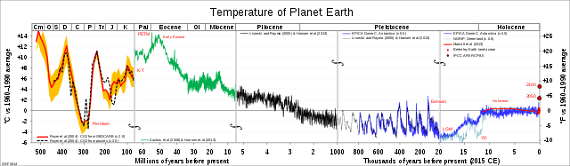
I find the Climate Reanalyzer graphs very instructive - at a glance one can see how extreme the situation is:
Thanks for sharing! Do you (or does anyone else) happen to know a website that provides similar (and similarly zoomable) climate charts and time series at a more fine-grained geographic level? Weatherspark.com used to have precisely that: climate charts for many locations on Earth and those went back years or even decades! But nowadays their UI is rather limited and one can no longer zoom out of climate charts to detect long-term trends or zoom in to review last week's weather.
The anomaly map mode especially. Thanks for sharing. I made a toy site recently out of interest: https://elnino.observer
Title: A short explainer on how El Niño works in US [video] (youtube.com)
Yeah. I opened it, saw that the map was centered on NA, and I closed it. I was hoping a primer on how El Niño works globally, given the title.
Yes, this was very US centric
Zeke Hausfather, Stripe's climate scientist, put together a great global El Niño dashboard here: https://dashboard.theclimatebrink.com/#enso
It's updated daily with the latest data. He also has a new "El Niño Impacts" tab here: https://dashboard.theclimatebrink.com/#impacts
aw man, I don't doubt the data quality, but the default-Claude CSS makes me sad just because it's so over-used
Here is one is French, very scientifically sourced, by a searcher of hugging face.
France isn't very much affected, so it's not focused on any country.
This video mainly covers how it works in the United States, here's one for Brazilian people in the HN, from Manual do Mundo
I have always like this explainer video: https://www.youtube.com/watch?v=IvmeUStFvz8
Actual title is "El Niño Winter 2026–27: What Pilots Should Expect"
Not that the cause is known yet but I’d been curious how this El Niño would affect flying after that terrible Florida Leer Jet crash. Great video!
I would be curious too. That said each pilot must avoid dangerous weather. There is a recent captain steeeve video where the pilot does that. ATC won't vector them around the storm (not sure why...) so they declare an emergency then they are free to fly as needed to avoid it.
We had recently created this explainer for our kids, India specific to some extent - https://mahanu.com/p/2veyc3j0dzdq007qe5xpyd2n56/monsoon/expe...
Ok Timmy, now that you saw the video of El Niño works, can you explain it in your words?
Timmy: uhhhhhhhh