Kirlian Photography: Building Your Own Equipment
imagesco.com"Your Brain Is Glowing, and Scientists Can’t Figure Out Why" https://www.scientificamerican.com/article/your-brain-is-glo...
"We Emit a Visible Light That Vanishes When We Die" https://www.sciencealert.com/we-emit-a-visible-light-that-va...
"Investigating ultraweak photon emissions as readouts of brain state: Evidence from biophysical and cognitive experiments" https://scholars.wlu.ca/etd/2912/
"The role of ultraweak photon emissions (UPE), which is endogenously-produced light from biological organisms, remains an untapped area in its relation to human health because of its strong ties to oxidative stress. Previous studies have demonstrated that UPE can provide insight into cellular health and disease, and biological organisms as a whole. […]"
The company is quite old! They have some old YouTube videos depicting how their stuff is used[0].
Some of their videos allude to kickstarter which made check! Kickstarter is 17 years old. Man, I remember the early days of it. Boy!
I like this video https://www.youtube.com/watch?v=tX-rGLNSoFM more technical details in https://www.youtube.com/watch?v=BRKIGhOJ5Ew
IIRC this was debunked as ...The plate/glass was not thoroughly cleaned between photos...
I.E. the leaf left residue on the glass.
It appears to be a form of DBD (dielectric breakdown discharge). Setting aside the para-physical claims, that aspect of it seems reproducible, as a fun science demo, at least.
I agree, the Kirian photography is real, but the GP is taking about the paranormal claims, in particular the torn leaf https://en.wikipedia.org/wiki/Kirlian_photography#Torn_leaf_...
(Are the original photographs available somewhere? I found only bad modern photoshoped versions, and even a guy that made a debunking video and then his photos were repeated as confirmation evidence.)
Replications are available online, can't seem to spot any of the original material as of now. http://exo-science.com/phantomleaf.html (!!Woo-woo warning, just take what you need and exit stage!!).
Reverse search off above leads to "The Phantom Leaf Effect: A Replication, Part 1" "https://journals.sagepub.com/doi/abs/10.1089/acm.2013.0182". I have not had the time to examine the claims therein.
The second one http://exo-science.com/leaf3.png looks like most of what I found. It's strange to see zero discharge at the cut and an particular at the right part of the cut that has an acute angle. Suspicious...
The other like http://exo-science.com/leaf1.png are very similar to the one in the article, but they just have too much detail on the phantom part to be real. If I have to guess, they cut the leave and put both parts on the device.
I'd wait until Mythbuster return.
This is specifically addressed in the article, at length.
I consider it a given that any living organism radiates (heat) energy: there is constant energy and matter exchange with its surroundings; a foundational aspect of life. I consider it at least a possibility that by looking at this radiation, you can find correlations between balanced “health” (new age speak: intact Aura), and potential imbalances, and thus that it may work as a diagnostic tool.
You can measure someone's temperature to find out if they have a fever, is that the kind of thing you're suggesting?
Did you ever touch a human body and noticed that its temperature feels different in different regions? Even, say, down one arm? That’s what I was referring to; not core temperature.
They do that for professional athletes but they use thermal cameras for that and look for asymmetries in the left and right side of the body. That seems to give a clue about inflammations. They look for differences as low as 0.1°C iirc. Take all that with a grain of salt because I heard very little about it.
As a sufferer of psoriatic arthritis, I am painfully aware of this phenomenon.
Out of curiosity: did you ever try a craniosacral biodynamics treatment session, and if yes, how was it for you?
Biodynamics is a method of organic farming.
Craniosacral therapy (CST) is a gentle, noninvasive hands-on treatment that uses light touch to help release tension around your body’s connective tissue (fascia).
Craniosacral Biodynamics Treatment is what then?
I’m all for hands-on treatment, but there’s better modalities than whatever this is presented to be.
I didn’t pick the name. It was used by an embryology researcher, Erich Blechschmidt, and was picked up from him by craniosacral osteopath James Jealous, for a 10-year training in gentle touch and presence to assist relaxation as you say. It is a branch of craniosacral therapy. It has nothing to do with the farming method that goes by the same name. It has actually been coined way earlier:
” In September 1866, a seminal monograph authored by the German zoologist and evolutionary biologist Ernst Haeckel was published under the title Generelle Morphologie der Organismen (or the General Morphology of Organisms). In this 2-Volume-monograph, Haeckel not only introduced novel terms and concepts, such as Protista, Monera, ontogeny, phylogeny, ecology and the ‘biogenetic law’, but also coined the word “Biodynamik” (biodynamics) as a synonym for ‘general physiology’. Haeckel (1866) separated the natural sciences into the major branches I (Abiology or anorganology) and II (Biology or life sciences). In Haeckel's scheme, biology (zoology, protistology and botany) consisted of biostatics (morphology) and biodynamics (physiology).”
https://www.tandfonline.com/doi/full/10.1080/15592324.2016.1...
Ah righteo. Apologies for the gruff tone of my previous comment.
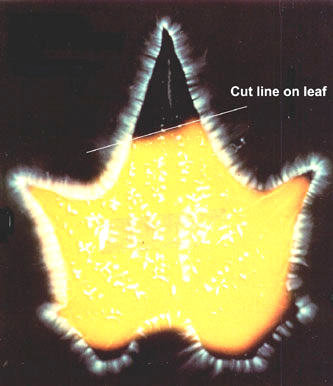
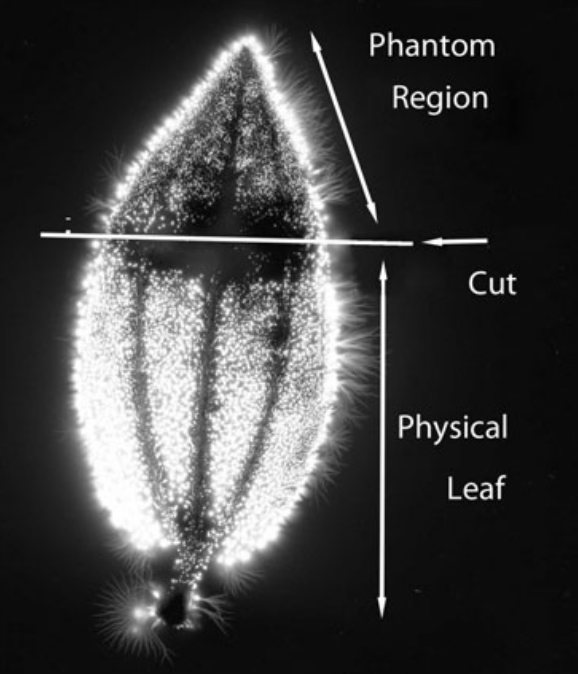
"Kirlian's work was first made known to the general public in this country by a book published in 1970 by Shelia Ostrander and Lynn Schroeder titled "Psychic discoveries Behind the Iron Curtain""
Ha ha, the psychic 70's. And U.F.O.s, biorhythms…
(Loved the 1970's)
And Rupert Sheldrake later in that decade with his theory of morphic resonance.
His son Merlin Sheldrake has written a book about fungi called Entangled Life which is quite sensible and doing very well. I noticed that the book was very carefully referenced with detailed end-notes, some like mini-essays with references to papers by a wide range of authors. These notes comprise about a third of the word count of the book. Unusual in a popsci book of this kind. I can't help thinking that this approach might be a reaction to Sheldrake senior's writings and the reaction to them.
OA is a nice Web site with practical information on what could be an interesting art-practice.
> I noticed that the book was very carefully referenced with detailed end-notes, some like mini-essays with references to papers by a wide range of authors. These notes comprise about a third of the word count of the book.
This is standard for most books written by academics as they are usually a compilation of their published and unpublished prior work.
Of the last three non-fiction books I read two were 1/3 references, the third book I’d consider more like long form journalism rather than an academic work.
The current book is 1/3rd references by page count and about 1/5th notes at the bottom of the pages.
The book Superlearning (also by Shelia Ostrander) made a big impression on me as a high schooler. The idea of using rhythms, music, relaxation to shift one’s brain into a highly receptive state to learn and memorize was super compelling.
I find I’m much more likely to read for an extended period of I put on some Chillout, Lounge, or other down tempo music.
Soma.fm and di.fm have some great channels. There’s another popular one I always forget at times like these.
(Loved the 1970's) I concur, Sir.
An aside: Arthur C. Doyle toured US to sumptuous throngs lecturing on consciousness, the spirit realm and seances in 1920s-ish, iirc. Someone alive in 1970 might have had recollections of that coverage/seen ACD in person and would be in a position to pass on the whiff of ether to an younger generation: hungry for transcendence and shedding of burdens.