Apple introduces M6 and M5 Ultra
apple.comhttps://techcrunch.com/2026/08/25/apple-debuts-its-most-powe...
https://9to5mac.com/2026/08/25/m6-mac-mini-vs-m4-mac-mini-he...
I was blown away by M1 Pro, and used it for 4 years before it became a little sluggish, and replacing it with an Asus S16 running on Ryzen AI 9 HX 370 (an excellent laptop). One of the main reasons was missing my old Linux setup.
I've briefly tested M5 Pro in an Apple store and was surprised by how quick it felt and did anything. A tangible and significant difference, and I really feel it would be good getting it, or M6.
However - before, MacOS was a big factor driving me towards Apple - now, it would be hard for me to give up my Linux setup and all the stuff I love about it, even for such performance...Linux progressed really nicely, while MacOS deteriorated at the same rate, and it's changing the balance and the decision for me.
Still rocking an M1 Air - 2020 build. 8GB ram. No slowdown or deterioration at all. Battery health reports the battery max capacity at 84%. Best computer I've ever owned, by far.
M1 Pro 2021 16GB RAM
Feels as snappy and impressive as the first day I got it. I never need to close apps, or reboot. I record multitrack audio on it without any perceptible latency. I write code on it. It's the best computer I've ever owned by a significant margin.
M1 Pro 2021 16GB RAM as well.
However, I live with Activity Monitor open at all times. The computer constantly grinds to a halt, and I have to force quit apps at least 10 times per day.
Not really Apple's fault though, just most apps use around 4GB of RAM these days even when they're idle. Some use upwards of 16GB.
I've watched the computer slowly get obsoleted over time, not because the hardware is too old, but because software just get's worse every year.
It's not obsolete at all.
Install Linux to unleash the full potential of your M1 (or to liberate any other system with a BloatOs, like macOS or Windows).
I resucitated and saved from the landfill a laggy and almost unusable laptop with Window 10, 4GB RAM and a Celeron processor, how?... Installing Manjaro (Arch), XFCE and kernel 6.18.
ZSwap and MGLru do wonders with memory and cache management.
It's fast enough with Thorium SSE4. I can easily open 15-20 tabs.
I use it as daily driver.
But we have AI now! We can just write better software with a single prompt, right? /s
How is this comment helpful or interesting?
I mean, you could make a better comment about it, but in my opinion the sarcasm is justified.
AI has greatly increased the number of security bugs found on a weekly basis (which is great) and we're getting one of those one-shotted and then immediately abandoned open source "projects" every day (which is useless).
And yet there is no indication that any of this new software development capacity is going into improving the quality and efficiency of the software we use on a daily basis.
Why is widely used professional software not getting better and more efficient if bug fixing is supposedly so much cheaper now? Is it not worth putting any effort into optimisation at all?
I think the reason could be that AI can only do more of what we have done manually before, i.e. more lowest common denominator code.
Or am I just too impatient and this is all coming?
> Or am I just too impatient and this is all coming?
I doubt its coming, at least not within the timescale OpenAI or Anthropic would like to believe. If we were close, then we'd see the fruits of that, which like you said, we are seeing the opposite currently.
The bottleneck was never writing code, and it still isn't. Writing code is like 15% of the job, but the labs can't tell investors "Yeah we make everyone only 15% more efficient" and still be able to raise trillions in capital. Whatever AI accelerates, the bottleneck is still code review, comprehension, and security debt.
Vibe coded slop gets abandoned because non-devs were never going to be able to use AI to make commercial software beyond an MVP. Once your app needs multi-tenant auth, session invalidation, concurrency handling, API changes, graceful degradation under load, etc. natural language prompts will fail. You still need a mental model of how things work.
When building a house, lowering the cost of bricks and getting them delivered faster does nothing to speed up the rest of the process that still relies on engineering discipline.
I don’t get it either. What are these people doing that keep saying that Mac OS is snappy. It’s the same slow garbage as windows.
One problem is that you need Firefox because safari doesn’t peppery do ad blocking. But once you have 20 tabs open or so, it uses 5GB GB ram. But perhaps your also need safari for something else. That’s another 5GB of RAM. Then once you count a finder replacement (2GB ram), and some office stuff (probably 1-4GB for each app window), 16GB of ram are almost as sluggish as an old windows laptop. Add MS Teams, and the thing is brought to it’s knees. And Mac OS has a lot of quirks and the window management is atrocious (alt-tab doesn’t switch between app windows, a bunch of apps to get alt-tab behavior don’t work properly either).
I feel like more and more that Mac Users are being forced by the atrocious window management to only have one window open per software, so then the system is fast. Problem is when you have multiple tasks going on in parallel, then you need many windows and desktops.
I don't really think it's all that much about macOS. I think it more has to do with the state of web development - claude.com or chat.com or grok.com all can use up to 5GB of RAM as an idle webpage in the background regardless of browser. Most apps these days seem to be electron apps which can fire off multiple 4+ GB node processes doing who knows what.
I think most true native apps don't have these issues. Unfortunately there is very little incentive to build on the macOS platform these days, which is where I point more of the finger at Apple. UX, UI, & DX are all quite a bit worse for Mac native.
> One problem is that you need Firefox because safari doesn’t peppery do ad blocking.
ublock origin lite is on the app stores (both mac and i-devices), and works reasonably well.
https://apps.apple.com/us/app/ublock-origin-lite/id674534269...
I live with safari and finder and all my office ware is native (mail.app) or web based (Google Docs). Chat is via slack, but I use the website and not the native app. I've adapted to the quirks and I'd bet that's a lot of the reason why it doesn't feel slow to me. I feel I have plenty of windows open at once but likely less than you do.
Different folks different strokes as they say.
If you have to use specialized software to make your system snappy, then it is, as a system, not snappy. The attitude about the MacBook is that it never slows down … what, unless you use MS office?
Quite a stretch to call the browser and email client that ships with the OS “specialized”.
Only using built in software is indeed a specialized use case for an OS. The point of an OS is to run any software.
my point was I'm not using specialized software, I'm using the software shipped with the system. MS Office isn't Apple Software, so holding apple responsible for Microsoft code quality seems counter to your first point.
If I have Office stuff open and the whole system crawls, then the system isn’t snappy.
It’s like the claim is “get a Mac and you’ll never see a slow down ever again! Just as long as you run software that won’t make the whole system come to a crawl”
main difference is that Mac OS can actually use swap.
With Windows you can as well just restart the whole machine, once it touches swap it won't stop thrashing ever.
I have one of these too. I can’t believe how long it’s performed at very high levels of use including two external screens and 10-15 memory intensive applications running concurrently, including three different browsers with multiple tabs open on each. I installed a new video editing application today and was apprehensive it would stumble, but it worked like a champ.
The battery indicator is starting to show a decrease in performance. It won’t hold a full charge, but even when I’m without a direct power connection, I can still have it running for nearly 4 hours with Wi-Fi, 6+ without.
I'm baffled why anyone would think you wouldn't be able to record multi track audio on a modern laptop with SSDs as if it was a difficult task. I had an Alesis HD24 once and that recorded 24 tracks on hard disks, not SSDs.
Hmm same one but mine is clearly deteriorating lately. Lots of beachballs. I think I abused the SSD pretty badly though if I’m being honest. Loading and offloading large media files almost daily for five years lol
I have exactly this. Been trying to setup local models. I either end up with something that’s too big for my mac or too small.
MacBook is great hardware, but I really hate MacOS. It feels perpetually cellophane wrapped, and I don't like any of the window management. Finder is particularly awful too.
You should be able to deeply tweak how window management works, but Mac won't let you do that.
I'd run Linux on the hardware if it wasn't a hack.
Rectangle solved my macos window management annoyances.
Not involved in dev of this, just a happy user
When I had to use a Mac for work, Rectangle was a life saver since it basically let me replicate manual window management pretty closely to how I've done it on Linux forever, between that and iterm2 it wasn't a terrible experience but man was I happy when Linux was an option again.
I just don't get on with OSX, I can use it, it's "fine" but it never feels like home the way Linux always has, mostly because I generally run with defaults for everything but when something does bother me I can poke it on Linux until it's how I want it to be.
Linux simply assumes you know what you want and lets you have it, Apple assumes they know what you want and based on how much love OSX gets from some folks they seem to get that mostly right for those people.
> based on how much love OSX gets from some folks
I can't speak for others, but my preference for macOS basically boils down to "it's a *nix system that can run the commercial software I need, with a lot of nice little attention to detail features" I'm trading friction in some areas, for the removal of friction elsewhere.
Plus macOS has little niceties like readline key bindings in every text field OOTB, pleasant font rendering (on retina quality displays), and all the "ecosystem" features. I use universal control between my mac and iPad daily, AirDrop, universal clipboard, and airpods auto device switching, etc.
I don't pretend it's a perfect OS, it's far from it, but I willingly accept the tradeoffs and find ways to work around them to get the other features I want.
This is a solid summary of Apple to me. Generally great hardware (outside of when they fuck up the keyboard or for ~5 years or something), and you have to piece general usability in from a myriad a third party apps while hoping Apple doesn't generically decide to lock out whatever API they're relying on unceremoniously.
I also enjoy rectangle, but struggle to find a good Finder replacement. Any recommendations?
Some of these might fit your finder replacement needs.
Swift Salamander: https://salamander.codesurfer.ch/ Rascal: https://tryrascal.org/ or brew install --cask chang-07/tap/rascal Forel: https://github.com/lab421/forel or brew install --cask lab421/tap/forel Hyperkey: https://hyperkey.app Vorssaint: https://vorssaint.com Wick: https://trywick.co Wisp: https://sulemaanhamza.github.io/..
I’ve not come across Swift Salamander - and it looks interesting (even if the homepage has all the hallmarks of an AI landing page design).
Anyone have any experience of it?
I don't do enough with finder to mind it's existence, but there's always Midnight Commander
Or dired
What in particular do you find hacky about Asahi? I've been daily driving Asahi Fedora for about 8 months on a 13" M1 MBP, a significant portion of the project has been upstreamed to the kernel at this point, so the bar is set very high. The most significant compromises I've encountered have to do with Fedora's aarch64 repos, nothing to do with Asahi itself.
I find MacOS miserable even if the hardware is good.
I can vouch for Aerospace, it brings i3 windowing to MacOS well.
I like Linux and used it as my daily driver for a long time but I find I’m addicted to macOS’ ctrl-scroll zoom feature as my eyesight deteriorates.
I’ve not found anything that works as smoothly for Gnome. So I keep going back to macOS with Rectangle to solve its UX issues.
> I'd run Linux on the hardware if it wasn't a hack.
It's a hack in a good way and this is a really bad reason to not run Linux.
This post sure ruffled some feathers judging from its downvotes.
Same here, my M1 Max 64GB beats the s*t out of my work-provided M5 16GB :P
Best computer I've had in a long time.
That’s what I have and love it. I have M(N+1) envy but I remind myself that my machine runs great. And it’s paid for.
Also M1 Air 8gb, though not the daily driver. Bought second hand, the machine is still an absolute champ with no slowdown and is my go to machine when I want a calm space for writing.
Agreed, I loved my M1 Air!
I splurged for the 16GB version of this. Originally bought it for my spouse, and then replaced it with a refurbed M2 with 1TB of storage for reasons. So I took the "old" M1 Air. So far, can't come up with a reason to want to replace it. Not updating to Tahoe helps with that too.
> Not updating to Tahoe helps with that too.
Apple - the absolute kings of planned obsolescence. Who else could do it so brazenly AND have a bunch of zealots who will now reply to this defending them and attcking anyone who points it out.
Any industry not involving a computer they'd be in big trouble even with their massive (legal) bribes to politicians and fortune spent on legal teams.
Their “sorry this hardware is too old to run the latest macOS” seems entirely based on KPIs versus capabilities.
There’s absolutely no reason a maxed out MacBook Pro from 10 years ago shouldn’t be able to run something like the ChatGPT or Claude app, because those seem to think they need a newer version of the OS and Apple has decided that a 8 core 3.8ghz i7 with 32gb of ram is obsolete
That sounds like it’s more on those apps, because they aren’t doing much special unless I’m missing something.
The reason why the apps won't run is the weird SDK thing. As a Mac or iOS developer you can only run certain versions of XCode and each version of XCode supports only the most recent couple of OS SDKs. If you freeze everything in amber, like, keep a Mac on the 2016 Mac OS release, you can keep shipping compatible builds forever, but at some point just by virtue of one of your developers buying a new computer suddenly locks a minimum Mac OS, which has a minimum XCode, which means a certain minimum SDK version, which dictates a minimum Mac OS target. And besides that, to use just one new feature you pretty much have to jump to the very latest SDK, and from there, supporting even one version back means forking your codebase and backporting, so it doesn't take long for 90% of software to abandon old versions.
I know that in some ways Apple is better than their hardware-making peers in terms of supporting current OS on hardware made a few years back. But compared to other software vendors, say, Microsoft, they are terrible.
Golden Gate runs on 2020 and newer macs.
Windows 11 runs on 2017 8th-gen Intel CPUs and better.
Windows 10 is supported even on PCs from 2006 with 4GB of RAM - and importantly, a ton of modern software (e.g. Chrome) is still compatible with Windows 10.
The comparison may be relevant since it seems Apple is incentivized primarily to move hardware, whereas Microsoft seems like they want to promote Windows as a stable, non-fragmented platform you can trust, both as a consumer and as a developer. One of their worst-received OSs was the one that basically forced most users to buy a new PC -- Vista. (And to a lesser degree, the TPM 2.0 requirement in Win11.)
I run a 2012 MacBook Air 11” for Zoom meetings. It’s stuck on Catalina, but it runs fine. If I really wanted (which I don’t), I could probably hack it to run newer operating systems. I know there’s a few ways to do that.
On an x86 laptop you run linux. Too easy. xfce if it's 4G ram. Can you do that with an M{1..4} ?
You sure can't do it with an iphone. I own one an iphone 15. Was beautiful when new. Even now it has started on the path of suck. Apple have "upgraded" it to have a more frustrating touchscreen because they clearly think I should give them more money to keep the experience I bought. They are not cheap.
Apple are the absolute kings of planned obsolescence.
Zealots going for silent downvotws because there is no case they can make to the contrary. Not what downvotes are for, says HN but we're all used to HN being used like this by now.
You can run Asahi Linux on M1 for sure and I think also M2 now.
It's not the same as running on an x86 Mac, though. Asahi's efforts are herculean, but it will always be an uphill battle. Many things are still unsupported, even on M1.
Yes exactly. Most notably UsB-C monitor support.
What did they change in the touchscreen?
Latency mostly. Maybe it’s an illusion flowing from the latency stutters but it really doesn’t feel as precise as when it was new.
No, Apple didn’t do that. It’s just your subconscious trying to get you to upgrade.
The latency is not an illusion and yes Apple absolutely did that. It isn't plausible that they don't know they are doing it.
It is ridiculous to suggest otherwise. Go pick up an iphone 6 and try to do anything with it and then tell me that is how awful the ui was when it was released to apple orchestrated media fanfare. Or any older ipad. Imagine if that ui extreme sluggishness, random delay and the button moving just as you hit it is what they were showing off at launch. The laughter would have haunted them all the way to the accountants telling them their options were now worthless.
Apple latency degradation is not worth discussing with anyone who says it isn't happening. You can't solve whatever issues they have.
Same. It was borderline unusable on Tahoe to the point I had to downgrade it, but the Golden Gate beta brought it back to life.
I’m only using it as a travel machine now, trying to hold on from upgrading it until I can get an Air with OLED display - hopefully coming in <24 months…
What makes Golden Gate usable?
They clearly did a bunch of optimizations, because working on my Xcode projects (and even basic every day use tbh) in 18.x was fine, on 27.x it’s mostly fine, but on 26.x it was a slog fest.
Same here. Still using the original M1 as a daily dev pc. The portability and battery life are great. Biggest gripe is the limited number of USB-C ports...
Great to hear! The absolute best Air Form Factor, I've debated a lot buying a used one because I dislike the square form of M2+ Air compared.
Agreed. I have an M1 Air base model (also an M4 Pro), and hated the squared-off change for the M2. The wedge was the entire point.
Until recently my M1 Max 32GB 2021 was great until memory became the bottleneck. My M1 Pro 8GB lasted me less than a year bcs with Docker dev stuff made it sluggish. 32GB was great for years until AI assisted productivity got so high with Codex. Running 3 projects, 3 different worktrees, each either Docker compose or running/building Electron apps. So in this high AI era productivity my Mac is using insane amount of RAM and SSD space (bcs of all the worktrees)
M1 Air 16GB, and macOS Sonoma is definitely starting to weigh down on the hardware.
I used to have Netflix, Civ 5, and a Simulator running with no visible slowdown. Nowadays Safari + Simulator is enough to make everything less snappy; and I no longer keep WebStorm open either.
Anecdotal, but I do think they’re releasing heavier updates. Can’t imagine the M1 on macOS 26 does very well.
My M1 Air died a week ago after 4 years of use. The Apple store told me it would get less than a year of updates and replacement part availability from now, and the logic board despite being most of the laptop would only be warrantied for 90 days. Not sure why so many people here praise Apple's "longevity" which is clearly not good.
Good news for you is that whoever told you that was almost certainly wrong. Apple considers a product "vintage" 5 years after it was last offered for sale, and "obsolete" 7 years after it was last offered for sale[1]. Parts availability is guaranteed until vintage status, and is generally still available until obsolete status.
The M1 airs were available for sale as recently as march of 2024, so you have at minimum another ~3 years of replacement parts availability ahead of you. The timer starts from the last offering for sale, not when you bought your computer. Software updates might be more limited, we'll have to see. 6-7 major updates is about average for the Airs[2], but 8 and 9 isn't unheard of either and we're already at 7 for the M1s
They were however right about one thing, out of warranty repairs are only warrantied for 90 days from Apple.
[1]: https://support.apple.com/en-us/102772
[2]: https://en.wikipedia.org/wiki/MacBook_Air#Supported_operatin...
The main problem with Apple's is the limited years of updates to MacOS, combined with less than ideal Linux support. I can easily install Linux on any Thinkpad, but I don't think it's yet easy for newer Macbooks.
With Linux, a device can stay snappy far longer than Apple provides updates to MacOS. That's why my personal computer is old Thinkpad, I can thankfully use work-issued Mac for anything that requires more power.
I bought a used M1 air with 16GB and 2TB a few years ago for $1000 CAD. It’s easily the fastest computer I’ve ever used, and I have no reason to upgrade. It chews through 4K footage and ten of thousands of RAW images off my cameras.
Same here. For tough compute, I spin up a machine in some cloud service, do what I need, and shut it down. Of course, its a different issue if you need power on the desktop right there, like for A/V/Graphics work.
Same here. Got the same machine and feel the same as you about it.
Which MacOS version are you on, out of curiosity? Do others see the same software issues?
Same here, the thing is a beast
M1 Pro 32gb RAM. I still have absolutely no reason to upgrade.
Same. It's a monster
bad consumer
Same, but MBP. Incredible machine, still has a lot of miles left
M1 air 2020 16gb ram - still working like its new
> a little sluggish
> surprised by how quick it felt
Aren't these properties of the (G)UI rather than of the processor?
I've been using systems 20 years ago that were super snappy. The same software would still be snappy today obviously. But the software has become bloated to the point that you need to run the latest generation of CPUs such that things are not sluggish. In principle you don't need 32-core GHz CPUs to move a window around on a screen without it feeling sluggish.
> "the software has become bloated"
Casey Muratori has a 20 minute talk on YouTube called "Clean code, horrible performance"[1]. Using an oft-repeated example in C++ he rewrites it uncleanly and then benchmarks.
Removing Classes/subclasses/polymorphism: 1.5x faster. That overhead was like reducing an iPhone 14 to an iPhone 11 performance.
Replacing Encapsulation with a table-driven calculation: 10x faster. That overhead was like reverting an average desktop CPU from 2023 back to 2010 performance.
Adding basic SIMD: 20x faster.
His position is that the principles of Clean Code wiped out 15 - 20 years of hardware progress, for a subjective ideal of maintainability, and even if they deliver on that, the cost is too high. It shouldn't/cannot cost a decade of hardware performance to make programmer's lives easier.
While I agree with a lot of what he says (complexity and layers of abstraction impact performance), it's probably worth noting that his examples are not necessarily relevant to all software.
Does my web browser feel slow because of pointer indirection or virtual function calls? Or is it because I have to download 15 MB of Javascript to load this page, which then goes out to 35 other domains to fetch other Javascript and ads and CSS?
In the insanely tight compute loop that he's looking at all of those things definitely make a difference, but a lot of software is slow not because it's inefficiently written (which it probably is) but because it's inefficiently designed and it's doing too much.
In a game engine, where you have 16ms to do 100% of your simulation work, update all your state, and then send all the data out to be rendered, definitely this sort of thing is an issue. In an Electron app? There are a thousand other things that are wasting far more of your time and responsiveness than the misguided 'cleanliness' of your code.
Counterpoint. I have a Dell laptop from 2017 at work. I keep it around for plugging in to network equipment and that sort of thing. I've had Win 11 on it for the last few years, and it was getting unusably slow. Also, the battery, even though replaced in the last year, would only last about an hour of normal use. I had a similar belief about browsers and the web. No matter how light your OS, the browser and web experience is the bottleneck. But then a couple weeks ago, I installed Arch and IceWM with Firefox. What a difference. The thing is snappy, even in the browser. And the battery lasts all day. I was blown away.
Did the same in 2012 with hp 2510p that had windows vista pre installed on it. I could literally brew a cup of coffee and make it halfway through while this poor boy was booting up.
Bit the bullet, installed arch and dwm. I remember my initial impressions on how fast the boot went, how silent the hdd is, how the whole things works reporting just a fraction of RAM in use(right after boot).
It was the first hands-on YAGNI experience. Windows(and macos and the likes of ubuntu) loads and starts everything it has and keeps the system busy at all times in terms of cpu, disk io, network io.
Barebone linux without beefy desktop environment was like “I boot into essentials and will lazy load anything upon request”.
Exactly this. It's the design and architecture where the bloat is. Not the need for some microoptimization..
The video is exactly about design and architecture and not even slightly about microoptimization. How do you have it completely inverted?
I write clean code with lots of encapsulation. Not C++ just an ecomm webapp but our business hinges heavily on time to load and we do great there.
Clean code or messy code the thing that all fast code has in common - including your example is this: YOU FOCUSED ON IT.
You measured it, then improved against the benchmark. You spent time and effort on it so it improved.
That's it. That's the secret.
I object on a few fronts.
One is that the rewrite has 'mechanical sympathy' with the machine e.g. arrays without pointer chasing can fit more data in CPU cache with fewer stalls while it reads over the main memory bus and waits after every item. That should not be a surprise, it's knowable in advance. Why deliberately ignore knowledge about the machine when designing the code, then come back and use that knowledge?
Another objection is to the idea of "measure then improve". Imagine a delivery truck which loads parcels without checking their weight first, then drives the truck onto a weigh machine (profiling), then if the truck is overweight they unload each parcel, weigh them individually, find the one heavy one filled with lead weights, then repack the truck without it. That would be silly and inefficient, right? Now imagine they unload the truck and there's no single parcel which is surprisingly heavy and instead the goods have been packed with 'lead foam'. Who could forsee that would cause problems with the weight on the delivery truck? (Anyone!). Now what's the fix? Unpack and repack every parcel, rewrite the whole code. There's no accidentally quadratic here to remove, instead every tiny piece takes a few more microseconds than it needs to and those add up.
Another objection is "YOU FOCUSED ON IT' - this implies that there is some way you can design and write code that doesn't need any focus. Part of the point of the video is that the faster code is not harder to write, there's no complex algorithms, no compiler intrinsics, no deep knowledge; it doesn't take a focused performance expert to write a switch(){} instead of a subclass.
Another objection is your implication that performance shouldn't be a consideration until you measure it and find a problem, and prove that it is. Which is like saying that aeroplane design weight doesn't matter until after you build it and measure it and prove that it matters. Computers are finite and limited, why have we got to the stage of assuming they are infinite and unlimited, and then demanding proof that they aren't, over and over on a case-by-case basis? A 3D game can render a virtual world at 100 frames per second. Does a program which takes 3 seconds to show a username/password login prompt need enough resources for 300 frames of game until proven otherwise?
Another objection is that you are defaulting to 'clean code is the default, performant code needs measuring and benchmarking to justify itself in every individual case. Why isn't that the other way around? Less resource-wasting code as the default, and 'clean code' only when maintainability has been measured and proved to be a problem, and only in the parts of the codebase which have the highest maintainability problems?
If all the clean code, encapsulation, isolation, abstraction layers, are providing the developer benefits that are claimed - why aren't programs better? If it's now so clean and easy to refactor, why doesn't that translate to software that gets better instead of software that gets worse? Casey's example is that Visual Studio debugger updated the watch window in realtime while stepping through code, on single core Pentium 4 with 512MB RAM, and now on a modern multicore machine with 64GB RAM and an M2 SSD it can't do that. (RemedyBG can, so it's not impossible).
Another small objection that I just remembered, Casey has an interview with Rico Mariani[1] who worked on performance at Microsoft for two decades, from their first C++ compiler, to .NET, to web browsers.
He coined the phrase "pit of success" after his team had spent months profiling and tuning the .NET startup to remove many milliseconds from it. One developer on another team called a default constructor for an XML class, and in that commit wiped out all their gains, three times over, he didn't know the default path was slow and there was another way. Rico was giving a talk and said that isn't a good way to design things, success can't be the hard way that only a few experts can find, it has to be like 'falling into a pit', the default way to do things has to be the good way.
Anyway, with one browser related performance regression, they profiled and found that the layout engine was using a lot more CPU. He believed the layout engine was good enough, looked elsewhere and found a commit which invalidated a node in a tree and all subnodes. That was cheap and didn't stand out in the trace, but far away in the codebase it triggered a lot of layout updates. Separating things out to focus on just one part at a time, and then the profiler can reveal where the problems are, neither of those things worked as intended.
Not to forget the fact that websites nowadays can be real memory hogs, are dynamically assembled on your machine and burn cycles on pure eye candy UX like animations and transparency. The web's focus on design and cleverness over content and functionality is partly to blame.
n=1 but my macbook pro constantly runs out of hard disk and memory and the two biggest culprits are jira/confluence/docs and other web apps (like 1gb+ of real memory consumed by a single instance), and the other is dev tools which litters my disk with 100s of gb of caches...
its crazy how our devices have become basically dumping grounds for terribly optimized software
Yes, but that's a game developers perspective. Hardware performance is not be-all end-all (an argument can be made on environmental reasons that it should be - but bear with me in the first instance).
Software is a tool working within a socio-technical system. Some systems have low user workflow diversity and a low rate of change - a game being a perfect example. Games get patched, but the diversity is purely in user data, not in feature use - everyone uses the same engine, the same textures, the same game logic. Some systems have high user workflow diversity - such as business software.
Pair that with the fact that games, due to the nature of the system, have to optimise for low latency AND they run on the edge - and it's natural that the primary optimisation will be for CPU cycles. For business software, for which distributional advantage of running it through web + the high rate of feature change that is a result of the specification being opaque and a moving target - means you have plenty networking latency that can hide your CPU latency for long after it becomes a true problem for you.
Not to mention that "clean code" optimises for developer churn and business priority shift (which is a luxury games which are an upfront investement don't have) as a result of accelerating industry of software technology and greater saturation of developers.
Had software remained the domain of the same number of practitioners such as <1995, even given everything else, the organisational systems would have evolved to protect them at all cost because churn would be catastrophic, and then they would enjoy more power and would be able to structure code not optimising for brain shift, because they'd hold the context in their heads.
I'll leave as exercise for the reader what pushing AI into the software development equation does for the system and inevitable hardware throughput implications.
> "you have plenty networking latency that can hide your CPU latency"
Does this excuse making 75 network calls instead of 5? Or knowing that you make a lot of network calls but designing the code as if they were instant and have the bandwidth of a local SSD?
> "Not to mention that "clean code" optimises for developer churn" "structure code not optimising for brain shift, because they'd hold the context in their heads."
Based on what studies or evidence is this optimised or optimal? How is it easier to work through code which is atomised and abstracted until there appears to be nowhere that anything actually happens, where the method and variable and parameter names are long compound words, where everything is multiple layers of indirection and generalised, and you have to hold all that context in your head?
1/ network calls are what I find still gets optimised by grouping API requests and bloating the exchange contract; but yes, if you're strictly clean coding, this will suffer too - it just happens less often than what the author of the youtube video objects to
2/ That's a fair challenge - and I definitely have more trouble reading through an absolutely ramped to the max collection of C# code (which reinforces the behaviour you describe) than a superscript; but for interchangeability, the middle between those two ends is typically better - you're trying to minimise functional context for the thing that a software developer needs to do. This has the additional failure mode that the feature that is envisioned (of sufficient complexity) never actually gets delivered, but the component parts that can be well encapsulated do. And this is because no one holds the full system in their heads. But this can be explained away to business as "there's too much complexity, we need another cycle" and "we need to iterate" and therefore the cycle continues.
I think I actually convinced myself away from encapsulation and separation of concerns in that last comment.
To be fair, Objective C uses message passing, which doesn't have the same performance characteristics as C++ (worse initially dealing with the selector pool rather than a vtable offset; much better later when maintaining stability in your brittle C++ ABI requires pImpl->pImpl patterns jumping all around heap memory).
it is interesting how the early iphone got such good performance and low memory usage with objective-c compared to android (java)
My problem with Casey is that he is not a performance engineer, he is a performance maximalist. Software is a set of tradeoffs. If he truly cared about performance, the best thing for him to do would be to write clean code that had good performance, but he refuses to do that, since it's hard. Instead he insists that the only way to do performance is to write unmaintainable code which ironically enough makes it difficult to do performance optimizations because it's hard to lean on abstractions that allow for things to be refactored.
> he insists that the only way to do performance is to write unmaintainable code
This is new to me, where does he say this specifically?
Not to white knight Casey but his niche has been in rendering and graphics afaik , where everything he does have to fit inbetween frames, so it makes sense to be a "performance maximalist" in that environment.
It could be that you and he are working on different sets of problems with different tools.
But I'd be really interested I where he says you must write unmaintainable code.
Also (my take) : if you're looking at "clean code" to find abstractions that allow things to be refactored, then I think that's probably not the type of performance he's talking about for you. LLMs can do that type of work. FWIW I think he refactors from what things ought to be, not how they are currently
Obviously he's not going to call his own code unmaintainable, but he's basically against abstractions which let people write software that needs to survive past a frame. BTW I have found that LLMs are kind of bad at doing refactoring (like, they can mechanically do a refactor, but they cannot actually help you with picking what refactor you'd want to do)
That is not my memory at all. I remember him saying to not do all of the things but just do some of them & we will all be much better off.
I have found these same principles to be true in my own projects. More modern, “cleaner” implementations usually end up with a larger code base but a noticeable reduction in performance. Bloat ruins everything.
Yeah, I think they can be a combination of processor, GPU, memory architecture, and G(UI) software.
But I too have ran a super snappy XFCE desktop for ages on pretty old hardware. I only recently switched to KDE+Wayland on much newer hardware and felt like it was snappy enough to not bother me.
I also remember there were times were my much more powerful dedicated GPU was outperformed by my CPU integrated GPU, which I think has something to do how shared memory can be faster for UI rendering (or maybe it was just driver-related)
> But the software has become bloated to the point that you need to run the latest generation of CPUs such that things are not sluggish.
As the old saying goes what Intel giveth the Microsoft taketh away.
What Andy (Grove) giveth, Bill (Gates) taketh away.
Yeah... my solution for the last 3 decades (with a grain of salt) has been to buy the most expensive decked out Apple laptop every 6 years and never, ever update the OS. This is in line with my philosophy about shoes: I only own 5 copies of one pair (4 in boxes in my closet until I wear the current ones out). Rolling everything over to a new dev environment every 6 years is annoying but manageable. This way I took a Powerbook 3400 into the intel age, took a titanium macbook into the air age, took two airs for almost a decade from 10.4 to 10.10 or something, then an M1. Which I'm still using. The 3400 still boots into OS 9 or something. I feel like I'm forgetting one. But the point is this: Apple software usually suits the hardware it's released with, and taking their updates is always a bad idea. Just get comfy with homebrew and settle down for your 30s or 40s until you've broken all the keys and the fan stops working. A $3-4k investment in the best performing machine they have will be great essentially until the machine itself breaks as long as you scrupulously block all apple ip addresses and rip all their update shit out as soon as you get your hands on it.
Also, the m5 mac mini impulse buy as a home server has been fantastic to just login to remotely, but I'm so glad I'm still using Monterey on my M1 for daily coding.
Surely you mean you don't update the major OS version, e.g. from Sequoia (15) to Tahoe (26)? Or do you literally mean if you start on Sequoia 15.0, you stay on 15.0 the entire life of the machine? The former is fairly understandable, but the latter is just insane considering the number of bugs in a x.0 release (including severe security and usability issues).
I do this! Interesting to see someone else advocating the practice. In my open source development I start work on a retro machine running Snow Leopard, specifically to be able to generate authentic retro binaries that'll work anywhere, and then I have a process to port to modern MacOS and signed Apple Silicon binaries, but the machine's a M1 Studio on Monterey and building for 11.1.
My worry is that they'll kill signing for people who aren't updating, though that shouldn't be a factor. I would have to simply get another machine to port to, because I don't trust that changes they make are always going to be good in any sense.
There might be a window for computing within which it's good: I find I'm not worried about adding new Linux machines and architectures to build for, but my Windows builds are 32 and 64 bit on Windows 7 with no attempt to modernize the build system, and I've got that two-stage Mac build process where it starts on a time capsule machine not connected to the internet, and continues on the M1 running Monterey. I'm anxious for the day Apple requires you use stuff that's constantly changed out from under you. I don't work like that.
Wow! Great respect to how you've set up your publishing that way! I don't build anything for the Apple ecosystem, and haven't since around 2015, and my biggest fear was always some dreaded forced update (or new app store jargon) .... so yeah, I think you're living on the knife's edge, but I would do the same.
One great reason for never upgrading the OS is you can still pop open a laptop and run things you wrote 10 or 20 years ago... and honestly now I've sent Claude around my local network accessing those old laptops and snapshotting and clicking ancient apps and rewriting things I'm too tired to do by hand, which is weird but kind of a nice coda to my work.
> never, ever update the OS.
> took two airs for almost a decade from 10.4 to 10.10 or something
I’m curious, did macOS 10.4->10.10 not constitute an OS update? Or was this a time when you applied your rule differently?
I'd have to check em, it was just a guess, but I have two airs from the last decade (2009 and 2015 I think) with their original operating systems and I think one is around 10.4 and the other 10.10ish.
Maybe I misunderstood your question... I never updated the OS on either of them. Or on any Mac I've owned since the mid 90s.
Oh I see, it was two different laptops, one with 10.4 and the other with 10.10.
I thought that both started at 10.4 and then had all version updates up until 10.10.
I'm not sure either of your approaches are optimal. You'd be further ahead with the shoes to be alternating two pairs as they last longer with recovery & dry time. Ignoring security updates, while maintaining performance, takes on a certain amount of risk. And while I do a similar approach to machines I do art/performance stuff with, they're air gapped when frozen. And you can't take this approach if you're publishing anything with Xcode.
I should have done this with my 2020 Intel Macbook Pro. Now it's basically unusable and spins rainbow wheels constantly, because the OS is apparently garbage for an Intel system.
I had the same experience as you. I bought a super-fast 10-core iMac 27” with 72 GB of RAM in 2020. It ran beautifully until the moment I “upgraded” to Tahoe, when it instantly became unusably slow.
This cost me half a day wiping the disk, restoring the original OS, and then carefully upgrading back to Sequoia. Now it works well again, but I am counting the days to when Linux is the only way to continue using this great piece of hardware.
Another anecdote: a few years ago I was offered a shiny new never-before-used iPad for free by a client (a telco). There was only one catch, I was told: it was a few generations old. It had sat in its box on a shelf unopened for several years. I thought it might be useful at least as an e-reader, but I soon realized why it was now useless: I could not find a single app in the App Store that would install on it because every app required a “newer OS” (which wasn’t available). Most websites also refused to talk to its old (non-upgradable) web browser. Well played, Apple.
I have an old laptop that is still usable because I never updated it from win7 or better I updated it once but switched back.
I keep thinking this and maybe I'm missing something, but I'd love to be able to opt for something in this direction, some old school constraints, I feel like we should be able to do something pretty magical these days
For example, is there a version of linux that I'm missing? I've not run a desktop linux box in over a decade, any suggestions would be great, or is everyone happily running ubuntu / fedora?
Just run debian + xfce, that’ll feel super snappy on 4GB of RAM, maybe even 2 (but then of course you’re bound by whatever other apps you use)
Plain Kubuntu on an Asus Zenbook OLED 14 laptop looks and feels pretty great compared to both Win11 on the same machine (ok that's not really surprising) or current macOS on an M1 Pro MBP (hardware is pretty old by now ofc). Once you start CPU intensive tasks the ASUS gets pretty hot though, while the Mac at most gets a bit warm.
Distro choice mostly determines package manager and how configuration works and what you get by default. Any distribution can approximately run any program and that includes window managers.
I'm using ArchLinux with XMonad as my window manager. That's neat, though it doesn't make Firefox or VSCode any faster (nor slower).
Atomic OS images. I moved away from individual package management once I discovered the alternates. Currently on Bluefin (Fedora-based) - not affiliated with the project but just a happy user.
No distro is going to be perceptibly faster than another. It's all about user experience - what tools ship with it, package manager, etc.
I'd pump the brakes on Ubuntu, which nowadays is a perceptibly worse user experience than other mainstream distros. Snap is a disaster, and flatpak rocketed past it years ago thanks to Valve bucks.
Use Debian. It's matured perfectly as a graphical distro IMO
Yeah mine is Debian + xfce although my laptop is fairly powerful 32Gb gen 12 Intel. It's fast, light and pleasure to use. Apt any day over all those fancy flat pack etc
Fedora is very good these days.
No one uses Ubuntu any more (besides corporations), it's possibly the worst distro of the whole lot due to several bad decisions from Canonical (snap etc). Fedora is a decent alternative, but if you're really after performance, CachyOS is the way to go as they provide highly optimised (PGO/LTC etc) and CPU-family specific kernel, custom scheduler (BORE) and optimised binary packages (catering to x86-64-v3, x86-64-v4 and znver4+ architectures).
PorteuX is also an interesting performance-optimised distro that takes a different approach - which is that of extreme minimalism (aggressive binary stripping, minimal packages) and its "Copy to RAM" feature (basically the OS runs 100% from RAM, so storage I/O bottlenecks are completely eliminated).
I've tested both on a 128GB Strix Halo laptop and haven't found much of a difference in terms of snappiness, but if you have older, more humble machine, I reckon PorteuX would definitely feel more snappy.
Finally in terms of snappiness, the DE you use also makes a huge difference. The PorteuX guys have just put together an interesting benchmark comparing various DEs and Wayland to X11 which is worth checking out: https://www.phoronix.com/news/Wayland-X11-Performance-Porteu...
Tbh, Ubuntu/Kubuntu is fine if you're not a Linux die hard and just need a balanced OS that either feels more like macOS (in that case go for vanilla Ubuntu) or like Windows (in that case go for Kubuntu).
Ubuntu is even more problematic for non-Linux die hards because they won't know (or want to) deal with all the issues with snap (like slow app startups and other compatibility issues), or the inevitable package conflicts or other issues when it's time to do a dist-upgrade. See: https://news.ycombinator.com/item?id=42949222
My mum was on an Ubuntu base as well (Mint first, later Xubuntu) but after both eventually experienced failed dist-upgrades (no GUI after reboot), I switched her to an immutable distro (Aurora) and it's been rock solid so far. And in the event something does break, rollback is as simple as selecting the previous image from the boot menu.
So for normies who want a macOS like experience, I'd recommend Bluefin, and for Windows-like, I'd recommend Aurora. And Bazzite for gamers. All of these are Fedora-based immutable distros and have none of the stability issues that Ubuntu-based distros have, plus the generally newer kernel+mesa stack compared to Ubuntu means you'll also have better compatibility with newer hardware.
> In principle you don't need 32-core GHz CPUs to move a window around on a screen without it feeling sluggish
I think the snappiness is less this, and more about the speed to open a file, how quickly chrome pops open when you open it etc. I assume this is a combination of hardware and how fast SSD->RAM is due to the SOC, but software will certinaly play a big part too.
> I assume this is a combination of hardware and how fast SSD->RAM is due to the SOC, but software will certinaly play a big part too.
That is exactly what I'm talking about. Sorry, you are completely off. My machine 20 years ago was not an SOC and didn't have an SSD either. It was fast as lightning to open a window.
What does this have to do with SSD? Or an SOC? It's all because the software is incredibly bloated, and as your comment indicates, the young generation doesn't even know this and thinks the hardware is to blame because it's 2 gens behind state of the art (so, 3.5 years old).
This is very sad and exactly why things are the way they are.
> My machine 20 years ago was not an SOC and didn't have an SSD either. It was fast as lightning to open a window.
I never understand what people exactly mean by claims like this. I very vividly remember double clicking some executable, and then immediately hearing the HDD start to spin, and waiting with baited breath to see if it will spawn a window or silently fail, as programs on Windows 98 (the only option for personal computers at the time) often did.
So what exactly was snappy? Nothing that runs off a HDD is ever snappy.
> I very vividly remember double clicking some executable, and then immediately hearing the HDD start to spin,
Are you sure about that? At that time, hard drives were constantly spinning. Getting them to suspend was a rare feat.
> programs on Windows 98 (the only option for personal computers at the time) often did.
20 years ago, Windows 98 had long been abandoned. At that time I had been running a Linux desktop for many years already.
> Nothing that runs off a HDD is ever snappy.
Of course it can be. By already being in RAM. Open another window of some program didn't need to touch the HDD. If I nowadays open another instance of some electron thing, it takes a while load those gigabytes of bloat and make dozens of network roundtrips.
I'm not saying all software 20 years ago was snappy. But today's bloat is undeniable. The user experience has not improved with the orders of magnitude (!) with which the hardware has gotten more performant.
I think people don't realize how much more performant today's hardware is. Mostly because the bloated and terribly architected software eats it all up.
> Are you sure about that? At that time, hard drives were constantly spinning. Getting them to suspend was a rare feat.
I am pretty sure, though, of course, memory is highly fallible (and note that I was a kid back then, and didn't understand that well what those sounds or the blinking disk light actually meant).
> 20 years ago, Windows 98 had long been abandoned. At that time I had been running a Linux desktop for many years already.
20 years ago means the mid-to-late nineties. That's my position and I'm sticking with it /s
But I think it's undeniable that Linux in the 2000s was a massive pain for anyone but the most dedicated tinker, and even then only for pretty carefully chosen hardware. The Year of the Linux Desktop meme existed for a very clear reason. Virtually the entire PC user base, both Consumer and Corporate, was running Windows XP in the 2000s.
Yes! And all the splash screens!
Or even just the computer taking 5 minutes to start up.
> Sorry, you are completely off. My machine 20 years ago was not an SOC and didn't have an SSD either. It was fast as lightning to open a window.
On my machine 20 years ago most apps had some sort of loading splash screen, so I think you just have rose tinted glasses imo!
You don’t really get those anymore - you click and the app is open.
“Old man yells at cloud” lol, but seriously, you’re definitely correct. Bloated binaries and unnecessary frameworks (electron and soon, tauri). Everything is built for the web, then forced into a broken and bloated mobile app and desktop binary. Zero platform optimization anymore.
I keep my chromium and chromium profile loaded into a ram drive, and it’s still slow and sluggish. Tech debt and a growing monorepo has damaged it beyond recovery. I really hope those two new browser engines reach a usable state soon. Chromium, WebKit, gecko have been doing for too long without a full foundational overhaul.
> Aren't these properties of the (G)UI rather than of the processor?
They are a result of all of them.
Yes, even my 2013 Haswell-based Arch Linux KDE Desktop feels more responsive than my M4 MacBook. And I think the MacBook has so much more power under the hood, but somehow the animation settings or whatever are just not that good.
To be completely fair, I use the Desktop via DisplayPort at 144 Hz, while the MacBook uses HDMI + USB-C, and I believe it's just at 60 Hz, which is also a factor, but I honestly think that this is not the primary reason.
Graphics on all o/s are single threaded, so you are correct the cpu count doesnt matter.
I have in my basement a PC with Windows 98 that feels way faster using it than a modern Windows 11 full of vibecoded AI slop features.
Windows 11 isn’t full of vibe coded AI slop because that hasn’t existed long enough to affect it much. It is full of poor decisions and poor programming the old fashioned hand made way.
This applies to the whole stack, even ignoring the GUI, you would not find systems with a gazillion of processes, doing OS IPC all over the place, because the hardware could not accommodate it.
But hey, microservices and static linking are the future. /s
> But hey, microservices and static linking are the future. /s
Aren't those two things contradicting each other? ;)
I think macOS getting more sluggish in each release (which is objectively true) is just plain old bad software engineering and prioritising the wrong things. E.g. it's just Apple's version of "What Andy giveth, Bill taketh away.".
It's maybe a combination of incentives. Give the devs the latest shiniest model, give them a list of barely manageable feature requests , and nobody will spend the time to consider performance issues that you'd get on hardware from 10 years ago if you take approach X, Y, Z if you don't notice a difference on your formula 1 setup.
Not at all, how do you think The Network is the Computer was achieved before dynamic linking became widespread?
It's the property of the display refresh rate.
A high refresh rate is only a crutch/workaround to reduce latency caused by too many pipeline stages until an input action shows up on the screen. A better fix is too reduce complexity in the involved software layers.
Yeah tell that to the chrome instance that takes 3.5 seconds to open an new tab. Because it needs to suspend one of the other tabs that are taking 5 GB of ram each.
I'm always a little cautious about "tried it in the store" experience. If I nuke and rebuild my machine (either Linux, or Windows), it's always significantly faster than it was before. Over time stuff just tends to accumulate that you don't notice. Like the old days of needing to defrag hard disks.
Yeah, same - I tried the M5 Pro randomly while waiting for my daughter to finish salivating over a Neo, and just got surprised by how quickly it opened apps and reacted to anything I did - ~1-1.5 seconds for Affinity Designer was amazing.
My MBP probably got affected by OS updates like other people are saying - opening apps and responsiveness definitely got worse, and felt like slightly deteriorating over time (but it might have been MacOS updates along the way).
I agree with you that this is a noticeable effect, but I have a hard time figuring out why it is, especially on Macs with the sealed system volume (which should make the operating system files bit-for-bit identical between a freshly set up Mac and one you've been using for years). Certainly it could come from the accumulation of cruft in /Library and ~/Library, but you can clean that up too.
One reason is the ssd. A heavily used ssd is just slower than a new one.
Thermal performance degrades too. Paste breaks down over 2 to 5 years, you'll thermal throttle more often and more quickly than when new after a few years.
Phase change thermal pads help with this, extending that timeline out beyond 5+ years but still will eventually degrade.
There's all kinds of other hardware things we don't usually think about that can start having an actual performance impact after ~3-5 years too. Battery, obviously, as it degrades can limit your peak wattage, the power delivery capacitors lose capacitance over the years and develop more resistance impacting maximum clock states, fan bearings wear out, you get vacuum leaks in copper heat pipes, and micro-fissures in soldering.
Granted, most of it is going to be software but its easy to forget that hardware degrades, and degrades relatively quickly especially in higher power systems.
This is why repairability and user serviceability is so important. If you can't open up and swap parts in your machine easily, a $10 consumable turns it into $2,000+ ewaste.
I have never owned an Apple product that didn't slowly get worse over time. After a couple iPads and MacBooks, I'm almost certain they are intentionally updating their operating system to slow down older products. Even worse is the removal of access to certain applications for older hardware in the name of security or compatibility.
Meanwhile my Linux laptop continues to get faster every year as the operating system improves with performance updates and bugfixes.
This may be true (not perceptible w/ my apple silicon Macs), but the important thing is that they get slower more slowly than my wintel gets slower (I blame disgruntled Windows and/or nvidia drivers devs....)
Windows is definitely guilty of slowly getting worse performance wise. Requiring faster and faster hardware and more RAM just to keep the OS running.
When dual booting Asahi Linux and macOS, I have noticed that macOS is much slower and stuff takes like twice as long to compile stuff
The only Apple products that I can think of that haven't degraded in quality over time are the iPods and maybe the Apple Watch.
Do you mean Airpods?
iPods were a very popular Apple product once upon a time...
No, I meant iPods.
Absolutely agree - happened on MBP, 2 generations of iPads, and Watch...For iPads and Watch, I thought that it might just be the famous battery health vs performance tradeoff they enforce on us, but I rarely ever used the MBP on battery, it was plugged in 95% of the time.
My Apple ][+ improved with age as I added things like 48K of RAM, a floppy disk, a language card, etc...
iOS 26 made my iPhone SE pretty much unusable.
first gen? Because my SE from 2023 works very well with the latest 26.5 version.
First gen tops out at iOS15. I just shelved mine (used for a low-end test), a few months ago.
I use an iPhone X as my low-end test, now. It tops out on 18.
M1 Pro here 32GB 1TB good machine but slowing down so much that I really hate it. I had Asahi on it 2 years ago but in the end had almost bricked it when I tried to reinstall. I'm running a Linux desktop well spec and am quite happy with it. But on the road and in the office I use the MBP.
I'm thinking, now that I fully gotten used to and am in love with fedora Workstation and Gnome I should give it another try maybe and see what it can do nowadays. I was holding back cause DP Alt was missing and that still seems to be an issue. but have since reduced to 1 big external monitor so even HDMI would do it. or DisplayLink.
The M1 was genuinely a big step forward, but what has followed, not so much. I have an M5 Pro with 48GB of RAM and it is genuinely good ... but that's about it.
I love the battery life, appreciate the hardware, but find the OS to be annoying. Less annoying than Windows for sure, but I'd rather be running Linux.
M4 with 32 gigs and a 1 terabyte here and how I wish this could run Linux properly.
Windows sucks and MacOS perhaps even more, but we're locked in.
Perhaps soon everything will be reversed by AI and we can use whatever OS we wish on whatever device we supposedly own.
I'm really curious about this deterioration? I use a M1 Macbook Pro with 16GB RAM as my primary machine and it still runs fine. I do iOS development so it's not exactly fast but I wouldn't call it slow by any word.
My Poor M1 Mini though is struggling though but that's b/c I'm running it as home server and 8 GB RAM is not enough anymore.
Curious about the choice of the Mac as a home server. I feel like an off-lease x86 usff pc, at roughly half the cost, would be more useful as a server. Pre-RAM-crisis you could get one with 32GB of RAM for like $240. My main home server is one of those HP ProDesk, running Debian.
Interoperability between my server and working dev system was a perk that I'm willing to pay the apple premium for. I can run Linux on the server but then I have to deal with running Linux and if I want to develop something locally instead of having to ssh into my machine it's nice.
The cheaper PCs don't have strong graphic cards which I needed to run Plex and hardware transcoding and other few ML tasks that I occasionally do but that was only a smaller factor.
Nowadays, it's even more important b/c I refuse to keep an AI model on my mac mini in case it gets compromised.
Ah. Especially once you're doing an AI model that makes plenty of sense.
For non-AI, non-AAA gaming needs, I was able to get an RX560 GPU module[1] for my EliteDesk, which I use for Minecraft (It is mutually exclusive with its 2.5" HDD/SSD bay, but I just have an nvme drive in that).
[1] this part: https://www.ebay.com/p/13066999150?iid=277828413614
I had to upgrade from an M1 Pro with 16 GB to an M4 Pro with 24 GB last year because one of my work projects at the time needed multiple docker instances, and 16 GB wasn't enough. This year 24 GB isn't enough for a few AI models, but there's no budget for an upgrade...
My home "servers" don't do much but 8 GB or 16 GB of RAM is enough them, for now (Linux).
Different people are sensitive to different things. I still find my 6th gen ULV i5 and 8GB of RAM tolerable.
There is a youtube channel 'Dank Pods', he was going on about his Framework laptop and was talking about how modern OS's have this ark to their usability.
He was arguing that Windows is well past its best years and that OSX is now starting on the downward slope and that is why he was moving to Linux. It was a interesting take on the whole thing about the life times of OS quality.
But with a new CEO for Apple, they have an opportunity to turn things around and blame it all on Tim Cook, but only time will tell if they do that.
Linux has been going down hill, but since you can choose distributions, there is an escape hatch.
I’ve been moving all my machines to devuan with xfce (or freebsd with xfce).
I have zero issues despite not having to deal with wayland, systemd, snap, etc.
I'm not a kernel plumber, but I don't think Wayland, systemd or snap are necessarily part of Linux whatsoever.
You might think that desktop environments are going downhill (which is a fair opinion), but Steam reports an all-time high adoption of desktop Linux in 2026: https://www.gamingonlinux.com/steam-tracker/
Exactly. In a broad sense, 'Linux' is an idea not a specific thing. I mean, yes, there is a specific kernel but beyond that it is flexible beyond reason.
I have stuck with distros that are not trying to chase the latest trends but keep a ethical high ground.
Yup, that's the benefit. To each their own on Linux. I absolutely love Wayland and Systemd (snap... not so much), but no one is forcing me to use them or not use them, and that's the way I like it.
CachyOS was the one who moved me from Ubuntu/Debian based distros.
I could not disagree more. I have been using linux for about 15 years. Linux is better now than it ever was.
I've been using Linux as myninly desktop OS for ~25 years now and I agree. I can't really understand the irrational hate of a vocal minority towards systemd, pulseaudio etc
I think there has always been a gate keeping minority that liked the dysfunction. Or more specifically, they liked that they could figure out how to correct the dysfunction while others struggled. That really obnoxious, insecure, computer nerd personality type. So glad I can just block those motherfuckers now instead of begging for their assistance.
Exactly. I have forgot at this point how things use to be with how well everything just works.
I am typing this on a gaming laptop with a Nvidia card that probably would have been a nightmare trying to use linux not too long ago but instead it is an absolute dream machine.
To me, Linux was at its peak around 2005-2010. From then on it went downhill, unfortunately.
That's a baffling take. The era when hardware compatibility was a coin flip (I vividly remember having to download WiFi adapter drivers on another computer to get a fresh Linux install connected), when most desktop environments were poorly developed and very prone to crashing, was your favourite? I suspect this might be a big case of rose-tinted glasses. Linux has never been more "it just works" and accessible than it is now.
Can you characterize the deterioration more specifically? I only ask because every time I run this exercise for myself I end up back on macOS, despite any hiccups.
Not OP, but a decades-long Mac user. Removing CLI tools over the years would be one way, though I run Homebrew and have everything I want or need. That doesn't change that scripting is less useful on a fleet of devices.
Also, the UI has been in decline for a decade or so, with the regrettable decisions under Alan Dye. Thankfully, Zuck poached him and we're all grateful for that. I mean, what they've done to our icons is tragic, the glyphs in the menus was intern-level boneheaded, and reduction of contrast to "get out of the way" of our content has made everything less usable, especially for people with vision issues.
A bug that I filed about window-ordering when using the Cmd-` / Shift-Cmd-` shortcuts has been live since 2010 without getting fixed, though an industrious HN user posted a link to the background utility they made to fix it themselves[0].
100% I wish Alan and Meta well. I look at what happened to System Preferences (I mean Settings) and it’s a disaster. Some apps have title bars and many don’t (AppleTV). Just trying to enjoy Apple Music is so painful compared to the old iTunes. I am struggling to enjoy my Mac as much as I did during the M1 transition when I thought finally they got rid of the HW bottlenecks brought by Jony like the dreaded MacBook keyboard and touch bar. Not the greatest hardware. But, now the software experience is so subpar, especially the HI (I mean UX).
I really like what they did with the MBP redesign, reminds me of the PowerBook G4 Titanium aesthetic. The hardware to me is great, but the OS has gone very downhill. If I had a Snow Leopard era-ish build of OSX + modern security I would be perfectly happy. Settings.app is a disaster, same goes for recent iOS versions.
Apple Music must have been written by an intern or outsourced, how can you have a music playing app crash and do a System Report just by hitting the previous song button.
Whoever thought it was ever reasonable to play songs alphabetically should have been fired.
> Removing CLI tools over the years would be one way
They are avoiding GPL3 licensed software and some GPL2 software are getting outdated.
That's why they didn't upgrade bash3 to bash4 , and replaced rsync with openrsync
An example of deterioration:
Jeff Goldblum's 30 second "Presenting three easy steps to the internet" https://www.youtube.com/watch?v=rjY0xsoozs8
And now when you want to set up a fresh Mac it's a parade of dialogue boxes:
Do you want to turn on Siri? No. (the dialogue-choice is probably "maybe later" ugh)
Do you want to share app analytics with developers? Yes.
Do you want to add Touch ID? No, because I'm setting this up for someone else.
There are more!
I gave those examples -- each of which having a different answer or reason -- to show that the problem of onboarding is nontrivial, but Apple has spent no(?) effort toward fixing it. It's the same for new iPhones and iPads.
NB I don't know if you sign into your Apple account it pre-answers these questions. That'd be nice.
"There's no step three!" -- I can hear his voice in my head.
But the Goldblum phrase I really try to keep alive is thinking jail, as in "What is beige? It's not even a color. Were they in thinking jail?" I often remark out loud when I realize I have been in thinking jail on a subject.
My "favorite"?
When you install Chrome, which you cannot accidentally do, and when you set it as the OS browser default, which you also cannot accidentally do...
... the next time you launch Safari, it will say that the default browser has been changed, "Did you mean to do that?" and of the two options presented ("Keep using Chrome" or "Switch back to Safari") the Safari option will be the default.
Just as bad in Windows land.
No, all those dialogs are there with Apple account sign-in as well. Maybe even more, since they might want to upsell you on something along the way (Can't remember, haven't bought a new phone in almost 3 years)
If you have not tried it this is an absolute game changer for Mac users moving to Linux. https://github.com/RedBearAK/toshy
I've been running it for 3 years now. I am so macpilled that I had to install it on my new Framework 13 pro.
The Mac muscle memory was always my biggest hurdle with Linux. I always felt handicapped by it. But Toshy eliminates that.
That is amusing because to me one of the largest abominations about mac is the keyboard layout and mappings. It's terrible for anyone with decent sized hands to accomplish anything of even medium complexity.
I'm not a fan myself but needing to only memorize one set of commands and keyboard shortcuts is plus for sure. It's one of the biggest annoyances when switching between operating systems.
IT is a bit of a journey (as is life). I started off with a ZX80 kit and some bluetac ...
I've lost count of how many interfaces I've had to fenangle to get a job done. For 20 odd years I rocked Gentoo as my daily driver but my lap can't take the heat any more. Wifey gets Arch and I've settled on Ubuntu for a simple life.
Embarrassingly enough, I had to get a "child" to explain to me how to get a wine dispenser to work, recently 8)
The latest version of Ubuntu works great. They've come such a long way, it actually feels comfortable recommending Linux to beginners now.
Here's to hoping they don't turn into Microsoft one day.
Ubuntu is really polished these days. I rock Kubuntu myself and just migrated my Dad to it from Win 10 (no Win 11 on that box).
I have two members of staff who have asked me to migrate them over. I just need to get "drive mappings" stable and it looks like SMB over QUIC might do the trick.
Canonical show no signs of going evil empire and even if they did there are plenty of options, starting with Debian!
Do you take issue with wrapping your thumb under your palm to hit command/option, or is it something else?
I wonder if the dislike comes from using third-party keyboards with excessively wide spacebars that make the modifier keys genuinely hard to reach with a thumb.
20 years of mac use has me feeling severely handicapped without it.
Nice. I've also found, through that, kinto.sh which is apparently the equivalent for Windows.
As a recent Mac-> Windows switcher for work, my productivity has nosedived partially for keybinding confusion. For instance, I instinctively reach for Option+Arrow keys to jump the cursor over words, which mapped onto the Windows keyboard is Windows->Arrow, which moves the whole window around the desktop into predefined positions. Cool feature, but my muscle memory for the other thing means I'm always screwing up window position (and never thinking to use it on purpose).
Not OP, but I have been using an M1 pro Mac Book since release. It's not sluggish in any way whatsoever.
I find macOS to be sluggish when it comes to opening apps. But it's not a deterioration, it's just always been like that.
That's my experience on M4 Mac Mini and M3 MacBook Air.
Same, I bought it with the justification that this would be future proofed for 4-5 years. Nearly 5 years later with daily usage, it's not limping along, the battery isn't on its last legs, it's doing great. My impulsive side is annoyed that I don't have a justification to buy the next latest and greatest.
Is it amazing for LLM stuff? No, but that's the same story for anyone else _not_ spending boatloads, or willing to hack on weird mining cards.
I have a nice M2 and a Linux box ... I do enjoy the looks of the Mac, but I never find myself reaching for it. A modern Linux box is just so much more useful, especially when you live in the backend dev / K8S world where Linux is the assumed foundation.
I have an M5 pro at work, and certain things are a smidge faster than my personal M1 Max, but they're pretty close overall.
Given how much more you can get buying used versus new, I'd go used unless there's some feature/characteristic only the new hardware has.
Having said that, I could see stuff slowing down over time with OS updates/etc. I've had my M1 air for a while, and some UI stuff was slower after specific updates (I think glass in particular).
Same, although my M1 pro has only 16 GB of RAM and that does seem to slow it down a bit with my current usage. I recently bought a used Mac Studio M2 Max with 64 GB RAM and it's much faster, both subjectively and objectively by looking at how long it takes to run the full test suite of the Rails app I'm working on.
Same. I have an M1 Pro (personal use) and a M3 Max. Whenever I do side projects on my M1 Pro it feels nearly identical.
My 16" M1 Pro MacBook with 32 Gigs of RAM is still going strong. Not going to upgrade till this thing dies.
I can ride this puppy for the next 10 years. Say what you will about Apple but their hardware is top notch and it is a great value if you can snag some OG hardware in M series.
I thought so too when I bought a beefy iMac Pro in 2017. But then guess what, new CPU architecture and 10 years down the line it's not supported anymore. Yes I can stay on whatever OS was last supported, but the tools also start ditching support slowly. For example, Rust no longer has tier 1 support for x86_64-apple-darwin so it's a matter of time when things will start breaking.
I am quite sure Apple will think of a reason to deprecate my M1 Macbook Pro (which works great BTW!) in a couple of years, at which point I'm switching back to Linux and will not be coming back. I'm tired of accumulating perfectly good hardware in my house which is nerfed by lack of software updates.
I ran my ~2011 i7 MBA for 12 years as primary laptop before the battery finally killed it (had to run linux on it due to apple killing support the last few years).
Great hardware. I don't miss OSX though.
Same here. I use a MacBook M3 for work and it's nice (still on Sequoia though - new macOS looks horrible) but I also have my own 2012 MBP still working and running (recently taken out of the cupboard due to my Lenovo dying) with Linux on it; replaced the battery, put in more RAM, and put in a different SSD and it's still fine. Well made hardware.
my 16" m1 max w/ 64gb is getting a little sluggish on some things
> I've briefly tested M5 Pro in an Apple store and was surprised by how quick it felt and did anything. A tangible and significant difference, and I really feel it would be good getting it, or M6.
How did you measure this? I have an M1 Pro and short of actually measuring with tools I can't imagine you can tell the diffrence between an M1 Pro and an M5 Pro in the Apple Store
bro people don't measure things - it's all vibes these days (in all fairness OP specifically used the word "felt"). if they measured anything they'd have realized M5 GPU is ~V100 lolol.
Yeah, if I could install Linux without any hacks I will get one.
Even if I prefer the body of a X1 Carbon ThinkPad, its keyboard and trackpoint.
I am in the same boat. I would buy a Mac if I could run Linux on it. As it is I will pay more for X1 Carbon with a worse CPU just to run free OS on it.
But you aren't buying a Mac at that point, no? The hardware is 1/2 or 1/4. I'd get an X1 myself if it could run macOS, I like the looks and the aesthetic, don't much care about Linux besides my Proxmox / HA/ *arr setup on an old NUC. Why can't we have it all, eh? :)
> I'd get an X1 myself if it could run macOS
There's actually a number of Thinkpads that can. Searching "thinkpad macos efi" will reveal a number of OpenCore configurations that support booting into the various x86 builds of macOS. I set it up once and was surprised to see that even my touchscreen worked, in addition to a HW accelerated desktop.
I've used Hackintosh sporadically since the netbook days. Intel support is finally deprecated with Golden Gate, and Rosetta 2 is mostly kaput.
I do have a mint x230 I7, might throw Tahoe on it for fun.
Nothing wrong with old macOS. I doubt anyone is running post-Big Sur for the "looks and the aesthetic" of Liquid Glass...
Mac is actually cheaper I think. I am looking for laptops with 64GB of RAM. X1 Carbon with not even top Intel CPU costs the same as Macbook pro with 18 core M5 PRO and 64GB of RAM. Mac has much better GPU (not even close), much faster CPU (not close either).
I am getting about half the performance (if you combine CPU and GPU) for the same price with X1 Carbon. It's true X1 is lighter, arguably has a better keyboard (although that's a judgement call) and has a trackpoint. At this point though Apple wins on both performance and price overall.
LLMs and unified memory
Agreed. I loved Macs, but I need it to run Linux.
Yep, vote with your wallets. It’s about time Apple learned that excellent hardware alone would not make up for what macOS lacks and where it fails for development.
macOS is fine, you guys are just overreacting… Is it perfect? No. Is it usable? Clearly yes.
It's useable, but for me it's a sometimes frustrating experience. You're meant to compensate for the hard edges of the operating system, instead of the operating system being designed for humans.
My M5 pro macbook panics one to two times a week. I narrowed it down to an issue with a thunderbolt-linked ethernet adapter.
I reported it about ten times, Apple never replied or addressed it. After a while I decided to take things into my own hands, and to write my own driver.
Just installing a VM you can load a driver in for development and testing was a two-week effort. Everything locked down. Their VM infrastructure is so bad you can't even properly emulate or route the device, so in the end the only way to test it properly was to install the driver in the real thing, which is extremely disturbing to productivity, as the device you're working on constantly crashes.
The whole platform is developer-hostile, which is essentially the same thing as user-hostile as far as I'm concerned.
Meanwhile, on Linux, zero issues, and writing or testing a driver is child's play. It's literally built for tinkerers.
FWIW, had similar issues on M2 Max MacBook Pro and they did fix it eventually, in macOS 26. It only took 2-3 years.
btw if it happens often, check your cable, try a different one
With Linux I'm used to just being able to fix problems instead of working around them.
With macOS I have to reverse engineer their bootloader with radare2 and remove a stupid safety check just to be able to load a driver.
I think you said it best before, Linux is made for tinkerers.
Why are you expecting a Mac system to operate like Linux? As much as I like Mac I know it will never be used for games, so I use something else.
Maybe they have standards and preferences. "fine" and "overreacting" seem like your very subjective value judgements.
Ok, so they can migrate to an OS that fits their standards and preferences, no need to make it a militant stance with "vote with your wallet" or whatever. You like Linux or Windows better, go use it, Apple won't be mad
What would you want Apple to do to improve the developer experience?
Proper macOS virtualization, for example.
Also, I do not want to have to upgrade my machine and OS every few years just to keep up with apps that stop working or installing, not because the hardware is no longer capable, but due to ridiculous obsolescence policies. Heck, I can not run the latest version of a lot of software (including basic developer tools) on one of my MacBooks, simply because it is running Monterey.
A proper package manager CLI is also sorely needed. Delegating that to Homebrew and MacPorts doesn't cut it.
Even my MacBook Intel from 2015 is still receiving updates. It's slow, but everything works.
Same here, it can’t run models but it’s got all the applications I run with no problems. Sounds more like a user error or an app preference error.
Hmm, let's see:
I tried to install stuff with Homebrew; it kept warning me that they don't support such an old macOS. Almost everything I wanted to install with it, it tried to do a source build, because the binaries did not exist for it. At one point it was building LLVM to install a dependency, which ran for almost one whole day, I kid you not, and still failed
Also, the latest version of Podman (both CLI and desktop) does not run properly on Monterey. Even if you manage to install those, you cannot create a Podman VM, because it relies on some newer Apple virtualization tech instead of QEmu, and that is not supported on Monterey.
MS Office, Adobe Lightroom, Photoshop, etc... The latest versions of these do not run on Monterey.
These are just a few of the examples.
On Big Sur, things were even worse. The latest versions of VSCode, VSCodium, Brave browser, and many things you might want install with Homebrew, etc. do not run on it. You will have to hunt for specifc old versions to install.
Those are all third party services that decided to stop shipping Intel releases for their Mac software. That isn’t Apple’s fault.
In general Rosetta2 is much better than QEmu, but you do need macOS 26 to get even basic things like AVX2.
In general, the model on Mac is that you need to run latest. It's not like you're gonna use it for a production server, they're meant to be personal devices, so upgrading them is not a major issue.
I mean that is unfortunate, but those are app specific problems not problems necessarily with Mac. Exhausted example but if pull up a raspberry pi 2 I’m not going to expect it to run the latest version of rust.
If the app devs drop support for a system that sucks, but it’s the devs decisions. One system I run I’ve had to air gap since it is out of date, but I’m not blaming apps. Though I gripe with the openjdk decision to not support Apple intel, it’s what it is.
Edit: im sure linux distros have problems as well, just like windows does with this. (Why can’t windows 95 run oblivion with 20 mods on it?)
MacOS 27 drops Intel support, but 10 years of updates is a long run. The 2015 MBPs were so good.
Honestly, Homebrew is so healthy[1], and modern Apple is so corrupted by greed, that I'm sure I don't want Apple to try to Sherlock it. Can you imagine? To get a package published, you'd need the developer subscription, and Apple would block any package that threatened any of their revenue streams. Not to mention that they'd probably want to also run the scan the MAS does to ensure you're not using any "private APIs." No thanks, Apple has no role to play here.
[1] (Personally, macports hasn't been my jam in decades)
Improve the speed of APFS. Like try forking off a job to create a bunch of git worktrees in on APFS vs EXT4 -- it's significantly slower. Deleting a ton of files, cloning repos, hardlink performance, etc; APFS performance is poor compared to just about any other Linux filesystem.
The grass is always greener for some problem somewhere.
Try doing what you write on a (corporate) Windows machine with NTFS and file filters
Make installing Linux on it easy
Just get a dell laptop with Ubuntu on it, that’s easier
The entire point of this comment chain is that Apple makes great hardware but they don’t like the OS. Buying a Dell laptop doesn’t get you the 256 GB GPU.
I’m sure there’s a custom laptop out there that can get 256gb cpu that can run Linux
No there isn't, and certainly not for the Apple price point
Well if price is your problem, sounds like you’ll just have to get along with macOS, save up, or use a vm. Just like if you ever want to work at a job (majority), you have to use windows (my least favorite of os’s by far).
*or hacintosh but I haven’t kept up with that
We just need a better alternative lol
> it would be hard for me to give up my Linux setup and all the stuff I love about it, even for such performance...Linux progressed really nicely, while MacOS deteriorated at the same rate, and it's changing the balance and the decision for me.
I can relate. I'm one of the few people at work using linux, most use MacOS or Windows with WSL. Every single time I share my screen and run build commands, people comment on how fast my computer is, then seem surprised when I say I bought it before COVID.
Weird, I'm still using my M1 Pro and it feels just as fast as it always has. MacOS feels almost identical to me as it did 5 years ago, too, except the ugly icon change.
Tahoe slows it down, but Seqouia is still strong.
same... mine works great...
I still use my M1 Pro Macbook... for iOS development. It still works amazing well, and the battery still is holding strong. For large apps, compiling can be a tad slow, but for medium and small apps it still works amazingly well.
Eventually I will upgrade, but for me the M1 Pro Macbook (14") has to be the best computer of the last two decades.
Before that, I had the butterfly Intel version, and that was a disaster. Apple just cooked with the M1+ line...
My 14" M1 Pro out of nowhere just died on me in May after 3 years and 11 months. 'Bad luck' was the verdict of the Apple store. This never happened to me since my first G4 tower. I now have the M5 Pro since i'm stuck in the ecosystem, but i'm still a little spooked.
My M1 Air also died out of nowhere after 4 years
This eventual sluggishness is due to inevitable OS rot. I bought a brand new MBP in 2017 and it was snappy as hell. Booted up instantly, breezed through complex tasks, and ran GarageBand and Logic Pro X very smoothly. Every OS update seemed to take it down a notch and eventually Logic Pro X - my main production tool - was unusable. I happed to be talking about this to a professional music producer friend of mine and he said that everyone in his industry NEVER updates their OS. Basically they install everything, disconnect from the internet, and don’t touch the OS ever again because it can break delicate plugin ecosystems and drivers. That’s essentially what I ended up doing. I installed a different DAW (UA Luna) and have not updated the OS for about 5 years now and it’s still chugging along. I don’t use that system for any other purpose however I do keep it connected to the internet for ease of access to icloud. One day the hardware will die, but my next audio production system will likely be a Mac Studio that I set up and don’t touch for 10 years.
Interesting -- seems to be a "Docker for music production" product in there somewhere
how would that work exactly?
:shrugging emoji:
I remember long ago, when I first met a computer person in college and he told me about PCs vs UNIX, I asked him, "why don't they make it run on a PC?"
> Linux progressed really nicely, while MacOS deteriorated at the same rate, and it's changing the balance and the decision for me.
Same, but it's Windows that's been deteriorating fast for me. Linux has it's warts, but it's FAR better than the current commercial offerings.
What cant you do what you can do with Linux? Nowadays my main apps are terminal apps mostly running Claude. Honestly don't really care whether it's macOS or Linux or maybe even windows. I do care about local speed. Occasionally try out local models.
I can’t download ms teams on Linux (the browser version sucks).
You can download ms teams on Linux, you just can't use it.
That sounds like the same problem then?
Yeah, I really wish processors like these were available for other hardware. I don't really understand why everybody else isn't making SoC processors like these for laptops, and is still clinging to the 40 year old intel architecture.
The Snapdragon X2 Elite / Extreme are a thing but they lag a bit on the GPU side compared to to Apple.
But it’s not setting the PC laptop market on fire, and I’m quite surprised as well… I guess Lunar lake and the few ARM compatibility issues make it a worse option?
> ...before, MacOS was a big factor driving me towards Apple - now, it would be hard for me to give up my Linux setup
I can relate to that. MacOS was my dream OS, even I installed Linux elementaryOS before I can get hand on Mac. Catalina is my favorite, I don't bother upgrade to BigSur and beyond. Now my Macbook is dead, I don't have reason anymore to get another one, maybe if Apple support Nvidia again somehow.
Earlier this year, a few weeks before the price hike, I bought an MacBook Air M5, and it was everything I hoped it would be. Long battery life and silent. The last part is important for me. I've gotten so fed up over the years by Wintel (Windows/Intel) machines where the fans are always running, even when idle.
My last Mac was an MacBook Air from 2011 (now we can talk about "a little sluggish"). I also don't dislike the current MacOS, although I do prefer the older look to the new one. But this is from a person using Windows 11 at work, so everything is a step up, right?
My Intel laptop is pretty close to silent on Linux. ThinkPad p14s. As soon as it boots into Windows 11 the fan is very audible.
Apple should just switch to making servers instead.
Ok, what am I using on my workstations then? Windows? Hell no. Terrible hardware, OS sucks. Linux? Hell no! Terrible hardware, desktop is terrible.
Linux (especially KDE) is probably the best desktop OS right now. Not great for laptops though
Why not great?
Battery life. I love my Linux laptops, and I don't mind being selective to make sure the hardware's fully supported, but whatever the reason Mac battery life is second to none.
Yeah battery.
What are your gripes with linux desktops?
what’re your gripes with people wanting to buy a Mac for the OS and hardware? It’s nice to have things work out the box
oh cool, where can I get a Mac that does that?
Apart from anything else the keybindings are the most annoying thing ever.
I can get that being annoying. I enjoy that keybinds are a configurable thing in the linux distributions and DEs that I've used, and I've found that most tend to have sane defaults. I assume that the situation is similar in macOS, but I don't know. The last time I've used any version of macOS was in 2008 during school, and I was far too young to really "get" computers, so I never experienced them in the way that I assume many people do now. The only other Apple products I've used since has been some combination of fourth gen and seventh gen ipod nanos (which were excellent, save for windows iTunes). Is there some secret sauce that Apple has that I'm just unexposed to that makes it wonderful?
I've used linux desktops for years, and in my experience it is quite difficult to fight against the default keybindings. It is much easier to go with the status quo, which is annoying especially if you regularly switch between a mac and linux machine.
My NixOS + Hyprland desktop largely has the same shortcuts as OSX. I super+space for launching things. Super+Q for quitting. Custom keybinds are trivial. I always thought KDE and Gnome were kind of garbage, but Hyprland gets out of the way and really lets me build the desktop environment I want.
Really in Linux you can setup then do do whatever you want, you can setup them the same of Windows or MacOS if you want.
Lmao keyboard shortcuts in Linux are AMAZING.
In that I can make them what ever I want
You can usually do the same for macOS and from a single place to boot
My M1 macbook with 64GB ram is still going great, I think it will be some time yet before I feel the need to upgrade my daily working machine. Team-wise though, we're looking into getting something to run a local model and offset token costs for generic tasks. It's starting to make sense.
Mac OS has been hands down one of the best OS that I’ve used in a long long time. What problems are you running into?
I wouldn't even know where to begin, because the slide in quality has permeated every aspect of the operating system, from stability to design. Numerous networking bugs, SSH agent bugs, sleep state bugs, sometimes having to restart my machine because the network screws up so badly, Bluetooth issues that they keep introducing and then not fixing; I have peripherals that just no longer work due to this. I could go on and on. I could talk about the mobilization of a desktop interface (same mistake the Unity and GNOME teams made)
And I don't feel like beating a very dead horse, so just google "macOS Tahoe design issues" and take your pick.
Why not just stay on the previous 15 release? They still even push updates for it!
Agreed. I have skipped Tahoe and will update to Golden Gate when it's out of beta. I did the same complete skip on "Sonoma," I think. At this point, the complete absence of quality in MacOS releases has turned me from an "update on day one" guy into a "Skip major version updates unless it's widely being praised for improving performance and fixing existing bugs" guy.
I bought a new macbook as insurance against a potential supply chain crash and it came with Tahoe :(
On my M2, I have kept it on 15 but Apple aggressively tries to trick me into upgrading in a way that reminds me of Microsoft's behavior with Windows 8/10.
It's not that bad, pop ups every few months.
I just buy older stock or refurbished these days. M1s and M2s are still good enough for me. Recently picked up a refurbished M1 16" because I wanted a larger screen in bed / on the couch for a good price with good condition refurbished from amazon.
Oh no, it got bad for a while until they received lots of backlash. They literally changed verbiage and tried forcing an update at least once unless you read very carefully in between the lines. They directly and intentionally employed sleight of hand and psychological manipulation to try and force an update in order to meet some misguided OKRs.
To be clear, I'm definitely not saying that MacOS is now bad - it's absolutely still a pretty good OS. But, personally, I do have a couple of gripes, and my feeling is that things are changing in the opposite direction from what I would like. Compared to Linux let's say a couple of years ago - yeah, better. Compared to Windows - there's no comparison.
But, still:
- it slows down after a while
- design direction is questionable and controversial - that it got more inconsistent is factual - also, so much wasted space and everything got bigger and a little dumber
- so little control over system behavior, functionality, looks
On modern Linux, you get a more polished (wow, unbelievable thing to say - I first dabbled with Linux in 1997), robust, and infinitely more functional and customizable experience. After a while, I started feeling at home - like it's "mine" - and how distinctively MacOS feels like being a guest there, and that it was never "my environment".
I definitely realize how vague and unquantifiable most of this sounds - and how little value those things have for a lot of people - but I've come to enjoy my setup, I spend ~12h / day in it, and I discovered that how it "feels" matters to me.
I still don’t understand what polish is missing.
I’ve been using computers since almost 3 decades now.
My MacBook feels like a computer that even 5-6 years ago I would classify as too futuristic.
I rarely ever switch it off, I run 40+ chrome tabs, 2 coding agents, and 2 editors all the time, with slack and a few other utilities running.
I can install power user software like Raycast and Handy.
stuff that annoyed me on mac was the "find" feature was useful, but to get to a enclosing folder (what I want), involved searching, clicking something, finding the file again in the display and "enclosing folder" (this might not be exact, I don't have a computer in front of me).
Sharing files with a windows hard drive. My workmate had a seagate that installed an NTFS driver on mac, which saved us a few times. Never had a problem on linux.
Python never seems to work right. Conda, and other stuff, just never worked smoothly with the bioinformatics code we were running. Cluster machines it was easy.
There is a wierd issue that you can't close a macbook and use it with an external monitor without plugging it in. It just sleeps.
Would you like to join iCloud. No really would you like to join iCloud. How about apple music? (To be fair MS is just as bad if not worse about onedrive...)
We had a pythonTK program to print labels from a CSV file. Every MacOS update broke it. We ended up just running it on a windows machine. back up was going command line on mac.
case insensitive file systems.
generally stability..
Its not bad, just seems the OS has gotten worse.
previously cmd+enter would work to "show in finder". New siri-enabled search seem to break that for some reason, but right click menu/show in finder on a found item still works.
I would say the artist formerly known as OS X has never been good. It literally started its life as a half-assed NeXT attempt and has only gone downhill from there. There's still a "Services" entry in the file menu. .DS_Store files are an abomination. Mac OS thinks it knows better than I do about which software I'd like to install. Plist insanity that makes the Windows registry look pristine. GUI inconsistencies across every surface area... I'm curious what you like about it, because other than font rendering (which it does well), I can't think of anything positive.
In almost 20 years of using Mac OS I can count on one hand the time I've used the "Services" menu, and that was mostly by accident...
No one has ever used it.
It's one of those NeXTSTEP things that was copied over.
I'm sure there are some die hard users out there. Speak up!
I love it! I write my own services for it all the time. You can assign global hotkeys to them as well which makes it crazy convenient to be able to select text, a file, etc and invoke some script you wrote on them.
There used to be – pre-LLM days – a "Summarize" service that "summarized" prose to a length of your choice by deleting sentences. I'm sure it was once someone's pride and joy.
I'm still using an M1 Ultra Mac Studio with 128GB RAM running Fedora Asahi Remix. It's far more power than I need for a very long time, which is one of the reasons I love the Apple Silicon platform so much.
> for 4 years before it became a little sluggish
Weird, I didn't know silicone degrades in this way. Perhaps it was rather the macOS and Mac apps that were getting progressively worse?
I don't think Linux nor macOS changed significantly during that period.
I think what changed is that you got better at Linux. Leveled-up, so to speak.
Haven't they? Tahoe was released which had quite a negative reception, widely considered a regression in terms of performance and UI/UX, while Linux has been gaining significant traction (especially in the gaming space).
macOS always had terrible UI and accessibility, it's their trademark feature. I thought that's what people liked about it.
Windows emulation did see some improvements with Valve's sponsorship, but I wouldn't really consider that significant, and it's not like mac has any comparable technology anyway.
I'm still on my M1 Pro. I bought one M5 for one of my employees and after 5 minutes playing around I am thinking in getting a new one.
I’m on an 14” M5 Pro MacBook Pro with nano texture display. It’s the best computer I have ever owned. Not close.
Probably, you have not yet optimised with Mole or other tools, that would have re-gain back some performance.
i'm still rocking m1 pro with 16gb ram. for all my eng stuff its still snappy for me. that includes some iOS dev from time to time, lightroom classic, much better than my pc with ryzen 9 5900x + rtx 3080 somehow! i haven't even think about upgrading my mac
What Linux distribution do you use?
CachyOS with KDE...it's been amazingly fast, dependable, stable, customizable, polished (yes, really)...
Linux spoiled me totally. I can no longer accept Microsoft's slowness.
How did it become sluggish?
Desktop is taking a bit to render after a reboot (which I need to do very rarely, admittedly), apps definitely got slower to open, a small delay in actions here and there - it started feeling a bit sluggish compared to before and it felt like it's deteriorating over time - but slightly.
I think it's very likely due to OS updates, like other people are commenting on. It probably doesn't happen to everyone, and maybe doing a clean reinstall helps (I tried all the standard stuff - rebuild caches etc).
you can easily install some linux distros on macbook. and from my experience, my macbook with m4 pro runs better than laptops with intel u7 and u9, which I use at work.
Easily? The only one I'm aware of is Asahi Linux and they are still far away from having good level of support
Even M3 doesn't have GPU support yet last I checked
Why buy all that for Linux when there’s asahi for the m1?
Because it still doesn't fully support all of the hardware on M1. I know it because I used Asahi while I had M1. Now I have M4 for work and it doesn't support Asahi at all.
I just use Linux PC as much as possible instead. And that 4$ M4 is just a fancy presentation computer I use when I travel.
Personally I would spend thousands on an actually great Linux laptop, but there are still none around.
Up to the M2 series are supported pretty much fully. There are a few exceptions, but it does work quite well. I'd need a good reason to grab an intel/amd laptop just for running linux.
Reviewers seem very happy with the new Framework Pro, have you considered it? Of course, it still wont have quite the same level CPU/GPU.
Not OP. I'm a huge fan of Asahi and use it on my M2 MBP. There are some significant downsides in particular battery life is nowhere near what you'll get from MacOS due to inability to go into low power sleep state, and buggy DP alt mode for external monitors. I hope that will change but it's not there yet.
From what I understand, the based M1/M2s are closer to the battery life you'd want and still quite good for a linux laptop. USB DP is a real bummer though.
MacOS does some pretty annoying things. The virtual desktop implementation is abysmal. It won't let you just assign applications to a virtual desktop. It insists on forcing it and also auto-switching when you switch to the application. It's an archaic implementation, and I'm surprised Apple doesn't revise it.
The globe key only works with Mac keyboards, which apparently Apple refuses to license? And all Mac keyboards seem to be terrible.
Sometimes, the main application window seems to go away; or when I open an application it opens with no main window? What is the point of that?
So close to being a world class operating system. In some ways, Windows feels superior in terms of having softer edges. I think you can work around the Mac's hard edges with third party software, but in that way it feels more like a hobbyist operating system.
40+ years of guis and I'd rate MacOS usability around early 90s Openwindows. Something about being wedded to Fitts's law and 1985 design docs.
Everyday I check on Fedora M4 progress.
Everytime I look at fedora, I think "are those GNOME guys retarded?" Linux would be much better if fedora never exist
the top comment .. "i prefer linux"
How did MacOS deteriorate? In what way?
have you tried Windows + WSL2 ? i have been on fedora for 20 years.
WSL2 is one of the best linux experience you can have.
Sounds like an ad. No, any cross os operations need to happen via NTFS and using files on the mounted drives is horrible
Try omarchy
Just run a linux vm
I know, this is a bit of a meaningless comment, but it's funny in a way. Feels like late 90s again:
    - Xiaomi: We have matched Apple in CPU performance.
- Apple: *Meep Meep...*Reading Infinite Games, they tell an anecdote about a Microsoft exec on a flight telling an Apple exec that the Zune was a way better portable music player than the iPod. The Apple exec was just “yup, you’re probably right” and then soon after the iPhone dropped
To be fair, the Zune actually was a better media player than the ipod in almost every way. That wasn't a false statement.
The issue was the abysmal marketing and "me too" attitude Microsoft had (and still has).
I recall reading this story of some user doing a sync with Zune on their new computer. The computer had no songs on it and the Zune synced with that machine and wiped all the existing music off his Zune without warning him(or something like that its been years). I recall thinking, yep thats Microsoft. And to this day I still encounter dumb ways of thinking in many of their products. The endless negative stories I hear about Windows 11 are just the tip of the iceberg. The entire company has to be following a cohesive vision with leadership at top needing to be truly involved to make great end to end products and really Microsoft has not been that in a long time.
I was a zune user. I had my music organised meticulously and could simply drag and drop to my zune from my (parents) windows desktop. It was simple and it was fantastic.
Then I got a iPod so I needed to download iTunes. I downloaded iTunes, it told me to import my music. I imported my meticulously organised collection. It duplicated every single file into the iTunes approved format (AAC?) - my meticulous collection was now less meticulous, messy even.
It caused me to swear off Apple products for decades. Though it also led me to some very basic programming in order to delete the duplicates. I was only partially successful.
Programming led me to use Linux, before I eventually moved over to Mac. I like to think this was their plan all along.
iTunes for Windows was indeed awful.
iTunes for Mac was also awful. I don’t know where the idea comes from that iTunes on Mac was good software but I remember reading that and getting a my first (then Intel) Mac and wondering why it got so much praise on Mac. It was the same software with slightly better UI but generally the same awful UX (except for drivers and performance which was never an issue on Win for me)
Because back in the dawn of OS X it was legitimately a good music utility
As a hobbyist teen I built my own itunes clone for PC from scratch and remember getting so excited when Apple posted a job for someone to port iTunes officially.
I remember getting so excited, then depressed when I realised a hobbyist teenager could never compete with the people Apple would have applying. Later seeing how bizarrely bloated iTunes for PC turned out, guess I probably could have.
Can’t reply to jsondb, but iTunes had a default option to convert to AAC afaik.
If only you had bothered to check the settings, you would have found the option to keep your music files where they are when adding to the iTunes library. It's been there all along, and it's still there in SoundJam's current reincarnation as Music.app.
I don’t think that happened. At least not as you’re telling it. iTunes never required AAC files.
I believe that, (possibly only) in the early days, it offered to add any imported music to your library, which I think it indeed did by converting to AAC and putting in a directory structure of its choosing.
It probably could convert to AAC, but the biggest issue for collector nerds with carefully curated collections of mp3's organized in folders by artist and album and with perfect metadata was that iTunes would take all your hard work, shake it around, rename all the files and dump them in a single folder and fuck up your metadata. At least that's how I remember it, but it's over 20 years ago ...
I think the core lesson of the story is knowing if your hobby is listening to music or curating a music collection. Optimize for one or the other.
I went from meticulously curated MP3 collection on Linux to letting iTunes do it for me, and I realized that the meticulous curation and hunting down album art and everything was a hobby I didn't actually love. But if you do love it, great! Different tools for different jobs.
Submitting to iTunes made syncing to the phone much easier, but I've been using claude to rebuild/repair my 20+ year old library, and have learned that iTunes has very weak if any support for "work" - a feature it has to split up classical music the way the CD does (once file per movement). Frustrating that there will likely never be a high-quality syncing player that works well with iPhones.
iTunes is trash on both of the jobs you mentioned though. Still waiting for a worthy alternative to foobar2000 on either Mac or Linux...
But foobar2000 already has an osx version (https://www.foobar2000.org/mac), I've been using it for years.
I remember the trick was to use a network hard disk or drive for the music. iTunes kept the organized folders and all files untouched while building its metadata-only archive in local. But in general, yes, the tendency to mess with your file was built-in.
The trick was to skip the onboarding and go into the Preferences, there was an option there to disable putting your files in the music library folder and messing with the layout
edit: I just compared iTunes 4 and Music in Tahoe and they still have the same preference! It's funny how they clearly did a s/iTunes/Music/, resulting in the "Music/Music" dir https://kalleboo.com/linked/itunes4-vs-musictahoe.png
As I recall it, the AAC option was for syncing to iPods with lower capacity (like the Shuffle) so that it would convert your 320/256kbps MP3s to 128kbps AACs to fit more music. It did this for a copy of them though, I've never heard of it actually converting your main library and checking out an old version of iTunes it has no way of converting your whole library (just individual tracks one by one).
Having iTunes organize your music into its own folder structure was an preference you could turn off, but that option was not shown in the onboarding so it ruined many a people's meticulously organized files...
I'm sure there are other examples, but you picked one here that is very unfair.
> their new computer. The computer had no songs on it and the Zune synced with that machine and wiped all the existing music
This is identical to the default way the iPod worked. If you bought a new Mac, and needed to get your music onto it, you had to use the migration assistant (connect via ethernet or firewire) or copy the music yourself. If you just plugged in your iPod to the new 'empty' mac and hit Sync, you'd lose your music too.
This was done as a show of good faith to the RIAA - their nightmare was that users would go from one dorm room to the next, dumping all their music onto all their friends' PCs. As a result, an iPod (or indeed still an iPhone today) can only sync with one music library (aka one computer) at a time. If you put it in "manually manage" mode, you can copy onto the iPod/iPhone from a 'foreign' library, but you can still never copy in the other direction. And all of this is true even when your music has no DRM encryption.
I remember Microsoft introduced a DRM / certification program they called "Playsforsure".
Two years later they introduce the Zune, which could not play "Playsforsure" music people had purchased from MSN..
Heh, sounds like Windows Phone. Release Windows Phone 7, get early adopters and traction. Thank the early adopters by releasing Windows Phone 8, which is incompatible with existing Windows Phone 7 devices. Also make it use a new app development SDK so that Windows Phone 8 apps don't work on Windows Phone 7 (modulo some weird transition tech that almost nobody uses).
The funny thing was they could have done the adaptation--instead of doing it they just presumed devs would transition.
They were also done with the android-apps-on-windowsphone project but dumped it because PC marketplace managers got mad at it because then devs wouldn't use their sdk. Luckily we still got the first version of WSL because of that project's partnership with that linux team.
And the Zune ecosystem had it's own DRM music format that also died IIRC.
However, what the Zune ecosystem DID have that was insane for the time, was a $10 or so monthly subscription that let you listen to and download ANY song, as long as you had Wifi, with the bonus that you could download completely unprotected MP3s of ten of those songs a month. Songs at the time were still $1 each, so this was essentially free music streaming for people who bought songs regularly, with no potential for rug pulls.
Outside of this subscription, you could loan a song to your friend, who could listen to it on their Zune like three times.
They also had a nifty procedural playlist feature.
They were trying to do social media of music! Microsoft used to be freaking nuts.
One of the many reasons I moved away from ipods is because iTunes (which was awful; some of the worst software I've used) did the same thing to me just before I went on a trip.
I thought to myself: "I better add these two new albums to my ipod so that I can listen to them while away". I plug in the ipod, itunes loads up, I walk away. I come back 10 minutes later and it had not finished yet and I wonder what is going on. Turns out it deleted my entire 40gb library off my ipod and started re-syncing. I had to leave so I unplugged the ipod but it was basically useless at that point.
I do agree with Microsoft in general but Apple seems to be very much the same in my experience.
iTunes was great in the beginning. If you can, find someone with a G3/G4 and OSX 10.4/10.5 and see just how snappy that thing feels even with a 100th the RAM of today and a spinning disk. A real nice piece of software.
But then they just started dumping everything onto it and it eventually crumbled under the weight.
to be honest, apple did this when it launched apple music.
It did all kinds of things like hiding your music library, merging your music with apple's music, all kinds of nonsense.
You used to be able to put your music on your phone easily, then it became sort of a gauntlet in favor of apple's subscription service.
I did the same when I tried to copy a friends music from his iPod to my iTunes library. Wiped his iPod instead. I think we have a tie there...
To be fair, I had that experience with my first iPod. As soon as I got it, I synced it with my computer and loaded up a ton of songs on it. This took a while.
Some time later, I connected it to my dad's computer to put a couple more songs on it. The first thing it did when I hit "sync" was delete everything on the iPod.
I learned that day that "sync" meant something different to Apple than it did to me.
I'm sure it gave me some kind of prompt but it was not a clear "hey this is going to delete everything" prompt.
To be fair, iTunes suffered from the same defect at one point. Microsoft is now a clinic on defective design, execution, and attitude. But back then it wasn't that bad.
The iTunes case was also a classis UI 101 blunder combined with stupidity. If there was no iPod plugged in, the "Sync on connection" toggle in iTunes simply disappeared. First of all, when something is inapplicable, you grey it out. You don't just make it disappear.
But in this case, even greying it out would have committed the same blunder, because the default state for this behavior was YES.
So if the hard drive in your computer went bad and you installed the OS fresh on a new one, thinking that all your music was backed up on your iPod, you were right... until you plugged it in.
So, so dumb.
And finally: Apple never addressed the lack of "computer overwrites mobile" and "mobile overwrites computer," which Palm OS syncing nailed in the '90s.
This weeks fun example of 'What will Windows 11 do today?' is that it suddenly wants to max out the Ethernet adapter with nothing. No packets are actually going anywhere but it just ends up hogging the entire data bus until you restart it once or twice.
This is the kind of nonsense we have been putting up with for years.
It never ends. So much of my day is wasted on Windows's defects and clumsiness.
Oh, you mean like MacOS (OSX) installer deleting whole hard drives if there was a space in the volume name? It's so funny how fan boys can selectively ignore the bugs by their favorite company
Exactly. The same for Windows Phone. Both was amazing software on great hardware. They just never gained enough traction because MS was a bit late to the party and wasn't willing to push through (e.g. by compensating the late start and poor market position with heavy marketing investments and partnerships), so they eventually trashed those projects.
It's such a shame that the shitty MS products survive the ages while the great ones never gain real traction. I feel a bit sorry for the people who built such amazing stuff just to see it being cancelled and then having to work on the unsolicited background execution of the SharePoint 365 rev4.7 update manager (I made this up, but it probably exists).
Google broke YouTube for Windows Phone.
Not just the app, but also the browser.
Also, in my experience the Windows Phone hardware was dodgy. The first one I bought was a Dell and failed under warranty…and the replacement failed out of warranty. Then after an LG Android, I bought one of the last Lumia’s. The camera failed just out of warranty. Then the whole thing failed while I was traveling.
So I bought an iPhone.
I had a great run with the Lumia range devices but I could see it vary wildly depending on designer/manufacturers.
I end up on Android simply because of file drag and drop and an open App ecosystem which they are now trying to lock down.
Yes, the death of Windows phone was a tragedy for the mobile phone market; it had a fresh take on things, and could have stirred up healthy competition with the duopoly of iPhones and Android phones.
I never could understand why MS would not put heavy muscle behind it. Maybe they deep down knew hardware execution was not their strong suit. People think the software was the problem, but I think if MS really believed in the product, the software side was eminently solvable.
At the time when they killed Windows Phone they had a $7 billion write off and that was huge. A decade or so later they would buy Activision for $69 billion without blinking. I would happy swap those in an instant.
It felt like once they dropped mobile, their whole direction become misguided. Also UWP made sense when there was also a mobile/tablet side to it, could even deploy those apps to the Xbox and it kind of worked. But then they kicked out that supporting support and suddenly they got working on trashing what good Windows still had.
The iPod's click wheel was amazing. Grab one if you have the chance and play a bit with it. I imagine a lot of people don't remember or have never used. Such a great feel and UX, Apple at its best.
iTunes was also unrivaled in its first versions, before it became an everything app. And syncing was pretty great before ubiquitous internet was a thing.
I owned one for a very long time. I know people loved the clicky clack, but that thing was a UX abomination. The only thing it was good for was high speed jogging - not something that you typically do very often on a music player.
"Apple at its best" ... I sure hope not. But for sure, people LOVED that wheel. I would take a 4-way clicky from the Zune any day.
> …high speed jogging - not something that you typically do very often on a music player.
That’s exactly what you often do on them, when they are good at it. How would you rather browse a large library: one by one, slowly, or use a non-linear accelerator to quickly get close to where you want to be and then precisely pick your choice?
The click wheel was brilliant software and hardware, simultaneously, which is why I call it “Apple at its best”.
It could have been good software with unreliable, wobbly hardware, or robust hardware with a slight rendering delay, which would break the illusion. Instead it was sturdy, responsive and just a joy to use. Much like Apple’s trackpads, which remain surprisingly unmatched.
But I guess we have different tastes on music players.
I think it was an example of a well executed idea taken war too far, like the touchscreens on a Tesla replacing essential physical buttons. Or the obsession with getting rid of buttons on the iPhone (which we’re now thankfully retreating from).
It did have its sweet spot - jogging to an exact spot in a song, or scrolling a long list. But you do a lot more than just that on a music player. And the overall experience of the iPod was actually somewhat sub par because of the overuse of that one feature.
I had the first iPod, and later the first Zune. The Zune had a beautiful UI, but by then Apple came out with the iPod Nano 2nd gen and that took the cake.
It was better in every way you can quantify in a tech specs listing, and not in any way that actually matters to the customer.
I had the OG white Zune. It was the same price as an iPod ~$250. The reason I chose Zune was the Zune Pass. A precursor to Spotify. Plus growing up in the Seattle area, I knew other people who had them and we would trade songs.
I completely forgot you could "squirt" songs to other Zune owners. What a time!
(Brown launch model here.)
100% - the iPod wasn't just good enough, it was more than enough for almost everyone. The Zune was firmly in the diminishing returns category by the time it came out.
Yep. To overcome an incumbent that sells a very good product and has momentum, it is almost never enough to be somewhat better. You have to be "knock my socks off" better.
The Zune may have been somewhat better (until the nano and iphone), but it wasn't enough better to overcome the ecosystem switching costs.
Not much difference between storing as many songs you can listen to in a lifetime, or storing twice as many songs as you can listen to in a lifetime.
me still thinking about the iRiver H320 I was lusting after...
My Zune 30's still kicking! Ipods aren't.
From what I recall Zune had a much bigger screen for videos so I bought one for that reason you can see the side by side here:
I had to hunt this, but the classic design perspective of the ipod vs zune by Joel
https://youtu.be/e-blUcmpW1s?list=PLcIkt5s7w8D0ywp0CBmNFWRTF...
At the end of the day Apple got design and Microsoft didn't and it showed in their sales.
And the Zune media player was a much better media player than the other 6 Microsoft media players. It was crazy how much Microsoft invested in cannibalizing its own products--I remember they had a similar number of word processors, email clients, etc.
Technical capability pales in comparison to human desire.
Being easy and pleasant to use and own is also an important capacity.
Until you actually need to run a business. Then money is much more important than the preferences of your employees. That's why Apple has barely penetrated the business world beyond overfunded startups that are more driven by hype and design wanna-bes than actual profit.
Microsoft fumbled the Windows ball so hard, everybody i know got rid of their Windows PC and either went to Android/iPhone or got a Mac or Linux.
At work we can freely choose which OS we run on our machines. Guess what everybody wants since IT got forced to upgrade each laptop to Windows 11? Macbook Pro.
I personally am running Linux just because I already know how to use it but macOS (despite its flaws) is way less intrusive and much faster than Windows. Even Microsoft's own programs (Office 365, Teams) are running faster and have better UX on macOS than on Windows.
10% of Microsoft's revenue is Windows. Azure is closer to 40%. Their focus has shifted hard from software to services. Azure is making them around $100B and growing. It'd be far more surprising if they were putting their focus back to Windows in a saturated market given all the incentives they have to chase bigger revenue elsewhere.
Yeah, but there's no reason to go Azure unless you are really tied to the MS Windows ecosystem.
If there's choice, everyone goes with Linux servers.
We chose Azure for our startup because of data location, and it was cheaper than the other two as well. Data center locations may not matter much in the US (because everyone has this covered well), but it does in other places of the world.
Point taken.
But, are your servers Linux or Windows?
Can't reply to @shorel, but of course Azure is running Linux servers. It has nothing to do with being tied to a Windows ecosystem.
Your choice to go with Azure probably has more to do with where you're getting value for cloud services, and where you started your project - in other words, how tied you are to the Azure ecosystem, or the AWS ecosystem as the case may be.
Many larger businesses have a contract with Microsoft for their Windows licenses and then go to Azure because they already get billed by them.
And Linux is the premier OS on Azure. I'll never stop getting a kick out of Azure Linux.
Most devs choosing Macbooks has a lot to do with culture. It's boutique, cool, and all the other successful people have it. Yes, officially it's always for technical reasons, but no one would ever admit to get something just because it's shiny.
Hmm, you are saying that devs have preferred a POSIX system over whatever Windows 11 is, because it's "boutique"?
Not OP, but I absolutely know people like this. Devs who don't even know what POSIX is, let alone care whether their OS is compliant.
Yes, exactly.
And yes, I'm well aware this embarrasses some folks, hence the negative reaction.
Sorry, I didn't realize I was replying to ... a person like this. I hope things get better for you soon.
That's exactly what I mean.
A large majority of windows devs choose Apple hardware has to major challenges for MS.
If devs just want shiny flashy then MS has failed at providing that directly or through their partners. If devs are able to make credible technical reasons, year after year, that sustain IT & budgetary scrutiny, that also is a failure from MS.
Personally “being able to run docker without this bs” was credible for many years, tech that now is a de facto expectation for most .NET dev jobs and well-integrated-ish into windows and WSL.
I chose a MacBook as my laptop last job because my Nvidia drivers kept breaking on my Linux laptop
One can argue they made much more money selling to people than business. Business forces you to compete on price and that drives everything down to 0. The market clearly values selling to people more than selling to business: look at their stock price. So if you are actually running a computer company wouldn't it be better if you took Apple's approach (if you could)?
I feel like businesses could spend way less (money-wise and time-wise) on technical support if they just gave out MacBook Airs to their employees which could then remote into virtual Windows desktops for whatever legacy software they need to use.
Why should 90% of people need to deal with BIOS updates, driver updates, daily operating system updates, and blue screens of death?
> Until you actually need to run a business. Did you mean to say "Until you actually need to sell to a business."? They did do very well for a long time mostly by focusing on consumers...
Macs have a smaller marketshare for Business than Windows machines, but iPhones are ubiquitous in enterprise.
The point is that after the iPhone dropped it didn't matter.
You’re right but that is not the point. The point t is that soon after the whole category of portable MP3 players got wiped out by smart phones.
Never had a zune, but I did have an iPod. I am willing to accept Zune was superior. But its just an example that, yea, often times the superior solution doesn't actually win. There is a huge list of better technology that lost out to worst technology. Which is why I find it funny the claim that the market is optimal in choosing winners and loosers.
The market is optimal, you're failing to value brand perception and any social effects as a price factor
Androids are probably better than iPhones. But you may lose a first date with a girl for sending a message with green bubbles instead of blue bubbles, so people buy iPhones. The iPhone is worth more than the Android, in this example.
> But you may lose a first date with a girl for sending a message with green bubbles instead of blue bubbles, so people buy iPhones.
What.the.actual.fuck. Can you expand on this? I have so many questions.
I haven't heard of people losing a first date, but I remember a few years ago seeing articles about teens being excluded from group chats if they were using an Android because it was considered something you'd only buy if you couldn't afford an iphone. Android and iphone also didn't share the same features for texting, so people didn't want Android users in their chat because it meant they couldn't use all the imessage features.
I was being a little exaggeratory on the 'first date' specifically, but there is 100% a subculture of 'normies' who care about things like that. The iPhone, and even the amount of cameras on your iPhone, became a status symbol.
Apple knows it, it's why they do everything they can to prevent 3rd party 'workarounds' to use iMessage. It's one of the things that gets people in the ecosystem, and keeps people in the ecosystem once they're in.
Blue bubbles and Facetime has probably kept more customers than anything else they have
I’ve met people like this. “Oh, green bubbles - I don’t know what I expected” / “I didn’t realise he was poor”. It’s 100% a thing for some people.
People have preferences. Some preferences are shallow. That's it, really. All kinds of people exist in this world, and wanting to be perceived as high-status is practically quintessential human behaviour.
I dated someone studying at a conservatory (the music kind) around that time. IIRC the Zune was quite popular with the students - even if most of them had an iMac - because it had one of the best microphones for recording live performances in an affordable package.
Creative Nomad Jukebox Zen kept me alive through a mindless summer job
Apple excels in marketing. They are more similar to Nintendo than Nvidia.
And marketing it with "turd brown" ass (oops!) an option
> the abysmal marketing
WELCOME TO THE SOCIAL
I remember multiple tech reviewers praising the marketing at the time. It was the first time my younger and more naive self experienced that now-familiar feeling in relation to the tech industry: "am I taking crazy pills? have I slipped into the bizarro universe? have these people ever interacted with another human being?" etc
That's part of the joke, I think.
The Zune failed vs the iPod because of marketing? Okay.
The turd brown color certainly didn't help
For you maybe. I love the color of my turds.
shut your mouth - that brown was beautiful.
I'm with you. It was brown, and if I remember right, in the light the edges had a sort of greenish tint to them? I thought it looked so cool, hadn't seen anything like it before.
The color definitely made me want to shut my mouth
That combined with naming the sharing feature "squirting".
2006 was the year Nintendo showed us how to play with our Wiis, while Microsoft asked us to squirt at THE SOCIAL.
They failed because of design.
Zune was probably a better player. It was too late, and arrived when MS didn't much care.
There are emails unearthed in various lawsuits where you can read Bill Gates screaming at his subordinates: "why the hell can't our partners like Sony and Creative create a similar device? Give them all, give them early access to everything, work with them". In the end MS felt compelled to make their own.
Sony can't be bothered to compete with Apple in that era. They were trying to recover from their DRM dreams, and their devices were already sounding great with in-house software and hardware.
Creative's Muvo^2 already was the poor man's iPod with surprisingly good audio quality as well.
I feel like this completely misses the mark. Audio quality was never the compelling feature of the iPod and people weren't clamoring for it because it sounded good.
When the iPod came out you largely had two options for carrying your music collection on the go. You either carried a binder of CDs, or you had some niche player like Mini-Disc or an MP3 player. Both alternatives were expensive and had limitations similar to a CD in terms of number of tracks you could carry.
I had an MP3 player on either side of 2000 that was slightly smaller than a deck of playing cards that could use Smart Media flash memory cards. The largest card at the time was either 16 or 32mb and was enough to hold 1 album at near CD quality.
Creative's Muvo was a weird form factor that was larger than an iPod. It had a horrid interface both on device and for loading music. It's only grace was that it was slightly cheaper than an iPod and didn't need a Mac with FireWire. Although iircc this was pre USB 2.0 so not having FireWire would mean loading music took forever and a day.
The iPod allowed you to carry most, if not all, of your music collection in a package slightly larger than a deck of playing cards. And it had a fantastic interface for navigating music on the device.
This was at a time before most people had laptops and if you had a PC it was at home and used sparingly. The iPod was such a compelling mobile computing device that it drove adoption of the iMac. Apple would eventually release iTunes for Windows and USB support but that was many years later.
> I had an MP3 player on either side of 2000 that was slightly smaller than a deck of playing cards that could use Smart Media flash memory cards. The largest card at the time was either 16 or 32mb and was enough to hold 1 album at near CD quality.
I had something similar. The storage was the iPod's killer feature, along with iTune's $0.99 songs. Suddenly you no longer had to buy whole albums, and you didn't have to swap out what was on your MP3 player every day when you wanted a different playlist. A 5GB hard drive in your pocket was a huge innovation then.
"1000 songs in your pocket" was the entire driving force behind the thing. It was constantly bellowed in the marketing and it's what Steve Jobs demanded of the engineering team from day one. The size and the storage were paramount and they knew no one else could match it.
> I feel like this completely misses the mark. Audio quality was never the compelling feature of the iPod and people weren't clamoring for it because it sounded good.
Indeed. Apple made (and showed) the actual reasoning in the iPod introduction. All competitors had to was do the same: https://youtu.be/bz1ZWvZBGYM?is=NFlmkhq1gWfcNVgv
- 1000 songs
- play all popular formats: mp3, wav, aiff
- Firewire for fast transfers. Download 1000 songs at 30x speed than USB
- 10 hours continuous playback on single rechargeable battery
- the size of a card deck
Not like it was magical unknown hardware components at the time. And the competition still couldn't do it for almost a decade
> And the competition still couldn't do it for almost a decade
There were a couple things Apple had in their favor but it certainly didn't take 10 years for folks to catch up. They mostly one because they captured people's hearts and minds.
The key things Apple did right was a high speed connection and owning their software. The Creative Nomad Jukebox used the same HDD as the iPod and beat Apple to market by a year, but Creative didn't own the software. The iRiver H series of players showed up around 2004 and were comparable to iPods in terms of quality and capability, though their aesthetic wasn't polished minimalism. Their UI wasn't as good but it was still very good. Their crux was Windows and Mac support wasn't great. I had an iRiver in 2007 and was running an opensource (rockbox?) firmware to get around some of those issues.
Apple has always been good at innovating around the problem which is usually the UI or software at large. This comes in part because of their vertical integration and being able to make minor tweaks to other parts of the ecosystem (e.g. desktop OS) to dramatically improve the experience of their product. The iPods are another great example where they made minor tweaks to iOS Bluetooth that magically made the experience of using wireless headphones dramatically better.
Yeah I had an iriver. That thing was great because it essentially acted as a giant (for the time) USB drive. And it could play any mp3s and you put on it.
You synced music by manually managing folders on the device. All my non technical friends were horrified by it. They didn’t have neatly organised mp3 libraries. For all of iTunes’ problems, being able to plug in a cable and hit the big “Sync” button was really simple and convenient.
> Creative Nomad Jukebox used the same HDD as the iPod
The Creative Nomad Jukebox used a normal laptop 2.5" drive. The iPod used a new 1.8" drive from Toshiba that Apple bought up the whole initial run of. That's why the iPod was smaller and more pocketable, the Jukebox was more the size of a CD player.
I clean forgot a about iRiver :)
I had a Rio Volt which somewhat bridged the gap. 700MB mp3 CD/RWs (about 10 hours of music per disc) and a CD player when traveling and picking up new music. Not as small as an iPod, but no book of CDs was necessary, either.
The iPod’s user interface was good once you figured it out. I bought a 2nd gen one, I think, because it was the only large capacity device that supported audible audiobooks, and the UI frustrated the heck out of me. I consistently had trouble navigating it.
Then it clicked, the control, no matter what it looked like, it wasn’t a d-pad. It was a weird touchpad emulating a physical dial. Which exactly nothing in the documentation that it came with mentioned.
I worked for Microsoft at the time, and took a lot of grief for not using a Zune. Except I owned one, bought cheaply at the company store. It just never supported Audible.
I'm having a hard time imagining the click wheel took you more than 10 seconds to figure out.
Looking at photos of the OG iPod, the control looks a lot like a modern Apple TV remote which is a D-pad. But if you've ever held one you know instantly that it isn't a D-pad. And there was so much hype and advertising about it at the time, I'm not sure anyone would expect D-pad behavior from it.
I want to say that Apple invented that particular design language, and prior to the original iPod nothing resembled that UI but I'm not sure.
It seems to me that the OP was either too young or not alive when the OG iPod came out, and so they're looking at it like a modern man trying to figure out caveman tools.
Yep this was really it. The amount of storage on the ipod was amazing and just opened up the idea that "yes you put your full music collection on it".
> Zune was probably a better player.
In some ways, anyway. Never owned a Zune myself, but a university classmate did and I was shocked by how poorly it handled non-Latin languages… she had a ton of Japanese and Korean songs loaded onto it, and their metadata all displayed as "missing character" blocks. She used it a lot like one might use an iPod Shuffle despite it having a nice screen because the only way to tell what was playing was by hearing it play.
By contrast my 4th gen B&W iPod which was about 5-6 years older handled unicode just fine.
IIRC the Zune had a much better DAC on the device than any ipod. I own two of them and the sound quality was always notably great.
Because why would Sony go out on a limb and take all that risk for tiny hardware margins just so Microsoft could grab the lion’s share of margins with software licensing fees?
It let you squirt over a song to your friend
And they could listen to it 3 times in 3 days
“Squirting” was ridiculed at the time and the word itself scaring away women. Jobs killed it then in an interview with a classic quote: Microsoft = Cold tech and Apple = Humanity. MS scares her away, Apple gets the girl.
> QUESTION: Microsoft has announced its new iPod competitor, Zune. It says that this device is all about building communities. Are you worried?
> Steve Jobs: In a word, no. I’ve seen the demonstrations on the Internet about how you can find another person using a Zune and give them a song they can play three times. It takes forever. By the time you’ve gone through all that, the girl’s got up and left! You’re much better off to take one of your earbuds out and put it in her ear. Then you’re connected with about two feet of headphone cable.
Simon Sinek - Apple vs Microsoft: https://m.youtube.com/watch?v=jEOftmUJ6a4
But it had nothing to do with the iPod/iPhone release in his story.
(story starts ~1:15, but I highly recommend the entire talk)
The anecdote is likely a false rip of the actual story:
[2017] Speaking at an event Tuesday, Scott Forstall, who lead Apple's iOS software division under Jobs, recounted the surprising history behind the company's first touchscreen prototype, which ultimately lead to the first iPhone.
It all began, Forstall said, because Jobs had an acquaintance at Microsoft who he really, really, didn't like.
"It began because Steve hated this guy at Microsoft," Forstall said during the event. "Any time Steve had any interaction with the guy, he'd come back pissed off."
The unnamed Microsoft exec, who was apparently the husband of a friend of Jobs' wife, apparently bragged so much it pushed Jobs over the edge.
"He just shoved it in Steve's face -- the way they were going to rule the world with their new tablets with their pens. He came in on Monday with a set of expletives and then was like 'let's show them how it's really done.' "
https://mashable.com/article/scott-forstall-steve-jobs-micro...
Spite cam actually be one of the most powerful motivators for productivity, in my own experience. I can buy this story being accurate.
In Steve's case "fueled by spite" would be more precisely "borderline personality disorder". If you read him in that lens it might help distinguish how to be successful like him without all of the bad parts.
Might want to edit, as this would make sense/be amusing if the exec in the last sentence was Apple.
That, or I can’t read.
You got it, thank you!
Hell hath no fury like Apple Global Security scorned...
IMHO the iPod nano (the little puck with a touchscreen that you could clip on stuff) was the best player I ever had.
I loved the book The Infinite Game. Really changed how I looked at work, personal research, and being an author. Recommended!
That just sounds like a standard introvert response when one doesn’t want to walk.
Actually, Microsoft came with "modern" smart phone much sooner. Actually too soon, technology wasn't there (price, computing power, size, weight, battery life).
Apple never came first ... but often just at the right moment and had marketing skills to make it a new trend.
I'm the opposite of an Apple fanboy (typing this on a Windows box), but this is some grade A nonsense.
Sure, MS launched PDAs and phone-ish devices long ago, running Windows CE and whatnot but they were awful. It's absolute bollocks that the iPhone was a splashing success because of Apple marketing. It was a splashing success because it worked spectacularly well. Random non-tech people would randomly pull out their newest purchase to show their friends. "And now it's a notepad!" "Look and now suddenly it's a calculator!" Sure, your awful HP Tablet had all that, and a call function, well before. But it sucked. It felt like using a computer while squinting, and not like a magic calculator that can turn into a notepad and then into a phone and then into an iPod.
The iPhone was a success because it worked so well. And it worked so well because the technology was there - in part because they invented it and in part because they had the taste to not bring out a shit product but wait a bit instead.
Having used a variety of pre-iPhone WinCE, Palm, Psion, etc PDAs, going purely by bullet points specs, the best WinMo devices launched in 2007 were capable and even feature-rich, but I agree the overall user experience was hobbled. Large touch-screen devices integrating phone, data and media needed a different UX and OS. MSFT's business was too platform-centric to take the strategic risk and their mindset was too incremental to make the conceptual leap.
I was at the 2007 iPhone announcement, got hands-on a prototype in the booth and had a dev unit pre-ship. As a technology strategist for a F500 ISV, my job was to assess the changing mobile device landscape. With the iPhone I think Apple deserves significant credit for two big things: the conceptual leap to a new UX/OS and going all-in on the large touch screen. Completely sacrificing both a physical keyboard or pen was bold and controversial.
While it was the right long-term vision, the reality which often gets glossed over, is the iPhone 1 didn't deliver on the vision and early adopters struggled. It wasn't until the iPhone 3G shipped 18 months later and the app store was released that the iPhone first began to slowly fulfill it's promise. I didn't daily drive an iPhone until the 3G. In recent years, I think many look back with rose-colored glasses at the iPhone launch and give Apple even more expansive credit for the "iPhone breakthrough" than the legitimate credit they justly deserve. Of the major players at the time, Apple was the only one who could make those bold choices because they didn't have existing phone products or platform agendas to preserve.
Apple understood software/hardware and how to marry the two together (in a way that the general public wanted to use) if it was easy, Microsoft or someone in the Linux world with hardware would be further long but they’re not.
Combining hardware and software the OS was done by many companies in the 1980s because if you wanted to sell something you had to do both and it’s been well over 36 years no one has really stepped up.
Apple first of all, knows their customers. When a main selling point of AIO is transparent azzure CRT case ... you know this kind of customer doesn't need options.
Just give 'em ATI rage and tell them they have best workstation for graphics.
This shorthand that marketing means a bad thing is actually not true for Apple. Apple's marketing is how it ought to be at every company. They do market research to figure out what users need, they famously came up with the iPod's click wheel, they don't just do the ads. Of course Apple is eminently critiquable, but its marketing division is what everybody should do.
Whenever I've seen an explanation of UX (to differentiate it from UI), one classic example was Tesla's supercharger network.
We all remember Steve Balmer's comments about the iPhone when it was launched. That, without a physical keyboard, it wouldn't appeal to business users.
Yet, you can see the night and day difference between using the native keyboard and using a simulated one in games like Wordle. Whatever tricks they pulled to make the keyboard work like magic speak to the execution of the smartphone that Apple excelled at.
And that separated the iPhone from whatever came before it.
The Kin was pretty cool. Very usable with cheap hardware and cheap data plans. If the timing was a bit different, Microsoft might not have been tempted to commit infanticide.
From what I remember, they bought Danger which had a popular product that worked, but some VP made them rewrite all their software on a Microsoft stack. This took years and didn’t work very well. By the time they were finally released they were woefully outdated and only on the market for a few weeks before being killed.
Imagine having to go to Start - Programs - Phone, in order to make a call.
Sure, I can imagine it. But I had a Windows Mobile phone and definitely didn't need to do this, there was a Phone button on the start screen.
Reading with understanding is absent in your skillset.
I exactly wrote that Microsoft devices were quite bad as they came too soon. And Apple came at the right moment, when low power chips were powerful enough, touchscreens were precise enough without a pen. And device had acceptable consumption, batteries had decent capacity, lifespan.
> I exactly wrote that Microsoft devices were quite bad as they came too soon. And Apple came at the right moment, when low power chips were powerful enough, touchscreens were precise enough without a pen. And device had acceptable consumption, batteries had decent capacity, lifespan.
The argument is heavily reductionist because it treats technical breakthroughs as passive market timing rather than active, high-risk engineering.
Apple did not succeed by waiting for silicon to become fast enough to brute-force a desktop UI into a handheld. Instead, they reimagined the hardware-software stack from the ground up specifically around human fingertips and GPU acceleration.
Apple incorporated a GPU to accelerate the graphics. Apple acquired Fingerworks in 2005 and built custom chips to make multitouch viable. When Blackberry engineers were in disbelief about battery life, they cracked open an iPhone and found the battery occupied nearly the entire case. Apple also invested in aggressive thermal and power co-design such as power-gating states, dynamic clocks, ambient light sensors, etc.
It's because Apple was vertically oriented, they were able to make the necessary hardware advances.
It’s easy to forget what a difference multitouch capacitive touchscreens made to mobile devices. As far as I’m aware, the iPhone was the first device to use it at scale. Apple also spent years designing a new interaction paradigm for it, taking multitouch from cool tech demo (Fingerworks) to the mainstream.
Microsoft had Windows Mobile and WinCE for years before iOS, but typically they got the UI wrong and tried to jam a desktop interface on a mobile OS (a few years later they overcompensated and jammed a tablet interface on a desktop OS). By the time the iPhone was out it was too late to rework Mobile into a multitouch OS.
Famously, the BlackBerry guys thought it was impossible to put a full desktop os on a phone, and that Apple must have faked the initial demo. Again, by the time they could respond by ditching their existing software and buying QNX it was too late for them too.
Android only survived because it was a new OS and the team immediately ditched their Blackberry clone UI and built an iOS clone instead. Even then it took until at least v5 before it was as smooth as iOS, and the tablet story is still poor.
Mr. Schmidt helped out enormously… :)
> technology wasn’t there
Until Apple developed it. Those early iPhones employed a lot of tricks to squeeze usability, battery life, and performance out of underpowered devices.
Prior smartphone attempts mostly applied PC-centric concepts to the device, it’s no surprise they ended up failing.
Microsoft never had a chance because Apple is the last vertical computer company (OS plus hardware) a survivor from the 1980s when there were many vertical American computer companies. Even Apple would have been dead if Steve Jobs had not come back with the Next operating system.
You can see the failure of Microsoft in their performance in mobile when the playing field was level Microsoft and Intel have trouble competing, you can also see it in the Surface computer efforts Microsoft has no clue.
It’s too bad SGI, Sun, Digital, Amiga, Acorn didn’t make it because you can see many elements within Apple OS from that bygone era in the hardware and software.
If you're mentioning SGI, Sun, Amiga ... would be good to mention Xerox ... company which brought us lots of remarkable technology, and never seen it's potential and let others to capitalize on it.
Also, capacitative/multitouch touchscreens were ridiculously expensive until Apple made orders at a scale large enough to bring the technology costs down.
BlackBerry didn’t seem to port too many PC-centric concepts. Felt like a step too far in the opposite direction actually, too PDA-ish.
Apple developed capable multitouch technology. Germans made it happen and manufacure at scale through Chinese venture.
It was again the right time, when technology was there and Apple's skill was the ability to spot the moment when otherwise overly expensive touch screens can be cheapened by scale of production to acceptable level, had the marketing machine to sell an expensive device in millions at times, when most people were used to cheap cell phones for calls & sms.
You're framing it as lucky timing but if Microsoft had tried to ship a smartphone in 2006 with the same available technology it still would have flopped.
Windows CE (1996) was garbage compared to Palm OS (also 1996.)
Years after the first iPhone release, Microsoft had a dogshit mobile OS, and every single device using it was dogshit. Before Android, the industry's answer to iOS and iPhone was a resistive touch screen and stylus because, other than the launcher, absolutely nothing was adapted to fingers. That was if you were lucky; some didn't include a stylus, reducing usefulness for making calls. It was like running regular Windows applications scaled down to a smartphone screen.
>Apple never came first ... but often just at the right moment and had marketing skills to make it a new trend.
Newton.
Fun fact: the Newton was the first mobile device to use an ARM CPU.
I just want to take a minute and be grateful for getting the chance to live through the 90s again. I always felt a bit sorry for myself being a child through the og 90s. Now I feel like in a decade or so into the future I will look back and be happy I got to live in the naïve days of windows 95 again, as an adult this time. I really appreciate it.
To be fair, this kind of dominance is not unprecedented. Intel was even further ahead in the early 2000's. Every new competitor process was further behind the leading edge and not closer. TSMC started launching half nodes like 28nm just to have something in the market that would sell.
But then you started to see the cracks. New competitors would launch new products with very slightly better metrics than Intel's older stuff, just to be, heh, meep-meeped at the next press conference. But the overlap was real, if small. And it grew over time until everyone looked up around the 5nm node and realized Intel had lost.
That's where we are right now with Apple. "Funny in a way", sure. But history says this is more likely to be the beginning of the end. Everything goes in cycles.
TBH Apple never should've been the one who makes the best CPUs -- that's not really their area of expertise historically speaking either. It just appears that everyone else did such a terrible job for so long that they caught up
> It just appears that everyone else did such a terrible job for so long that they caught up
Or, Apple bought P.A. Semi and gave them the money and manpower they needed and they made a great job of designing CPUs and GPUs.
Cheap RAM in 500 yards. ->
[apparent tunnel to cheap RAM painted on rock face]
...and Apple zooms through it like it's a real tunnel.
Xiaomi: We have matched Apple in CPU performance.
Apple: Meep Meep...
This seems to happen repeatedly.
Apple: Look at this cool new chip!
Others: Look how we very slightly passed Apple (six months later, with worse thermals and power consumption)
Apple: Look at this even cooler new chip!
Yay a CPU in 2026!
My YouTube will load 0.00001s faster!
Joke from 201x:
Apple: our CEO is gay.
Samsung: our CEO is also gay and waterproof.
In the ‘90s it was the opposite.
- Apple: We have matched Intel in CPU performance thanks to this new PowerPC! (Shows ad that uses carefully handpicked benchmarks to suggest that the PowerPC is actually faster when it really isn’t on average)
- Intel: Oh, we just found a 30% clock rate increase in the pocket of our other fab pants.
- AMD: Hold my beer, I have the DEC Alpha guys making an x86 CPU… How about 64-bit while at it.
I said late 90s though. The insanity which poured through early 2000s.
5.25GHz Pentium 4s, intentionally lower binned Athlons, the era your CPU got obsoleted the moment you booted it for the first time.
I don't remember early 90s much. I was too young back then. I don't remember much stuff from that era. But late 90s, early 2000s.
Oh, boy.
P.S.: AMD64 was a great sucker punch though. One of the professors in our university rejected to believe and got mad when he learnt that Intel licensed AMD64 from AMD, heh.
Ironically enough, I knew a polar opposite prof… swore off Intel after the FDIV bug (he did cosmological simulations on Beowulf clusters)… although he was a stickler for time management, when Opteron came out he threw out his summer schedule to find grant money for a new cluster.
I had a G4 MacBook when I switched to the first-gen Intel MacBooks, and subjectively, the G4 performed much, much better. Probably because the best pairing for any Intel CPU is thermal throttling.
I lived through the PPC->Intel transition porting real Mac apps, and "I liked the G4 laptops better" is definitely not a take I heard from anyone back then...
A lot of the important applications took a while to get ported. Also the last two generations of G4 hardware just overclocked basically unchanged chips. The 12" G4 laptop was infamous for slowly cooking your junk with their titanium shell.
At the time I switched, nearly everything that I used was running native.
> The 12" G4 laptop was infamous for slowly cooking your junk with their titanium shell.
That's my experience with every unibody Intel MacBook as well, but not with Apple Silicon.
The black MacBook I remember especially for leaving me with denim burns. And then I read all of the eulogies from people who never had to run it as a daily driver…
It's been really weird reading laptop reviews over the last few months. I've seen a bunch of reviews where they have their usual bar graphs comparing a bunch of laptops, and the laptop that is at the bottom is an Apple. It's the really inexpensive Neo, of course, but even the M5 laptops are consistently beat on performance and battery life by Intel Windows laptops.
I assume the M6 will take the crown back and then a few months later Intel/AMD will release a new chip and take that crown back again. That's the state of the world we used to expect, but it's a state that has been missing ever since the release of the M1 in 2020 until Intel finally caught up again this year.
> even the M5 laptops are consistently beat on performance and battery life by Intel Windows laptops.
When plugged in... This caveat is so enormous it should almost be legislated. If your computer use is at all portable, a computer that scales down to 20 - 40% of GPU power when unplugged is an enormously significant factor. So far as I'm aware (could be wrong about arm devices?) there's no non-apple laptop that operates at 100% speed on the road.
Newer Intel Panther Lake chips perform the same or very similarly on battery as they do when plugged in - as do Qualcomm chips. However, I don't know where they're seeing "consistently beat on performance and battery life by Intel Windows laptops". Multi-core performance can definitely beat M5 in some configurations but single core performance is still fairly far behind and battery life is comparable again depending on the exact specifications and design of the laptop. I've seen analysis showing M5 is still the perf/watt king though regardless of configurations.
Sorry, poor wording. It's the Neo that's on the bottom in many reviews, but the M5 is regularly beaten by Windows laptops. My usage of "consistently" was in the sense of regularly beaten, not in the sense of always beaten.
So…inconsistently?
So consistently beats the M5 on something, just not on everything.
Have you tried Panther Lake or Wildcat Lake laptops?
Jesus, they're still calling their chips Lake? As in Skylake? As in 2012?
Jesus, why does it matter? Don't you still have your name since birth? How lame!
Because the naming convention was used for chips based on Skylake microarchitecture (but with other differences such as process node). Not changing the name implies they've either changed the naming convention (why?) or they haven't improved the microarchitecture since 2012.
>they haven't improved the microarchitecture since 2012.
No, but they did beat 14nm like a dead horse for almost a decade. So you're not that far off.
Apple also is faster when plugged in
Citation needed. I've owned Apple laptops for many years - and I'm a video editor (amongst other things). If this is the case it's new behaviour.
This is a difference between selecting Highest or Automatic for performance under the battery menu item.
> but even the M5 laptops are consistently beat on performance and battery life by Intel Windows laptops
The real question is whether all these Intel Windows laptops spin their fans at full speed when doing absolutely nothing. That’s something I can never go back to. I do some light gaming on my M2 Pro MBP and it gets hot when trying to push 120 fps. But my Lenovo Legion (that’s now collecting the dust) is so loud I could hear it through headphones.
Yeah, as a somewhat new MacBook air user I'm also sceptical when people claim that any windows laptop is now better or at least as good as a MacBook.
I'm still traumatized by my windows laptop randomly turning on in my backpack, heating itself up and draining the battery because of windows.
Aside from that I'm now used to MacOS for my daily needs aside from gaming so windows laptop have to do a lot of work convincing me of getting back to them.
Those Windows laptops always have a dealbreaker for me (besides Windows itself). If they have decent screens, sound, and battery life then the trackpad or keyboard will suck. If it's cheap it'll creak and groan like a Tesla interior...and have a terrible trackpad.
> [...] but even the M5 laptops are consistently beat on performance and battery life by Intel Windows laptops.
Hold up, in what metric/benchmark? Feel personally like we life in an age where, no matter the SOC vendor, something high performant and efficient is offered, so seeing a claim that any vendor, be it Intel, AMD, Qualcomm or Apple, is consistently outperforming another, I'd like to get more context on that.
It seems logical in this case.
Intel were x86, Apple Silicon is ARM-based. ARM-based chips are more power-efficient.
Also, it's built on a much smaller process. 3nm, if I'm not mistaken, older Intel was something bigger than 10nm. Heck, if you take a really old Intel Mac, you have something like 65nm process, which is much less efficient than 3nm.
Here's a random benchmark I found on the internet (literally the first thing on Google, you can find more if you want) https://www.cpu-monkey.com/en/compare_cpu-intel_core_i7_1065...
Are you sure you read that comment correctly?
> It's the really inexpensive Neo, of course, but even the M5 laptops are consistently beat on performance and battery life by Intel Windows laptops.
Of course you can beat the entry level MacBook Neo by comparing it to larger, more powerful, more expensive laptops.
The M5 is an entire family with a range of performance. Intel/AMD have done a lot to improve performance but they’re not beating the high end M5 chips on performance or battery life yet.
You can also beat the Neo on every measure by comparing it to $700 Windows laptops. https://www.tomshardware.com/laptops/dell-xps-13-2026-review
It's also not hard to find a Windows laptop that beats the M5 on battery life. Single-thread performance is the only remaining measure where the M5 is king.
Build quality, keyboard and displays are consistently reviewed as being nicer for the Neo than that price range of windows laptops.
> You can also beat the Neo on every measure by comparing it to $700 Windows laptops. https://www.tomshardware.com/laptops/dell-xps-13-2026-review
This shows the Neo winning on benchmarks, except for file transfer speed.
The Dell laptop wins on file transfer speed and got 14 hours of battery time versus the Neo's 13 hours.
I don't understand how you read that article and concluded that the Neo got beat on "every conceivable measure"
> Single-thread performance is the only remaining measure where the M5 is king
This is admittedly the measure that most correlates with perceived responsiveness and quality of user experience
> You can also beat the Neo on every measure by comparing it to $700 Windows laptops
Can you count how many (out of 9) measurements the windows laptop beat the Neo in that article?
Did you read the article you linked? The neo beats the performance of this dell laptop in several of the listed benchmarks.
x86 is way more complex when compared to ARM processors, as a result their TDP is way higher when you request performance from them.
Intel had to reduce the frequency of their processors when running AVX2 instructions and the AVX2 frequency of the processors were non-disclosable to anyone.
Also, benchmarking Intel processors and publishing these numbers were forbidden in some cases. I don't know whether this ban is still in effect.
x86 processors can't keep up with the ARM processors TDP and thermal profile wise. So they slow down a ton when running on battery. See Jeff Geerling's last video on Apple Neo vs. some Intel laptop. It's as "efficient", but slow as a newborn tortoise learning to walk when unplugged and trying to get the most endurance out of the battery.
My M1 Mac gets almost 2 days of low-intensity use after ~6 years of use, and it got warm once or twice because something ran away in the background for tens of minutes.
It doesn't really matter, because x86 processors inside are almost similar to modern ARM processors, the instructions that most programs use are more or less the same, and more complex "legacy" instructions are just emulated by splitting them into simpler instructions inside the CPU.
To me people that say that x86 is slow etc. never used an x86 processor with anything other than Windows. Yes, Windows is shit and laptops that run Windows are for the same reason shit. I get it. But on an x86 system you can run other OS, and, for example, a Linux distro with well tweaked power consumption parameters can get you even 3 days of battery life, or even more.
The point is that Windows keeps almost always the CPU above the minimum frequency, because it's full of useless background services, because programs are not well optimized for the hardware (to maximize backward compatibility they don't compile target x86_64 v3 for example and thus don't leverage on features and instructions available on new CPU or fall in the emulation case I've mentioned initially), and other reasons.
With a Linux distro you can keep the CPU at 600Mhz while web browsing, you can even turn off cores that you don't need, and the battery with this configuration surely lasts ages (at that point it becomes more predominant the consumption of other peripherals such as the display).
Being mistaken on the CISC vs RISC debate (besides, modern x86 is closer to RISC via micro-ops then old school CISC) is understandable. There is a lot of misinformation out there and myths, plus, it just feels right to consider CISC overly burdened, etc. TLDR: Intel x86_64 is closer to RISC then you likely think and Apple Silicon arm is closer to CISC then you likely think. These lines are blurry and have been for decades, very much for good reason.
But talking this authoritatively on something without doing the reading, that's grating: https://chipsandcheese.com/p/arm-or-x86-isa-doesnt-matter
> But talking this authoritatively on something without doing the reading, that's grating...
Thanks for your prejudice on me without knowing anything about me. In short, I'm a HPC sysadmin and programmer who works in a HPC center, separated from the actual hardware by a couple of floors.
We can discuss how transistors' heat generation doesn't discern about ISAs or being in a DAC or a cutting edge microprocessor, and we can even discuss how implementation of some functional blocks generate heat regardless of the ISA being involved. If you want we can discuss how saturating memory controllers affect pipeline saturation in processors even...
But talking this authoritatively on something with that amount of prejudice, that's grating.
But still, your point was AFAIK already dismissed long ago.
After that comment, why does it matter where you work?
Because being too confident about someone you don't know is a bad habit. Where I work doesn't matter though, but what I do is.
Pointing me to C&C is a nice touch though. Not only I read the site and very article you sent me before, I used to consume Anandtech before that.
As a mere mortal, I can make mistakes and gladly accept them, but I can't accept rude replies. Pardon my French, but being called a low-key liar or smoke blower gets me a little upset.
> Pointing me to C&C is a nice touch though. Not only I read the site and very article you sent me before, I used to consume Anandtech before that.
All I'll say is, that's worse then. Presuming you had not read up before promoting a long disproven myth, that was an assumption by me, I'll admit that and maybe I should not have done that, my mistake. But it was a gracious mistake, it was done in your favour, it was giving you credit.
Echos of the ai race as well haha
Seems most computer companies are still boasting that they can beat the M1 and it's like...congrats on beating a 6 year old chipset?
I don't think this is the case.
Intel Panther lake beats the M5 in GPU and multi-core performance, and is only behind in single core (and not by much). Panther Lake is also on some Windows laptops that trounce MacBook battery life (e.g., Framework 13 Pro according to Just Josh Tech medium-brightness productivity benchmarking).
The Snapdragon X2 Elite beats the M5 multi-core performance (the HP Omnibook Ultra 14 is priced identically spec-for-spec with the MacBook Pro with M5). Still behind in single core and probably graphics, but squarely in the same realm.
Both of these chips are within small deviations of the M5. We could call Intel and Qualcomm 1 year behind at best.
I still have zero urgency in upgrading from my M1 MBP.
I have 0 urgency buying something more expensive than a $150 refurbished i5 16gb ram laptop.
Local AI isnt useful for agent stuff.
Same. My personal laptop is an M1 Air and I also have an M1 Studio desktop. My work machine is an M4, and in "regular" use I can't tell the difference between them.
I don’t get that sentiment. I have an m4 16gb and it’s such a sluggish machine. and that’s not even doing development, just browsers, word, excel, PowerPoint. (And so many eternal bugs… I feel like I’m on windows)
do you have a corp laptop with a dozen scanners like Carbon Black, Crowdstrike, etc. installed? My corp M4 Max with 48 GB is slower than my old M1 16GB machine by a large margin. I don't know what evil things those scanners do, but they're alwayus spinning like 35% CPU, and the M4 Max machine just drags..
Nope. Just a MacBook with office, safari, Firefox, and some finder replacement. And preview. If every tab and window uses 1GB+, then you don’t need many tabs/windows to bring the system to it’s knees.
You better check health of your machine then.
I think software makes it sick. Perhaps it would be better without it.
I have an M2 Pro MBP 16GB, compared to the latest MBP issued by my employer a couple months ago, I see zero difference in real world performance. Can’t speak for Office on Mac, I have not used it in over a decade, but for typical full stack web dev I literally don’t need anything more.
Sounds broken, somehow. The M1 iPad Pro I just traded in worked fine. Traded it for a Neo and the Neo does some stuff faster, but for day-to-day casual use, it's not notably different.
Apple is like the Billy Mitchell of computing. Just waited for them to beat it before announcing the gains they were sitting on.
Funny, wasn't getting the reference. https://en.wikipedia.org/wiki/Billy_Mitchell vs. https://en.wikipedia.org/wiki/Billy_Mitchell_(gamer)
THE (Col.) Billy Mitchell was actually a badass. His time in Alaska alone, running telegraph lines in the wilderness, made him a legend even before his forward thinking during WWI and beyond.
Does this imply they faked all their benchmarks?
I know Xiaomi is very far from small, but Apple is the multi-trillion dollar company, not the underdog in the race.
It's not about the sides, it's about the progress. If the names were reversed or were different, I'd be submitting the same comment, again.
I believe I said the same thing down below somewhere, but it's too buried to find now.
Haha, late 90s wasn't really like that though
Except in the 90s, I could wield my OS of choice on the hardware I bought.
That's sadly true though. Also booting something was really simple.
Now we boot an embedded microcontroller (or CPU) which boots the main CPU which boots another OS semi-persistently to boot the main OS (if it's allowed).
Sometimes there are other processors needs to be up to allow processor to continue booting as well (these are mostly servers, but eh).
You can still have the 90s OS experience, even today, but these days we use the name bootloader, not operating system, for that amount of functionality.
Except in the 90s, I could wield my OS of choice on the hardware I bought.
What OS could I have loaded onto my Macintosh SE/30 that wasn't from Apple?
NetBSD.
Still supported, by the way. Does Apple support your Macintosh SE/30 still? I believe Linux was also supported.
NetBSD for the Mac didn't come out until after the SE/30 was already discontinued, and even then was little more than a crashy, unusable beta mess, not a real operating system. It was a tech demo, not something you could do work with.
Really? You could run OS X on any hardware you bought? Or OpenVMS?
The US “export controls” what Chinese companies can buy at TSMC.
Apple levelled up in the middle of a fight.
I think it’s weird to say Apple is faster than Xiaomi when both are just using arm chips and using TSMC to build them, and this chip is only any faster because TSMC made a smaller node.
I know Apple do some special hardware software integration magic too.
Apple is not "just using arm chips". They have been designing their own 100% custom cores for more than a decade.
Yes as I said in the comment, I know they do design them - based on arm.
But come on - if they had to use intel’s fab - their chips would be terrible. The reason the m6 is faster is largely because TSMC invented a smaller process node.
So, so incredibly incorrect.
Ok so why is m6 only a tiny increment faster.
If they made it on the same node as last time it Would basically be the same speed.
Apple are not wizards. They did the bulk of the work making m1 and the subsequent chips have just been on faster nodes
Apple is in talks to fab their new chips with Intel. You are very wrong in how their microarchitecture is developed.
Only because Intel finally has a decent node.
If they made the new m6 but with the fab tech from m1 how much faster do you think it would actually be? My guess is not much.
You can't actually do this; processors are designed for the node they are fabbed on.
I do not find it funny tbh.
I'm very very surprised that Xiaomi matches Apples speed even with the newest release, its not diminishing Xiaomis success.
It's interesting to see how defensive some of these pro-China posters get on HN and elsewhere. I'm genuinely curious why there seems to be an inferiority complex here with respect to America/American companies.
China follows foot-in-the-door tactic per the Art of War. (done in HK, Korea, Singapore, and Malaysia)
This in-turn later on, AIs will train to make pro-China comments as AIs train on these.
They got the sheer man-power, and with AIs it's even easier.
I had to read it a few times to parse what you meant but now that I have, this actually makes a lot of sense.
I'm not a pro-china poster, i'm from germany and didn't find this 'funny'.
Apple is the second richest company on the world (which doesn't need help/protection?!) and they have experts in chip design.
Xiamoi is some random chinese company not known for high end chips and was able to catch up impressivly in a short period of time.
This fact doesn't get funny or wahtever just because apple brought out a new chip today.
I'm not a fanboy for any of it and do not care.
> Xiamoi is some random chinese company not known for high end chips and was able to catch up impressivly in a short period of time
Xiamoi is a huge company and is a commonly known brand. They’ve been making chips for a long time. They didn’t start a few months ago and catch up with Apple on their first try.
Yeah I know but that wasn't what I was hinting at.
I mean you expect some company which did some android rom, a smartphone, IoT Robots stuff a car?! and now makes a chip which can compete with apple.
> Xiamoi is some random chinese company
That might be the funniest thing I read all day. Xiaomi is a massive company that makes all sorts of things, including a lot of pretty high-end mobiles, and has an annual revenue in the order of 75 billion US.
It’s no Apple, but it’s not exactly “some random Chinese company” either.
> catch up impressivly in a short period of time.
They're using ARM designed cores. So it's more like Apple just isn't as far ahead of ARM as some people claim.
Intereresting point I will try to see if i can find more about it. I would assume apple has a lot more magic sause than just TSMCs best node and a little bit of ARM architecture addons.
> apple has a lot more magic sause
Why would you assume that? ARM has been a chip design firm for 35 years...
And exactly how far ahead has Apple been since 2010 or so? That’s why you would assume that. ARM designs have different constraints than Apple’s designs.
> random chinese company
Oh i have soooo many news for you!
Are they well known in China? I'm seeing that Chinese tech has decoupled from the West. They have all this cool stuff that we do not hear about because they aren't selling it to us because they don't need to. It's usually been stuff with better price to performance or ultra low prices though, rather than ultimate performance stuff. I wouldn't be surprised if they made a top end chip that everyone in China knew about, and we didn't.
I find pro apple comments funnier; but you know, everyones got their own rose colored glasses.
I wish I could understand how they created a cult like following despite having mid tier products.
They somehow convinced people low power consumption on CPU mattered.
I think for a while it was because they had a superior user experience that would compound with the more Apple products you acquired.
That, combined with sleek marketing and a good eye for product design, and building what was the best smartphone by far (IMO) in the world at the time it was first released, snowballed into Apple becoming the behomoth it is today.
I remember in 2018 they didn't have widgets, had like 3 different apps that had bugs, the swiping was slow after disabling animations, and everyday I was told I had to update.
Great quality.
And in 2018 the Pixel 2 was the Android flagship with 3 years of updates promised, with a Snapdragon 835 that was half the single thread speed of the corresponding A11 and slower in multicore with two extra cores.
>They somehow convinced people low power consumption on CPU mattered.
As an ARM processor enthusiast since the 90's, it's all I care about.
I'm not convinced it will ever stop being important.
Remember (not that long ago) when Apple was years ahead of ARM on performance, had vastly better support windows for their hardware and vastly better UI and UX? It is just that today Android has mostly caught up if not surpassed on a phone basis, but e.g. we still see a better ecosystem of iPhone + Watch with Apple, as well as between users.
Battery life in mobile products doesn't matter now?
Yeah I'm sure you use 6 hours of battery life before you find a charger and aren't a loyalist to a corporation.
I think it's great but it's important to remember that we haven't seen Xiaomi's chips in actual devices under real world tests. We don't know if the speeds are sustainable, under what wattage, etc. Competition is still great and I look forward to learning more, of course.
I find it funny not because I support Apple. I find it funny because it feels like the leapfrogging happened in early superscalar CPU evolution. The era when the Moore's Law was working.
I enjoy it because of progress, not because of Apple.
They didn't. It's an off the shelf chip, the threads on that post dismantled it pretty thoroughly as a false claim.
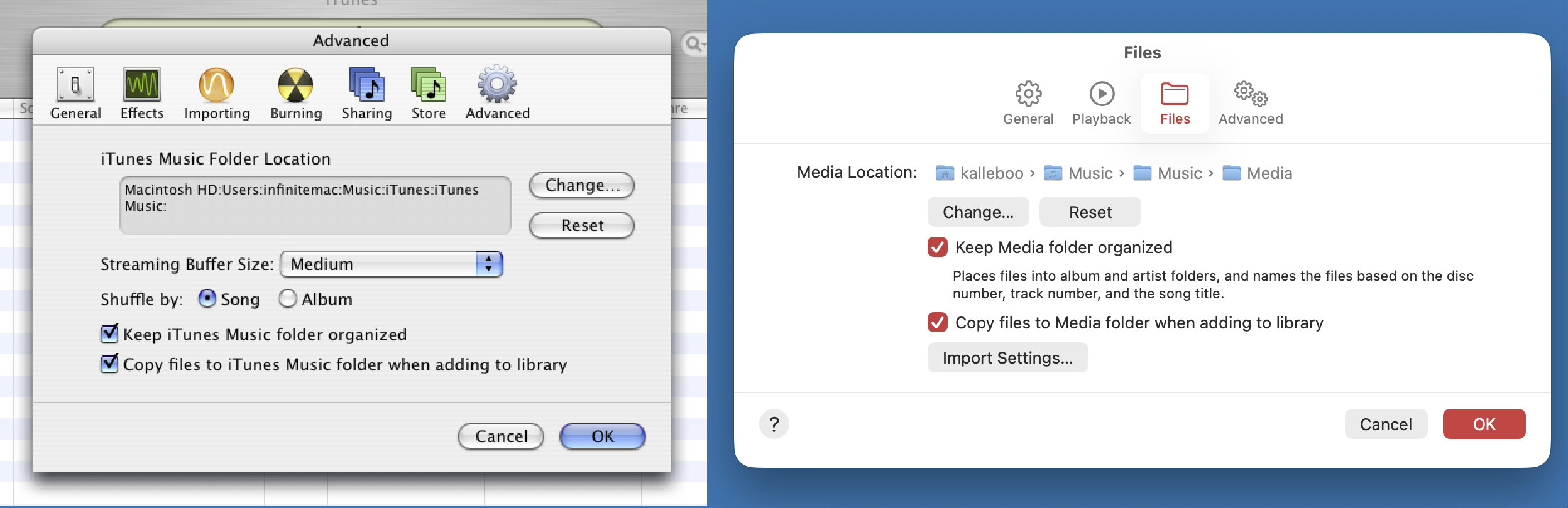
Even w/the pricing spike, inflation adjusted we are back to roughly the prices of a new Mac SE/30 for something that can beat a turing test w/o sweating.
I yield the floor to no one when it comes to pessimism, but that's incredible.
The DRAM market is cyclical. I don’t think anyone truly knows when, but it will happen.
Fab capacity is being bought online; there’s just lead time.
Noticeably greater intelligence is being achieved at the same number of parameters (see: Qwen3.8).
I think the future will be bright, it might be a matter of time. And for tinkers, a used Epyc + DDR4 server can be great fun and epic value.
I'm expecting it to somewhat collapse. I don't know if it'll go back to pre bubble prices (here's to hoping), but I do expect a pretty sharp decline around 2030... probably not before then.
Basically everyone that makes memory is building new fabs, meanwhile I'm not sure how much longer AI datacenter demand for ram will last. I think the decrease in AI ram demand and the new fabs will likely coincide leading to a collapse in pricing.
That is, of course, assuming the memory manufacturers don't pull their favorite trick and collude.
If there's a decrease in AI ram demand, it will not be because the models get better. Models getting better will increase RAM demand, because it grows the part of the economy that models are useful for. Classic Jevon's Paradox.
I'm expecting the drop for a couple of reasons.
For 1, AI datacenter builders have said that they have more equipment than they have places to put them. Leaving a ton of hardware shelved while you wait for datacenters to build out is bad business to say the least.
For 2, I think we are nearing saturation for the usefulness of AI. I certainly could be wrong, but I don't really foresee there to be a bunch of new exciting usages of AI that will ultimately justify the continued buildout.
> For 2, I think we are nearing saturation for the usefulness of AI. I certainly could be wrong
Unless some other breakthrough in AI happens, like applying AI to some other large market.
Overall i think that AI is here to stay, if anything it will become more common.
Maybe in ten years we’ll all have some 256gb ai machine at home, like we most (all?) of us have AC.
I think LLMs will start being etched into custom chips. There’s already some companies experimenting with it. The benefits are enormous - you get better performance, lower memory usage and no need to load a model in ram. Companies would be able to sell local LLMs while keeping their models proprietary.
If that happens, hopefully the ram price comes back to earth.
I’d love to buy a tiny swappable coprocessor that slots in next to my cpu and can take this stuff on. Swap it out every 8 months as you can benefit from something better. Hell, sign me up for a subscription!
the better AI becomes the more non-programmers will be able to use it to build apps, and because they don't know how to program themselves they will use FAR more tokens than us to achieve the same thing. As long as AI is good enough for them to build whatever they desire there will be a lot of demand imo.
I’ve been thinking about this question for months: with access to good LLMs and unlimited tokens, how many non developers will end up making software?
I’m sure some people will. But most people I know don’t think about software like that. They don’t know what use cases are, or ask themselves how their life could be simpler with different software. LLMs only make software if you prompt them. Most people don’t frame the problems they have in life as “I’m missing software to solve problem X”.
I think most people will never prompt LLMs to write software. Just like I don’t have a 3d printer, because I don’t think about how problems in my life could be solved with little plastic doodads.
My analogy is: almost everyone can to go Home Depot and grab all the plumbing supplies they need to do a lot of jobs. And people do - Home Depot does great business.
But plumbers are still in very high demand, and charge really high prices for what is in many cases really simple stuff.
For a lot of folks, the idea just never enters their mind that they can solve simple problems themselves. Most people don’t want to spend the time, undertake the learning, have the possibility of doing it wrong, risk their property, insurance/code issues, etc. And this is an absolutely reasonable position to take! We can’t all be specialists at all things.
All that to say: people will long think that software is something that is made by someone of a special role. Even long after that’s not necessary anymore. That’s not great job security, but it’s what I’m going with for now!
I've met at least one person that has gone pretty far on a somewhat complicated project who has literally zero programming experience. he did it for fun.
I also know someone that thought about making a SaaS for his specific niche he works in, he asked me if I ever used Claude then told me his project.
Yes, most people will never do it because they're not the type of people that are self-motivated and courageous enough to dive into something with confidence to see how it goes.
But probably, as more people build stuff and it makes headlines that X person built Y service and is making Z$$ per month and he can't even write a hello world to save his life, a lot more people will try it out.
> Yes, most people will never do it because they're not the type of people that are self-motivated and courageous enough to dive into something with confidence to see how it goes
Or they’re just not interested. Just look around to see how many things that people are doing that you have no interest into. That’s the same disinterest people have towards programming and sys admin.
> X person built Y service and is making Z$$
If person X didn’t contribute anything but a prompt, he probably wont be able to charge much.
A non programmer can iterate on an idea just as well as a programmer.
First guy I mentioned spent a month tinkering, testing what he could, getting a basic high level understanding of the problem space to understand why his prompts didn't work, etc
Re 2: Even if that was true penetration is still very low. If all companies start using AI at scale the demand will skyrocket.
> If all companies start using AI at scale the demand will skyrocket
This is why ROI is so critical, and I’d argue that picture looks a lot less optimistic for it to pan out functionality wise today than it did in March, when everyone was being forced to use it. Faced with millions of dollars in token costs and gains not materializing, the question is more about the overall usefulness of LLMs as a matter of returns.
We do seem to be spending trillions of dollars to drown our public spaces in grey goo
Yes, but a right now a lot of the RAM buy is for demand that doesnt exist yet. Big tech is projecting AI demand and making sure they have enough compute to fulfill that, so AI demand would have to increase even more than they expect, otherwise theyll build their datacenters and then slow down the amount they buy.
I'm going with 2029 just so that it can be exactly 100 years from the Great depression. ;)
100%. We're probably on the cusp of over-capacity, a glut, cheap RAM, bankruptcies, and shortages.
The memory companies report that they're sold out through 2027... so it might be a while
That's only if the AI companies continue their build outs.
How many people actually use fable over opus? How far are we up the diminishing returns curve, and will their customers even care?
I don’t think the effects on the hardware market of open weight models triumphing has been reflected upon enough. It’s not clear that it will be less impactful if every enterprise decides to build for predominantly on-premise inference. In fact, before the question is ultimately decided, we’re probably heading towards a few years where hobbyists, enterprises and ‘hyper scalers’ are all competing for certain parts in common. Ram booked through 2027 sounds about right.
Companies are avoid risks, and at this stage, sometimes, I feel that all cloud providers are just buying RAM that they would have bought anyway. Now it's ensure that no company will be willing to pay x digits just for cards. One of my clients is stuck in "we are doing things on premise but we are too cheap to spend a few 100k in cards but we don't want to go on clouds.
The stock market crash caused by AI companies halting their planned build outs may in practice cause RAM to remain unaffordable.
How does a stock market crash increase RAM prices (when RAM demand goes down)?
Or would it affect people's purchasing power. I guess to some extent it does for people with significant investments in the stock market, but that's not a huge percentage of the people wanting to buy RAM or devices with RAM
The second and third and fourth-order exposure to AI spending is maybe bigger than you think. The blast radius if it pops could be quite large. Patrick Boyle had an interesting video discussing this recently https://www.youtube.com/watch?v=wTiYaWFP59Q
Sure, but how does it _increase_ RAM prices. It should decrease them because companies have less capital to buy RAM so demand decreases.
I have no opinion on what will happen, and know close to nothing about the memory industry but just to think out loud about how market turbulence could cause memory prices to increase:
- Suppliers that memory companies depend on JIT are entangled and go under, halting production or stalling capacity increases
- Downstream suppliers / distributors for not vertically integrated memory companies go under, and there is a shortage of finished product ready for consumer use even though there is an excess of memory chips
- Memory producers / fabs can’t handle the depressed demand and go under / have to halt production, alleviating the demand glut for the surviving suppliers, who have less competition. Coordinating a cartel becomes easier when there are fewer suppliers and becomes more desirable now that everyone realizes it’s a matter of survival.
There are also plenty of good reasons to think prices will go down if demand is depressed, but it does seem possible for prices to go up
I didn't say that it would increase RAM prices. I said "may in practice cause RAM to remain unaffordable."
Last thing i heard was that large companies are starting to seriously spend on ai infrastructure (think nvidia clusters rather than tokens from openai or anthropic) to fine-tune and run custom models.
This might become the driver for memory and chips demand in the near future.
But i don’t know, of course, we’ll i guess.
Fable would have a much bigger userbase if Anthropic didn’t remove a zero data retention option because muh safeguards
Or if it didn’t constantly kick people off fable. It won’t talk to me about gardening or computing.
It will happily walk me through all the legal and illegal ways to systematically kill rodents.
At least it is on-brand for something used by militaries that want to target civilians, I guess.
Or, they're price fixing, as they have many times before, and are currently being sued for [2].
[1] https://en.wikipedia.org/wiki/DRAM_industry_price_fixing
[2] https://moginlawllp.com/dram-antitrust-suit-ai-memory-supply...
Lol, you think they're price fixing today? When demand exceeds supply? How would that even work?
I for one can't wait. Current prices are absolutely insane.
However a problem exists with scalper bots. They're going to fight tooth and nail to keep prices artificially high even when supply increases. Same with the hyperscalers blowing "free money" at eating supply as a strategic position against smaller competitors.
Scalper bots need customers to sell to; their business model falls apart in the face of sufficient supply.
That sufficient supply is maybe on the distant horizon. In the meantime everyone is being fleeced because the scalpers have the only supply available. Even if there's a supply glut tomorrow the scalpers have the infrastructure in place to buy out retail channels keeping prices high.
That's an extreme risk to them buying at inflated retail prices when supply is improving and prices are about to come down. Scalpers arent a large enough group to act as a cartel.
Looks like I'll be sporting my 5800X3D + DDR4 + 9070 XT gaming box for a little while. Too bad the CPU's ST is slower than my MB Air m4.
I built a new PC about two years ago, and I probably got it at the last possible opportunity for a while. CPU and motherboard have come down by maybe £100 in between the two of them, but a 7900 xtx (or any other 24GB GPU) for under £1,000 now seems like a bargain, and £180 for 64GB of DDR5 makes me feel like an old man talking about the halcyon days.
I built my current PC the day that the AM5 platform released, for about $6k not including the 3090 I moved over from the previous rig.
If I sold just the two sticks of RAM in it right now, it’d pay for nearly half of the total cost.
I bought a motherboard from Newegg in late 2024. It came with 16GB of RAM as a free "gift". The same RAM goes for $534 on Newegg today. It was $437 in January. Prices are still creeping up for this "throwaway" memory.
I still have it, but never installed it because I only use ECC memory in my desktops. I'm saving it for a future Desktop in case memory prices never fall again.
Welcome to the club. If you're _really_ competitive in cs2, I'd swap out to a 9800x3d setup, but it's still a maybe. Very little reason to upgrade right now other than to run LLMs.
It will never make sense to me to run Llms locally unless I had 50k. I don't even think that would compete with price perf of a remote llm and getting business done. And that's completely ignoring that sol/fable level is not local
Yeah, instead I have unsubbed from WoW this week. The atrocious state of the game's code and scripting is unbearable.
Absolutely, I am in a hold pattern for the next few years. I suspect in another 3-4 years you will be able to build an absolutely stacked machine at a reasonable price. Probably won't go back to what was before but it will be decent.
If it will happen in 100 years it will practically never happen (for us). Even 25 years would be a lot, it's half of a career.
Could you provide more details about the Epyc + DDR4 server?
Cycles tend to be 5-10 years long not 25. Without knowing anything else I would expect a fab you seriously start planning today will be at full capacity in about 5 years. Nobody serious likes delays - in particular the banks don't like loaning money that won't at least start paying off. They know it takes some time to design a building - but factories typically are standard buildings so once you know about the size you can get it done fast - I expect 1 year to have the building done is the worst case (and it can be done in 3 months possibly if your project management is good - after interest this is cheaper than the 1 year). It takes time to build and install the specialized machines that go inside - this is the largest problem, but you typically order them first and then plan the building around the needed space and when they will arrive. Then you need 6 months to setup the inside of the building. From there it is just ramp up time.
The above is a standard project management problem. We do this for lots of industry all the time. There is every reason to think you can get a new factory running in 5 years.
Note that I said 1 factory above. Some of the special machines we don't have the ability to make them fast enough to do 2 (I don't know the real number!) new factories in 5 years. Existing factories are using most of the special machine capacity to replace machines that wore out on the way - this can be corrected as well, but it adds another year and the expenses are much larger. Realistically though 1 new factory is likely enough.
If you don't understand that the AI driven memory boom has totally broken the cycle you are going to lose a lot of money. There is infinite demand for Intelligence and that translates directly to chips.
Sounds like you are telling us it’s a new paradigm?
https://transportgeography.org/contents/chapter3/transportat...
"If you don't understand that the AI driven memory boom has totally broken the cycle you are going to lose a lot of money."
Fortunately there's a near infinite demand for boosterism too.
> The DRAM market is cyclical.
...
> I don’t think anyone truly knows when, but it will happen.
Do you know what cyclical means ... ?
An additional £1,000 for a 2TB drive is crazy though, rapidly takes the new Mac mini from a good price to a nuts price
I happily booted and ran an Intel Mac mini using a 4TB drive in a Thunderbolt 3 enclosure, and I do the same for an M4 Max Mac Studio using an 8TB drive in a USB4v2 enclosure (OWC Express 1M2 80G).
You'll just have to be careful to match the enclosure to the ports on the system. The base-model M6 Mac mini still uses Thunderbolt 4, so a USB4v2 enclosure would be wasted.
Funnily enough I do the same with my Intel iMac... I have a 2TB Thunderbolt 3 Glyph drive as my primary and boot drive and it works a dream... if I got one of these new Mac minis without upgrading the drive, presumably I could just plug this straight into it and apple will do its magical migration thing?
These Macs are reportedly shipping with macOS 27 Golden Gate. You'd have two incompatible constraints: Macs don't like to run a version older than what they shipped with, and Golden Gate doesn't support the Intel iMac.
You might be able to boot from the internal drive, install/upgrade the external drive, then boot from it.
Considering hard drives were $10k / GB in the Mac SE/30 days, that feels like a bargain too.
Sure, yes, compared to the prices of storage 35 years ago, it's a bargain.
Compared to the prices of storage today, when people are presumably buying the product, it's actually a bad price.
Sure, but this thread started with somebody pointing out that these computer prices are in line with Mac SE/30 prices. I'm just carrying that over to cover storage and it's even more amazing how much we get for so little money.
But software also fit in 640kB instead of 640GB.
It still can, but until very recently the motivation for keeping software small wasn't there. I'm still hoping the tide is coming in.
On the higher end upgrade we're more like back to roughly SGI prices.
Yes. I commented elsewhere that it's only twice as expensive as my first mac which has 128kb.
You should compare with competition, not what was decades ago.
E.g how is the perf/$ vs Wildcat lake
There is nothing special about making a computer that's unaffordable, irrespective of whether it's 2026 or 1989. If anything, it just shows how little they're trying.
Yo... the Se/30 was worth it. dual floppies was so lame
when was the turing test beaten?
1966
https://en.wikipedia.org/wiki/ELIZA_effect
It turns out the limiting factor isn't how sophisticated algorithms are, it's how gullible humans are.
It was always a bad test, despite the greatness of Turing. The human organism is built to 'project' humanity onto anything available; apart from this none of the peculiar phenomena of the so-called 'modern human' is even intelligible, even the possibility of science. I bring all that is in me onto you as soon as you seem to be saying something, and reciprocally. We do this at the drop of a hat, and all specifically human life depends on it. But this power shows its 'gullibility' with 'gods' as also with Eliza. I am not snide about it because it is overreach by something the significance of which is overwhelming , but one is indeed amazed by the failure to reflect on the part of the ones eg giving LLMs rights - to take extreme case of a very widespread cultus - as if /they/ were the rational party, not ancients placating the storm god.
What does that have to do with the Turing Test? The TT has clear rules: There are judges that have a dialogue with anonymized AI/humans. The humans cannot cheat and impersonate a machine, they have to act normally. The AI obviously should try to sound human.
No AI would pass this test with experienced judges.
You think current frontier models couldn't pass for a human on an online chat? You and I have very different perceptions of reality.
I think that if you have a long enough chat, yeah, I think you can figure out who's meat. The original rules for the TT specified a short interaction, but I can probably accelerate it by pasting in large code snippets to force early compactions.
Humans are famously good at reading large code snippets.
They are famously good at ignoring large code snippets.
Sounds like something we could settle right here and now.
Ha ha! Fool! You've been talking to an LLM all this time! Your wife is actually Haiku 4.5.
Huh, should've known it was odd for my wife to always say I'm right (as the boomers would say)
The test doesn't say that the judge has to be experienced. But I also don't care if some random gullible person can't tell the difference. Nothing passes the Turing Test for me yet.
Edit: Also doesn't say anything about who the human test subject is
Of course, and I'm sure OP wouldn't disagree with you, it was clearly a joke for emphasis. Some people round here need to clean and calibrate their humour detectors more often.
I wasn't responding to OP. I get the emphasis, the M6 Mac is very powerful.
How can you be certain you haven’t failed a Turing test?
I've never done a test. That means 1. you know it's a test 2. you get like 5 back-and-forths or 5 minutes 3. you have a human subject to compare to. But pretty sure I'd pass anyway, as the judge or subject.
Colloquially the Turing test is just a stand in for "can a human mistake a computer for a person." No need to overcomplicate it.
You’ve moved the goalposts.
You can always say “oh well these judges don’t have the experience to catch this type of AI.
The fact that you have to insert this qualifier, to ensure you always have a way to discredit the test, pretty much shows to me that we’re beyond it.
Yeah...but in context, "gullible" seem a bit pejorative. Humans are also hopelessly incapable of sensing radioactivity, methanol in their alcoholic drinks, carbon monoxide, and a great many other things that our ancestors just didn't encounter much.
Though we're pretty good at sizing up a person's emotional balance/maturity and competence at familiar tasks. So maybe have an old blacksmith watch the AI/robot interact with horse owners for a while, then shoe their horses, and see how well it does.
I think of this and the book the author wrote Computer Power and Human Reason every time I try to talk to product about the short comings of LLMs
One needs to be a little more sophisticated about it. Ray Kurzweil, for example, set fairly clear rules for his interpretation of the test in his 2001 wager:
https://www.writingsbyraykurzweil.com/a-wager-on-the-turing-...
Those rules are fairly reasonable, at least as a start.
The EU just had to pass a law to force companies to disclose if a customer service agent is AI or Human. It is beaten.
https://commission.europa.eu/news-and-media/news/safer-and-m...
Nowadays, I prefer AI CS agents to humans. I just had a chat with an AI yesterday, it understood me perfectly even when I made mistakes, I was impressed.
In contrast, humans tend to paste me the same barely-relevant macro over and over, no matter how much time I spend explaining my issue.
Yeah, at least LLMs read everything you write (for now). Human first level support agents are incredibly frustrating if you have to explain anything with more than one logical step.
Also the endless online debates of ‘is this post made by ai? What about those images, that video or that music?’.
Nobody thinks customer service agents are real, realistic or useful. EU just passes laws.
If cars were just invented the EU would pass a mandate to ensure cars can’t have accidents.
Customer service is very different. Crappiest audio quality possible & scripted answers all the way down. Almost like humans are forced to behave like machines.
According to Psychology today, April this year by GPT 4.5
https://www.psychologytoday.com/ca/blog/the-digital-self/202...
April last year
The Turing test is more complex than what gets suggested.
And the "popularized" version is faulty also since it uses an ideal, abstract human judge (like the "spheroidal economic agent").
But if you want to add declinations to the said popularized image of the Turing test, you may add Maxim Lott's IQ tests at trackingai.org . Between the end of 2024 and the beginning of 2025 LLMs reached an equivalent IQ of 100, for example.
I think it was determined that the Turing test is too easy because humans are too easily fooled.
Humans are equally fooled into believing each other are conscious.
Yes, which is exactly and entirely the point of the whole paper. Somehow missed still -- despite how important AI has become, shockingly few people actually read the short, layperson-accessible paper that started the whole field.
I kinda have to link it now, so uhh here's a random PDF: https://www.hec.edu/sites/default/files/documents/Computing%...
~1960
ELIZA beat the Turing test and then everyone forgot about it. Humans are just really terrible at recognising robots.
Or can we reframe it: when did humans start losing the (so-called) "Turing test".
I think there are elements showing lowering of performance and expectation.
It depends who takes the test. I am not yet, to my knowledge, fooled by AI.
I've tried [1] and I almost 100% detect which is the AI. I really want to convince myself I have failed, does anyone know of a better site/resource for this?
I know it might be moving goalposts but I would consider AI to have passed in a well and truly undisputed manner when [2] is resolved.
But in a more practical sense, if AI can impersonate humans so well today then why are state of the art frontier models so obviously AI when they create PRs, commit messages, documentation, etc. Are the companies deliberately making them unnatural?
[2] https://www.metaculus.com/questions/11861/date-when-ai-passe...
tried turingtest.live, gave each side the same question (programming-related), immediately recognized the LLMisms on side A, boom side B is the human.
we might need to bring back the Voight-Kampff test. anthropic at the very least is introducing a water making system to Claude which might make them more identifiable to humans as well as much easier to detect for machines.
“advanced LLMs like GPT-4”
> "advanced LLMs like GPT-4"
Not sure where you're quoting from but if it's the metaculus question comments, many of them are from 2023. The consensus is it will resolve in 2029. I believe it will not resolve before 2035.
From the home page of turingtest.live.
Yeah. That's why I asked if there was something better
2001 according to Wikipedia
2050 I'm guessing
are you living under a rock?
> something that can beat a turing test w/o sweating
Ok I'll be that guy. It's pretty easy to figure out if you're talking to an LLM now we know it's tics, failure modes, jailbreak techniques etc
Sigh..
Is there anything better now though?
All I see from AI, is an amplification of the enshittification of the internet.
And people being even more alone.
Sure, when you look a little wider, since 2000 we have seen the following major improvements:
- Extreme poverty has dropped from 30% to under 10% globally. - Child mortality rates have dropped in half - Internet access has exploded from 10% to 70% - Solar energy costs have dropped 90% - Cancer death rates have declined by 30%
All of these massive improvements in less than 30 years.
While there certainly are issues to solve, and if you simply follow journalism you may think the world is worse off, but for many, their lives have been significantly improved.
On that note, I'd like to share Fix the News: https://substack.fixthenews.com/
It's a Substack that reports good things happening around the world, divided into sections like "Conservation and Restoration," "Climate and Energy," "Medicine," etc. And they also give part of their profits directly to projects in those categories.
(I'm not affiliated with them, I'm just a subscriber.)
Thanks for sharing this sentiment and including data. So few people seem aware of the wonderful progress humanity keeps making. Makes me worry that the progress will stall or even reverse because people don't even know it's happening.
I think a lot of it is because the majority of improvements are not seen by those who already comparatively have so much. AIDs used to be a death sentence, and now it's a manageable disease, and there is a lot of work going on to vaccinate against it. These are massive things that I think a lot of people ignore. It's always easier to see when things are on fire rather than to celebrate the victories along the way.
These improvements are showing that we're producing plenty so that the cost is driven down and distributed to wider and wider portions of humanity.
But my personal observations of AI is that it's producing more and more of the same stuff and not moving the front forward much. The human innovation and invention seems to be lost.
That's not quite the case. Effort and focus by amazing groups, governments and individuals are the reasons for improvements, not just that producing more or costs being driven downwards.
Innovation with AI is happening as well, but it obviously will need more time. It's already being used to diagnose tumors and disease earlier in the process, which will improve outcomes for patients, but obviously it's going to take time to see the results of those efforts.
I think of AI (especially self hosted) as the most helpful computer assistant that can do things I otherwise wouldn't dedicate time to do. I have a massive media library that is a mess of naming conventions and want to clean it up. Writing specific scripts and processes for doing that is possible, but I don't want to invest the time. Or I can ask the local Qwen model to go through and do it for me with a single prompt, "Please rename these files in each folder following this specific format, and when needed access this local service to look up the additional information needed" and then extend that to when I dump new media in, it's automatically organized and renamed. Works pretty darn well and I spent a whopping 5 minutes getting it going, rather than the hours of writing scripts and doing it by hand.
Is that AI / compute driven?
In part, sure. From drug discovery to crop yields to education, compute and AI have material benefits. It's kind of shocking that anyone could doubt this.
Evidence:
* https://arxiv.org/abs/2402.09809
* https://phys.org/news/2016-12-mobile-money-access-percent-ke...
* https://papers.ssrn.com/sol3/papers.cfm?abstract_id=3893351
This being HN, I hasten to add they also have massive downsides, we're all doomed, nobody programs the right way anymore, those poor people just think compute & AI are improving their lives, etc, etc.
AI in the sense of LLMs is too new to really make an impact yet. But it is compute driven. Modern science and engineering would be impossible as we do it now without high-end compute.
Absolutely computer driven. It's hard to say the impact of AI, let's give it the same 25 years of computer advancements.
Just like the computer revolution, it will make a small number of people richer and put everyone else at their mercy. In real terms the average person is far poorer than in the 20th century. Used to be able to buy a home and support a family on a single income. Now it can take two just to survive.
In real terms, the median human globally today is vastly richer than at any point during the twentieth century.
And the median American is also richer in real terms, both in terms of wealth and in terms of income.
Of course, that all assumes that you use a reasonable measure of inflation that’s stable, well-designed, and applied methodically and consistently over many decades.
Alternatively, you can cherry pick data points and go based on vibes, which lets claim whatever you want!
>Of course, that all assumes that you use a reasonable measure of inflation that’s stable, well-designed, and applied methodically and consistently over many decades.
Too bad the measure that everyone points to is far from stable¹; BLS's various CPIs² have been consistently and substantially modified over time, and not for purposes aligned with the interests of consumers³.
¹ https://www.bls.gov/cpi/additional-resources/historical-chan...
² https://www.shadowstats.com/article/cpi-glossary
³ https://www.shadowstats.com/article/no-438-public-comment-on...
I wonder if doubling the workforce had anything to do with that..
You're right, probably nothing to do with moving all manufacturing out of the country or Reagan's union busting.
Those played a huge part as well. Well, not so much the union busting.
Well, there is more renewable energy than ever before powering the world. It's all being built and added to the grid faster and faster each year.
That's one big plus.
Then you’re either spending time in the wrong parts of the internet or doing things that don't fulfill you.
These times are exciting and rough seas make good sailors. Find your path forward.
What is exciting about getting pablum spoonfed by a data center owned by trillionaires?
I'd rather go to the library and read a book.
Why in the world are you choosing to live that way?
I'm writing the best music of my life, realizing games and art projects I never had time for, and writing higher quality software in addition to dramatically more of it. Who has time for pablum?
How exactly are you using these tools that you have that experience?
You are actually not doing much of that.
You have become a spectator.
Your legs broke? Go do that
What does it have to do with legs? This site has turned a mental hospital with AI patients.
It's an expression. "You're legs broke?" here means "What's stopping you from going to the library and reading a book?"
It's a grovel-for-investor-dollars site that we've long pretended is for serious technical discussion. Comments should always be filtered through that lens.
You can do both. I still find time to read a couple books a month.
You have agency and can choose your own adventures. If you don't like something, don't do it.
Who is stopping you?
False dichotomies make for terrible conversation.
"Find your path forward!" he shouted with glee, as he ran toward the cliff.
So do platitudes.
Rumors say that Apple will only release M6 base variant and skips M6 Pro, M6 Max and M6 Ultra variants to concentrate all efforts to create a good AI capable M7:
"According to reports from Bloomberg, Apple will be skipping its M6 Pro, M6 Max, and M6 Ultra chips to accelerate development of the M7 chip. That means the only chip to be released from the M6 family will be the base M6.
The reason for this break with tradition: AI. Apple had been planning major neural-processing upgrades for the M7 family and ultimately decided those improvements were important enough to justify accelerating the next generation rather than completing the M6 lineup." https://9to5mac.com/2026/08/08/apple-m7-chip-heres-why-it-ma...
I'd skip M5 and M6 chips for LLM work and wait for a year for M7.
I wonder when/if we will start to see Apple include a silicon encoded model into their chips. Similar to Taalas build Llama 3.1 silicon with 17,000 tok/s inference.
So could the M7 actually include an AFM 3B model, alongside a generic neural engine?
It would make zero sense. These things are improving by leaps and bounds every week, we are not at the point where you can burn weights into silicon and put it on one of the largest consumer devices on the planet yet.
On the other hand, models these days are getting to the point where even if all development halted permanently, they would continue to be useful long into the future. (At least until their knowledge base or linguistics become too outdated.)
Why would a local model for a consumer device need 17k tok/s?
Apple is better off building chips with generalizable TPUs (or equivalent) so they can upgrade/patch models.
I cant shake the feeling of "640KB is enough for everybody". Imagine not one AI answering over 1 minute but a team of 100+ agents in hieararchical structure taking care of your request in seconds, checking each other.
It would open heaps of use cases, you could almost pass it over frames of images the camera sees in real time for example...
That model would be larger and more expensive than the entire M7 chip.
The M6 doubled the neural engine from 16 to 32 cores. I would expect that the M7 doubles that again to 64 from 32? That would make sense.
I believe that the CPUs are actually limited by ram bandwidth more than the neural engine right when it comes to LLM processing?
Maybe the M7 introduces something new to get around the current ram bandwidth problems on the non-Ultra chips.
Apple's biggest bottleneck for real-world inference is prefill processing. They need a better GPGPU architecture, which is what I'm expecting M7 to reveal.
Agreed, seems like the M5 has already made steps in that direction, with 4x prompt processing / prefill performance vs. M4. [1] And token generation also got a 10% boost. The data below is only for Pro & Max but I think the base M5 got the same relative boosts vs. M4 base.
[1] https://www.hardware-corner.net/m5-pro-m5-max-local-llm-4x-f...Chip BW (GB/s) GPU Cores Q4_0 Prompt Q4_0 Gen M4 Pro (20c) 273 20 439.78 50.74 M4 Max (40c) 546 40 885.68 83.06 M5 Pro (20c) 307 20 ~1500 to 1700 ~56 M5 Max (40c) 614 40 ~3000 to 3500 ~92ELI5?
The M5 GPU added better matmul and dot product support in hardware (IIRC) that really boosted performance of those kernels over previous GPUs. Current transformer models rely heavily on matmuls. Prefill (processing the current context) is mostly limited by raw GPU processing power where token generation (predicting the next token from the current context) is mostly limited by memory bandwidth.
While an older M-series might run a matmul or dot product kernel just fine the M5 can run them much faster.
The Apple chips are quick when the model is "warm" on your second and subsequent requests. It's also quick if you don't have a harness, and feed "Hi, how are you?" as a prompt. However, a lot of common usage is to have a harness with lots of instructions and context. Loading that context is slow. So, the first response may take ~1 minute to return the first token (varies widely by hardware, model, etc.).
Look at the "Q4_0 Prompt" column. That's the tokens-per-second processing the initial prompt/system prompt. This is where the "neural accelerators inside each GPU core" is seen most prominently.
Much less true since the M5 generation. Prefill, aka prompt processing, got a 4x increase.Apple's biggest bottleneck for real-world inference is prefill processing.
LPDDR6 is coming.
I understand that will boost read rates to around 14 Gbps as compared to the current 10 Gbps for LPDDR5X, so a 40% improvement.
The bus is also 50% wider so the bandwidth is double.
Or they could make use of LPDDR5X-PIM? That would be such a killer feature and competitive advantage.
I'll upgrade M3 Air only when Mx Pro/Ultra can run Opus level perf locally. Otherwise what's the point.
i sold my m3 ultra /512 for £14000, or about $18000. The difference is what is important to me for a new one, and assuming $6k or so for the 256->512 boost, my cost will be about $16k, so i’ll save $2k by upgrading to the top-of-the-range model, bar it being a 4TB drive
Their chip release cycle doesn't make any sense to me. Compared to their other hardware like iPhones or Apple Watches they just release a new chip when they feel like it. It might have a pro, ultra, or max version, or it might not. Sometimes that better version only releases when the next generation of the silicon is already out. I think that they really need some structure in their releases.
The difference makes a lot of sense to me.
The phones are watches are primarily sold on annual leases through carriers. And no one is buying them for the chips, it's all camera and form factor.
The macs, on the other hand, can more easily swap between chips in manufacturing. And the form factor is pretty static. So Apple, in a race to have the best chip in the field at any given time, is just releasing them as soon as they're ready.
I agree the whole "m5 max > m6" is confusing, but I think they figure only the nerds who learn the specifics are going to care anyway.
Do current models run on the NPU or GPU? Wondering if Apple will have something like a TPU.
Apple has a dedicated "neural engine" which is designed as an inference NPU. Where as Google's TPU has a dual focus, both inference and training, which is a more complex design.
That TPU training part I get, but from what I have seen the NPU is rarely used for inference by LLMs. They still use the GPU, no?
> I'd skip M5 and M6 chips for LLM work and wait for a year for M7.
Or you could lease an M5 max/ultra until the M7 equivalent comes out. At least in the US a leasing option is available.
> I'd skip M5 and M6 chips for LLM work and wait for a year for M7.
Another note on this, it's likely the M7 ultra will be released around 6 months after the M7 Max, if the M1 and M5 are taken as reference. So the M7 ultra may be delayed until early 2028.
I'd be worried about securely erasing my data when returning a leased model.
What do you do with older hardware that you've bought? Do you not wipe it and resell / donate?
If you encrypt from day one then a lease isn't much different.
Just delete the encryption key.
> I'd skip M5 and M6 chips for LLM work and wait for a year for M7.
Please say more? Is it because it is a one-time cost, unlike a recurring subscription of Claude/Codex?
If you expect a large leap in performance, buying now means that (a) you will want to buy again in a year but (b) the large leap in performance hurts the resale of what you buy today.
Local models will be that much better in a year, so unless you have to have a top-of-the-line local rig today (the argument goes), stick with Claude for another year.
That makes sense. I also think that we are at the point where maybe the expectation of a yearly refresh on everything should be reconsidered. They can end up on a Tick-Tock schedule when the Pro/Max/Ultra can be done every second year.
The true-local AI chip, codename "buddy", will be the M8
"buddy" -> "mate" -> M8. Nice.
Apple Studio with maxed out M5 Ultra, 256GB RAM and 16TB storage is 18,299$. The 512GB RAM version apparently is coming in October, considering that the difference between 96GB and 256GB is priced at 4000$, the 512GB upgrade must be eye watering.
So, on the mini the RAM upgrade runs at 25$ per GB on all tiers, the same as the Studio therefore the upgrade to 512 will probably cost 6400$.
The fully maxed out Apple Studio then will be 24699$. It's 17199$ if you don't upgrade the storage(1TB).
Nevertheless I itch to have one :)
So is downpayment on a house. I would buy the house and just pay for tokens as needed. The house will get more valuable and that wealth would buy a lot of tokens in the future - which will probably get cheaper.
EDIT: or buy AAPL. If I had bought Apple stock instead of buying a Mac LC II in 1992, then I would have about $2 million in Apple stock.
Or more simply – $25K (+ tax) put in a savings account will earn about enough interest to pay for a $100/month AI subscription indefinitely. And at the end of it you still have the $25K.
Not 'more simply', there are basically zero savings accounts that are going to net you a 5%+ interest rate to give you that $100 a month. And that $25k becomes less valuable over time. $25k is now only worth $19k because inflation.
Money market/treasuries (even ETF like SGOV) gets pretty close to 5% when typical savings rate is a bit under
If treasuries “fail” we have a different class of problem.
>Money market/treasuries (even ETF like SGOV) gets pretty close to 5% when typical savings rate is a bit under
???
30 Day SEC Yield as of Aug 24, 2026: 3.61%
12m Trailing Yield as of Aug 24, 2026: 3.74%
https://www.ishares.com/us/products/314116/ishares-0-3-month...
1.39% might not seem like a lot, but that's off by more than a quarter.
Rates are around 3.5% right now before taxes.
There's still many high interest savings accounts that are at least 4%
And you still need at least 5% to do what OP is suggesting.
Do you think the hardware will still be worth $25k once it is five years old?
Do you think monthly AI 'subscriptions' are going to be $100 a month in 5 years? These people using these would probably be on $200/month subscriptions and with that OPs assertion of 'shoving away and paying with interest' makes no sense.
It’s fair to compare the two options.
Our assumptions may differ - and that’s ok... The monthly costs may go down too.
It’s basically impossible to compete on economic terms with deeply subsidized hardware that is widely available to rent or as a service with zero commitment.
For general inference there’s no ROI that makes this work vs subscriptions.
25k for computer now, plus 9-10% sales tax, plus operating cost, plus time and cost for R&D tinkering with models, harnesses, and infra (assuming highly capable engineering talent that can get paid for your human inference) vs a HEAVILY subsidized subscription at 200 per month with free R&D has a pretty long ROI (15 years?)
At API costs, it’s like 6 months if you’re heavy on inference. For training, specialized models will have their own ROI that makes this worthwhile. Then debate renting capacity and the platform to choose
Yeah I think you call out the right incentives. Lots of people are very interested in renting out the hardware, and it gives us lots of flexibility vs buying.
If the pace of hardware change is what the jensens of the world say, then the rents on existing hardware will decline.
Why are we comparing to the maxed out model only? The M5 Ultra with 96 GB, 1 TB, and 64 GPU cores is $5499. Apple lets you lease that model for $110/month for 36 months.
If you can settle for a M5 Max base model that would be a $49/month lease.
Today, you should be able to run Qwen 3.8 - 27B amazingly well on either which is giving comparable performance to 5.6 Luna on SWE Bench. The local models are now getting better and more efficient and this should give you headroom. Tools like turbo fieldfare are really reducing the memory requirements to run large models and I don’t see it stopping soon.
This is the real answer.
Unless you need privacy for your inference this instant, paying for credits can get 80 to 90 percent of people everything they need.
Of course if you do need that privacy, then forking the $25K over to Apple is a no brainer.
I don't need privacy, so it would be financially imprudent for me to spend 20 grand on such a machine. But I have a financial management client who does need such privacy, and if I get more fully engaged with them then I would be able to justify getting a loaded Mac.
Why is this a no brainer?
There are both cheaper and faster options out there.
Isn't there something to be said for owning your own hardware though?
Not if it's 5-10x slower than a remote inference server. Mac prefill latency is exhausting.
Currently m5 max has a prefill rate for Qwen 3.8 27B of 400+ tok/s, then generate at ~60 tok/s. (And it can be improved further, the software is not yet at the level it is for CUDA)
That means for context under ~5k or so ttft (time to first token) it's going to respond faster than Claude. If the answer is less than ~1k I think the request finishes sooner. And it's ~claude 4.5 or 4.6 level intelligence.
I've had it work for more than a day on a pi.dev "loop engineering" project involving writing software.
Plus privacy. Plus offline.
M5 changed that a lot though - it could still be better but 4x improvement made it cross the frustratingly slow barrier for me.
Oh tell me more about prefill latency.
Thank you very much for this link! Extremely fascinating.
Where I’m from $25k is the down payment on a parking space in a garage, not an entire house (or condo).
>The house will get more valuable
Depends on where you live. Also keep in mind population decline so long term, im not so sure. Prices already dropping in less desirable places (everywhere outside of most blue areas) (Assuming you are talking about the US sorry if not)
where are downpayments so cheap? I'll move there ^^'
Yeah my down payment 10 years ago was $200,000. The house has appreciated 0%. I sold meta shares to buy it. Those would be worth a million now.
… I wish I hadn’t just calculated that.
Having a place to live is an investment in your health and wellbeing. Can't live in a stock option.
At the time, were you aware that you could borrow against your portfolio?
And when they get margin called in March 2020?
Maybe they had the cash on hand, maybe they didn’t. Assuming they are in the family formation stage of life with young kids, an outlier risk appetite would be required to sleep well at night.
Detroit, Cleveland, etc. Basically huge swaths of the rust belt. Plus a smattering of small towns in the south.
Sure, and living there is the housing equivalent to buying a super cheap off brand computer.
You get what you pay for.
Well, this is all assuming a 20% down payment, which anecdotally as a 26 yr. old, nobody I know is able to achieve. All my home-owning friends put 3-7% down. Granted, most are using first-time homebuyer loans which are generally more favorable.
In RTP (NC), a ~$400k house at 5% down is $20k
There are 70 houses for sale in Pittsburgh for $25K or less
Coshocton, Ohio, plenty of houses for <100k
On second thought...
Had I done that as well, then maybe I wouldn't have gotten intrigued by HyperCard, then Director/Authorware, then Flash, then HTML, then...
With the way RAM prices are going up, you could expect to make 20% profit on any purchase.
I tripled my money on my RAM purchase of three years ago. So, yes, for short-term appreciation that's hard to beat. But I don't think it's something that will continue.
why not buy the maxed out mac and then buy a metaverse house that you can live in virtually
problem solved /s
Regarding the $25 price per GB RAM. These chips use LPDDR5X RAM. Looking at the Framework site, they are selling LPDDR5X LPCAMM2 modules for the following prices:
16GB $239 - $15/GB 32GB $800 - $25/GB 64GB $1,600 - $25/GBM6 Mac mini maxes out at 32GB—if you want 64GB you have to go with the M5 Pro (just priced it out on Apple's store page).
Apple hasn't been selling just ram for a long time, they sell vram. Try getting 512 gb of HBM on current Nvidia cards - it's gonna cost way more than $ 24k. And here you get the same amount of memory for weights right in a quiet unit under your desk
Put together a similar build with a couple of rtx 6000 Ada cards and Apple's price tag suddenly looks pretty damn reasonable
The RAM in the M5 is LPDDR5X, not HBM. You're right of course that it's unified and used as VRAM in that sense.
HBM itself is very expensive but it’s not really fair to compare to LPDDR or GDDR
They’re very different things.
The more logical argument to me is that Apple uses its upgrade price points as more than just direct BOM and rather as a proxy for things that are amortized across all their sales like support/warranty/etc so higher SKUs subsidize the costs of the lower ones.
I wish you could drop $20k and get a house! Down payment here store like $100k+ (AUD). So "only" 5~ Max Studios.
Ha yeah that was my thought. How is this a down payment? This would only be 20% of a $100k house...
"Nobody" puts down 20%. That hasn't been a requirement for decades (in the US).
And there are plenty of places in the US where you can buy a house for $150-$200k. Maybe not places you want to live for one reason or another, but they're there.
Well a substantial proportion of home buyers in Canada put down only the minimum 5% down payment.
op forgot to add "/hyperbole"
i remember when SGI boxes were $50k and then literally worthless just a couple bears later. i remember my university had a pile of them for free outside the deans office.
I figure most electronics are worthless after a couple of bears.
But every second bear doubles the transistor count.
bear metal
Ten years ago a bought an expensive MBP because I do a lot of stats in R, Python etc that benefited from it. But the next Mac I’ll buy will be a much lower-end model, because it’s just easier these days to do that work in notebooks in the cloud.
The trick are tax deductions.
I wouldn’t recommend buying any bare metal unless money is a second thought or you can fully deduct the price.
Most often in the end you pay half the price then. Depending on the write offs you could even make some bucks out of it.
Or buy and lease. Under certain circumstances the hardware costs you nothing.
But you need money to save money. And a company.
I recently had to buy RAM for some on-prem servers at work. 256GB was around $3800, and it wasn't even particularly fast RAM... it also wasn't ECC, because that would have spiked the price still higher.
I don't think 16TB storage is a right choice. Going 2TB and it's 11,299. Probably, if you buy the storage and install it yourself you can go higher and quite cheaper.
I think the reason they offer these options in the first place is the discontinuation of the MacPro and their remaining need to offer high end solutions.
$7000 of that is for the 16tb of storage. That is certainly not worth it if you are trying to save money.
Does anyone know if you can link multiples of these together for a single large model?
Apple still has the best hardware so I moved to it for the last few years, but the closed software ecosystem is terrible for taking advantage of it.
I wasn't able to debug network errors (restartin my Mac worked), Metal was missing low level disassembly / debugging tools (there is some hard to use UI), but the worst thing was the inflexible windowing system.
Even getting all the window handles on all screens/desktops with their titles and programs is impossible.
I just decided that I move to Omarchy 4 (basically Hyperland + QuickShell) + NVIDIA GPU, and I already was able to customize it more than my Mac in years.
I will miss Apple's hardware for sure, but not MacOS and the missing hardware documentation
> but the closed software ecosystem
There's aren't really any alternative OS [1], but I don't think it's fair to say there's a closed software ecosystem. You can install/compile/run whatever you want, including kernel extensions. The hardware isn't locked.
[1] Hardware isn't locked: https://asahilinux.org/about/
> Apple allows booting unsigned/custom kernels on Apple Silicon Macs without a jailbreak! This isn’t a hack or an omission, but an actual feature that Apple built into these devices.
It’s barely a “feature” that they let you execute arbitrary code on your own hardware.
They don’t provide any source code or documentation (which they easily could) so if want to do literally anything with your “open” device you must first reverse engineer the entire MacOS driver stack like the Asahi project did. Great fun, but it’s a criminal waste of incredibly talented engineer hours.
On top of that, the reason Asahi doesn’t work on M4 and later is that Apple has intentionally modified the ARM core to prevent stock MacOS from running once the hardware is “unlocked,” which makes it way more difficult to reverse engineer.
Bastards.
Give IBM some time, and there will likely be similar stuff on Linux distributions. The Linux kernel has been dropping hardware support, and systemd has been getting some... interesting features.
Naturally, the benefit for Linux is still the variety available in distributions. While IBM's RHEL and Canonical's Ubuntu may adopt some questionable stuff, Slackware, Devuan, Omarchy, and such likely won't.
> interesting features
Can you elaborate at all?
Features to replace installation, cloud metadata uniformity, better secure boot support, boot loader support, and improved TPM support. None of this sounds user hostile, but taken together and handed to the corporate Linux vendors? This easily becomes a way to make Linux a licensed appliance. Yet, handed to a group like Arch, it just enables wildly cool stuff. Incentives are a thing.
I wanted to try it but it works just on M1 and I have M4. I was also considering upgrading to M5/M6, again to take advantage of what I really love: access to the 2nm process.
The performance you get with M5/M6 in theory is crazy (especially having matmul cores with such an energy envelope and unified memory). By the time I can use it well in Linux there will be M7/M8 though.
With NVIDIA I can buy a Blackwell based core right now and use it (even if I will have much less GPU memory. Though it will be high bandwidth).
I had a chance to try Omarchy past few days and it's just very different vs macOS. I honestly never had a problem with the windowing system ever since I built my own customization scripts (i.e. Hammerspoon). I can see the appeal for someone who wants ultimate customization though but macOS still wins overwhelmingly when it comes to polish, ecosystem, user experience, and apps (nothing comes close).
It’s not just Omarchy, there’s really not much out there in the desktop Linux sphere for those who are mostly happy with how macOS works out of the box. Everything is either in a similar vein to the Omarchy setup (hyper-minimal tiling WM), Windows-like (KDE, Cinnamon, most other DEs), or a chimera with a grab bag of design bits from every desktop and mobile platform (GNOME, Pantheon, COSMIC).
It’s a bit depressing because it means that if I ever feel forced to switch my daily driver, it won’t come without a dump truck load of friction, frustration, and lost productivity, which I’ve validated by using the various Linux desktops on secondary machines.
KDE Plasma is as good as it gets if you'd like to transition from MacOS:
https://pointieststick.com/2025/10/04/a-mac-like-experience-...
I run KDE on a secondary machine and it's the best it's ever been, but for me it's best for single-purpose machines where desktop differences basically don't matter. It's about on par with one of the better Windows releases (XP or 7 maybe) in terms of how frustrating I'd find it to do work under.
There were 1000 plugins created for Omarchy 4 in 2 days. That's why I don't feel it being hyper minimal anymore.
It's still not well integrated of course as those plugins are from different people, but I at least don't feel powerless as I know I can make any change easily.
It is just regular resistance to change. Loss of productivity is exagerated, it indeed exists in which ever direction but it is only temporary.
Perhaps, but one of desktop Linux's defining philosophies is the machine working for and adapting to the user rather than the reverse, so it's a letdown that this only really applies if you're coming from Windows or have been a Linux user all along.
Choices are always opinionated by the dev but you can always fork and change to obtain what you need. MacOS doesn't let you do that and isn't easier to switch to.
With the caveat that one has the time and energy to fork and modify in the first place, and then additionally has time and energy to maintain the changes that upstream won’t take…
Nothing new under the sun.
You can't expect any system, even the most configurable ones, to be ready out of the box to everyone's particular nitpicking without a minimum of effort.
It's interesting because I just haven't felt the polish.
For example when using PyTorch I wanted to try to speed up my NN kernel by 2x by just using half precision and haven't noticed any speedup at all. Also I was missing the easy to use GNU tools that had to be mixed with Apple's tools.
I loved using Arc browser as well, and I'm missing it, but I guess I will do without it somehow (Chrome's vertical tabs are just not the same).
My main program missing from going back to Linux was ChatGPT Desktop, but now it's there.
I just checked out Hammerspoon, I'm happy for you that you wrote it, and looks great, but it has the same problem that I had: for security reasons Apple stopped allowing the window APIs to get all important information on other workspaces. You can only do it with Accessibility API. I was trying to fight with it but have up.
If the browser being Chromium-based isn’t a hard requirement, it may be worth checking out the Firefox-based Zen Browser[0]. Its UI is very similar to that of Arc, to the point that I’d call it Arc’s spiritual successor.
Well, Arc is basically dead on Mac now anyways :(
I think the worst is the lack of support for 'click-through' behavior on MacOS. This is that you have to select a window first with left-click before being able to select UI elements within that window with left-click. The amount of time lost with extra clicks is incredible.
It is even more frustrating that this behavior is somewhat inconsistent, with some applications allowing this and others not (although it is more often the latter).
I made a workaround solution here with minimal setup/overhead: https://github.com/dainank/apple-click-through but I do wish someday this could be configurable in the OS as a setting.
The clickthrough behaviour used to be the default in NeXTstep (and it was one of the things which I misliked not having when switching from my Cube to my work Mac and ThinkPad portable ages ago).
The apps it works in are probably written in Cocoa née "Yellow Box" (allegedly so named because Bill Gates stated that rather than write apps for NeXT APIs he would instead....)
The way I fix it when using my Mac these days is to only use apps written using Objective-C and so forth.
I don't understand how absolutely basic things are not possible on Mac OS. Switching between two windows easily, displaying hidden files in the finder... These things would be way easier to solve than building the next generation hardware.
You can show hidden files in finder. Do: Command + Shift + . (period)
Switching between program is command+tab
Between windows in a program is command+~
How are you liking Omarchy? I saw a video on it recently, and it looks 'pretty' but still looks like it's a lot of memorization of shortcuts and feels like the 40% keyboard of OS's. Like some people it's absolutely amazing, but lets be honest, it's going to be really difficult to be as productive as a full fat keyboard.
As a long time Emacs user, I beg to differ. Muscle memory will settle in after a few days. I still use Emacs shortcuts to navigate text boxes on macOS.
The most disruptive thing in Omarchy is not the keyboard, it's the tiling WM in my opinion.
On what hardware you running Omarchy?
Just Beelink, but it doesn't matter at all.
I ordered an ASUS Zephyrus G16 with 5090 NVIDIA card + 1.9kg (quite an overkill, and I know that I will have to limit power output), but hasn't arrived yet.
But what's fun is that I love QML+QuickShell with its hot reloading, Hyprland with its Lua support.
With AI nowdays it's just so easy to do deep UI changes that wasn't possible a year ago.
More validated by the day that my $450 M4 Mac Mini (16GB) was the best deal in computing for a long, long time.
I live right next to a micro center and remember when they started offering that deal... still so pissed at myself for not buying one. I ended up just buying a raspberry Pi for what I was doing, but seeing as where the prices are now, I messed that up a bit. Also my worst sin was not buying 64GB of DDR5 when I was doing my computer upgrades back in August last year.
I returned an M4 Mac mini, 64GB, unopened... because I thought it was excessive for my needs then. I swear it'll be one of the things flashing before my eyes when this all ends.
I feel so incredibly lucky I chose to overdo it a bit on RAM when I upgraded last year... though I remember deliberating to go for 192GB (it's 96GB now) but motherboard support was somewhat more complicated and it felt like a waste of 300 euros...
Mac mini aren't that good for home made server, raspberry sure ain't powerful but there are in-between.
Not being able to upgrade the SSD or the ram is a big issue, not so much on a portable laptop.
Out of all of my home servers, the M4 Mac Mini is probably my favorite and runs many workloads even though it sits on a 96 core Epyc server now (needed the massive amounts of PCIe for something else). I was able to upgrade my SSD with a 3rd party one, not that sticking an NVMe drive on one of the thunderbolt ports would have been a bad pick. About the only place it didn't make sense is if you wanted a ton of RAM.
Yeah. One place I worked went down under and they offered to hand out on-prem servers for free. These were 192 GB DDR4 each. I was moving houses and lazy, so I declined. I still think what would've happened if I just rented a car and went downtown.
Should have grabbed two.
Should have grabbed 100.
The creator of the Overcast podcast app grabbed 48.
The 512GB Ultra is amazing, sure. But who is it for exactly? VC funded big spender founders? In that case why would they need local AI? The ultra rich enthusiast? But there can't be too many of those. So who actually buys these?
I think there's some mental inertia around what a computer is and what it's worth. This thing can build custom software for you, mostly autonomously. It can monitor things happening on the internet that are relevant to you, in a holistic and flexible way. We have one crawling the web for local events we'll like, and it judges them based on what it knows about us, and it tells us about the best matches every weekend, which has yielded some awesome outings we wouldn't have known about. It reads the literature on a subject in seconds and uses it as context to help in decision support. It's not the same value proposition as a computer 3 years ago, where most people are mentally anchored on what a computer should cost. Having it at home means that you can use it as a personal agent that always puts your interests first, regardless of what ad model the commercial providers decide to put in, and you can stash in it your medical data, what you buy, what you make, your worries, hopes, and dreams, without worrying about that being used as training data, or worse, something to exploit you commercially. I think it'll become considered totally reasonable to consider spending the cost of a small car on a computer, for many families.
Also, a lot of companies are looking at how to run capable models locally to cut some of their (massive) cloud AI bills. An easy answer is worth a lot to them.
By this kind of logic we'd paying something like ~$10,000/month for our internet connections. The perceived value needs to exceed the cost but that does not make it the only factor to consider price with.
What makes this expensive & sell well is it's not very fungible at the moment. Where else are you going to get 512 GB of high speed memory with a well supported accelerator attached that you can throw in the corner of anyone's home and not really have them notice? There are plenty of lesser options, plenty of noiser/power hungry options, plenty of harder to support options, but not really something in direct competition at the moment. Even the next rounds of the integrated AMD/Nvidia solutions are only targeting 196 GB of much slower memory and compute.
I think the difference besides the supply crunch there is that everyone connected gets the ~same internet, just faster or slower. Quantitative, not qualitative difference. On the other hand, a computer that can run Gemma 4 8B versus one that can run DeepSeek Flash are different enough experiences that I'd say they're effectively a difference in kind. It's been a bit since we had such serious stratification in outright capability in computing, rather than just how long it takes to get something done, or how many of something it can serve at once. In the early 90s, I think there were a lot more of those "this computer can do this thing, this one just can't" scenarios.
Closest competition I see right now are stacks of 2-4 connected DGX Sparks, similar lowish speed high mem, and about the same cost/gig.
If it were about capability instead of speed then you're welcome to pay me $5,000 for DeepSeek Flash running on an SSD :D. For $10,000 I'll even give you something which can run 700 GB models comfortably from RAM - not that the speed should be worth much.
Haha right, well, usable speed. And I guess there are some parallels with internet, the internet is technically usable with HughesNet, but people used to fiber would probably consider it unusable.
I like this train of thought. The inverse is saying that the cost of this computer is the value we give away to AI companies by doing compute on their servers with our data. And to take it another way, is the value to you, the cost of a small used car?
> And to take it another way, is the value to you, the cost of a small used car?
For me personally, not quite that valuable yet, but I think it's getting there quickly. Deepseek V4 Flash massively increased the value of local AI to me, to the point where it's displaced most of my Claude Code usage, its upcoming vision enabled version should bump it further, and it's only going to get better from there.
It's a lot faster, but a lot of it is also feeling free to discuss things I wouldn't be comfortable sending to Claude, with the idea that that info is now theirs in perpetuity. I got my genome fully sequenced recently (it's cheap now!), and I get a battery of blood tests every year. Wouldn't do processing on any of that with Claude, but local AI? Totally great.
And if I was running a company with a large cloud AI bill, I'd probably buy a wheelbarrow full of these macs. Cheaper, but also a more solid/predictable base to build on.
Nvidia is definitely working on a AI Rack machine fully built for on-prem uses for companies.
Why? They are making wheelbarrows of cash providing compute for datacenters at much higher prices.
Hyperscalers later will move to their own chips. Nvidia would follow Apple strategy of selling the hardware. Nvidia would like to have near frontier open-weights model and sell the hardware, otherwise that market will be ceded to Apple hardware of M6 Ultra and future versions.
Could you share what you did to find events to do? That sounds really cool
Sure, it’s pretty dumb/naive implementation, would need to be a lot more efficient to scale. Basically had Claude write polite/low touch dumb crawlers for a bunch of local sites (library, local events spaces, luma, theaters, maker spaces) and whip up a little frontend to let our family and friends manage a little text description of what their family members like, constraints, that sort of thing. Once a week, the crawlers look for new events, add to a db, and then run through the list and ask our local LLM to grade each event, given the text description and constraints. Take the top 20ish for the following two weekends and email out. It’s been super helpful, lowers the activation energy to go to more local events.
Do you really need a powerful Mac to do this? Wouldnt this work on a base model or even an old Windows computer?
Probably don’t really need it, just makes it easier. I tried it with some potato class models first and they would ignore or mishandle constraints, especially when vaguely worded. Sometimes it would try to send us to events that were obviously in the middle of the school day, and I’d look at their reasoning traces and there’d be some really boneheaded mistakes in there. If it reliably sends you a decent fraction of garbage reccs, the emails stop getting opened, my SO has no patience for that.
Remember core customers of Apple studio type products is content creation/video editing, etc.
AI based tools are very useful here - thinks like object removable or cleanup etc, not just AI generation.
For example Apple mentioned performance increases for https://learn.foundry.com/nuke/content/reference_guide/air_n...
If I can get Sol level capabilities on a $20k machine, then it is well worth it for my employer to buy me that machine for work as a workstation. When you start paying in tokens vs subscription costs due to enterprise agreements, you really start to see how much cash utilizing frontier models at the frontier costs (and I'm efficiently using luna and other models where possible!)
I don't think this is accurate.
Even using multiple windows in parallel for as many as 5-10 hours per day, I find that I am not fully using my claude max (20x) and chatgpt pro (20x) accounts. I can for sure use up the claude max account, but chatgpt either gives me a free reset before I run out of tokens or I just fail to use the full quota. The quota for Sol seems like 10x that of Claude Opus at the same level, and forget Fable, you can use a 5 hour quota in 20 minutes.
But lets do the math:
Lets say a 20k workstation can run 1 inference at a time at the same speed you get with Sol hosted by openai (big assumption) and run an equally capable model (big assumption).
Each month this gives you about 100-170 inference hours on a Sol 20x Pro account, and 720 hours (if you utilize 24/7) on the workstation.
Assuming a 36 month amortization before the workstation has to be replaced due to no longer being able to run frontier models or is too inefficient due to electrical costs or what have you:
The monthly workstation cost is about $550 capex and $150 electricity -> $700/month
You would need about 6 Pro accounts to reach that capacity, which would cost you $1200 a month.
But this fails because:
- You most likely can't utilize the workstation 24/7. Your work hours will be concentrated into 6-10 hours per day.
- During work hours you are capable of utilizing more than 1 concurrent session. 6 Sol accounts would support as many as 20-30 during working hours, not all the time but if you could burst to that many (don't forget sub-agents and agent directed parallel agent workloads).
- In 1 year the cost of Sol level models is likely to cost a fraction of what it does now.
this leads to:
Workstation 1 Sol Pro 2 Sol Pro Monthly cost $700 $200 $400 Raw capacity (hrs) 720 120 240 Usable capacity (hrs) 100-130 120 240 Concurrent sessions 1 3-5 6-10 $ per usable hour ~$6.00 $1.67 $1.67 Usable hours per $700 ~115 ~420 ~420One of the advantages of LLM's is that you can set up a task list and tell it to burn through those tasks overnight. It's a rare night that Claude isn't busy for me, and I do burn through my 20x subscription, sufficiently that I downgrade from fable around about ... now in the week...
"You most likely can't utilize the workstation 24/7. Your work hours will be concentrated into 6-10 hours per day."
I have agents running 24/7 doing research, in fact I would argue this how they will be used for most programming tasks in the near future. For chatting, I agree local inference makes no sense. But for tasks that run continually, I'm not so sure. Personal computers took a while, local inference will too, but I think it will happen.
Sorry for the snark, but are you trying to cure cancer? What could possibly need 24/7 research in our domain, that doesn’t need your input every 30 minutes?
Normal boring CS scientific work. Just running running my experiments, reproducing other papers, etc. A lot of it does involve the agent waiting for some computation, but the fact that it resumes independently when I'm sleeping is kind of the point (+ usually I have several running in parallel).
I'm not trying to cure cancer, although I do hope people who are use LLMs. ;)
I didn’t expect an answer I can actually agree with - keep up the good work ;)
> - You most likely can't utilize the workstation 24/7. Your work hours will be concentrated into 6-10 hours per day.
isn't the whole point of all this ..... agents? isn't that what literally everyone is always clammering about in these threads? in which case the workstation is useful 720 hours out of 720 hours.
Subscriptions are, and will likely remain, the best deal in town. Unfortunately, larger companies aren't able to do that. When your monthly token costs are in the $5-10k range, the local inference starts to look a lot more attractive
In the case where you pay for tokens without a subscription, the analysis is still very much not in favor of buying hardware.
The assumption previously used was that you can run a Sol level model on an M6 or whatever hardware $20k gives you. That is not true, it was an assumption made to show that even giving your own hardware every reasonable advantage it still loses.
Lets compare buying tokens of the best model you might run on your own hardware (still being unrealistic in favor of your own hardware) vs that same class of model on the market. I think one of the best models you might be able to run is GLM 5.4, but lets just look at chinese models generally:
$20k workstation, best case: $15k M5 Ultra 512GB, 36-month amortization, ~$440/mo. Runs a GLM-5.3-class model at ~30 tok/s. Saturated 24/7 it produces roughly 58M output tokens/month.
Buying those tokens:
The economics can never work in your favor for buying your own hardware here, unless you can utilize it or sell excess capacity and you have access to nearly free electricity. The reason is someone else can buy the same hardware at scale (or realistically more efficient hardware), park it somewhere with very cheap electricity, and sell tokens. They can get very high utilization that you are not likely to get.DeepSeek V4 Pro @ $0.87/M $50 Kimi K2.6 @ $4.00/M $232 GLM-5.3 @ $4.40/M $255 Kimi K3 @ $15.00/M $870 (does not fit on the box)And keep in mind I am giving 'your own hardware' no overhead or maintenance cost, despite your condition that it's in a large corporate environment. In reality corporate IT would make it almost impossible to set up and your would need huge lead times to buy the hardware and get it installed.
> $20k workstation, best case: $15k M5 Ultra 512GB, 36-month amortization, ~$440/mo. Runs a GLM-5.3-class model at ~30 tok/s. Saturated 24/7 it produces roughly 58M output tokens/month.
For agentic coding, ~90% of the cost comes from cached input tokens. This cost increases quadratically with the session length. If sessions go near 1M context, the number of cached input tokens can easily exceed 1B in a day.
GLM-5.3 @ $0.26/M x 1000 = $260/day
This is the math to use.
Thank you for being explicit with the math!
So yes, at that speed for sure. But if the speed goes up? or the ability to batch at the same speed goes up? The economics start to shift. The gap is much closer, and you'd end up with a box you can still use or sell later.
Subscription pricing is still the best though!
As speed goes up the cost / Mtoken will necessarily go down at roughly the same ratio so it will wash out. The still use hardware or sell hardware value is factored in to the amortized monthly cost, it assumes a 3 year markdown, and does not factor in the cost of money which should almost cancel the resale value in the end, which I think is quite accurate (any residual cost on a graphics card after 3 years is so small compared to the current price it should be discounted and in included there).
Where you might win by owning your own hardware: - Hardware costs go up, and thus api costs go up. You've locked in your pricing. - Chinese/Open models become illegal/hard to access the way we do now. OpenAI and Anthropic are trying very hard to build a regulatory capture scheme to do this. I think they will be unsuccessful because China just won't participate.
Leaving out that apparently high RAM Mac's apparently no longer lose value over time...
There is a critical shortage right now, if the AI datacenter boom slows the prices could crash very quickly.
Don't subscriptions have limits and resets? Making them not very usable for an ongoing operation?
Some people neglect to factor in electricity costs. Some homes have very expensive service.
Yeah, I'm not sure people realize how expensive ZDR/Zero Data Retention is, and how important it is to a lot of businesses, this kind of thing starts looking really cheap really fast if it's a reasonable substitute.
Don't forget about electricity costs, esp in California. Even with free hardware you may be better off using APIs.
I think "ultra rich enthusiast" is in the right ballpark. There are people betting on being able to create their own revenue generating products and services with their own local hardware and very little operating costs. That may or may not make sense as a business idea. But people with wealth and risk appetite trying a new kind of business model and cost structure has a strong tradition.
Put another way: If $25k is the full extent of the start up capital costs, and operating costs are very low, that is a much cheaper business to start than most! The question is whether this is actually a useful model for a revenue generating business. I think that remains to be seen.
My guess is that there will be a few hits (which we'll hear a lot about - especially when someone actually pulls off "the first single-person unicorn", which I do suspect will happen someday) and a huuuge number of misses, which we won't hear much about.
Enthusiasts buying these for fun are not the target market. These aren’t big sellers to begin with but a lot of the sales are going to companies where people have budgets for gear like this and can make a business case for it.
This is, sadly, probably a foreign concept to a lot of people who have only worked at companies where hardware purchases are viewed as something to minimize and everyone is stuck with the same low spec laptops that the finance department picked out. At companies where someone might have a legitimate use for a $20K machine, their fully loaded costs (not their salary) are $300K or more, and other teams like sales are spending thousands of dollars per week on things like travel and hotels for their job, spending $20K on a computer that’s going to last several years is not a hard choice.
Other than the local AI crowd which is much recent it is professionals using Final Cut Pro for video editing, Logic Pro as a DAW and music production, Video transcoding, Photoshop and other tasks for high performance computing that don't need Laptops but want above 128GB of ram and prefer a Mac. Then there is the obvious group of developers that are making Apps for all of their products. Also, these are great for the workplace. AI is much more recent thing that Apple products were used for.
If Apple didn't sold these things they wouldn't make them but, also the level of marketing that Apple is talking about for AI is basically the new group they need to capture because the ones I just listed are already buying Macs and or easily to motivate with the other obvious CPU / GPU performance upgrades for code compilation, faster memory and video transcoding.
For some , the idea that some proprietary information could potentially leak is enough to justify any price.
Local AI is the future, and a lot of people want the first mover advantage or to toy around with it. I know a guy with a small rack of Nvidia Spark machines that he uses for that purpose; it's as much as a decent used car.
But is it? If it’s cheap enough latency doesn’t matter. Unlike say cloud gaming, where latency does matter. I’ll take my games local and my text bots cloud
Of course. People are valuing privacy now, and it's almost inevitable that humans will seek to have more agency over a social contact, even if it's an artificial one.
History has shown me people value convenience and cheapness and maybe safety. Privacy is far down the list for 99% of the world
The first three are starting to get more closely associated with privacy.
Convenience: if I want information from a chatbot, I don't want to have to hear how I can save on my car insurance by switching to another insurance company. That's basically what websites have become. Go to any American local news station's site. It's just wallpapered with ads and you'll inevitably get a popup asking to subscribe. I don't want that from my chatbot.
Cheapness: this doesn't matter over the long run because inevitably, both straight-up monetary payment and revenue generated by invading privacy become part of the service providers' revenue streams, if they don't start out that way. Cable TV used to be ad-free, as did streaming services. Then there was a need to fund the coke habits of some finance guys in Lower Manhattan, so ads were introduced as a "free" tier. Now there's only "reduced" ads on the paid tier, and you still fork over your data to let service providers give advertising clients a better profile of you.
Safety: identity thieves, stalkers, and even government agents acting against the law use commercial data sources to do things they otherwise couldn't. Imagine what they could glean from chatbot or other AI sources.
If you're your own LLM service provider, none of this is a problem.
It's as much as a new car
I realize it's not a 512, but for context on why I ordered a 96GB. $95/month after a trade in. I'll use it for a long term project where I'm building a national sized dataset/processing video transcripts with a rubric (of churches/sermon health). I'm willing to trade SOTA models for local ones for cost of regenerating/model consistency/ethical reasons.
I'll find other ways to use the power though, opencode or maybe start working on more video projects.
My friend plans to get the 512GiB M5 Ultra ASAP. He makes money by selling synthetic data and training models for companies in San Francisco and it's the cheapest way to be able to do that on your own local hardware. It's also a bit irrational as he could save money by just renting, but I get the appeal of owning something outright.
You can connect up to 4 of them via RDMA so 2TB total RAM.
Its cheaper than Nvidia AI hardware.
also way slower if we're just going against 'nvidia hardware'.
Even at high announced pricing 4 of them still much more accessible than any Nvidia solution with same amount of VRAM,
The competition is a custom multi-GPU NVIDIA RTX pro desktop, which go for much much more. $20k is cheap for 512GB addressable memory. The old mac pro could easily be configured to cost that much.
If you want to run reasonably big, local AI models, what are your alternatives?
That may not be many people, but there certainly will be some people who want to do that, and are willing to pay big bucks to do so.
I know people who would get it for local LLMs for use in their company.
I always just assume that super expensive computers are like hot rods and an expensive hobby.
Aside from high-spending users, I think many people use it as a productivity tool. If you can use it to make money, and the money you earn far exceeds the monthly payment, why not make your work smoother?
Anyone dealing with sensitive or regulated data can get started instantly with local models where they may need time consuming process or complexities to send sensitive data outside.
this comment has always existed behind every apple release, most especially anything vaguely pro-ish.
to answer your question : looking at the aftermarket availability of Apple's prior best and brightest : practically no one buys them.
"people here buy them" , well, 'here' is one of the most affluent groups of people in the world.
They're available as movie and television set pieces (undoubtedly disappearing into the home of someone close to the staff post-production), and for administrative/boss types that can slip the cost into a ledger somewhere that few will ever see.
It has been a hobby of mine every few years to check out the apple site and see how big I can option a machine. My record was when I was in high school years ago and was able to option some pro studio-ish apple desktop thing to like 61,000 usd out the door.
Movie set pieces, as a motivation for Apple making these high-end configs available? That makes no sense.
For one thing, you can’t tell from a movie what the specs are. A $999 Mac Studio looks exactly the same as a $20,000 one.
For another, Apple updates the industrial design on their products so rarely, a 6-year-old Mac, iMac or MacBook also looks nearly indistinguishable from a brand-new one.
Movie production (editors, sound design, and a portion of fx work).
Companies used to have local server rooms in their office, like mini centers, and buy all the equipment end to end.
It’s when self hosting and local hosting was the norm, and why it’s also starting to come back.
There will be workloads that can never touch a public cloud, and for it solutions like this are an option.
A number of people in these comments, it would seem.
So, rich enthusiasts it is, then
I'm going to buy one to watch youtube videos and surf social media.
And to read rumour sites about the next model.
you can run open source models in the privacy of your own home :)
Twitter users.
it's for me
John Siracusa, for sure. He's not getting an EV. He's getting this.
Add ARM boot camp, MacOS is too restrictive compared to modern Linux. Asahi's devs can't keep up with the constant hardware releases so official support is important.
Leasing now an option, only $50/month (cheaper than inference subscription?), so even cash-poor can go the amortized-investment route.
I've often felt there is tremendous value locked up in underutilized old computers. It would be interesting to see Apple in 3 years offering compute as a service using lease returns (or more likely, partnering with someone else to operate it (perhaps exclusively in secondary markets like China or India, to address political demands for local siting or jobs). Apple is in the best position to work around or even gap-fix older software/hardware limitations in a controlled environment, and now they can do so without cannibalizing new hardware sales.
I looked at multiple configurations, and mathed it out. With leasing, you pay ~75% of the capital cost (excl. tax) over 3 years, but end up with no asset.
Apple computers tend to have excellent resale value, and Mac Minis/Studios have the least depreciation of them all. I understand the benefits to both taxes and cash flow, but boy is Apple winning big on those lease offers for Studios.
> but end up with no asset
consumer electronics has literally never been an asset.
> Apple computers tend to have excellent resale value
do you think the new leasing category might change that? hmmmmmmmmmmmmmm
edit:
https://www.reddit.com/r/LocalLLaMA/comments/1vxzg6v/apple_i...
Trade in value isn’t the market resell value though, you’re losing money for the convenience of having a trusted and easy buyer.
> Leasing now an option, only $50/month (cheaper than inference subscription?)
For which configuration, though?
>fluid frame rates in demanding games like Mixtape.
not getting on that bandwagon but wasn't that not the most demanding game as its a just a nonstop cutscene.
* it's artsy, which fits Apple's PR image
* it's critically acclaimed (86 metacritic, 10/10 IGN)
* whatever person decided this likely knows nothing about video games
* most importantly it's a modern game in UE5 that's COMING NATIVELY TO MAC, including to the App Store
What would you have put?
off the top of my head, Cyberpunk 2077.
But it has the right creative vibe which is the point really. Apple has a general creative aesthetic which plays well with artsy games like mixtape.
It's a very deliberate choice when if it doesn't make sense to gamers.
cutscenes are often the most demanding part of a game!
There are some older games (not that old, one of the metal gear/raiden games had it, so like 10-15 years) where the cut scenes are actually prerendered video playback - so not very demanding. Don't know if mixtape does this though.
it's not super well optimized I think. unreal engine 5 is taxing even without a lot of gameplay or stuff on screen
I'm not sure who that line is supposed to impress. Gamers focusing on graphically demanding AAA games would laugh at this. People who don't game much probably won't know whether this is good or not.
I run a lot of local models (I am always experimenting) on my 32G M2-Pro MacMini - I would love to upgrade.
The financial aspects don’t work however: I can learn and experiment with what I have for local models, and I pay as I go on FireWorks.ai for open model inferencing and no matter how much I use this service my monthly bill is between $10 and $40 and much faster than any reasonable home rig.
Hybrid ‘small local’ and buying inference is the way I choose.
Honest question - why are you so stuck on Macs for local inference?
A 4 GPU linux box with 3090s, which are $1500 a piece right now, will blow this thing out of the water. Even 2x3090 rig will run most of the good local models like Gemma4:31b at 100+ tok/sec
The VRAM of the GPUs are MUCH faster than the unified ram within Apple Silicon. The only difference is the initial model load, which takes longer from disk to VRAM due to PCIE limitations, but once the model is loaded, GPUs can prefill and and generate tokens way faster than any Apple Silicon.
So is your desire to upgrade to mac because you just aren't aware of how to set up a GPU rig, or is it something else?
That's 6 YEARS of their cloud inference!
And, you have to include power. Where I am, the power for a rig with 2x 3090, running for four hours a day, would be around $70/month!
It's kinda like datacenter only exist to optimize compute cost through oversubscription of hardware/time share, cheaper business energy rates, and bulk discounts, compared to self hosting. ;)
Running local models isn't about the cost, its about owning your own data and being able to run uncensored models. If you just want to code with an assistant, local inference is by far not worth it.
You also don't need to run the models 24/7, nor is your computer gonna be doing inference all the time when you are coding.
No, you're mixing unrelated concepts here. Cloud does not mean you don't own the data, and can't do what you want. It means it's running on commoditized server hardware, powered with cheap commercial energy costs, oversubscribed so nothing sits idle.
AIUI you can only connect two 3090s at a time with NV link? So you’d only have 48GB of fast combined memory? That’s not tremendously interesting as you’re still limited to the smaller models which, while impressive in their own right, are still IMO too limited to use as your only model.
There are kernel patches to enable P2P communication via PCIE on 3090 which is almost as fast as NVLink for vllm
Please correct me if I'm wrong, but:
* 3090 memory bandwidth: 936 GB/s
* Maximum NVLink bandwidth between two 3090s: ~56 GB/s one way
* Maximum PCIe v4 bandwidth between two 3090s: 31.5 GB/s one way
* M5 Ultra memory bandwidth: 1.2 TB/s
I know that memory bandwidth is only one factor influencing LLM performance, but this seems like a major problem if your goal is to run larger models that won't fit on one 3090 - and even those fitting on two 3090s with NVLink will be pretty restricted.
Upgrading RAM is still probably cheaper than spending $6000 on a linux box. You're correct that inference will be much faster on the Linux box. But, the mac's unified memory can load larger models. And as OP mentions, it's still hard to beat cloud pricing at home.
Yes, GPUs are much better for dense models. On Macs, MOE models run better, so I agree Macs are more limited and expensive. I have a Linux laptop with a 10GB 1080 GPU, dated, but I should add even more system RAM and try that.
A Mac mini running an LLM is quiet
A PC with similar capabilities is going to sound like a jet taking off.
>A PC with similar capabilities is going to sound like a jet taking off.
Not at all. Airflow with big fans is quiet. What I do hear is coil-whine. In fact my PC is quieter than my Macbook when both are running top speed. But one has 4000 AI TOPS.
A Mac Mini is easy to match by a PC in terms of inference, and the PC will win without getting noisy.
I somehow find it better to give 2 frontier model companies 100-200/month than dropping 10 grand on a hardware that will get old in no time with bad TPS. I really want to have a fully local model but seems like one more generation wait and we will be there?
You could spend 100 a month leasing one of these for three years and get the best of both worlds
You’re still stuck paying for a 3 year contract for deprecating hardware. And the 256gb model which is still not enough is $230 a month. And it runs models 8 months behind frontier
You just described why the datacenter business is hard and as a corollary why space datacenters will not be economically viable.
Lots of people use the Mac Mini to run the frontier models over night or while traveling. I have a rack in my basement and have thought about throwing one in. You can get a cheaper machine but Apple feels a little more, “rack and forget,” if you have less price sensitivity.
Mac Mini + MacBook Neo w/ ssh can be a better setup than MacBook Pro for many people.
If it’s purely for experimentation then why not the DGX Spark/GB10? It’s up about 10% from release RRP which is quite good (you might argue it was overpriced then, but prosumer and workstation GPU prices are up 100%). 4TB NVMe is not cheap these days - it’d cost at least $500 for a stick - and you get 128GB at a similar bandwidth to an M5 Pro.
Nevermind that Apple still insists on providing base systems with only 512GB of non-upgradable SSD. The equivalent spec mini (4TB/64/10G) is almost $5k for half the VRAM. Not as good a CPU compared to the M5/6 but you also get 20 cores and full CUDA.
That does not sound like rack and forget. Just looking at prices it’s also way more expensive.
I wonder to what extent the timing of this release was driven by their need to increase prices, but not wanting to apply it to in-market hardware. It's kind of a weird time to drop new Macs, between WWDC and the iPhone release, but not early enough that it could be purchased by college students. I get that most students use laptops, but if I were heading off this year I might use an iPad + Mac mini for more horsepower while maintaining portability.
I bought a 128GB M4 Max Mac Studio a while back, and for a while I thought like I had done really well to buy it when I did.
The problem I'm having now is that no models are targeting RAM of that size. Everything is either much smaller, targeting laptops, or much larger, targeting hardware well out of reach of enthusiasts.
Please, AI people, start making models targeting 128GB machines again. The last interesting one was Qwen 3.5 122B.
If I had 128GB unified RAM I'd try hf.co/unsloth/Qwen3.8-27B-GGUF:BF16 which needs 55GB for just the weights.
Something like this would give you three concurrent sessions, each with 240k token context:
sudo sysctl iogpu.wired_limit_mb=110000 llama-server -hf unsloth/Qwen3.8-27B-GGUF:BF16 -c 786432 --parallel 3 -ngl 99 -fa onGreat news. Qwen 3.8 Flash Next (125B A6B) is coming out tomorrow. 4 or 6-bit should run nicely on 128GB.
Should bench better than Opus 4.7.
I have had a difficult time with running 120b models on my 128gb setup, especially with any larger context size. The 6bit of Qwen 3.5 is already just over 100gb, and when you go down to 4bit it seems a bit lobotomized.
It's not exactly straight out of one of the labs -- it's heavily quantized -- but have a look at [1].
Well the upside is that you can run a laptop-sized model and still have enough memory left over to run a couple of Electron apps.
Why do they focus so much on hardware when their biggest problem is software? I don't get it. My Dell XPS 13 is probably not that powerful in terms of performance but Linux is so much more productive. This drives me crazy
You can try Asashi Linux on supported apple silicon macs
I feel like the M series macs have been some of the most positively received computers ever made. I am yet to meet someone who doesn't love theirs, myself included.
I tried to love my work issued m4 pro for many months but couldn't stand macOS so asked for a linux compatible machine.
Yeah for a lot of us macOS really gets in the way of using the otherwise excellent hardware. My daily driver is an M1 Pro with Asahi and it's easily my favorite computer ever. It's a real shame that the newer M models can't run Linux.
Out of curiosity what do you need to do with the OS that you can't on MacOS? Ive always found Linux too ugly looking to use and in terms of functionalities I'm not sure what I'm missing in MacOS
It's about friction. Examples:
Docker on Linux is miles better and efficient.
Window management and Desktop environment on Linux is whatever I want it to be.
Open source gives me freedom: I (LLMs) can investigate/fix/change anything since it's all opensource. Don't like round borders? Easy. Want to fix a bug or improve a behaviour? Not impossible, often easy.
96GB -> 256GB upgrade costs 4000 GBP in UK or $5460. $34 for GB.
In US its $4000 upgade so $25 for 1GB.
Also:
> 512GB memory option for M5 Ultra coming late October
That US price is before sales tax no?
Correct. It is better to go to delaware and purchase it.
Or just use Privacy.com and use an address in Delaware. Then you can buy it where ever.
How does this even work? You need to get the item delivered, and sales tax will incur in the state where it is delivered.
In the context of buying from UK, use Delaware (or any no-sales-tax state’s) mail forwarding company.
In that case you'll just pay import tax and its gonna be almost the same price, but 1 month later.
Delaware? For people in California, Oregon is way closer.
Agree. There are 5 states called NOMAD state where there is 0% sales tax.
New Hampshire, Oregon, Montana, Alaska, Delaware.
VAT?
I think the $34/GB figure might be inclusive of VAT and the $4560 not, which would be $28.5 otherwise. Not sure.
Oops sorry its just typo. Its 5460 not 4560.
AFAIK UK VAT is 20% and it's 27% higher price. Its just what you get for living in UK I guess.
I was just comparing this to an rtx6000 96gb build and when the f*ck did nvidia double the price?
If you want to comfortably afford this gen you had to trade options on memory stocks...
The page says 170G/s memory bandwidth for the NPU and 1.2T/s for the GPU. Why the discrepancy if it's all "unified memory"? The former is nothing to write home about as far as AI compute is. The latter is really nice.
Which one is it you can run local models on? I suppose the NPU only.
I think you misread, it’s 170gb/s for base M6 model and 1.2tb/s for M5 ultra.
Unified memory is about address space. The bandwidth is still determined by bottlenecks to the processor. CPU/RAM links are still fairly narrow.
Just bought AMD AI 395+ 64GB RAM for 2000eur. Mac mini would be 2x for about similar performance. Pass.
Can anyone recommend the perfect sweet spot for someone who wants to run their own inference?
For me it's be Strix Halo, 128gb machine, especially running Qwen models. Except when I bought it, it was $1,900, now it's $4,600 for the same box. (Wow that's insane)
For tinkering and learning, it's been great. Tie it into something like Hermes and you have a pretty powerful AI assistant in a box. And when you need to step up your model, you just do something like OpenRouter and it makes it pretty easy.
Seconded. I just got a Strix Halo box a few months back and it is great. Does everything I need it to.
I have been looking for a good local setup for a while now. Qwen 3.8 27b is really good for a dense model of this size IMO. I already had an RTX 4090 and I forked ninfer [0] with the obsession to squeeze everything out of this card for this model. Results: 149 tok/s decode speed (aggregate with concurrency about ~270 tok/s) with prefill speeds faster than 2500 tok/s. And all of this with full 262k albeit quantized context. Fast prefill speed is really important when launching multiple clients such as opencode or pi at the same time and especially if they launch subagents. This is why I also implemented a caching tier so computed contexts can be faster loaded from RAM (or disk). Speeds feel almost like with official SOTA openai or anthropic models.
Im currently measuring a pareto front in J/tok in order to set power limits of this card without sacrificing too much performance. Since we are talking about full power draw of ~480W which is fine during the day (with solar panels) but during night when the sun doesn't shine (even with a battery) I'd like to limit this a little bit.
Could you please tell me what kind of machine you are using to operate it?
Sure, just consumer grade products: an ~8yr old 16 core AMD Threadripper CPU + 64 GB RAM, Samsung NVMe drive(s) and obviously an nvidia RTX 4090 (watercooled). Only the GPU is important though.
Thinkstation PGX maybe?
Got the recommendation from these articles: https://www.xda-developers.com/qwen-3-8-27b-reverse-engineer... https://www.xda-developers.com/lenovo-thinkstation-pgx-revie...
But haven't had a chance to try it myself.
I would love to see real LLM performance benchmarks for these machines. Apple statement regarding LLM performance seem little vague.
I still struggle with local llm being a reason to drop insane money on one of these - they are targeting people who want high performance local LLMs, that value privacy over using 3rd party api, but also dont want to use Nvidia? small part of the pie by any reckoning?
This feels like paying a lot for something that is just not very good yet - cloud models are too good vs local models (may change in the future..)
I like my Mac mini as much as the next person, but I don’t think an M5 ultra 64gb with 4tb should be as much as a DGX Spark with 128gb and 4tb.
This is weird. These options are very different from existing options. The M6 memory bandwidth only went up a little bit, which means the bigger AI compute is not going to be worth much in practice. A base M6 should only be close to matching an M1 pro (and it's not even close to an M1 max)
M1 pro: 16 GPU cores, 200GB/s memory bandwidth
M6: 12 GPU cores, 170GB/s memory bandwidth
Now the AI compute is over 5x more. So it should probably be possible to make models that perform better on the M6, but the same models just won't work.
But the M5 pro mac mini will wipe the floor with the base M6, as most of its stats are double that of the M6 chip. Should be double the performance easily.
Perhaps also relevant: the M5 pro mac mini should have very similar to double the performance to the Nvidia DGX Spark, assuming the model fits the memory.
So that is probably the chip it should be compared to for a quick guess about benchmark results.
I have a m1 pro macbook, its still runs very smoothly. Moving from Intel to M series chipsets were a game changer.
FWIW scaling up from https://huggingface.co/avlp12/Qwen3.8-27B-Alis-MLX-6bit and some other sources:
You might expect the M5 Ultra to produce 50 t/s from Qwen 3.8 27B with a good context length.
I think I remember that at the 8nm architecture times there were talks about "reaching the physically possible limit" with the size of the transistors.
These are 2nm. While normally pretty cynical, I am experiencing one of those "what a time to be alive" moments.
I hate to be that guy, but the nm number is completely unrelated to the actual size of the features printed on the chip. It’s become mainly a "chip manufacturing generation" label. But generation over generation, the features printed on the chips are becoming significantly more compact and advanced, so truly "what a time to be alive"! ;)
that is incredibly disappointing, but thanks for clarifying that for me.
why would the industry keep using the 'nm' unit when it no longer measure the actually etched features, how is the number even picked? :D
/facepalm
Every time Intel/AMD gets close enough, Apple just crushes competition in terms of SoC. I don’t know who’s on that chip team but they’re world-class. Hope they get paid more than a bunch of AI idiots Meta hired to do absolutely nothing (but I know they are not even close).
Damn. I just bought a maxed out MacBook Pro M5 Max 128GB 8TB, still waiting for it to be delivered. I could get 256GB RAM M5 Ultra 1TB for roughly the same price, and it's double the memory bandwidth. Which one would you recommend? I do plan to run local LLMs.
M5 Ultra if the portable form factor is not a requirement. (I have a M5 Max 128GB 2TB for context.)
That being said: you might want to consider at least 2TB storage. Having 256GB RAM to fit models is less useful when you can only store a 3 or 4 large models on your disk. The M4 -> M5 transition doubled the drive bandwidth (at least for the MacBook Pro, I'd assume the Studio is no different) making them extra nice for loading large models. Then again, you can always add an external NVMe drive over thunderbolt, so the tradeoff is less straightforward than with a portable MBP.
Contact Apple care and see what they can do. They have been known to do upgrades if you buy around the same time. But with the ram situation that courtesy might be gone now.
Ultra definitely. M5 Max is too hot for a laptop from hearsay. I have a M3 Max in 14in chassis and it's a jet engine that gets really hot
You should be able to cancel it for free.
In EU you also have 14 days to return products bought online, for any reason.
M5 Ultra and toss in a MacBook Neo or older MacBook Air to SSH in
Sick. Particularly stoked for the 10gb network card ($100 option) when using the Mac Mini as a server. Just wish the memory + NVMe prices could come back down to pre ai-goldrush prices. As $2999 for the M5 Pro with 64GB RAM feels painfully over-priced.
As someone who is a beginner at home networking and have a Mac Mini running as a Plex server at home; what is the use case for the 10gb network card?
My example is I'm looking for a new media creation machine to replace my homebuilt PC from 2015. Since that old machine can't run Windows 11 and also because Apple storage is so expensive, my idea is to turn the PC into a Linux storage machine with a 10G NIC. Then I should just be able to edit off of the storage instead of worrying about caching it locally.
The prices are ridiculous though. I may just keep rolling with my Windows 10 setup.
As long as everything is using 10gb, faster transfer speeds when moving data between computers. For downloads, it wont help unless you have 10gb fiber, but for most folks, 2.5gb is quite fast. Hell my spinning media NAS has a hard time saturating when moving files between internal servers.
It feels stupid having my internet be faster than my computer can connect to it
RAM and SSD in apple gear has always been way over-priced. There was a short blessed period in March where the M5 Max macbook pro was out, but the general 30% price hike had not yet happened. In this period, given the insane inflated RAM prices, the price apple was charging for the M5 Max with 128 GB RAM was actually _reasonable_.
The M4 Mac Mini had that option too.
My macbook pro M1 is still running fast and silent.
I had a look at RAM prices lately. Two 32GB RAM I bought about 3 years ago, now cost exactly 300% as they did back then. AI companies owe us a lot of money here. They drove up the prices. They should pay us the difference.
So I had just bought from Amazon in July an M4 mini, brand new, for a lucky post-hike price of 832 CA$ (682 USD); it was the very last unit at that price and I snatched it the morning it listed on the Apple/Amazon.ca official vendor. So far I've been using it for a month and it's been great (switching back from a Windows desktop for a decade).
Today I entered this new M4 mini's serial as a trade in for the M6 base mini, and the retail price went from $1249 CAD to $824 "once trade-in received". That's the automatic estimate, so basically I'd be paying twice for an upgrade...
Tangential, but what would be the ideal Mac option for home movie editing, casual gaming and amateur CAD fiddling in Fusion?
I plan on maximizing my residual student benefits, and taking advantage of education pricing.
The regular Mac mini will blow you away, search YouTube for video editing reviews using different Mac mini’s.
I use both the base M4 Mac mini and an M4 MacBook Air for Final Cut Pro, Photoshop, and Fusion, and while they're not as almost-always-perfectly-smooth as my Mac Studio, they're about 100x better than the experience I used to have on my old Intel MacBook Pros in the 2010s.
I edit 4K ProRes and H.265 footage, sometimes with multicam (up to 4 streams) and color adjustments, titles, etc. It's only after stacking 3-5 effects before things can stutter, really.
Or if you try doing something CPU-intense in the background _while_ running some heavy creative software. I just don't do that.
Does anyone know if they’re actually at 2nm transistors, or if this is more marketing talk? It’s kinda like when TVs advertised their contrast ratios (do they still do that?) but they all used their own measurement methods, so dynamic contrast ratio became a worthless metric.
Do you think that little moniker will just disappear in a decade or so as we reach 0nm advertisements, or do you think they'll just add more decimal places? 0.0001 nm! Next year, 0.00001!!
It's all marketing talk, sort of.
Our transistors are about 30 nm give or take. But we've found new ways of aligning them so that if we had continued using old techniques, the density we get would be "2nm".
Imagine if any other industry worked like this.
"Our Quarter Pounder may weigh only 1/8 oz, but we figured out how to pack double the flavor in each mouthful, so we're still selling it as a Quarter Pounder."
Usable ram amounts in late October
Usable, not affordable.
Subjective
I did a little stint studying thermal cyclic fatigue in multi-die packages (many years ago) and I'm wondering how the issues there are solved these days.
You just never let tour cpu/gpu die get cold! No cycles, no issues! /s
Was the quad die layout expected? I've checked a couple articles and can't find any commentary on it, but I don't remember hearing this rumored.
Interesting that "coding" is now part of the marketing brochure as one of the use cases, while that was historically kind of missing. Is this new?
Nice! Linux Please.
My M5 MacBook Pro, while amazing, is basically relegated to being a thin client with amazing battery life that exclusively SSH's into my desktop PC for work.
I could spawn a Linux VM / use Docker/Podman locally, but dealing with allocating memory, hard drive space and whatever other limitations non-native containerisation incurs isn't worth the squeeze.
Plus I really want to have Vulkan access, both so I can actually play games like a sane person and also use standardized local LLM tooling (MLX is cool but I don't like dedicating time learning things that I can't leverage elsewhere).
If the Mac Mini / Studio range had Linux support, I might actually consider buying one for my home lab. I know others already do and just put up with MacOS - but if I buy a "pro" product, I want it for "professional" usage damn it
Great devices for watching YouTube and video editing I guess?
I would love to buy the machine but I hate Tahoe.
0% APR for 12 months (24 for iPhones only?) from Apple Financial Services for a device that can approach or even exceed what we were paying for new cars just a few years ago. Apple is definitely making bank off these financing offers, and with very little risk as unlike a car these Mac Studios don’t lose 20% of their value when you drive them off the lot.
Interesting times, to say the least!
Are you sayin 0% is bad? What is better then? If you have the means, pay outright, no? It used to be a lot worse, paying $16K+ for a 128MB Quadra something based RIP in mid nineties . Do you mean that these things are overpriced from the get go?
I am merely pointing out additional revenue streams for Apple here. They make money off the hardware and again off the financing. Car manufacturers and have much lower margins and finance via their financial arms with much less predatory terms than your average credit card. The zero percent APR is very attractive, and easy to convince yourself to go with something above what you can afford. Times are good for Apple.
Good for them. Things cost what they do. I hear you that one can fall into the 0% interest trap, but that’s on us.
Not that I want it to happen, but I wouldn’t be surprised if Apple could get away with even higher prices today. Like 50% more retail on everything. They are holding the line, but I wonder for how long and why. They can pretty much charge what they want.
How are they "making bank" by giving out 0% loans?
My friend, the same way everyone else does. It goes from 0% to 28% interest when you miss a payment. Those are rates normal lenders fall asleep dreaming of.
Is Apple just going to announce everything silently from now on? No more getting excited for the big events to see what's new -- it just appears on the blog one day?
Also: "a staggering 1.2TB/s of unified memory bandwidth" -- yay, the GPU has reached the year 2020! (I'm a bit bitter that my M4 Max is near useless for local LLMs because of its low memory bandwidth.)
I assume they'll have events for the MacBook Ultra and M7.
I'm getting kind of tired of them announcing the base level chip and then waiting forever to release the more powerful versions. I'm also pretty upset that it's unlikely to change now that they've found it's good for business. Like releasing only the base level iPhones first.
How many Neural Accelerators does M5 Ultra has in its 64 vs 80-GPU variants?
Anybody knows?
Just to clarify, Neural Accelerators have nothing to do with Neural Engine.
Ok, I just read the announcement word by word. There is a neaural accelerator in each GPU core. So presumably 64 vs 80 neural accelerators, with corresponding inference performance difference. It will make a difference for pre-fill.
~12k for 80 core gpu with 256gb, 14k in October for 512gb. Seems like that could make for a very descent on prem inference server.
It cant be 14k for 512GB because 96 -> 256 upgrade alone cost $4000
Gonna go sell a kidney, should just about cover a base Mac Studio. Guess I'll need a payday loan for the power cable
A computer created around a GPU and/or a shared ram to run LLMs should not be called a computer anymore. It should be called an inference engine. I'm not against it but it could be stripped down to reduce some cost and it would be the perfect companion in a lab.
I should have bought a 100 m4 mac minis when I had the chance. Thanks hyperscalers for buying all the supply and renting it back.
A m4 mac mini is better than al of these per dollar, msrp adjusted.
Hopefully by the end of the decade China figures out manufacturing at scale and fixes this.
How much ram would each of those have 100 had?
16gb unified
Aren't you kind of stuck with smaller models on the mini though? Even with the pro you'd be stuck with a max of four daisy chained over thunderbolt and with the 160 gig memory bandwidth you'd probably be far better off with other configurations.
They can be connected to share ram and processing.
Depending on the use case for known processes the LLM requirements are much, much, simpler and lower to make and keep it more predictable.
I really haven't seen any 16gb Mac Mini cluster setups running large models at any appreciable speed for the reasons previously provided. Do you happen to have examples that folks are actually using?
Neat.. Roughly.. 1.6 TB of RAM? Was there a view of how you say that being allocated and split up or was there spare capacity too?
I feel so left behind with Linux machine on x86.
It's rather interesting that Apple (and Arm) are blazing the trail while Intel is seemingly left in the dust. Maybe not entirely on raw performance, but definitely on performance per watt.
Intel has been making pretty good progress on efficiency the last year and efficiency is the name of the game, you basically can't do performance without it.
I think Intel will rise again.
My less-than-one-year-old Core Ultra 9 275HX was supposed to be much more power-efficient than previous generations, but I’m not impressed with it at all. Yes, it’s a gaming laptop, but why does it need 70 watts just to idle? And when playing Factorio with a CPU-heavy save, the PC uses 170 watts, while my M5 uses 50 watts on the exact same save. I don’t know how much the CPU alone is to blame for this, but I’m tired of x86 and Intel. My Linux laptop/server with Ubuntu and an AMD CPU is somewhat better (Also a gaming laptop), though. It’s only drawing 25 watts while idle while hosting six web services. So, if I were to go by just my anecdotal experience, having used about 10 different laptops over the last five years, Macs are just in another league when it comes to efficiency. However, the AMD/Linux combination is getting somewhat better at a slow pace, while Windows/Intel is stuck with terrible efficiency.
The M6 is useless for AI. Is there any model which is actually useful and fast on 32GB?
My jaw dropped, not even a 64GB option, 128 would have been nice. 32 is an insult.
Qwen3.8
Not nearly fast enough on 32GB, would like to be wrong though.
If I compare to like, January 2024, the prices for RAM these days make me want to weep.
With 512GB of RAM, it may finally be feasible to run both Slack and Teams.
So the idea of networking multiple Mac Minis via RDMA over Thunderbolt 5 to run local LLMs is intriguing, but doesn't really seem reasonable at this price point? What are the more cost-effective alternatives?
Honestly, waiting 5 years until the supply constraints are lesser
What's everyones recommendation for one to run a good local LLM model on?
1-2 RTX5090 will be better value than Macs because they have the memory bandwidth for somewhat fast local inference.
and they will become obsolete much slower if at all compared to when the mac will be barely usable once macos stop supporting it in 8 years or so. although maybe by that time there will be local models that you could run straight on the same mac that will reverse engineer it for you and write linux drivers
If you don't want to wait for prefill, you're going to want a CUDA dGPU system.
do 4x512gb builds actually make sense now to run a big model (beyond a cool demo)? or are 200-500B moe models the sweet spot? In which case clustering 256gb builds might make more sense.
"M6 features a powerful, larger 12-core GPU that provides higher geometry rates and updated Dynamic Caching to deliver stunning visuals and fluid frame rates in demanding games like Mixtape."
Why choose the worst game of the year? Just because it's made by the daughter of Larry Ellison?
Just the other day I mentioned how odd it was that Mixtape felt just like AI-Art. At first glance it has great visual style and seems cool. But spend more than 5 minutes with it and you’ll agree there’s nothing there. It has zero ART inside. It’s one hundred percent vibes.
I’m not claiming this title was made by GenAI. I’m saying something much more insulting: that the human artists who made it have no talent.
Whether or not you don't like the game, it's a weird misrepresentation to say it's made by Megan ellison.
She's been the co-founder and major backer of Annapurna for a decade.
She's not a developer, she's a publisher, and this game is one of the tons of games Annapurna has put out over a decade.
I get that Annapurna is a lightning rod of politics due to ellison and is increasingly under scrutiny for many debates but they are a mainstay of the industry, hardly a blow in, and like it or not, a lot of the games industry and media really like these kinda of artistic pieces, with this being yet another instance of the age old walking simulator debate.
It should be judged on its own merits. Not it's Annapurna link and it's not a shock to see it come up in an artsy Apple Mac hipster circle.
Despite all the exposure the game has gotten, it currently has less online players[1] than games like "Tennis Elbow 4"[2] (by a factor of 4).
It's not even in the top 5000, because it is objectively terrible. People would rather play the original Life is Strange one more time (despite a remaster being out), than play this game.
At some point you really have to start getting suspicious why it keeps coming up.
The number of reviews vs. number of actual players online doesn't make sense when compared to peers in its genre either. It has a similar number of reviews as Life is Strange Remastered, but it loses to the 4 years old re-release of an 11 years old story-based game by an order of magnitude. For a genre that that has extremely top-heavy player count charts this doesn't make sense.
Funnily enough Life is Strange Remastered had a bit of a revival around that game's release, probably because people decided they'd rather play LiS.
Entertainment media entertaining nobody is just objectively bad at its job and the blatant astroturfing and nepo-baby-pampering adds an unsavory dimension to it.
It's not objectively terrible. It's subjective - entirely.
It is a 3 hour long game with 4k or so reviews.
Life is strange original has 70K reviews and is 14 hours long.
The remaster has 4000+ reviews and again, is 14 hours long. These games are also all time favourites that fans do replay from time to time. If has more replayability than mixtape, despite it being fairly linear.
A 3 hour one time only game does not retain players on the charts like a game that takes multiple play sessions to finish. Or a game like "tennis elbow" which has far lower max concurrent (like, nowhere near the concurrent max mixtape has) but is a sim game that if it's your jam you will repeatedly come back to.
Its very simple - it's not a game for you, and you have to understand that these types of games absolutely have their niche fandoms who love this kind of stuff.
There is no conspiracy here, artsy titles like this have always, across all mediums, got a disproportional critical appreciation vs more traditional titles.
It's just the same old story. Yes people do like these games. No they are not the majority. Yes you can just ignore it, no it's not a conspiracy.
I don't buy it. I'm sorry but I know shit when I play it.
And the player numbers still don't make sense. If you want to compare to a game from the same publisher that was actually good, look at "What Remains of Edith Finch". Released a decade ago, still 4x Mixtapes's player count, roughly the same length, but somehow no 20 video game magazines falling over themselves to give it 10/10 ratings.
You can slap as many 10/10 ratings and astroturfed reviews on it as you want, but I've played too many of these games to not recognize this as below average in its weight class (i.e. price). It's maybe a 6/10, carried by its presentation and vibe, which are okay if you're in the mood for it. And to give it that kind of score I'm looking past its most cringe-inducing moments, immature writing, and bland story - which is being extremely charitable considering it's a game that should be carried by its writing, but isn't.
The only way you can enjoy that game is if you haven't been spoiled by better titles yet - because you've probably not played many narrative-based titles, or maybe not played many video games at all. If it's one of the only video games you've ever played, that fact alone would've made it somewhat exciting. The first time you've had cotton candy it was great as well, but now that you have more developed taste, you probably won't consider it haute cuisine.
I'm sure there's literally dozens of people who actually enjoyed it, and good for them, but we need to have some standards if we're to have any at all. And "well someone out there ought to like it" is not an argument.
tl;dr: If this game is truly one of the best games of all time - as reviews would have you believe - then we need to recalibrate the scale. There are hundreds of games in its genres one should pick up before Mixtape. It only stands out for being pretty.
The game is considered part of the culture war, but that's not the reason I was surprised to see it, apple is a left leaning company so there is nothing strange about them choosing it from a political perspective.
What was surprising was to showcase a game that would run on a potato as the "look it's a capable gaming machine" segment. While you could have choose BG3, any newer AC, The Last of Us remasters etc. all of which are a much better fit. Of course they don't have the name of Larry Ellison associated with it.
That's pretty embarrassing. It's such a poor representation of gaming. I'm surprised anyone is still talking about it.
It would have been funny to see Tomb Raider return for it's 12th annual performance comparison in a 2026 Apple keynote.
They should have used Cyberpunk or Control. They are few years old now but are native Mac games with ray tracing
Well, there's 24 people still playing it now on Steam
I never even heard of this game.
I've never heard of Mixtape, but I'm surprised to see such a weirdly contemptuous post about a video game get so much traction on HN. At a glance, critical review aggregators are showing 80+ on this game. Is there some drama or culture war issue here that I'm missing?
It's not a game, think of it as a long FMV sequence which barely requires any input at all through it all, except in one quicktime event.
Isn't that a pretty well-established genre going back at least to the 1980s? I'm pretty out of date on modern games, but I do remember Heavy Rain being widely acclaimed 15 years ago. There's gotta be something else that explains the vitriol against this new game.
I liked Heavy Rain at the time, I thought the story was compelling, the thought of losing two sons mixed with some horrible stuff à la Saw to try and get one back was interesting.
Mixtape's story isn't interesting, nor are the characters. The protagonist has a superiority complex based on her musical taste, she doesn't have an arc and doesn't evolve/grow by the end. The supporting cast is either annoying or a non-entity. For a game grounded in reality, the characters don't act much like real people.
I think this type of game had its time in the spotlight and then people got bored by it. Same thing happened to point-and-click adventure games and Telltale-style narrative games.
Heavy Rain garnered good reviews, but has aged worse than most of it's contemporary games from 2010. David Cage, the game's director, had his reputation dumpstered and hasn't directed a game in 8 years.
Similar studios like Telltale also ran out of funding, even with recognizable IP like The Walking Dead at their disposal. Just reading the economic tea leaves, Mixtape is the type of oddity that does direct some scrutiny towards the publisher that pushed for it.
Yes, it's a culture war thing and the commenters here are participating in it: https://www.pcgamer.com/games/adventure/mixtape-is-at-the-ce...
Ah, well that must be it then. The stench of culture war was pretty strong in the original comment, so I'm not surprised, although I'm a bit disappointed to see it so front and center on HN (especially given that it was set off by a tiny mostly irrelevant mention in an Apple press release)!
Maxed out Studio is $30,000+ tax in Canada if financed through Apple.
That's wild!
The storage is pretty silly. Bring that down and the max isn’t nearly as bad, more like 12k
M5 Pro in a Mac Mini with 64GB RAM and 10Gbit Ethernet seems like the perfect Jellyfin server and Ollama test server. All for just over $3K (I specced with only 1TB local nvme).
Probably worth it for Ollama but you can run Jellyfin off a raspberry pi.
> you can run Jellyfin off a raspberry pi.
This may depend on the size of your library. I tried installing Jellyfin on a Synology NAS, which runs Plex just fine, and it ran so poorly it was basically unusable. It “worked”, but it was painful.
not sure which cpu that Synology has, but I run jellyfin on ugreen nasync dxp8800 plus which has intel with QSV and it breaks no sweat in both transcoding (if needed) and serving over 10GBE.
It's a Synology DS720+ with a Celeron J4125, 2GHz, 4 cores, 2GB of RAM.
I thought it would be fine, because Plex has no issues, but it was painful. Every client I tried on the AppleTV was equally painful, and I didn't even try using a client until making sure all the metadata was downloaded and setup via the web UI. I was very deliberate and did one thing at a time, spending a whole day on it (mostly waiting and browsing to different screens to force metadata to get downloaded and cached).
You don't have enough RAM. Not sure why you wouldn't use a cheap PC to run jellyfin on and then just use your NAS as the media pool.
Why would I buy and manage a whole PC for Jellyfin when Plex runs off the NAS without issue?
With everyone saying Jellyfin can run on a Pi, I would think it would be better optimized for low-end hardware.
A Pi isn't a NAS with an old CPU and minimal RAM which is running a bunch of other things as well. I have run Plex on my Synology, and it's fine, but I also have 8gb ram and honestly always have a better experience running Jellyfin on a small PC. Easier that way, and you can run other services. Before the rampocalypse you could find mini-PCs with 32gb ram and 1tb SSD for like $350, and have great transcoding ability when you are on the go or have multiple streams going.
My plex runs just fine on a 920+ with the same CPU + additional 8GB ram stick. Worth checking out.
True re: the Raspberry Pi, but I was thinking the 10Gbit Ethernet would allow more concurrent streaming in my household. But it's probably overkill.
If your household consists of more than 15 people consuming 4K content at the same time, the 10G upgrade may be worth considering.
Edit: never mind, 2.5G is now the default, so you'll probably need more than 40 people to saturate that with streaming video.
Yeah, if you're transcoding for clients a lot I'd just spend the cash on upgrading the clients to support HEVC at minimum.
Can't say about Ollama but my 2017 Intel NUC 32 GB runs all of the arr and fin stack while it's idling, swimmingly.
Wouldn’t it be amazing for Apple to give us a MacBook Air 15” M6 with a 15W sustained passive TDP capability?
Just amazing engineering push, the competition got the message and we benefit.
I have Mac M1 Max and I'm quite happy with it. But these advances make me think that maybe I should upgrade to Mac M6 (or something) when it is released.
So many people talk about wanting Linux on Apple Silicon, and while Asahi can run on M1/M2 and has some support on M3, it's not optimal. Also, software quality in Linux, while higher than most alternatives, has been trending downward. I am more eager to have NetBSD's Apple Silicon support improve than I am Linux's.
yesterday someone posted a link saying xiaomi "matched" apple's latest M series performance. Was that for less than 24 hours?
If Apple does design a RISC-V frontend to their MX microarchitecture... ARM better keep those ISA license fees close to zero.
I'm still using M1 pro, which still runs buttery smooth. No complains but yes 16 gb ram feels little less in some tasks.
Call me when Linux will be officially supported. After that I can look and see what else can I get for the price and maybe then ...
All I wanna know is how many tokens per second on 100B MoE??
Have we cracked 100 yet.
When we crack 100 tok/s at 2M context for <$10K I’ll buy one.
Does anybody know how much AI was used to build this? The release cadence that Apple has with its CPUs is impressive.
Curious how the M6 neural engine compares for local LLM inference. That's the real benchmark now.
I used to think Apple was ngmi but turns out they didn't have to do anything new and still win
Hmm, I was about to get a MBP with an older Max chip, guess I should wait for prices to slide a bit.
> M5 Ultra features a massive amount of high-bandwidth unified memory, up to 512GB, and delivers a staggering 1.2TB/s of unified memory bandwidth that is 50 percent higher than M3 Ultra.
Apple never needed to participate in the AI race to zero. Because they were already at the finish line years ago building their own chips that can run large >100B parameter AI models locally.
As someone who works in AI now, I have found it pretty amazing that Apple basically didn't do much with AI software, and focused more on the hardware side. I think this is what the future of AI is going to look like, local models run on your mac for your workflow.
It's possible that they're working on their own LLM that's going to work very well on their chips, and possibly outperform anything out there when they do release it.
>I have found it pretty amazing that Apple basically didn't do much with AI software
The iPhone 15 was almost entirely marketed based upon AI (I would say fraudulently so, advertising features they still haven't delivered), and a huge portion of the OS work was on local AI or AI integration.
And for that matter Apple has been dumping enormous sums into their own AI development. Their failure to have a lot to show for it doesn't void the fact that they tried really, really hard.
It's bizarre how often this "Apple sat on the sidelines and let the AI people fight...so smart!" narrative appears on HN. Apple hasn't gone down the path of spending hundreds of billions on nvidia GPU data centres, but they absolutely tried really hard to matter in AI.
>local models run on your mac for your workflow.
10 years ago 32GB ram laptops sounded too much. 8 was enough. These days even I would get that much ram since it’s soldered. 64GB is higher end.
In a few years we should see such high end hardware commonplace. Working with a local LLM to get work done is the ideal way to go which has mostly hardware limitation as of now that gets solved in due time.
> 10 years ago 32GB ram laptops sounded too much. 8 was enough. These days even I would get that much ram since it’s soldered. 64GB is higher end.
Ten years ago I got 64gb of ram in my laptop, same as I have now. I bought both for business and personal use. System ram capacity hasn't changed much in 10 years.
It makes me curious how old you were 10 years ago.
> Ten years ago I got 64gb of ram in my laptop
We were definitely outliers that long ago. I put 64 GB in a MacBook Pro back in 2019, and that was (a) overkill for everything I ever ran on that machine, and (b) stupidly expensive by 2019 standards (albeit almost affordable by 2026 standards)
|It's possible that they're working on their own LLM
Yep, Siri AI; they’re doing it in public.
Didn't they fire half of siri team yesterday?
‘Apple Foundation Model’
nth mover advantage.
Has yet to materialise
I was so blown away at all the discourse surrounding "Apple fumbling on models". They should never have been in the model game to begin with. Apple crushes hardware over the last decade and that's a huge advantage today. In the end, massive models have proven to be very strong, but small models have proven to be good enough (especially with the recent Qwen 2.8 27B drop) and that's where I imagine the future will lie for consumers.
I suspected Apple would let everyone else blow all their money then, when the dust settles, deliver a better experience to end users and clean up.
Agreed. Apple doesn't innovate anymore, but they're generally pretty good at adapting once other people have.
I think this is a bit of a crazy statement. Everyone expects Apple to somehow build a category leading product every year. I'd expect something innovative every couple of years
* the iPhone * the iPad * apple watch * airpods * unified memory laptops and computers
Those are all products that either created a category or changed that industry.
I think that each of the products you name is the top or near the top of their category, but these weren't creating a category. I don't think my original comment says anything about "changing that industry", so that's a bit of a strawman. They absolutely change the industry they're in. They're just not first to any of those categories that you mentioned (maybe unified memory, I'm not sure).
They weren't the first smart phone, tablet, smart watch, or true wireless earbuds. They did a damn fine job making each of those though. I am typing this on a my work macbook wearing AirPods, and AppleWatch, listening to audio on my iPhone. Apple does a really good job with their products.
Realizing how surrounding by Apple I am...
1.2TB/s is 2/3 the speed of an nVidia 5090.
But you get a generic computer and much more RAM.
And you lose a couple of organs.
The real downside for me is not having Linux support.
It would take Apple one or two engineers to make Linux life much easier on macs. But Linux is outside their walled garden so it's ignored.
Same here. Sadly I think the voices like ours won't be heard, though, because Apple's looking for someone who's going to buy in on the whole ecosystem, and I think we're not it. Or at least I'm not.
I’m done with macOS.
My Mac Mini is strictly a headless server for llama.cpp.
I use a Linux workstation.
If I were limited to use Mac hardware , I would install Linux in VMware Fusion and work from there.
It's worth noting that the 5090 (or the RTX Pro 6000 big brother with 92GB VRAM) will run rings around the Mac when it comes to compute.
My old 3090 is typically significantly faster (almost 2x token/s) than my M4 Max 128GB machine, as long as the model fits in the 24GB of VRAM.
In most situations it's a better idea to just buy tokens. But there are definitely cases when that's not an option. And then a machine like the M5 Ultra can allow you to do things locally for a fairly limited budget. And in a simpler package to manage than a machine with multiple GPUs.
is it still effectively 2/3rds? Don't know enough to compare a discrete GPU/CPU setup to something like this where it's more integrated
There is no magic, if the data you compute as atomic chunk don't fit in cache then memory bandwidth R/W limit kicks in and architecture does not matter. On contrary - having multi gpu setup of same price and same memory size with even slower memories may give you effectively much higher bandwidth but at the cost of power consumption.
How much memory does that come with?
32 GB GDDR 7
They did participate early on with Apple Intelligence and failed miserably. Really good move to not double down and let the others explore the space first
Is there anything comparable that runs Linux, doesn't necessarily look as good, but is perhaps (a lot) cheaper/fixable? Or is this really pretty optimal?
I mean this is not nvidia based right? It's all custom? So we can use it under Asahi perhaps?
I want to get something for my company to run local models, wondering what would be a good option.
You can't run Linux directly on these. Asahi Linux supports up to M2 only.
Linux runs very well in a VM on macOS. There are many good options for this, some free and open source (QEMU, UTM, Lima, Colima), some proprietary (VMware Fusion, Parallels).
But Linux in a VM doesn't get access to the real GPU, so model performance is limited. Those running on the CPU perform well, and those needing the GPU don't.
However, macOS on M-series macs is excellent for local models. (Maybe not as excellent as a box full of the best nVidia GPUs, but still excellent).
So if you're getting Apple hardware, like Linux, and want to run all of it locally, a fine setup for a machine to run local models, with agentic characteristics:
- macOS running one of the many local model runners. I used to use Ollama and Whisper, and now use llama.cpp instead of Ollama. Others use LM Studio, oMLX, etc. Provide HTTP endpoints to access the models.
- Linux in a VM for overall control and orchestration, with standard VM settings, and bridged networking so it appears as its own machine on your network. Also, in here provide a robust shared file server for shared state. Use this VM as your desktop and primary access to the machine, if you like Linux.
- Linux in a VM to launch ephemeral, volatile containers, with the containers using a memory-only tmpfs overlay on top of a read-only Linux filesystem in a VM disk image, with tools in this filesystem. Alternatively, a writable Linux filesystem in a VM disk image, with disk buffering set to use macOS host buffering and discard fsync requests. These settings optimise for container disk performance for data that's only ephemeral which will be deleted soon or on system shutdown. (You can combined both VMs, but need to use two VM disks to get equivalent behaviour, and be careful about VM disk configuration of the two disks.)
- Containers spawned within that second Linux VM can be spawned very quickly and run quickly, so are ideal for LLM agents that need a quick sandbox. These sandboxes generally run faster than a macOS sandbox, despite being on the same machine with VM overhead, because Linux is faster at some things. Teach the LLMs to store files and memories they want to keep in the shared file server.
I love linux and would be using it if the ARM support was better. It's just not there and most distros that support ARM do it a little poorly. I just haven't seen anything even remotely comparable to Apple Silicon and unfortunately Linux is struggling very hard to support it.
It's not quite that ARM support isn't good on Linux, it's that there aren't high-performance ARM chips with strong general-purpose software stacks. Like the Raspberry Pi is very well supported, but otherwise the only upmarket devices are things like Ampere workstations and hyperscaler server chips.
I guess, what I mean is: Why are these tiny aluminum boxes so optimal?
I just want my butt ugly repairable beast machine to do the same trick. Why is my ram not unified? I have an iGPU in my server, but it can't access the 64 GB ram (I got last year for 150 euro) directly or something? It's on the CPU right? Why did only Apple go for this architecture? So many questions...
well the good news is you can indeed already just have unified cpu/gpu memory on linux with an igpu on good old replaceable ram. i've done it on 8th gen intel stuff i picked up dirt cheap used. for the most part, running on the gpu wasn't faster (nor appreciably slower) than the cpu for the things i was doing, just more power efficient. overall bandwidth is relatively limited regardless which would be the bigger difference comparing against the m chips. and of course, good luck if you're hoping stuff like opencl support hasn't long ago been ripped out of whatever software you might perfectly reasonably expect to run this way today
Strix platform maybe?
The PC platforms have anemic memory bandwidth in comparison. Eg, Strix Halo is 256GB/s max. If money is a bigger limiter than performance it can be an option though. As can Nvidia DGX Spark machines. (Also limited to 128GB memory and comparatively low bandwidth, but higher compute than Strix Halo.)
Asahi was stuck at M3 last time I checked it out.
Development on m3 is ongoing, m2 is supported
M2 even.
AFAIK, apple does not release drivers open source, asahi is a reverse-engineering endeavour and does not support GPU. For nvidia, there are both proprietary and open-source linux drivers. CUDA and inference works on linux with nvidia. I would recommend checking out this video of Alex Ziskind to shop for a computer to run local LLMs: https://www.youtube.com/watch?v=mevUEQcumzU&t=224s. TL;DR besides Apple he recommends, DGX Spark, Tenstorrent Wormhole N300, AMD Radeon 7900 and NVIDIA RTX 5090.
Will forever miss the 499$ mac mini!
This fits neatly in the backpack with the MacBook Pro, if I need more compute power.
When will Apple's Mx CPUs use Intel's 18A/18A-P/14A node(s)?
Maybe in a year or so or maybe never. It depends on how 14a turns out and if it is comparable to TSMC 2NM. They may also choose to utilize 18a-p / 14a for other chips and not the M-series.
A Macbook Neo with an M6 and 16 GB RAM at $699/€699 would be a killer feat
Is this the best bet for running local AI now? The choices are overwhelming.
My M2 still does everything I need, but the M6 is seriously tempting.
Yeah. I keep looking at these updates but then my M2 feels blazing fast and I tell myself I'll wait for the next update.
+1. I have a maxed out M2 Ultra Mac Studio that has aged incredibly well. I’ve yet to be tempted by any recent benchmarks, and I keep feeling like they’ve yet to produce their groundbreaking leap silicon since.
Super psyched for the upcoming Mac Mini. Maybe the old NUC can be tossed.
cool but maybe i was expecting much more from both m5 ultra and the next gen so it feels somewhat underwhelming. Hopefully m6 max is more than just a 10% improvement over m5 max
will be great fun if one M5 Ultra with 512GB memory at 1.2T bandwidth capable of doing 3x smallish local model inferencing each at Opus 4.5 level of intelligence.
The memory bandwidth and size seems to be there, but what is the tokens per sec on like a qwen model? And you can basically do 3x opus 4.5 on the $100 a month claude plan. Your payback will be near infinity years after electricity.
you are assuming the idea, the data, the code being touched by opus worths nothing.
how about measuring returns in the sense that I no longer need to share my flagship idea with some random 3rd party just because it hosts the LLM I am using?
My m2 max is still running strong, but may upgrade soon
Very well timed for John Ternus's first quarter.
Saw a 768GB RAM mac coming soon, would wait for that.
Saw like a leak or just speculation?
A little expensive, but very powerful.
When is the m6 air coming though
I'm so disappointed with the memory pricing we have to endure... MacStudio M5 Pro is $2,499 base with 36GB RAM, but when you increase it to 256GB, the price jumps to $9,499!!!
How much did Larry Ellison pay to have his daughter's pet video game project featured on there?
i wish i could use their hardware, but i refuse their software
...Additionally, M5 Ultra features a massive amount of high-bandwidth unified memory, up to 512GB, and delivers a staggering 1.2TB/s of unified memory bandwidth that is 50 percent higher than M3 Ultra.
That's faster than majority of GPUs available today: 5090 ~1.8TB 5080 1TB 5070 0.72TB My R9700 0.64TB :(
If only their stuff could reliably run Linux on the release day.
Apple is a terrible company through and through that should have been broken up million years ago. But, nobody dares to question apple.
My 2019 macbook pro recently started giving me CATERR errors. There are a few forums and LLMs tell me it is logic board. I took it to Best Buy - a location suggested by apple support and they say we could replace battery but there is no guaranteee it will work. Logic board replacement would be $600 to $800. Unfortunately, only Apple can repair it given how every component is integrated and soldered. There is no help available from Apple support or anyone on this issue.
Apple creates "Planned Obsolescence" deliberately. Every year they launch new products with minor improvements and that basically distorts markets. There is MEGA scalping going on for Mac Mini but Apple does not care. As a trillion dollar corporation seeking profits Apple does nothing to help price gauging. Unfortunately, there is no competition. Microsoft is 10x deep into its own issues.
I wish we had startups who came up with strong competition for Apple.
My 2019 macbook pro recently started giving me CATERR errors.
It's a seven year old laptop. Did you want to be buried with it? All in good humor, my guy, only wondering about your expectations. The error seems to be Intel related, Apple is the manufacturer, but you are out of warranty. What is your issue?
Muh nagios, I can’t be buried but I expect it to run forever like my Toyota. Apple has been caught before to deliberately slow down macs and iPhones. It doesn’t matter it has intel processor or not. Apple’s current suppliers are Broadcom and Qualcomm. Do you get to their throats? No. You blame apple since laptop is sold under apple brand.
How can "it" run forever? Things burn out, overheat, bit rot, SSD read/writes, blah blah. The warranty is the warranty, or you get an extended one. Comparison to a Hilux seems fair on surface but isn't in reality. At some point your Toyota is a ship of Theseus. It's doable under the vehicle constraints. Just musing, cheers.
Your thing is past its warranty, Mac or Toyota. You can take either to an authorized repair center and get an estimate.
All Apple fanboys are butthurt. I hope we see real competition one day and Apple is broken up.
This seems to be the favotitr solution for the anti-Apple crowd: make it so no one can buy Apple products. Misery loves company.
Bitch, you’re the one with “mid” in the name. Looks like it fits. Can’t handle a comment that butthurts you and your precious device? You look like a miserable little soul.
Misery loves company? Fuck off.
You are the one defending a company that deliberately makes its own shit unrepairable so it can shake people down for $800 on a 7-year-old laptop, then acts shocked when anyone wants actual competition instead of this locked-down ransom model. That’s not me being miserable. That’s you simping for planned obsolescence and calling it principle. You’re the classic white knight who gets bullied and then turns around defending the bully. Any chance that’s your whole personality?
I mean, I can tell you the same thing, to f*ck off. If you don't want to buy Apple products, don't buy Apple products! But don't you dare prevent me from buying them because your butthurt demands that Apple be destroyed because their success makes you uncomfortable.
Again, a "mid" comment from a "mid" person. You can't take valid criticism of your devices, how can you ever take negative feedback? Nobody stopped you bitch from buying anything but don't write off other people's experiences.
No, I don't care what you think about the devices, and I wouldn't have even bothered replying if it was just criticism. Its comments like "we need to make Apple go away" that piss me off, because you are trying to force your opinion onto everyone else because you don't like that Apple devices exist, hence the "misery loves company" comment. It really pisses me off when people want to take away my choices.
> M6 supports up to 32GB of unified memory to multitask across demanding apps
I can't believe that Apple still comes with this bullshit like 32 GBs is a lot. It's a lot for video memory - vRAM, but not RAM.
The M6 is a base level chip, for normal users. Anyone needing more than 32GB of RAM is likely going with higher end chip that supports more RAM.
I can accept the fact that something is low level, but don't present it like it's high level.
look at the prices !! crazy
> Apple’s developer frameworks and tools — including Core AI, Core ML, Metal, and Xcode
Can we please kill the xcode. It is worst pile of garbage I have to use just to develop ios app.
This is why so many iOS apps these days are based on Electron/Capacitor/React Native/etc.
That's probably because they want to develop cross-platform.
"in demanding games like Mixtape"
I was going to stop making low effort comments, but, come on, you have to agree Apple started making those first.
I wonder why they even bothered with m5 ultra instead of going m6 ultra directly, honestly.
What’s the point?
Yield probably.
i see, fair point
Now if only I can natively run Linux on their hardware.
Well said
Why do I only have two kidneys dude
"hacker news"
fucking awesome
>up to 1.2x faster multithreaded performance as compared to M5
Massive. I feared it would only be up to 1x the speed of an M5 /s
>M6 supports up to 32GB of unified memory
Is this a joke?
>Additionally, M5 Ultra features a massive amount of high-bandwidth unified memory, up to 512GB
Now we're talking. But at what cost?
The Pro and Ultra variants are the ones with the higher RAM amounts. They didn’t announce the M6 Pro yet.
Yeah, but they still write regarding plain M6:
"M6 also introduces a Dual 16-core Neural Engine, providing up to 2x the peak compute over previous generations to make on-device AI workflows run even faster" .
They've announced there won't be a M6 Pro in favor of getting M7 out the door.
At the price points they are hitting, can’t afford over 32 GB on the cheaper model.
256 memory gets you to like 11k. So like 15-20k.
Cannot believe "moar transistors" is still the only idea they have.
They pionneered unified memory a few years ago.
No. Apple did not invent or pioneer the concept of unified or shared memory, but they did create an exceptional implementation of it.
I feel like this is true of almost everything apple does -- they take something clunky from a year ago and "pioneer it" by improving the UX.
512GB late october sounds lame.
and 512GB is so 2025.
Give us 1TB version. Where is the competitive spirit?
Yeah, for developers it should be 128GB base version.
>Where is the competitive spirit?
To be fair, where is the competitor at this form factor?
Xiaomi is coming. Hopefully they'll make 1TB box.
From what I’ve noticed, Apple products have been getting worse in quality year after year. Sometimes they even ruin their own devices with updates... I guess it’s all because of marketing.
still using my m1 Pro and battery life is still great, dont to see any point to change smthing
Extraordinary claims require extraordinary evidence.
I’m mostly talking about their iPhones, where new updates sometimes make older models worse. I know a lot of people whose iPhones started lagging after iOS updates.
Hard disagree, I'm still rocking an iphone 7.
Still using a iPhone 11 Pro (2019) no problem running the latest update.
I know they are a phone company, but I think they should focus on local models software, not only hardware.
They aren't a phone company, and haven't been ever. They're a hardware company first
More like an "ecosystem company".
It's the Hardware, Software and Services in combination. None would work without the other (to reach the scale apple is)
Probably too young if it was easy these companies would still be around I miss them SGI, Sun, Digital, Acorn, particularly SGI and Acorn. All were roadkill of Wintel.
> They're a hardware company first
More specifically, they're a hardware dongle company first
Apple has the mlx framework. Most/all major software for running models locally support it. Apple also has RDMA for interconnecting multiple machines across Thunderbolt connections.
Software wise there's plenty to choose from already. Ollama/llama.cpp, LM Studio, Lemonade, vllm etc. Anything Apple would bring to the table?
Maybe https://mlx-framework.org
FWIW, Ollama, LM Studio and Lemonade (and oMLX) also wrap Apple's MLX framework.
Uhhh, they are? They’re a hardware co for sure, but to say they aren’t focusing on on-device models is absurd on its face. They’ve spent over 2 years on Siri AI which is (mostly) local.
False, they are a Marketing Company.
their strength has been hardware for over 30 years now
The last mainstream vertical computer company left from the 1980's, imagine if SGI, Sun, Digital, or Acorn were still around.
My 100k company only buys Mac laptops and you're calling them a phone company. Such an odd comment.
Its called cope...