Ask HN: Why can't we have wireless 4k monitors?
Why can't my laptop or desktop just send whatever it was going to send over HDMI or DisplayPort to my monitor over the EM spectrum?
More broadly, why isn't wireless communication stupid fast? Why does Wifi 6 only support gigabit speeds? Given clear line of sight between laptop and receiver, why would there ever be dropped packets or unreliability? If my phone can do gigabit, why can't my laptop which is much bigger do ten gigabit wireless transfer?
This is obviously an incredibly difficult problem, I'm not saying "psh I don't understand what's hard so it must be easy". I want to know what I'm missing: what are the key constraints?
Some guesses:
- Is it purely because bandwidth is limited because of regulatory reasons and you can only pump X GB/s in the 2.4GHz & 5GHz bands and X is kinda small? Edit: so why not just claim significantly more bandwidth, "the people's" wireless transfer speed seems really important?
- Is it because of something like "power consumption scales with speed" so there's a tradeoff?
- Or is it because there's no market for/nobody wants to pay for wireless monitors and laptops that can broadcast out the 20GB/s that's necessary for 4k 60Hz 10-bit 4:4:4. But maybe we could totally do it if people were willing to pay for a laptop/phone that cost $100 more?
- Is it because of backwards compatibility hell and an ineffective bureaucracy managing the Wifi standard?
- Is it because of huge proliferation of devices in the band that behave poorly/uncooperatively which cause traffic (in the same sense there can be traffic on a highway, you lose through put for no good reason).
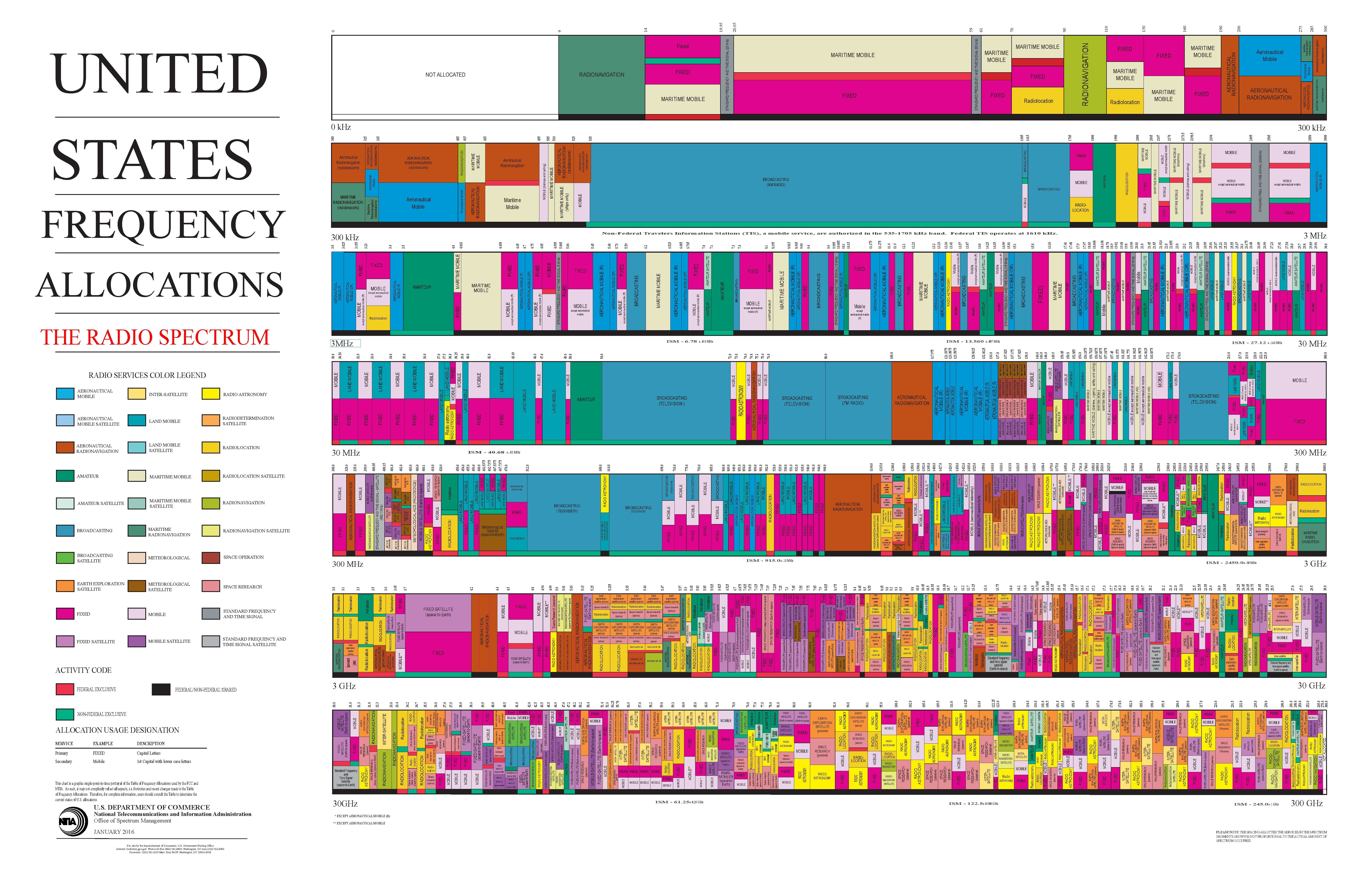
I'm hoping my guesses have revealed multiple fundamental misunderstandings. Please disabuse me of them. There are short range ultrawideband technologies thar have different laws because the power is so low. One of those may be able to do it. But... range will be short. We can't claim more bandwidth because the spectrum is utterly plastered with legacy stuff, some good, some just legacy. If it were up to me, we'd probably start phasing out things like FRS and business radios, maybe even part of the FM spectrum, and all of the world's mobile radio would be digital and probably fit in 5MHz plus 1MHZ for emergency services or so, and we'd have lots of free space for IoT. But that wouldn't give us 4K, for that we'd need a lot more, and you'd get in the way of important stuff like radar or something if you wanted long range. You would have really big competition issues too. We have ChromeCast and various things that use compression that are good enough. People want to stream to TVs to consume media, and using the phone as a remote to control youtube does fine. For very very short ranges, perhaps we will have some 2ft range optical networking for laptop to monitor connections someday? Say you had a blank slate to rejigger how bandwidth is allocated. What would it look like? Could we move things around and end up with more bandwidth than anyone knows what to do with? What's the ratio of "bad legacy we should cut" to "useful legacy band but it's only around because of legacy, we definitely wouldn't carve a band out for it today if it didn't have one" to "we have to keep this around". Is it like "well, if you want airplanes not to crash, you need to give up this band to RADAR, and that means there's a fundamental limit on how good wireless communication can possibly be for today's humans?". In reality it would cost billions, because the only way to do it without disrupting the world would probably be the way they did digital TV, just giving people free digital replacement radios, and it would likely be unpopular with those who don't trust computers. All in all, looking at this chart, we could probably save about 30MHz to 100MHz, if I had to guess and there were no political or financial issues. https://upload.wikimedia.org/wikipedia/commons/thumb/c/c7/Un... Some of FM radio and most of the 2-way stuff could go without disrupting anything, as long as we were willing to pay for high quality digital replacements. but everything that's already digital is generally pretty good. The only change I'd really want to make is we would replace land mobile radio and similar services with a national standard digital system, that would have cell phone level quality, provisions for tiny amounts of digital data, and a standard repeater and internet tunneling system. All but the top public safety systems wouldn't have private frequencies anymore, you'd get assigned to a shared digital channel, and you'd have have a secondary redundant shorter range higher frequency link for things like construction sites, so that you'd always have at least local coverage even if the long range channel was clogged in a disaster. Just really go all in and make sure there was no room for anyone to complain that analog was better, make it totally bulletproof and mass produce one high quality module by the millions. Another possible savings is to ban any new commercially sold point to point devices that don't use transmit power control. If you know who you are sending to and have a 2-way link, it's easy to adjust to the minimum power, it just gets hard when you are broadcasting or meshing. For some reason wifi has it as an extension, but it didn't come till later. At the moment it seems like they do a pretty amazing job The EM spectrum is pretty heavily utilised by a variety of uses and its not all that easy to deregulate spectrum. Much of the 5 and 6 Ghz spectrum overlaps with radars and other uses and has to detect collisions and shut down frequencies if it interferes. So its already a problem at the current spectrum use in a variety of locations and that will get worse the more spectrum is shared. Even with Wifi 6E we are only really talking about less than 10 gbps theoretical bandwidth, which practically even with a device using 4x4 (which none of them do) would be half that. That is well below the 32 gbp/s of Displayport 1.4a that monitors typically use and that is ignoring DP 2.0 and HDMI 2.1 standards that offer even more. Its a lot of spectrum that is required to reach monitor levels of bandwidth without significant compression (which is how VR headsets do it within 500 mbit/s on wifi 6@5Ghz). Its technically possible but not without significant costs to other users of EM spectrum. Shannon says that the bit rate is the bandwidth times the logarithm of the signal to noise ratio. Adding more power helps with the bit rate but you have to increase the power exponentially to linearly improve the bit rate. Regulations limit bandwidth but so do concerns with the antennas and electronics. At some point the power consumption of the signal processing electronics become unreasonable. There is also interference, if there are a large number of these devices in a small area they will cross talk. This is particularly a problem in nexuses of marketing such as CES and Best Buy. (I’m convinced that the problem of demoing Bluetooth devices at CES has an impact on what gets sold.) There is WiGig https://en.wikipedia.org/wiki/WiGig?wprov=sfla1