Pangolin – Mobile AMD laptop with Ryzen CPU and Radeon graphics
system76.comI can't speak to the 4700u or the pangolin specifically, but I can offer this perspective on PopOS/AMD:
I've been using System76's PopOS with my Asus Zephyrus G14 (4800hs) as a daily driver and I really like it. (freelance/web)
The battery life is comparable to Windows (on integrated graphics mode, it has graphics switching available)at 7-10 hours with 70% brightness and balanced power settings using VScode and firefox.
The g14 has a 75wh battery vs the pangolin's 49wh, so I would expect less battery life from the pangolin despite the 4700u having a lower default tdp, since the 4800hs likes to sit at around 6-10 watts when doing non-intensive tasks anyway.
In 2021 I'm not missing any major programs. It's pretty incredible how much is cross-platform now.
Would buy in a heartbeat if it had a 4k display. Hard to go back to 1080p after six years of Retina and 4K displays.
Honestly find it hard to notice much difference in the display quality between my 1080p 2018 XPS laptop and my 1800p 2019 Mac laptop. Actually the XPS is slightly preferable to me because the matte vs glossy finish outweighs the extra resolution at that size for me.
I guess that could just be my sight, but the reviews for the XPS laptop vs the 4k model of the same were pretty much unanimous on the 4k variant being a waste of battery for a neglible return on image quality, so it's at least not a fringe view
> the XPS is slightly preferable to me because the matte vs glossy finish outweighs the extra resolution at that size for me.
I have a ThinkPad, and this has been my experience. Sitting next to my Macbook Pro 13" retina, there is not much difference. 14" 16:9 1080p vs. 13" 16:10 1600p. The matte finish + slight diagonal increase closes the gap between the two. Unless you're in your 20s with perfect vision, I doubt the average person could tell a visual difference between the two.
I will also say that at 13", the difference between 16:9 and 16:10 is practically nonexistent. Especially 14" vs 13". I thought this would be a major issue for me. But it's not. On a 27" desktop monitor? Sure, that can make a difference.
It could be your sight, or the size of your display. You never mentioned how big it was. If it's a monster 18" laptop then the difference between 1080 and 4k is a lot more significant than if it's a 14" display where you almost can't even tell the difference. It's all about pixels per inch. I always prefer higher quality pixels as opposed to more of them, I don't mind 1080p if it's extremely accurate colour and amazing viewing angles, but that's just me.
That's fair. I can notice the difference between 1080p and 1440p on my desktop monitors which are 27" (or between the 1080p monitor and the 1080p laptop).
Both laptops are 15".
I have an XPS 15 from around the same time and the 1080p display feels a little poor. What I notice most is the long pixel response time. I'd take a 1080p OLED over a 4K LCD anyday. I'd also take a 4K OLED over either any day as well. High refresh rate and/or backlight strobing would be nice to have as well. Battery life isn't as much of a concern to me. I know not all users have the same priority as me. It's nice that consumers have options.
> 1080p OLED
Yep. What's getting lost in this whole discussion over resolution and whether >1080p is necessary is the issue of panel quality. Most laptops have always had absolute shit that is useless for photo editing or color-accurate work. Even at the high end they rarely advertise things like gamut coverage.
Does anyone sell an OLED laptop display? I thought it was just in phones and giant TVs still. The standard today is pretty much that good laptops are IPS and bad laptops are TN
I've seen options with OLED from HP, Lenovo, Dell, Asus and Razer (always on a few select models though).
There's a big difference when it comes to trying to read complex characters 贅沢な醬油の会社の面接体験を受けようとしています。
I absolutely hate viewing text on my LO-DPI PC vs my 6 year old HD-DPI Macbook Pro or either my 4 year old android smartphone or my 1 year old iPhone or my 7 year old iPad. It's like playing a NES game vs a PS4 Game. Sure some are fun and it's nostalgic but the world as moved on and lo-res is old.
"lo-res is old"
This is exactly what the product people who are building blazing fast, high spec laptops with top-of-the-line circa 2006 displays need to hear.
Theoretically the best balance between high resolution (you can't see any single "normal" pixel anymore at normal viewing distance and normal eye sight) and battery usage is 1440p.
But support for 1440p on Linux (and as far as I know not just Linux) is crap.
Anyway in my experience having a high quality display is much much much more important then the display resolution (as long as it's at least 1080p).
I'm curious what support you think 1440p needs specially or where you think Linux falls down? I've got a 1440p primary monitor for my desktop and the only device to have issues with it is my PS4 pro which only supports 1080p or 4k video out even though 4k mode if often upscaled 1440p
Wayland currently only supports integral scaling, so as long as you don't want the content on the screen to be noticeable smaller (no scaling) or bigger (scaling by 2) you have a problem.
Sure some wayland implementations do support fractional scaling but only in a way which leads to not so crisp fonts and images (scaling by 2 and then down scaling the pixel output to the given 1.x scaling factor), which defeats the whole point of getting a higher resolution screen.
Sure if your 1440p screen is also size wise bigger this might not matter but then my argument was always about increasing resolution without increasing monitor size. E.g. like a 1440p14" Laptop or similar.
Also a perfect size scaling on a 1440p14" to make the UI be the same size as on a 1080p14" monitor is technically impossible, through there are ways to get solutions which are good enough anyway (but not scaling to exactly the same size but something close by, separately for each font and other elements in a UI).
And while X impl. might work better, lets be honest X is dead. Still used, sure, but dead anyway.
The non-crisp rendering is only true if you use xwayland applications. Wayland apps support fractional scaling.
No issues running multiple 1440p, 144hz monitors on Linux for me.
> could just be my sight
It is
1080p to 4k is such a large difference
Really? On a 13" display? I bet in a blind AB test at a normal viewing distance you wouldn't even be able to accurately tell me which is which.
There's no need to bicker about this. A 13 inch display at 4K has about 340 pixels per inch along the diagonal. At 1080p it would have about 170 pixels per inch.
Perfect vision is usually understood to be the ability to discern details of about 1/60 of a degree, or 0.29 milliradians. By the arc length formula (s=rθ), we find that the distance needed to precisely align this angle with the level of detail provided by a 1080p screen is about 20 inches.
In other words, if you sit closer than 20 inches away from your screen (perhaps not that unlikely for a laptop), you might be able to discern details beyond the 1080p level. This would only be possible for extremely contrast sensitive small details, like text in a small font size at 1:1 (no DPI scaling).
So... it's a bit complicated, but I suspect 1080p would be good enough for nearly everyone at 13 inches, but move up to 15 inches and I could see many people preferring 1440p.
This isn't a complete analysis.
High DPI screens are able to render text without aliasing, and that makes a significant difference, especially with less-than-perfect eyesight.
What you're saying is true insofar as I had to squint up to a 1080p screen at 13" to actually see the pixels. But everything was slightly blurry, and switching to a "Retina" (1600p iirc) screen fixed that.
Which was the lack of subpixel aliasing: you can make those screens look blurry as well, by turning it back on. But a 1080 without it just looks like it has janky text rendering.
An actual 4K screen is unnecessary at 13", imho, but the extra pixels are harmless except in battery life. I do detect a real difference in textual rendering between 170ppi and 227, because it's the difference between leaning on subpixel aliasing and turning it off while still getting good results.
I never understood the "eye resolution=screen resolution -> good enough argument".
First of all the cone spacing in the fovea is around 31arcsec or about half the arcmin you assume. IMO that is more relevant than the 20/20 vision number because that number is not based on any intrinsic quantisation of the visual system but rather mostly limited by blur which tends to be very much not gausian -> not an ideal low pass filter for most eyes.
Now consider the nyquist shannon sampling theorem that tells us that any signal we want to fully capture needs to be sampled at at least twice the frequency of the highest frequency of interest. So if we want to be able to fully represent any state of our visual system on a display we need at least twice the resolution of our visual system (ignoring for a minute that that assumes an ideal lpf which your eye is not as stated above). so already 4x your 1arcmin resolution number.
But that all quickly becomes rather theoretical when you look at jagged elephant in the room: aliasing and scaling! a lot of what we look at is either rendered with pixel precision being very prone to aliasing at scales that are much much larger than your pixel pitch (see this worst case demonstration https://www.testufo.com/aliasing-visibility) or image or video files that might be displayed at a size that isn't an integer multiple or fraction of its native resolution. scaling just like aliasing causes artifacts that go way beyond the scale of your pixel pitch and one way to mitigate the issue is to just have a very high target resolution to scale too. So yeah I don't thing "can't distinguish individual pixels" is a meaningful threshold and even way beyond that there is still benefit to be had even for those with less than perfect eyesight
I use small text. Readability absolutely improves around the 8-10px ranges.
Especially with Chinese/Japanese characters, these can sometimes become unreadable on smaller fonts on 1080p.
I have two 14” Thinkpads I switch between which have almost identical setups, but one is 1080p and one is 1440. I’m not buying another 1080p if I can avoid it. And yes I have been tweaking fonts and X11 quite a bit already.
And people can’t really tell 30fps from 60fps from 120fps either, right?
Once you see and appreciate the difference, you can’t unsee it. Anything less is jarring.
Print media figured out three to four decades ago that print buyers prefer at least 144 lpi for black shapes, at least 300-600 dpi for grey images, and minimally 300 dpi but ideally 1200 dpi for colour photos people will consider high quality. (Note: For reader convenience I’m mixing lines per inch or lpi with dots per inch or dpi here, lines is per screen but there may be several screens per image, so dpi is the source material you’re trying to reproduce with screens.)
We’ve been settling on computer screen quality for too long. If all we did was video, fine, but we spend most time simulating print.
Can't find any results for 13" displays. But there have already been several blind tests carried out for TV's that show people can make out the difference.
http://www.hdtvtest.co.uk/news/4k-1080p-201311153442.htm
https://carltonbale.com/does-4k-resolution-matter/comment-pa...
https://www.slashcam.com/news/single/4K-vs-8K--Who-can-tell-...
I would bet money on you being wrong at 2-3 feet away
I went from a 27" 4k display to a 27" 2k display on my desk and I notice the difference every day. I only switched for higher refresh rate.
The biggest thing keeping me on my Macbook is it's hard to find a 13 inch, hi dpi, close as possible to mac keyboard laptop. The Razer 13 inch was sooo close but they made tilde and backslash half keys for some reason....
https://www.ultrabookreview.com/wp-content/uploads/2019/12/k...
I'm pretty sure most people see a huge difference between a old-style MacBook Air screen and a MacBook Pro screen. The Air is a 1080p 13in display. The Pro isn't even 4k, but the difference is extremely noticeable, especially if you are looking at a document or code (even from 24-36 in away). Seeing the difference between Apple's retina display and 4k? Well, that is difficult.
Would love to take the test. I can bet all my life savings that I will be able to tell the difference on first second. Difference between those resolutions is HUGE and I immediately see the difference.
I find it weird that non-Mac laptops either come with 1080 or 4k display options. Mac displays look incredible, and the 16" MBP resolution is 3072 × 1920 - basically 70% of the pixels on a 4k monitor.
Indeed as backend developer screen real estate is much more important than super accurate colour or viewing angles.
I'm a backend developer as well (or maybe full-stack, hard to say) and I switched my 4k to 1080p long time ago, because it wasn't worth it. On the other hand I like good viewing angles and nice colors. Unfortunately the latter isn't too good in basically every laptop I tried and... my current monitor (eh).
Full-stack dev here, running 1x1080 23" (top) + 3x1440 27". No real interest in moving to 4k, 1440 is the sweet spot for my workstation. The only problem... need more monitors!!
Do you run your mac at native res? The default is 900p with pixel doubling (and some fonts at native res). Basically anything other than doubled or native has a performance and battery life penalty relative to those two modes.
This has less space than 4k at 200% (normal for 15") or 1080p at 100%.
I suspect OEMs buy standard panels that usually come in those sizes. I'm also guessing most OEMs don't sell enough of the same models to justify going custom-made
I think it's to avoid fractional scaling.
And the crazy thing about that is that Windows handles fractional scaling perfectly, and I hear that Linux environments mostly do (but I have no experience), while macOS uses an absolutely stupidly bad technique that literally makes the higher resolution worse than having a lower resolution screen in most cases: rendering at the next integer, and scaling down. That way, it’s impossible to draw pixel-perfectly, and fine detail (like text) is always blurry. The mind boggles and I still have trouble believing that they actually did this, when their grip of their ecosystem made them the OS in the best position to do it right.
macOS uses an absolutely stupidly bad technique that literally makes the higher resolution worse than having a lower resolution screen in most cases
That's not my experience at all. For a while I was using a 27" 4k display at an effective resolution of 2560x1440. Obviously it wasn't as nice as 5k at 2x scaling would have been, but it was much sharper than a native 1440p display.
I think you misunderstand what's happening with macOS resolution scaling. What you're describing is assets being rendered down and getting blurry; but this doesn't happen to text because text is vectorized. You're right that some assets like icons and such will be less sharp at 1.5x than 2x, because 2x will have an actual asset and 1.5x will have to be scaled down.
How does Windows fix this? I have used so many Win32 apps that are jus broken in one way or another on HiDPI displays, most shockingly Visual Studio, my experience of HiDPI on Windows is always worse.
I've had better luck with fractional scaling on Windows over Linux. Can be hit or miss if any given Linux application will handle fractional scaling well, but the desktop environment (KDE Plasma on Ubuntu) does fine with it.
My experience with it and multiple screens is not great.
Not sure why it is that way - it's just a matter finding a global pixel size, rendering all screens to these bitmaps and then 2D scaling them down to panel resolution.
It depends on your age. At 50, even 768x1366 would be good enough if it had fractional scaling. ;-)
Now, seriously, I find it hard to see the difference between 1080 and 4K. What would be nice is a good HDR display panel.
you don't need 4k for retina at that size. 2880x1600 (3k?) will do 221 ppi
4k will also absolutely destroy battery life, 3k is a good compromise
Yup, 1080p was the first thing I saw. We're in 2021 and 1080p should be considered obsolete by now, yet still many new laptops come in 1080p.
Do you want just 20 minutes of battery charge or what?
4K laptops can have reasonable battery life. See almost every>= 4K Ice Lake and Tiger Lake laptop for example.
I know, eh ? Why is every linux laptop manufacturer insistent on using panels that they fished out of a dumpster behind a 7-11 ?
If somebody zoomed everything out on a 15 inch screen, would you be able to tell the difference? Have you done the test?
I'm really unclear on the motivation for sticking a 50wh battery in a machine which can easily burn 25+wh in normal operation.
If the computer can only hold up a 1.5 hour battery it really doesn't satisfy the use case of a laptop, doubling the battery up to 99 wh really allows for a 3-4 hour minimum battery life and a longer battery life for non-GPU work.
You can still carry it in your bag and plug it in at home/work.
This. I have a laptop that I rarely use on battery. It spends most of its life on a desk tethered to an external monitor. The advantage of being a laptop is that I can take it to my parents' house on the weekend, carry it back and forth to the office, etc.
But then, at the office, they got some HP Elitedesk minis, which are very small - but use regular desktop CPUs - and I bought one for myself. Now the laptop spends most of its days in a drawer because the desktop is much beefier and just as portable.
Of course, there are use-cases that a computer requiring an external screen and AC to even work can't handle. That's why I would be much more interested in having a "big" laptop, as in powerful CPU, tons of RAM, glorious screen. Could even be tempted to throw in a dedicated GPU. Don't care about it being 1 cm thin, featherweight and all-day battery. I do care about it not spinning up its fans when I'm just running vim in a console. I don't mind lugging around 2-3 kg of copper if that means the CPU can do a lot of work in silence.
I have a friend who's moving much more around, in meetings, etc. Her old macbook air is perfect for what she does. Also, the latest and greatest AMD wouldn't make a difference for her job, but she would clearly hate to lug around a heavy, bulky beast.
I think the issue is that, with today's technology, there's clearly no one size fits all. And there seems to be a trend in laptops to optimize for size and battery-life. Luckily, there are people for whom this is the right compromise. Don't know if they're the majority, but clearly there are other use-cases for which choices are more limited.
Especially in a post-COVID world where home offices are more common and possibly with even less travel, I think battery life is quite overrated for many people. I have a Serval Workstation (i.e. high-power laptop) from System76 and absolutely love it. The battery doesn't last very long especially if I'm doing heavy-lifting on the GPU, but I very rarely go somewhere I can't plug in. I need to be able to fold up my "workstation" and take it with me, sure. But I can work from the airport, many planes, from my couch, from most coffee shops, etc. I just have to plug in when I get there. I would rather plug in when I get somewhere and have a much more powerful machine at my desk.
Indeed, LG's 32wh battery laptop rated at 23 hours instantly comes to mind.
For Intel based laptops built in the last 10 years basically the only thing making a difference in battery life for laptops with same CPU is screen, and battery.
Everything else is almost the same everywhere. NVME SSD + WiFi will uniformly eat 2W. Power conversion will also eat at to 500-800mW. All other peripherals combined will unlikely to eat more than 1 watt, with exception of 1GB ethernet if working full speed.
Battery life is a proxy for somethings you do care about: how often does the fan come on and when does thermal throttling impact performance notably? If you don't travel, a desktop will cost less, last longer, and do more than a laptop — in part because the system won't be throttling. I spent about 20 years being laptop-only and went back to a desktop recently after realizing that it'd literally been years since I'd had any significant amount of on-the-go work which I couldn't do on my phone.
I routinely travel!
From my desk, to my easy chair, to my bed, and back again.
Not hard on my battery (two of those have charge cables handy) but difficult to pull off with a desktop.
Now that you mention it, it's been more than a year since my laptop has left my home. Ouch.
FWIW, I found that losing that tended to remove low-productivity time - I do work at my desk and call it a day, whereas it was a little too easy to be hunched on the couch surfing HN. If I really want to do something, walking over to the desktop only takes a few seconds.
Granted, becoming a parent also meant that things like watching a movie are “haha, I’m going to sleep” now, too.
Not me, I get a lot of work done in bed, probably more than half. The easy chair is not a productive setting, I grant you. Lately I prefer to pick up the kindle or tablet for a short break from the desk, and this is probably more conducive to work than switching from "getting things done" to "browsing HN/Twitter" on the same machine.
I use a sit/stand desk but barely ever sit at it, so fifteen minutes of down time here and there helps.
For me battery life means I can go outside somewhere to get some fresh air/inspiration (hobby computer music production). It doesn't frustrate me to have to take the power brick along, but it is nice when I can replace that weight in my bag with a small midi controller.
Does graphics switching in popos works without full system restart or at least without restarting X11? I didn't think there was a way to make switching graphics work in linux without either restarting X11 session or restarting the machine completely.
On related note - does external display works without nvidia GPU? A lot of manufactures have lately decided to hardwire external HDMI connection to descrete GPU and hence it has been pretty painful to use NVIDIA powered Laptops on Linux. :(
I have an older system76/galago laptop(Intel graphics). I use it with 2 external 4k(HP/Z27) monitors with no issues. Previously used with 1 4k, 1 1920xSomething/Portrait. Resolution switching works fine. Also, PopOS gnome UI comes with build-in tiling, feels like slightly nerfed i3. It also works fine across monitors/virtual desktops and so on. PopOS desktop is X11 based and I havent played with Wayland on that laptop
I was considering to buy a G14, but got distracted with other stuff. Can you please share a few details on how you use it?
- What kind of external webcam do you use? Does it have any problem with any video-conferencing software?
- Do you access any streaming service (with DRM)? Any issues?
- Any issues with drivers, returning from sleep/hybernation?
Thanks!
I've have a G14 with RTX2060 and I'm very happy. Battery life is good (4-6h work with IDE etc) and webcams work as intended. DRM is mostly a non-issue, at least not more than on any other Linux install.
The nvidia driver is a bit of a pain to set up, especially if you're on wayland or if you want to use displays via USB C (reverse prime does not work yet due to an nvidia driver bug, so you need to use the nvidia gpu as primary when docked). Other than that, everything works and the community (arch wiki and rog-core) provide good support for getting everything up and running. A bit of configuration and a somewhat recent kernel will be needed (it's pretty new hardware after all), but it's not that hard if you either know Linux or are willing to spend some time. I'm running this config for 8 months now, so the situation from a fresh install might be even better.
Similar to the sister comment, I came from an XPS 13, but I'm happy. The laptop is a bit heavier, but in exchange you get a lot more power, far more RAM (up to 48GB), more ports and, subjectively, a dar better keyboard. Initially I wanted to stay with an XPS, but now I'm happy I made the jump.
EDIT: One unbelievably good point I initially forgot: You can run a VM with GPU passthrough on the laptop. If you need Windows with graphics performance, especially on the go, this is an incredible advantage.
>EDIT: One unbelievably good point I initially forgot: You can run a VM with GPU passthrough on the laptop. If you need Windows with graphics performance, especially on the go, this is an incredible advantage.
Can you speak more to this? Does Pop_OS! configure this (more-or-less) out of the box? Would it work with any Nvidia card or are there restrictions?
I'm interested in such a setup and have done research from afar. I've developed on Linux for years, but have heard GPU passthrough can be difficult unless you wrangle drivers a bit.
EDIT: I'd also like to use it for CUDA in Linux. Do you have to reboot when enabling GPU passthrough (not a dealbreaker, just curious)?
> Can you speak more to this?
Sure! Regards working out of the box, you'll probably have no luck with that. VFIO is still somewhat of a niche and VFIO on a laptop is a niche of a niche, so you'll need to expect some command line usage and a bit of config file editing. This being said, getting it to work is not too hard and, if you've done VFIO in the past, you should feel right at home.
For the initial setup, you can mostly follow the guide on the arch wiki [0]. You might need to adapt it a bit on ubuntu(-based) systems, but the major points are the same. The only difference to the usual setup is that you need to include an APCI-table [3] to get the laptop driver to work in the VM. This reddit thread [1] describes it quite well. The author of that thread also has a repo [2] where he published his files and on which I based my scripts on. Note that you need the usual CPUID work-around (see the "Error 43" section on the arch vfio page). Also, you'll need an USB C to HDMI/DisplayPort/... cable and a monitor for the initial setup, after that you can use a dummy plug [5] and looking glass (also described on the arch wiki) to use pass through without external monitor. The setup is also very stable for me, with the exception of the looking glass part - if you absolutely depend on the setup, having a monitor handy will save you a bit of headache, but you can always revert to a VM display in the worst case.
Regarding GPU support: It should support all GPU configurations, but you should check reddit etc to be sure. If you're talking about other laptops, the situation is a bit different. The big advantage of the G14 is (1) that the GPU has its own IOMMU group and is therefore easy to isolate and (2) that the display ports are well split between the two GPUs (the HDMI out and the internal display are connected to the AMD iGPU and the USB C DP-channel is connected to the RTX). This is rather rare, but makes setting this up (comparatively) easy. Note that the USB channel of the USB C out is not routed via the GPU, so if you're connected to a docking station, its display ports will be used by the VM, but the USB ports are on the host, still. This, however, comes with the drawback that you can not pass through an USB controller, as the groups for those do not work out. The ACS override patch (see arch wiki) might fix this, but unless you need to use audio interfaces, the "normal" USB redirector will suffice anyway.
Rebooting is semi-required. In order to change from VM to Linux and back, you'll need to [un-]bind the nvidia driver and switch to vfio-pci. Going from Linux to VM is only possible when nothing uses the nvidia driver, which either needs a restart of your display server or only using the iGPU for all apps (quite easy on sway/wayland, haven't tried on X). The reverse should work as well - the author of the reddit threads above has scripts to do so, but this did not work out for me. Leaving the vfio-pci driver for the GPU is not an option either, as this will prevent it from going into the low power state and therefore heat up the laptop and use up the battery. Because of this, I usually simply reboot. In summary, if you don't mind rebooting, having the GPU bound to vfio-pci via kernel parameter on a secondary boot option is by far the easier way :) But it should be possible without, it'll just be a bit of work.
To work with CUDA, you'll need to have the nvidia driver loaded, but you'll want to have that anyway to enable low-power states, as mentioned above. Using only the iGPU for display is possible in combination with CUDA, you'll simply need to stop your CUDA-apps before unbinding the driver. That's actually the setup I use, too :)
Hope this helps!
[0] https://wiki.archlinux.org/index.php/PCI_passthrough_via_OVM...
[1] https://www.reddit.com/r/VFIO/comments/hx5j8q/success_with_l...
[2] https://git.deck.sh/shark/g14gpu
[3] Since the original link is down for me: You need the ACPI table [4] and include it like this in the `<domain>`-part:
See: https://git.deck.sh/shark/g14gpu/src/branch/master/win10.xml...<qemu:commandline> <qemu:arg value='-acpitable'/> <qemu:arg value='file=/home/cole/vfio/acpitable.bin'/> </qemu:commandline>[4] https://git.deck.sh/shark/g14gpu/src/branch/master/acpitable...
[5] https://www.amazon.com/gp/product/B086MKR9WH - no affiliation, anything should work
I have the Dell G5 4800H (AMD iGPU+AMD dGPU), there are a couple of graphic driver issues under Linux. I'm using the USB-C connection which is connected to the iGPU.
* Locks up on suspend/resume
* Locks up when inserting an external USB-C monitor
* Requires a recent kernel to work properly (5.8 or later)
* Locks up without amdgpu.runpm=0 kernel command line
* dGPU can't be turned off, so increases power consumption
* Locks up with vsync on with the dGPU
* Kernel warning on startup, but doesn't affect stability
Besides these issues (which can be worked around), it's very solid.
Wow. I've got a Dell Latitude 5505 with a 4700u.
It's worked great so far except for plugging into Dell's USB-c dock in the morning. This is a guessing game of which (of 3) monitors are going to work, often requiring opening/closing the lid a time or two or turning on/off screens.
Battery life is decent (VERY good if you turn down brightness and ssh to your work) and it's blazing fast. It does get egg cooking hot when unplugged and running the GPU (games).
Running Win10 currently, but trying to figure out which Linux is going to run with 3 monitors without doing hours of research. Suggestions welcome. Guess I'll try PopOS next.
I have a Dell monitor which has a built-in USB-C hub. I experience similar issues when plugging in my MacBook Pro - the monitor part works fine, but the keyboard/mouse usually takes a few attempts at plugging in ("docking"). Might not be your laptop so much as Dell's USB-C dock acting up.
I had a G14 that I ended up returning. for points 2 and 3, I had no issues at all in the few months I used it.
A side note: the build quality was extremely disappointing, coming from an XPS 13.
I use it with Fedora happily, and for work I have to use Zoom daily. I did have to replace a fan with one from Aliexpress due to rattle, but haven’t had issues since.
I run Pop!_OS on my T480 and it's amazing - really stable with great battery life. They've struck a nice balance between the stability of Debian and the modern-nature of Ubuntu. The only apps I miss from Windows are Office (mostly Excel) and OneDrive.
Strange. I tried using Pop!_OS on my Acer Aspire E15 and my experience was quite the opposite experience: https://news.ycombinator.com/item?id=26113962
I have a Lenovo IdeaPad 520 with a Ryzen 5 3500 running Pop_OS. It works great, but battery life hovers around 4 hours (I have no idea how long it is supposed to last under Windows, though).
> I've been using System76's PopOS with my Asus Zephyrus G14 (4800hs) as a daily driver and I really like it. (freelance/web)
Thank you for the pointer. I have the exact same laptop and tried Ubuntu on it - couldn't even change the screen brightness.
You won't be able to change the brightness or use the keyboard shortcuts by default, but it's pretty easy to use mainline to get the latest kernel which will support those features.
This would also work for Ubuntu.
Ubuntu 20.04 lts?
Yes.
It's so unfortunate that it's called Pop! OS. That name is unspeakably awful. It screams "toy not suitable for anything serious."
It wouldn't turn me off from System76 if the hardware were good, but it's just... bad... real bad.
Any more, all I care about is how searchable the name is. That's something to like with Debian and Ubuntu.

Why aren't there any bold laptop manufacturers? This is a 2021 laptop that uses USB-A primarily, a meh panel, and no particular standout design features. Why do I have to get a mac if I want actually good design?
System76 should take a risk and truly make an interesting laptop. leaving the standard, boring design to the big name companies.
System76 is probably one of the least bold laptop manufacturers because they can't afford to be. As other comments have noted, much of their hardware are largely rebadged devices from other manufacturers such as Clevo, because the main selling point of System76 appears to be the software experience and hardware integration.
If you want great design that matches a Mac (overall, better in some areas, worse in others), look at the flagship ThinkPad models, Microsoft Surface devices, etc. There are many laptops that have "standout design features" such as convertible designs, novel display and input options including pen-and-touch, etc. If anything, I think Macs lag behind in these innovations, although they have other benefits.
I bought an innovative new convertible tablet from HP in 2008. I now appreciate Apple's hesitancy to implement innovative designs before they're ready for prime-time. Sometimes, quality of execution is more innovative than the concept.
I still have a vintage 2010 HP TouchSmart tm2 sitting around. It was certainly an early execution of the convertible idea, and I appreciate it for that. Doesn't stop me from also appreciating my modern Surface Book 2 and Dell XPS 13, though.
Anyway, that's basically the creation myth of the iPhone, no? That it supposedly was basically iterated on for quite a few years before the technology got to the point where a high-quality execution was allowed. I also had Windows Mobile smartphones and remember the iPhone releasing. I didn't recognize or appreciate that difference then.
I also had WM phones at the time of the iPhone release. Most WM users at the time, myself included, were power-users who criticized the iPhone for a lack of features and never actually bought one. I couldn't install my network scanning app, connect to exchange, or even copy/paste with the iPhone, so what was the point?
Turns out I was entirely wrong: Apple wasn't positioning this phone for IT/business professionals for corporate use. They were building a consumer product. The feature set they were prioritizing was entirely counter-intuitive from my perspective. The features that I thought were gimmicks at the time ended up being the features that made it successful: natural multi-touch input, a (then) gigantic screen, and a bare-bones UI/UX. It had nothing that I wanted or needed, but it had everything that they needed to open up the market to millions of people who weren't using HTC bricks on their Verizon corporate plan that their IT admin configured for them.
Just search "windows mobile" on YouTube and look back at the awful (but feature filled!) experiences we used to think was awesome. For example: https://www.youtube.com/watch?v=PXDgsZvSTP8
I think the Nokia N95 was the best phone of 2007
hmm - aren't there Eluktronics laptops (https://www.eluktronics.com/laptops/) which also uses some rebraded chasis for newest Ryzen laptops? Even if you are forced to use rebranded chasis - i think there are better options out there. The pangolin model looks pretty meh tbh.
I couldn't find any laptops with the new Ryzen mobile on this website.
I think it's a combination of:
* extremely, extremely thin margins
* in general, users are pretty low-discretion, which makes it hard to meaningfully differentiate your product
* deeply entrenched competition (what % of laptops are sold at best buy/etc?)
* the users who are high-discretion are going to be extremely demanding users. They're going to nitpick over small details in both hardware and software. And they're probably going to be installing their own OS (or at least reinstalling the existing one) and will generally be more demanding of both product design and support. Also, they probably have the tech skills to correctly point the finger at you when it's your fault. Whereas less discerning users might just go "Ugh bill gates!"
Doesn't help that the "linux laptop" niche was probably a big part of this "niche laptop" market segment and Dell and Lenovo are both kinda warming back up to that niche. e.g. the newest XPS's all work great on (latest kernel) linux.
Reminds me of this medium post [1]. Apple might make it look easy but all those little things they do are really difficult and require massive scale to get at a reasonable cost.
[1] https://beneinstein.medium.com/no-you-cant-manufacture-that-...
I don't know what laptops you are looking at ?
The XPS 13 competes directly with the mac in terms of (familiar but) industrial design, standout display and inner design (with the white carbon fiber) and USB-C ports for a lifetime. Stating it first, because its the most obvious competitor.
The Razer, Asus, HP and Surface flagships have clear standout designs and similar features.
The only 2 laptops that are purposely boring are the Thinkpad and System76, because they seem to cater to people who need them as work machines, first and foremost. (LG Gram is not a flagship)
I'm on my 2nd XPS 13. I switched to it and linux after being severely impacted by the butterfly keyboard (i.e. having to fly to a different country to get it repaired, only to have it break again a few months later).
I don't _hate_ the XPS 13, but I wouldn't recommend it and I probably won't be getting a 3rd one (unless they change).
The build quality just isn't there. First of all, the flexible chassis is annoying. If I pick it up on the side with one hand, it's likely to flex enough to trigger a trackpad click. Secondly, while it's pretty quiet, it does get rather hot. Third, the trackpad and mouse aren't Macbook-quality (butterfly keyboard aside). In my first one, the trackpad and battery had to be replaced. The keyboard on my current one (9300) has very mild issues (I think they reduced the travel distance and it, like butterfly, is somewhat susceptible to dust/dirt)
Not sure what I'll replace it with. Will see how the reviews for the Framework laptop are.
They got rid of the butterfly keyboard on the latest Macs, no?
Yes, but I prefer Ubuntu and I'm under the impression that running Linux on Macbook's isn't great ??
I would imagine part of the explanation is that Apple is a trillion dollar company and System76 is a million dollar company.
Microsoft experimented with bold ideas with their surface series. They have fantastic displays (3:2, 4K, multi touch), keyboards, and touchpads. But they have the same issues as Apple’s devices, you cannot open the machine and change components, and the I/O are a bit limited (USB 3, SD, USB-C, propriety port for charging).
System76 doesn't design their own laptop hardware, as far as I know.
They plan to one day: https://www.linux-magazine.com/Online/News/System76-To-Desig...
And that's the reason.
OEM are very risk averse. They only produce cookie cutter designs because most of their buyers themselves look for most casual buyers.
My xiaomi notebook looks a bit like a mac clone and as 2x USB-C ports and 2x USB-A ports. It is not without its problems, but if you want a reasonably priced laptop that looks like a mac I would say it is a pretty good choice.
I'd have to disagree. I bought the Mibook Pro a few years ago after it seemed to get quite good reviews, but it is an absolutely miserable machine to use
The iGPU has a hard-locked 64MB of RAM allocated to it, which means the Nvidia graphics chip is ALWAYS on, causing it to get maybe 2~ hours of battery life at best
The build quality is miserable, I ended up replacing all of the screws in the machine to make it more properly sturdy (which also fixed the case flex causing the fans to grind to a halt if you nudged the machine too harshly)
Linux support still isn't 100%. The Nvidia blob doesn't support GPU switching for what ever reason and Nouveau just causes kernel oopses
After suffering with it for so many years I finally bought an "MSI Modern 14" Ryzen laptop, which I'm moderately content with. I'll probably send the Mibook off to some people I know that work at Red Hat so they can at least improve its Linux support for those who still have it though
Besides build quality, the problems you have are with Nvidia. What should Red Hat do? Forward your strongly worded email to Nvidia?
I'd be sending it to Nouveau project members. So they can work on ironing out support for its MX150 GPU
> This is a 2021 laptop that uses USB-A primarily
Seems like the reasonable choice, given that host-side USB-C is still dead in the water.
If you want something like a Mac there are plenty of options. Off the top of my head there's Lenovo Yoga, Dell XPS, and Microsoft Surface.
I've grown to love my Dell XPS (with Linux). It definitely has some rough edges. Dell shipped what I consider a faulty machine. The trackpad is wobbly/bouncy. I had a tech come out to replace it, but he ended up having to send it to "the depot" due to a screw being sheared. I hadn't touched the screw. The depot returned it to me with a missing/broken case LED, unplugged speakers and one WiFi antenna that won't seat. Even still, the machine is beautiful. Even the fingerprint reader works in Linux. I use the heck out of it and battery life is quite good. Also, I upgraded my RAM to 32G and my SSD to 512G. This thing also has another M.2 slot just in case I want to put another SSD into it.
What is so bold about the MacBook design in 2021?
Not a "fan" of Macs but a fanless laptop without having to get 5 year old performance in return and the touch bar is still very rare outside Apple devices.
Aren't the current rumors/expectations that they are dropping the touch bar?
Hopefully. The fact it's never migrated to any other project outside the 'Pro' laptops seems to point to an obvious conclusion.
Agreed, although on that front it completely baffles me that they didn't release a Magic Keyboard Pro with TouchID and Touch Bar at most one release cycle after throwing the Touch Bar into laptops.
I find them completely useless and am ready for them to be gone, but it's like they didn't even try.
That it’s exclusively a Pro feature?
Fanless performance is a microchip innovation not a bold laptop design.
Apple can design custom everything and has the economy of scale to justify it. The PC space is also more competitive, Apple managed to associate their brand with luxury and charge a huge premium for their hardware, a laptop with equivalent specs would struggle massively to sell at the same price when you could purchase similarly powerful laptops for half the cost that would run the same software.
At this point Apple can design any gimmicky piece of hardware, stick their logo on it, sell it for three times the price of equivalent third party products and still run out of stock on launch. You can't beat that.
It wasn't always the case. Also, Dell, HP, Lenovo, etc. have more than enough economy of scale.
$1000 for the M1 air is not a huge premium. It's actually very cheap.
> It's actually very cheap.
Which is a huge problem for the competition. I know that I can get just get a cheap Mac and it will still be fast, it will still have a great screen and the build quality will be higher than the majority of PC laptops.
I happen to like macOS, so it's not a huge issue, but if I want to get a laptop for Linux, then I need to go to a store to see the models. Otherwise I can't be sure if I'll like the screen, keyboard or overall look an feel. The minor price difference for an Apple product is acceptable, given that I know what I'll getting a usable laptop regardless of which model I pick.
I don't think $1000 can be called "very cheap" when the median laptop price is around $650, and you can get basic Windows laptops for under $300.
Yet $1000 is cheaper than some phones from the same manufacturer. Which is, of course, an apples and oranges (pardon the pun) comparison. But boggles my mind, nevertheless.
I expected to pay almost double
It's been the case for a while though, and I know for a fact that Dell offers form factors very similar to MacBooks. But even then, the market is a lot more fragmented when Apple offers a full ecosystem of devices.
Just before M1 it was hugely uncompetitive. Higher ended macs throttled thermally so bad that using more than browser with 10 tabs and Jetbrains IDE caused them to grind to a halt.
The Mac markup is not 100%.
For SSD upgrade prices, it is actually more than a 100% markup compared to retail prices for the most premium Samsung PCIe SSDs on the market. Apple's markup is multiple hundreds of percent compared to mid-range PCIe SSDs on the market.
Retail prices already include higher profit margins than bulk order prices would include, which makes this markup even more egregious.
I calculated it the other day, and Apple is charging $0.52/GB for SSDs on their M1 MacBook Air.
Samsung's 980 Pro is under $0.20/GB for the 1TB model on Amazon right now. That is arguably one of the best SSDs on the market right now, and I'm fairly sure Samsung' 980 Pro is actually significantly better than the internal SSD that Apple is using on the M1 MacBook Air.
That means Apple is charging a 160% markup above retail price, minimum.
The Western Digital SN550 1TB PCIe SSD is priced at about $0.10/GB at retail on Amazon, which means Apple is charging over a 400% markup relative to the retail prices of that perfectly good SSD. Most users would not be able to tell the difference between the SN550 and the internal SSDs Apple is currently using.
I recognize that other OEMs can sometimes charge steep upgrade markups too... but Apple's prices for storage are personally annoying to me because the M1 MacBook Air seems reasonably priced until you get into the upgrades. I wanted to get more storage, but I'm not going to pay $0.52/GB for additional storage these days... I just don't find it reasonable.
I’m talking about computers here though, not parts. Spec for spec, is an Apple computer really 2x more expensive?
Certainly. Computers are made of parts. Apple charges egregious prices for upgrades, some companies don’t. System76 is the focus of this whole discussion, and they charge extremely reasonable prices for SSD upgrades... not hundreds of percent markups.
Since we’re on the topic of System76, a fully upgraded Oryx Pro (except leaving the GPU at the base option) costs about half of what a fully upgraded 16” MBP costs (also leaving the GPU at the base option), while offering similar specs — $3158 vs $6000. The System76 chooses to go for a 144Hz panel instead of a HiDPI panel, but different people value different things. The System76 obviously has a better port selection (for most people), while obviously not being as sleek — but it’s not huge either, it’s reasonably thin and light. It’s more durable while not as shiny. It’s easy for people to pull out the “no true Scotsman” defense at this point, but it all depends on what the customer is looking for. It’s Apple’s fault if they don’t offer enough variety to meet the needs of their customers.
I’m sure I could dig into comparative analysis of other OEMs vs Apple and come up with other examples, but this one is easy enough.
Spec for spec, Apple charges much more than twice as much for many important upgrades... so a sufficiently upgraded Apple laptop can be more than twice as much, even if it’s often “only” a 70% markup or something. That doesn’t excuse charging egregious prices for storage. Customers want storage, and Apple withholds it unless customers want to pay a large ransom. They solder the SSDs so that customers cannot upgrade their own computers.
I own an M1 MacBook Air. I’m not some “Apple hater”, but their upgrade pricing is truly appalling, and for all their talk of environmental friendliness, their attempts to thwart aftermarket repair and upgrades significantly hinders the total potential lifetime of their products, which increases their environmental impact relative to what could be.
I bought the 256GB/16GB model, and that 256GB SSD is borderline too small for me to deal with, and I’m not even like an average user that would be attempting to store music and pictures on it. I’m almost exclusively using it for software dev and web browsing. I would swap out the SSD, but... that’s obviously not possible.
If I can’t make the 256GB of storage work long term, I think I would rather sell this thing and buy something else than give Apple $0.52/GB. The M1 is good... but it’s not priceless. My opinions are subject to change, of course.
>Since we’re on the topic of System76, a fully upgraded Oryx Pro (except leaving the GPU at the base option) costs about half of what a fully upgraded 16” MBP costs (also leaving the GPU at the base option), while offering similar specs — $3158 vs $6000.
Not sure where you're getting these numbers. Comparing like for like and maxing out the Oryx, and the Mac's processor, they both have 64GB RAM and a 4TB SSD. The price I'm getting for that Mac config is $4800 vs the $3168 that you mention. $6000 doubles the Mac's storage to an 8TB SSD, which the Oryx does not offer. 6K is indeed a lot, but how many PC laptops even offer an 8TB SSD at any price? I haven't seen many.
But I digress. That's roughly a 50% markup, which is indeed a lot. For the extra $1500 you get a much higher resolution display (2880 x 1800) with good color reproduction, much better build quality, macOS and the Mac software ecosystem, Thunderbolt ports, Mac trackpad and keyboard, etc. Maybe these things are not valuable to you! But it's not like you're not getting anything for that money. The products are not equivalent, even if their specs were the same on paper.
I own System76 products and Apple products, and have owned countless PC laptops in the past. I do the math regularly and know what I'm paying for with Apple stuff, and it's almost never a 70% markup. And Apple stuff has specs you just can't find in other products, like the high-res displays and high number of Thunderbolt ports. Which isn't to say it's perfect! I don't like the Touch Bar and would like an SD card reader and HDMI out. But in general, statements about the price inflation are overblown. It exists but it's not as bad as many people think.
I agree that I made a mistake on the storage capacity comparison, I was walking and looking things up on my phone and got briefly confused.
The rest of your points I’ve already addressed. More thunderbolt ports is actually bad for most users if it comes at the expense of ports they can actually use without a dongle. The build quality is not really any better... I’ve owned both as well, and I’ve also had a work MacBook Pro 15 with the butterfly keyboard. Until recently, Mac keyboards were the worst in the industry, including reliability. Now they’re decent, but nothing to write home about. Definitely not an advantage. Trackpads are what you make of them... Apple certainly makes good ones, but it’s not 2010 anymore. Every mid-to-high end laptop I’ve used in the last 5 years has had a good trackpad, but I still reach for a mouse even on my Macs.
I already addressed the display as well. It’s a trade off. Apple doesn’t offer high refresh rate displays on their laptops, which matter to some people. If they didn’t matter, Apple wouldn’t put them on their iPad Pro.
System76 used to offer 4K displays (optionally matte) on the Oryx Pro, and mine was exceptionally good! And that’s higher resolution than Apple uses, in addition to the wonderful matte effect cutting down on glare. I’m just guessing the massive ongoing part shortage has affected which displays they can actually acquire for the moment.
So yes, I agree you get different things with a Mac, but those things are unlikely to be worth 50% more to most people, with the exception of macOS itself... and that’s only valuable to people who like macOS or are literally required to use macOS.
> in general, statements about the price inflation are overblown. It exists but it's not as bad as many people think.
I started this conversation by pointing out the price inflation I care about the most: storage, and it’s on the order of a 400% markup. It’s extremely awful.
If Apple would be environmentally friendly and allow people to repair and upgrade their computers, we wouldn’t even be having this discussion, because I’d have a 1TB SSD in my MacBook Air, and it would have cost me $100. If Apple would charge a healthy 100% profit margin, I would probably have paid them for the SSD... I’m just not willing to go to 400% markup.
Apple has basically always charged egregious upgrade prices, it didn’t start when they started soldering things down, so the small number of people like myself who would actually upgrade components should not be considered a threat to their profit margins... but even if most people did it, Apple should allow it because it’s the right thing to do long term, even if it impacts short term profits. Instead, they seem to be optimizing their products to eek out every last percentage point of profit. Which is understandable... it is a company, but it would be nice if they didn’t. They already have hundreds of billions of dollars of cash.
>If Apple would be environmentally friendly and allow people to repair and upgrade their computers, we wouldn’t even be having this discussion, because I’d have a 1TB SSD in my MacBook Air, and it would have cost me $100.
I mean, yeah. This is the one thing that's basically inarguable. Their computers increasingly do not contain serviceable parts, except for the Mac Pro, which is absurdly expensive. I suspect they just prefer compactness and longer battery life to repairable devices. I have to admit this isn't something I care about very much because I don't upgrade my machines and I use them until they break, which is often around a decade with Macs. Because you have different preferences I can see how you'd find these changes upsetting.
Indeed. Just looking at the M1 Air (which I am quite tempted by).
$999 Starting Price. tempting
+$249 +265Gb SSD (and a 8th GPU core)
+$200 +8Gb RAM (to a reasonable 16Gb)
+$200 +512Gb (to a nice 1Tb)
So that's $649 for a 768Gigs of SSD, 8 Gigs of RAM (and a GPU core). Cost of 1Tb gen-4 and a stick of RAM is about $200
The fact that paying those inflated prices after the initial purchase isn't an option is already enough to turn me away from buying any of them (or even the laptop itself).
I think it's more (and it's not just Apple playing this game) that the entry model/price is horrifically under-powered. It's there to hook you in on the price, and that's it. The rest of the pricing is then designed to pull you along the upgrade ratchet.
i.e. You've paid the absolutely necessary $249 to get the 512Gb... then it's only $200 to get an extra 512Gb. Once you've overcome that first hurdle, the 2nd looks almost good value.
Yeah. I've said it before, if you do a like-for-like comparison (of notebooks, I've found this to be less true on their desktops) then their prices are often in line with other manufacturers. Every time I've bought a MBP (2007, 2009, 2012, 2017) I've done a comparison with non-Apple laptops and found that a spec-for-spec equivalent from most manufacturers is going to be roughly equivalent in price to Apple's (usually a range of about $300-400 on the prices, Apple being near the top but not always the top).
Now, if you spec out their Mac Pro, especially as it gets updated so infrequently, those get very out of line with competitor hardware quickly.
It depends on the products, for some of them I'm fairly sure it's well beyond that (their new headphones come to mind). For their macbooks you're almost certainly right though.
My Huawei Matebook Pro is most of what I wanted in that space. 3000x2000 screen, USB-A on one side and C on the other, all day battery, nvme instead of soldered in SSD.
Still has soldered in RAM, unfortunately.
All day battery is partially thanks to LPDDR that need to be soldered.
They have to take whatever designs are coming out of China and can only make minor adjustments to the specs.
Apple has huge volume, big margins a very tight supply chain and a mountain of cash in tax havens. They have a lot more options.
If a seller like System 76 adds too much margin on their models people will buy a Clevo rebadged by some other seller which is a shame because System76 are adding value with their firmware and OS tweaks.
I am looking forward to the day when a company like System76 can release their own designs but without being in Apples position of fleecing customers for music, video, apps, cloud, mobile, tablets etc in a closed ecosystem it might be a long time coming.
It’s fairly expensive to develop and pay for tooling on an entirely new notebook. It’s relatively inexpensive to start with a whitelabel design from Clevo or Tongfang instead and leverage the existing tooling and validation work.
Thinkpad X and T series laptops are excellent machines. They’re all in the process of getting at least a 2k display, 11th gen intel chips (or amd in the case of T and X13), etc etc
Perhaps you may be interested in https://puri.sm/products/librem-14. Some more info about its innovations: https://puri.sm/posts/librem-14-adding-librem-ec-freed-embed...
I'd love to replace my thinkpad. But I need/want things that seem unavailable.
* trackpoint + buttons (can be without touchpad, disabled anyway) * full keyboard * strong durable * removable battery * 4k screen * ecc 64-128gb * rj45 * lots of ports * hardware switches to disable: networking, camera, mic,..
Thinkpad's are move farther away each year. I hope some company will fill the gap.
I was/am thinkpad user also. I have migrated to desktops. They are cheap enough to have one at the office and one at home.
Sure the above wont work for everybody, but if you are like me, you unpacked the laptop at home and at work each day at exactly the same space, where all the cables and extra monitors were.
I used to use laptop in coffee shops and outdoors, but nowadays between phone, and tablets (wel phone and kindle in my case) I almost never feel the need.
Buy silent box, mobo for overclocking and underclock it for extra silence, and throw the box under the table.
Still have my laptop, but its mostly just "backup" and in case I travel somewhere, but honestly I don't care about it as much
With the quality of networks these days it may pay off to just have a single beefy desktop at work or home and a very simple desktop in the other location that you just use to remote in to the first. Keeps the environment consistent over time and even allows leaving long running computations running and picking them up later. Two remote stations and a headless server in a rack somewhere may even be better. No worries about noise and cooling.
What remoting software do you recommend
Honestly, it depends on what you need, and what your platform is. Windows has its Remote Desktop, which works fine.
I’m on Linux, and use mosh as a more reliable ssh client.
mosh + tmux
Mosh and tmux is classic setup. If you need x11, I have recently found x2go to have the best performance.
I use wireguard to access my home network when I'm visiting my parents.
Exactly what I did. 2 desktops at home and office, sync via dotfiles for OS config, documents via Nextcloud and src via git.
A laptop (xps 13 9360) for traveling or working in remote places.
Even have a yubikey on each desktop and one for travel. All storing the ssh keys.
I don't use the laptop for months, open it and update the packages and dotfiles before going for a travel and that's it. Ready to go.
> sync via dotfiles for OS config, (...) src via git.
This is something other than just having your dot files in git, and system config in git via etc keeper?
i just keep my personal dot files in git, not system config.
Systems are slightly different, at work i have two 27 inch monitors and at home i have one 30 inch, and I do play some paradox games on home computer on ocasion
My main reason to go for a laptop was that I wanted to continue coding where I left off and not have to worry about differing settings and system configuration.
Did you solve those problems? and if so how?
I do all my development in VSCode, and symlink my settings to a git repo. VSCode really let's you customize a lot of stuff, and if you lean into it as your development environment, you get awesome cross platform support.
That same git repo has scripts that apply some of my system configurations, and a readme to walk me through the GUI stuff I have to do.
My first few setups were hard. I had to debug some weird issues on my Linux install. (Not sleeping properly, remapping some keyboard keys).
But now I've got it cased. I setup 3 machines (2 Linux, 1 windows) over the past couple days and all are essentially equal development experience now. Was super fast to setup l. If your going the Linux route, make a repo where you record all the tweaks your making so you can redo them if you need to on a new machine.
It's shitty the first time, but now I know I can buy any new machine and have it ready to rip in mere minutes. With my custom keyboard layout (home, end, pageup, pagedown, alt, cntrl, alt+tab), my custom VSCode hotkeys, my ssh key identity management, my terminal font and themes, my system hotkeys (moving windows around and switching workspaces). Now that I've got all this setup, it feels great. Feels very fluid on all 3 machines.
3 machines Syncthing setup between desktop, laptop and a cloud instance in case laptop wasn't on to sync and the desktop is off for some reason. It takes about 15s from connecting the laptop to the internet to having the files synced to it. Just need to remember to save files in emacs.
Setting up Syncthing in the cloud was a challenge, had to tunnel the web-ui with ssh port forwarding.
I do it with Windows by using remote desktop.
If you don't want to do something like that, with a Microsoft account a lot of settings can be applied to multiple machines.
I use Linux for application development. Python, C++, occasional R and use linux containers as well.
I too went desktop route. Built what I want - including lots of ECC memory. I too have a laptop for backup and travel (and a Chromebook used as RDP client).
Sync isn't an issue. All work is on VMs, and they get backed up every day to my Synology.
My backup laptop is a 6 year old Thinkpad, which hasn't been out of it's bag in over a year.
The downside with this is extra effort to keep them in sync. Depending on what you do, syncing can be easy (or even trivial if you do everything remote anyway) or more annoying.
Just install Syncthing. And if you have an Android, you can even sync photos/notes to and from the device to your computers.
Syncthing has been life changing. Very much "set it and forget it".
cannot say enough good things about unison
Rsyncing home directory worked for me for 15 years.
Carrying a disk on your commute is easier than carrying a laptop.
>>>*laptop at home and at work each day at exactly __the same space__, where all the cables and extra monitors were.*
Nope. Actually, just like with my phone chargers, I like to have a laptop charger in all the spaces I like to compute.. I like to have a charger in my bedroom, my living room and in the garage.
I used to have this for all my machines - though I now have a new HP Omen (bad ass machine) - but I only have one charger for it currently.
I havent touched my ipad in a really long time.
But here is a tip - this super light and super cheep USB screen is AMAZING to have with a laptop:
(This thing was $69 when I bought it - but its now $99 but still - a USB only monitor is fantastic.
https://www.amazon.com/AOC-e1659Fwu-1366x768-Brightness-3-0-...
What I do, is I make it the top monitor - and I have this TV Tray stand that is at the perfect level for me to have my laptop on my lap, a tray or a TV tray, and then I have the AOC monitor on this stand and I just move up to click on that mon...
And this is dope because during this pandemic, I am trying to take every free training I can get my digital hands around.
https://digitaldefynd.com/free-udemy-courses/
So I have the training vid on the top screen and then I can use whatever program(s) I need on the laptop...
Blender courses are a good example of how this works great. The point is to have the two screens stacked vertically so that you only move your eyes up and down and dont have to turn your neck...
I'm on the same boat as you: my ideal laptop would be an x220/x230 on the outside with a 1440p display and a modern CPU on the inside.
I can't understand why Thinkpads are moving away from this absolutely perfect design in the name of... slickness?
Why are laptops with a minimal (or non-existing) touchpad so difficult to find? Once you start using the trackpoint your wrists feel incredibly relaxed at all times.
Why do so few vendors offer RJ45 ports? When in the lab, I find my self needing one almost daily.
Why this trend of including keyboards with shorter and shorter travel distance?
There was a campaign to bring attention to all these details a few years ago which (surprisingly!) resulted in Lenovo releasing the "Thinkpad 25 anniversary edition" [1] which ticked most (but not all) of my boxes and which is unfortunately no longer available.
Do people really prefer the new design trends? Am I out of touch with reality?
[1] https://www.lenovo.com/us/en/outletus/laptops/thinkpad/think...
The X220 is nowhere near an "absolutely perfect" design, it's way too wide. I still use one as my daily driver, but come on. The screen bezels are huge, the keyboard stretched to fill its wide footprint, and the power plug juts out the back where it gets stressed against the floor in any cross-legged, or other tilted back usage setting.
The X61s was far closer to an absolutely perfect design, it just needed less plastic in the chassis. Things started going downhill with the X201s in the transition to wide aspect ratio displays, and X220/X230 arrived at full retard on that trajectory.
You are completely right. The X61s is a better design (I happen to own one too!), I completely forgot about it as, due to its much slower CPU, I must have put it away somewhere in the attic many years ago :)
...slow and 32 bit. Got one too.
> ...slow and 32 bit. Got one too.
Slow by modern standards, being pre-Nehalem, yes. But not 32-bit, the X61s tops out at a 1.8Ghz c2d L7700, which is 64-bit:
https://ark.intel.com/content/www/us/en/ark/products/32243/i...
  Intel® Turbo Boost Technology: No
  Intel® Hyper-Threading Technology: No
  Intel® Virtualization Technology (VT-x): Yes
  Intel® 64: Yes
  Instruction Set: 64-bit
  Enhanced Intel SpeedStep® Technology: Yes
  Intel® Demand Based Switching: No
I honestly love overhearing you discuss your perfect computers, because it doesn't seem impossible that you might get your wish! One really interesting possibility is to recycle the X61s chassis and use modern PCBs, chips, and peripherals to get you what you want. Another possibility is the creation of a PC ecosystem similar to the "Red Camera System" where yes, your m2 module costs $5k instead of $500, but it it comes in a machined aluminum module that fits perfectly with the rest of your tricked out customized laptop.
Likelihood of people actually using products they buy is overestimated, I think.
Lots of games on Steam has achievements for extremely simple tasks, such as launching the game for the first time or playing it for five minutes, and popularity of those is typically around 82.5% and 75% respectively among audiences for most popular titles.
IOW, 17.5% of PC game enthusiasts pay for a game and immediately put it on a shelf and don’t even double click on the icon. 25% reaches past the loading screen. Of all purchasers, maybe 10% reaches the final boss or end of the storyline. Potentially less.
A person who has issues with a mainstream laptop for its lack of an Ethernet port few years into ownership, who knows how many of those exist in the whole world?
I would like to think that there are *dozens* of us!
At least, many people in HN and most people in /r/thinkpad seem to agree! :)
The X1 nano is the same width and height as a X220 but half the thickness and significantly lighter. The X13 is very close to that too on the lower end. What would you change in those?
Having been a user of the old X lines throughout the years the current X/T and X1 lines seem like a definite improvement to me. And I also use the trackpoint exclusively.
I own both the x230 and the x395 (which is, externally, almost the same as the x13) and I can definitely feel a difference when typing on the much more comfortable x230.
It's mainly due to two factors: 1) thanks to having a very small touchpad, the keyboard is closer to the edge and I feel much less strain on the lower part of the arm, near my wrists, which becomes more apparent after long coding sessions; and 2) the key travel is much longer and typing feels "better" (I make far less mistakes).
Also, because the x395 is almost half the thickness, they could not fit a bigger battery (which is definitely my main complaint on these newer machines).
Don't get me wrong, the "X" series is great and I will probably get the latest version when I need a replacement *but* I'm sad they make these sacrifices in the name of "design".
Have been using an X1 Nano for a few weeks now and so far it's been quite nice. Light as a feather, decent keyboard/trackpoint/trackpad, reasonably battery life, and the 16:10 screen ratio works so much better on this size than 16:9.
Feels quite well built despite the low weight, too. It doesn't sacrifice on solidness to achieve its weight.
The X1 Nano seems like a great buy. I think I will hold out for 9th gen X1 Carbons to drop in price, however, because I want to bump up the RAM to 32gb and keep the laptop for a long time, lessen the chance of my workloads outgrowing the machine. Or I will wait for the T series to get the 11th gen Intel chips and 16:10 screen
Plus the extra battery life in the Carbon. But the X1 Nano beats my 2020 intel macbook air in battery life from the benchmarks I've seen, which could be longer I have not found lacking
Yeah I made the same consideration. Carbon G9 has some distinct advantages but I needed the laptop sooner than later (who knows how long it'll take the G9 to come down to reasonable prices in the current environment) so I went ahead and bought the Nano.
Yeah given a time constraint I would make the same decision easily.
I think there is definitely space to at least offer some SKUs with all that, albeit at a high markup (kinda like the Mac Pro).
However I think that yes, most people (including me) prefer the new to the old. Eg.: I dislike full keyboards because it shifts my hands to a side and moves the mouse further away. I tried track points but I find touchpads superior. I don’t need an RJ45 because even if I wanted to use it, I’d much rather have it on a USB-C dongle with pass through power, so I only have one cable to disconnect when moving around. And call me crazy, even though I use a mechanical external keyboard most of the time, I actually like typing on the butterfly keyboard more than on other laptop keyboards I have and had.
Not a solution that scales, but if you really want a modern CPU variant of the x230, check this: https://www.xyte.ch/shop/x330-pricing-list/
They also have the T25 frankenpad: https://www.xyte.ch/shop/t25-frankenpad-kit/ and https://www.xyte.ch/thinkpads/t25-frankenpad/
Have you looked at the P series laptops?
> Why do so few vendors offer RJ45 ports?
I'm guessing that because laptops are portable machines, almost nobody ever uses the network port and if you need one, you can use an adapter with the USB port.
> Have you looked at the P series laptops?
They come close in number of ports and battery life *but* they still have an excessively big touchpad, don't have a 13 inch version and start at 1.7 kilos (which makes them less than ideal for carrying around).
But I agree they are the very nice machines and we keep a bunch of them in the lab.
It's worse than you think: They are somewhat hamstrung in their hardware decisions by the current offerings from those Apple/Ultrabook chasing OEMs, but in this case they jumped the shark entirely and removed the 2.5" drive caddy.
The nearly identical Clevo NL51RU/NL50RU [1] has a 2.5" drive caddy but a 36 Wh battery. Take a look at the internal photo of the System76 unit at [2]. It's the same laptop. Heck, they didn't even bother removing the boss and brass insert for the 2.5" drive retaining screw by the left speaker.
System76 is not an OEM, they whitelabel and have tweaks made to Clevo/Sager laptops. I think they do a great service to the Linux community with PopOS and driver development/compatibility to make those into machines where Linux "just works" out of the box, don't get me wrong.
This obsession with thin-and-light goes completely counter to the whole point of "Our laptops’ guts are fully accessible!". They say they've got a tactile keyboard, to fit in 20mm thin right on top of the heat sink for the high-power Ryzen processor and discrete graphics I think I'm pretty safe in assuming it's a pathetic <1mm key-travel scissor unit.
1" thick or more is not too much. You could fit in all the ports, as well as an 80 Wh battery, and cooling to run at boost frequencies for more than 20ms. You don't have to match the dimensions of a Macbook Air and be able to slice tomatoes with the wrist rest.
[1]: https://laptopwithlinux.com/wp-content/uploads/Clevo-NL51RU-... from https://laptopwithlinux.com/product/clevo-nl51ru/ [2]: https://assets.system76.com/products/pang10/internal.png
> 1" thick or more is not too much.
I think it depends a lot on an individual's needs. Like in my case, a recent laptop purchasing decision revolved around qualities that make a laptop particularly good at being a laptop — that is, high portability, low/no noise, little/no heat. Power and ports were a cherry on top because I already have another machine that fills those needs.
In that situation, 1" isn't necessarily too thick, but it is negatively impacting its functionality as a laptop, if only because added thickness implies added weight (especially for sizes larger than 13").
With that said, ultraportables shouldn't exist at the cost of models more oriented toward power and flexibility… they should be an option alongside more traditional laptops.
IMO thickness isn't a much problem but weight and footprint is.
I agree with your general sentiment. (He says typing on his Dell XPS 13...) But it also seems to me that ditching a drive bay to get a bigger battery is the definition of a design decision and not in any way jumping the shark.
Thank you for this. I look at every System76 announcement dreaming of this screen size, this keyboard, this trackpad.
I am glad I am not the only one.
Thanks for sharing this, it looks outright incredible. I love my x201, but it's starting to feel a little long in the tooth these days... I may end up getting one of these. What's the battery life like?
I can typically get 4-6 hours with an OEM x201 battery? I really don't try to max out the battery though. It really depends on your usecase as well, as I don't do anything too harsh with it.
I have an x200 as well, so if I was really worried I could just carry a spare battery.
I've been looking around for a good linux laptop dev machine and am starting to resolve around the idea of having multiple desktops. It's cheaper with better support for replacing parts as well as linux.
The laptop market churns way too much for my liking and I feel like the second I move away from my macbook pro (work) I'm going to be disappointed with the quality.
When it comes to development, my goal is to be able to ssh into my linux box and use that for most development (tmux + vim). That plus ZeroTier and I now have access to my dev machine from wherever.
Even on large codebases written in Typescript, vim + plugins are "good enough."
macbook pro + live inside an ssh terminal seems to be working well enough for me.
The closest I came was my XPS 15 9560. The build quality and hardware was excellent. i5 + GTX 1050 + 8GB RAM + 256 GB NVME + Thunderbolt. Linux support was phenomenal, especially on a rolling release. After about 18 months of owning it, I upgraded the memory to 16GB and storage to 1 TB without any problems. Unfortunately, I ran into a few issues trying to use it as a work and home machine.
1) Mixed DPI is insanely bad on Linux, and that issue is amplified if you have Nvidia hardware. At least as of last month, Wayland and XWayland are basically unusable with Nvidia. Since the laptop screen is 4k, but I was using a Thunderbolt dock plugged into 2x1080p monitors, I'd have to turn off display scaling on the laptop, and, because I was stuck on X11 because Nvidia, I'd have to restart the laptop for the scaling change to take effect.
2) There was no Thunderbolt dock support for unlocking full disk encryption, so if you wanted FDE, you either had to unplug the laptop from the dock, open it, type the password and plug it back in every time you turn the laptop on, or just not used a Thunderbolt dock. This wouldn't be a big deal except I was restarting the laptop frequently when changing pretty much any display parameter.
3) There was no clear best practice for managing switchable graphics. There are options like Bumblebee that I never really figured out if they were working properly - especially for games. Then, Nvidia supposedly added a "primus-run" feature to the driver, but again, it seemed to just not work. Eventually I settled on "prime-select" but that involves rebooting every time you switch.
4) Selecting the Nvidia graphics disabled on-board audio. I had to either use USB or Bluetooth. I never figured this out despite countless hours of messing around with alsamixer. My best guess is that it was trying to direct everything over the HDMI out even though that wasn't plugged in. The Intel drivers were loaded, just every time I selected the Nvidia chip, the audio devices would disappear.
In the end, I settled on picking up an Acer Aspire refurbished from eBay. It has an i5 10400, 12GB RAM, and a 512GB SSD. I put a 1050 Ti in it without any problems. The total system ran me $500. It's much nicer. So the moral of the story is for me, if you do go Linux laptop, avoid Nvidia like the plague.
>4) Selecting the Nvidia graphics disabled on-board audio. I had to either use USB or Bluetooth. I never figured this out despite countless hours of messing around with alsamixer. My best guess is that it was trying to direct everything over the HDMI out even though that wasn't plugged in. The Intel drivers were loaded, just every time I selected the Nvidia chip, the audio devices would disappear.
Try sudo alsactl restore
I have a Dell G5 with Nvidia RTX and my headphones do not work when I start it
Took me a few months of investigation, but that alsactl command fixes it in 90% of situations
> I put a 1050 Ti in it without any problems.
Possibly a stupid question, but isn't a "1050 Ti" an Nvidia chip? How did this help you with the driver issues?
Unfortunately, I need CUDA for work. However, with a desktop and static resolution (not changing from laptop 4k to dock 1080p all the time) I can comfortably use X11, and without power management issues (no battery on desktop) I don't have to switch between Nvidia and integrated graphics.
I had the same problem. As lenovo seems set on making thinkpads more like macbooks I just embraced it and got the m1 macbook air instead of another thinkpad. It’s amazing, as long as I don’t need to repair it.
I would cry tears of joy to get a laptop with mouse buttons. Trackpad gestures are a gimmick and so much harder to user than buttons. Apple did it to be "bold" and everyone copied them.
Apple has only ever shipped single-button mice with their computers, so turning the whole trackpad into that button on their laptops was a pretty simple evolution. Gestures came much later.
This is one of the reasons I still enjoy using my old XPS. The buttons are great: nice deep solid clicks. Even doing stuff like dragging windows around is so much better than on a touchpad-only design. (I've used Macbooks with the old "hinge" style touchpad, and they're even worse than using a double-tap-and-drag gesture, just because of the force needed to keep the button pressed.)
Given the number of people these days who don't even own a desktop, I don't understand why mouse buttons aren't the standard. With the XPS I can even play casual games while sitting on the couch. No need to move to a desk and dig a corded mouse of the drawer!
I moved from Macbook to a ThinkPad (trackpoint+trackpad+mouse buttons+trackpad buttons).
I never used gestures. But I seriously miss inertia scrolling. You never realize how much a pain in the ass it is scrolling web pages until you don't have it. Firefox has it, but you have to turn on an environment variable to get it and it feels a bit weird to me. Chrome does not have it all on Linux. And the way they are implementing it means that every app has to reimplement inertia scrolling on its own. Sigh. At least you can hold down the middle mouse and use the trackpoint to swiftly scroll.
> But I seriously miss inertia scrolling.
Maybe I'm mistaken, but this is just when you scroll, release your fingers, and it slows to a stop instead of stopping instantly, right? I have that out of the box here on Linux. Firefox + X + touchpad with the synaptics driver.
I had thought this was what "Use smooth scrolling" did it in the Firefox preferences.
Edit: I also just checked and I have this in my terminal (Konsole), text editor (KWrite), and PDF viewer (Okular) so this is at the very least not a Firefox only thing. It feels exactly the same in each application. I bet it's a feature of the touchpad driver.
>Trackpad gestures are a gimmick and so much harder to user than buttons.
They're not a gimmick if well implemented. Useful gestures are very dependant on deep software integration, however.
And is there anything as enduring and resistant as the thinkpads?
I accidentally spilled a glass of water on my old thinkpad w, and all I had to do was to replace the keyboard (happened twice). It also helped that I could find spare part easily online. Would it be possible with lesser-know brands? It also fell several time on the ground but never broke anything. I'm honestly very interested to know if there are laptops as durable as thinkpads.
Sounds like you want something along the line of what Purism is offering. Not sure about ECC ram on a laptop. Haven't seen that one yet.
The one thing that stops me from getting a Librem 14 is the utterly hateful decision to have a tiny right-shift key to the right of the up arrow. Like seriously wtf Purism?
Oddly enough, I almost never hit the right shift key. I touch type pretty fast, but the left pinky does a lot of work. I suppose it comes from CAD stuff and (let's be honest) WASD gaming where my left hand is on the keyboard and right hand is on the mouse.
But I totally agree: Input and output to the user (keyboard, trackpoint/mouse buttons/touchpad/screen) are of critical importance. I can be really effective on a decade-old Thinkpad (with the IPS display mod!) and woefully out-of-date processor, but if it takes too long to adjust to the keyboard I'll be frustrated every time I have to use it.
Thinkpad P series has ECC
Screen is only 1080p
For sure, this doesn't meet all of the wishlist specs.
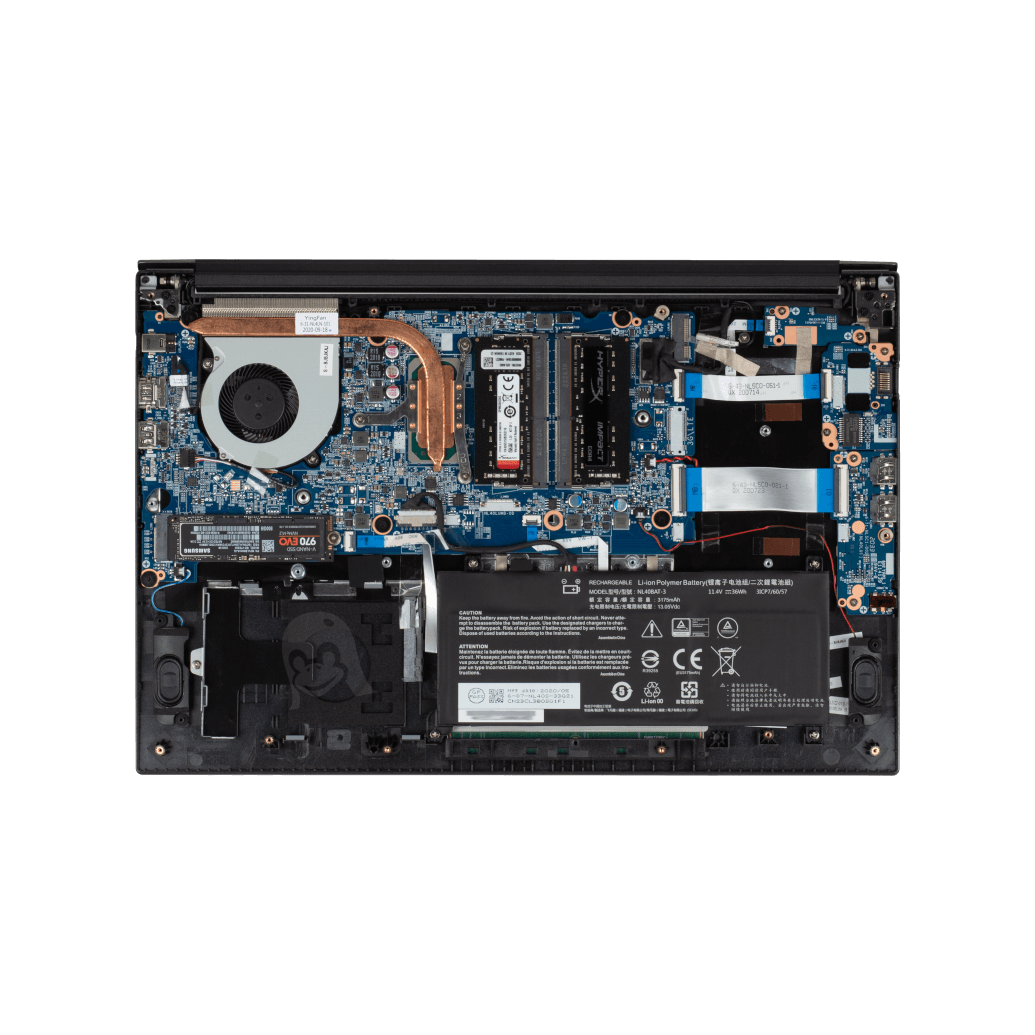
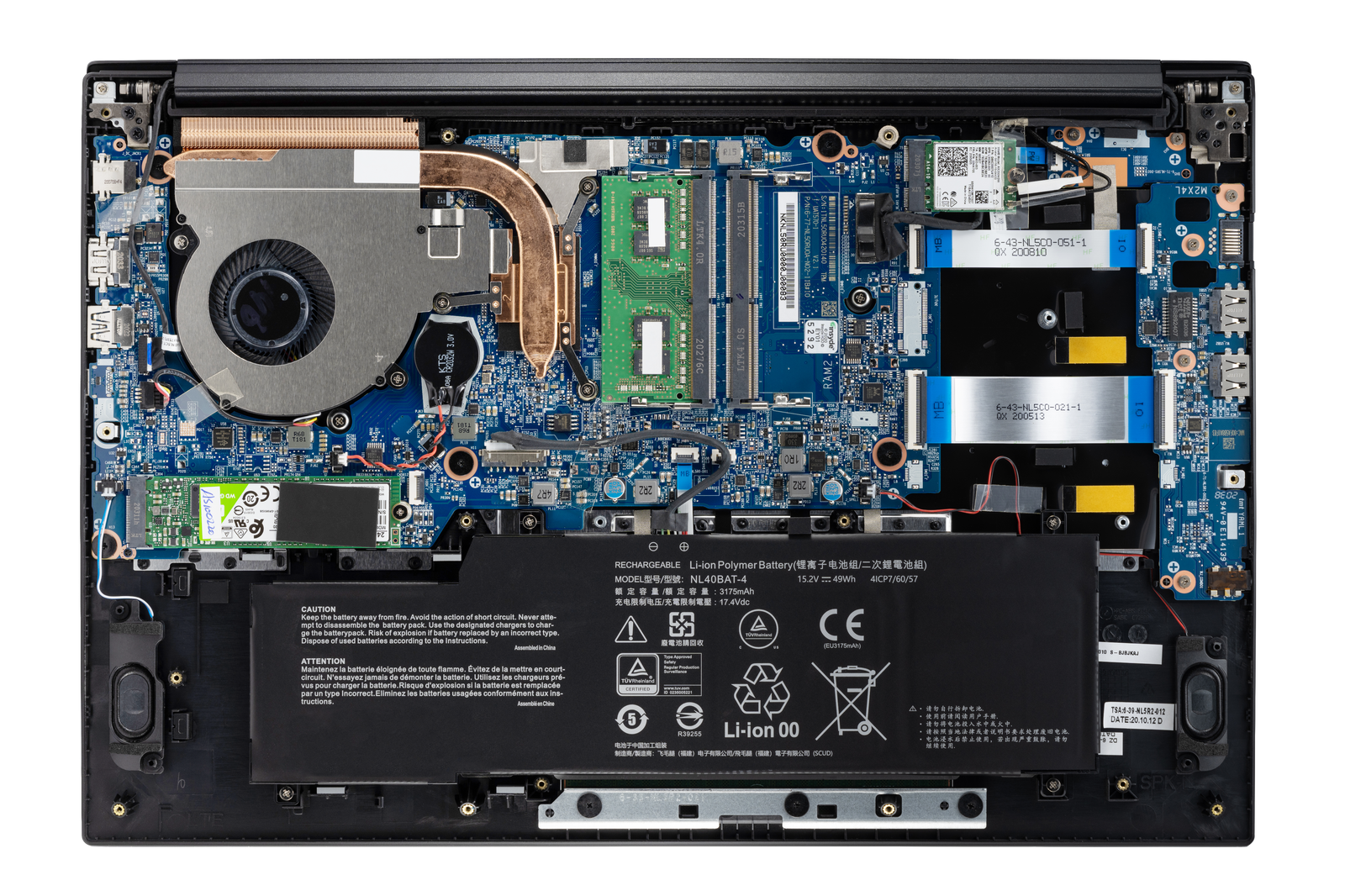
I don't understand why many of these workstation-class laptops have num. pads.
It is so annoying to type with your hands off-center from the screen.
I don't understand why many workstation-class laptops DONT have a num pads.
It is so annoying to have to type long sequences of digits without one.
This debate makes me wonder what it'd be like to have a keyboard layout in which the num pad is in the middle of the keyboard, such that on a qwerty keyboard Q-T, A-G, Z-V are on one side and Y-P, H-L, B-M on another, with the numbers in the middle (separated by a buffer space).
I know this sounds crazy, but IME the worst part of keyboard ergonomics on mac laptops is that my hands are much closer together than my shoulders are; widening to shoulder width makes for much more comfortable typing.
I'm sure nobody will crazy enough to build a laptop like this, but it makes me wonder...
Nice idea. Keyboard design is stuck in typewriter era and my shoulders and wrists could use an ergonomics upgrade. There's nice split keyboards, but the price is steep (~300 euros vs my current sub 10 euro keyboard).
I've been typing on a ~60eur let's split for the better part of a year now. Made myself some nice armrests out of scrps of locust. My more expensive keyboards don't hold a candle to it imo
By "scrps of locust" do you mean scraps of Robinia pseudoacacia (black locust) wood?
I agree you probably won't find this in a laptop ever, thanks to the standard keyboard design still being stuck with strange quirks, some of which were already outdated in the era of actual typewriters.
That said if you're a numpad user a keyboard with centered numpad is pretty much the best concept other than the rabbit hole of custom ergonomic keyboard layouts. Either way you can only get into that realm with a lot of money unfortunately.
Go down the rabbit hole! :) You’re one text file away from plopping a numpad anywhere you want on the laptop’s keyboard. Right Alt + K is the center of a numpad on my XPS 13.
Oh don't worry, I'm already neck deep. Anything other than a 40% columnar staggered layout doesn't cut it anymore ;)
Many Korean tripartite (세벌식) keyboard layouts have a virtual numpad accessible with shift. In a particular layout I'm using [1] it is HJKL:YUIOP for 0 through 9, so you can type 3.141592 with shift plus L.J:JYPK. Note that most symbols from the numpad can also be typed with shift, and full stop and comma can be specifically typed with or without shift. To me it is much better than the ordinary numpad (even at the middle) because it only takes two rows instead of three rows.
[1] https://en.wikipedia.org/wiki/File:KB_Sebeolsik_Flnal.svg
As someone with a disability who types with one hand, please for the love of God don't make this the standard
I've considered it!
I use an ErgoDox, and there's just enough space in the middle for a numpad.
But I often stick my phone there, and I just don't think I'd use it very often. Technically I can pop up a layer to turn the right side keys into a numpad (advantage of ortholinear) but I don't quite have the muscle memory to really take advantage of it so that's basically wasted.
I've mulled over having a special lighting routine that lights up only those characters, in distinct colors, that would probably get me close enough. But it's just enough hassle that I never get around to it.
I've been thinking about buying a trackpad and an ergodox and putting the trackpad in the middle. Think it will fit? Think that's a good idea? Where do you put the mouse when using an ergodox?
I have a Moonlander and a Magic Trackpad. I tried putting it in the middle and you can make it fit, but I haven't found it to be very comfortable. My keyboard is slightly tilted, so moving my hand to the middle also necessitates vertical movement, so overall I prefer it off to the right side. For minor movements I just use a mouse mapped to the keyboard and I want to try a trackball on my right as well.
I use a trackball to the right of the righthand side
A trackpad should fit, because you really want the halves parallel to your shoulders or just a bit tighter. Though as I think about the movements and gestures, you might find one of the halves interfering by being where your wrist naturally wants to be.
That does sound neat and would actually be quite withing the realm of possibility for a System76 laptop since their controllers are open-source. If you got like 50 people to chip in, you could probably get the production cost for one unit under 100$, which is still cheaper than most desktop split keyboards on the market.
You could always get this e-ink keyboard that is being crowd-funded the nemeio where you can I guess completely customize the keys https://www.nemeio.com/ - seems interesting and could allow you to easily explore alternative layouts but not sure how good the ergonomics of a keyboard like that would be but it seems interesting to me.
I've been vaguely pining for an Advantage keyboard with a trackpad in the middle. In a typical display of mainstream keyboard makers being completely stuck on the same track, keyboards with an embedded trackpad have it on the right, despite laptops providing a ubiquitous example right in our faces and hands.
Interesting... are there any keyboards with a trackball in a position easily accessible by the right thumb? (I haven't used a trackball myself but I've heard good things...)
EDIT: hadn't seen the sibling commenter mention https://atulloh.github.io/oddball/ which looks interesting, but perhaps too minimal for my taste (eg; where's the space button?)
Ergodox, if you're reading this, an integrated trackpad/trackball solution would be pretty appealing!
Afaik the ‘Ultimate Hacking Keyboard’ does that via its modules: http://xahlee.info/kbd/iergo/UHK_addon_modules_trackball_330...
Turns out it even has a touchpad, though its size is pitiful. Alas the whole keyboard reeks more of ‘mechanical + wacky layout‘ approach, with dubious ergonomics aside from the split halves.
Otherwise, trackballs on keyboards don't seem too rare: image search turns up this Adesso board (https://www.hippo-deals.com/products-images/1500/65915.jpg or better-ish https://www.adesso.com/wp-content/uploads/2018/03/2017061601...), something named KeyTronic, etc.
This 100%. Or a trackball. Look up the oddball keyboard or the ultimate hacking keyboard with its modules concept.
I've been thinking of getting an ergodox and putting a trackpad in the middle..not sure if the windows Trackpads on Amazon will work on Linux though.
Get an mnt reform and build your own :D Or just invest the few bucks to go for an mvp: split 60% keyboard and a separate numpad simply stuck between the two splits. If you like it, build it properly. :D
I already use a separate keyboard for each hand when I'm at my desk (external magic keyboard for left hand, right hand on laptop, with the unused half of the external keyboard underneath my propped-up laptop). Works great!
I don't usually do a lot of numerical stuff so rarely need the number pad... it'd just be nice to have a wider laptop keyboard when I'm roaming about (though tbf I'm not sure I'd want a laptop that large...)
This is a great idea!
It is also far more ergonomic than the current status quo.
It would be a great step.
Next step would be adding more keys under thumbs: backspace and arrows would be good candidates.
Some laptops have this on the touchpad, with a printed grid of numpad keys there.
Perhaps because you can buy a separate numpad if you want one, and then have the best of both worlds: both a numpad and a centered keyboard?
I don't want to have to assemble my laptop in parts. Why not the webcam and the mouse and the speakers while we're at it.
> Why not the webcam and the mouse and the speakers while we're at it.
Given the reportedly awful quality of webcams and especially speakers on those Clevo laptops, you might be on to something...
Assembly shouldn't be required (could be pre-configured from factory) but I don't see any reason why the top deck of a laptop couldn't be modular so the same model could support a more MacBook-like config with a centered keyboard + trackpad with no numpad and larger speakers OR an off-center keyboard and trackpad with numpad and smaller speakers.
Actually, thinking about it, it strikes me as slightly absurd that this isn't an option on at least a few mainstream laptops.
Great. I need 4 speakers for my quadrophonic music files! ;-)
Perhaps, one can just buy a mouse and have the best of both worlds?
Do numbers constitute even 5% of your keyboard usage time?
Depends on what you're doing: any kind of 3D work requires a numpad to be effective, since that's typically where camera controls are bound in every workflow I've seen.
This only applies to Blender. No other 3D software that I know of requires numpad hotkeys. I've been using Maya/Houdini/zBrush for years, never touched the numpad, that feels too awkward. If numpad keybindings in these apps do exist - I never knew about them, never needed to, never will.
(because left hand is on the keyboard, and right hand is on the mouse or stylus, and putting down the mouse to reach for a numpad is just weird.)
Doing it with the laptop would be even worse, I imagine.
Same goes for Cinema4D, wouldn't know of any numpad shortcuts
I'll say I personally can't use numpads, and they're total wasted space for me, so I try to avoid them on my keyboards and laptops, especially because they put the keyboard off-center on said laptops.
However, I think there are use cases and people who prefer using them. Some software is really geared around the full cluster being there. I've got a full size, numpad-ed keyboard (some old stock DEC thing that went to a mid 90s alphastation I believe, I got it for dirt cheap) attached to my "windows gaming machine", and I use the numpad on a few shortcut-heavy games.
Otherwise, though, I just don't have any muscle memory for it. I have to look and hunt/peck for keys on a numpad. I'm mostly using bash and vim for work, though...
I did work experience for a week for my IT course when I was about 15 in the offices of a petroleum-selling company. I spent a day or two in the accounts department absolutely amazed by the ~50 year old lady who was showing me how she input numeral data into the old green-screen workstation, fingers flying over the numpad inputting quantities and prices. As someone who even then felt I was 'good' with computers, I was stunned and thought I'd never get to that level.
Now I feel crippled whenever I'm on my laptop, which doesn't have a numpad, my own fingers flailing uselessly over numbers that whilst in mind are not available to my right hand.
I should probably get one of those external numpad USB things, but I much prefer a whinge.
To some professions, they do.
This includes a surprising variety, from accountants and POS, to 3D modelling artists...
Outside of typing out emails or schpiels, yes. If I discount Ctrl, Alt & Shift - probably significantly more than 5%.
Excel users yes.
I feel you, but after having chugged around 17 inch laptops for a while, I've come to the conclusion taht if I need a "big screen" I usually can place an external monitor + a ten-key USB thingy in that place and then just have a good 13 inch for other moments.
The NEO2 layout has the numpad on another layer under the right hand, no numpad needed.
> It is so annoying to have to type long sequences of digits without one.
I can't remember when was the last time I had to type more than 8 at any time.
even if I had that use-case, I'd still be annoyed having the typing home position off-center.
go split / layer keyboard, and you will change your mind. I will never go back to a num pad, cause it would mean the loss of layers and a 60% TKL.
Until you experience it, you will not have the experience.
Either UHK v2 or Dygma Raise. Both are great.
I don't understand why most developers that work in a stationary location use underpowered/thermally-constrained laptops rather than a desktop machine.
Because I work in multiple stationary locations. Even during pandemic.
If I really wanted to work on desktop I'd need to buy a car and bother with transporting it few times a week, or I'd need to buy multiple desktops and move only external SSD.
And in that case it would be a luxury, but I'd still want a laptop for occasional work and entertainment from couch.
Or you could have a powerful desktop machine and SSH/RDP into it from a less powerful laptop.
Latency from multiple locations would be a problem, also would need to expose it to the internet, and static IP is a problem. I'm sure there are solutions to this tho, but not worth it IMO.
I was wondering that about myself for a while. Upgraded from a laptop to a desktop and it's awesome. The ease of maintainability (and upgradability) and ergonomics of not having a laptop on the table are awesome. Plus it's much cheaper.
Ever try using Blender without one? You absolutely need the numpad for 3D programs and game engines, otherwise it's outright painful.
You can always add a usb numpad, but you can never remove one that is already there.
True. Why do they sell laptops with screen built in?
They do sell them without built in screens too - Mac Mini for example.
They don't call them laptops though.
A long time ago I used to own a laptop that I bought from a friend after someone stepped on it and broke the screen. I removed the screen and installed some version of Linux on it.
It turned out to be quite fun and useful. Not a very good laptop if you want to use it where you don't have a screen, but it was kind of like a modern TRS-80. You could treat it like a keyboard and not have the laptop screen get in the way of the larger desktop monitor (back then it probably would have been a CRT) I actually wanted to use. In a sense it was actually less awkward than a normal laptop for the way I usually wanted to use it.
Excellent idea! Then you can reposition it so that the useless numpad doesn't force the main keyboard to be off-center. ;-)
Because all laptop users make use of the screen.
A large number of laptop users just use them on the desktop, tethered to a big screen, in clamshell mode. This includes almost every vlogger setup one can find...
Except the primary design goal of a laptop remains portability to some extent. And not having a screen would make it an incomplete device.
I use it like that 80-90% of the time, but the on the rest I just use it purely as laptop on the couch. I like to have both options.
Surely this is just due to a lack of knowledge? If you're never going to use the portability, then you can get a much more powerful desktop than a laptop given the same amount of money.
Having a built in UPS is pretty sweet for some use cases though.
>Surely this is just due to a lack of knowledge? If you're never going to use the portability, then you can get a much more powerful desktop than a laptop given the same amount of money.
They can also just like having the option of portability, and appreciate the less bulk. Plus, they do use it once in a blue moon outside (at a conference, traveling, etc).
That's what my original argument stated,
> Because all laptop users make use of the screen.
If they wanted less bulk, they could buy an Intel Nuc or similar form factor device.
The screen and portability are the compelling feature of the laptop design.
Then they would be better served by a desktop.
Im not a top tier user of blender but I get by via remapping some of the relevant keys. I don't use all the features, but I feel like having no numpad is well supported in blender, and is irrelevant in Unity and Godot. Can't speak to unreal.
Using a mouse is very bad for my shoulders if it's too far away from my center. Numpads are simply not an option for me, unless I had an external one in a special location.
I think the numpad users are outnumbered by the indifferent and numpad haters. I'm in the latter column.
I did think that for the first few weeks of using Blender, but I find I don't use it any more. I think perhaps once I was using Blenders verb / constrain / snap model I stopped using the ortho views. So for example (G)rab / X / (10)units. (S)cale, Y, 1.5. (E)xtrude, Y, Snap.
Six years ago, I searched long and hard for a 15.6in screen laptop with a SSD and no numeric keypad. HP had just come out with the first of their Omen series of gaming laptops.
I've sort of regretted the decision. Not the keypad part, I still hate those, but there are other little aspects to the laptop I still don't like, or didn't work quite right.
I don't know, I guess I shouldn't really complain. For all the expense, the 16G of RAM and SSD are holding up well after this time. The programmable gaming keys didn't work quite right for my purposes (I just wanted dedicated PgUp / PgDown, Home and End, with the shift and Ctrl variants), and the battery life is crap these days (glued in). It still mostly works though.
If you were a blender user, you would understand.
Lots of people don't care.
It can be important to keep the trackpad close to centered on the keyboard for easily use of both, but the screen not aligning by a couple inches is purely aesthetic.
To me a num pad is a waste of space, but my Dell M6800 with a 3rd mouse button on the trackpad - wonderful luxury!
I do dislike them too.
It would be better for that keypad to be on the left side, as it interferes less with mouse use.
But, a friend of mine, was asking specifically to get a laptop with such an extended keyboard.
They're optimizing for the professional accounting Olympics use case.


I'll give System76 (and their hardware partner) this: They're getting closer to something I'd buy.
This looks like a good option for a 15.6" laptop.
My issue with it is that they're still shipping with those barrel plugs AC adapters, and don't appear to support USB-PD for charging on the USB-C ports.
The lack of Australian support also makes it a difficult purchase - a former colleague bought a System76 laptop a few years back and it died a few months after purchase. Having to ship it back to the US, and the associated delays means having to buy a second laptop to continue working while it's being repaired.
For $86 at purchase you get free shipping for warranty issues (Canada, may be more for Aus)
> Shipping Coverage
> Canadian customers only - covers all shipping for warranty service.
> Canada warranty two way ground shipping coverage +$65
They don't offer it for Australia.
I'd be surprised if they would - you'd be looking at air-freight, and from prior experience shipping a Lenovo laptop to Australia it was over USD$150, and that was 10 years ago - so probably more now.
Australia to the US would be even more still.
Don't they support USB-C charging? I compared the other days all their models, those that rated at 65W all supported USB-C charging.
I don't think so.
Clevo are known to be the OEM behind many (all?) of System76's laptops. In Australia they're sold under the brand of Metabox.
The System76 Pangolin tech specs[1] match the Metabox Edge specs[2] and visually match as far as I can tell identically, and neither mention USB-PD or Charging capability. Metabox specifically call out USB-PD capability on their other range of laptops, so I don't think it's an omission.
[1] https://system76.com/laptops/pangolin#specs [2] https://www.metabox.com.au/store/Edge-Range/Specs
Here they do: https://system76.com/guides/lemp10
Notice "65W+ USB Type-C Charging Compatible" in specs.
That's a different laptop.
Purism Librem 14 supports it: https://puri.sm/products/librem-14
It doesn't look like there is a Thunderbolt port ( a 40 GBPS port ). I recall reading that it has something to do with it working on Intel only hardware.
But whatever the case is, lack of Thunderbolt is unfortunately a deal breaker. I've moved on to unifying all my docks and power chords to only be Thunderbolt. It's unfortunate because the Ryzen chipsets are clearly getting to be superior from a price/performance point of view.
EDIT: I am writing this as someone who supports System76, and has only ran Linux professionally and at home for the last 10 years.
The lack of Thunderbold has nothing to do with Intel. Apparently AMD has not supplied hardware partners with any reference designs implementing it. If you do it then it would be up to you to come up with your own design implementation. There is one desktop Ryzen board that supports Thunderbolt
Thunderbold is generally not available on AMD systems.
Several reasons.
a) Intel wants licensing cash for allowing you to use it
b) It does not actually add that much to USB. You want to attach monitors? Non-Thunderbolt USB can do that. You want to attach storage? Non-Thunderbolt USB can do that. Networking? Charge your device? USB can do all that.
The remaining selling point of Thunderbolt is that you can attach an external graphics card over it. There are external USB graphics solutions, too, but they can't really compete if you plan to do high perf 3d graphics over it.
However this selling point is also the Achilles heel of Thunderbold. It exposes PCIe to devices outside the device, allowing direct memory access over it. This can be partially mitigated if the OS and all drivers cooperate and are really well written (for example not expose a memory page that contains other stuff as well).
But bottom line? I actually view this as an AMD advantage. It's a bit like Firewire was. a) it cost licensing money and b) it introduced a similar security issue while c) not actually delivering that much of an advantage over USB unless you are part of a certain niche.
Thunderbolt may not matter so much for desktop, but it definitely does for laptops.
Like the other comment mentioned, docks.
Yes you can theoretically accomplish everything with other ports, but I don't want to feel like I'm disconnecting my laptop from life support every time I move around. 1 Wire for Power + 10+ peripherals is awesome, and I can't go back.
>1 Wire for Power + 10+ peripherals is awesome, and I can't go back.
This can still be done with non-TB USB-C. Including power and video.
Not if you use 4k or even more.. DisplayLink compression sometimes gets so bad that you can measure it in seconds per frame.
I believe, based on my own experiences, that you're mistaken here.
MacOS has a nice feature that shows you in the device tree what the thunderbolt connection speed is, for my eGPU it shows as '2x' which is 20GBps, and that's running an eGPU with 2x 4k displays.
For work, I run a 4k panel from Lenovo[0] that has a USB-C in and while that's a 60Hz screen, it does not show any signs of input lag or artifacting.
Many Docking stations only can do it via DisplayLink though
USB C alt mode over DP isn't DisplayLink, does 4k and is published by VESA.
https://www.dell.com/support/kbdoc/en-us/000141328/displaypo...
In my opinion, though I don't actually have this option, the killer use case for Thunderbolt (or USB 4) is sufficient bandwidth and a large aftermarket for...
Docks.
Now, I had a thin 'n' light with just 2 USB-C ports, and I could get a dock/adapter that had power delivery, HDMI, Ethernet and a couple USB-A/USB-C ports. But for high-refresh rate monitors, a proper dock will want a lot of bandwidth. Without that bandwidth, you'll have to pick your compromise on the dock.
Thunderbolt aka USB 4 (I think?) can be added to AMD systems but so far I've only seen one AMD desktop motherboard introduce this option. So far it doesn't look good for 2021... maybe next year?!
It's complicated. Thunderbolt 1/2/3 were all open-ish, but required intel's chip. Which was alright at the time - AMD didn't have anything competitive in mid to high-end market anyway. Thunderbolt 3 later became royalty-free, but with mandatory certification by intel.
Around January 2020 vendors are able to make their own controllers and submit them for certification. AMD doesn't have any. Intel's controllers don't have an embedded version for sale.
Seems more sensible to me to base everything off of usb-c instead.
Thunderbolt uses USB-C since ~2015.
Point still stands.
No it doesn't.
USB Type-C is a connector shape, used by both USB and Thunderbolt. So people saying they want thunderbolt and you saying they should want USB Type-C doesn't make much sense.
Imagine someone in 2001 saying they are disappointed with new computers being released without USB 2.0 (i.e. still using USB 1.1), and you replying that things should be based on Type-A. Both USB 1.1 and USB 2.0 used Type-A connectors. The shape is unrelated to the protocol/speed/etc.
I think it was obvious beyond any reasonable doubt that I meant USB over USB-C.
I like my System76 desktop but I've had plenty of issues with their laptops, and I really dislike a numpad on a laptop.
> I really dislike a numpad on a laptop.
Was going to say the same.
Also, I will not buy a 1080p laptop. We're in 2021, give me 4K or at least 1440p or I'm not interested.
I also personally prefer 13" laptops for travel convenience. (Not that its a concern right now, but I assume one day it will be again!)
I question whether 4K on the average laptop screen size is worth the added load on the GPU (and so, lowered everyday performance and battery longevity). On big screens, sure, but at 13 inches? At that point you're stretching the limits of perceptibility, and given the other compromises you're already making to have a laptop instead of a desktop, it seems like a doubly silly one to add.
Well, my current laptop, a Dell XPS 13 has a resolution of 3840x2400 and its great! Yes, my normal use, I have things scaled/zoomed but for watching videos, its fantastic.
For normal use, 1440p is fine, but 1080p is too low for me. 4K is probably not necessary if its only used to watch videos. I probably should have flipped it and said: "give me 1440p, or even 4K"
Although one area where I find higher resolution is beneficial code editors, if I have enough pixels that I can have 3 vertical splits and have the text still look crisp, that really helps my development workflow.
On a 15" and above though, I wouldn't go lower than 4K personally.
Seconding the numpad thing. I wish laptops would come with something like a 50% ortholinear mechanical keyboard in them.
Yes! If someone from system76 is listening to this thread, please, make a version without the numpad! That would be the case for me to buy one of these, but with a numpad it is a no.
I love my numpad.
Try putting it under the home row with a modifier key. I won’t go back.
https://docs.google.com/spreadsheets/d/1NBBq9vHufU9a6d59irhR...
given the size of the unit it makes sense to have a numpad, no? What would you put instead?
I don't like having my hands off-center. I assume I'm not alone there. Among other things, it causes amplified wrist pain.
You're not alone. Why anyone would prefer an off center keyboard only to gain a numpad I'll never know.
Being left handed makes the numpad even dumber. It's placed on the wrong side of the keyboard.
I'm left-handed and I'll take a built-in numpad any day. I punch in enough long numbers day-to-day to really enjoy having it, even if it's on the "wrong" side of the keyboard (and so it is with virtually every other keyboard out there with a built-in numpad).
I also already normally type with my keyboard slightly off-center on my desktop, so an asymmetrical laptop keyboard ain't really all that big of a deal. Even if I didn't, and insisted on a perfectly-centered typing experience, having an off-center screen is something that I've yet to actually really notice.
Just put the keyboard in the centre, there's no rule that you need to make use of the whole surface.
Most offices don't allow people to put pictures or personal effects on their hotel desks anymore so perhaps one could have a little LCD panel there displaying pictures of one's loved ones, or the cat not eating salad.
You put nothing, why do you assume if there is space it needs to be more keys in there? I bet they can even improve the structural rigidity by not having the numpad.
i'd prefer wider more forgiving typing targets of the keys i use
I just can understand people creating non HiDPI displays in 2021. It’s just beyond me that someone is making laptops with display much worse than my 2012 MBP Retina.
> I just can understand people creating non HiDPI displays in 2021.
Because they still sell.
Back around 2 decades ago, we had a funny thing in Russia where people demanded 640x480 monitors back, and even bought, and sold them on premium because new 1024x768 monitors "make everything so tiny!"
Totally agree with you. I use my MBP mostly on native resolution if my screen gets really crowded and on the other hand it's nice when you're doing creative work and can switch to a downscaled image with so much more "smoothness" and details. I like the specs of this Pangolin notebook, but as soon as i saw 1080p i was gone.
I've no use for a hidpi display. I've a use for lower power usage though. If I don't care about power usage, I'll be using a desktop anyway. Plus the price is probably pretty different. I know decent external budget 4k monitors are non existant.
I have their 13-ish/14-ish laptop from 2017, 3200x1600 display. It's great. Damn shame they don't have anything high-dpi now. 15" 1920x1080 is unacceptable. 1920x1080 is the new 1366x768.
I am avid for System76 direct user experience. How's the machine-OS integration going on so far?
An I agree that 1080 now is a 13-14'' display resolution only nowadays.
I want to love this, but the keyboard seems horrible. I know I'm exceptionally picky when it comes to keyboards, I usually just take a 60% mechanical keyboard with me, but I've been able to adjust to using the (non-crappy years) Macbook Pro keyboard and the Thinkpad keyboards while traveling, and generally find them acceptable. This keyboard though has really bad legends, an inexplicable numpad, and it takes up too much real estate when I'd rather have a trackpoint and a larger touchpad.
Also, the screen resolution and size seems odd. I'm okay with a 1080P screen... but not at nearly 16". This should be offered with a 3K or 4K screen only.
I've never bought a laptop without a numpad and would never even consider a laptop that doesn't have one.
There are tons of apps, specifically in the video editing / 3D modeling space that are basically unusable without one.
When I code, I have macros tied to numpad keys. Couldn't work without them.
If all you do is browse the web and answer email on your laptop, then yeah, makes sense.
For any serious work, no numpad = no buy.
I probably feel differently, because I'm used to using shortcuts and macros on a TKL (or smaller) keyboard. There are many different ways to achieve that, but for instance on my 60% mechanical keyboards I have between 3 and 14 layers (depending on keyboard firmware) which can be accessed with modifiers and trigger macros. There are significantly more combinations available to me on a 60% keyboard or on a laptop keyboard, with appropriate tooling, than is available on a numpad.
I've been doing "serious work" for my entire career, thanks, although these days I do spend more time in Zoom meetings and writing emails/documents.
Do you really feel like you would be constrained by the amount of shortcuts on a keyboard without a numpad? There are so many different combinations you can make once you include control/alt/fn etc. Sure, if you're used to shortcuts on a numpad I can see how it might hinder your productivity for a few weeks. However, working on a smaller keyboard will definitely not constrain the amount of flexibility you have in the long term once you get used to other shortcuts. You might even become more productive on a smaller keyboard, because it takes less effort to stay on the home row and find keys.
> 60% mechanical keyboard
What's that?
The article on the Deskthority wiki probably explains it best: https://deskthority.net/wiki/60%25
It's essentially a keyboard lacking function keys, a numerical pad, and a navigation cluster. Usually has between 61 and 68 keys, and contains an extra "function" key that acts beyond the typical Fn key to help you control layers. Every 60% doesn't have layers, but most do, and those layers are generally programmable. These days pretty much all of them use QMK or VIA firmware.
The Deskthority article for some reason mentions the Minila which is actually a 65% keyboard (which is a 60% + arrow keys).
The other strange thing about a design like the Minila is that there's enough "bezel" at the top of the case for them to have put half-size function keys, which would have made it much more useful without having to increase the overall size.
I feel like battery life could be a challenge too, at 49 Wh. The M1 Macbooks have a 58 Wh battery, but they also benefit from being not-x86 and having better power management at the OS level. Dell XPS laptops with discrete graphics ship 97 Wh.
I love non-4k displays, but 1080p on a 15" is too harsh. 1440p would probably be the cutoff for that size.
It seems that most developers (their target audience?) love hidpi which may be one of the biggest adoption issues for System 76.
I previously bought a Thelio desktop from System76 and it was great. I ended up upgrading and basically took all the parts from it except motherboard and cpu. I still use PopOS as my daily driver and have no reason to ever switch to anything else. Drivers always work and updates are painless. Major version upgrades are always smooth. I haven’t had any external hardware compatibility issues (though to be fair this isn’t just PopOS, but Linux in general improving). I’m a huge fan of PopOS.
+1 It might be a bit pricy, but the tech support is amazing.
I just spent a few weeks working with them to debug a transient kernel panic with my new Thelio. Throughout the entire process, I talked to support techs with actual agency, and not just automata reading a script. Serious kudos to System76.
(The problem ultimately turned out to be a clearly labeled experimental feature I'd turned on a few months earlier and forgotten about. Ooops...)
The Thelio is my daily driver, and PopOS just fades into the background.
Laptops with offset keyboards are difficult for me to deal with. The keyboards qwerty (or whatever layout) section should really be centered under the screen
I really like System76, and what they're trying to do. But their mediocre laptop keyboards are always the deal breaker for me--it's the chief human interface, and the one component I don't want to compromise on.
I have a Darter Pro 2019 and I also have two ThinkPads (T490 and W510) and I can say the Darter Pro is not half bad. The layout is "different" but not bad once you get used to it. The feel is pretty good. Not as good as the W510 but comparable to the T490. Even the trackpad on the Darter Pro is smooth.
I agree with the overall sentiment though that it's time for a premium-designer-made-for-linux-laptop!
Yeah it's telling that on the specs page, the keyboard doesn't even get a mention.
> and what they're trying to do
What is it that they're trying to do? Sell re-branded Sager laptops?
Yikes that keyboard. Small right-shift key, weird narrow numpad, off-center trackpad.
Do people actually like that kind of layout? It seems pretty awful to me. I'd prefer no numpad at all and a full size shift key with half-height arrow keys.
If I want a numpad, that's what desktop keyboards are for, or a USB numpad.
For the last 20 years, "has a numpad" has been one my qualifying criteria for buying a laptop. I need a numpad, because I type long-ish numbers into my computer all the time. IP addresses, phone numbers, and simple arithmetic problems are probably my top three uses. If I had to suffer with only a number row on a day-to-day basis, I'm sure I'd have some kind of RSI by now. The number row is too far away from the home keys to be of more than occasional use.
The num pad is much farther away from the home row than the number keys, which touch typists reach without needing to move hand position.
I have a laptop with that basically that exact same keyboard. It's not too bad. In practice, I find the flush surface hidden mouse buttons to be more problematic. I would never want a numeric keypad on a laptop, but apparently it's a selling feature and it's near impossible to find a larger-screen laptop without one.
I find whether minor things like the off-center trackpad bug me tends to reflect more about my current state of mind than anything else.
Laptops that are designed with Linux first-class support are interesting, and I've been considering to get one once I'm through with my late 2014 MBP.
How do System76 and Purism compare in terms of daily drivers? Anyone tried both and could provide a comparison?
Pricing doesn’t seem that bad. I wish they’d elaborate on what “AND Radeon Graphics” means specifically
It doesn't have a dGPU specced, so it looks like it's just the APU graphics. That's a Vega 6 for the 4500U and Vega 7 for the 4700U. This may be useful for placing that performance in context: https://benchmarks.ul.com/hardware/gpu/AMD+Radeon+RX+Vega+7+...
I'd buy one if they had high DPI panels. Even 16:10 would be a significant improvement; 1080 vertical pixels feels awfully cramped these days.
> 1920×1080
Come on.
How are they keyboards in System76 laptops? By the pictures it does not look very good.
Would like to see more specifics than just "AMD Radeon Graphics".
That could mean literally anything from Intel integrated level performance, to a proper dedicated GPU, though for the price here I'm guessing on the former ...
https://www.amd.com/en/products/apu/amd-ryzen-7-4700u
Vega 7 @1600Mhz
You are unlikely to see dedicated graphics paired with a U-series processor in most cases. (There are exceptions, but you'll see the dedicated graphics card specified in those cases.)
The graphics appear to come from the processor, either a Ryzen 4500u (6 gpu cores @1500Mhz) or Ryzen 4700u (7 gpu cores @1600Mhz).
See benchmarks here: https://www.videocardbenchmark.net/gpu.php?gpu=Ryzen+7+4700U...
basically: not great
I don't want to advertise, so I'll just say - you can go to a big computer/hardware seller website and search for laptops with nvidia graphics cards. You can get a laptop with a GTX 1650 for $700, which has 3x the performance.
And then we have to deal with nvidia's proprietary drivers, HDMI being electrically connected to the gpu, graphics switching, etc.
AMD's APU graphics offer a good enough solution while removing the headaches many of us are trying to avoid.
Not if you want 3d graphics it's not.
Too bad it has that numpad instead of a centered keyboard.
Also I don't understand why a laptop of that size doesn't have a 99Wh battery.
The 1080p resolution is understandable... high DPI support suck-fest can be avoided.
Last year I bought a 4800H Tongfang PF5NU1G (sold as the Tuxedo Pulse 15, KDE Slimbook, and by Laptop with Linux, among other places) that has a centered keyboard and a 91Wh battery that's a better option than this Pangolin, but availability has been pretty scarce.
I get system76's coreboot offering looks interesting because there aren't many vendors shipping that feature. What's the appeal of their other products though?
Is it normal for it to use somewhat old processors (4500U and 4700U) instead of the new ones that have been available for quite a long time like the 5700U and 5800U?
Supporting system76, librem, etc was once about investing in support for linux....
Yet those companies provide zero contributions, rebadge open source projects, and just re-sell taiwanese white-label computers while going great lengths to hide that and fake innovation.
if pcpartpicker.com adds a single checkbox to their searchs: "[ ] support in mainline linux kernel", it would make more good to linux support than all those companies combined.
Also, barrel charger plugs? ugh.
Interesting choice of animal, given that Pangolins are suspected of being the source of the virus causing the COVID-19 pandemic. https://www.webmd.com/lung/news/20210210/did-the-new-coronav...
All publicity is good publicity, I guess...
This was my immediate thought upon reading this. It is a very bizarre name choice given its potential connection to COVID-19 and that it was released during the ongoing global pandemic. Regardless of whether Pangolins are the true source of the pandemic (it is looking like that is becoming much less likely as time has gone on), the connection is still there in many people's mind and not what I would be naming my product after in 2021. Maybe in 2030 it would be safe, but this might just be a bit too soon.
Surely someone at System76 has to be aware of this, which begs the question, was this naming intentional? It would have to be I imagine. It seems a bit crass to go this route in the current climate.
Given the Pangolin was used for Ubuntu 12.04 and System 76 has used previously referenced animals from Ubuntu's naming scheme before, I'd suspect that's why.
Ha, came here to say just this.
Is there a way to get an accidental protection plan on these machines? I would love to support Linux HW vendors, but I am very clumsy.
Add it to your home insurance? Buy a separate policy?
looks like the aura 15 from tuxedo computers / schenker but a little bit more expensive? https://www.tuxedocomputers.com/en/Linux-Hardware/Linux-Note...
Also, with a smaller battery.
Just switched to a Gazelle from an old IdeaPad p400 touch. Full keyboard, beautiful screen, removable battery, extensive power management options, large trackpad, multiple color adjustable brightness back-lit keyboard so I can change it to red to avoid hurting my eyes, a real gpu, and powerful as all heck. I love it.
10MB of unnecessary large (2560x3842) PNGs on a product page. It's not a gallery, it just makes it slow to load.
A dragable laptop with a numpad. No thanks. What programmer or devops consultant needs a numpad? Unless they're coding in hex.
I long for a ~13-14" 2k AMD Ryzen ultrabook. So far the screen is always subpar. I've been using 2560 resolution on my X1 yoga now for 2 years and I can't go back to 1080.
What's the price difference to comparable hardware from other vendors (and other OSes)?
Someone on here yesterday suggested a Lenovo Slim 7, which seems broadly comparable, this review covers a few other similar models https://www.theverge.com/21423498/lenovo-ideapad-slim-7-2020....
Note, I'm in UK "slim 7" here is used by Lenovo for a "Yoga" model whilst the poster mentioned an "IdeaPad". I assumed that as I searched for the latter and got the former that they must be different regional names. But, no. They're very different with very similar model names. Lenovo seem to do this a lot and it's very annoying.
After some consideration, I am going to buy a System76 computer. I want them to succeed.
How does it compare to Lenovo Thinkpad L15? As I understand there is no problem with running latest Linux on it, and currently I'm thinking about buying it (mostly Rails development + docker). Do you recommend any other machine?
Why do they use such ugly fonts for the keyboard? It's an immediate turn off.
Probably because it's (likely) a Clevo NL51RU or something similar and they use these gamer-y legends. [0]
[0] https://clevo-computer.com/media/image/15/da/88/CLEVO-NL51RU...
My question was rather "why would anyone use such an ugly font on a keyboard?" :)

Has anyone in Canada ordered from system76?
I'd expect to get dinged for GST or HST, but were there any additional surprise brokerage fees or duties?
This thing is really up my alley and I just got my first decently paying, steady software job...
Love it, I really hope the idea of more 'crafted' laptops and computers catches on. Ideally with more open source and more repairability. It is something I miss from the "good old days."
I've got the Thinkpad E495 with AMD Ryzen 3, Vega and 1TB HD, Fedora 32 for under 500€.
Excellent machine, faster than anything else I got. But it was only a short time test balloon, I fear. Not available anymore.
I have a 2-yeard old Darter Pro, which has an Intel CPU. Love it, great laptop.
Can someone comment on the pros and cons of the Ryzen CPU? Wondering how to compare the new machine to the Intel-based System76 laptops.
Just picked up a Thinkpad P14s with the 4750u (8 core 16 threads) for about $600 using corporateperks.com discount. Spent another $250 for 1tb m.2 and 32gb ram upgrade. The value is tremendous.
You're welcome guys. I'd been considering whether to wait for one of these or buy something else.
After just putting in an order for a Darter Pro, of course this immediately becomes available!
Is this laptop designed by System76 or yet another Clevo re-brand?
This is a compelling laptop I wonder if the build quality will compare with Lenovo.
15.6 inch screen at 1920×1080? That’s barely OK but not great for a laptop in 2021.
Is this system better than, say, Lenovo Legion 5 or HP Envy, they have similar price, are those System76 laptop offer better build quality, etc?
I have owned multiple S76 machines - the machine was built by Clio? The guts were good, but the case was chintsy.
I had four of these laptops - and on ALL 4 they would have screws come loose and fall out inside the case. You could hear it rattling around when you turned the machine. Two of them had one type of connector for the screen and the other two had a different connector - One got fried and on the other I broke the screen on - so I couldn't harvest parts from one to the other.
S76 wanted $90 for a new charger after one of mine failed.
I have an HP Omen laptop as my primary machine now - here is what is cool:
I had an HP Omen and it failed to power on one day - so I contacted support and they had me send them the machine - instead of fixing it, they sent me a brand new Omen which was way better than the failed unit. The design is super elegant, and it has dual NVME slots, so I have dual drives in it.
The screen is matte so no glossy reflections like my macbooks have...
Yeah - I think I'll stick with Omens for the foreseeable future. HP's support was FANTASTIC.
When my macbook pro caught fire in my sleep and nearly killed me (it was laying on my bed and I fell asleep watching a movie and the machine caught fire - something that that model was recalled for) I took it to Apple's main store in San Francisco - and they kept it for two months "analyzing it" then came back and told me that even though it was a safety issue and the machine was under recall for CATCHING FIRE, they found that one of my moisture sensors had been triggered and therefore, they were not going to replace, fix or help me.
(I had spilled a small bit of water on the keyboard many month prior to the machine catching fire)
Then they tried to sell me a new machine, or have them "replace the machine for $1,500"
A total joke. Ill never buy another apple machine nor a s76 machine again.
HP support is AMAZING.
Also - When HP bought Compaq - we had a bunch of Compaq/HP servers back in 1998 - and the support back then on those servers was top notch - and the HW design was as well. I used to rebuild those servers in minutes in the literal dark.
All the Sun servers we had, like the 650s would bitch if their case was even slightly off center and would refuse to boot.
As a counter-anecdote:
I'm typing this on a 7 or 8 year old s76 Gazelle. It was my primary work and personal machine for 3 or 4 years and has been my primary personal machine since. I did replace the original drive with an SSD, and I think I may need to replace the fans---they're getting loud. Hardware- and build-quality-wise, I've never had any problems. (Well, ok, I killed one of the USB ports. Probably broke some of the connections.)
The one problem I have had is with the NVidia graphics, which have never worked properly. (I've got graphics acceleration disabled now.) Either it wouldn't go to sleep, or the graphics wouldn't wake up. The last straw was when I got those problems beaten into a standstill, and Chrome started somehow overriding my window manager and keeping the (accelerated) Chrome window front and center, minus WM decorations.
Sure, it's a generic Clio or something, but I've been very impressed. Never had much love for HP, though.
I had good experiences with System76 support. I've bought 2 laptops off of eBay and had no problem getting support even though I wasn't the original owner since the original owner bought the 2 year support package. If I had a loose screw I would have removed the case and found it. They're reasonably able to diy and your warrant isn't voided just because you replaced the RAM. Apple support has gotten horrible based upon anecdotal experiences friends and family have had. The build quality isn't the greatest but having everything work well under Linux and be supported is a good thing. I gifted my Oryx Pro to my step-kid who uses it to play games etc. Linux battery/power management has never been great as this isn't the focus of most kernel developers and there is a lot of microcode optimizations that might be possible.
I opened them up. I spoke to S76 support and they charged me $9 for a new screw kit...
I am quite familiar with breaking down/working on all types of machines...
they had lock-tight paint on the screws, which didnt work.
and the sad thing was that the connector type between the two broken machines had changed, even though they were the same model "Gazelle" - they are also a super pain in the ass to work on. The screen connector requires you to basically dismantle the entire machine...
Obviously this machine was a white-label Clio machine, and S76 has more recently started designing their own machines (supposedly - so I dont know how much of that design is in-house vs them spec'ing things out to other design services...
> HP support is AMAZING.
Can anyone else back this up? Has HP changed? I've sworn off HP products (both enterprise and consumer) because of their terrible customer service and documentation. Dell/Lenovo always offer something very similar in price and performance, and their enterprise support is fine to great.
I might have just hit the HP Support Jackpot. But it was hands down the best experience I have had between machine manufacturers - HP/Sun/S76/Dell/Apple etc...
I was completely dumbfounded when HP just said "we are going to send you a new machine, at no cost, please pick from this list...
And I picked this dope Omen machine and when I opened it up to look at the guts and put in a second SSD, I was taken aback by the elegant symmetry of the design. The only downside is that even though the sound is "bang & olufsen" - its a bit too quiet.
However, the support guy on my case was dope, and I love this machine
Yes it is amazing, EVEN for the lower end E series.
I bought one, and didn't like the keyboard. Send to a relative overseas. Months later the Mobo died a few weeks under warranty. Called HP and told i was overseas. They provided a local support number. ship by local post. upgraded new mobo. no charge.
This was a non-business $300ish laptop.
sadly, their shopping experience is abysmal like every other PC manufacturer :(
If you're running Linux, I'd recommend avoiding the Envy (and maybe all HP laptops) as they typically don't have S3 support: https://www.linux.org/threads/acpi-bios-error-and-suspend-do...
A Legion 5 will have an Nvidia dGPU, so you have to decide if you want to run PRIME or something else and see how the external monitor outputs are muxed if that's important to you.
Pangolin 15 looks interesting.
Compared to the latest Thinkpad X1 Carbon, I wonder how bulky the thing is. Sure display wise, it's bigger.
> Video Ports HDMI(w/HDCP)
Would be really nice to use a proper modern DP instead of antiquated HDMI for this.
Is it using Coreboot by the way?
HDMI is less hassle. Everything comes with a HDMI port these days, but a DP port is still more of a proper full Computer Monitor(tm) feature. My work just installed a whole bunch of projectors that have HDMI and VGA as input options. I have no idea where they found them.
Of course sometimes the HDMI fails due to DRM nonsense, so that's also an issue.
I think HDMI only exists because HDMI cartel keeps pushing it for patents profits. There is no real need for it because DP is much better. But since they make HDMI only equipment, we are still stuck with it.
And personally, I had a lot of problems with HDMI in the past. Unlike with DP.
Theoretically some DRM content should refuse to play at full resolution on DP connected displays due to the lack of DRM on the cable. I've never tested this myself, but you often see requirements for things like Blu-Ray players that you have to be running a late model Intel chip, on a supported motherboard, on Windows 10, over HDMI to a supported monitor. Get anything wrong and you've got a 720p picture or a black box.
Edit: Behold this list of requirements. https://www.reddit.com/r/htpc/wiki/faq#wiki_what_do_i_need_f...
I'm quite averse to DRM in general. For blurays there should be libaacs with keydb.
DP should support HDCP as far as I know, if you need it.
Seriously, HDMI should just disappear already but that corrupt cartel will keep it around for years.
A lot of hardware these days just convert DP to HDMI internally for ease of engineering.
Do they do anything to neutralize/disable the "AMD Secure Technology" thing (if that's even possible)?
System 76 is well known for the linux laptops, aka mobile workstations. I've owned a few over the years.
Why still only 1080p in the year 2021?
battery and overall compatibility.
and for under 15" it is just a waste for 90% of people.
I still miss thunderbold on the ryzen mobile laptops. I still hope that tb4 changes things.
Its all exciting until you see the accountant's 10 key hanging off the side. :(
I stopped at FHD display. WTF can we have at least a QHD resolution on a 15.6" ?
I like System 76 and I use Pop OS on a desktop PC. I don't know how else to say this but crikey, these machines are ugly.
Edit: I expect to be downvoted, and this is just my unhelpful, subjective opinion. But the font on those keys looks like one you'd get from a 90s shareware kit of 100 free fonts.
Nice price on the extras, fairly cheap upgrade parts such as cpu and memory.
I don't think I'd buy a laptop in 2021 without USB-C PD charging.
Anyone know the battery life? Interested to see Ryzen 4000 VS M1.
Has it an aluminum chassis? The plastic always breaks with time
Given that Display specs are not front-and-center, my guess it's a TFT panel. Combine that with 1080p resolution and this laptop is might (no GtG or refresh specs) be good for gaming but not any serious typing or designing.
How serious is your typing?
Sometimes, when I type colon and close parenthesis people laugh. But, that's an exception.
Sure it’s not DSTN?
Honestly why do I need to spend so much money on a Linux laptop? I have my inspiron with 11th generation i3 and an 8gb of RAM, rocking both Linux Mint and Zorin with 0 problems.
Oh, and Pop OS runs great too!
This but thinkpad keyboard.
Does it use coreboot?
This name triggers some deep and still ongoing trauma
asus zephryus is a better buy, as much I would love to purchase the system76. Core of it, is it at least 20% higher margins.
The Ryzen 5000 is out, I highly recommend either going for Asus Zephryus or wait for lenovo's mobile 5000 AMD lands.
how loud is it? should've bought this....
plot twist: you get corona if you touch it.
Still no 4k equivalent resolution. yawn.
Just don't let randy near it
How is this ad not banned on the spot?
Shipping 1080p panels in a high end laptop was a non-starter in 2016.
Totally disagree, you won't see much of a difference in such a small screen anyway and the battery life is way better.
I have a 4k monitor on my laptop but I regret that choice.
I don't mind the resolution per se but am a bit concerned about what sort of panel it is. There are some bad cheap panels out there.
Not such a big deal because highdpi is finnicky in Linux in 2021 (as long as it is a high-quality panel). Lenovo has shipped some atrocious 1080 panels in the past.
Works well on Wayland from what I've heard.
Works great, if you happen to have resolution that is usable with integer scaling.
If you need fractional scaling, only native Wayland applications work well. X11 applications are going to be upscaled and look blurry. Today, Chrome, all Electron apps, Jetbrains tools still do not support Wayland, though at least for Chrome/Electron the support is on the way.
I prefer them. Either my opinion is wrong, or your blanket statement is wrong.
I'll play this game. Reasons to like lower resolution screens:
* Concerns about power * Concerns about HiDPI issues / fractional scaling, esp. with Linux * Likes seeing pixels * PriceSometimes I wish there was the possibility to see the exact number of upvotes or downvotes a response got here in HN in order to settle the numbers of such opinions (pro and contra).
There are hn polls.
why do you prefer 1080?
My eyesight is not great. The higher resolution screen is wasted on me, and wastes computing / energy resources to drive it.
I enjoy gaming on my laptop, and prefer native resolution gaming.
I require a high refresh rate due to post-concussion syndrome. So sure, if that can be the case with a higher resolution that's fine, but that isn't the norm yet. (2021 seems to be the year for QHD 165Hz though!)
I'm in no way saying QHD or 4K isn't ideal for anyone. It's just silly to say that "this option I don't want is a non-starter" as if it applies to everyone.
Same here. I (old fogey) use a 1080p 24" monitor with my desktop, and don't feel any particular need for more.
I prefer it since 1080p takes less resources to drive, therefore gets better battery life. On a 14" display, I think 1080p looks more than fine. If I want a hidpi display, I'll just dock to an external display.
Longer battery life and no app scaling issues (on the apps I use)
I completely agree. I will never go back to 1080p and a 16/9 ratio.
3/2 is the best ratio ever when writing code (after 4/3, but that’s definitely dead).
I would have love something like 2160 × 1440 (3:2 aspect ratio), but then they'd likely not have included a numpad.
For me and my tired eyes, no laptop screen comes close to the real deal which is a large ultrawide monitor. So it might as well come with 1080p which has better battery life and no application scaling issues on Linux.
I don't understand the appeal for System76. It seems grossly overpriced. Is it simply because they install Linux for you? You can find the same processor with much better specs for cheaper on Amazon or Costco.
With system 76 you get not just the processor, but also the other parts. You know System 76 didn't change network interfaces to something new with no linux drivers mid stream. Or Wifi, USB chipset, some BIOS, or one of the many other non-processor parts that manufacture change all the time. If there are drivers the substitution doesn't matter to anyone, but often there are no linux drivers for 3-6 months (best case - meaning that it isn't hard to write the driver, in the worst case linux will never get a driver).
Note that for the above substitutions there often is no part number change so you have no way of knowing if the amazon/costco model will work even if it works for someone else.
Pro-tip from an ex-university sysadmin: beware getting consumer-grade machines, and never, ever, get them if you are buying in bulk. The specs will probably all be similar, but the individual parts will be whatever was in the bin when the chassis came down the line, which means whatever was cheapest that day. Even if you get lucky and have drivers for everything, supporting 10 machines with 10 different configurations is 10 times harder than supporting hundreds of machines with one configuration.
Costco list the model and the manufacturer provides all the information about the chips on their website. If you're running a distro with a 2 year old kernel then you may have issues, but I run Arch so it works flawless. I just got a Ryzen 4600 on Costco for $429 and everything works great.
Not everyone runs Arch or a distro with anywhere near the newest kernel. Not everyone feels like digging for posts online that show what wifi/ethernet/etc chipset a laptop is using so they know beforehand whether or not its going to be a pain in a more LTS minded distro.
System76 is there for those people.
It is all set up and chosen to work out of the box. I have a limited number of hours in my life, and figuring out the right combination of hardware to run a Linux box correctly is not something I'm going to bother spending them on.
I certainly paid a bit extra for my Thelio, but it's incredibly cute on my desk (in a NeXTcube kind of way) and I didn't have to worry about finding the right permutation of parts to get everything up and running.
I'm sure I likely could have purchased and assembled the components myself and found a more spartan case and all that, but it felt a bit like Christmas using it for the first while.