Norway’s new passport – already a design classic?
theguardian.comAlong the same lines as this new passport here are some cool design proposals from Metric[1] and Snohetta[2] for Norway's new banknotes.
And a couple of concepts from US based designers[3][4] for US currency designs.
[1]http://www.metricdesign.no/work/norges-bank
[2]http://snohetta.com/projects/200-design-proposal-for-norway3...
[3]http://www.travispurrington.com/2014-usd-proposal
[4]http://tyznik.com/currency/
Edit: I thought Travis Purrington was US based but he is actually Zurich based.
Notes really should have faces on them. It's easier for the human brain to detect when something isn't quite right with them and also to be able to see differences between one note and the other. This helps to detect forgeries.
I learnt this from the Bank of England museum.
Outside of the US the green dollar bill is one of the most known incarnations of her, changing it would be sad, to say the least. It'd be like painting the Statue of Liberty pink.
You omitted the best proposal. Link to wayback machine since the images does'nt seem to resolve on original site anymore.
https://web.archive.org/web/20150518212006/http://buzzit.no/...
Edit: Saturday-night-whisky spelling mistake.
Those are great, I've never seen them before. I can't decide whether I like the 500 or the 1000 krone note more.
Edit: Here's an additional concept for the British Pound that I forgot to add to my above post.[1]
[1]http://www.travispurrington.com/-2022-british-pound-concept
The GBP notes are an interesting set of designs, but I wish I could see versions that used the current colour scheme (the linked designs mistakenly(?) use green/blue tones for £10 and orange/brown tones for £5, which is the opposite way round to all existing notes. £20 and £50 more accurately match the current notes).
I'm not familiar enough with the GBP notes to have noticed that, thanks for the info. I'd like to see the correct colors used as well, it must be very confusing if you've grown accustomed to the standard colors.
The metric designs look A LOT like the Euro notes.
And the new Swiss Francs, which I find the most beautifully designed notes I have ever seen. Some of the following notes are not out yet, Switzerland has been replacing the old notes slowly for the last couple of years.
I wasn't able to find an image of all the notes, here is the new 50 franc note:
http://www.snb.ch/n/mmr/picture/3a29e64cf82f471d00257f8d0021...
Nah, it's way prettier than Euros.

Not as cool as Finland, though. Their passport design features a moose on each page, which doubles as a flip-book animation of it walking! See https://www.youtube.com/watch?v=Ym4v2TBJwuI
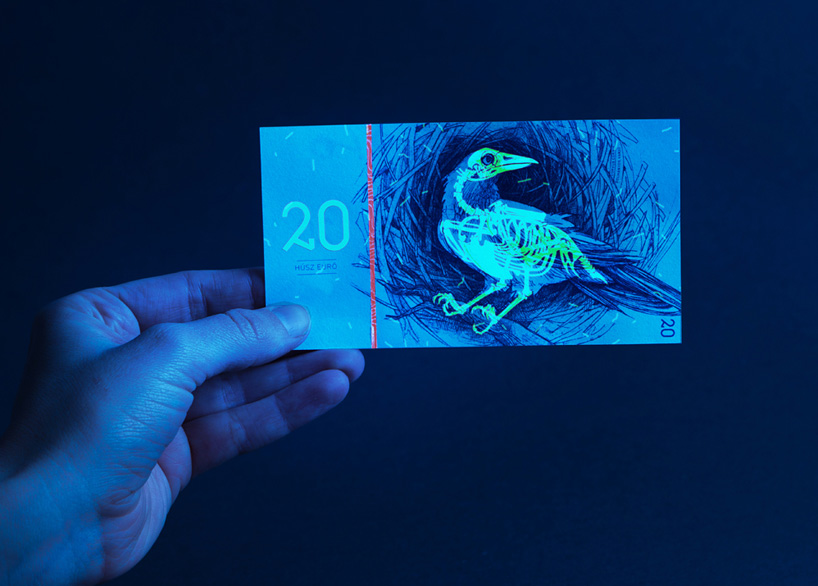
I also like the new Canadian passport pages, which have clever highlighting under UV light [0] and this Hungarian EUR 20 note is inspired, with UV light showing the skeletal structure of the pictured bird [1] but sadly its just a mock-up from a final-year project by a design student...
[0] http://imgur.com/gallery/3u8xP [1] http://www.designboom.com/wp-content/uploads/2015/02/barbara...
> I also like the new Canadian passport pages, which have clever highlighting under UV light
The article notes that under UV light the pages of the new/future norwegian passport switch from day view to "northern lights" night view. The first two pictures in TFA are the same page viewed under normal light and UV.
Well before that, the Slovenian passport had a man on horseback galloping along the outside edges. You can see the blue icon in a couple of positions here:
http://www.twenty.si/uploads/pics/Licul.6_01.jpg
Much easier to spot removed pages than with the subtle Finnish design.

Interesting that the pass just has Norwegian (Bokmål and Nynorsk) and English -- no French. Is French no longer the Lingua Franka? My kid's German passport still has German / English / French and my Australian one is still English / French.
I've used French in some weird remote corners of the world where English didn't work.
French hasn't been the been the modern lingua franca for some time, it's obviously English (well, actually many variants of English) now.
The ICAO still recommends to issue passports in English and French _or_ in the national language plus English or French although using the national language(s) plus English and French is still common in Europe.
European Union passports even use all official EU languages as far as I know (I cannot check right now).
EU passports use all the languages, but only via a page with translations for each field.
My British one has English and French on the data page, and a number to look up the translation.
http://news.bbcimg.co.uk/media/images/48863000/jpg/_48863568...
Just looked at a few around the house:
- Australian: English/French for the photo page, page for restrictions, and the contact info. All the rest (bit where the GG requests in the queen's name (!) that you be allowed to travel, advice if you get arrested on drugs charges (!!) etc is in English
- USA: English/French/Spanish for name, address and other meta info. Advice on not violating ag rules etc in English. Request for free entry also trilingual
- German: "German Passport", number of pages, other meta info in all EU languages; name, etc in German / English / French. No request for free passage, no advice about being arrested.

The new passports will not be issued until April 2018.
I just realised I'll end up with one of the first ones - my current spare passport expires on March 31st, 2018.
More likely you'll end up with one of the last ones. Generally it is good to keep at least 6 months of validity on your passport if you plan on using it.
Depending on the country, it might be more difficult to renew it after it has expired than shortly before.
> Depending on the country, it might be more difficult to renew it after it has expired than shortly before.
Or it might make no difference whatsoever.
I renewed both my passport and my "origin" ID card ~6 months after they expired, through the consulate (though both my country of origin and my country of residence are in the EU). There was no issue whatsoever renewing them (I did cut it a bit short as I realised my passport was expired 2 weeks before leaving the EU for holidays, but the passport took under a week to renew and reach the consulate).
It is not my main passport; I carry a 2nd one (Also issued by my country of origin, Norway) - as I travel a lot for work, one passport may be in some consulate somewhere waiting for a visa while I go somewhere else on the other.
However, there's a bit of a calm period in my industry now, so I manage well on only the main passport (which doesn't expire until 2026, I got a new one last year - your 1st passport is issued for ten years, the spare for two.)
It really depends on the country. The US is perfectly fine with your passport up until the date of expiry, so is Canada, so is many EU countries.
Be sure to check before traveling.
All of the 26 European countries comprising the Schengen area require that U.S. passports are valid for at least 90 days beyond the traveler’s intended date of departure and many assume travellers will stay 3 months, thus requiring 6 month validity.
What country is your main passport?
You could wait one day to renew it, no?
This story is from 2014. And also the ID card is just a proposal, I've been living here for over thirty years and I have never heard of a Norwegian having an ID card.
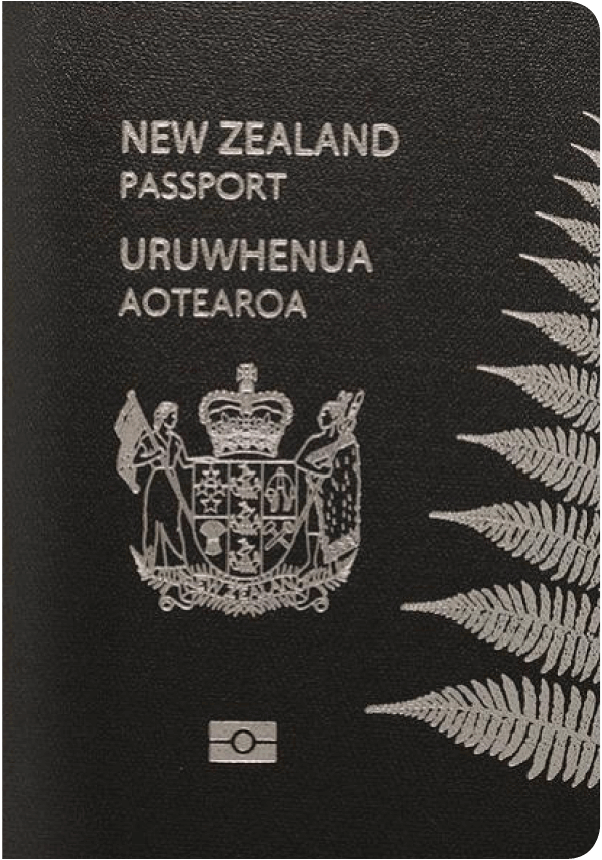
All cred to Norway for doing their part to make a passport something usable and something a citizen can show with pride. However not a patch on current New Zealand passport design. Everywhere i take mine out for use i get comments about how cool and yet elegant it looks - inside and out.
Your comment made me curious about the design of New Zealand passports, which eventually led me to this atlas of passport covers:
https://www.passportindex.org/
Here's New Zealand's distinctive design:
https://www.passportindex.org/countries/nz.png
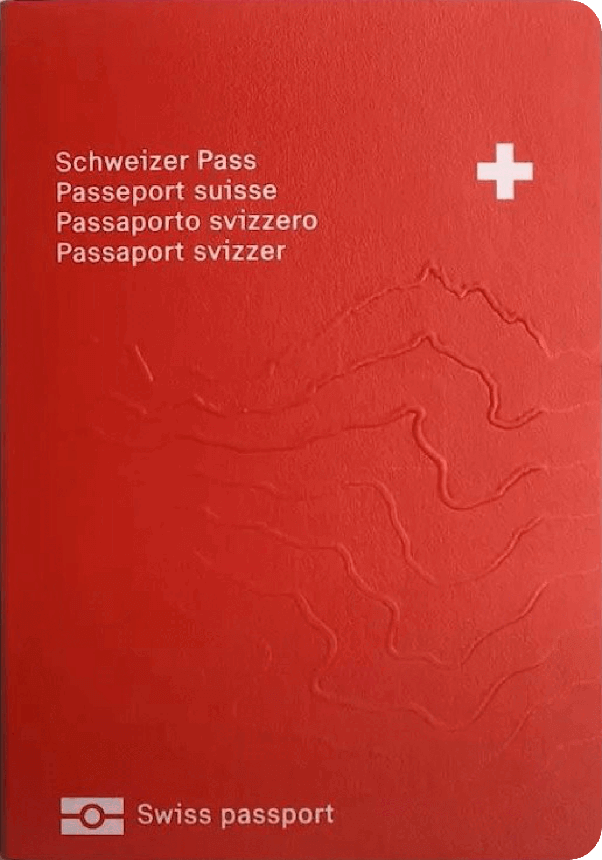
But I prefer the elegant minimalism from Switzerland:
https://www.passportindex.org/countries/ch.png
De gustibus non est disputandum. :-)
Beautiful passports make me wish I could collect citizenships.
Ugh EU passports look so bad with that butt ugly bordeaux color :D
What is the difference between an "immigrant passport" and a "standard passport" ? Are naturalized citizens of Norway not equal to natural citizens of Norway?
They are for legal residents without the ability to get proper documents from their home countries. My guess is primarily "refugees" that haven't gone through the full citizenship process.
https://www.udi.no/en/want-to-apply/immigrants-passport-and-...
Got it, thanks, in hindsight, I should have googled it myself. I've never seen a refugee travel document / refugee passport be called an "immigrant passport" before, but that's cool, and more importantly, it's great to see Norway hasn't created a "second class citizen" category, and that all citizens are truly equal, at least from a Passport/Documentation perspective.
These are so cool! How do I get one?
American passports are so drab in comparison. Another nice passport design is Swiss, but that shouldn't be surprising.
In my case? I accidentally fell in love with a Norwegian some years back. If I have my date and time stuff correct, I should be able to apply to get one in late summer/early autumn.
Of course, the path to that stuff also includes language learning and civics and all that stuff too.
The new US ones aren't too bad (nice pictures and quotes in them) but they are definitely very traditional. My family has a mix of American and New Zealand passports and the US on looks a little boring compared to the kiwi ones!
(2014)
I've been thinking that the security function served by a passport is very rapidly becoming obsolete (or at least redundant) for travel to most countries in the world. It could be replaced by a plastic photo ID card -- which you could then call a "passport" I suppose. And with strong biometrics, it could be replaced by nothing.
Let me explain this with typical cases where a passport is used:
(1) You're entering your home country with your passport. Pretty much at every secure border crossing, they're going to use your passport number to pull up absolutely every bit of info that appears in your passport, including your photo, plus a lot more info from the home country's computers. The passport serves at most as a "something you have" security token. They already have your photo, so the only case where the physical passport helps is avoiding impersonation by someone closely resembling you.
(2) You're traveling to a foreign country that needs a visa. In that case, you will have submitted a ton of information, including your photo, to the foreign country in advance to get the visa. When you arrive at the foreign country, it's just like case (1) above.
(3) You're traveling to a foreign country that doesn't need a visa from citizens of your home country. In this case, the proof you need is that you are a citizen of that country. It is likely that the two countries have exchanged a mass of information to make the visa-free travel possible, or they can share the info about visitors in real time as they arrive.
It's really the edge cases that the physical passport helps. Like obscure border crossings where they don't have an electronic feed, or very third-world countries, or as a recognizable document to show to hotels/banks/airlines within a foreign country.
By the way, I'm not saying that this is a good development. In fact, it's a terrible loss of privacy and furthering of worldwide surveillance. But it seems to be the trend, like the elimination of cash.
You're totally right, the paper passport could be considered a strange object in a very electronic world.
However, in my experience, truly electronically equipped borders are the edge case. The countries that take e-passports without any agent interaction are fee and far between, and typically only service citizens of that country.
Perhaps you're fortunate enough to travel in a selection of bleeding edge countries, via plane. Many, many people use land borders, and most land borders don't have electronic systems.
For an electronic system to work, you'd need 100% coverage of every border, or the system breaks - and that's hard to pull off.
The flip side is that there are security flaws with partial electronic systems. My country passed a law against travel to Iraq / Afghanistan for citizens, and yet, because they have 100% electronic border control for citizens, (and Iraq / Afghanistan don't..) - my passport has never been checked, despite having 'illegal' visas plain to see.
>For an electronic system to work, you'd need 100% coverage of every border, or the system breaks - and that's hard to pull off.
And therein lies the true absurdity of it. All travel stops if the internet goes down?
If we truely have high-level terrorists crossing borders, then yes, every person's identity should be checked against national police files and thus, when Internet is down, every decision should be suspended, if we want to be consistent.
Obviously I say "if" because those who actually want to deceive the system walk through borders by foot (taking advantage of the terrain), and register as migrants (under no less than 14 identities for one person - that's what happened for the last terrorist in Europe). Heightened passport security rules are great, but they mostly catch citizen who thought they were law-abiding, while it's much, much harder to deal with real criminality.
I'm not talking about a momentary outage. I'm talking about, e.g., citizens trying to return home after a crippling cyber attack that leaves America offline.
Apologies for my ignorance but what was the reasoning behind banning travel to Iraq/Afghanistan for citizens of your country?
He probably has a South Korean passport. The reason behind the ban was safety but I don't think a country should enforce this through such bans.
The point of the passport is that information in there is readable easily. I can easily check my visa state as can the cop checking me somewhere. Also the passport can be checked by a porential employer to verify my integration state which might include a working permission. Also mind that in many countries of the world (i.e. in many African countries) technology is of limited availability. Any digital form would require data exchange formats and protocols. Printing/stamping/sticking can be done everywhere easily and the protocol "paper pages of size 125 mm × 88 mm" is trivial.
The thing you describe essentially also exists in many countries as a ID already, which I.e. can be enough for EU citizens to travel within the EU.
The EU countries have something very similar to that: https://en.wikipedia.org/wiki/National_identity_cards_in_the...
Majority of countries that allow visa-free entry for citizen from 1st world countries won't have any data on particular citizens.
U.S. Government won't upload a dump of personal data of its citizens to Thailand or Indonesia, would it?
Moreover, if local governments would want this data from everyone let in without a visa (for TH and ID it's almost every country in the world except, probably, Africa) they'd end up with data on roughly 3 bln people. They don't have IT infrastructure to deal with it. This data will also be out of sync the second it's dumped from origins.
So, when you're being processed in Bali by border control on your first entry, the only thing they can do is confirm the validity of your document's physical properties, but not the identity it represents.
For land/sea crossings between Canada and the US, there exists such a thing -- it's known as an Enhanced Drivers License and contains a barcode and RFID chip in it. https://en.wikipedia.org/wiki/Enhanced_Drivers_License
But the Federal government can't mandate having these machine-readable identifiers on the State-issued drivers licenses, so we're stuck with Passport Cards and Passport Books in addition to the EDL.
They can mandate a lot, or at least bully- the REAL ID act has gotten most states onboard by threatening to not accept noncompliant State IDs for plane travel.
If by "most countries in the world" you mean first world countries - the EU numbers 28, add in the US, Canada, Australia, Japan, etc. you might get up to 40-50 countries where this is a reasonable expectation. I am sure there are even edge cases along the US-Canada border where the crossings aren't all electronic since it is overkill when 99% of the people crossing are locals.
There are 180-200 countries in the world. You characterisation of the vast majority of them as "very third-world" is rather crass. You are also ignoring possible police stops inside of foreign countries. In order to ask for a bribe, they check that you have all of your paperwork in order.
For (1), The Schengen area has already implemented this for EU countries with national identity card schemes. In contrast, the US doesn't have a national identity card scheme so you still need a passport (booklet by air, card by land or sea). Even illegal immigrants can get an ID card or Driver's license in California, for instance.
For (2), some countries just want to collect a little fee and don't care much beyond that as long as you stay for less than 30 or 90 days.
For (3), the US, for instance, extends the Visa Waiver Program to any country when the Visa reject rate drops low enough. I think you are greatly overestimating the level of cooperation between countries on visa policy.
it seems to be the trend, like the elimination of cash.
Again, this trend is limited to very first world countries. In most of the world, cash is still king.
The history of passports is quite fascinating:
Your from a country in which privacy isn't particularly valued I take it? I think you're heavily overestimating how much data is available to governments.
Why? I've seen such a system in action - based on the passport number, they pull up a digital copy of that passport, including the information on it and photo, as well as the list of dates when you traveled in/out of the country.
Each country definitely has something like this for their own citizens, and within the EU this information is shared (probably quite freely) between frontier agents and the police. A driver's license from the Netherlands can quickly be checked for authenticity/validity in Germany for example...
They don't need that much data, just photo and name, ID numbers, maybe the registered address(es).
Based on that, if you have any criminal history, you can bet they'll see it anywhere as it is priority information.
It's still an important component of human-oriented societies, to permit the individual to inform you of who they claim to be.
You rob individuals of agency, when you start dictating to them who you've declared them to be.
If two identical twins appear becore you, wearing sunglasses and gloves, are you going to demand that they remove their accessories, so that your special machine can declare them honest?
Sounds like an alienating place. How far will this go, once a person crosses the threshold, and steps into such a zone of absolute identity? Smart people might wish to stay the hell away from such a place.
Smart people might prefer a place that permits them the dignity of producing an artifact from their pockets, rather than acquiescing to a medical inspection.
On several occasions I have been rather nearly killed by reckless drivers. In each instance I recorded the license plate number and phoned the police. In each instance the police said they could not be sure who was driving therefore could not even begin an inquiry.
In your quasianonymous utopia, which twin is to blame when one of them comes to my country and injures someone? Neither?
Your anecdotes seem scary. So anyone can get away with reckless driving?
Over here the owner of the car needs to identify the driver. If that person refuses to do that/cannot do that, they might be required to have a "journal" (think: like a cab) for each and every ride with the car..
I'm not going to dodge the premise of your quandary, which is that accountability and responsibility are necessary components of a civilized society, and that idealizing anonymity also introduces problems and is prone to abuse.
Your example is disconnected from this premise though, for other reasons. Even with air-tight biometrics, determining the exact identity of which twin crossed the border, the police would still have their hands tied.
Biometrics would not solve a hit-and-run manslaughter, simply because the level of surveillance necessary to prove the identity of every passenger in every driver's seat at all times would amount to oppressive totalitarianism.
In reality, a rental car provided to a vactioning traveller could have been stolen for a joy ride, and possibly returned before the renter noticed it was gone. The police would need a stroke of luck, in the form of some video footage or a witness further corroborating the identity of the driver at the time of the incident. A border crossing, and a rental agreement wouldn't confirm the criminal, even if a jury might convict on that basis alone.
Anyway, back to accountability. There's a fine line painted at the boundary of the statement: Those who have nothing to hide, have nothing to fear.
It's always going to come down to the constituents of a given society, to determine the level of discipline required to participate with adjacent members. An individual's neighbors will determine how volatile their environment is. A permissive environment may attract those rejected from other regions. A fortress may sterilize all behavior. Everyone should be able to choose their own peers, according to preference, but what if one finds themselves chosen for the purpose of exploitation? There's no easy answer to this situation. Complex systems require defense mechanisms to persist and withstand chaos. My point, though, is that people should understand which side of the defense mechanism their on, and whether they are participating deferes, or regarded as the defended, or perhaps if they are the repelled chaos.
It's a distinctive, minimalist design, for sure. Hopefully it's still as usable as before. Though ICAO passport specifications mean designers probably aren't given enough rope to hang themselves.
I find it hilarious that the related articles includes this: https://www.theguardian.com/artanddesign/architecture-design... , which basically details how the UK government has managed to make an utter mess of the same exact design space.
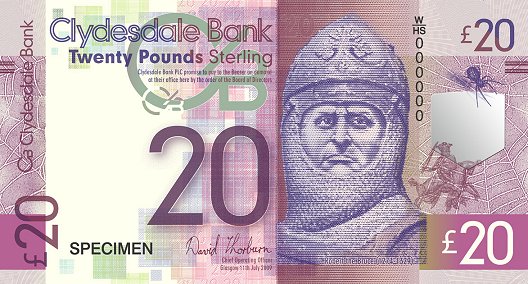
We seem to have a knack for including portrait drawings that look like a bad DeviantArt fan-art. That Shakespeare picture is pretty goofy, and the Clydesdale Bank 20 GBP note has a particularly awful depiction of Robert The Bruce, for example: http://www.britishnotes.co.uk/news_and_info/scottishlatestne...
Wow, those look awful. The subtitle "Why must the UK passport look like a clumsy photocopied moodboard? is an apt description.
That is truly wonderful design, I'm genuinely drawn to it and quite envious, until now I thought the current New Zealand passport was quite pleasant - http://i.stuff.co.nz/travel/kiwi-traveller/84012074/the-migh...
If I am not wrong, Chinese passports are also similar beautiful design and different pages show different things under UV light.
The canadian passport has apparently used UV-reactive ink since at least 2003: http://imgur.com/gallery/3u8xP contrasts the "old" canadian passport's UV pages to the "new" one's, the new one (biometric/ePassport) was introduced in 2013, the previous one was introduced in 2003.
A thread relevant to this discussion - why do we require passports?
I have to say, when I got my U.S. passport I found it striking. My Canadian passport is pretty bland even though it has the same format (backdrop image and a quote).
I like the design, although they do remind me a bit of the little Kate Spade notebooks and accessories you find at upmarket department stores..
I seriously love the design of this passport. Well done to the company that designed those.
Needs a [2014] tag:
> Monday 17 November 2014 15.29 GMT
> Last modified on Monday 17 November 2014 18.40 GMT
What does it take to become a citizen of Norway? Asking for a friend.