Editor’s Note: This blog post was originally published on my personal website two years ago and has recently been migrated to Substack.
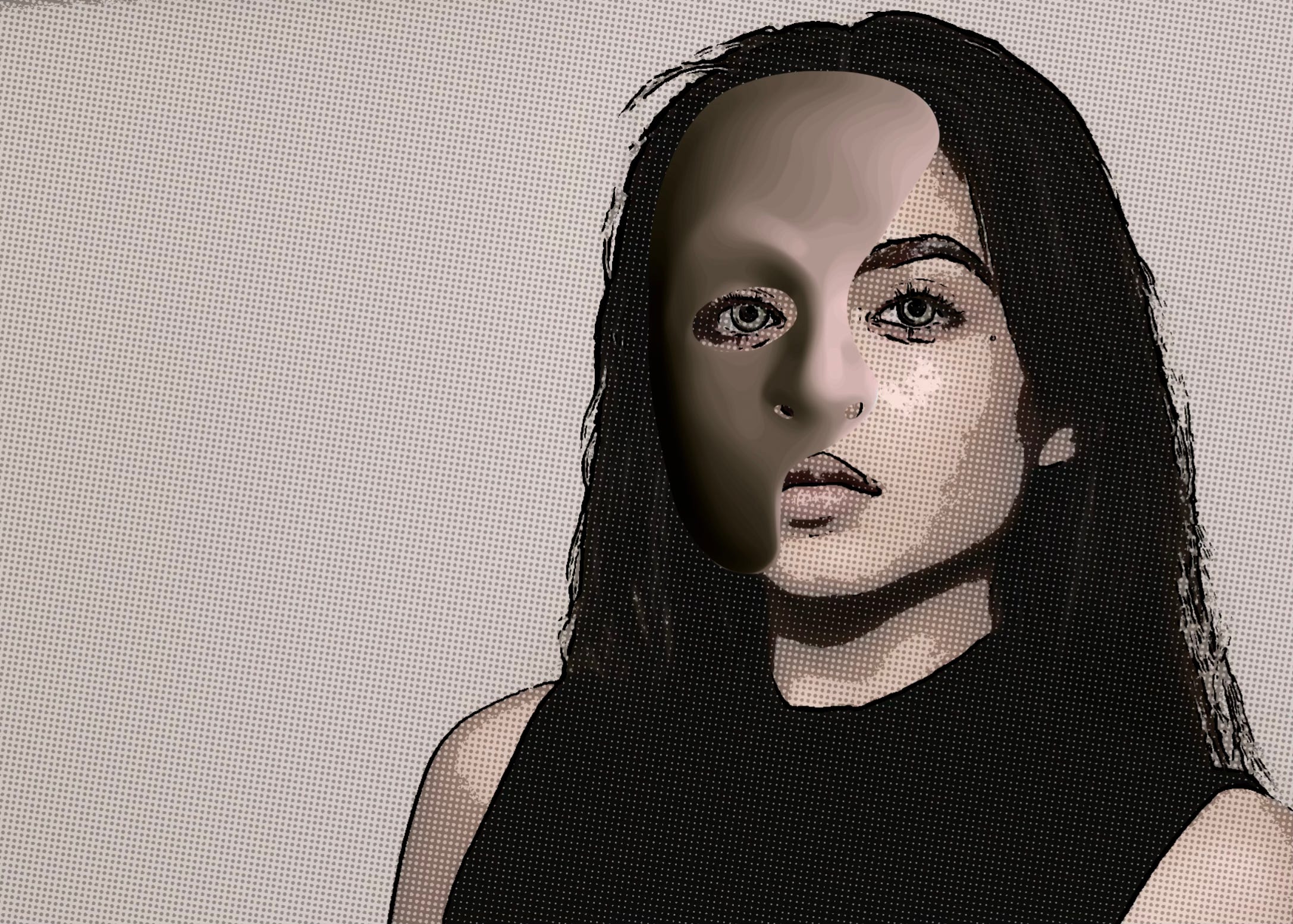
“Ours is essentially a tragic age, so we refuse to take it tragically….”
On a Saturday afternoon in December of 2020, I was finishing up with a zoom call when I received a DM on Instagram from an unknown account. I glanced at my phone, thinking it was just spam, but what I saw made my heart race. The message contained a photo of what appeared to be my face photoshopped onto a naked person's body. The image looked disturbingly real.
Everything faded into the background as I stared at the message. Along with the photo was a link to an adult content forum where dozens of images with my likeness were being posted and discussed. I noticed that this had been out there for several weeks. I completely froze, not knowing what to say or do. I saw what looked like my face in these photos, but I knew it wasn't me. It couldn't be me. It looked somewhat similar to me, but was it me? I started asking myself. How could this be me? More importantly, who was this person and why did they send this to me? Was it someone I knew? How did they get my Instagram ID?
While I was looking through this forum and asking myself all these questions, I received another message. This time it was blackmail. Here’s what the messages read:
“this you? [with a photo attached]”
The next line contained the address of the university was attending.
Followed by:
“Send me some custom videos of you or I will post all details on internet with your family pictures”
And of course, they sent me the family pictures they were referring to.
This person had clearly done some research on me before messaging me.
I wanted to believe it was just a cruel joke, or even a case of mistaken identity, but the realism of the images and the invasive nature of the messages made me feel violated and scared. I felt an overwhelming urge to find out who was behind this and why they were targeting me. My mind raced with questions. I looked around my empty room, hearing my family from afar, oblivious to the storm brewing inside me. Should I tell them? Should I call the police? I felt a wave of nausea and my hands started to tremble.
I glanced at my phone again, half-expecting another message. I felt trapped, as if the individual who sent these messages was watching me, waiting for my reaction. It was violating and overwhelming. I wanted to scream, to demand answers, but I felt paralyzed by fear and confusion. Who would do such a thing? And why me? I began to replay recent events in my mind, wondering if I had unwittingly shared too much online or if someone had been watching me more closely than I realized.
The rest of the afternoon passed in a blur. My family noticed my sudden change in demeanor and asked if I was okay. I forced a smile and made some excuse about feeling a bit under the weather, but inside, I was anything but fine. The image, the entire forum, and the messages haunted me, and I knew I had to do something. I couldn’t just let this go. The sense of intrusion was too deep, too personal. I needed to take control, to understand how this had happened and how to stop it from going any further.
I checked out the person's Instagram, but it was completely blank—not even a profile photo or bio. I blocked them, hoping it was just a cruel joke that would stop if I didn’t give it any attention. However, I couldn't help but keep looking at the forum where people were sharing and discussing these images. It seemed like there were faces of several girls who had similar features, or at least someone made it seem that way. There were even videos using a voice similar to mine. As I scrutinized the photos, I began to recognize certain elements. Then it hit me: parts of some of those images were my photos. I had become a victim of a deepfake. Someone had stolen my likeness and was using it to create some of these photos and videos that looked and sounded like me.
A couple of days later, I received a text message on my phone from what I can only assume was the same person, with what looked like different iterations of these deepfakes. Some had a heavy filter changing my eye color and adding a lot of makeup. Others used photos from my Instagram, which was a private account, and edited my body to make it look like I wasn't wearing any clothes. Some images included extreme fetish-related content. Each iteration had its own forum, featuring faces of several girls who shared similar features, potentially reinforcing harmful stereotypes based on ethnicity.
The photos and messages of blackmail kept coming, each one more disturbing than the last.
“I have all your data and don’t make angry me or you will pay heavy cost maybe ☠️.”
I felt a mixture of rage and helplessness. How could someone invade my privacy like this? First blackmail and now a death threat. How did they get my phone number? My mind raced with possibilities, each one more unsettling than the last. I knew I had to take action, but I didn't know where to start.
Let me backtrack a bit to give you some details of how I found myself in this situation - or at least what I believe to be the source. Several months earlier, in March 2020, COVID had caused all college campuses to close for the rest of the academic year, so I moved back in with my family because I was still in college (19 years old at the time) and had nowhere else to go. My summer internship was canceled, and I was hearing news of people's job offers getting rescinded. Everything looked so uncertain and was moving so fast. There seemed to be no definitive answer to how long this was going to last, when I would be on campus again, if I would have an internship for next summer, what would happen when I graduated, and if I would be able to get a job. I just wanted the academic year to end so I could think about all of these things without having to worry about my classes and final exams, as well as everything else.
June 2020 rolled around, and with classes over, I found myself living at home with nothing to do and facing a very uncertain future. The pandemic had upended everything — my college campus had closed, my summer internship canceled, and job prospects were dwindling as the economy contracted. It was a time of profound uncertainty.
It was during this time that I began looking for ways to fill my time and do something beneficial for my future. Since I no longer had an internship for the summer, I started looking online — because the internet always has a solution, right? I stumbled upon a site called OnlyFans, where users could monetize their content by sharing photos, videos, and interacting with subscribers, an idea similar to something I was already familiar with, Patreon.
I always liked the idea of becoming a model, trying out new clothing and making clothes with my own unique flair — at one point I even wanted to major in fashion because I just loved the idea of having my own clothing line and modeling in them and of course taking photos of myself was a must throughout the years. I was intrigued by the idea of only a few people seeing my content because I was not really interested in becoming an influencer at the time. So I decided to give it a try and explore the fashion icon in me. Opening an account was surprisingly easy and the verification process was very quick. It seemed like a harmless experiment at the time.
I started by posting content similar to what I would share on my Instagram account — everyday photos, thoughts, and just random everyday activities. I wasn’t looking to promote my account or gain a massive following; rather, it was an outlet, a way to engage with others during an uncertain time and have fun modeling. After about a week, I had accumulated a grand total of 7 followers — hardly a bustling community, but enough to pique my curiosity about the platform's potential.
As weeks passed, however, other priorities took precedence. I focused on staying healthy mentally and physically, helping out at home, and staying connected with friends virtually. OnlyFans gradually faded into the background of my daily life, becoming a forgotten pastime born out of pandemic-induced boredom.
Late August came around, and classes had resumed in a new hybrid format. Most classes were given online, TA office hours were online, and I didn’t really have anything in person so I found myself living at home that semester. Living under the same roof as my family during college also meant more interaction with my relatives, and I became the default tutor for one of my cousins who lived nearby. A few days each week, she would come over, and I would help her with her homework and essentially babysit her.
One afternoon, she asked to use my computer, and I readily agreed. I figured it would keep her entertained while I attended to my own studies. She spent some time playing games, innocuously downloading a few onto my computer. After she left, I cleaned up by deleting the games she had installed, thinking nothing more of it as I returned to my academic responsibilities.
However, in the days that followed, I noticed my computer behaving sluggishly. Programs took longer to load, and there was an overall lag that wasn't typical for my machine. “There’s probably something I forgot to delete” I told myself, “I’ll figure it out later” thinking I could just delete what was causing this issue. Since everything was online, I was constantly downloading things from my classmates, friends I was no longer interacting with in person, and other resources I found on the internet to stay connected. Looking back, I also had people in my life whom I no longer consider trustworthy. I chalked up the sluggish performance to one of these downloads, never suspecting anything else at play.
Early September, I notice my computer acting very strange. It refused to shut down, and my GPU ran incessantly even in the absence of GPU-related tasks. Opening the task manager proved futile as a blank window would inexplicably obstruct any attempt to identify running processes. These anomalies were unsettling, hinting at something deeply wrong with my system.
A few days later, I realized my Twitter account, which I rarely used at the time, fell victim to hacking. My profile photo was replaced, and tweets promoting cryptocurrencies were posted from my account. In a panic, I swiftly changed all my passwords, securing not just my social media but also my email and other critical accounts. However, the real shock came when I logged into my Amazon account. To my astonishment, I discovered a substantial gift card balance of over $1000, seemingly deposited without my knowledge or authorization.
Further investigation into my Amazon history revealed a series of refunds dating back almost a year, each claiming non-receipt of goods I had actually received. Disturbed and confused, I immediately contacted Amazon support, explaining my suspicions of a hacked account and the unauthorized activities linked to it. Their response was baffling—they reported no signs of suspicious activity or unauthorized logins from different devices, leaving me perplexed and increasingly worried. I wondered what was the angle of the person who hacked my account, were they going to buy themselves a gift card with my account?
How was it possible that my accounts were compromised without any new login attempts detected? If my passwords were secure, could someone have exploited a vulnerability in my computer itself? The unsettling truth surfaced when I discovered my computer had been covertly mining Ethereum, a cryptocurrency, while ostensibly idle - the cause of my GPU to be running. It dawned on me—I had unwittingly become a host to malware, a sophisticated virus that not only mined cryptocurrency and sought to buy Amazon gift cards but essentially installed a backdoor into my system, allowing unauthorized access and control by unknown individuals allowing them to do this and so much more.
I downloaded and paid for all kinds of malware detection software to try to find where this malware was installed and how to get rid of it. It was no use. Despite my efforts, I couldn't locate anything suspicious. Frustration grew as I continued to struggle with my compromised computer. It wasn't until I did a little bit more research that I stumbled upon the name of this insidious malware: Fareit.
Fareit, also known as Pony Loader in cybersecurity circles, is a malicious program notorious for its ability to steal sensitive information from infected computers. It operates stealthily, capable of extracting usernames, passwords, and financial data stored on the compromised system. Moreover, Fareit installs a backdoor, allowing remote attackers to control my computer clandestinely.
More details on fareit malware here.
My mind raced with questions. How long had my computer been compromised? What personal information had already been stolen? The thought of someone having unrestricted access to my digital life was deeply unsettling. I felt violated, not just by the intrusion into my privacy but by the realization of how vulnerable I had become. Knowing that no matter how many times I changed my passwords, it didn’t matter. Someone had access to my computer where my updated passwords were saved and automatically filled at the login page of all websites I had a password for.
The only way to get rid of this virus and the backdoor that was downloaded was to delete everything on my computer, including Windows itself. I salvaged what I knew to be uninfected, like my coursework and saved documents, transferring them to an external flash drive. I was heartbroken to discover that some of my files were deleted, including an album with hundreds of photos, videos, and personal vlogs I had made for myself over the years. Knowing that I wasn't going to get them back, and that whoever deleted them did so just for the fun of it. I was devastated.
But I had to act quickly because I knew these types of malware tend to lock your device and files, hoping you will eventually pay a ransom to unlock them. So, I deleted everything, reformatted my computer, and thought it was all over. I believed I was safe. Well all of my data was floating out there somewhere, but no one could hurt me with it, right?
Fast forward to December 2020, and I’m sitting in my room after a Zoom call, staring at my phone in disbelief. The DM on Instagram was just the beginning. But then the text messages started, each one more disturbing than the last. I recognized some of the photographs on these forums, but not entirely in the way I remember them. They were modified: deepfakes with what looked like my face imposed on explicit nude bodies, edited photos from my private Instagram, and images that I had lost due to the malware. There were also entirely fabricated images that I didn’t recognize, featuring extreme fetish-related content using a modified version of my face, alongside images of other women who seemed to have similar features to mine. My mind was spinning, trying to connect the dots. Was this related to the virus I had just dealt with? Did someone purchase my hacked data from some dark web platform? There was no other way for them to have access to and modify some of the photos I saw on these forums. What was I supposed to do now? I couldn't just delete my leaked data from the dark web, could I? I didn’t (and still don’t) even know how to access the dark web or where to find my information. It was already too late anyways.
“…The cataclysm has happened, we are among the ruins, we start to build up new little habitats, to have new little hopes. It is rather hard work: there is now no smooth road into the future: but we go round, or scramble over the obstacles….”
I considered my options. Should I go to the police? Would they even take me seriously? And telling my family felt equally daunting; I didn’t want them to worry, and I felt ashamed, as if somehow this was my fault. The shame I felt was paralyzing. Even though I was the victim, a part of me irrationally felt responsible, as if my actions had somehow invited this nightmare into my life. I was afraid my family would see me differently, that they might think I had done something to deserve this. I feared their judgment and the disappointment in their eyes. The fear of becoming a burden to them, adding to the stress and anxiety already prevalent due to the pandemic, was unbearable.
I tried to search who owned this phone number but wasn't able to get anything other than the fact that it was a VoIP number. A VoIP (Voice over Internet Protocol) number is essentially a phone number that uses the internet to make calls instead of traditional phone lines. This means it can be used from anywhere in the world, making it nearly impossible to trace back to a specific location or person.
I finally decided to all the police on the non-emergency line to report what was happening to me and to see if there was anything they could do. When an officer answered the phone, the conversation went as I expected — filled with confusion and misunderstanding.
"Hello, I'm calling to report some disturbing messages and photos I've been receiving," I started, trying to keep my voice steady.
"Okay, ma'am. Can you explain what's been happening?" the officer on the other end asked.
I took a deep breath thinking about these DMs and these forums, and I told the police office about the matter and that it had escalated to blackmail where this individual was demanding custom videos under the threat of exposing my private information and family photos, along with everything else.
The officer was silent for a moment, likely trying to process the barrage of information I had just unloaded.
"I see. Have you engaged with this person at all?" the officer inquired.
"No, I haven't responded to any of the messages. I hoped ignoring them would make it stop, but it hasn't," I said “Is there anything you can do to help me?”
The officer paused for a moment before saying they can send an officer over to come and take my statement.
I instead requested going to the station to give my statement there.
After giving my statement, the investigator had told me it was a serious threat because they had my name and address. He had asked me if I wanted to press charges if they find out who this person is. After inquiring more about what going that route might entail, I told him I would think about it because I wasn’t really even sure if this person was in the same state or even country as I was in. The uncertainty gnawed at me. Pressing charges sounded like the right thing to do, but the complexities involved made me hesitate. The person behind this could be anywhere, hidden behind layers of digital anonymity.
Moreover, I feared the potential backlash of pressing charges. What if the person retaliated? They already had access to my personal information and family photos. The threats could escalate, and I might end up in an even worse situation. I decided I needed more time to research and think about the consequences going forward in the legal system, not just to my name but also to my mental health.
Shortly afterwards, I started receiving messages from other people who not only seemed to be fans of these deepfakes but also believed they were real and that I was behind them. They would inquire if I had an OnlyFans or similar platform for this type of fetish-related content so they could purchase more.
One of the messages read:
“I love your xxx fetish content. Do you have an OF account where I can get more?”
I chose to ignore those messages as well since engaging with these individuals seemed potentially dangerous. The idea that there were people out there not only consuming but actively seeking such content, believing it to be genuine, left me feeling deeply unsettled. It reinforced the magnitude of the misinformation circulating about me and the extent to which my identity had been manipulated and exploited.
It took several days before I received another message, from yet another phone number, with a video. A video with what sounded like my voice saying things that I had never said before.
I had seen several videos this individual was sending me and remembered seeing similar things being done to celebrities. Their voices were cloned, making it sound like they were saying things they had never actually said. I never thought something like this could happen to me. I wasn't famous; I didn't have many videos online — apart from the ones that were stolen from my computer and floating somewhere on the internet. But I figured that was all they needed — hours of videos I had made for myself, talking about all kinds of things. I kept wondering why this was happening to me. Who was this person, and why were they making it look like I was saying such awful things? It was as if someone had crafted an entirely different persona for me, using my likeness.
Searching for answers, I once again turned to the internet for solutions. I wanted to know how this person was making these photos of me and if this was happening to other people and what they did about it. I started going down the rabbit hole and saw so many other forums where something similar was happening to hundreds of other women and even men. Their likeness was being stolen, their voices cloned — it could happen to anyone: your sister, brother, wife, mom, or anyone else vulnerable to this type of digital manipulation.
The term ‘deepfake’ emerged online in 2017, primarily on Reddit, where users had combined the phrase ‘deep learning’ and ‘fake’ to describe how a new type of artificial intelligence could learn the movements of a face and replicate them convincingly on any video. Prior to this, in 2016, researchers from Stanford, a Max Planck Institute and the University of Erlangen-Nuremberg created Face2Face, a system which could edit the facial movements of a subject and reanimate them with those of a source actor. Researchers demonstrated their work by manipulating the facial movements of George Bush in real time, directly from a YouTube video.
Creating convincing deepfakes initially required complex software and significant resources. However, by 2017, the Reddit community began creating deepfakes themselves, leading to the circulation of a fake pornographic video of Gal Gadot. Soon, numerous pornographic deepfake videos featuring other celebrities like Emma Watson and Kim Kardashian appeared. With plenty of available images and videos of celebrities, AI could quickly learn and create highly convincing deepfakes.
Despite social media platforms like Reddit and Twitter starting to ban sexually explicit deepfakes as ‘involuntary pornography,’ the phenomenon had already taken off. Deepfake porn remained accessible online, and the tools to create it became increasingly available.
I found out about Noelle Martin who discovered that her selfies had been photoshopped into pornographic images and distributed across porn sites. Horrified and determined to fight back, she began speaking out against this kind of abuse. Her advocacy led to the enactment of laws in Australia making the circulation of non-consensual intimate images illegal.
In 2019 an app called DeepNude appeared which allowed people to alter photos of a person to make them appear nude. The app rose in popularity very quickly and is still readily available. Some information on the app from MIT technology review: “The app [DeepNude] specifically targeted women. The app specifically targeted women. Vice found that the software only generated images of the female body, even when given a picture of a man. The anonymous creator confirmed that he had trained the GAN algorithm only on nude photos of women—in this case more than 10,000 of them—because they were easier to find online. He did, however, also intend to eventually make a male version.”
I discovered a Telegram bot that was launched in 2019, connected to seven Telegram channels with a combined total of 100,000 members. The main channel hosted the bot, while the others provided technical support and a platform for sharing the altered images. By July 2020, just one year after its creation, the bot had been used to target at least 100,000 women, most of whom were likely unaware of what was happening. More information about this telegram bot.
A study conducted in 2019 by the American Psychological Association found that out of 3,044 adult participants (54% of whom were women), 1 in 12 reported experiencing at least one instance of nonconsensual pornography victimization in their lifetime.
You might think that deepfakes are some new technology that hasn’t been around for very long, but you are wrong. This technology has been evolving rapidly, becoming more sophisticated and accessible than ever before. You may have heard about the recent deepfake porn video of Taylor Swift that spread over Twitter. Most people recognized it as a deepfake and understood that Taylor Swift didn’t actually make a porn video. But when the victim is someone who isn’t famous, the situation is different. The lines between reality and fiction blur, especially if the deepfake is convincing enough and seen frequently.
It is those 1 in 12 women and men who suffer the most. Their reputations get tarnished, they are afraid to go online, and they live in fear of the damage these false images and videos can cause. Unlike celebrities, they don't have a platform or an army of fans to defend them. They are everyday people who suddenly find their lives turned upside down by a technology that can make anyone appear to be doing or saying anything.
Deepfakes can generally be categorized into two types: benign and malicious. Benign deepfakes, like those of Tom Cruise or other celebrities, often serve as showcases of technological prowess or entertainment. Here’s another video of Anne Hathaway supposedly making an inappropriate joke
These videos can be impressive demonstrations of what AI and deep learning algorithms can achieve, often created with the consent and involvement of the celebrities themselves or with the clear intention of parody or satire. They may blur the lines between reality and fiction but typically do not aim to cause harm or deception beyond entertainment value.
However, the more malicious deepfakes are those that intended to deceive or manipulate. These deepfakes aim to manipulate and deceive by altering images or videos to make it appear as though someone is doing or saying something they never did. For example, nonconsensual pornographic deepfakes can be used to exploit individuals, especially women, by creating fake nude or explicit content using their images. These deepfakes can be distributed widely online, causing immense personal and professional damage to the victims.
I have thought about all the possible scenarios as to how I could have ended up in this situation. Was it really my cousin who innocuously downloaded the virus along with some games, or was the virus given to me intentionally by someone I know through an email or download link? It's a question that may never have a definitive answer. Regardless of how it happened, one thing is clear: the virus — Fareit — served as the conduit that made this nightmare possible. This type of malware can be delivered through a variety of methods: infected downloads, malicious email attachments, or even through seemingly innocent games and software. With access to my computer, the perpetrator had a treasure trove of personal data to exploit, including photos and videos that were never meant to be seen by anyone but me. The very existence of these deeply personal files being manipulated and exploited leaves no doubt that the virus was the key to this violation. There was simply no other way for anyone to access and misuse these intimate images and videos.
Among the various altered content, one specific version garnered particularly disturbing attention: a manipulated face, possibly resembling mine, with altered eye color and heavy makeup filters superimposed on a nude body, designed to cater to a specific fetish. Though I am American with multiple ethnic backgrounds: American, Persian, Southern European, Middle Eastern and Indian - this seemed to suggest an attempt to fit a certain stereotype influenced by perceptions of my partly Eastern background. Given this, it added another layer to consider whether this content was racially or ethnically insensitive. The realization that the deepfake content may have been crafted to cater to a fetish based on racial or ethnic stereotypes was deeply troubling. The thought that someone may have targeted me based on my ethnicity, creating and circulating such demeaning content, intensified the violation of my privacy and dignity.
This particular deepfake seemed to captivate and disturb viewers more than any other iteration of my altered photos and voice-cloned videos.
I contacted the administrators of the sites wherever I found images and videos using my likeness posted, pleading with them to remove the content. Sometimes they would comply, but most of the time, I was ignored. The process was exhausting and dehumanizing, as I had to repeatedly explain my situation and beg for the removal of these explicit and false representations of myself. As adult websites began cracking down on revenge porn distribution and implementing more robust verification systems, I found some relief. I was able to have these manipulated photos and videos removed from some adult websites and the accounts they had created using my likeness deleted. However, the internet is vast and the content was still circulating on other platforms and obscure forums.
I began paying for services that would help me remove the hundreds of images and videos with my likeness being sold. I didn’t know what else to do. But I do know that if I had chosen not to do anything, it would have felt like giving consent for it to continue. I almost wanted to hide myself from the internet and any camera forever. The thought of my silence being perceived as acceptance of these violations was intolerable. As the quote goes, "Silence is death, and you, if you talk, you die, and if you remain silent, you die. So, speak out and die." I realized that even if I couldn’t get all the images and videos deleted, I could try to reclaim my likeness and build a loyal fanbase that would defend me against allegations of creating such extreme fetish-related content. So that’s exactly what I did.
After nearly two years of enduring this nightmare, I returned to social media and started posting videos and photos that I had consensually made and posted. It was an attempt to reclaim my narrative, to show the world who I really was, and to drown out the false and damaging content that had been circulated. I love modeling, I love making genuine connections with my audience, and I love learning and sharing what I know.
Through this proactive approach, I aimed to create a space where my true self could shine, overshadowing the manipulated and harmful representations that had been forced upon me.
I still can’t wrap my mind around the fact that what happened to me could happen to anyone, and I realized that I’m not uniquely vulnerable. Several friends, to whom I’ve told this story, felt strongly that if some of the images hadn’t been so convincing, or if they hadn't exploited specific stereotypes related to my ethnicity, the impact might have been less devastating or I would have assumed it to be a case of mistaken identity. Either way, I have to accept that someone used powerful technology to wage psychological warfare on me, and I lost a part of my peace of mind. For now, I just keep fighting back with my truth, refusing to be silenced and stereotyped.
“…We’ve got to live, no matter how many skies have fallen.”
― D.H. Lawrence, Lady Chatterley's Lover