Finland's track gauge is the same as Russia's was in the late 19th and early 20th century— 1,524mm — which is 89mm wider than the European standard.
- Yle News
Finland plans to adjust the gauge of its railroad tracks to the European standard, according to Transport Minister Lulu Ranne (Finns).
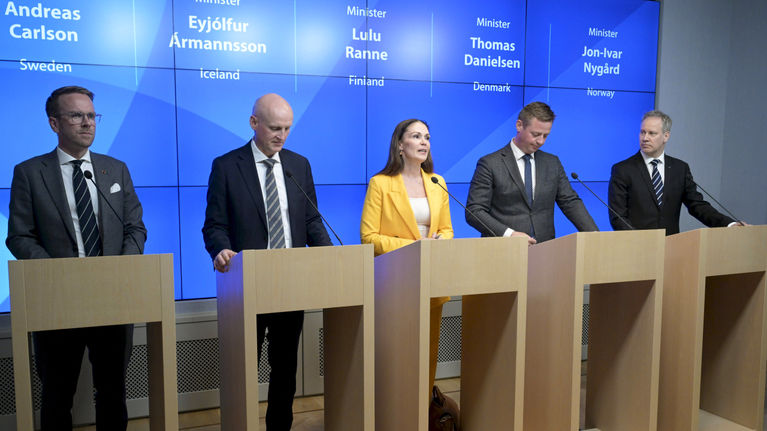
The minister issued the announcement at a joint press conference on Tuesday, at an informal meeting of Nordic transport ministers in Helsinki.
According to Ranne, the Finnish government will need to make a decision about changing the gauge by July 2027.
Reasons to change the track gauge include improving Finland's security of supply and military mobility, as well as cross-border links to Sweden and Norway.
According to Ranne, the plans are not exclusively a Finnish matter, but a joint project between Europe as well as Nato.
Once started, the track gauge adjustment efforts would begin north of Oulu, a city on the country's northwestern coast.
Towards the end of last month, it was reported that Finland is planning to invest in a future rail link to the Norwegian Sea. At the time, Minister Ranne noted that Finland was under pressure to change its track gauge to the European standard width.
The EU's TEN-T Regulation, which enters into force this summer, includes requirements for countries with different track gauges to study and plan a transition to the standard European 1,435 mm track gauge size. Finland currently uses a 1,524 mm track gauge, which dates back to the 19th century.
About two years ago, the previous government's transport ministry said it would not be cost-efficient for Finland to change the rail gauge.
Timing and cost sharing
According to Ranne, now is the right time for Finland to start work on changing the gauge.
She acknowledged the effort would be expensive, but noted the potential of the EU funding half of the project's planning costs and 30 percent of the actual work.
However, the project will not take shape quickly, Ranne said, noting that work on it could start in the 2030s at the earliest.
"Of course, we are very pragmatic and realistic, we cannot do this in five years. Planning will continue until the end of the decade, and maybe in 2032 we can start construction," Ranne said at the press conference.
During their meeting, the Nordic transport ministers issued a statement about military mobility and security of supply.
According to the Finnish transport ministry, the joint statement "emphasises the importance of cross-border military mobility, civil preparedness and security of supply in both the joint Nordic transport system strategy and the planning of the national transport systems".
The transport ministers' informal meeting is set to continue on Wednesday, when they are scheduled to discuss maritime safety, including the "shadow fleet" in the Baltic Sea region.
Finland and Åland hold the Presidency of the Nordic Council of Ministers this year, and the informal meeting is part of the Presidency, the ministry explained.