In early April, chef Takashi Sano of Azuma, one of Sydney’s most acclaimed sushi chefs, ignited an unlikely debate with two Instagram posts outlining the house rules at his omakase counter. Arrive on time. Listen to the explanations. Eat each piece of sushi as soon as it’s served. Ignore those rules and risk being blacklisted.
Most commenters applauded Sano for protecting the experience, but others labelled him arrogant, questioned his talent and balked at the idea of a chef telling paying customers how to behave. Yet surrendering control is the point of omakase.
For Arisa, a sushi enthusiast who grew up in Japan before moving to Sydney, that meaning has never been abstract. “One thing I think is sometimes misunderstood outside Japan is the meaning of the word ‘omakase’ itself,” she says. “Overseas, omakase has become heavily associated with luxury dining, but for many Japanese people it simply means, ‘I’ll leave it to the chef.’”
Traditionally, she says, it’s an expression of trust: allowing the chef to choose the best ingredients available that day and serve them at their peak. “It’s less about luxury and more about trust, seasonality and the chef’s judgement.”
That doesn’t mean everyone agrees on where the line should be between guiding diners and directing them. Food writer Nicholas Jordan told me the broader issue is that some chefs risk centring themselves over the people they’ve invited to dine. “I think chefs should care more about whether guests are enjoying each other’s company,” he says. “I love omakase, but I don’t always want every dish explained. Sometimes I just want to experience it. I think it’s valid to want to experience art without explanation.”
Others questioned not the etiquette itself but how it was enforced. One person who contacted me after Sano’s posts welcomed the fact that he had published the rules, but questioned whether blacklisting people who unknowingly broke them was compatible with hospitality. “Publishing the etiquette is great,” they wrote. “But blacklisting people who didn’t know the expectations feels contrary to the spirit of hospitality.”
For Merivale executive chef Dan Hong and Michael Shen, however, that criticism misses the point. “It’s his omakase, so it’s his rules,” Hong says. “Don’t go if you disagree.” Shen believes much of the backlash came from misunderstanding the format. “Since when is it controversial to not be late, listen to the chef’s explanation or eat what’s served immediately? When you don’t do these things, you really disrespect the chef who’s literally in front of you.”
A little over a decade ago, omakase was still an underground curiosity in Sydney. At Sokyo, Sano helped introduce the format to a wider audience. Then came Raita Noda Chef’s Kitchen, Sashimi Shinsengumi, Masuya, Sushi E and Kuon. At first, the challenge wasn’t getting a reservation. It was knowing these places existed. As awareness spread, bookings became increasingly difficult to secure. Even well-known chefs struggled to get a seat.
“I remember it took me two years to sit in front of Toshihiko Oe at Masuya before COVID,” Hong says. “He would never reply to my messages!”
At the height of Sashimi Shinsengumi’s notoriety, a mobile phone was switched on at 7pm every two months, on the second-last Monday, for just one hour. No texts, no callbacks. If the line was busy you kept trying. If they picked up, you were in. Securing a seat became a badge of honour. “I dialled about 500 times across three phones to secure the booking,” food lover Mr. B tells me.
Longtime omakase diner Vivian Phi believes the real boom came during the pandemic, when international travel came to a halt. Shen agrees, pointing to the flood of openings that followed lockdown. “In that post-lockdown period alone we had Yoshii’s, Haco, Kuon, Bay Nine, Kisuke, Besuto, Ora and Hachioji all opening,” he says. “A meteoric trend in the Sydney food scene if I’ve ever seen one.”
Sydney has always had a soft spot for scarcity. We queue for limited sneaker drops, collect blind boxes and chase impossible reservations. Omakase fit neatly into that culture. Getting the booking became part of the experience.
“What was traditionally just an incredible meal showcasing seasonal produce has become a bit of a hype game,” Phi says, and she isn’t alone in that observation. Shen believes social media is a double-edged sword. It introduced more Australians to omakase than ever before, but also fuelled demand that outpaced Sydney’s small pool of experienced sushi chefs. “Initially it was just people who were really into Japanese food and knew where to find these experiences,” he says. “Now it’s the usual mix – influencers, gastro enthusiasts, box tickers.”
Eric Yu, a Food & Travel advisor who has dined at hundreds of omakase counters in Japan, says the phenomenon isn’t unique to Sydney. “While you still have those who are in it just for the food, you also increasingly have people who are there because it’s prestigious or because they want to be seen,” he says.
Instagram didn’t create Sydney’s omakase community. It simply pulled back the curtain. In an era where restaurants compete to be seen, some of the most coveted counters have become valuable because they still rely on introductions, regulars and reputation rather than algorithms.
If you followed the right accounts, you glimpsed a world that felt just out of reach. What looked like exclusivity from the outside often reflected years of familiarity.
I’ve started jokingly calling it “bromakase.” It’s shorthand for the returning guests who always seemed to be there: the familiar faces I’d recognised on Instagram long before meeting them in person. Phi’s explanation is simpler: the same groups booked entire counters, returning often enough to become regulars.
The question was no longer how you got a booking – it was how you got invited back.
Yu says Sydney’s reservation woes are “child’s play” compared with Japan. There are reservation drops that make Noma look easy, paid bots competing for seats, restaurants where first-time diners aren’t served the best produce and places where bookings are made years in advance. He already has a booking for 2028.
Some of Japan’s best omakase counters are known only to those who already dine there. They rarely advertise. Many only accept bookings from returning guests and the people they bring. Regulars aren’t simply inviting someone to dinner. They’re introducing someone into a relationship with the chef that may have taken years to build. Over time, they’re trusted enough to introduce someone else.
This practice is known as ichigensan okotowari. Literally, it means “no first-time customers”, though in practice it’s closer to “no introduction, no seat.” Without someone to vouch for you, you’re just another stranger.
Arisa says the custom is easier to understand when viewed through Japan’s culture of trust. “Restaurant reservations are often made over the phone without deposits, prepayments or credit card guarantees because there is an assumption of mutual trust between the customer and the restaurant,” she says. “When a booking comes through an existing customer or a trusted introduction, there is a level of accountability. People think carefully about their behaviour because they don’t want to inconvenience the restaurant or embarrass the person who introduced them.” Referral-based systems, she says, weren’t originally about excluding people but about protecting trust, preserving relationships and maintaining standards.
On paper, it sounds radically exclusionary. But Phi believes that’s missing the point. “This is innate to the upper echelon of Japan’s finest restaurants. I can understand why chefs want to have a say in who dines at their counter. I don’t believe it means to exclude diners, but rather is built on trust and respect between regular guests and their patrons.”
Hong agrees. “The accountability is on the regular guest,” he says. “They have to be selective about who they invite so they don’t ruin that relationship.”
Shen, who admits he still can’t get into Japan’s most exclusive ichigensan okotowari restaurants himself, nevertheless supports the practice. “For anyone who has an issue with this format, just think of such restaurants as private supper clubs,” he says.
Phi has watched it play out, telling me “I have personally seen guests being told not to bring back certain people as they are not welcome.” Yu puts it more bluntly. “If you were a chef, would you rather serve the diners who supported you from the start or whoever has the most social media followers?”
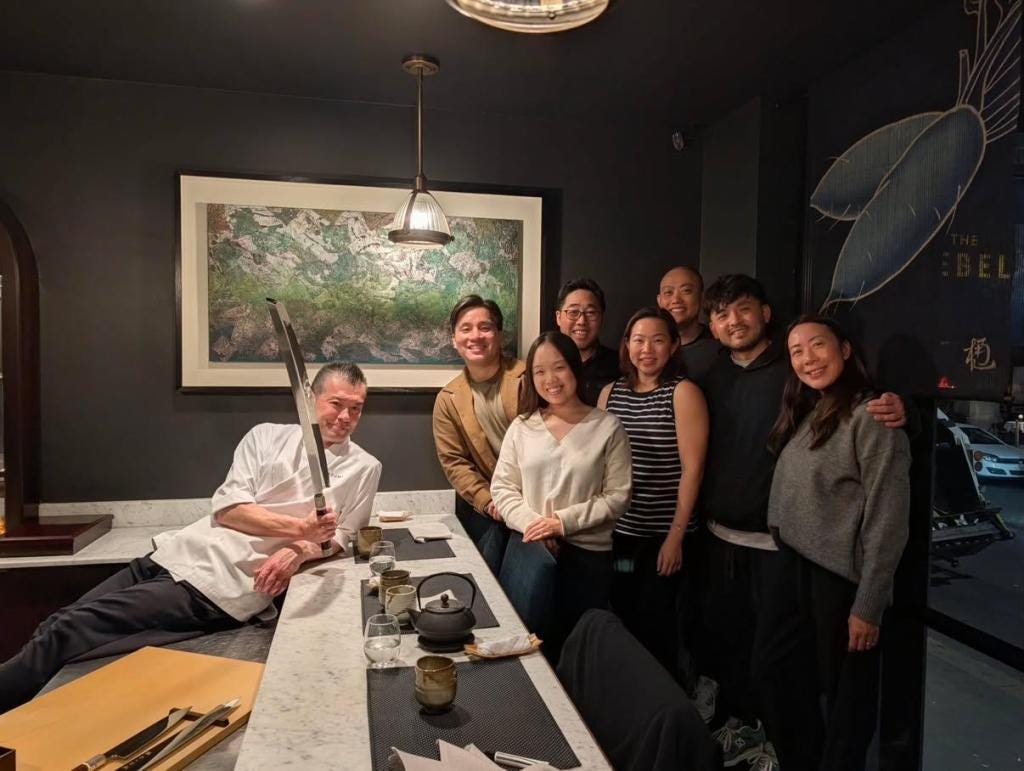
I had my first experience at Sano’s counter in June. It took me a decade to get there. The introduction came from someone who had followed my work on Instagram for years. Outside Instagram we’d only met briefly, but he trusted me enough to put his own standing with the restaurant on the line. Before the booking, he reminded me several times about Sano’s rules, especially about being punctual. It was the same responsibility Hong had described. By introducing me, he wasn’t simply helping me get a seat – he was staking his own reputation on me. In Japan, introductions are often built over years of shared meals. Mine began in my DMs.
I arrived 10 minutes early. I asked permission before taking photos. I listened to every explanation and ate each course within seconds of it being placed in front of me. Throughout the night, the regular guests remarked on changes Sano had made to his sushi and reminisced about when they first encountered some of his signature nigiri. By then, the rules no longer felt like rules. They felt like the price of joining a conversation that had been going on for years.
When the meal ended, Sano handed me his business card with a direct line for future reservations. It was the first time I understood what being invited back actually meant.
Seen through that lens, Sano’s Instagram posts read differently. What looked to some like arrogance could also be read as an attempt to preserve a dining culture built on trust, respect and accountability. The rules were never just about punctuality or eating each piece the moment it was served. They were about protecting a culture that had always existed quietly – until Instagram made it visible. Perhaps that’s what omakase has always meant. “I’ll leave it to the chef” was never just about food. It’s about trust.
All words by Howard Chen