The dream of the democratisation of film-making is coming true. Now that it’s feasible for an individual artist to create an entire film on their own, it’s worth reflecting on what we have lost.
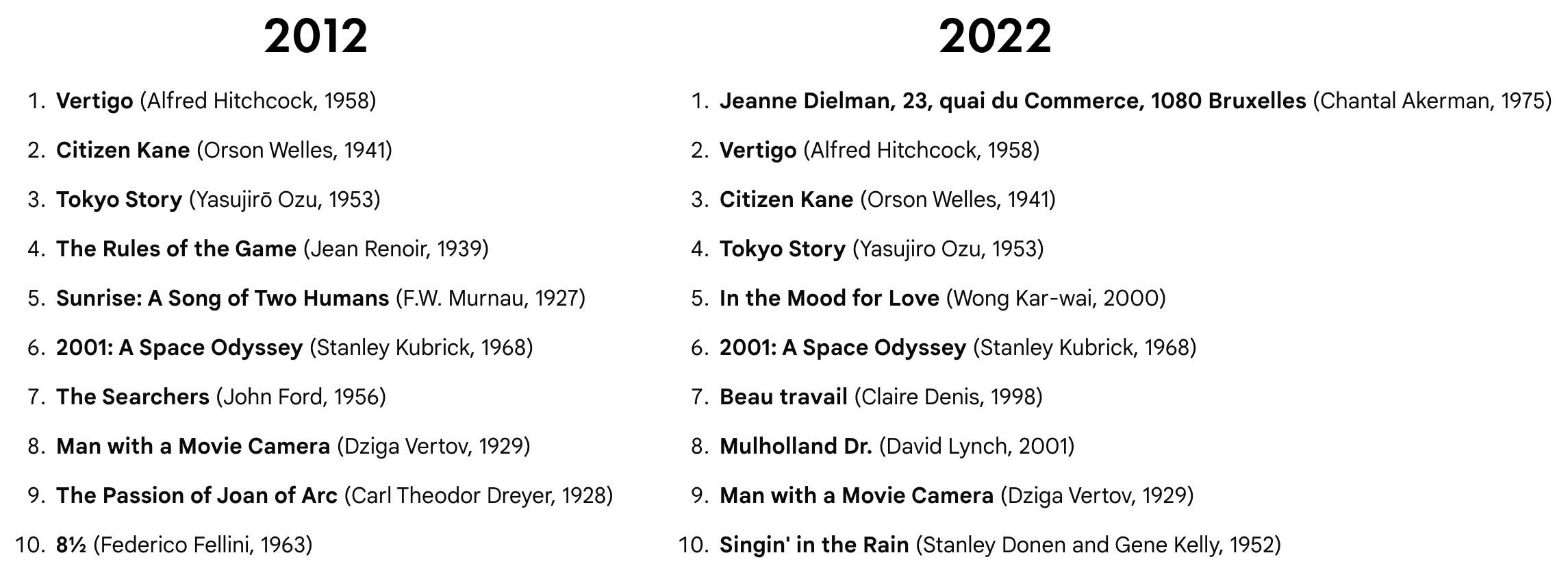
Every decade, the BFI’s Sight and Sound publishes critics’ and film directors’ lists of top-100 films of all time (shortened to top-10).
As you might expect, given the BFI’s cinephile skew, IMDb’s top-10 looks different.
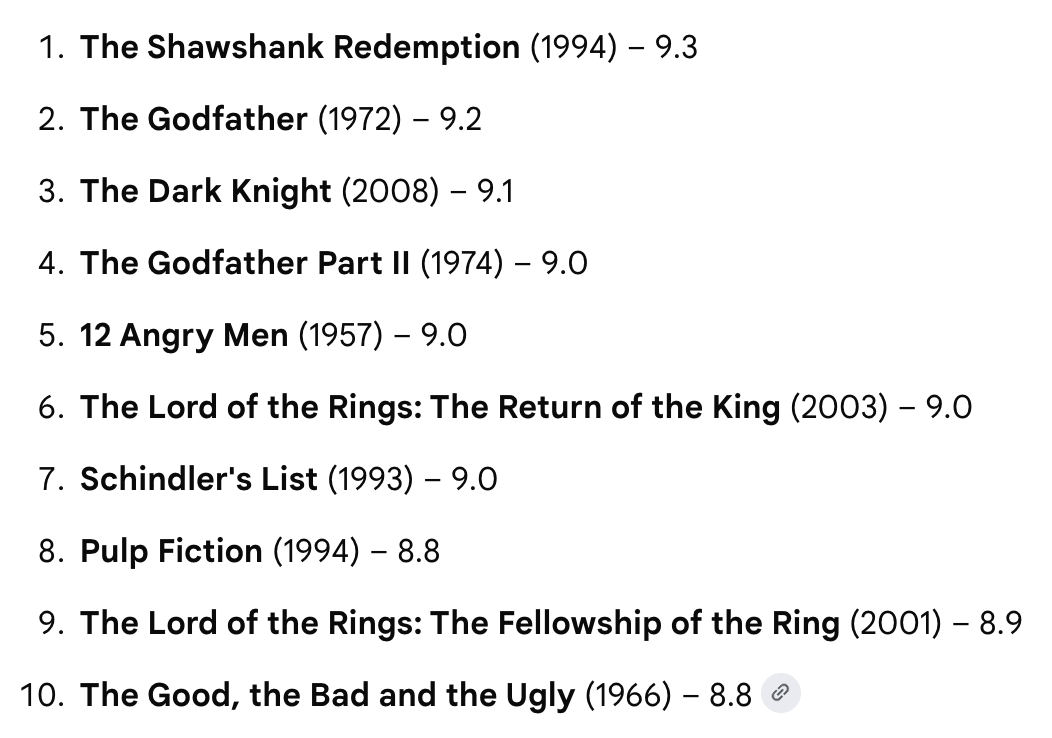
Putting aside questions of taste and the fact that canon lists skew old for many reasons, what’s notable about those chart-toppers is the set of attributes they share: shot on film, using tungsten lights (instead of LEDs), with minimal CGI.
Some of that is statistically inevitable: the industry transition to using digital cameras and LED lights didn’t begin in earnest until the late 2000s. By 2016, over 90% of major films were shot digitally; and yet, when top-tier directors like PTA, Nolan and Tarantino are in a position to design their productions, they disproportionately go analog (camera & lights).
If film-making has never been more accessible, shouldn’t there be a slew of digitally-produced films from emerging talent? Why do influential directors make their own lives more difficult by sticking to old processes?
I contend that the 21st century has seen a dramatic loss of information on screen, making for a less luxurious and less satisfying experience for the viewer, and trace how this loss was manufactured, department by department.
Provided below are examples of information loss in different departments, starting with camera and stock, then moving on to what the camera actually captures: light, props, textile, and face, ending with post-production and delivery.
[Caveat: I’m neither an engineer nor academic, and write from my experience as an artist and crew member who’s worked in different production departments, and my perspective as a technology-loving media geek. I speculate liberally.]
CAMERA AND INSIDES
1 (A): Stock
1 (B): Digital sensors
1 (C): Resolution
1 (D): Fractality
1 (E): Lenses
1 (F): Colour
LIGHTING
2 (A): Tungsten
2 (B): LED
In this post, I treat the film as an example of the Gesamtkunstwerk: an “all-together-artwork” (transl. from German) created through collaboration between artists from a wide variety of disciplines – writing, design, music – unified by a single vision. I invoke the Gesamtkunstwerk framing because the loss I’m pointing to is systemic, rather than a camera-department complaint.
Analog film (referred to as “stock”) is made from strips of plastic covered in light-sensitive chemical emulsion, which consists of silver halide crystals, dyes, and other compounds suspended in gelatin. The physical makeup of stock is inherently messy.
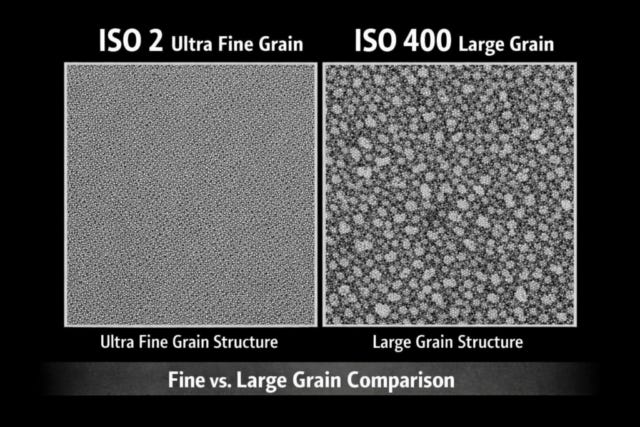
(Photo from Zebra)
The lower the ISO, the more light is necessary for a successful exposure (make a note of this point – we’ll come back to it). ISO 50 - 100 is considered fine.
The higher the ISO, the larger the grain, reducing lighting demands. Subjects in low-light conditions (like concerts) are best captured on “fast” film with a large grain structure, typically ISO 800 - 1600.
Mid-century onwards, film productions generally worked with 100 - 500 ISO stock.
Digital cameras capture images using CMOS sensors. Light that enters the lens is picked up by millions of minute light-sensitive elements, converted into electric charges, and processed into an image. The sensors’ orderly nature allows for a uniform, repeatable capture.
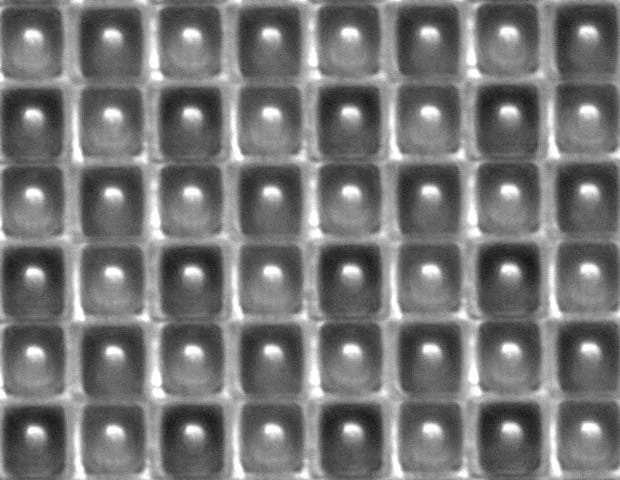
They are also better at capturing detail in shadow areas. Counter-intuitively, this makes shooting more challenging: just as film stock yielded luscious detail when sufficiently exposed to light, it plunged under-exposed areas into total darkness – leaving the lighting crew to focus on lighting only that which we wanted to see. Digital sensors’ ability to capture detail in darkness means crew has to take light away, and also spend more effort and time on design (props and set dressing).
Achieving a chiaroscuro look on screen is much harder today than in the past.
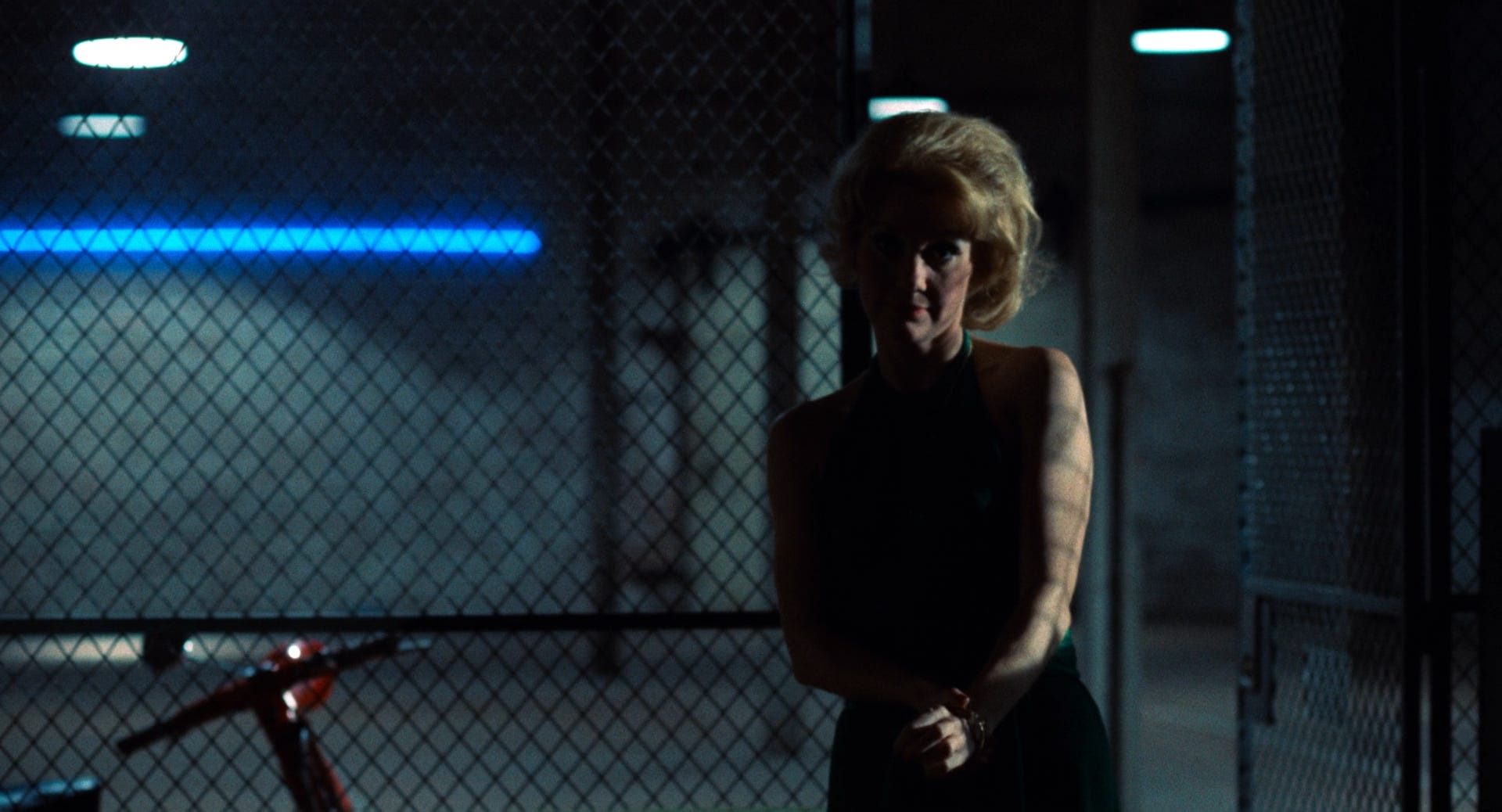
The Conversation (1974)
As of 2026, two industry-standard cinema cameras are:
- ARRI Alexa 35: 4.6k sensor providing a resolution of 14.58 Megapixels; and
- Sony Venice 2: 6k and 8.6k sensors yielding 24.8 and 50 Megapixels respectively.
Googling the resolution of an average frame of 35mm stock, measuring 21.95×16mm, provides an estimate of 3.2 - 4k (~6 Mp) – a clear loser when compared to the Alexa and Venice 2. But film stock isn’t made of pixels; because it’s analog, its resolution isn’t easily determined… and it’s vastly more elastic than you might expect.
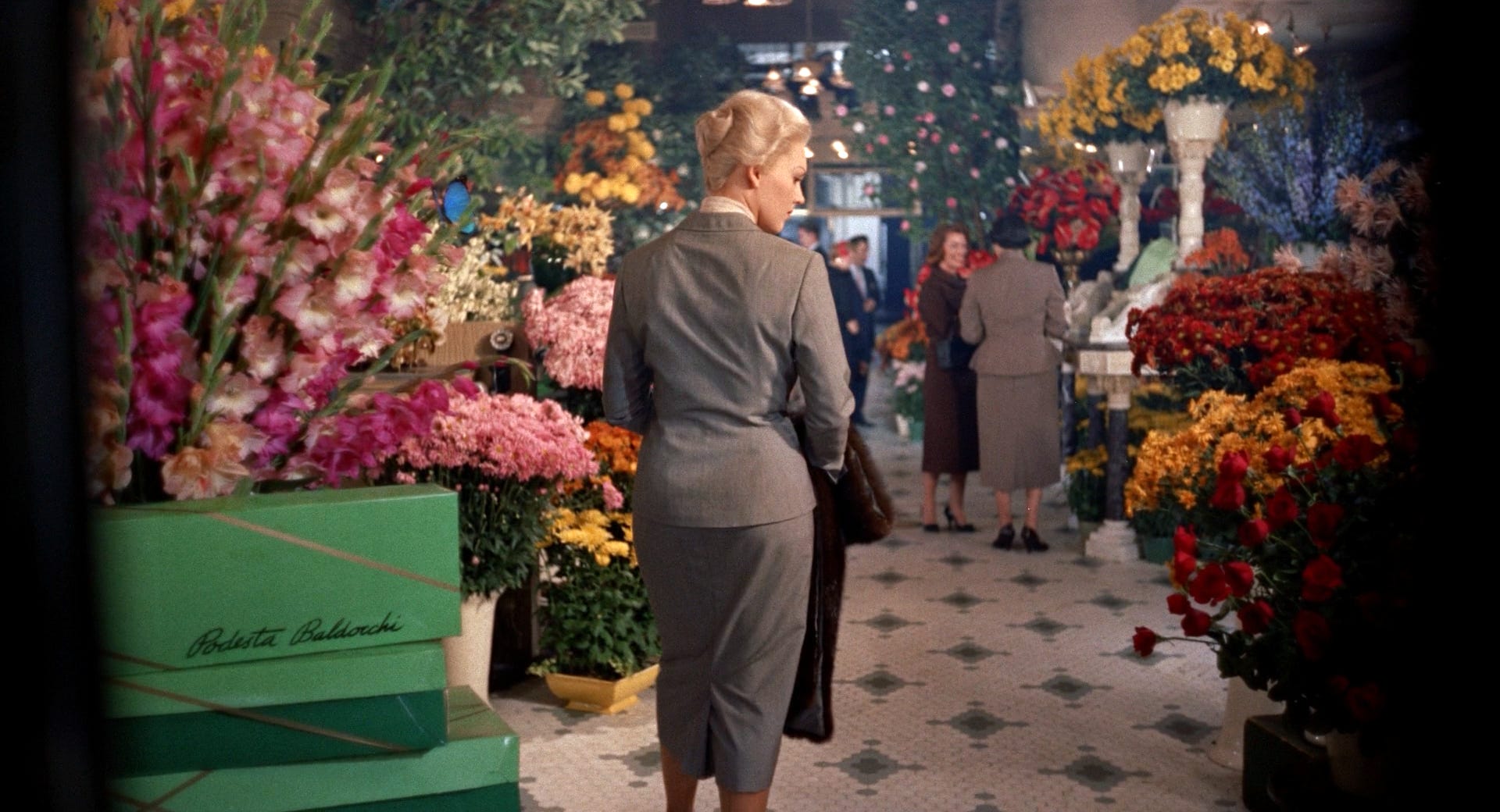
To film Vertigo (1958), Hitchcock chose Kodak Eastman 5248 25 ISO 35mm stock: an exceptionally fine-grain stock capable of recording fine detail, and a vibrancy of colour to make you weep.
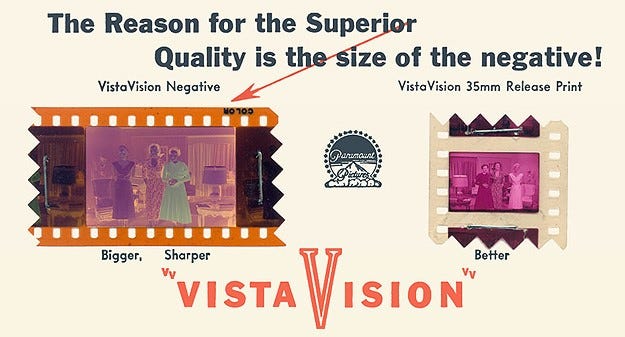
Using a VistaVision camera allows for more efficient usage of the 35mm frame: ~37.7×25mm instead of the standard 21.95×16mm (the rest is lost to black bars), yielding much greater resolution (approx. 2 - 6x).
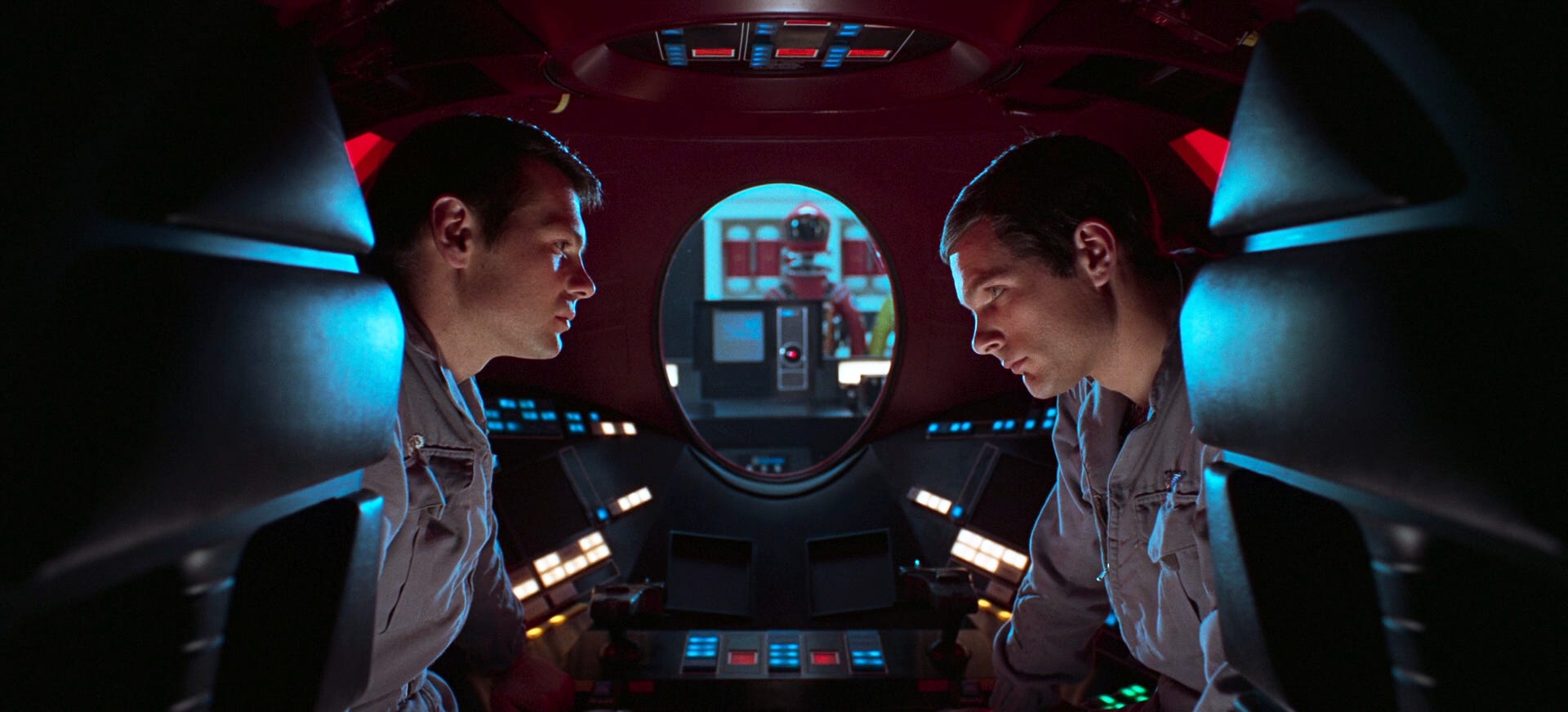
2001: A Space Odyssey (1968) was shot on 65mm Eastman Kodak 50T 5251 (ISO 50) stock using the Super Panavision 70 format. Its native resolution is estimated to be in the region of 8-18k (depending on scan), or up to 200 Megapixels; estimates vary.
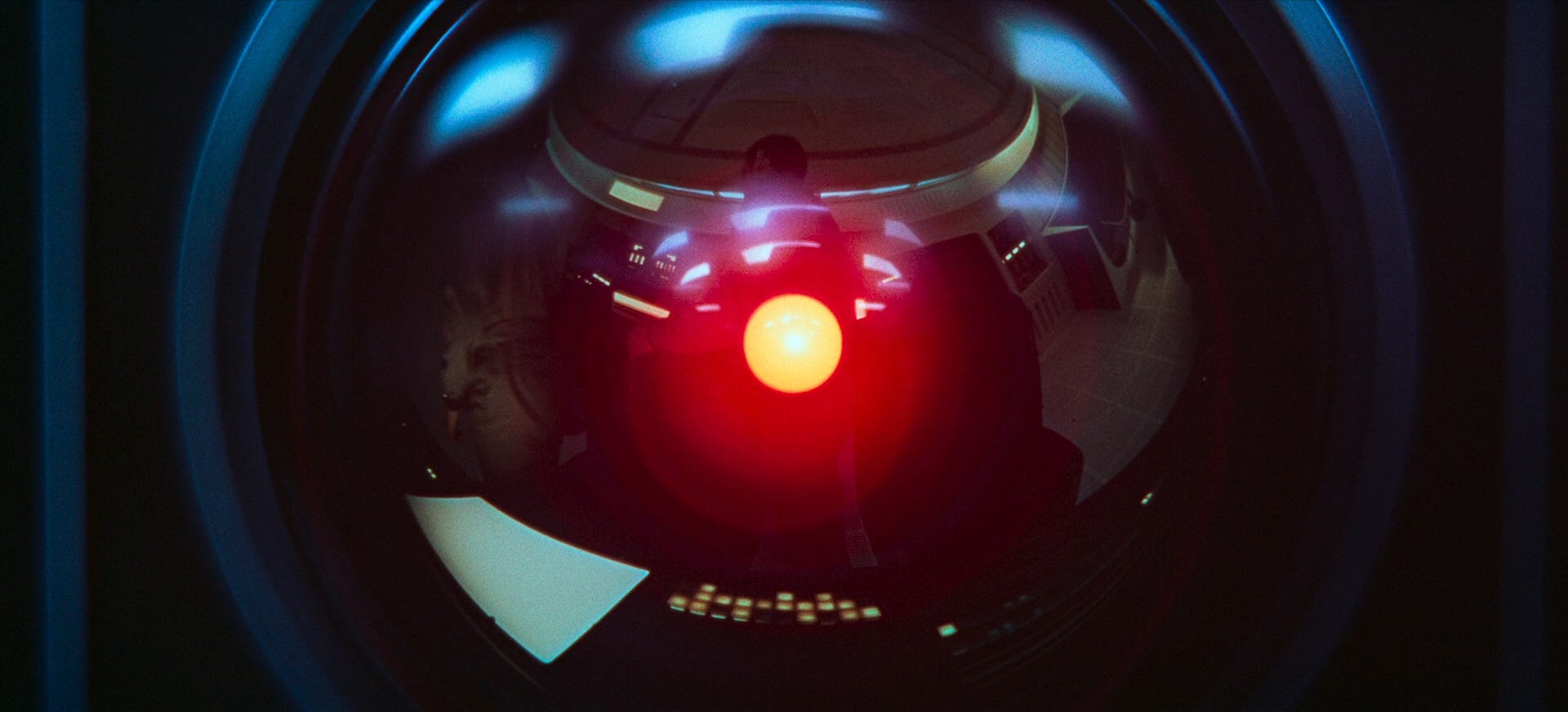
The 8.6k Sony Venice 2 became available in 2022.
If we care so much about resolution, then what’s the appeal of grainy 16mm stock? Is its charm a nostalgic hallucination? Probably not.
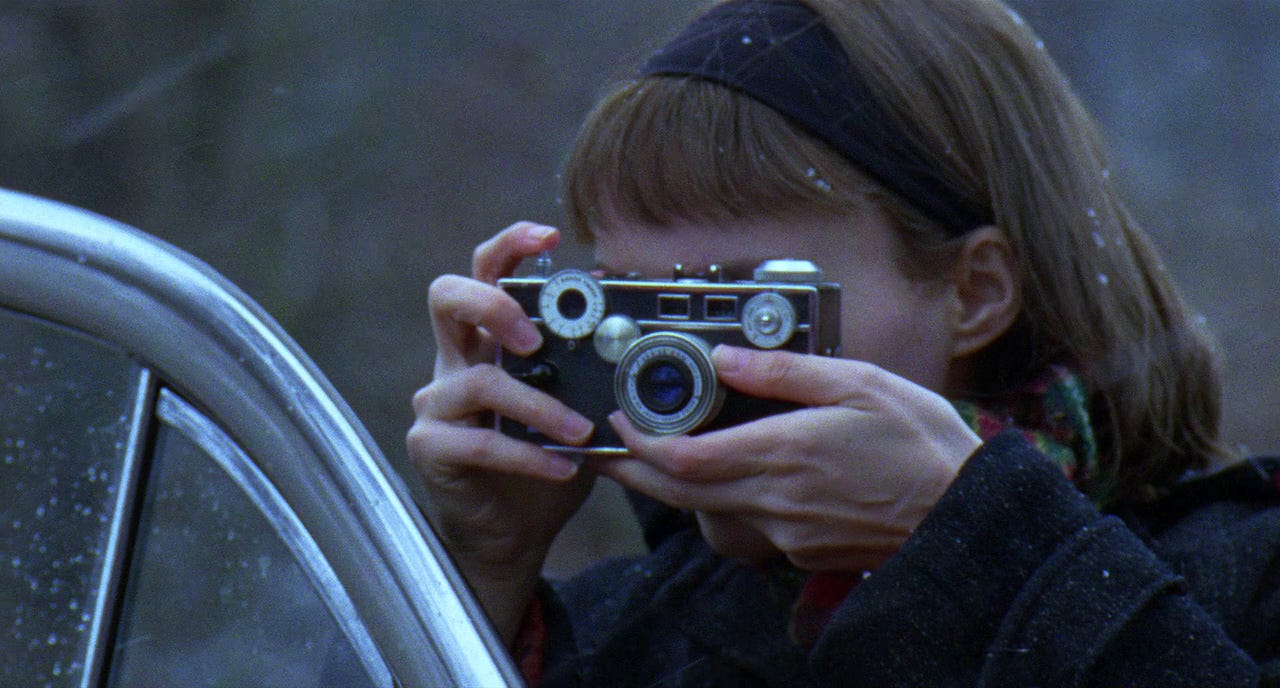
Carol (2015)
Research into the aesthetics of fractals has shown that humans prefer images with mid-range fractal complexity – a fractal dimension of roughly 1.3–1.5.
The chaotic nature of film grain – heterogeneous crystals distributed randomly through chemical soup, with varying density depending on exposure to light – produces noise that originates from the natural world, and makes each frame unique.
Noise generated through interaction with a fixed-pattern sensor and locked to a manufactured grid is fundamentally different – closer to mathematical white noise.
Older lenses were hand-assembled and highly variable in performance. Kubrick would buy multiples of the same lens and acquaint himself with particularities of each, choosing the set of strengths and flaws he thought right for the job. Flares, bokeh, barrel distortion – no two lenses were the same, regardless of cost.
Today’s lenses are computer-designed and machine-ground; a QC victory. It is common practice for cinematographers today to combine digital camera bodies with vintage glass in an effort to re-introduce organic irregularity.
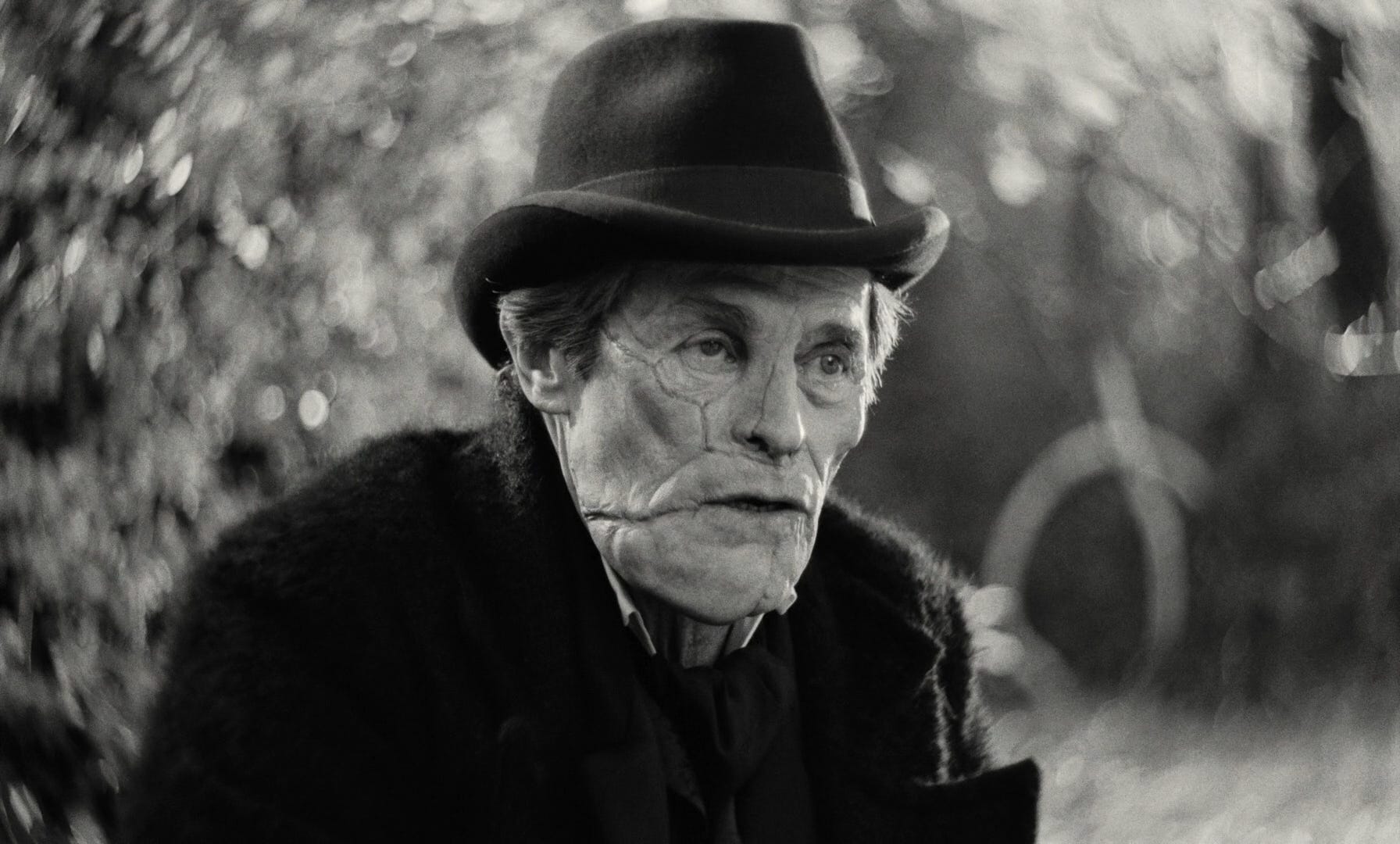
Poor Things (2023)
Technicolor’s early gems (The Wizard of Oz, The Red Shoes) employed the 3-strip process: a special camera filmed in triplicate, exposing 3 sets of negatives (one each for red, green, and blue light) that would then be combined in a complex dye process.
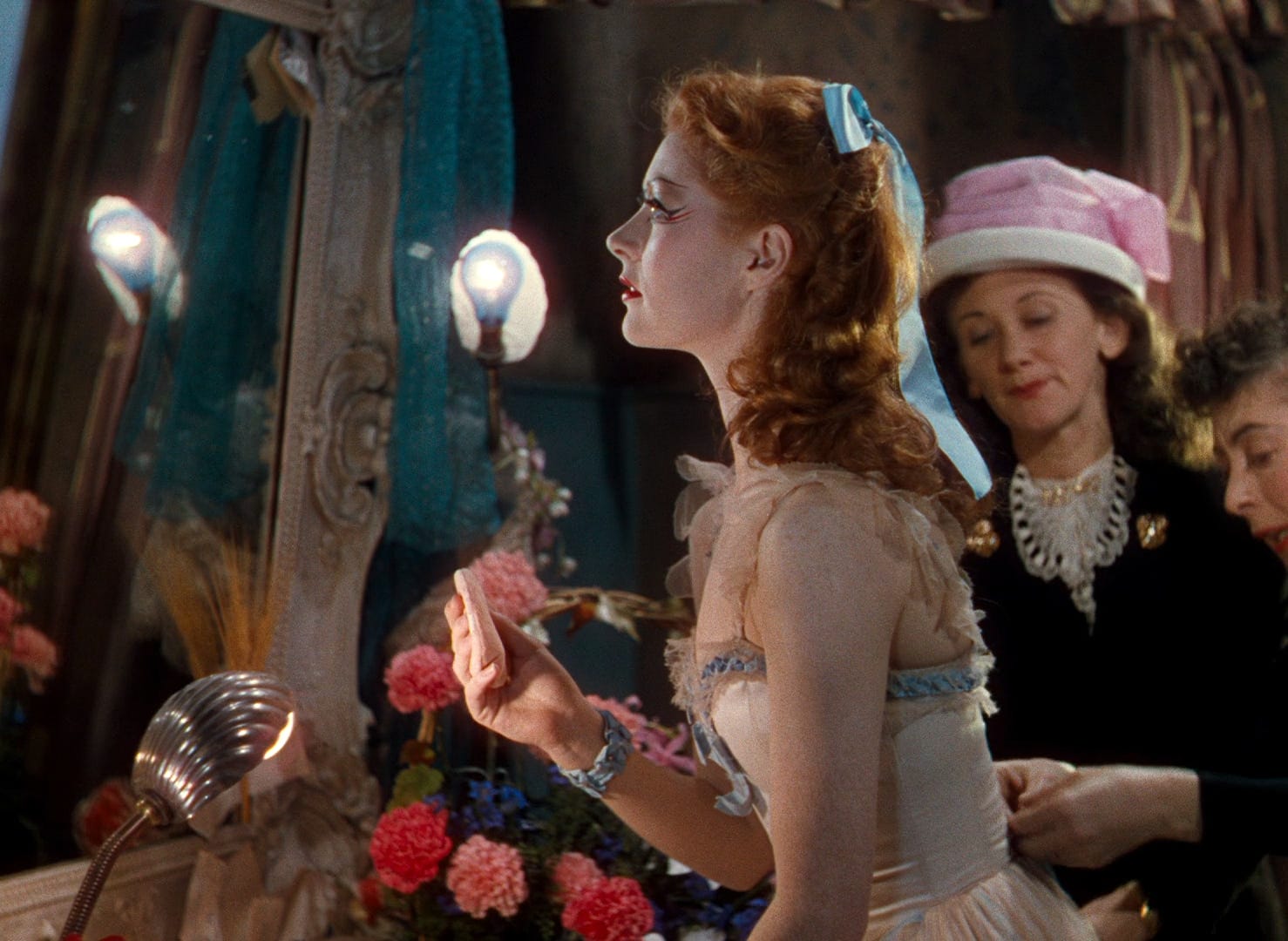
The Red Shoes (1948)
The 3-strip process was retired in 1955. By then Kodak had developed a 1-strip process where cyan, magenta and yellow were stacked on a single strip of celluloid. Technicolor moved with the times and invented a complex printing process where colour was physically pressed into each print like a lithograph, one dye at a time.
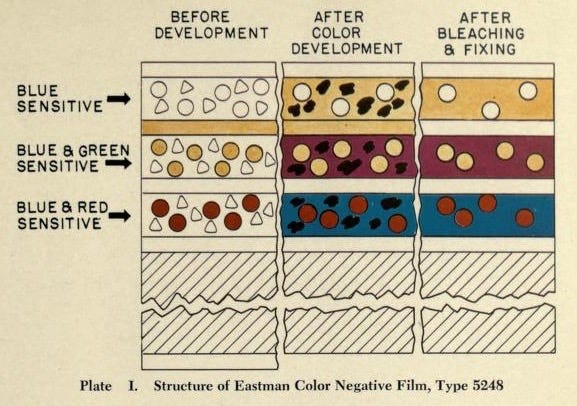
It is this 1-strip dye-transfer process that we tend to refer to as “Technicolor”.
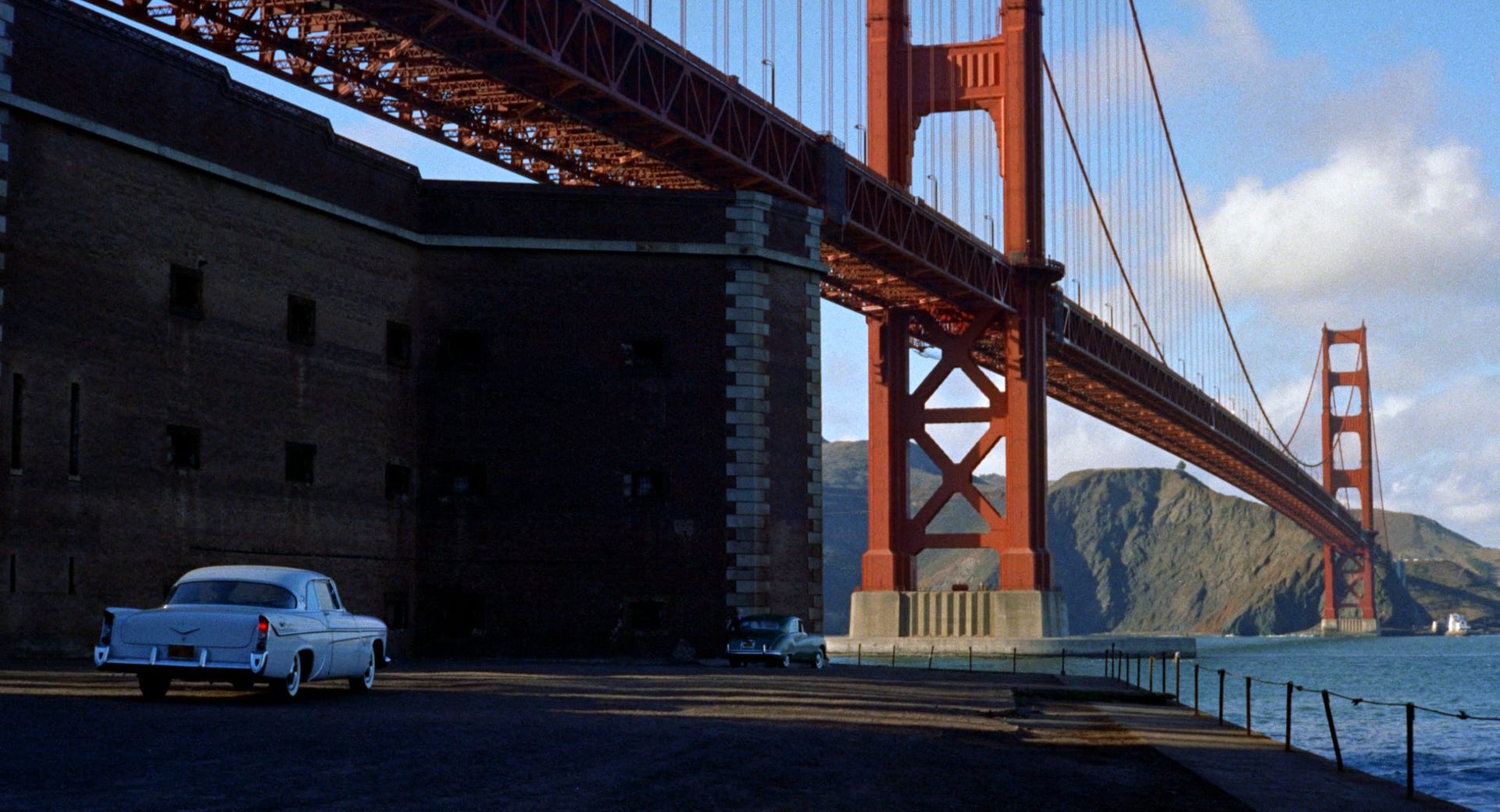
That’s not a matte painting or back projection in the background – it’s real, baby. Vertigo (1958)
So the "Technicolor look" of the late 50s and 60s is a hybrid: Vertigo, The Umbrellas of Cherbourg, 2001, A Clockwork Orange were shot on Eastman negative and printed by dye transfer. The process survived ‘til the mid-70s in Hollywood and 80s in Europe (Suspiria is considered the last Technicolor film), until it was killed off due to high processing costs, slow turnover speed, massive consumption of water and power, and the costs of disposal of the chemicals.
In my view: the reduction of filming and colour-grading costs led to a more lax attitude towards colour within the frame: with less at stake and more ability to “fix it in post,” requirements around cross-department collaboration (such as between cinematography, costume and production design) became much looser. The same could be said about filming on stock in general: no need to be so precious about every little detail anymore.
Having covered the methods of capture, let’s turn to what the frame contained.
Tungsten lamps generate light by heating a wire filament until it glows. It is, in essence, captive fire: around 95% of the energy becomes heat. The remaining 5% is light that is continuous across the spectrum, warm (no pun intended) and dense, with physical properties similar to candlelight and sunlight.
Remember the ISO point from earlier? Slow stock (such as Vertigo’s ISO 50) demands stupendous amounts of light. Black-and-white era productions drowned their sets in it, colour stock relaxed the requirement somewhat, and modern digital sensors need almost nothing. Every advance in making stock more responsive to light has led to reduced power requirements.
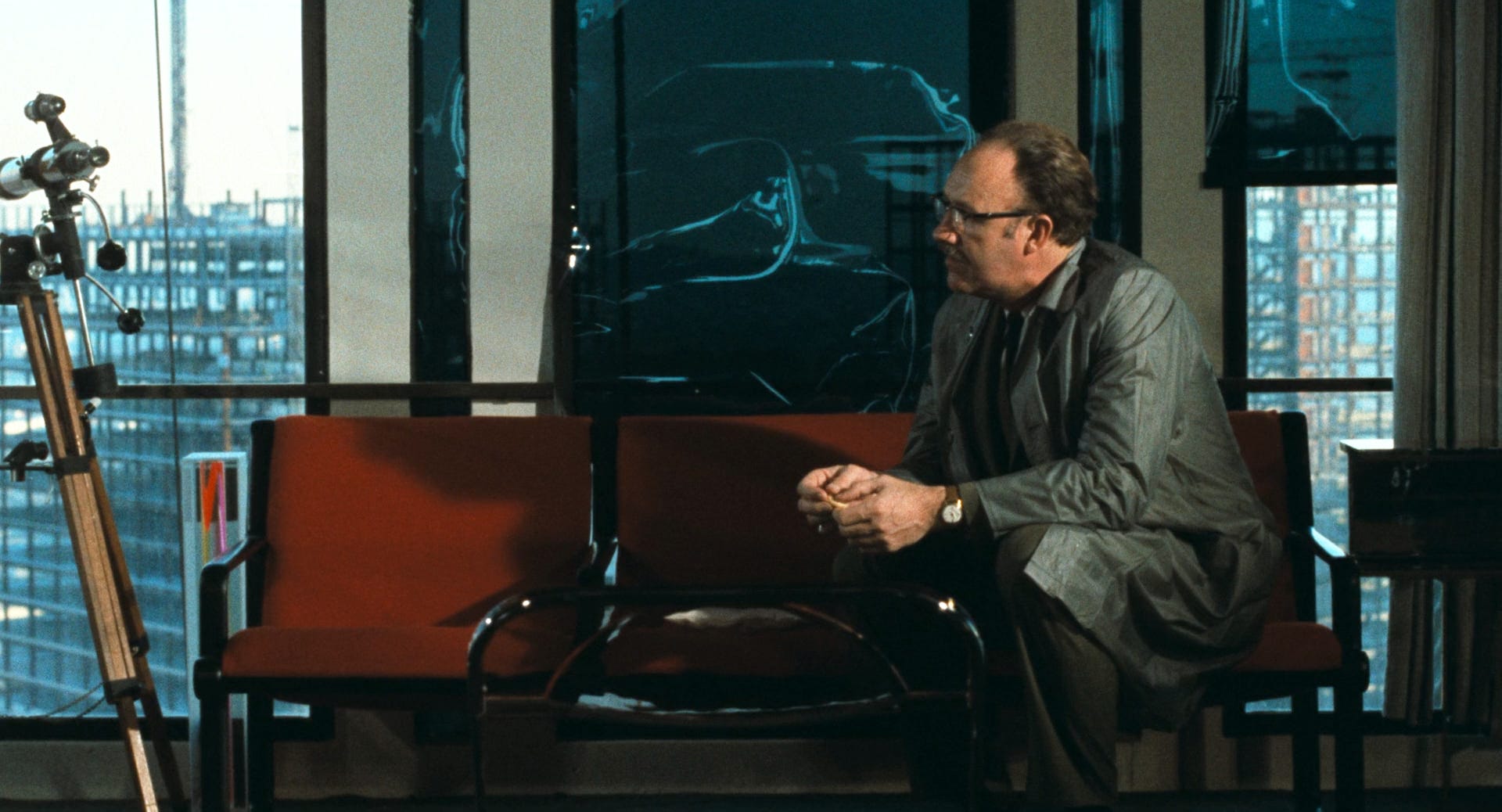
That ain’t daylight behind Hackman. The Conversation (1974).
Wattage did things beyond exposure. A tungsten fresnel is a point source: its light travels far, carves hard-edged shadows, and lands on objects with real intensity. Brights were bright and blacks stayed black, lending compositions a dynamic quality.
You can imagine the heat generated by the mini-furnaces tungsten lights, a sizeable crew and poor ventilation. Sweat was concealed with thick painterly make-up, and actors’ pupils contracted under the harsh illumination, exposing more of the iris.
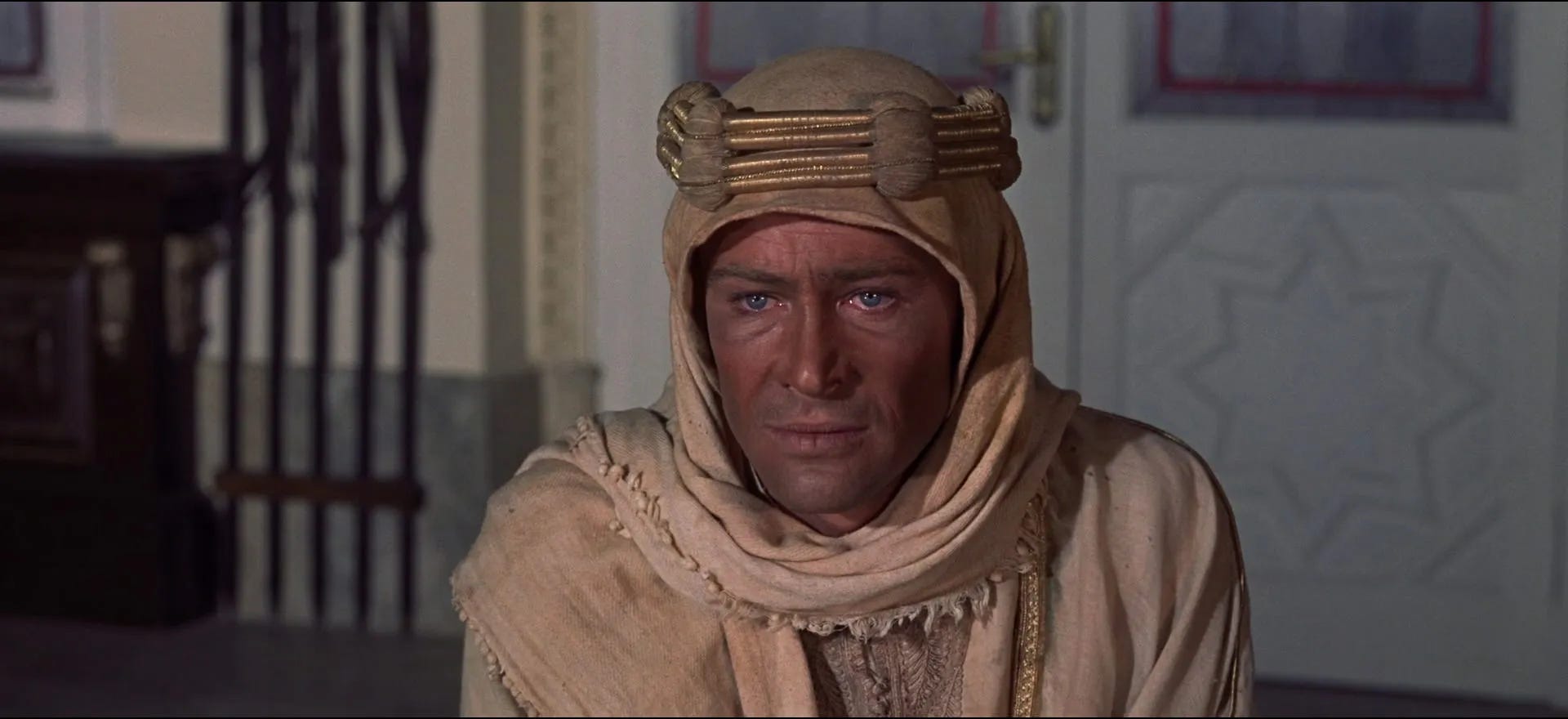
Lawrence of Arabia (1962).
Although energetically inefficient, tungsten units were in one sense sustainable. Their simple components – filament, glass, reflector, lens – made for easy repairs and decades of service life.
LEDs use semiconductors to emit light. The difference in power consumption is stark: an 800W redhead (a small tungsten light) is comparable in output to an LED panel drawing somewhere around 100 to 150W – and most scenes need several of these. The savings in electricity, generator hire and air conditioning are enormous, and sets no longer routinely catch fire.
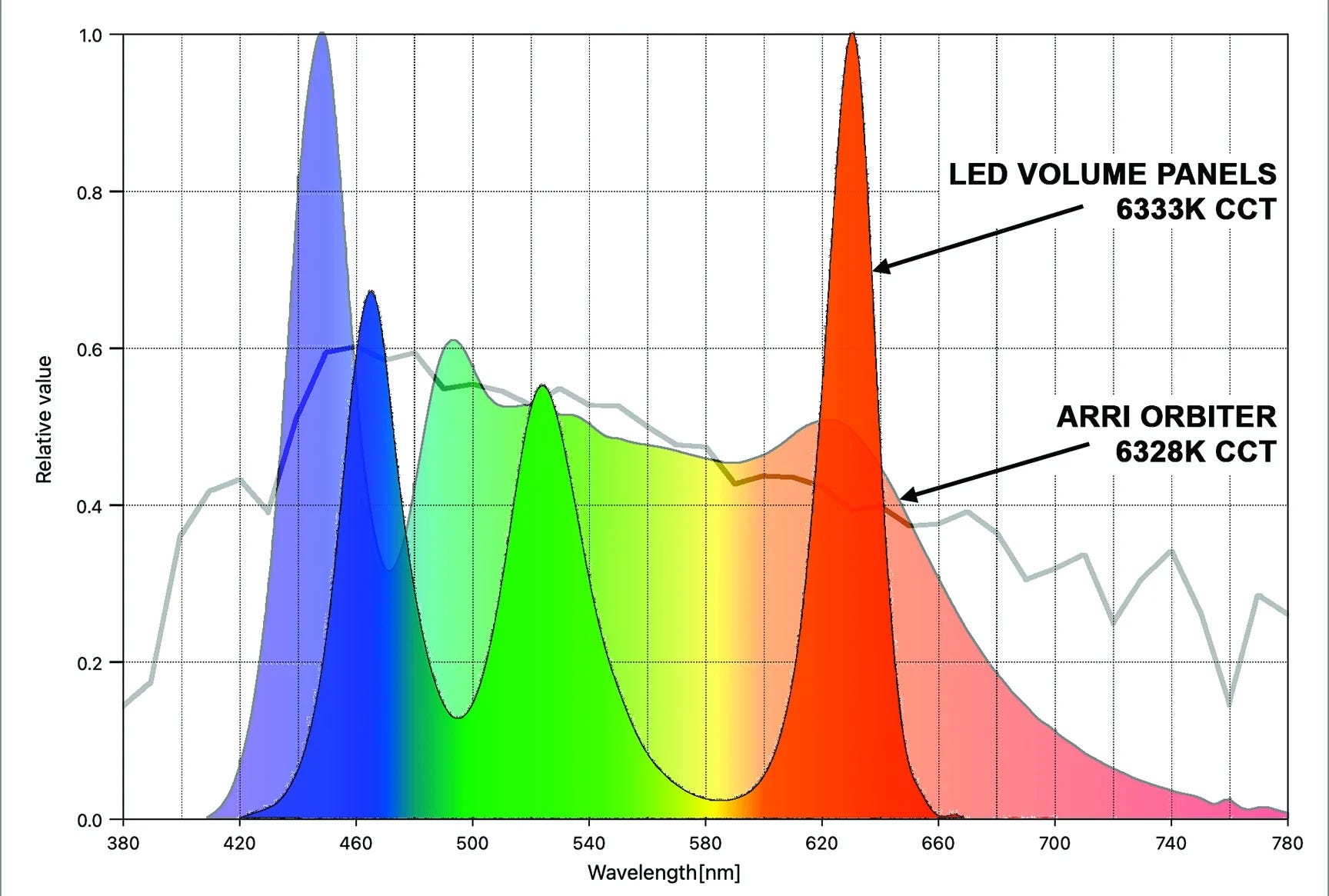
A thorough comparison conducted by American Cinematographer (2021).
Because they contain diodes and phosphors, LEDs have a spiky light spectrum. Colour rendering has come a long way over the last 20 years, but skin under LED and skin under tungsten continues to look noticeably different. LEDs are soft by nature – their light doesn’t travel very hard – so achieving hard sculptural light from them takes deliberate effort, often leading to an “overlit” look and a kind of visual dullness as a consequence. But film production is costly and increasingly risky, and the finer points of the shape of lighting are far down the list of financiers’ concerns.
There’s also flicker.
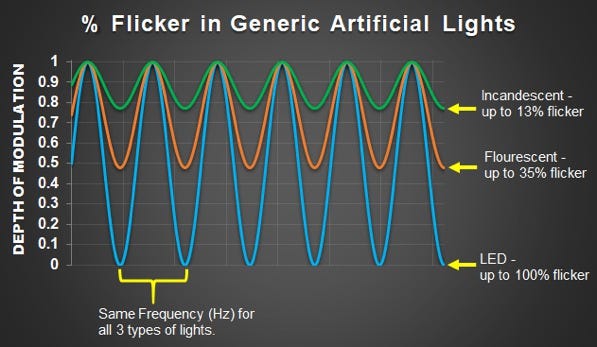
Origin of image unknown.
The electricity powering our homes is AC: the current alternates at either 50 Hz (Europe) or 60 Hz (North America), meaning the electrical voltage actually drops to zero 100 or 120 times per second as the current reverses direction.
Because filament has thermal inertia, it continues to glow between cycles of current, dipping just a little. Light emitted by LEDs switches on and off thousands of times per second; faster than conscious perception, but evident and somewhat familiar to videographers who travel internationally and have to adjust their camera settings to avoid strobing artifacts. Whether the nervous system registers this at some level below awareness is an open question, but given what we’re learning about light therapy, it’s within the realm of possibility that our bodies can sense such fluctuations.
LEDs dim over years, fail in complex electronic ways and generally can’t be repaired on set or anywhere else before they become e-waste.
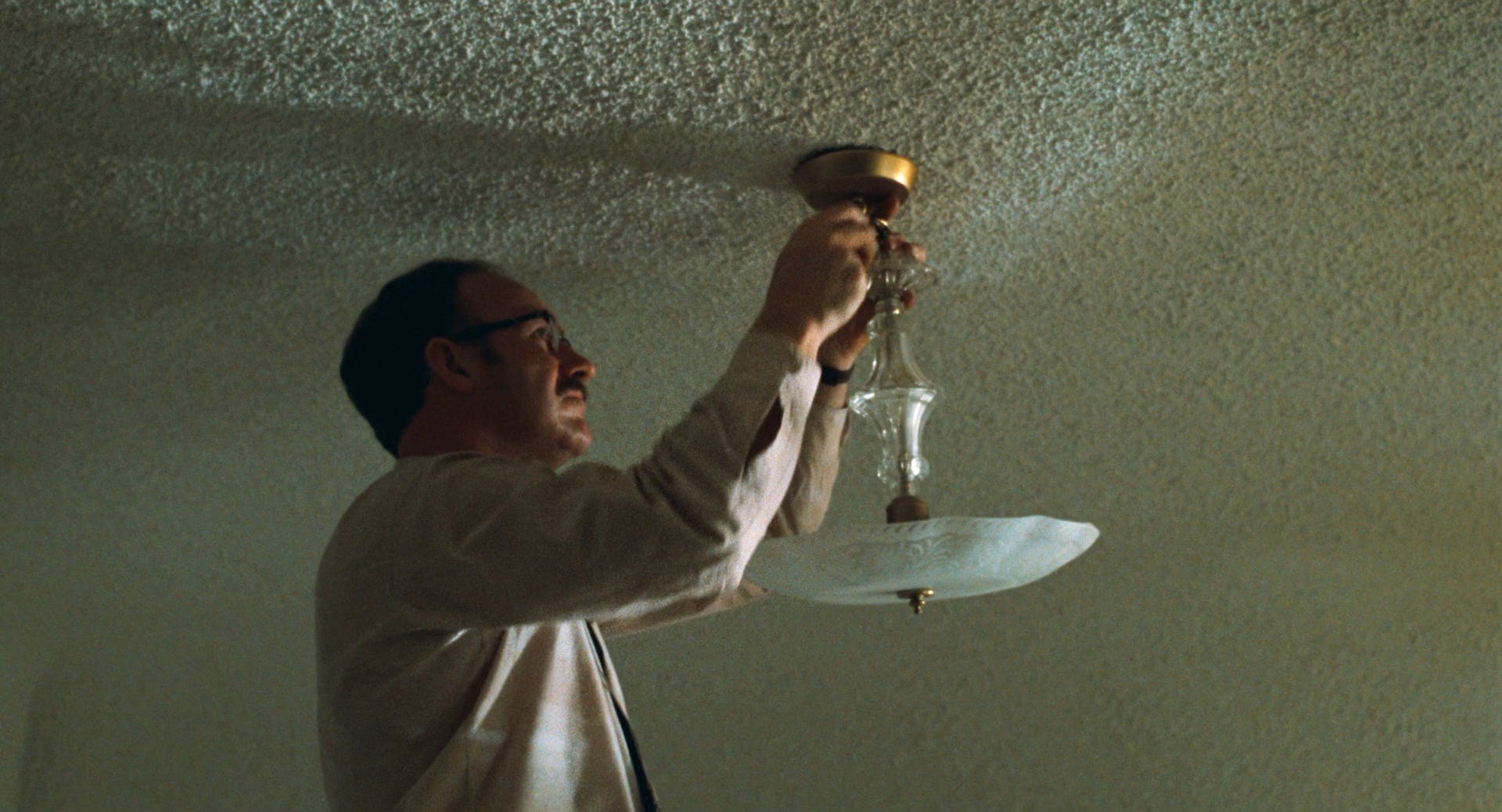
Hackman swapping his newfangled LED for his gran’s ceiling lamp.
The switch from stock to digital had repercussions beyond the visual.
Stock is finite. Every foot running through the camera costs money: purchase, processing, printing. A 1000ft magazine of 35mm comds to about 11 minutes, and under those conditions, every take is a decision carefully made. In “Making Movies,” Sidney Lumet describes his rehearsals process.
On the fourth day, I stat blocking (that is, staging) the scenes. Each interior we’ll use in the movie has been laid out in tape on the floor in its actual dimensions. The tapes are in different colors, so everyone can see which rooms they represent. Furniture is put in the same places where it will appear on the actual set. Phones, desks, beds, knives, guns, handcuffs, pens, books, papers – all there. Two chairs, side by side, become a car, six chairs a subway.
Digital takes cost only time, and buy freedom – freedom to explore and make happy accidents. Covertly recording a “rehearsal” of accidental genius has saved many a scene. But the attraction of “we can always go again” is hard to resist; this means less preparation, more coverage, and a mountain of material pushed downstream to the wretched editor cursed by someone uttering “we’ll fix it in post” a hundred times too many. Every decision can be revisited later… by someone else.
This is where we bring up the Gesamtkunstwerk once more. The all-together-artwork requires all departments to work together under an invisible vision from the future. Costume spoke to camera, camera spoke to design, and everyone spoke before the shoot because afterwards was too late. The migration to remote work has made everyday life more convenient, but proved disastrous for inter-departmental communication; each department does its job asynchroniously, which brings down the film’s ultimate cohesion. No director or producer is able to oversee such a fragmented process.
Like any other complex production process, the history of film development is one of optimisation. Let’s round up what has been gained and lost.
In-camera
GAINED: uniformity and repeatability; sensitivity (shooting in near-darkness); shadow detail; unlimited takes.
LOST: chiaroscuro blacks; organic grain; lens character; dye-transfer colour; the obligation to decide before shooting.
Lighting
GAINED: massive energy savings; cool, safe sets; no more routine fires; portability and battery power.
LOST: continuous-spectrum light on skin; hard light and long throw as the default; contrast that comes out of the box; repairability.
Optimisation is a normal part of progress. Although health and safety assessments for film are a pain to write, they’re evidence of past mistakes and provide some protection.
But the frog boils slowly. Little by little, all is shaved away that can be; and one of the great gifts of cinema is the chance to capture time, to live another’s life. Being mindful of that which is disappearing gives us the chance to choose when to make a stand for things we love for no other reason than their beauty.
Part 2 to follow!