
For years, if not decades, Ubuntu has been the default recommendation for anyone wanting to switch from Windows to Linux. Backed by a large organization like Canonical, Ubuntu arguably has the most coordinated resources behind it to create a reliable and predictable experience.
But the Linux landscape has evolved a lot, and what used to be a driving force in the Linux space seems to have turned into a ball and chain holding it back. At least, that's how many in Linux community seem to see it, and I can understand why.
I've made it no secret that I'm not a big fan of Ubuntu, and more and more, it's looking like Fedora is taking over as the standard recommendation for new Linux users, and for good reason. While Fedora has its drawbacks, Canonical has often made bad decisions that contribute to Ubuntu losing its popularity.
Choosing Snap over Flatpak
Sometimes the standard exists for a reason
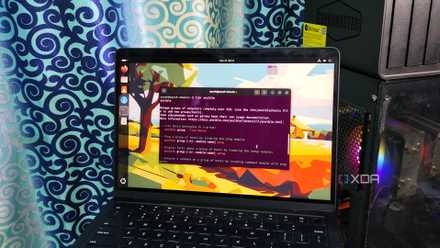
App distribution on Linux in general can be a bit of a mess, as a lot of different distros support different packaging systems and package managers by default. But in 2015, something called Flatpak appeared, offering a new way to distribute apps on Linux that can be easily supported by any distro while also adding a layer of security by running apps in a containerized environment. Flatpak has grown to be widely adopted by many Linux distros, but Canonical had different plans for Ubuntu.
Instead of embracing Flatpak, which would have effectively made it the way to get apps on Linux, Ubuntu introduced Snap, a somewhat similar packaging system that's actually worse in a few key ways. For one thing, Snaps can be even more restrictive for developers, which has caused some apps to choose not to adopt it. But also, Ubuntu has been criticizing for making its official "Snap store" a requirement for anyone using Snap, giving more control over what can be distributed to Canonical.
 Quiz
Quiz
8 Questions · Test Your Knowledge
How much do you know about Fedora?
Trivia challenge
From cutting-edge kernels to RPM packages — find out if you're a true Fedora expert.
HistoryReleasesFeaturesPackagesCommunity
Which company sponsors and funds the Fedora Project?
Correct! Red Hat has sponsored the Fedora Project since its founding and continues to provide significant resources and engineering talent. Fedora also serves as an upstream testing ground for Red Hat Enterprise Linux (RHEL).
Not quite — Red Hat is the correct answer. While companies like Canonical and SUSE have their own Linux distributions, Red Hat specifically backs Fedora as part of its open-source strategy and uses it to prototype features destined for RHEL.
In what year was the first version of Fedora Core officially released?
Correct! Fedora Core 1 was released in November 2003, following the discontinuation of Red Hat Linux as a free consumer distribution. It marked the beginning of a community-driven project that would evolve into today's Fedora Linux.
Not quite — Fedora Core 1 launched in November 2003. Red Hat had just announced it would discontinue its free Red Hat Linux line, and Fedora was created to carry that torch forward as a community-supported project.
How frequently does Fedora Linux release a new major version?
Correct! Fedora follows an approximately 6-month release cycle, keeping it on a fast cadence that brings users the latest software and kernel updates quickly. Each release is supported for about 13 months, overlapping with the next two releases.
Not quite — Fedora targets a 6-month release cycle. This rapid cadence is one of the things that distinguishes Fedora from more conservative distributions, ensuring users get access to the newest open-source software relatively quickly.
What is the default desktop environment in Fedora Workstation?
Correct! Fedora Workstation ships with GNOME as its default desktop environment and has a close relationship with the GNOME project, often debuting new GNOME releases before most other major distributions.
Not quite — GNOME is the default in Fedora Workstation. While KDE Plasma, Xfce, and MATE are available through Fedora Spins, the flagship Workstation edition is tightly integrated with GNOME and frequently ships the latest GNOME releases on day one.
Which package manager is used natively on Fedora Linux?
Correct! Fedora uses DNF (Dandified YUM) as its default package manager. DNF replaced the older YUM tool and offers improved dependency resolution, better performance, and a cleaner codebase written in Python.
Not quite — the correct answer is DNF. Tools like apt belong to Debian-based systems, pacman is Arch Linux's package manager, and zypper is used by openSUSE. Fedora's DNF builds on the legacy of YUM with significant improvements.
What is the name of Fedora's immutable, image-based desktop variant?
Correct! Fedora Silverblue is the flagship immutable desktop edition, using OSTree to deliver an image-based, atomic update model. It pairs with Flatpak for app delivery and toolbox for development environments, making the core OS far more stable and rollback-friendly.
Not quite — Fedora Silverblue is the correct answer. While Fedora Kinoite is a related immutable spin using KDE Plasma, and CoreOS targets containerized server workloads, Silverblue is the primary GNOME-based immutable desktop that pioneered this approach within the Fedora family.
What is the name of the alternative software repository commonly used alongside Fedora to provide codecs and proprietary drivers?
Correct! RPM Fusion is a community-maintained repository that provides software Fedora cannot ship due to legal or licensing restrictions, such as NVIDIA drivers, multimedia codecs, and certain media tools. It is split into 'free' and 'nonfree' sections.
Not quite — RPM Fusion is the right answer. PPAs are an Ubuntu concept, the AUR belongs to Arch Linux, and Snap Store is Canonical's package platform. RPM Fusion fills a critical gap for Fedora users who need proprietary or patent-encumbered software that Fedora's strict open-source policies exclude.
What was Fedora's package format called before it was rebranded simply as part of the broader RPM ecosystem?
Correct! Fedora has always used the RPM (Red Hat Package Manager) format, which predates Fedora itself. RPM was originally developed by Red Hat in the mid-1990s and became a standard package format adopted by many distributions including openSUSE and RHEL.
Not quite — Fedora has always used RPM packages. The RPM format was created by Red Hat in the 1990s and became one of the foundational package standards in Linux. Fedora inherited it directly from Red Hat Linux and continues to use it to this day.
Challenge Complete
Your Score
/ 8
Thanks for playing!
While Snap is supported on multiple Linux distros, it's easy to see that adoption is nowhere near on the same level, and Ubuntu is suffering for it. But it actually hurts every other distro, too, because Flatpak adoption could be that much more significant if the entire ecosystem embraced it. It would be a huge step toward solving the "app gap".

Linux's app problem isn't compatibility anymore, it's Flatpak and Snap splitting the desktop in two
Both try to solve the chaos of Linux app delivery, but their split creates even more confusion, inconsistent behavior, and a constant trust tax.
Increasingly high resource usage
How did we get to this point?

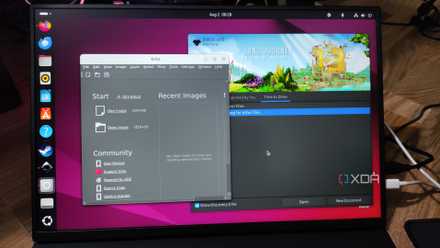
One of the big talking points when it comes to comparing Linux to Windows is how much lighter Linux can be and how it still supports lower-end or older hardware. But when you look at Ubuntu, that seems to be less and less true as time goes on. Being the default for so many people, Canonical has felt the need to load Ubuntu with a lot of things to make things easier, but in doing so, Ubuntu has, in many ways, become almost as bloated as Windows.
We've talked about that before, and there are options to have a lighter Ubuntu experience, but just look at what's happening with the upcoming release of Ubuntu 26.04. With that release, you'll start needing a minimum of 6GB of RAM to run Ubuntu, which is 50% more than Windows 11. And you can argue that's because Canonical wants to ensure you have a good experience by meeting the minimum requirements, but that isn't really the point of minimum requirements, in my opinion. That's why software often has recommended specs in addition to that.
When Fedora still lets you install the operating system on just 2GB of RAM (though it is advised to use a different desktop than the default GNOME in those cases), it becomes a little ridiculous.
Ubuntu is easily the most bloated Linux distro, but it doesn't have to be
Ubuntu doesn't deserve all the hate it gets (especially not the Server version)
The default desktop is alienating
GNOME isn't for everyone
There's also the fact that Ubuntu ships with the GNOME desktop environment, and really only GNOME. There are officially endorsed Ubuntu derivatives that do use different desktops, but you won't find those easily on the Ubuntu website, and they're not maintained by Canonical, so you never know how reliably they'll be supported.
GNOME is often considered beginner-friendly, but for a user coming from Windows, I actually believe it's a detractor. It just looks and feels too different, and customization options are somewhat limited unless you dive into GNOME extensions, but you need to know what those are first.
Fedora has two official flavors for desktop users right on the official website. Sure, GNOME is the "true" default, but the KDE version is right up there next to it, with the same level of official support. And again, it's a matter of preference, but even if you like GNOME more than KDE, just having the option right there is great. You can choose what works best for you from the get-go, and for most people, I'd say KDE probably makes the most sense.
Ubuntu sort of makes you feel like GNOME is the only option you have, and it's customized in a way that doesn't make sense for everyone, either.

Fedora is on the bleeding edge
Ubuntu moves a little more slowly

While this last one isn't necessarily a benefit to everyone, it's also worth mentioning the cadence of updates on Fedora is a lot faster, which means you're almost always on the bleeding edge. Fedora still does a reasonable amount of testing and it's not as prone to problems as something like Arch, but you get new features, fixes, and improvements at a much faster pace.
Ubuntu does have a faster cadence option if you opt for the non-LTS releases, but it's typically still a good bit behind the latest innovations in the Linux kernel and other packages, which makes Fedora more exciting for new developments. Though, again, whether you prefer a faster update cycle or not is entirely a personal choice and I don't necessarily hold that against Ubuntu.
Fedora is an easy choice
Seeing the route that Ubuntu has taken over the past few years and how the Linux landscape looks these days, it's easy to understand why Ubuntu is losing some traction among Linux fans. In some ways, it feels like it's become so big that it felt the need to be more like Windows, for better and for worse.
At this point, other distros are much easier to recommend, and while Fedora may not be perfect for everyone either, it's not surprising to see it recommended much more often.
