

RAM prices have skyrocketed globally in 2025, with industry officials pointing to explosive demand from AI data centers as the primary cause. Mainstream DDR5 memory modules now cost at least twice what they did in mid-2025, and overall DRAM contract prices were a stunning 171.8% higher in the third quarter of 2025 compared to a year prior. For context, these increases have even outpaced the surge in gold prices over the same period, which has also seen a surge in price given economic fears and overall uncertainty. Manufacturers and analysts are now warning us that we're at the start of a major DRAM bull market, with shortages expected to continue into 2026.
With all of that said, the memory industry has a bit of history with regard to price-fixing. While I'm sure that there are perfectly natural market forces at play, here, there's a lot of room for skepticism, too.
A global surge in memory pricing
Some context, first

The price spike in memory (especially DRAM) is being felt worldwide. Contract prices for server and PC memory have climbed steeply through 2025, and these increases are now trickling down to retail. For example, a standard 32GB Corsair RAM kit I found on Amazon, specifically 6000 MHz DDR5, cost $110 at the start of this year. Now it costs a whopping $442 after a long period of time where it was out of stock. That quadrupling in price in less than a year highlights just how quickly the market has turned. In other regions, prices have jumped at a similar scale, and there have been reports of retailers even rationing sales of memory modules due to limited supply. In Japan, certain shops have even capped the quantity of HDDs, SSDs, and RAM that a customer can buy because deliveries are so scarce, and memory kit launches are being delayed, too.
This isn't just a DRAM story, either. NAND flash memory and hard drive prices are rising in tandem, all caught in the same squeeze of demand that's affecting everything. Back in September, both DRAM and NAND flash contract prices were climbing by 15 to 20%, and that trend has accelerated as we enter the final quarter of the year. Major cloud providers have reportedly agreed to pay up to 50% higher prices for memory chips than they did in the previous quarter. Plus, even despite those premiums, some companies report only receiving approximately 70% of the server memory that they ordered, and smaller buyers are receiving even less. Memory is being allocated to those with deeper pockets first, and it's affecting everything.
Anyone looking to upgrade or build a PC will have noticed the crazy-high RAM prices that are now taking hold. The cost savings from cheaper CPUs or GPUs this year are being wiped out by memory kit price hikes. Even now, desktop DDR5 memory modules cost roughly double what they did just a few months ago, and this adds significant expense to any build. And if you thought you could go to older DDR4 modules instead, then think again. Those are also getting pricier as they become scarcer, and that's because DDR4 is being phased out of production. Companies like Samsung, SK Hynix, and Micron are extending how long they're producing it for, but production was supposed to have stopped by now, and it's unlikely that they're producing it at the same rate they used to.
It's not just consumers and AI companies that are feeling the pressure; companies that produce devices like laptops, smartphones, and graphics cards are feeling the squeeze, too. Major PC OEMs and system integrators have started panic-buying and stockpiling RAM to secure supply, and Asus has said that it only has about two months of inventory left for production. Embedded devices aren't exempt either, and the Raspberry Pi Foundation, which had stockpiled memory ahead of time, was forced to increase the prices of its 4GB and 8GB models by $5 and $10, respectively, because memory now costs "roughly 120% more than it did a year ago," according to Raspberry Pi Holdings CEO Eben Upton.
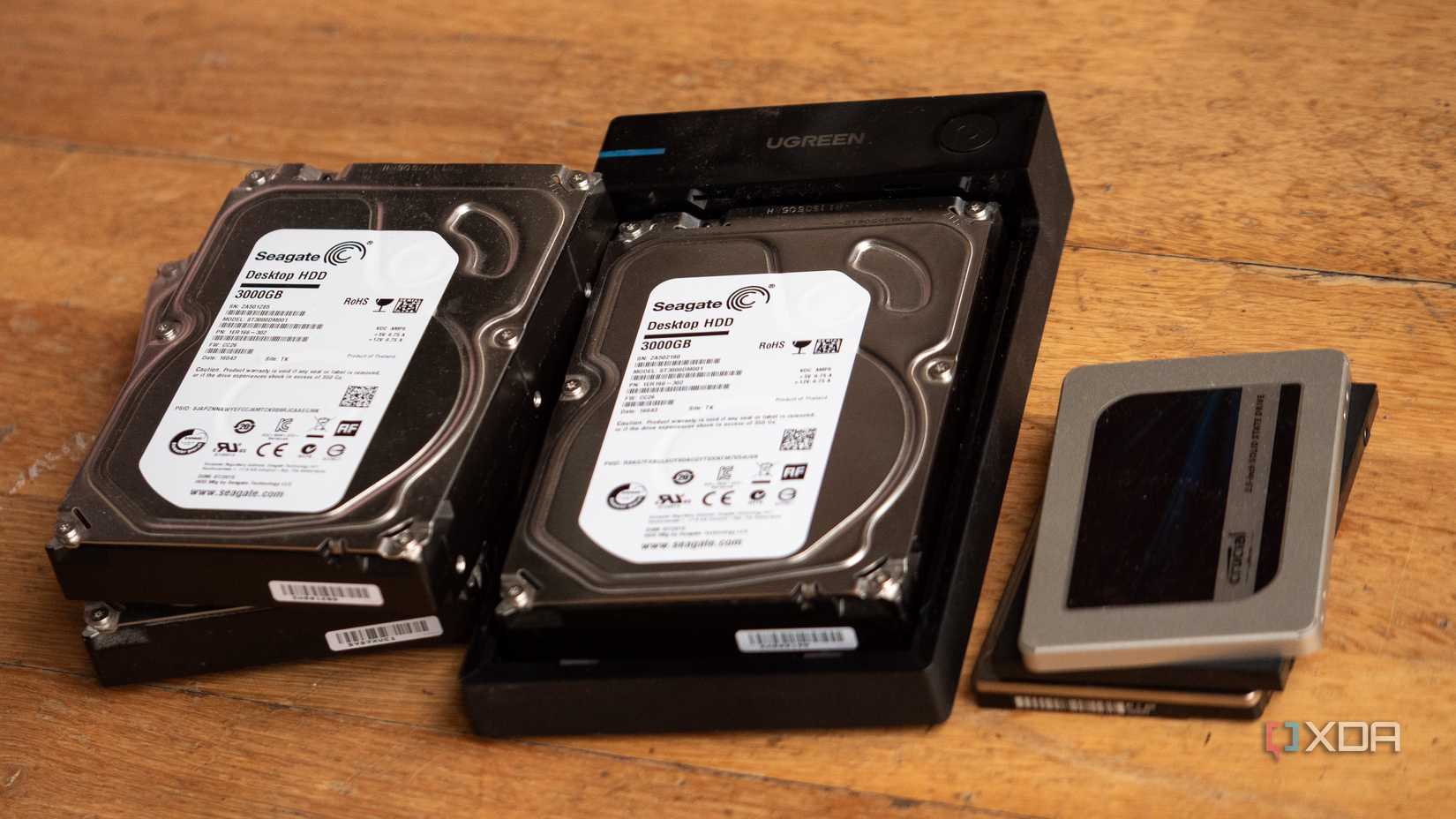
Even data centers aren't safe from the chaos they've created, and some analysts estimate the world's largest memory maker, Samsung, have imposed such steep price hikes that they could push AI server costs up by 10% to 25% for cloud operators. If things worsen to the point of not being able to get any stock at all, hyperscalers may have to slow down their AI data center deployments because they simply can't get enough memory to actually build out their data centers. Plus, because AI servers are devouring both DRAM and storage, it's causing a cascading effect. High-capacity HDDs (which are used for data center storage) are on backorder for a year or more, and with disk drives scarce, cloud companies are turning to flash storage (SSDs) in roles traditionally filled by disks. This simultaneous strain on NAND flash and HDDs is unprecedented, as when one was constrained, the other often acted as a fallback.
AI is the official explanation
An absurd amount of DRAM is going to just a few companies
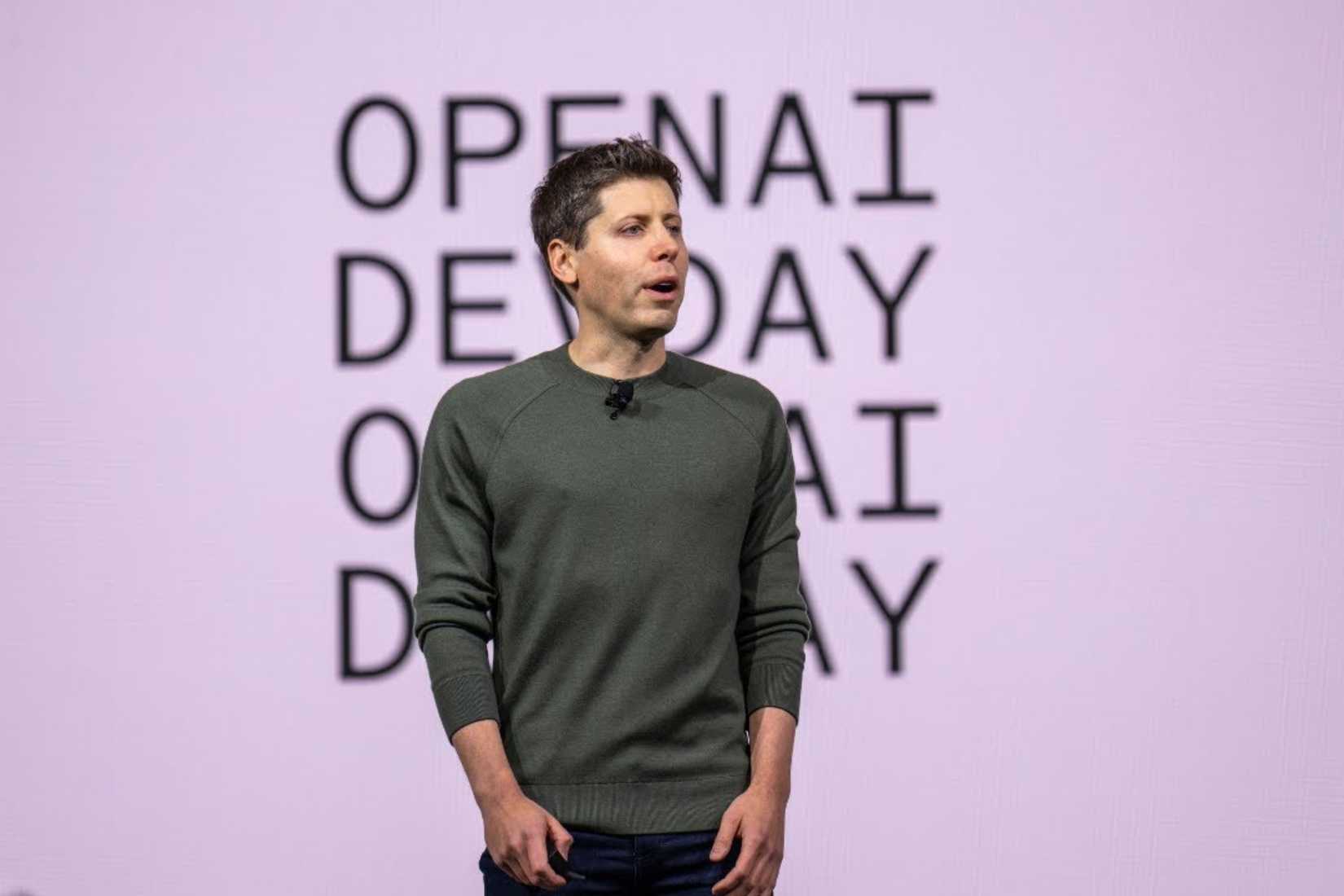
The explanation from industry leaders is centered around a perfect storm of both booming demand and constrained supply, and the narrative from most companies in the space backs that assertion up. Generative AI requires a huge amount of both memory and storage, as training and running models require data centers filled with GPUs; GPUs that can have hundreds of gigabytes of DRAM paired with multiple terabytes of flash storage. For example, OpenAI's new "Stargate" project reportedly signed deals with Samsung and SK Hynix for up to 900,000 wafers of DRAM per month to feed its AI clusters, which is an amount close to 40% of total global DRAM output if it's ever met. That's an absurd amount of DRAM. Similarly, cloud providers are pre-buying years' worth of memory. Micron, as another example, has already presold essentially all of its HBM (High Bandwidth Memory) chip output essentially through 2026, and Samsung's next-gen V9 NAND flash is nearly fully booked by enterprise customers before launch, though that's a problem that technically started in September 2024.
On the supply side, only a few companies produce the vast majority of the world's memory chips, and they were clearly not prepared for this surge. The DRAM industry is an oligopoly of basically three major players; Samsung, SK Hynix, and Micron. Over the past decades, the memory market's brutal boom and bust cycles drove many competitors out, leaving just these few big suppliers. This matters because with so few producers, any strategic choices they make (or don't make) have outsized impact on supply. In this cycle, manufacturers had cut back production and investment during the last downturn (2022), and they've been slow to ramp back up. To make matters worse, with a suspected AI bubble that could pop at any moment, it seems that memory makers have no plans to significantly increase overall DRAM production as a result of potential market volatility. In an interview with Taiwanese CommonWealth Magazine, Pua Khein-Seng, CEO of Phison, said the following:
NAND will face severe shortages next year. I think supply will be tight for the next ten years. In the past, every time flash makers invested more, prices collapsed, and they never recouped their investments. So companies slowed spending starting around 2019–2020. Then in 2023, Micron and SK Hynix redirected huge CapEx into HBM because the margins were so attractive, leaving even less investment for flash.
Another factor limiting supply of standard RAM is that memory firms are diverting their limited manufacturing capacity to the most lucrative products. Specifically, there's a gold rush for HBM, which is a special kind of memory used by AI accelerator GPUs, because HBM commands far higher prices and profit margins than commodity DRAM. Every wafer a company allocates to making HBM for GPUs is one not used to make standard PC or server DRAM, so from the point of view of a major company, why bother investing in the consumer-grade or regular data-center hardware when the same resources can be used to make something with a much higher return? These companies ran out of HBM last year, and if production was shifted towards HBM, then they can gain a higher return on each wafer while also increasing the price of regular DRAM, too.
When it comes to DDR4, given those phase-out timelines given by the major producers, some smaller Chinese companies (like CXMT and Jinhua) are stepping in to make DDR4 and undercut prices, but they haven't fully filled the void. This story may sound familiar; when DDR3 was phased out, the big players exited in the same way. Essentially, the industry says that this is all a supply-and-demand imbalance, with demand from AI and cloud shooting up and supply being unable (and unwilling) to catch up. Many will argue that there's nothing nefarious going on, and it's all caused by unfortunate timing and caution from the companies that produce global DRAM supplies. If AI proves to be a bubble that bursts, memory firms will end up with another price crash like what has happened in the past.
DRAM producers have artificially inflated prices before
And all of them are benefiting right now
Look, there are a lot of plausible factors that we've already highlighted that could cause pressure on pricing, but there's a lot of room for skepticism, too. I'm not saying that all of these reasons given aren't the cause for the recent price boom, but what I am saying is that it wouldn't be the first time that price-fixing occurred in the memory industry. The DRAM market, being dominated by three main players, has crossed the line into illegal, price-fixing cartels. In the early 2000s, multiple memory manufacturers pleaded guilty to conspiring to fix DRAM prices between 1998 and 2002, resulting in hundreds of millions of dollars in fines given out to a few manufacturers, including the big three that survive to this day: SK Hynix, Samsung, and Micron. More recently, during the big DRAM price run-up in the middle of 2016 and the start of 2018 (where prices nearly tripled in a year and a half), a class-action lawsuit accused the big three of colluding to restrict supply in order to inflate prices. That more recent class action lawsuit was brought by the same firm that brought the original class action suit in the early 2000s against those same companies, which coincided with the U.S. Department of Justice investigation. While that second lawsuit didn't hold up in court (and failed in appeal), that ongoing suspicion exists for a reason.
All of this history shows one thing: memory suppliers have both the motive and precedent to coordinate behavior, even tacitly, in order to keep prices high. When only a handful of firms control the taps, it doesn't take a formal cartel for them to collectively benefit from constrained supply. Each firm knows that flooding the market would hurt all of their profits, so a form of unspoken coordination can occur, and this is next to impossible to prove. The backdrop of past cartels makes it hard not to be cynical when hearing that "AI demand" is solely to blame for increased prices. Whether or not any collusion is happening now, it's clear that memory companies are profiting immensely from the current crisis. After bleeding financially during the last oversupply downturn, the major DRAM makers are now seeing record-high earnings in the third quarter of 2025 thanks to the price surge, and to put it bluntly, the shortage is great for business.
Meanwhile, these same companies are not rushing to add capacity that would ease prices, a fact justified by fear of an AI bubble, but which also conveniently prolongs their windfall. Memory suppliers have shifted to higher-profit chips (like HBM) and aren't exactly trying to temper the increases in demand. Instead, they're facilitating it at higher prices. It's worth noting that the big three DRAM makers have all taken a similarly cautious (and profit-preserving) approach this DRAM cycle. All have cut back on older products (like DDR4), all are prioritizing higher-margin AI-related memory, and none are dramatically boosting standard DRAM output or engaging in a price war to gain market share. In effect, supply is being "redirected" in unison. All three firms seem to be stockpiling capital rather than building new fabs immediately, despite the obvious need. Micron, for example, has plans for new fabrication plants (one in New York, one expansion in Idaho), but it has delayed some of those projects by years, all while reportedly pushing out its new U.S. DRAM megafab by two to three years due to market uncertainty, even as it accelerates niche projects like an HBM fab.
It's hard not to see this supposedly coincidental aligned strategy of restraint and wonder if there's something more at play. All of these actions support pricing stability (for those companies) and suggests that no one is "breaking ranks" to grab a larger share by undercutting prices. In a truly competitive scenario, at least one player might be tempted to boost production and capture the extraordinary demand, even if it meant driving prices down, in order to grow their market share and revenue. We haven't seen that; instead we see a cautious, unified approach across the three major players. Three major players that have, in the past, been accused of price-fixing.
I'd argue that it’s not conspiracy theory territory to be skeptical of the official reasoning. To be clear, AI demand is real and is a major factor, and we've seen the impact it's had on all kinds of markets. The numbers don't lie about huge new consumption of memory, but it's easy to be suspicious given that the memory industry's structure just so happens to benefit the three companies that control practically all of it when supply is constrained in this way. One could make the case that companies will have an attitude along the lines of "Never let a good crisis go to waste," while memory vendors would counter that they are merely being cautious and that they'll invest in new capacity once they're sure this demand isn't merely a mirage.
Things don't look to be getting better
It'll be more than a year at least
This current trend is complex, and on the surface, it's being driven by something that is genuinely transformative to the wider industry as a whole. The rise of AI and data centers that consume far more memory and storage than traditional computing ever did is certainly a factor, and that real demand surge, combined with the slow ramp of supply, is definitely a large portion of the price increases and shortages we're seeing. However, with so few companies controlling the market, alongside their decisions to prioritize profits, cut back older products, and cautiously avoid overproduction, have all lent credence to allegations that something bigger may be at play. After all, history shows that these firms have skirted the line between smart business and anti-consumer collusion before.
All in all, both things can be true. The AI revolution can be driving unprecedented demand for memory, while the memory giants are more than happy to not fully ease the supply pressure because it's basically printing money for them. Unfortunately, everyone else is caught in the middle, and it's not just consumers feeling the pressure, either. AMD is reportedly thinking about increasing the price of its GPUs as a result, and when companies exhaust their memory supplies for laptops and other hardware, those costs will likely rise as well. It's hard to justify building a PC right now, especially because it's unclear when all of this uncertainty will end.
But that's the question most people are wondering the answer to: when will it end? Unfortunately, it looks likely to extend well into 2026, and as we already noted, the CEO of Phison thinks it could be a decade. The only way things will improve is if either the supposed AI bubble pops and the demand cools off, or more manufacturing capabilities come online. If companies started to purchase less DRAM as a result of memory prices rising so high that they start delaying purchases, that could well be a good sign that the tides will turn, but for now, it's clear that cheap, plentiful RAM is no more. Right now, whether initial skepticism turns out to be right or wrong, one thing is true: the house is winning, and everyone else is paying the price.