Throughout history, faith has emerged as a universal thread woven through the tapestry of human experience. It manifests itself in a myriad of forms across cultures and beliefs. In India's Madhya Pradesh, faith and belief turned out to be caretakers of important natural relics from the past: dinosaur eggs.
Stone balls or something else?
In Madhya Pradesh's Dhar, the Mandaloi family has been worshipping palm-sized "stone balls" for generations.
Add WION as a Preferred Source
A resident of the Padlya Village, 41-year-old Vesta Mandaloi was following in his forefathers' footsteps, worshipping these balls as "Kakar Bhairav" — or lord of the land.
As per a Times Of India report, Vesta and his family believed that the stone balls were a 'Kuldevta' or a totem that would protect their farmland and cattle from problems and misfortunes. Like the Mandaloi family, others in Dhar and in adjoining areas too had similar totems they worshipped for protection.
&im=FitAndFill=(700,400))
How fast can the Sukhoi Su-30 fighter jet really fly?
)
Did China ask its people 'not to respond to aliens'? Origin of bizarre claim on social media
)
MS Dhoni-CSK Fallout? Report claims failed stake sale talks triggered rift
)
Scientists reveal the SAFEST COUNTRY when catastrophe strikes the planet
)
Serial killer on the loose in South Korea's Jeju Island? Fourth body found in three days as more than a dozen people go missing
)
2/3rd of glacier detached, collapsed: ISRO satellite images reveal what triggered Nepal floods
)
Trump once again claims without him there would be ‘no Israel right now’
)
Foreign espionage attacks against German companies surge to 37%, Bitkom report reveals
)
Blake Lively wins partial legal fee from Justin Baldoni after $8M request
)
Why is Pakistan deploying Turkish Bayraktar TB2 drones near India border?
)
'OH MY GOD! We've found other agents!': Investigators discover not one or two, almost 700 OpenAI AI agents went rogue, hacked Hugging Face
)
Lunar eclipse 2026: India timings, places to see and more. August Blood moon factsheet
)
RSS chief Mohan Bhagwat on global outreach tour
)
Both pilots killed as training aircraft crashes in Lucknow – What we know
)
16-year-old charged with preparing terror attack on kindergarten in Norway
&im=FitAndFill=(700,400))
How the S-400 protects itself from enemy attacks
)
Nepal floods: Over 165 dead, 400 missing; US, India, China, World Bank mobilise aid
)
India's multi-layered watch: The new surveillance war
)
5 doomsday planes spotted in US skies hours after CIA director's secret trip to Russia
)
9/11 mastermind Khalid Sheikh Mohammed to finally face trial in 2028, nearly 27 years after horrific attacks
)
Islamabad hospital fire: What we know about one of the biggest facility that housed Imran Khan
)
Workers run for life while filming Nepal flash flood: Scary new visuals emerge from Rasuwa
)
Russian military planes enter South Korean air defence zone amid rising tensions with North Korea: What's happening
)
Ron Weasley Is Back! Rupert Grint set to return to Harry Potter universe on Broadway
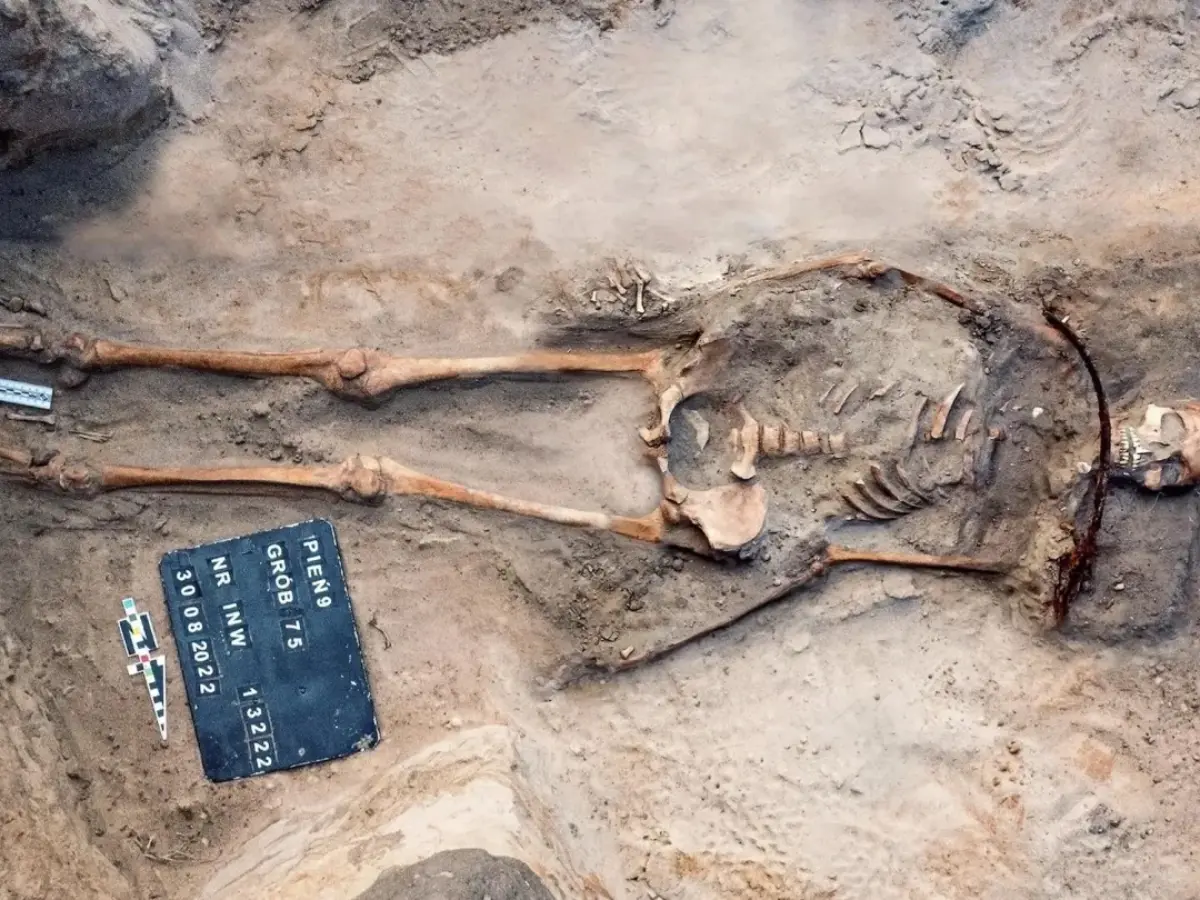)
400-year-old 'vampire' grave in Poland reveals non-existent genetic lineage
)
Dolly Parton, global icon and queen of country music, dies at 80
)
Nepal flash floods: Kailash Mansarovar yatra affected, close to 400 pilgrims out of contact
)
'If he is dead, they're putting on a pretty good show': Trump casts fresh doubt over Mojtaba Khamenei's fate
)
Man arrested near US Capitol with guillotine in pickup truck: What happened?
&im=FitAndFill=(700,400))
Why the Su-30MKI cockpit is painted bright turquoise green
However, a team of researchers revealed that these balls turned out to be something else. Experts from Lucknow's Sahni Institute of Palaeosciences during a field visit determined that these stone ball totems were actually dinosaur eggs from a bygone era.
After an analysis, they came to the conclusion that these balls were fossilised eggs of the Titanosaurs species of dinosaurs.
Titanosaurs
It is the first Indian dinosaur to be named and properly described. The specieswas recorded for the first time in 1877, and its name means 'titanic lizard'. Titanosauris among the largest dinosaurs to have roamed the planet. As per estimates, the species roamed the region around 70 million years ago, during the Cretaceous period.
Earlier this year, more than 250 eggs of the titanic lizard that once roamed the Narmada valley were discovered in MP's Dhar district.
In January, a study, published in the peer-reviewed scientific journal PLOS One detailed field research carried out by a team of researchers from Delhi University (DU) and the Indian Institute of Science Education and Research (IISER) in Bhopal. They had uncovered 92 nesting sites containing 256 fossil eggs belonging to titanosaurs.
(With inputs from agencies)