Big h/t to Joe Cohen for injecting this into The Discourse™. Most of the factual information is straight from his thread.
Urban Proxima is not primarily a newsletter about housing. Housing policy reform is critical for cities, and I am a fervent Yimby, but there are already lots of great folks covering that beat.
This, however, was way too funny not to write about.
Costco wants to build a new store in Los Angeles' Baldwin Village neighborhood. The problem with that is the same problem with building anything in California. Years' worth of process, public hearings, and the threat of after-the-fact lawsuits. Fortunately for Costco, Yimbys in California have been chipping away at all this and there are now ways to bypass the legacy review process.
The way this worked historically, a developer would first propose a project that complies with all existing rules. After the city determines it checks all the boxes, they would still spend years being reviewed by the planning commission, city council, and members of the public.
Recent reforms, though, have created alternative processes. If a project meets specific criteria, it's able to jump tracks and avoid the years-long public debate. Developers demonstrate compliance with the rules and then get to start building. No further discussion required.
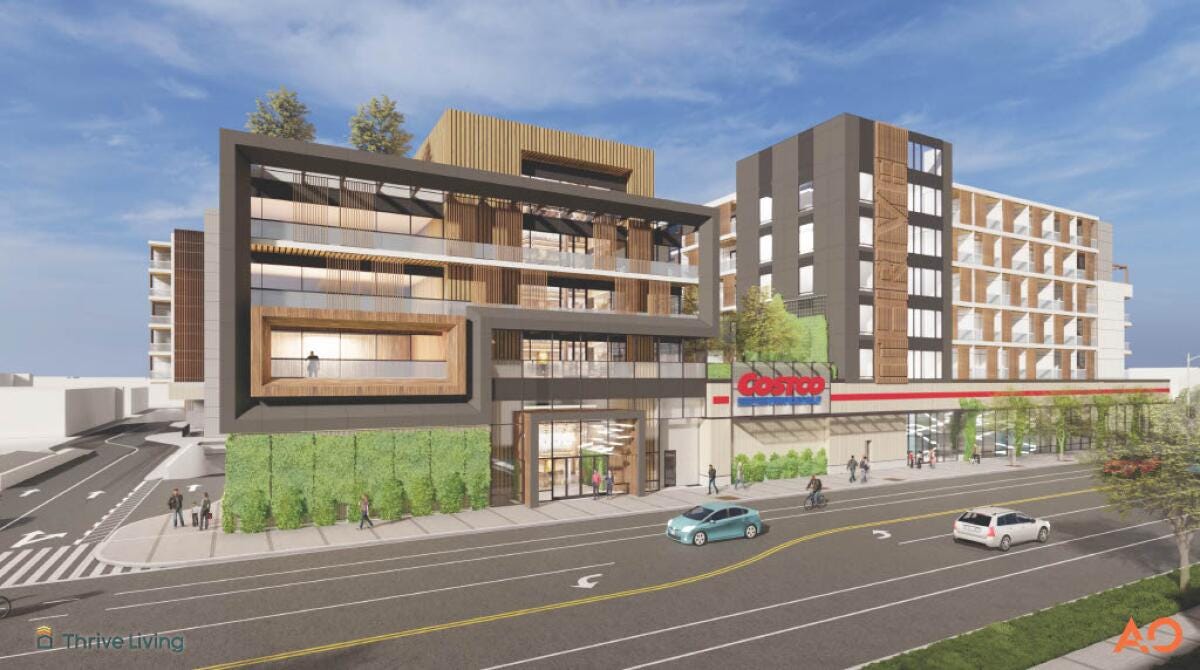
In the case of Costco, building ~400,000 sqft of housing to qualify for the alternative track was easier than dealing with the legacy process.
Costco’s current plans show modular housing and the reason for that is kinda interesting. AB2011 – the specific legislation Costco is invoking – has a prevailing wage requirement. This sets a minimum for construction worker pay and ensures union labor remains cost competitive. If developers aren’t allowed to pay less than what union labor costs, non-union workers can't undercut them.
The rub here is that for AB2011, this requirement only applies to onsite labor. Work done off-site can be paid at whatever rates the developer can negotiate. What Costco seems to be planning is to buy prefab modular units (built at a factory somewhere else). This will let them save on labor costs. It will also result in housing that looks like a stack of shipping containers.
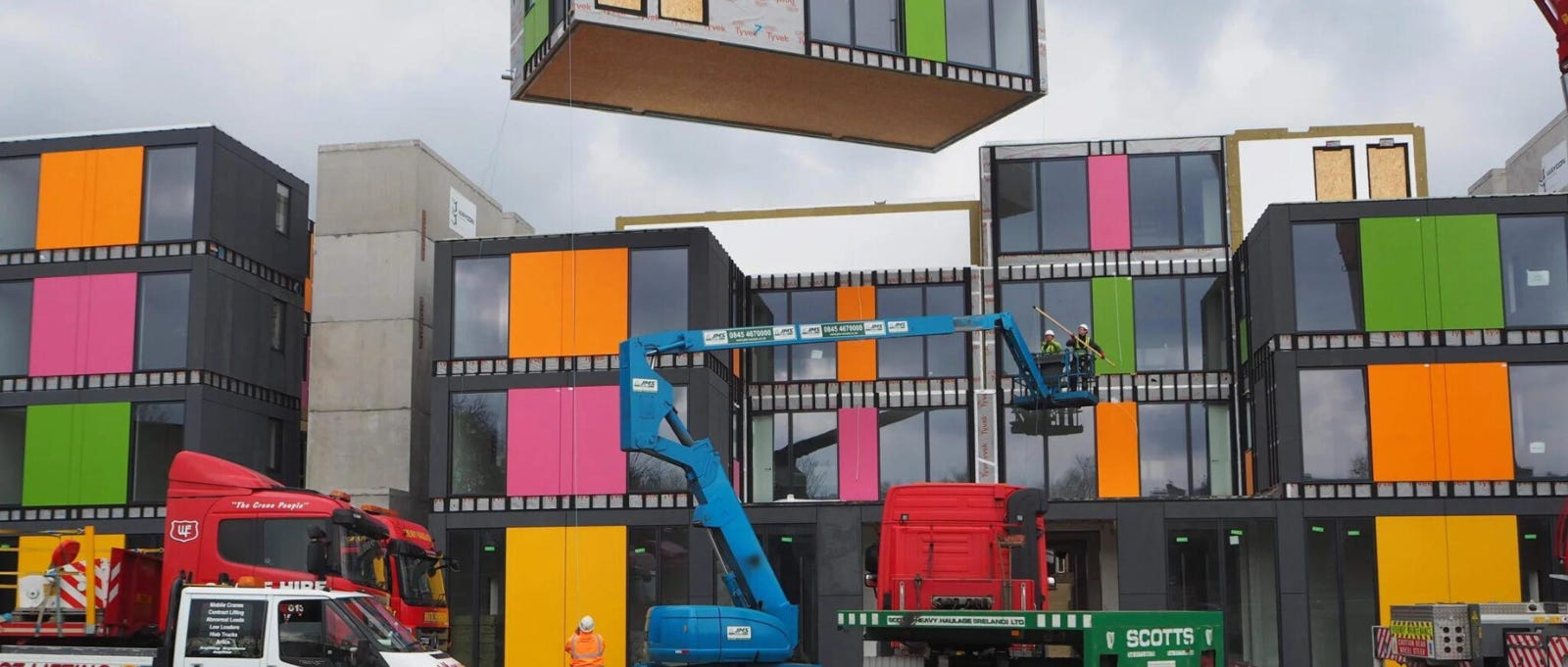
While Costco regulatory-ally1 arbitraging itself into becoming a housing developer is amusing, it speaks to a larger truth about regulations and urban development.
In the first place, land use regulations restrict supply in the face of demand. American cities chronically undersupply housing and this causes all the problems that any Yimby will be happy to recite at the drop of a hat.
The second part, though, is the way land use regulations shape the form in which supply manifests.
Imagine hypothetical future housing as a fistful of play-doh and land use regulations as the pasta-maker-mold-thing you put the play-doh through to get specific shapes. That mold rate limits the amount of play-doh that can go through at any given moment. At the same time, it forces whatever does get through into specific shapes.

In our Costco example, AB2011 is a mold with a larger aperture, allowing more housing to go through. At the same time, it’s also forcing that additional housing into a particular kind of shape (i.e. shipping containers attached to a Costco).
Taking an additional step back, land use regulations are just one example of how rules impact the way that cities function and grow. We should think of laws, regulations, jurisprudence, and even culture as types of invisible infrastructure. They're all systems that influence and govern the way people live together. Taken as a whole, they start to form something that looks like software guiding how a city's hardware -- physical people and places -- looks and functions.
We’ll spend more time on these themes in future posts, but for now I’ll leave you with a thought. Twenty years from now, when someone wonders why there’s a bunch of apartments that look like shipping containers nestled around that one Costco their parents used to shop at…you’ll know why.