
In a move that has raised eyebrows among privacy advocates, Ford has recently filed a patent application for autonomous repossession of its electric vehicles (EVs). The patent, filed with the U.S. Patent and Trademark Office, outlines a system where an EV could drive itself back to the dealership if the owner falls behind on payments. While repossession is standard in the auto industry, the idea of an autonomous vehicle driving back to the dealership has raised concerns about potential abuse. In addition, critics have pointed out that this technology could be used for repossession and other purposes, such as tracking the vehicle's movements or even spying on its occupants. At the same time, proponents of the technology argue that it could be a helpful tool for lenders to ensure they can recover their assets in default. In addition, they note that the autonomous repossession system would be faster and more efficient than traditional methods, which often involve sending a repo agent to physically retrieve the vehicle.
Along with this patent, Ford plans to invest more than $50 billion in electric batteries and sell two million units by 2026. Their 2023 plans include building 600,000 EVs between the Mustang Mach-E, Ford F-150 Lightning, and Transit EVs. The Ford patent application comes at a time when autonomous vehicles are becoming increasingly common on the roads. While self-driving cars are still in their infancy, many experts predict that they will revolutionize how we think about transportation in the coming decades. However, as with any new technology, there are bound to be challenges and controversies.
Ford Has Applied For A Patent To Autonomously Repossess EVs After Missed Payments Works
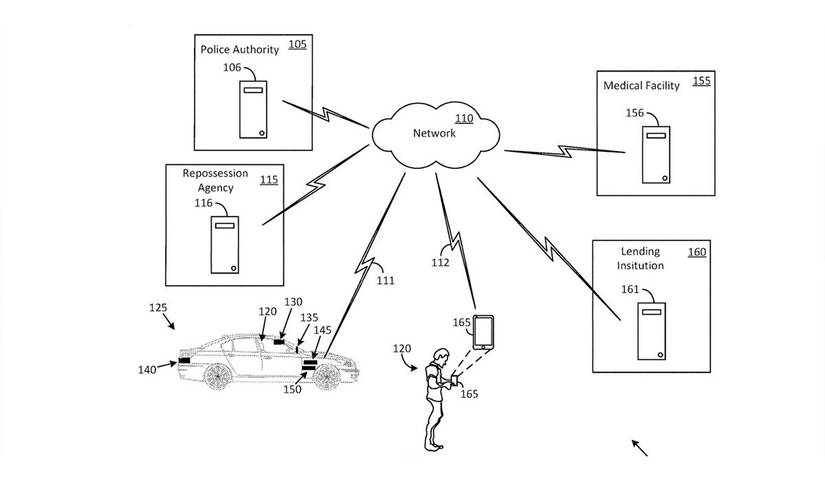
When we hear about autonomous driving systems today, we typically picture a driver relaxing in his seat while the car handles the rest of the driving as he reads the paper, works, or simply rests. However, the prospect of vehicles performing automatic tasks and moving independently opens the door to other possibilities. Ford is the first to attempt to patent such technology for repossession purposes. Imagine that one day, you wake up determined to get into your brand new electric Ford and discover that it is not where you left it the day before since it has decided to leave because you have missed the payments you were obligated to make. This story seems like a science fiction nightmare of AI rebellion, which could become a reality if the blue oval automaker develops a patent it just filed.
Ford's new repossession system comes when auto loan delinquencies are rising in the U.S., resulting from higher prices and interest rates that make Americans overpay for their car loans. A Consumers Reports investigation found that many are paying more than they can afford, putting them at risk of default, thus potentially having their cars repossessed.
How Ford's Autonomous Repossession System Works

Ford's patent application, discovered by The Drive, was officially published on February 23, 2023, although Ford filed it in August 2021. The document reveals many creative (potentially dangerous) ways Ford wants to compel delinquents to make their payments. A system that would allow a bank or leasing firm to remotely disable particular features or the vehicle itself is described in the patent. For example, you would get a notification on your car if you missed a payment. If you fail to respond to the message, the vehicle could execute the procedure's first step, which is divided into several phases.
The first would be to activate the multimedia system to "emit an incessant and unpleasant sound" every time the car is entered. Then, to make things a bit more complicated for the owner, you won't be able to turn off the audio or turn on the air conditioning until you contact the lender and address the late payment. If you somehow manage to get around this first phase, the computer can take over the door-locking mechanism so that the vehicle can only be accessed at certain times and days (such as weekends) or in specific areas. If the delinquent owner does not take the appropriate measures to resolve the late payments, the vehicle may drive autonomously to a place where it can be seized. In some cases, if the car's value is below a certain threshold, it may simply head straight to the junkyard.
Does Ford's Patent For Autonomous Repossession Threaten The Freedom That Cars Gives us?

Many of us wonder how this technology could negatively affect the Ford electric car ownership experience. Perhaps this new technology could become another reason not to buy the Mustang Mach-E, or make buyers consider the Chevrolet Silverado EV is a better option than the F-150 Lightning. Historically, the car has been represented not only as a means of transportation but also as a symbol of freedom and a tool for day-to-day development, whether for work or our personal life. And although this patent does not mean that Ford will continue developing this system, it is an idea that technologically speaking, is possible to implement in any vehicle (to a greater or lesser extent, depending on its degree of automation).
However, some considerations should be taken into account before adopting technologies that could lead to questionable results and specifically, what Ford's autonomous repossession system it would mean for the future of the auto industry. For instance, what happens if the vehicle is needed in an emergency, like going to a hospital, and similar situations where car use is urgent? To address these concerns about being able to use the car in an emergency, Ford includes technology in the patent that uses exterior cameras to determine if the user is having a heart attack, for example, and can call medical services if necessary. Of course, this is only one possibility, although if it were to be put into service, the ethical side of all these ideas would have to be considered.