Verge readers ranked the 50 Apple products on this list, and here are the final results. Thanks for participating!
Expand description for Original iPhone
 Original iPhone
This is not three separate devices — this is maybe the most influential, and unquestionably the most lucrative, gadget Apple ever made. When it launched in 2007, the iPhone instantly remade the phone market in its image, and helped change the way we interact with technology.
Expand description for M1 chip
 M1 chip
This is the moment Apple goes from a company that makes its own processors to an absolute silicon powerhouse. The M1 first shipped on a MacBook Air and a Mac Mini, and offered a combination of power and battery life that its competitors still can't match.
Expand description for Original Macintosh
 Original Macintosh
Four decades after its launch, you'd know how to use this computer. It forced you to use a mouse, which made the graphical user interface mainstream, and which became the software foundation for countless Apple products to come. The first one needed more power, but it had the future almost exactly right.
Expand description for Original iPod
 Original iPod
Apple's first pocket-sized cultural revolution. It wasn't the first portable music player — far from it — but it put 1,000 songs in your pocket in a simple and useful way. Almost immediately, every other MP3 player felt like a knockoff.
Expand description for Mac OS X
 Mac OS X
When Steve Jobs came back to Apple, he brought an operating system called NeXTSTEP that eventually came to power Macs. And iPods. And iPhones. And everything else. Mac OS X is the software foundation for decades of Apple hardware, and is a key reason all that stuff actually works.
Expand description for iPhone 4
 iPhone 4
It was the first phone to run on an Apple-made chip. It had the first Retina display. It made video calls. (You may have been holding it wrong.) The 4S added Siri, the first mainstream voice assistant. But most of all, this is when Apple first got the iPhone hardware absolutely right.
Expand description for Bondi blue iMac
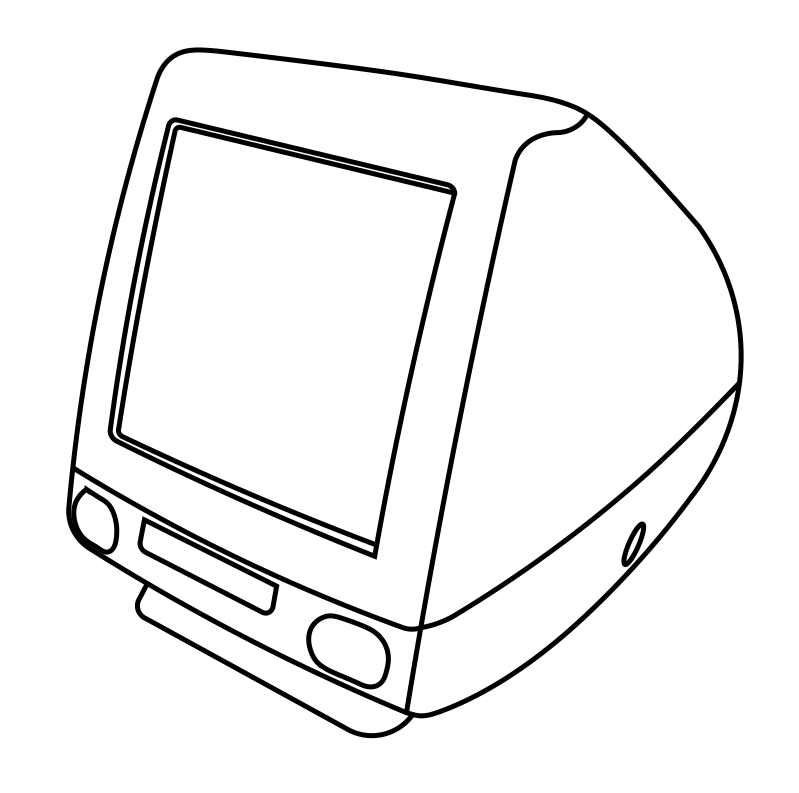 Bondi blue iMac
Apple is back on track. That's how Steve Jobs set up the 1998 announcement of the original iMac, his first big initiative in his second stint as CEO. The big, translucent, colorful all-in-one, designed in part by a newish employee named Jony Ive, immediately turned Apple back into a company that made hit products people loved.
Expand description for Wedge MacBook Air
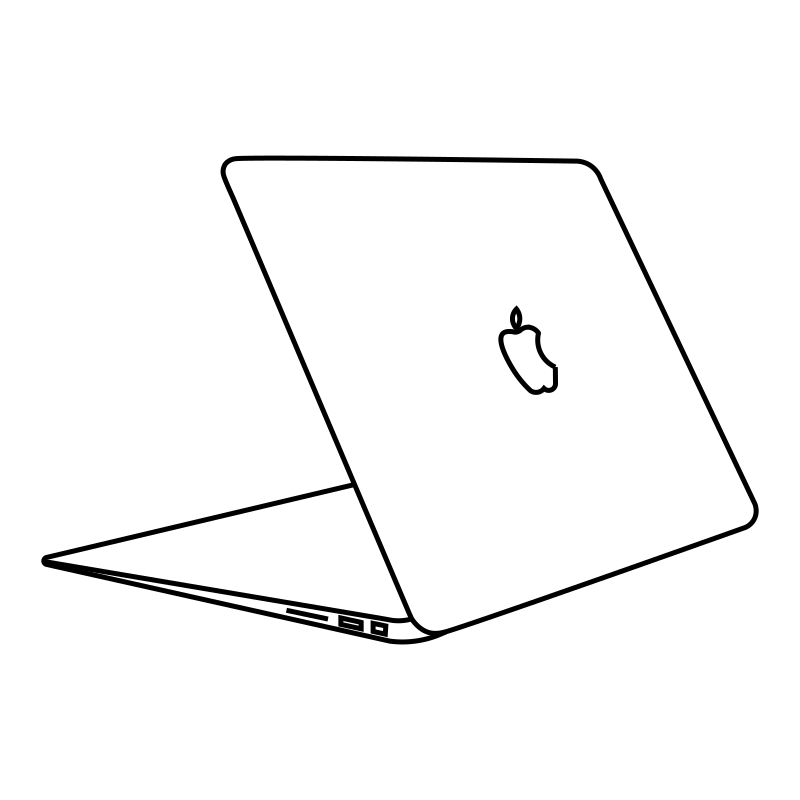 Wedge MacBook Air
Bet you can't think of a more iconic laptop design. The wedge lasted more than a decade, and survived many processor changes and bad ideas about PC design. The Air was an easy choice as a go-to laptop, and you could spot it from across the room.
Expand description for Slim unibody iMac
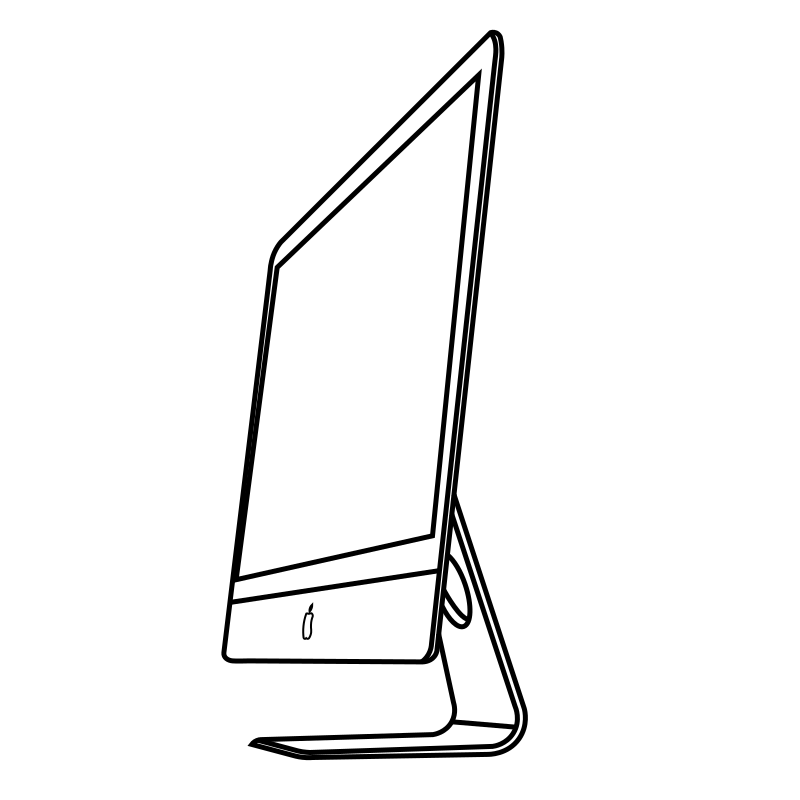 Slim unibody iMac
There's a good chance you know someone who still has one of these 27-inch aluminum beasts on their desk and has no intention of getting rid of it. Even a decade since their 2012 debut, the design and display still look fabulous; shame you can't just use it as a monitor.
Expand description for iPod with click wheel (4th gen)
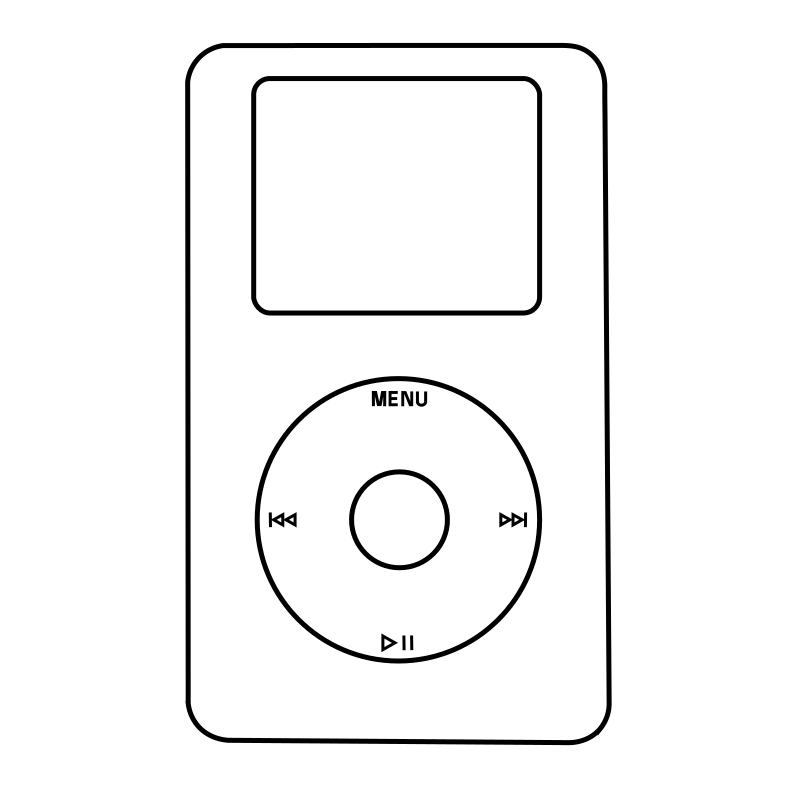 iPod with click wheel (4th gen)
The click wheel was such a good addition to the iPod that it now seems hard to imagine using an iPod without one. (There were buttons! Gross!) And when Apple set out to make a phone, it started with this interface.
Expand description for Original iPad
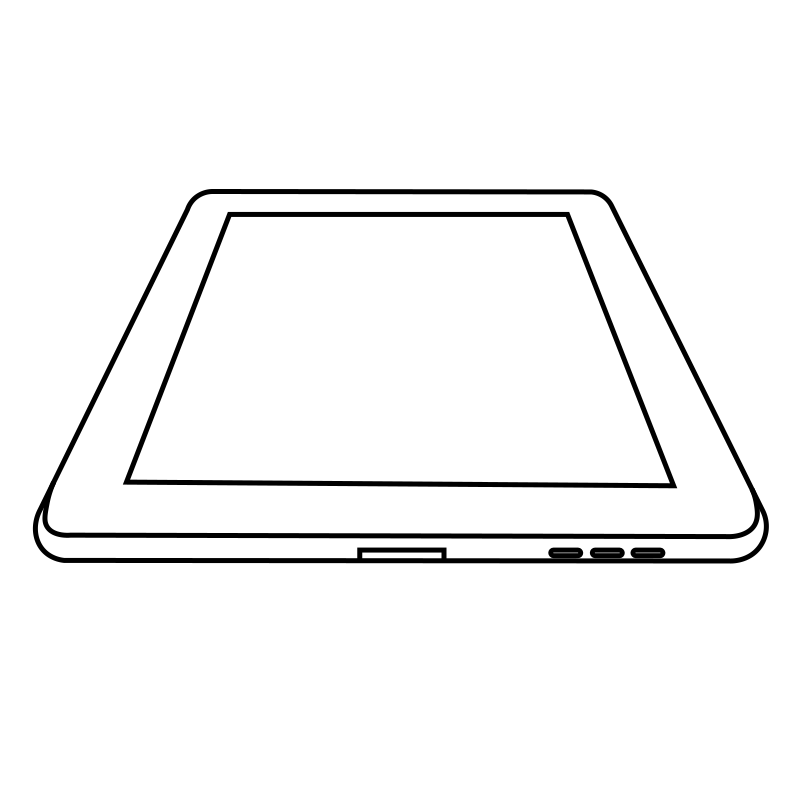 Original iPad
The original iPad may have been "just a bigger iPhone," but it created what remains essentially a category of one.
Expand description for Original AirPods
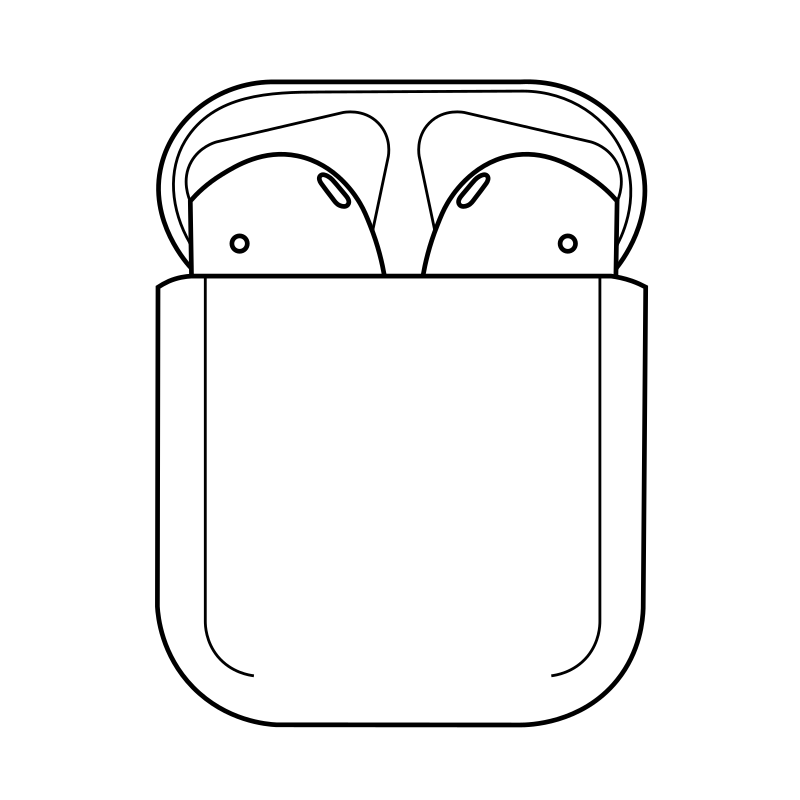 Original AirPods
There may be no better sign of Apple's coolness than the fact that these candy cane-looking earbuds almost immediately became ubiquitous. With easy pairing, decent sound, and good battery life, they made truly wireless headphones look easy. For a price.
Expand description for Apple IIe
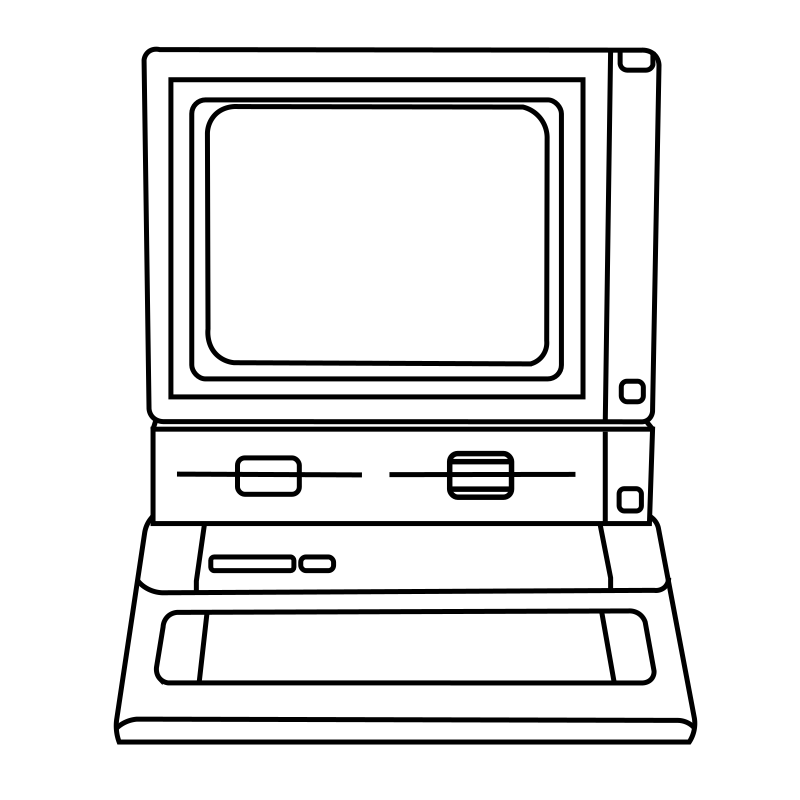 Apple IIe
Apple went through a lot of chaos and change in the late 1970s and early 1980s, and the ongoing success of the Apple II was about the only thing that kept it in business. The IIe was newly expandable, had more memory, and could — gasp — even type in lowercase. It was a big deal.
Expand description for Original AirPods Pro
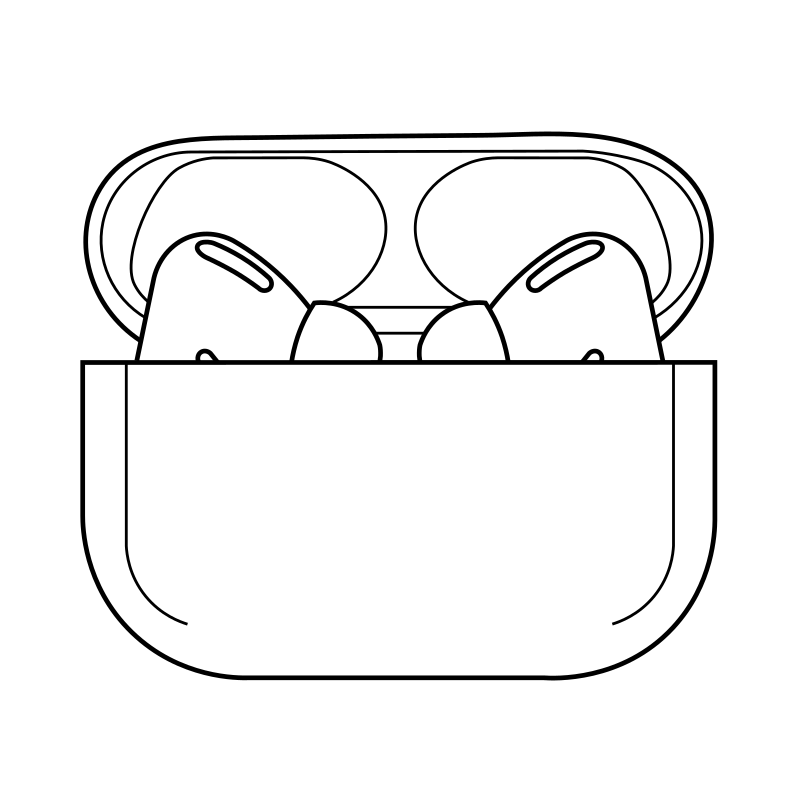 Original AirPods Pro
The freedom and simplicity of the AirPods, with the performance and noise cancellation of a proper pair of high-end headphones. Despite the higher price, these became the default AirPods pretty quickly.
Expand description for iPhone 5S
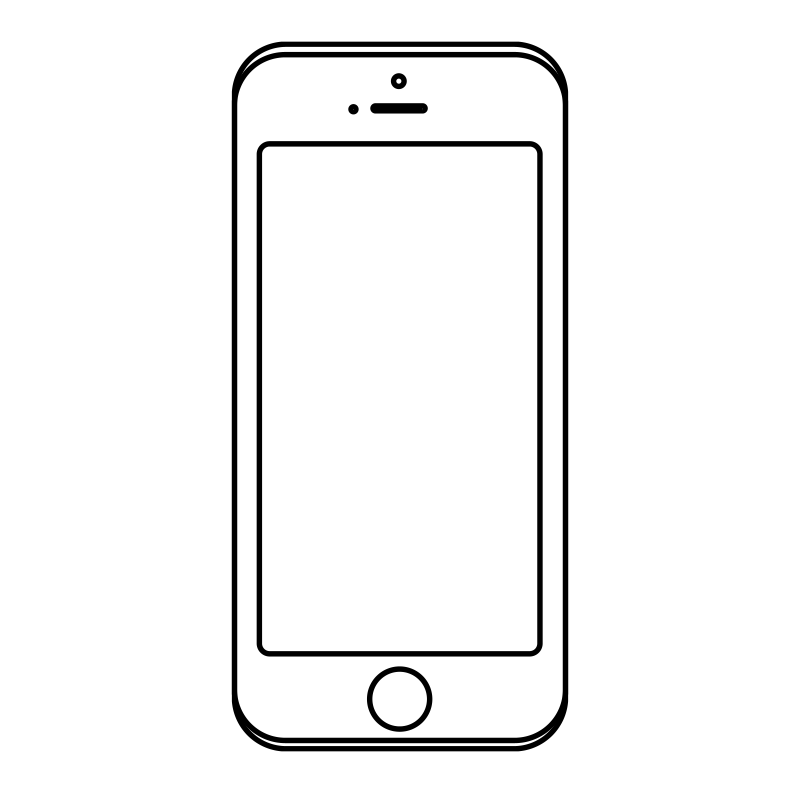 iPhone 5S
Two words: Touch ID. Two more: iOS 7, the moment Apple ditched its skeuomorphic design and embraced the world in which everything was digital. This is a lot of people's all-time favorite iPhone.
Expand description for AirDrop
 AirDrop
I have a file. I would like you to have that file. Somehow, this problem stymied generations of technologists, until Apple just let you send the file between devices in a couple of taps. You may have been unwantingly AirDropped before, but luckily there's a privacy setting for that.
Expand description for Apple Pay
 Apple Pay
Our phones are largely about dragging us into digital spaces, but Apple Pay helped turn them into real-world tools as well. Our phones became our credit cards, our tickets, and our IDs — and meant we could finally stop memorizing our credit card numbers.
Expand description for Power Mac G3
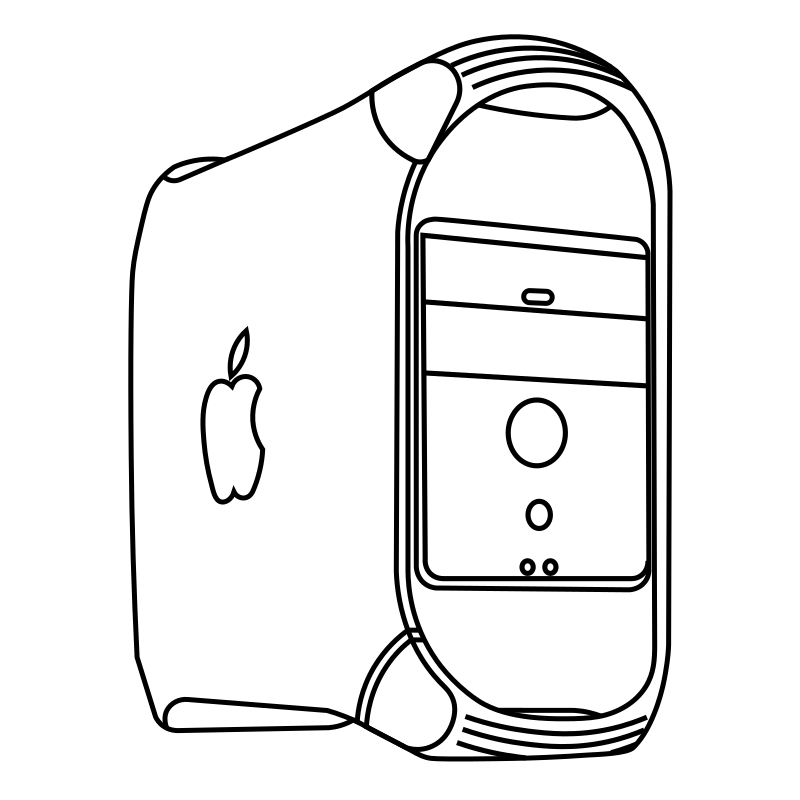 Power Mac G3
Apple blew people away with the redesigned Power Mac G3, which was just as colorful as the iMac and featured an innovative hinged access door. The design persisted in more mature shades of silver for years to come as the Power Mac G4.
Expand description for FaceTime
 FaceTime
Before FaceTime, people still made phone calls. (Can you imagine?!) First with the iPhone 4, Apple made it just as simple to talk with your face, and the world never really looked back.
Expand description for Original iPod Mini
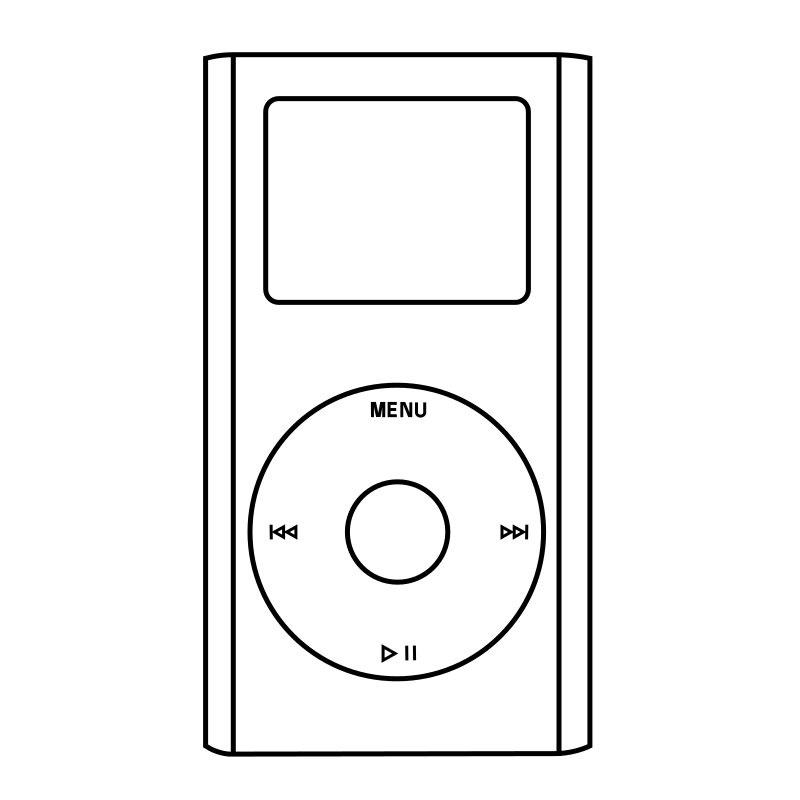 Original iPod Mini
The Mini added some fun to the iPod formula. It was smaller, it was colorful, it was more durable, it was cheaper, and it still offered all the things that made the iPod great.
Expand description for iMac G4
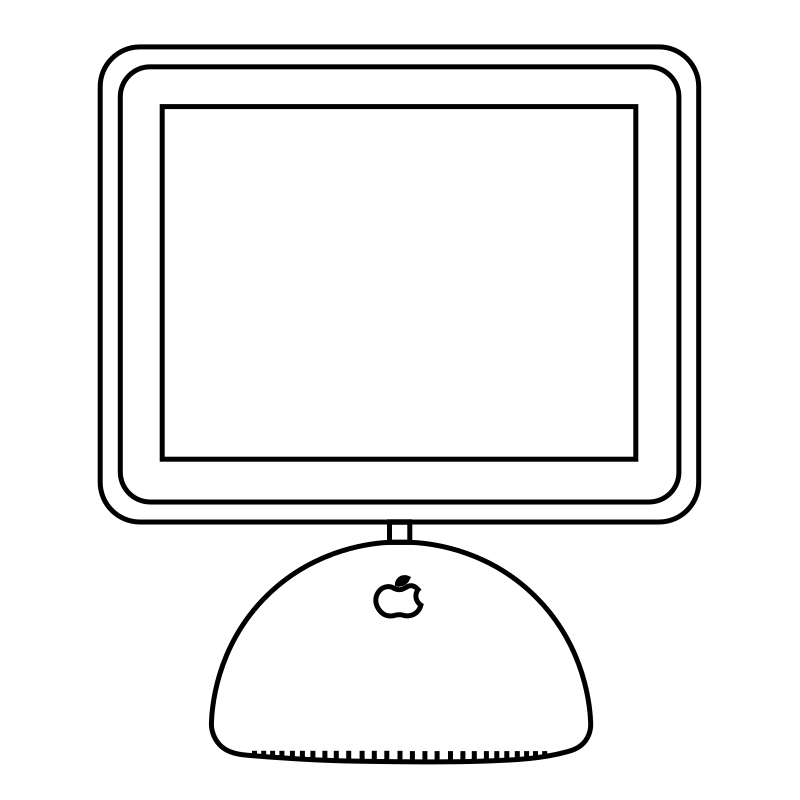 iMac G4
The sunflower design, the round speakers, the articulating flat-panel display — not many computers have ever looked cooler on a desk than this one did. It barely even looked like a computer.
Expand description for iPod Nano (2nd gen)
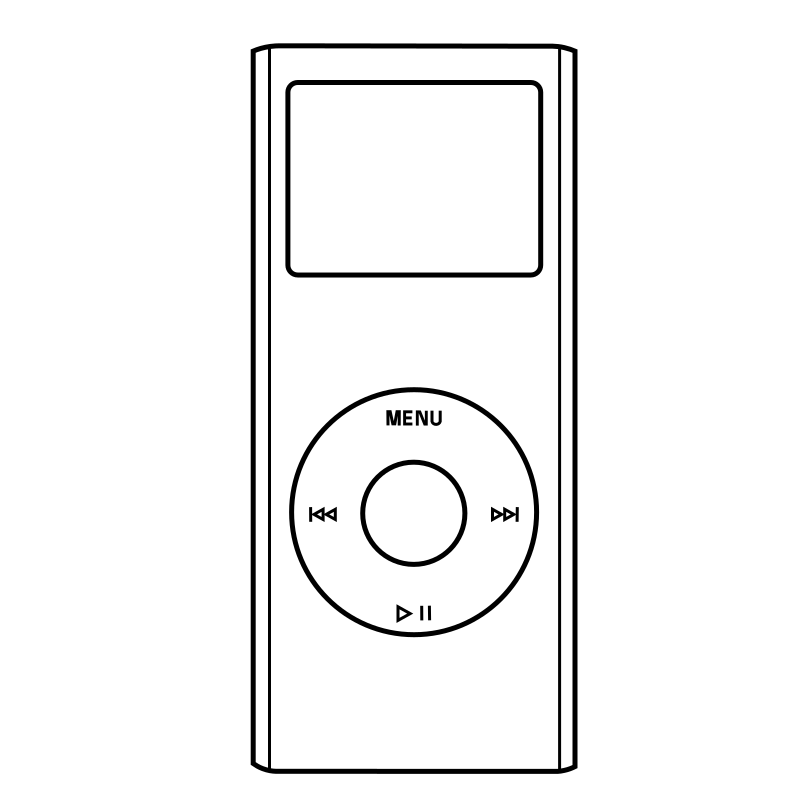 iPod Nano (2nd gen)
The one for the tiny pocket in your jeans. This super-skinny player got a big battery boost over the original Nano, doubled the storage, and also came in fun colors. Including that awesome red.
Expand description for Apple I
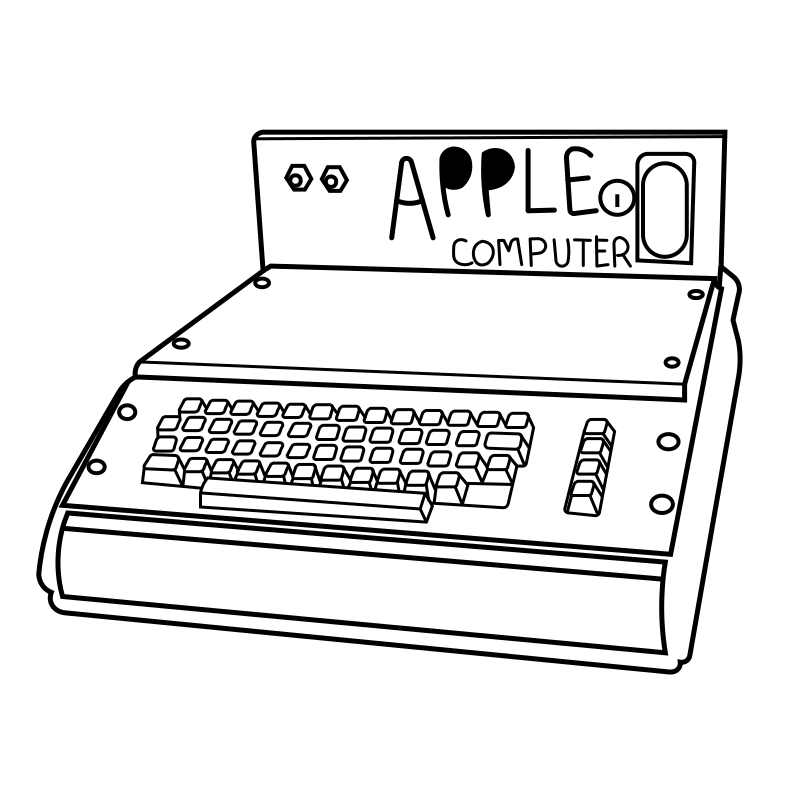 Apple I
The Apple computer that started Apple Computer. Steve Wozniak's handmade design wasn't a big seller (Apple couldn't even afford to make many of them), but it convinced Wozniak and Steve Jobs that they were onto something.
Expand description for HyperCard
 HyperCard
What if we could decide how our software looked? If we could pick features, design apps to our specific liking, and make everything a system of our own design? That was the idea behind HyperCard, which broke software into pieces to be assembled in countless different ways. AI agents owe a lot to this concept.
Expand description for iPhone XS
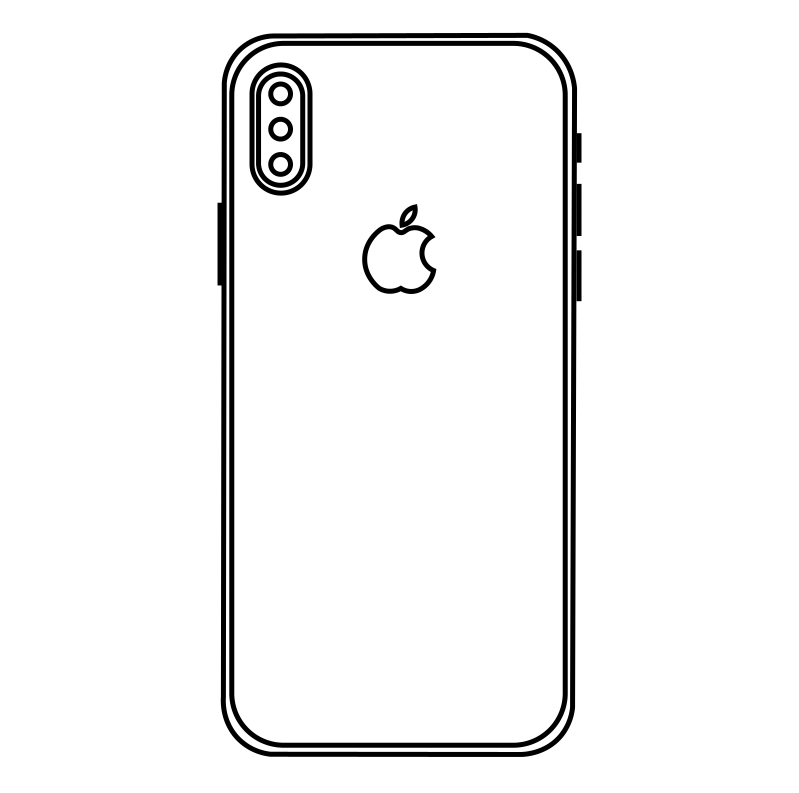 iPhone XS
The iPhone X was Apple's big anniversary redesign, with a bigger screen and that new notch at the top, but it took another year to get it right. The XS was big, it was fast, it had Face ID, and it was the smoothest iPhone yet.
Expand description for White iBook G4
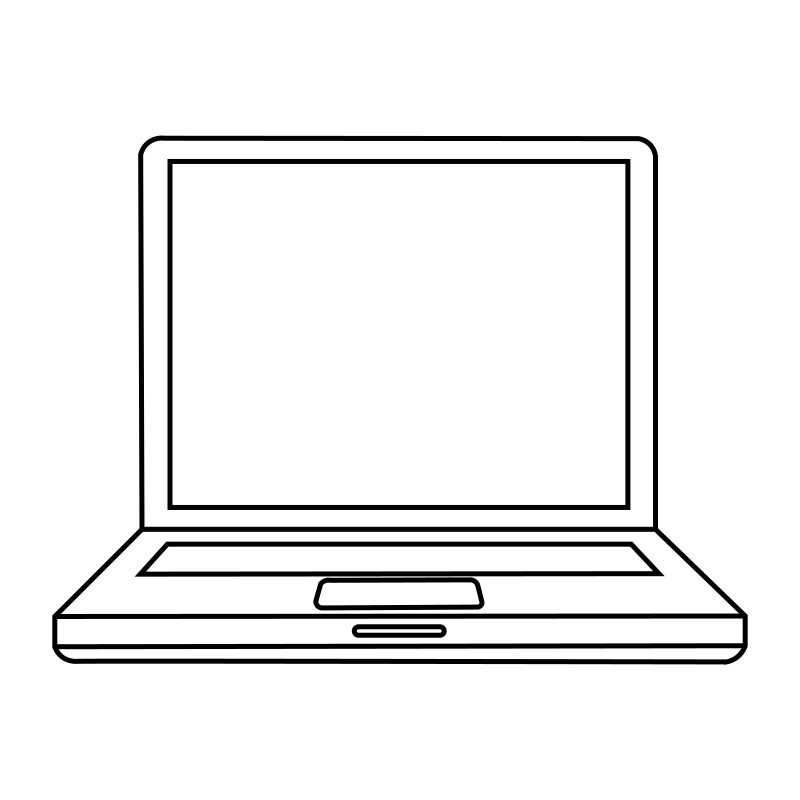 White iBook G4
The all-white iBook with a G4 chip was a terrific last version of an icon before the MacBook arrived in 2006. Apple's design team was falling in love with the single-color, unibody-style look, and they'd never really go back.
Expand description for iPod Nano (3rd gen)
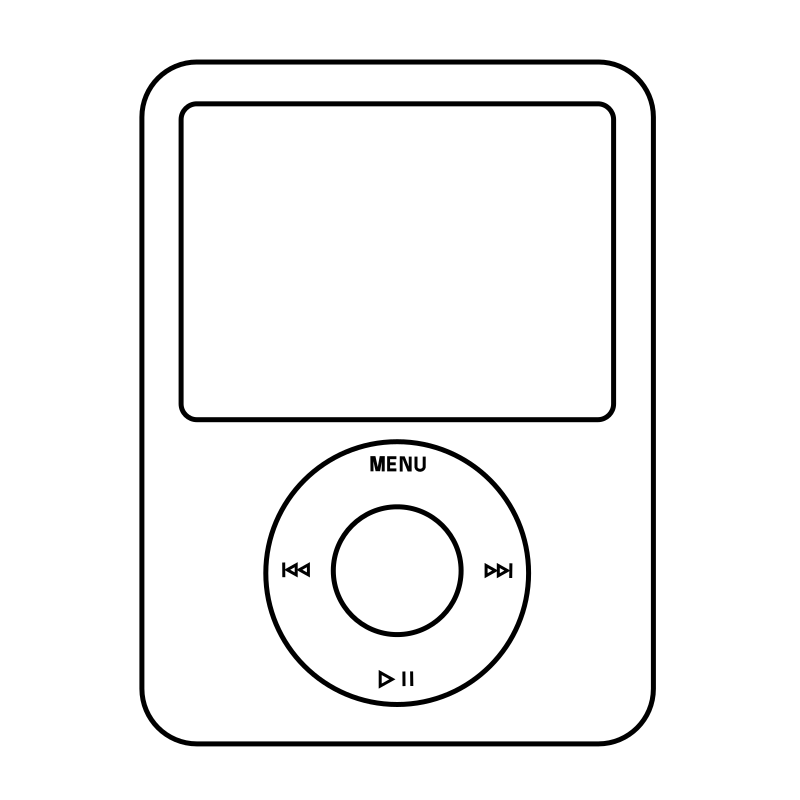 iPod Nano (3rd gen)
An iPod... for video? Apple made the Nano shorter and wider, thinking you might buy some shows from the new section of iTunes to watch on the go. Even if you didn't, you liked the bigger and better screen.
Expand description for Intel Mac Mini
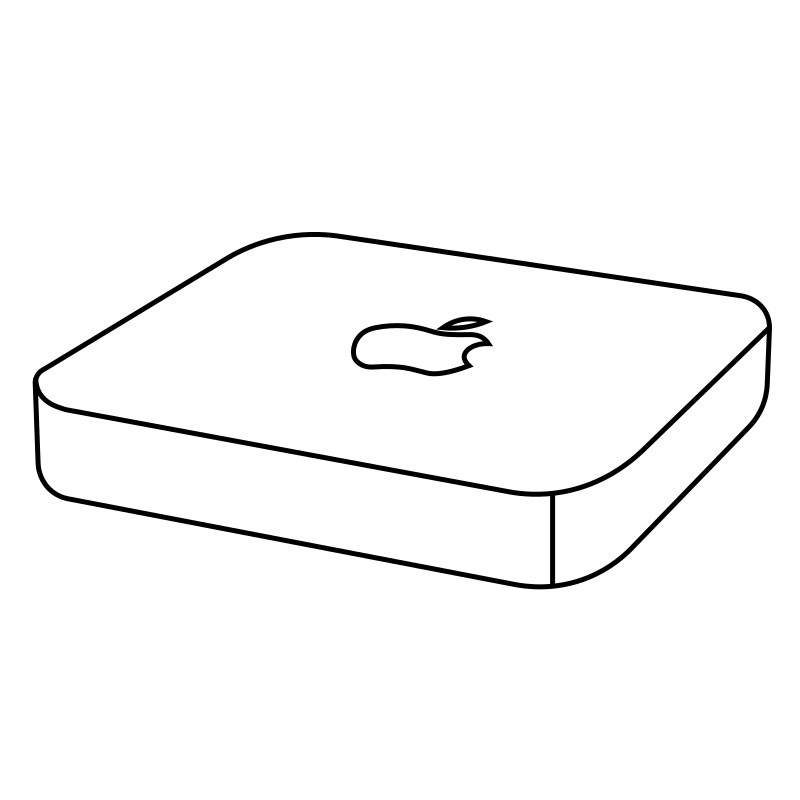 Intel Mac Mini
When Apple switched from PowerPC chips to Intel chips, it started with its simplest computer and turned it into a terrific low-end desktop. It had all the ports; it didn't cost a fortune; it was a perfect way into the Mac.
Expand description for iPad 2
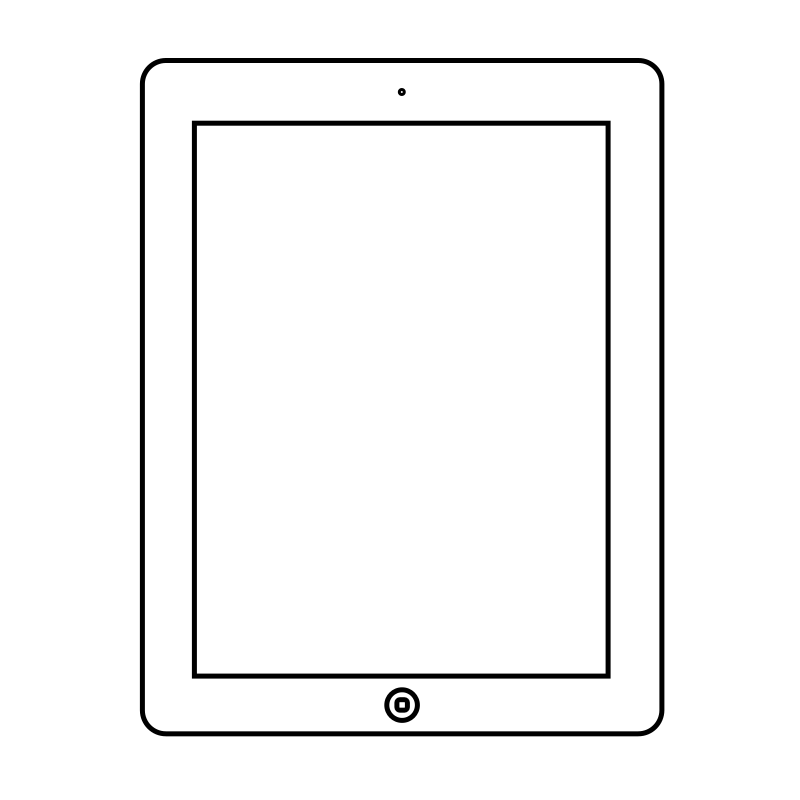 iPad 2
Not the first iPad, but perhaps the most important one. The design looked fabulous, the camera finally looked half decent, and with a new chip and a new cellular modem, the thing ran fast and it ran everywhere.
Expand description for Titanium PowerBook G4
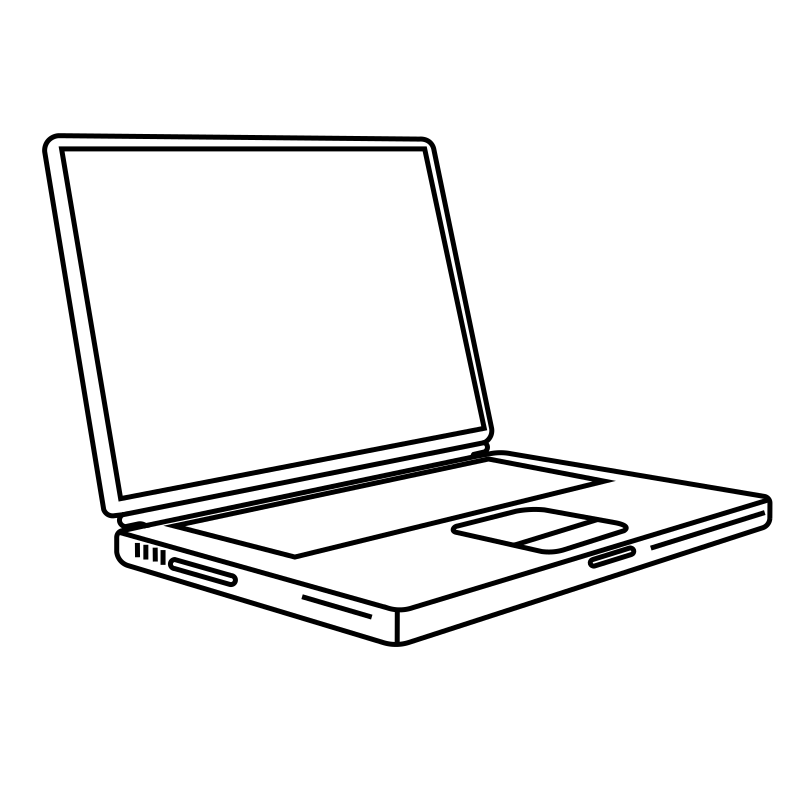 Titanium PowerBook G4
The most beautiful laptop ever made, even if the hinges sometimes cracked and the paint chipped. The TiBook is still the one people dream about.
Expand description for Apple Watch Series 3
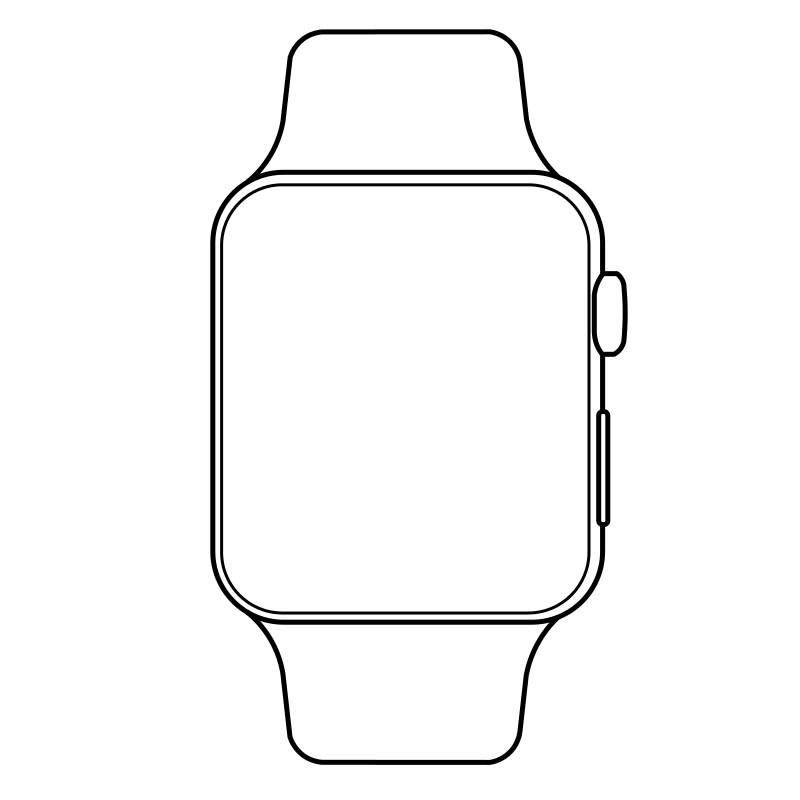 Apple Watch Series 3
It took Apple a while to figure out what the Apple Watch was for — health, fitness, and just a dash of Siri and notifications — but by the Series 3 it had started to dial in both hardware and software. And with optional LTE, the Watch could do even more.
Expand description for Original iPod Touch
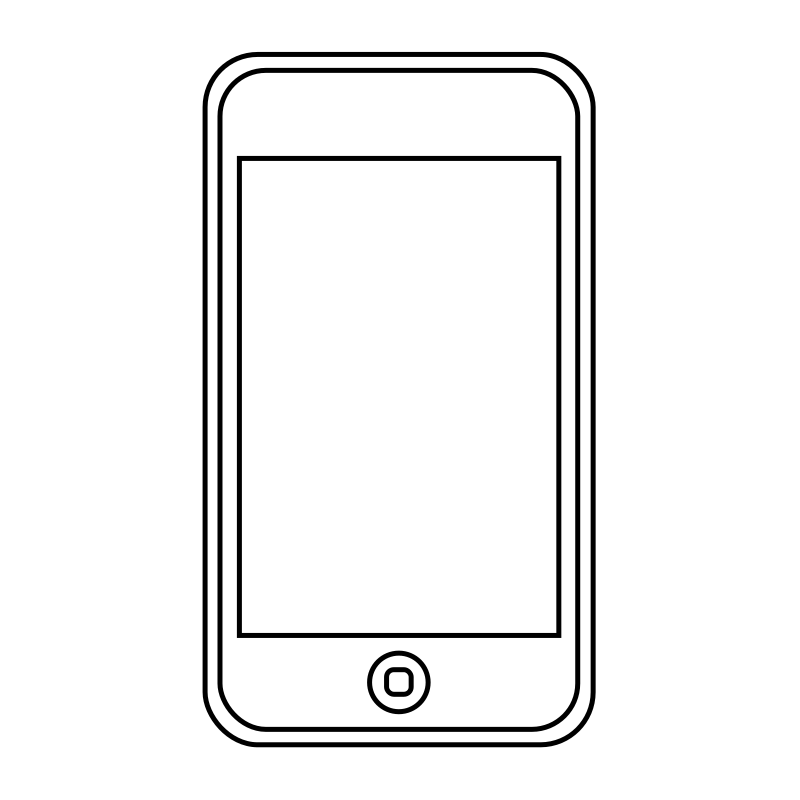 Original iPod Touch
When the iPhone was expensive, and only on AT&T, the iPod Touch was the best way most people had to see what the touchscreen future looked like. In many ways it was the iPad before the iPad.
Expand description for iBook G3
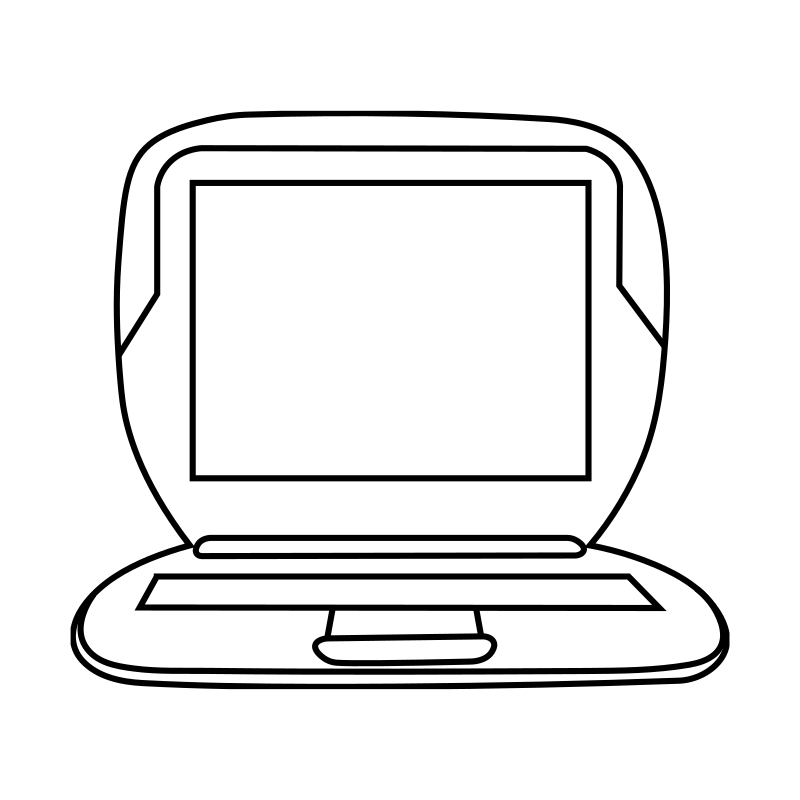 iBook G3
The idea of a computer that could connect wirelessly to the internet was so incredible that when Apple debuted the iBook, Steve Jobs made Phil Schiller jump off a ledge while streaming video just to prove Wi-Fi wasn't a trick.
Expand description for iMac G5
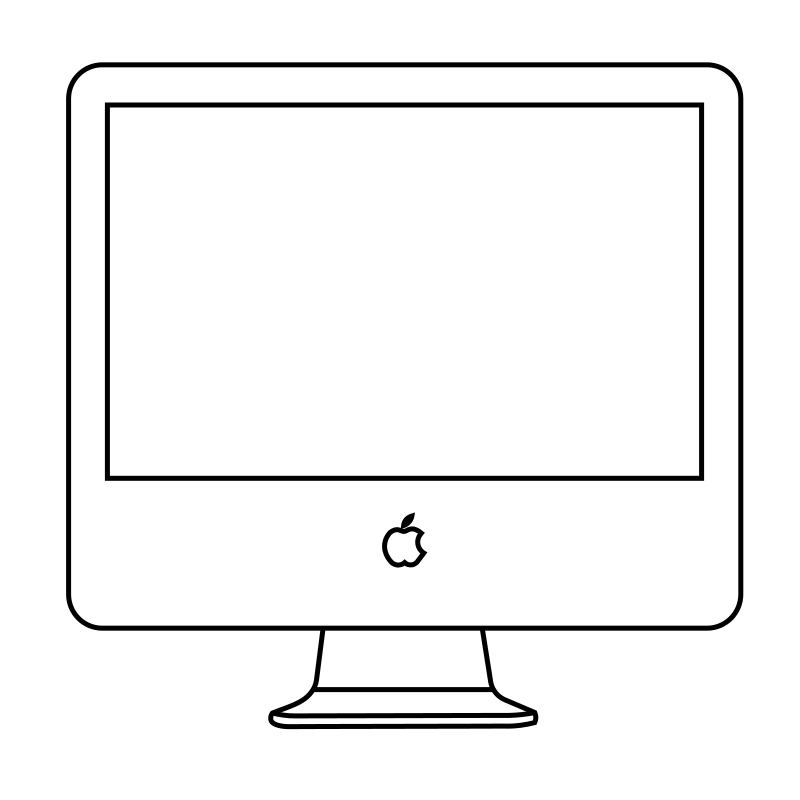 iMac G5
As computer screens got bigger, Apple came up with an elegant way to hide just about everything else. This is when the iMac became a minimalist object, just a screen and a stand and a mouse and a keyboard, and introduced a design that never went away.
Expand description for PowerBook G3
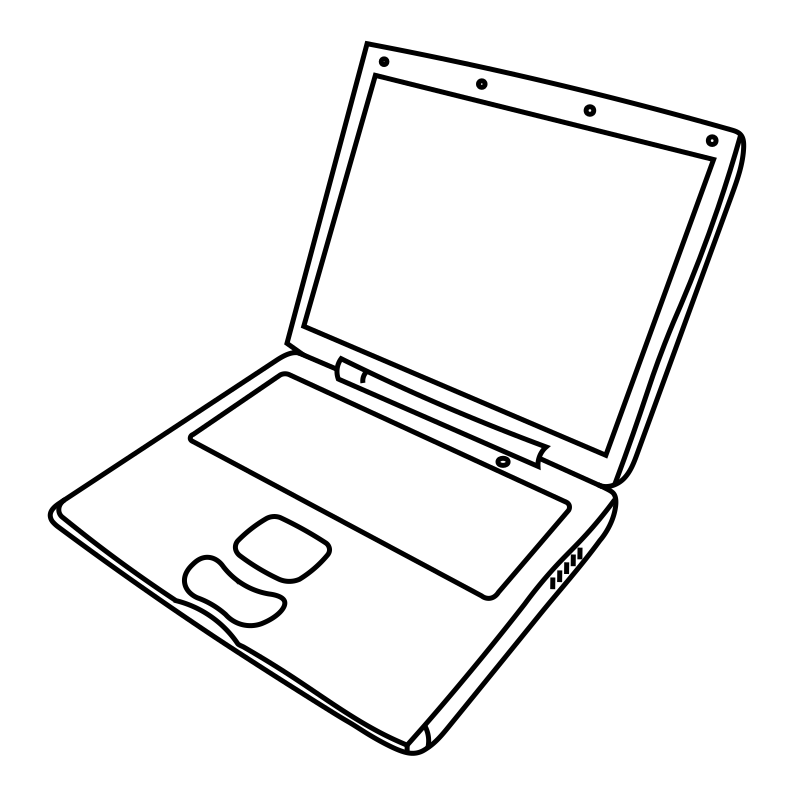 PowerBook G3
Apple called it the fastest laptop in the world, and it also had enough battery to actually work on the go. Even Sex and the City's Carrie Bradshaw had a G3.
Expand description for Black MacBook
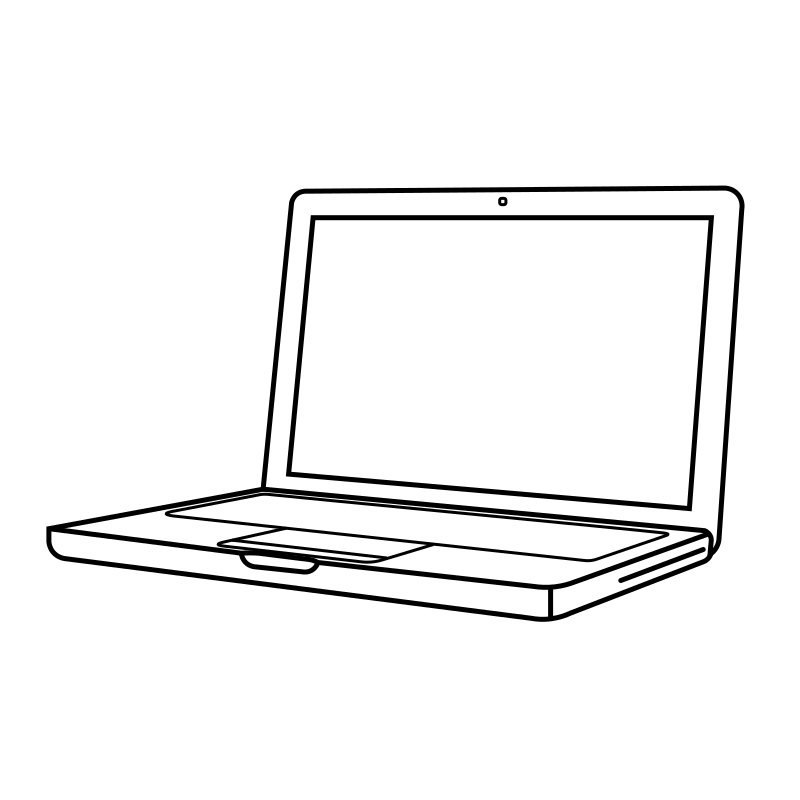 Black MacBook
Lovingly known as "The BlackBook." It wasn't the most innovative MacBook ever, but it was a workhorse, and it looked oh-so minimalist and cool. That glowing logo? Come on.
Expand description for Mac Plus
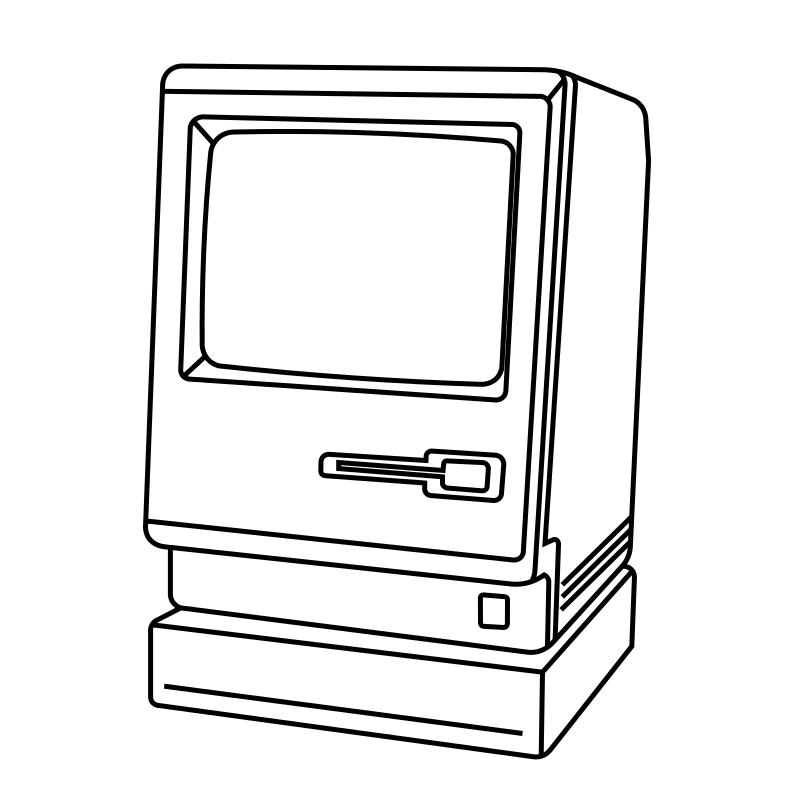 Mac Plus
Here's where the Macintosh goes from innovative to just excellent. It had plenty of memory, lots of expansion options, and enough software to be worth the price.
Expand description for Mac SE/30
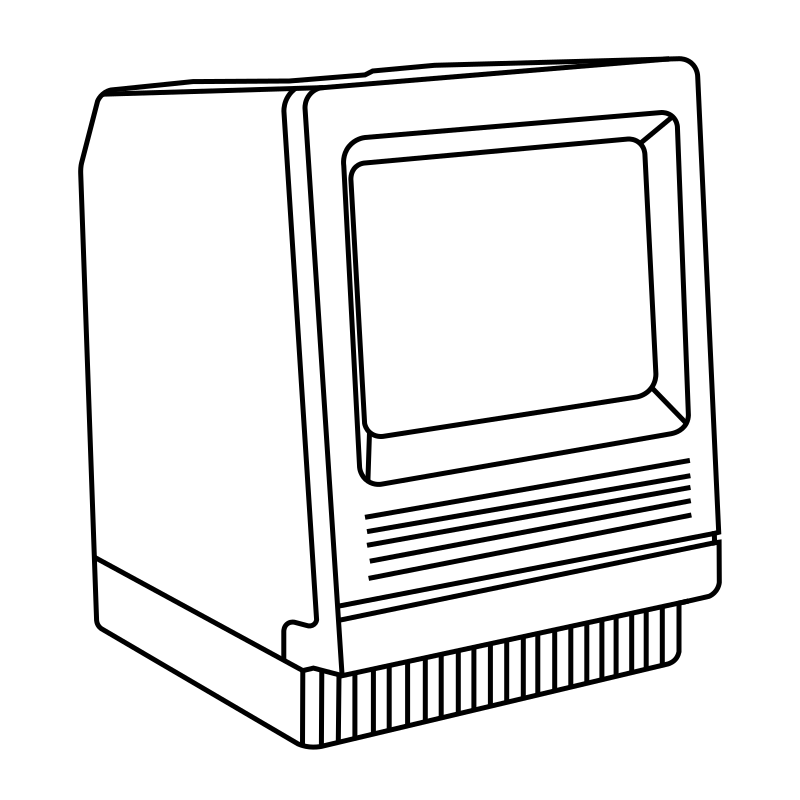 Mac SE/30
True Mac nerds know the SE/30 was the best of the OGs. It was a small computer with big specs and performance — a combination you couldn't really find elsewhere — and was even faster than some of its supposed successors.
Expand description for iTunes
 iTunes
Yeah, it eventually got kind of slow and overloaded. But it changed the way we discovered and bought music — and when it came to Windows, iTunes made it so anyone could get an iPod. And everyone did.
Expand description for GarageBand
 GarageBand
Apple has made a lot of software that attempts to simplify creative processes and make professional tools accessible to everyone. Nowhere has that worked better than with GarageBand, which turns the Mac into a music machine right out of the box. And the built-in loops became the foundations of some of the biggest pop hits around.
Expand description for Apple Extended Keyboard II
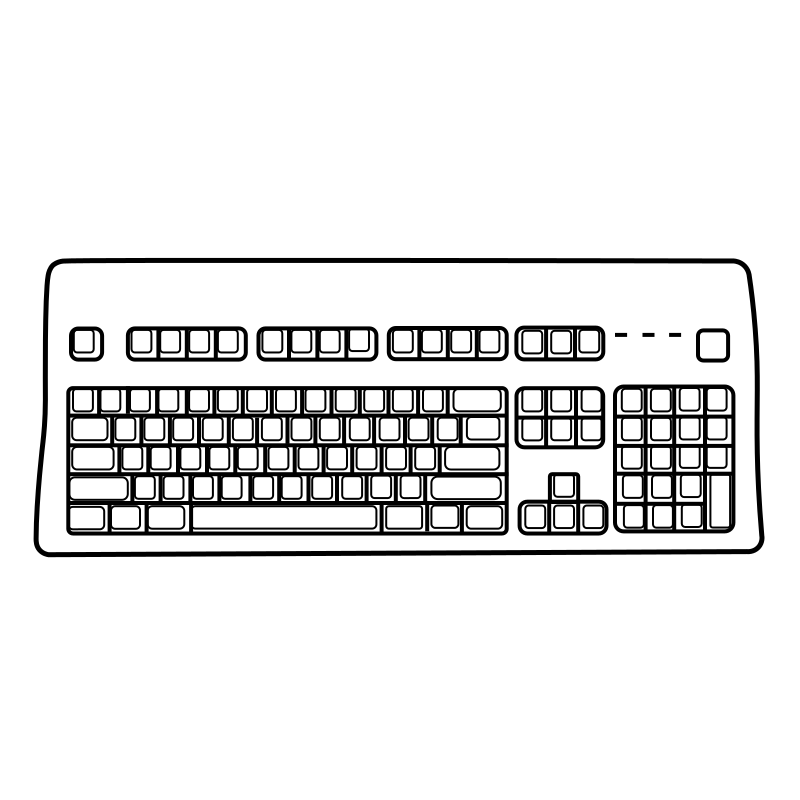 Apple Extended Keyboard II
The gentle, sloping curve of the device. The adjustable feet. The often-imitated thunk of the keys. The all-beige look! The 5-pound size! An icon many consider the best keyboard ever made.
Expand description for Final Cut Pro
 Final Cut Pro
For a long time, Final Cut Pro helped keep Apple at the center of the creative community — it was just what people wanted to use to make movies and videos. Even after a somewhat controversial rewrite in 2011, it's still a key part of the filmmaking process.
Expand description for QuickTime
 QuickTime
The idea of playing video on a computer with software alone was merely a dream until Apple shipped QuickTime and made everything just work. It's still the backbone of the MPEG-4 format that's everywhere today.
Expand description for PowerBook 100 series
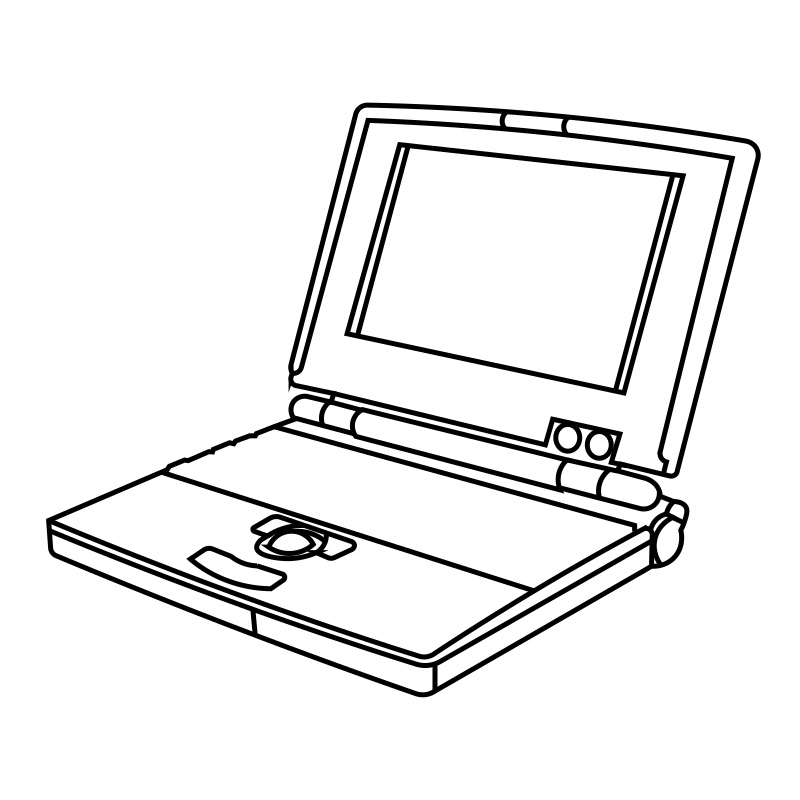 PowerBook 100 series
Apple's first proper laptop. (Let's not talk about the Macintosh Portable.) It turned Apple into the laptop leader almost immediately, and gave the early-’90s Apple a boost it desperately needed.
Expand description for Apple TV (2nd gen)
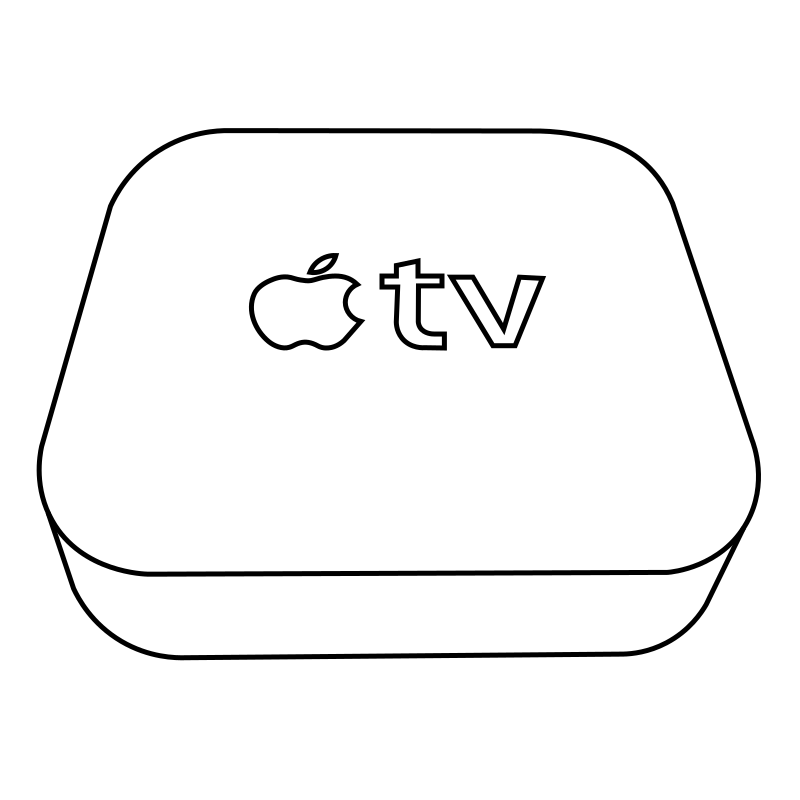 Apple TV (2nd gen)
The first Apple TV was essentially a Mac, with an Intel processor and a spinning hard drive. This one is when Apple landed on a design and remote not so different from the current model. It was the first time Apple's TV ambitions started to seem like more than a hobby.
Expand description for PowerBook 500 series
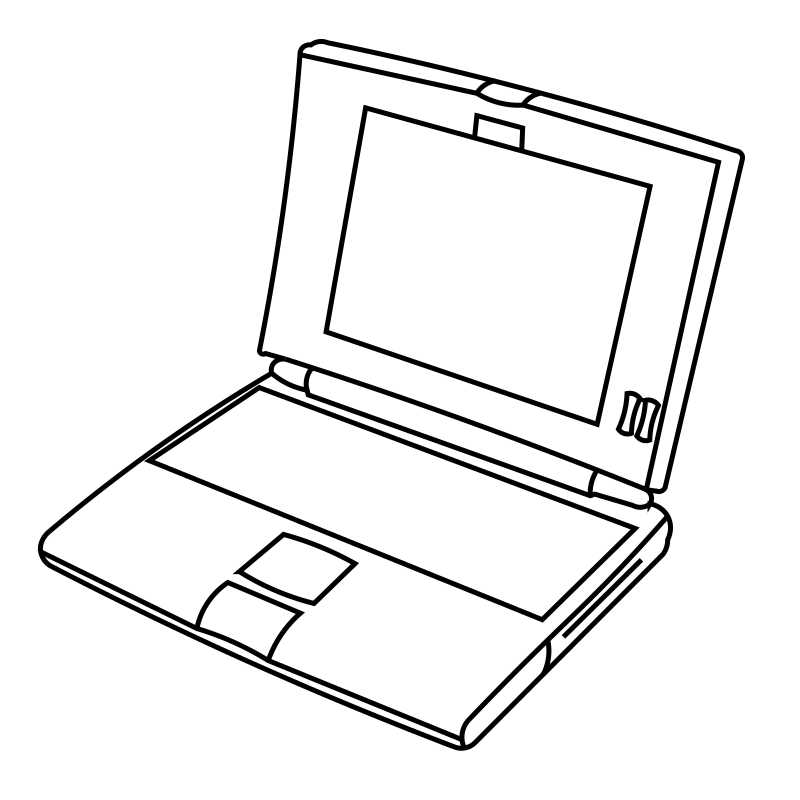 PowerBook 500 series
Trackpad, keyboard, screen, hinge. Apple invented the modern silhouette of a laptop with the 500s, and things haven't changed a lot since. Plus: built-in Ethernet!
Expand description for Clip iPod Shuffle
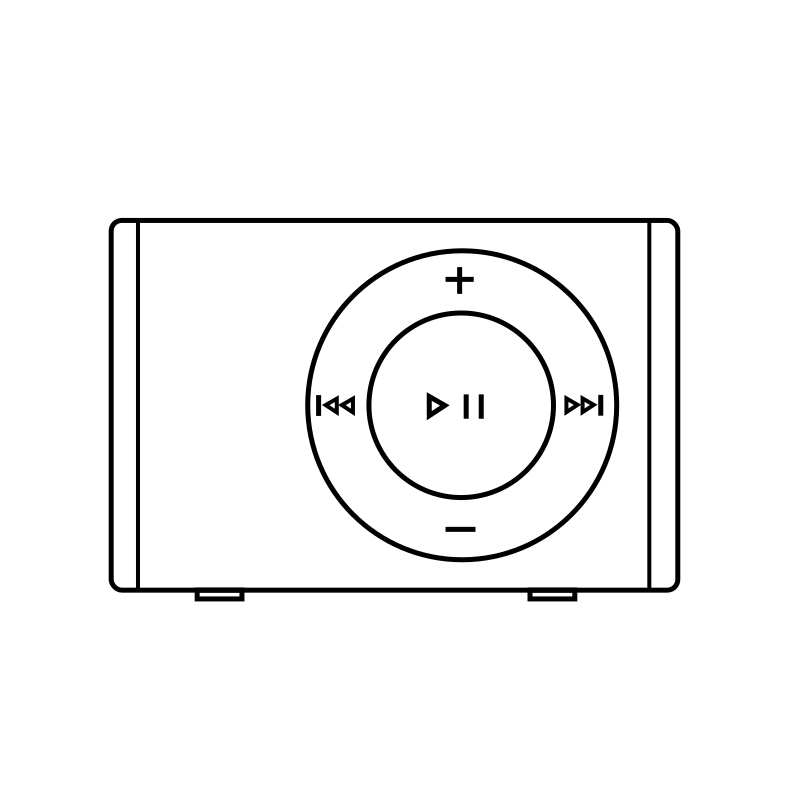 Clip iPod Shuffle
Here's where Apple got the Shuffle right. It was as tiny and simple as Apple wanted, but gave you enough control to actually, you know, use the thing properly. The clip meant it could live anywhere, and so music lovers put it everywhere.
Expand description for Original Cinema Display
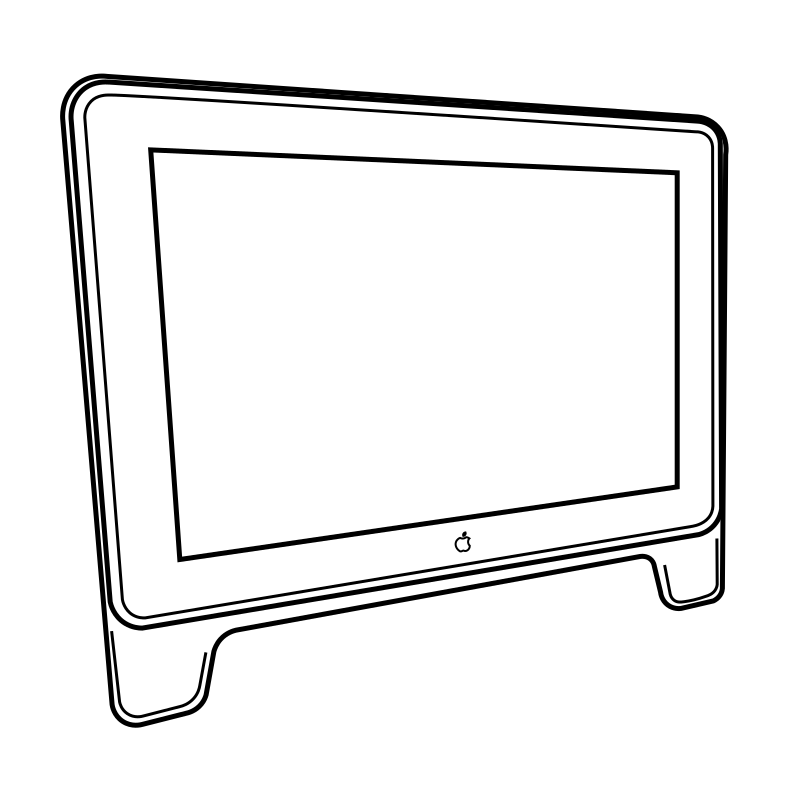 Original Cinema Display
When the first 22-inch Cinema Display shipped, Apple mostly compared it to giant, hulking CRT monitors. Because that's what everybody had. From the easel stand to the slimmer design, Apple was early to the idea that your computer screen could actually look cool. And not take up your whole desk.
Expand description for LaserWriter II
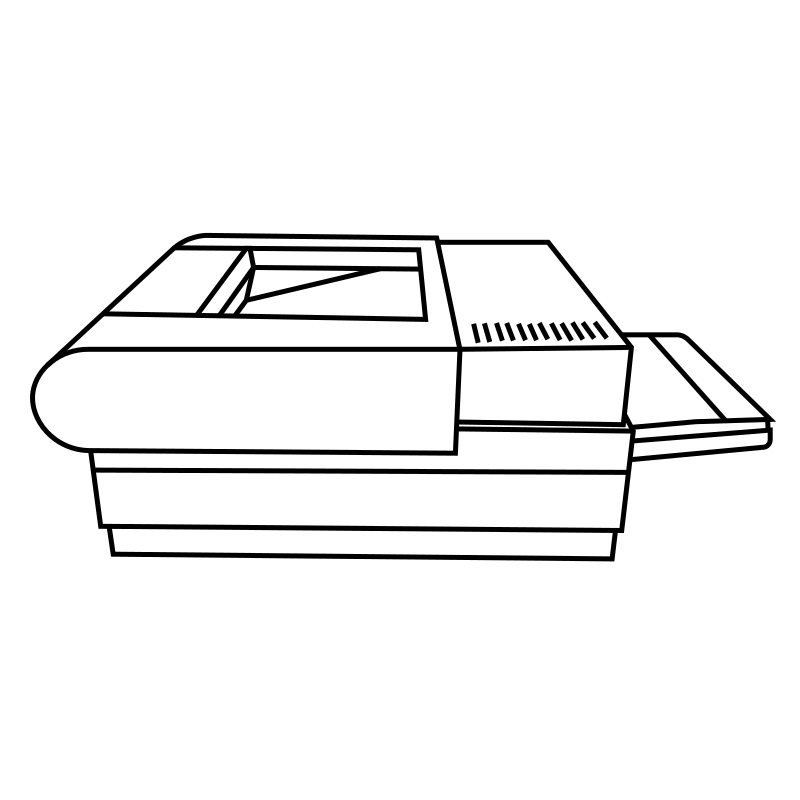 LaserWriter II
Apple made the first mainstream laser printer, and being able to quickly and easily design and print things in high resolution quickly became the killer app for the Mac. The LaserWriter II was a big improvement, and it was a fixture in offices and schools for years.
Expand description for ImageWriter II
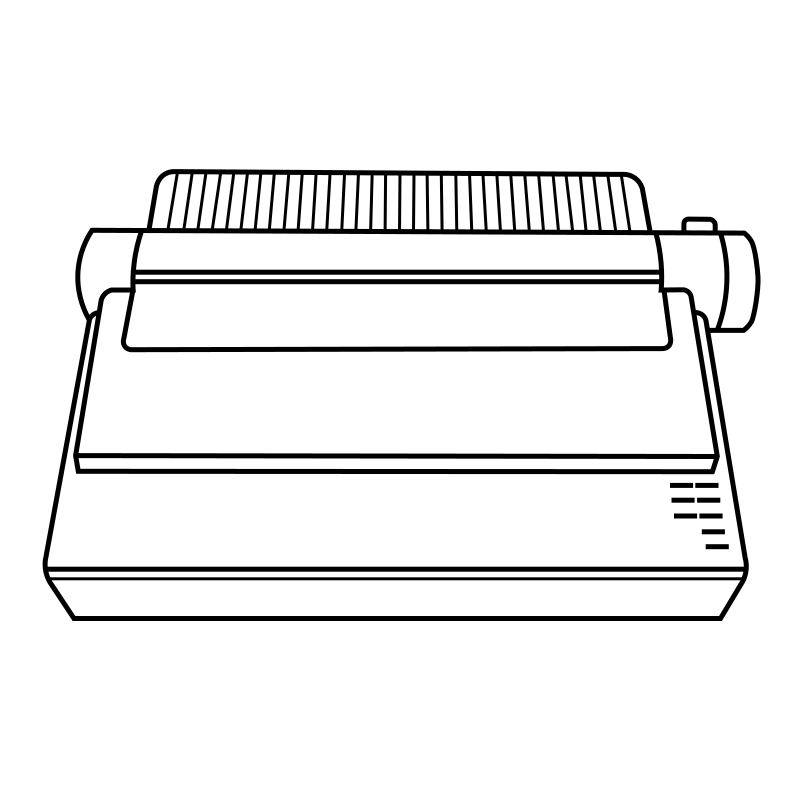 ImageWriter II
The big clunky dot-matrix printer churning out HAPPY BIRTHDAY banners is an icon of early computing, and the ImageWriter II (paired with Print Shop Pro, natch) is an icon among icons.