
This article was updated on December 2, 2025, with commentary from a former TSA officer who spoke to TheTravel, and again on January 28. It was first published on December 1, 2025.
The Transportation Security Administration (TSA) first issued a notice on the Federal Register in November proposing an $18 fee for American travelers going through airport security checkpoints without a valid REAL ID or passport. The fee proposition initially sparked controversy across the United States among travelers; however, the agency confirmed on Monday, December 1, that it will not only go ahead with the charge, but it will also increase it.
Americans clearing airport security checkpoints without a REAL ID or passport will have to pay $45, starting from February 1, 2026, the TSA has confirmed. The agency also issued final "red alert" warnings in preparation of the fee on its website in January. However, some say the extra cost will penalize families more than others, particularly those who don't travel often, according to its rules' fine print, as well as the nonprofit American Economic Liberties Project.
Here's why the fee will impact families the most, how much they could be forced to fork out, what they can do to dodge the charge, and why the TSA deems it "necessary." TheTravel also spoke to a former TSA officer, who provided their thoughts on the upcoming fee.
The TSA's New $45 Fee Penalizes Families The Most, According To Experts—And The Fine Print
TheTravel had a discussion with a former TSA officer on December 2, who spoke on condition of anonymity—their name is therefore off the record. They gave their thoughts on the new fee, saying, "I think the fines are too high, and rules around the fines are too strict." And those rules will perhaps be a tough pill to swallow for some traveling families.
Bill McGee, a senior fellow for aviation at the American Economic Liberties Project, noted that the new $45 fee to clear airport security in the U.S. could particularly penalize families who don’t travel frequently, as reported by the New York Times. The fee, let alone its increase from $18, could punish this specific demographic the hardest because of how it'll work, according to its rules' fine print.
The TSA said it will refer passengers to its fee-based "TSA Confirm.ID payment option" if they're unable to present a valid, acceptable ID at U.S. airport security checkpoints. The TSA Confirm.ID's validity period means families could feel the highest financial burden.
"Travelers will be able to pay $45 to use TSA Confirm.ID for a 10-day travel period," the TSA's press release about the new fee states.
The $45 fee only pays for a 10-day travel period. In other words, travelers pay up, and they can fly what is assumed to be any number of times within that 10-day validity period without paying again. Those who fly frequently will face a lesser impact; they pay once and get "more air travel for their money's worth," for lack of a better term, if they intend to fly a lot during the validity timeframe.
In contrast, travelers who don't fly regularly, particularly families who'll have to pay $45 for every person in their travel party aged 18 and above, will feel the financial pinch the most because they could be required to pay more than once per person, depending on the length of their trip.

For example, let's say a family of four that doesn't have REAL IDs or passports goes on a two-week vacation in the U.S. They'll be charged $45 per head to clear a TSA checkpoint, totaling $180. Their return flight 14 days later falls outside the 10-day validity period; therefore, they have to pay $45 per person yet again for their journey home (another $180). That's $360 in TSA clearance fees for a family of four—and that could grow for even larger families.
Granted, children under 18 don't have to present an ID, easing the strain somewhat for families with multiple young ones. Travelers under 18 can fly domestically with a companion who holds a valid ID or passport, per the TSA. For international flights, children under 18 require a passport. But families traveling together whose kids (or any other family members—think grandparents, older siblings, or extended family) are 18 or over will feel the biggest financial dent.
A "Necessary" Reality Check
As expensive as that may be, the TSA says it's "necessary" and has provided positive reasons as to why, which Americans at all U.S. airports will benefit from, even though they're footing the bill for it. The former TSA officer who spoke to TheTravel also gave further insights into why the fee will be enforced, and why some travelers "who don't listen," despite having 10 years of REAL ID pre-warnings, are finally getting a reality check.
Why The TSA Says The New $45 Fee Is "Necessary," And Why It's A Reality Check For Some Travelers
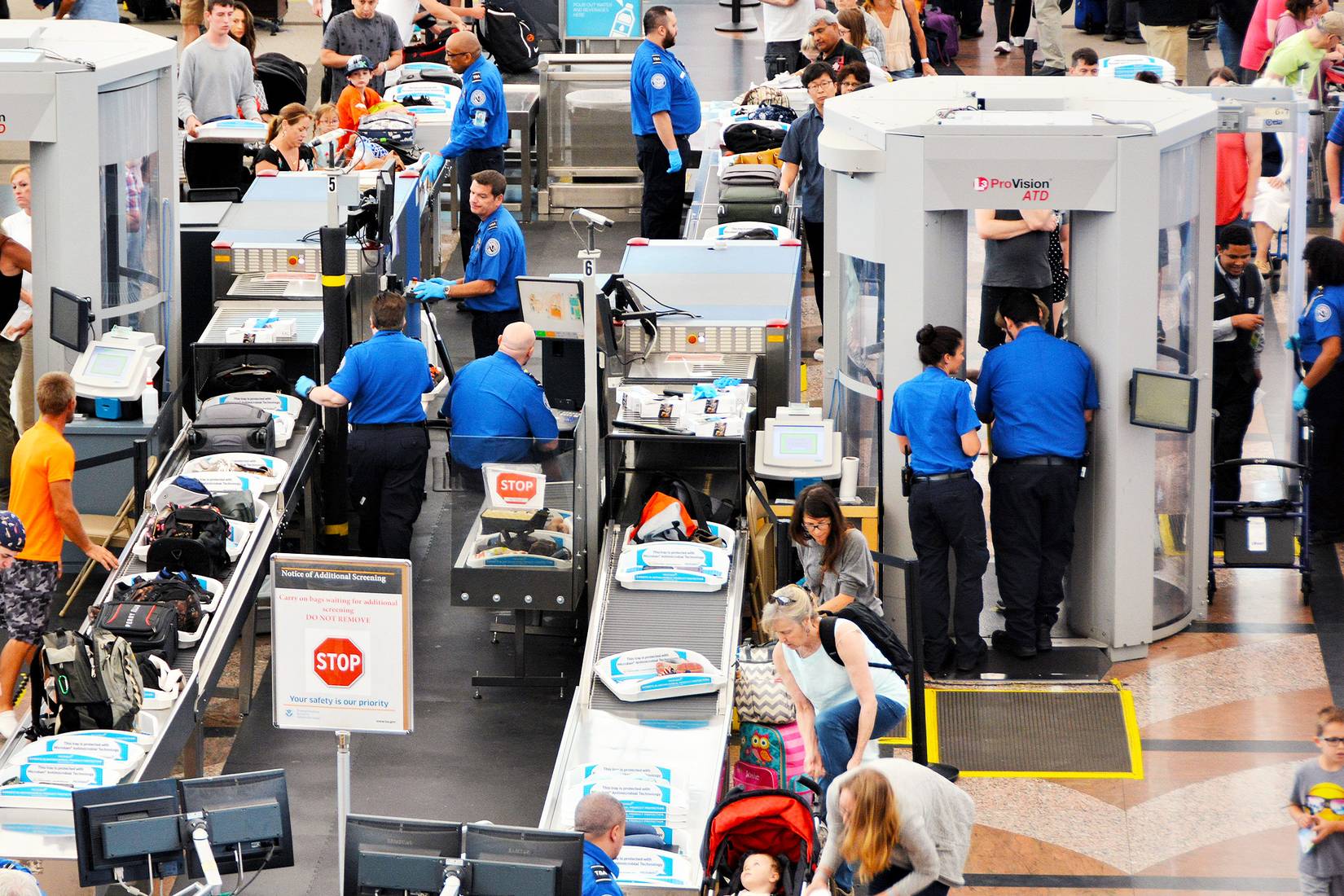
The TSA said in its notice posted to the Federal Register that it was designed "to address the government-incurred costs" associated with the new, modernized alternative identity verification program, which is intended to enhance air travel safety across the U.S. and implement a more modern system for travelers.
"The fee was necessary because we needed to modernize the system. We needed to make sure that the system is safe," TSA deputy executive assistant administrator for security operations, Steve Lorincz, told ABC News.
The new $45 charge is thus part of a welcome push to streamline TSA checkpoints and modernize operations, which should speed up security checkpoints and make the TSA experience easier for the majority of travelers. More importantly, the modernized system is expected to boost safety for all.
Safety aside, the fee may also be a step toward getting more U.S. citizens to obtain REAL IDs and/or passports, since many Americans never truly believed there would be any penalty for those who refuse to do so. They're now getting a reality check. The former TSA officer who spoke to TheTravel said that "it is the first time the TSA is charging fines" for non-compliance—a move that many passengers never thought would actually happen before now, but the agency is finally enforcing action after years of half-intentions.
"Passengers don't listen, a lot of them think the TSA is a joke. The fines are a way to enforce the rules for the REAL ID," the former TSA officer told TheTravel.
REAL ID requirements rolled out in May 2025; back then, government officials similarly said the change was to improve security while also creating a standard for state-issued documentation. Even after the May deadline, American travelers were still permitted to fly without this updated form of ID with no penalties; they simply had to undergo additional screening, including handing over current addresses, per the TSA's website. But that exception didn't last long.

Last month, TSA officials hinted at plans to crack down on U.S. citizens who hadn't yet conformed to the push toward REAL ID when they announced the initial $18 proposal for travelers. While the idea sparked some controversy, many Americans were indifferent or in favor of the fee; some say there's no excuse by now not to be REAL ID compliant because the public has had many years of advanced notice to prepare. In fact, according to the former TSA offer who spoke to TheTravel, some travelers outright refused to comply out of choice, with some making their intentions perfectly clear while undergoing screening at the airport.
"When I worked for the TSA there were several times when the real ID requirements were 'about' to go into effect. I would be sitting, checking people’s IDs and hear many passengers on the line talking about it. (There was signage up on the checkpoint at that time). Some would laugh and say they had no intention of getting a real ID and others would say they wanted to see what we would 'do' to them if they didn't comply," the former TSA officer told TheTravel.
Now, whether they're prepared or not, starting February 1, 2026, those travelers without a REAL ID or passport will be required to confirm their identity on the TSA website or through a series of forms at their departure airport, with the $45 fee tacked on.
Biometrics and biographic information may also be used to validate travelers' identity.
Travelers who reach the front of the security line without a passport or REAL ID will be removed from the line and required to fill out the forms in person, which should take no longer than 30 minutes. Lornicz explained there will be no exception for travelers who can't verify who they are.
"We still need to go through the process to make sure that we verify who you are. And for whatever reason, if we can’t do that, then you can’t go through the process," Lorincz told ABC News.
Still, travelers, especially families who may feel the squeeze the most, can prepare for the new rule, avoid the $45 fee, and minimize the risk of disruption and delays at the airport for themselves.
What Travelers And Families Can Do To Avoid The TSA's New $45 Fee, According To The Agency

Travelers and families in the U.S. who don't want to pay the new $45 TSA fee to clear airport security must ensure they acquire either a valid REAL ID or passport in time for any flights they take after the deadline on February 1, 2026.
"TSA urges travelers who do not have a REAL ID to schedule an appointment at their local DMV to update their ID as soon as possible," the agency said in its press release.
U.S. citizens can apply for a REAL ID at their local Department of Motor Vehicles (DMV). Applicants should note that some states' DMVs (including Maine and New Hampshire) have experienced license printing glitches this year, causing many perfectly valid REAL IDs to be rejected at TSA checkpoints. Travelers are advised to check and see if their local DMV is affected.
Alternatively, travelers can apply for a passport. In any case, both of these ID documents will allow travelers to breeze through TSA checkpoints at U.S. airports without paying any fees.

The REAL ID Act was first passed in 2005 in response to the 9/11 attacks and was meant to be implemented in 2008. But decades of administrative delays continued until 2025. Today, around 94% of travelers in the U.S. already have a REAL ID or another form of acceptable ID (like a passport), according to the TSA.
The upcoming fee will likely shift that figure even higher by February next year, when travelers without a REAL ID or a passport will have to shell out $45 when passing through airport security.