Hands On Uniontech's Deepin 25.0.10 release shows that the Chinese desktop world isn't waiting on Western tech. It's modern and good-looking, and (pausing only to sigh deeply) has built-in "AI".
Deepin 25.0.10 is the latest point release of Uniontech's free community desktop, following the debut of Deepin 25 in June 2025.
The original release of Deepin 25 followed about 10 months after we looked at Deepin 23 in August 2024, but the distro does not look and feel radically different from the previous version. It has the same Deepin Desktop Environment as before: the Deepin 25 announcement mentions it being DDE 7, but we couldn't immediately see much difference from before: the Settings program has been reorganized and the file manager revamped, but it's not radical.
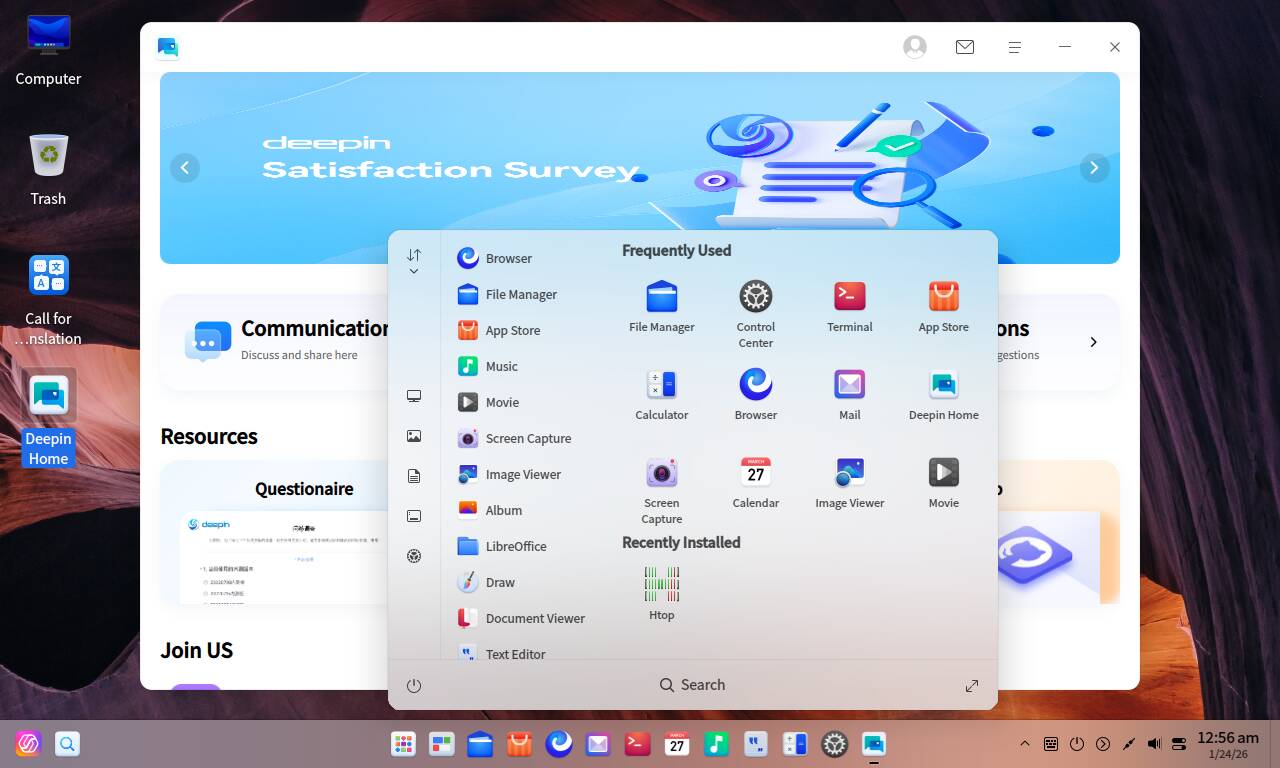
Deepin 25 doesn't look much different: no Wayland or anything here. Under the hood, though, things are changing. - Click to enlarge
Deepin has a new Wayland compositor called Treeland in development, which uses the Qt toolkit as used in KDE and LXQt – but for now, this is merely a tech preview: the current release still uses X11.
The desktop layout resembles Windows 11, with the main app launchers centered, leaving the leftmost position for a launcher for Uniontech's LLM bot, "UOS AI". We opened it, agreed that we were over 18 and that we understood that the English-language experience might not be perfect, and after a few moments, we were left with a box to type in our query.
We asked it "what Linux distribution is Deepin 25 based on?" The result was reams of text, in which the model repeatedly stated that its training data was from 2023 and it couldn't access the web. It repeated that older versions of Deepin were based on Debian, but that it could not speculate about versions unannounced at the time of its training data. On the first boot, a welcome video shows off some of the LLM-powered features for Chinese language users, such as automatic document and text-snippet translation, explanations, summaries, and local file search.
We remain unconvinced that this tech is going to change the world any time soon, but for those who want it, it's there, built-in, and fairly well-integrated. This is an important part of the sales pitch in 2026, we fear – even in China.
Deepin 25 has a partially-immutable OS layout, which the company calls Solid, which is based on OSTree tooling. It protects some system directories, so even for the root user, we found /bin, /lib, /lib64, /sbin and /usr were read-only. It doesn't seem to do whole-system snapshots, though, and there are commands to disable and re-enable immutability – functions we last saw in openSUSE back in 2024, and a very different approach to Red Hat's whole-OS approach.
- openSUSE deep sixes Deepin desktop over security stink
- What the Linux desktop really needs to challenge Windows
- Debian's FreedomBox Blend promises an easier home cloud
- MX Linux 25.1 brings back switchable init systems
This version also includes Uniontech's cross-platform packaging system Linglong. The command ll-cli list showed some 20 installed Linyaps packages, including the email client, calculator and so on.
It's notable that English is a little less visible in this release. The initial bootup screen is in Chinese, and only the word English is actually in English. There are various US English keyboard settings available, but no UK English – only a region, so at least dates aren't in confusing middle-least-most significance order. (Coercing everyone into what this vulture still thinks of as Xkcd order would be fine with us: that's the order that they're written in Chinese, but delimiters are the actual words for "year", "month", and "day".)
Deepin strikes us as a relatively simple and pragmatic distribution. There's no choice of desktops: it has its own, Windows-like offering – no GNOME versus KDE battle here. It doesn't engage with the Flatpak versus Snap debate; it has its own Linyaps format. It freely uses bits of Debian and Red Hat tech, but avoids being totally locked down like most Western immutable distros.
It's Sinocentric but supports some other languages and character sets, international search engines, and so on. It's not especially lightweight, but it takes a modest enough 6.7 GB of disk and a gig of RAM. It is a little fussy about hardware: we had problems with both VMware Workstation and on the metal on our testbed ThinkPad T420, although the live medium ran very smoothly on a newer Dell XPS 13.
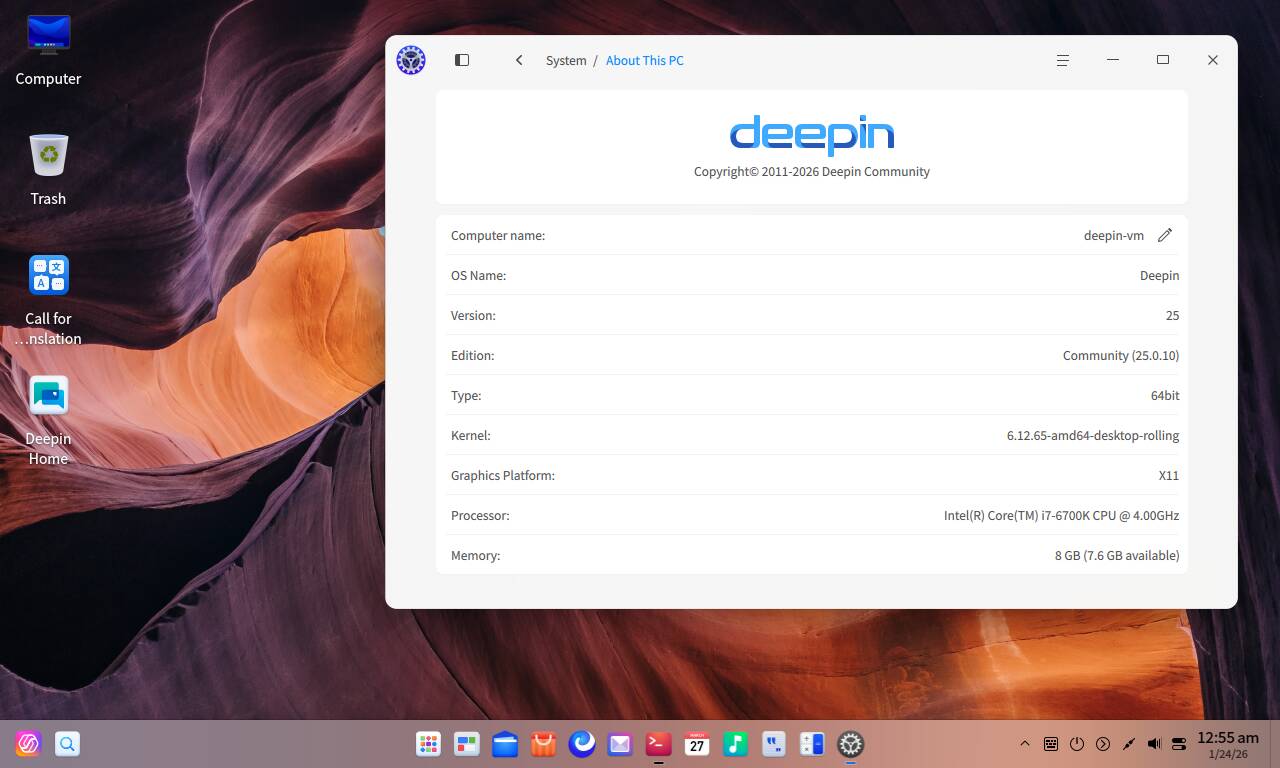
Deepin 25's Settings app has been simplified and reorganized, as has the file manager. - Click to enlarge
It's not profoundly technologically radical, but Deepin does the job while looking fresh and modern and attractive. If this is a showcase of the state of the art of Chinese domestic desktop Linux, it really is not bad at all. China has taken FOSS tech developed in the West and used it to create its own OSes with its own desktops and its own tools and apps – which run on its own processors, too.
As we noted last August, tech like this doesn't have to be world-beating: it merely has to be good enough that China can rely on its own software running on its own hardware for it to risk invading Taiwan, even if that means destroying the Taiwanese chip-making industry on which Western tech relies.
If you want to take a look for yourself, the downloads page offers editions for AMD64, ARM64, and Loong64, plus a preview version for RISC-V. Its system requirements on x86-64 are modest enough: 8 GB of RAM, a big screen (1920×1080 or higher recommended), and at least 64 GB of disk space. ®