hands on After successful crowdfunding, the latest release of the original handheld Linux distro will power a new handset coming in mid-2026.
The initial crowdfunding drive for the new Jolla Phone seems to have gone well: at the time of writing, the new device has comfortably passed double the number of orders needed to go into production. Finnish vendor Jolla set a goal of 2,000 €99 pre-order deposits by January 4th, but passed the goal in less than two weeks. The first batch of 2,700 units were £499. Batch 2 will ship two to four weeks later, and cost €549, but that's now sold out too. Currently, well over 5,000 orders have been placed. With 20 days to go, the pre-order page says:
We take a maximum of 10,000 pre-orders until January 31st, 2026. Reserve your spot and lock your special total price of 579€.
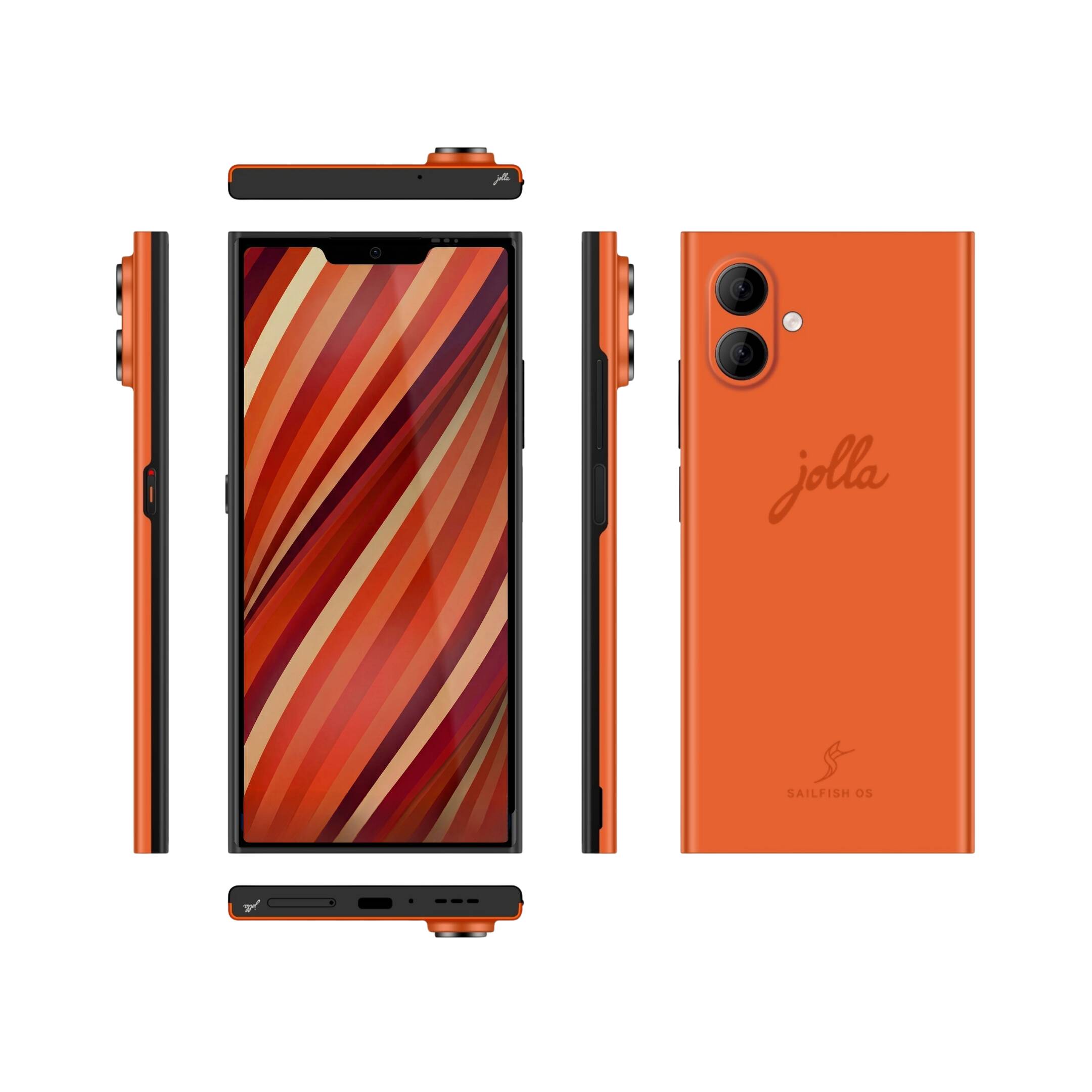
The new Jolla Phone, resplendent in The Orange – or Snow White and Kaamos Black - Click to enlarge
The down payment will be deducted from the total price. Jolla is now taking orders for 5,200 units in batch 3, which will cost €579 and ship three to six weeks later. After the first few production runs, totalling 10,000 units, the price of the handset will go up to €599 to €699.
The phone specs were set by a survey the company ran, with a first stage in August followed by November update. To our eyes it looks decent if not outstanding: 5G connectivity, a 6.36 inch AMOLED screen, an indicator LED, 12 GB of RAM plus 256 GB of storage expandable via microSDXC. Some of the details are welcome: a user-replaceable 5,500 mAh battery, plus a software-based privacy switch which can disable the microphone, or Bluetooth, or Android apps, or other programmable options. For this vulture, a sad absence is a headphone socket.
An added incentive, if the device sells 10,000 units, is the return of smart back covers called The Other Half, which even included a keyboard. An earlier version of The Other Half was a feature of the original Jolla Phone, which launched in May 2013, hit its order target by August, and then started shipping that November.
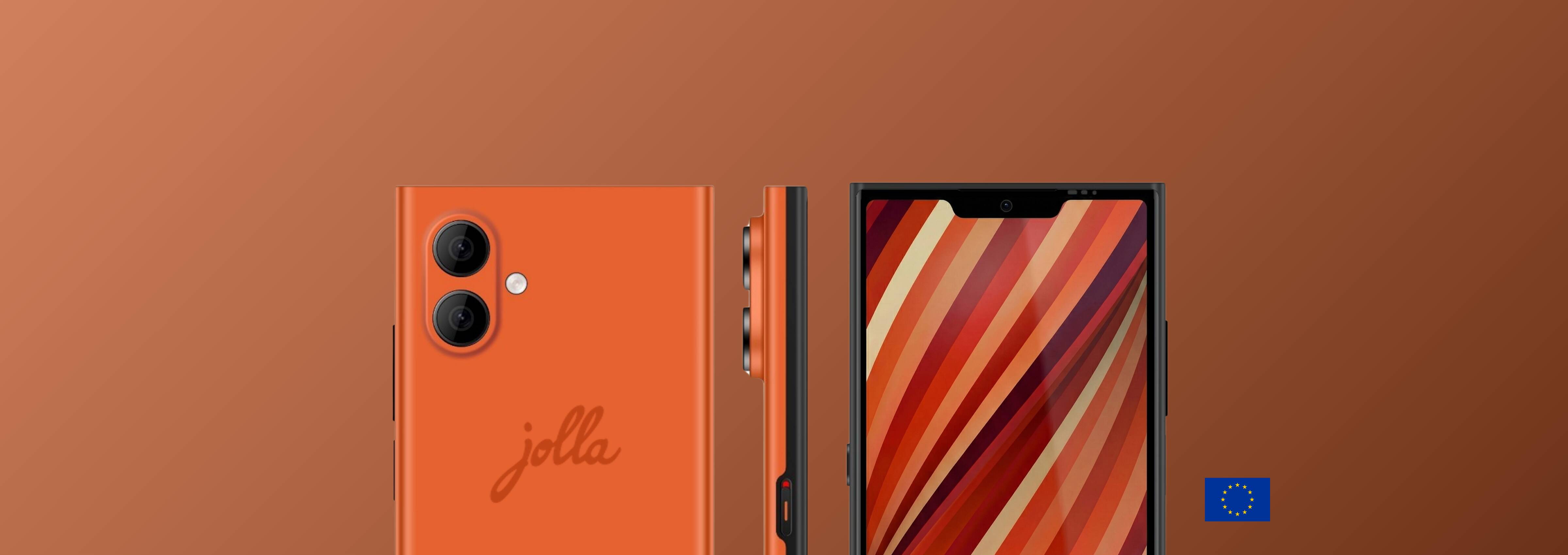
The privacy switch is good, but we really would have liked a headphone socket. - Click to enlarge
So much for the hardware ... what about the software?
The Sailfish OS has a long history: it's a remote descendant of the Maemo OS from the Nokia 770 internet tablet, which came out twenty years ago. Maemo became Meego, which Nokia drove off the rails. Meego was renamed Mer, then revived as Sailfish. Version 1.0 launched in February 2014.
Once afloat, though, Jolla (it's a Finnish word for a small yacht) and Sailfish hit some stormy waters. Buoyed by the phone's success, the company attempted to launch a Sailfish tablet later in 2014, but hit financial troubles: not all backers got their kit, as the company admitted in 2016. At one point, it considered bailing from hardware entirely.
Thanks to its age, Sailfish predates the modern trend of keeping everything in the cloud and accessing it over web apps, which may be why in 2015 Russia got interested. The next year, The Reg speculated that Russia's interest might be the savior of Sailfish.
To put it mildly, Russian backing is a mixed blessing. Following Russia's invasion of Ukraine, in 2023 the company's former leadership started a new company, temporarily named Jollyboys. The old Jolla OY was wound up, and they renamed the newer concern to Jolla Mobile Oy.
Back in February, Jolla exhibited at FOSDEM and a few weeks later released Sailfish OS 5.0 "Tampella". The Reg FOSS desk talked with the company at the event, and its representatives arranged to lend us some hardware to try it: The flagship Jolla C2, a version of the Reeder S19 Max Pro S. Aside from Jolla's own phones, Sailfish 5 also officially supports over a dozen models of Sony Xperia, with more community ports too — but sadly not the original phone or tablet, nor the Planet Computers Gemini. We also got one of the best-supported Sony models, an Xperia 10 III – and for comparison, a postmarketOS device, a OnePlus 6T. We had problems setting up the C2, and the reflashing procedure is dauntingly complex, but we gave the OS a thorough workout on the Xperia.
A break from iOS-Android monotony
Sailfish is distinct from any other mobile OS today. Its origins at Nokia predate the January 2007 launch of the iPhone, by whose prospects The Reg was not enthralled. That, of course, also means it was out long before Android, which as Daring Fireball described in 2010 was originally designed to rival Blackberry. (The Internet Archive still has some of Engadget's screenshots.) After Android was remodeled to take on Apple, both OSes look a lot like each other: the home screen is a grid of app icons, and both lean heavily on tapping on-screen buttons. (Before that, of course, they relied on physical buttons.)
There are also an array of de-Googled Android offerings, such as Murena's /e/ OS on both phones like the Murena One and Murena Pixel Tablet as well as multiple third-party devices. Alternatively, for the very privacy-centric, there's the Punkt MC02, whose Apostrophy OS is based on Graphene OS.
We've tried unmodified iOS, and we also jailbroke it and installed Cydia and our own apps, tweaked the launcher and so on. We've tried vendor-modified Android, plain Pixel-style Android, and several forms of de-Googled Android. However they're modified, both have their own distinct feel, and there's a lot of overlap.
The combined Apple and Google influence continues to be visible in modern FOSS efforts such as GNOME Mobile, which runs on Linux-powered kit like the FuriLabs FuriPhone – and much the same applies to Phosh and Plasma Mobile on the Android-free postmarketOS distro. All of them show the blended influences of Apple's desktop and mobile UIs, mixed in with the desktop-OS components they're built from. To this vulture, GNOME feels like a much more natural fit on a phone than on a keyboard-driven desktop.
Sailfish 5 feels very different, with little visible influence from anything else. You flip between its two home screens by swiping left and right. One holds a list of messages and notifications, and the other is a full-screen app switcher, with tiles for each open app. Dragging up from the bottom reveals the app launcher. Uniquely, it distinguishes between long and short drags down from the top of the screen: a long fast swipe down opens a settings panel, but in native Salfish apps, a short slow drag opens a full-screen-width menu; you scroll up and down until the desired option is highlighted, then select it by lifting your thumb. It shows whether options are turned on or off with a large, bright white dot, or a smaller dimmer dot. A different white dot at top left is also the Back button, where one makes sense.
Like the overloaded white-dot symbol, some aspects of the OS are a little confusing. In addition to the official Jolla Store, there are two different tools for managing third-party native apps: StoreMan manages software from the collection on OpenRepos, and Chum GUI manages RPM packages from Chum. Then there's the built-in AppSupport compatibility layer, which lets you run Android apps. We installed both F-Droid and the Aurora store, and had no problems installing any typical tools such as Signal, Whatsapp, or YouTube Kids.
There are built-in apps for all the things you'd expect a smartphone to do, and these connect to the usual suspects such as Google's email, calendar, and contacts. There's a browser based on Mozilla tech, as well, which works fine – as did Android browsers such as Vivaldi. Like its very distant relative Symbian, though, this is a local-first sort of device which can sync, rather than a pocket cloud client.
Maps are a particular weak point: we tried Google Maps and Nokia spin-off Here, which both literally drew a blank. The OpenStreetMap-based Mapy.com ran and could be searched, but couldn't detect our location. There aren't many cloud-storage clients, either. The stock keyboard doesn't support swipe-style text entry, which we found frustrating.
Overall, Sailfish is arguably the most complete independent mobile OS. It's totally separate from anything from Google, or Apple, or desktop Linux, and the app catalog is impressive. We did regularly get lost in its slightly idiosyncratic UI, but it was always possible to get out again. If you want a total break from the mainstream mobile duopoly, this is a viable alternative. Although you might need a standalone sat-nav too.
The big, 6.7-inch (17cm) screen of the C2 looked appealing, if only we could have gotten it working, but that was fated not to be. With practice, we suspect Sailfish would be very fast and fluid to operate, more so than any phone based on a desktop Linux GUI.
For now, the new handset is only available in the EU plus the UK, Norway and Switzerland – but it should work anywhere. With its own high-end handset, Sailfish 5 could be a very tempting proposition if you want to own your own data, especially if someone can revive the slide-out keyboard – and maybe squeeze a headphone socket in there, too. ®