For commuters used to seeing "Züg verspätet" (train delayed) notices flashing at their local station, seeing the names of German cities at the bottom of reliability rankings may not come as a surprise.
In the latest European Railway Index, German cities occupied all 10 places at the bottom of the rankings for punctuality, with almost 1 in every 2 trains facing delays of some kind.
Compared to an average waiting time of eight minutes at the busiest European stations, passengers in Germany were left staring at the departures board for almost 15 minutes on average.
When it came to the frequency of delays, Dortmund ranked worst, with 73.8 percent of trains facing disruption. The neighbouring North-Rhine Westphalian city of Cologne came second-to-last, with 71.5 percent of trains delayed, followed by Hamburg, Bremen and Essen.
READ ALSO: The app that wants to help you avoid Deutsche Bahn delays
At Berlin Central Station and Frankfurt am Main - two of the busiest stations in Europe - around 61 and 57 percent of trains were delayed respectively. However, the longest delays were seen in Hamburg, where passengers had to wait an average of almost 25 minutes for their connection.
In Berlin Central Station, the average wait time was 20 minutes.
The survey tallies with the latest punctuality data from Deutsche Bahn itself. According to DB, just 54.2 of long-distance trains arrived on time in August.
Track renovations running behind schedule
In a nation known for its love of punctuality, Deutsche Bahn's inability to make the trains run on time is a long-standing source of frustration.
The national rail operator has repeatedly laid the blame for low reliability on its aging infrastructure and is currently modernising the busiest rail corridors.
On Thursday, however, DB boss Evelyn Palla admitted that even the construction work was failing to run on time. In northern Germany, the route between Hamburg and Berlin reopened six weeks late this year, and delays in approving new signalling boxes has led to further delays for passengers.
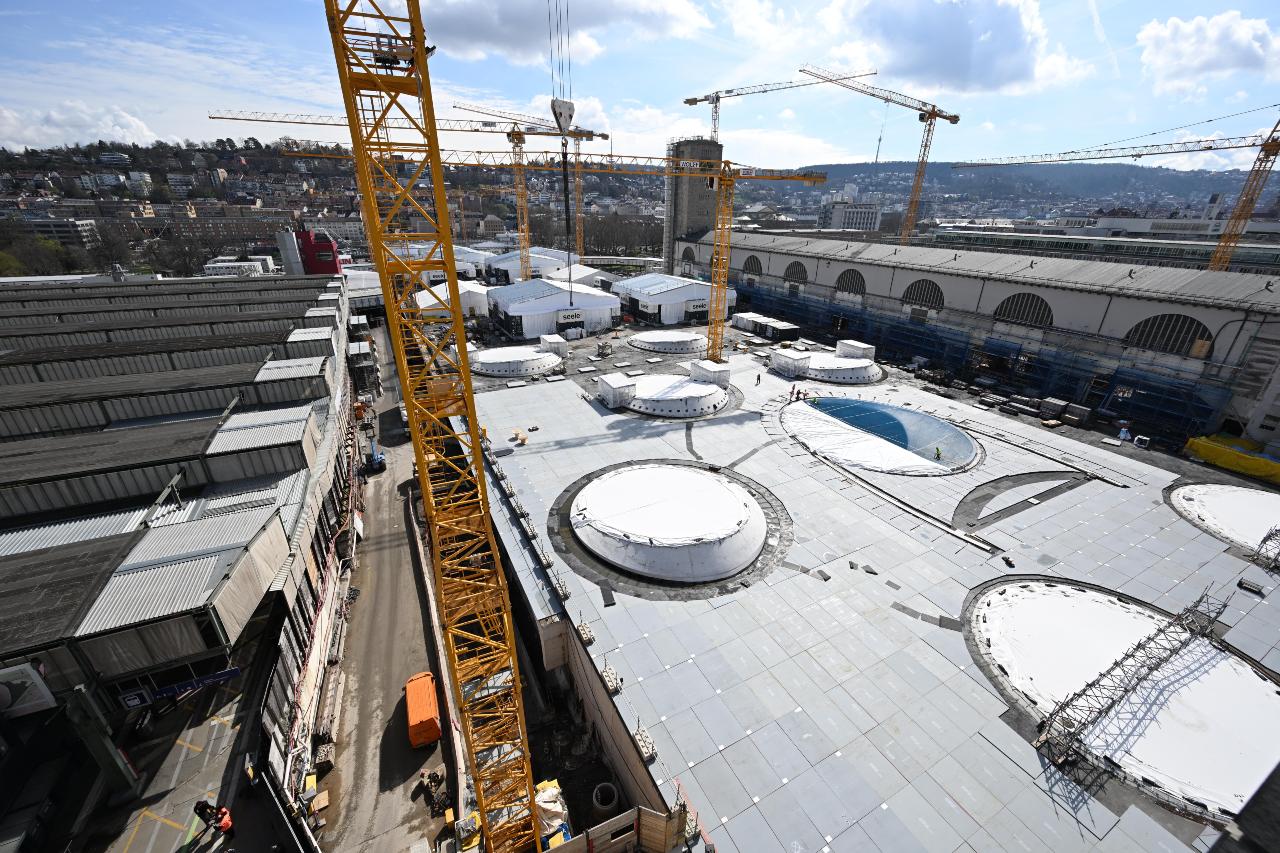
The outside of the construction site for the Stuttgart 21 train station in Stuttgart, Baden-Württemberg. Photo: picture alliance/dpa | Bernd Weißbrod
Meanwhile, construction between Regensburg and Nüremberg finished three weeks late. The route between Cologne and Hagen reopened on time, but the discovery of a crumbling bridge along the track has since caused lengthy delays.
READ ALSO: How Deutsche Bahn will spend €50 million to improve information for passengers
Stuttgart 21 - the long-delayed overhaul of Stuttgart’s main railway station - is now due to be finished in 2031 at the earliest.
In light of the ongoing issues, Palla announced last week that the construction works would be slowed down even further. From now on, just two projects per year will take place, rather than the current four. This could see the overall modernisation project stretch out far beyond the current deadline of 2036.
New ICE trains and more competition
Barely a year into her new role at the head of Deutsche Bahn, Palla is facing mounting pressure to deliver a better rail experience for customers.
This pressure is set to increase from 2028, when private Italian operator Italo plans to offer a number of long-distance routes within Germany, potentially including Munich, Berlin and Hamburg, as well as routes between Munich and the Ruhr region.
At the same time, private operator Flixtrain is set to expand its German operations, putting around 65 brand new trains on the tracks.
READ ALSO: German cities could see rail links cut as competitor enters market, union warns
In a recent interview with Tagesspiegel, the Deutsche Bahn boss welcomed the additional competition from Italo.
"Competition makes the railways faster, leaner and better," she said.