‘Stone age’ is shorthand, for many, for a human past before the dawn of civilisation. Cavemen, clad in furs, throwing stone-tipped spears at woolly mammoths. Perhaps some dinosaurs parading around in the background. Maybe these humans are a little heavy of brow and shaggy of hair.
Notwithstanding the dinosaur bit (non-avian dinosaurs were all wiped out in a mass extinction event around 66 million years ago, long before any hominids existed), ‘the stone age’ is a label that encompasses the vast majority of human existence.
The start is marked by the earliest stone tools made by ancestor species – for a long time thought to be around 2.6 million years ago. But in 2015 a site in Turkana, Kenya, revealed tools that are a staggering 3.3 million years old.
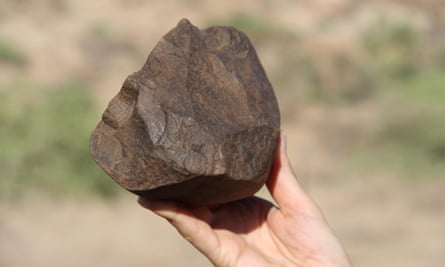
These tools were probably created by ancestors from the Kenyanthropus genus, which predate even the earliest Homo species. Which means archaeology sort of begins before humans did.
In Britain, the stone age ends with the introduction of metalworking techniques, around 2,400BC. Globally, the earliest evidence of casting and smelting copper dates from around 7000BCE, in eastern Serbia. This time is associated with a cultural package of farming, established settlement, large monuments, elaborate personal adornment and trade.
So the stone age spans more than 96% of human existence on the planet. It spans the convoluted evolutionary journey of our species. It encompasses apes bashing things with rocks, but also the intricate material culture of intellectually modern people who didn’t know how to make metal, but otherwise lived lives as innovative and sophisticated as our own.
A label is a powerful thing. It doesn’t just describe, it shapes our imaginations. And that’s why the stone age is such a perilous misnomer. Not only does it throw up those Flintstones mischaracterisations, it also serves to blind us to the range of materials that early people relied on and had mastery over. Stone (and metal) obviously had important functions. But not necessarily more important than wood, bone, ivory or hide.
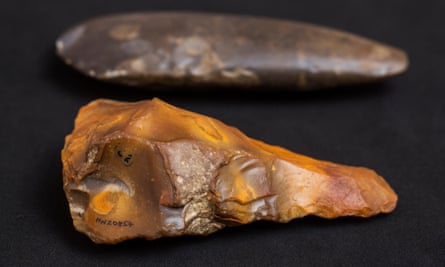
The common labels used for prehistoric periods – stone age, bronze age, iron age – are known as the Three Age System. First formulated by a Danish museum curator, Christian Thomsen, in 1836, it was a way of categorising sites chronologically using the primary identifiable material in the archaeological record.
Shortly afterwards, there was a push for a distinction between the really old stone age, and the recently old stone age – so Paleolithic and Neolithic were coined. Then identification of a discrete type of material culture, typified by tiny worked flint blades known as microliths, resulted in a middle stone age – Mesolithic – inserted between Paleo- and Neo-.
Based on typologies of stone blades, flakes, cores and axes, stone became central to identifying and describing the cultures existing in these periods. Implements made from organic materials were far less likely to have survived. And paucity of evidence leads to an underestimation of its importance.
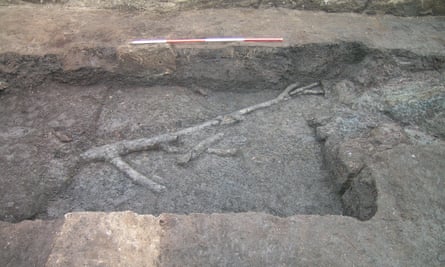
Nineteenth century antiquarians didn’t have the techniques to identify, analyse or preserve the fragments of organic evidence that may have been present on stone age sites they investigated. With modern excavation and analysis techniques, we can build a picture of prehistory with many more of the jigsaw pieces.
The early Mesolithic site at Star Carr in North Yorkshire dates to around 9,000BCE. Bone, antler and wooden artefacts have been exceptionally well preserved in peat beds that once formed a verdant lakeside. 21 antler headdresses made from smoothed and pierced red deer skulls may have been used by shamans, or in ritual ceremonies involving the wider community. Barbed harpoon points made from bone and antler – 193 in all – represent an important non-stone tool-making technology for the hunter-gatherers who lived at Star Carr. An engraved shale pendant was subject to award-winning analysis - using high-resolution imaging techniques, and examining for organic residues and use-wear patterns, the research team have been able to explore the biography of the pendant, posing questions about how it may have been embellished, used, and how it relates to pieces of portable art from other Mesolithic sites across northern Europe.
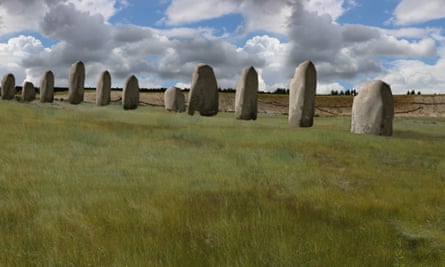
At the late Neolithic site at Durrington Walls, in Wiltshire, ground-penetrating radar surveys completed last year led the research team to announce that a ‘major new prehistoric stone monument’ comprising up to 90 standing stones had been discovered 3km from Stonehenge. Excavations this summer have revealed that the anomalies discovered under the vast henge earthwork are, in fact, holes for huge timber posts. The posts appear to have been erected around the time settlement at the site ceased, but then removed (rather than burnt or rotted in situ), before the henge was constructed. We have no way of knowing what these post looked like, and whether they were decorated, daubed, carved or shaped. Archeological reconstruction drawings of timber monuments often opt for a ‘neutral’ telegraph-pole look, but these visualisations are likely to be widely of the mark. Tantalising examples of the strange things prehistoric Britons did with trees and timber are well showcased at Holme in Norfolk.
Must Farm, although bronze age in date, offers the most comprehensive insight into how little we normally see when looking at prehistoric worlds. Timber houses complete with thatch, wicker walls and clay chimneys; knapped stone tools still hafted into their wooden handles; fine linens, reels of thread and complete sets of pots and cooking vessels all survive. These homes, hastily abandoned during a devastating fire, are preserved in all their glory. Far from the meagre homestead toolkits we’ve allowed ourselves to imagine previously, Must Farm reveals material wealth. If only the stone and bronze had survived, as would be expected, the site would be filed alongside the multitude of significant-but-ultimately-insignificant prehistoric sites in the country.
Time travel into a mid- or late stone age community and the primary technologies and many of the valuable artefacts will be made from wood, leather, bone, pottery and plant-based textiles. By missing those technologies from the label for the period, we risk missing them from of our imaginations, and our understanding. The Pottery, Wood, Textile, Leather and Stone Age isn’t as catchy (the PoWoTexLeSto?), but it’s an awful lot more accurate.