As usual, there was a lot of corporate power-related news last week. Hollywood super-agents launched a campaign to break up the streamers, Dems are musing on doing corporate oversight after the midterms, and the Trump DOJ wants to settle the Apple antitrust case.
But before getting to the full round-up, I want to discuss the deflating AI bubble. There were three important and related pieces of news this week on that phenomenon, two you may have noticed, and one you probably didn’t. The first is the slide in AI stocks, which we sort of predicted last week. That fall was led by the “neoclouds,” which are essentially off-balance sheet entities for big tech firms run by scammers. That suggests the AI bubble is popping, or is at least in its latter stages.
The second is the government released data showing wholesale prices went up by a red hot 6.3% last month. And the third is that China put in new rules to limit exports on key technologies and machines in everything from solar panels to biotech to chips and AI. Few noticed that, even though it will likely lead to the de-industrialization of key parts in the U.S. manufacturing and pharmaceutical base.
These are linked in an important way. The AI Bubble is leading to higher prices across the board, as capital and material are sucked into this massive build-out. Meanwhile, the Chinese decision matters profoundly for our future, but it went almost completely unnoticed because we are so obsessed with AI and the financial markets. The biggest cost of the AI Bubble, in other words, is the political focus of the nation is on the problems that don’t matter to anyone except financiers. And it’s why we should pop this damn AI bubble as soon as we can. The longer it goes on, the longer this ridiculous air of unreality continues.
And with that, let’s get to what happened this week. Last Sunday, we discussed Wall Street’s revolt against Nvidia-backed Firmus as an early sign the air is being let out of the AI bubble. On Wednesday, Wall Street tanked another Nvidia-backed neocloud, CoreWeave, whose shares plummeted 15% in one day. Remember, a neocloud is not really a business; it’s a shell company that runs servers and leases them. Many started as bitcoin miners, and then pivoted to the latest fad of AI training or inference. There’s no special sauce, it’s just a financing scheme by a leasing company and a chip vendor circulating money to each other. CoreWeave bought chips from its own investor, Nvidia, and then raised more money from the public markets at higher valuations, under the guise there’s some sort of magic involved in running servers.
That scheme began falling apart last week, as CoreWeave ended down 24%, with its bonds in distressed territories. Other neoclouds collapsed as well, as did adjacent firms like Oracle. Microsoft abandoned another neocloud we discussed, Nscale, just yesterday. It’s all collapsing.
But what’s also happening here is a “rug pull,” where insiders promise something to public investors and then dump their shares on the rubes. CoreWeave’s three co-founders, Michael Intrator, Brian Venturo and Brannin McBee, have cashed out $3.3 billion in stock since CoreWeave went public last year, including over $2.4 billion this year alone. It pays well to pump and dump, a lesson that Intrator learned in his crypto-mining days before starting CoreWeave. We should reckon with what that telegraphs to hard working Americans who are seeing their wages flatline.
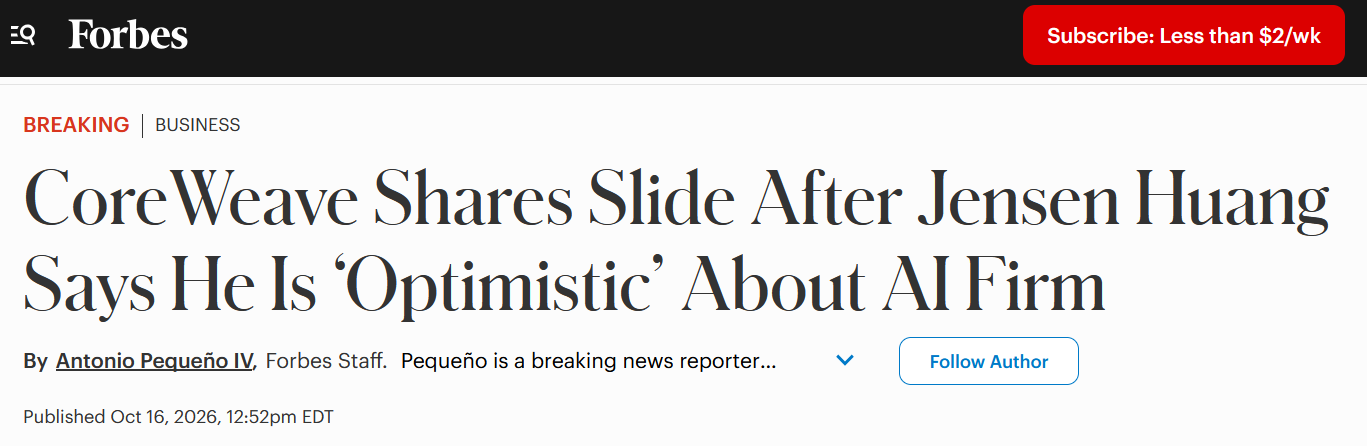
What makes the CoreWeave news systemic is that Nvidia CEO Jensen Huang did a press tour to say he was still optimistic about the company. On Huang’s optimism, shares immediately slid an additional 11%. CoreWeave alone doesn’t matter, but the $5 trillion Nvidia does. If Huang's attempt to promote the stock has failed, that’s a big deal.
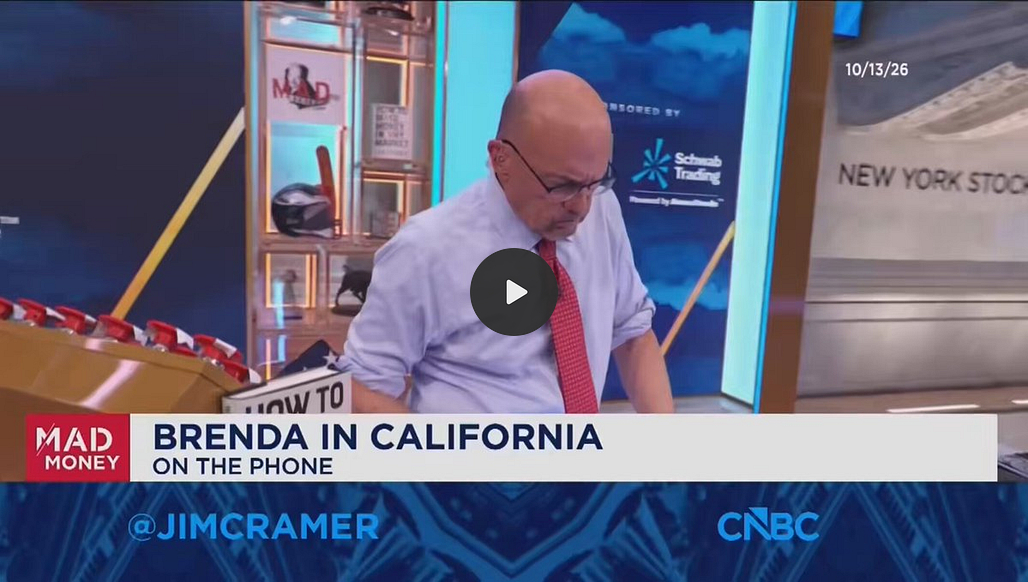
So it’s more red flags for one of the scammier corners of the AI industry. On Wall Street, there are rumors that multiple hedge funds betting on AI stocks have collapsed, and that this coming week things should calm down. Maybe. That’s often what happens these days. Corporate booster Jim Cramer sure thinks so:

Shay Boloor@StockSavvyShay
Jim Cramer was asked about $IREN and he said $CRWV is “the only one that I trust and want to be in” among neoclouds.
2:44 AM · Oct 14, 2026 · 224K Views
121 Replies · 53 Reposts · 764 Likes
But CoreWeave’s crash is another data point in flailing investor confidence that the AI buildout will produce returns.
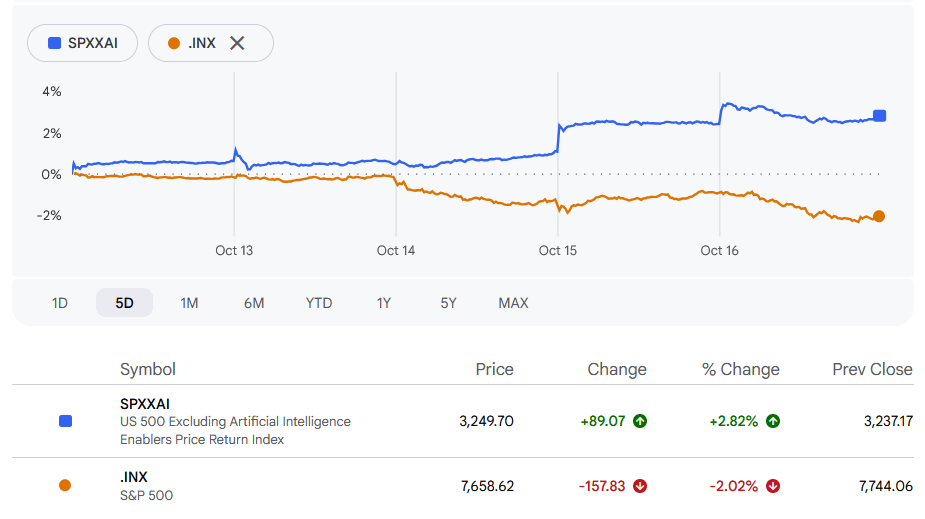
There’s another metric that investors look at that signals a broader wave of anti-AI sentiment. It’s called the ex-AI index, or SPXXAI, and measures the S&P 500 without the AI companies that have driven much of the broader market’s growth in recent years. This week, the ex-AI index outperformed the S&P 500 by 4.8%, officially the largest spread since 2024. So investors are shifting away from AI and toward the rest of the market, aka the “old economy.”
Of course, it may be more than a “rotation” of investment. Money managers are warning that sustained losses in AI stocks would be “really bad for the economy.” That’s because for money managers, the stock market is the economy. And it used to be the economy for most people was better represented by wages and perceptions of affordability. And that’s still mostly true but, as BIG noted in June, a bubble bursting will have lots of indirect and direct impacts on the economy in dangerous ways.
Until recently, pensions were controlled by institutional intermediaries, which meant employers and pension trustees managed the investment risk while workers themselves were more insulated. Today, retirement vehicles like 401(k)’s and IRAs rise and fall with the market, leaving retirement plans more directly exposed. For this reason alone, we’re a lot more vulnerable today to a market crash than we were a few decades ago.
Aside from the pension shift, a record number of Americans are exposed to the stock market. According to a 2025 Gallup poll, some 62% of Americans reported owning stock. Another metric is the percent equities alone make up of all financial assets held by individuals and non-profit institutions (i.e., the general public, not institutional investors), and in 2026 that percentage is sitting at an all-time high of 48.2%. In 1945, that exposure was 22.5%. In 1984, it hit an all time low of 10.7%.
This dynamic creates a toxic pressure. Stock markets are a reflection of corporate profits, and corporate profits are a reflection of steadily increasing prices. And the current economic moment instructs Americans that if they want financial security, they need to invest in the stock market, without making clear that this also requires setting aside frustration over rising prices. There’s a political trap, where high profits require higher prices, but higher prices cause political anger.
The upcoming midterm elections will be a referendum on Trump’s handling of the economy, and if every election since 2006 is instructive, Democrats are likely to retake control of either the House or the Senate or both. And sure enough, the early voting numbers look bad for the incumbent party. Trump has been banking on the fact the stock market has been going gangbusters, while the ongoing morass of the Iran War is maintaining persistent inflation.
The problem for Trump is that a higher stock market isn’t making up for flatlining wages and pocketbooks being squeezed at the checkout counter. The other political concern is longer term and existential. Let’s say the Democrats retake the House and the Senate this year, and perhaps also the Presidency in 2028. The AI bubble may be popping just in time for them to blamed for a flagging market.
That’s why some political commentators, including on the center left like Derek Thompson and Chris Hayes, are expressing that our political leaders don’t actually have control over commerce. A couple of months ago, Thompson and Hayes got into an irksome discourse that stuck with me, and it went something like this: People want prices to come down, but are unwilling to endure the process for prices to actually come down, because that process would probably look like a recession. Outside of a recession, the President and Congress don’t really have any power to affect prices otherwise.
It’s irksome for a number of reasons. Interest rates move prices up and down, particularly around things like mortgages, auto loans, farm loans and so forth, and so the powerlessness frame ignores that important price-setting power. State utility boards literally have price setting power over electric and gas and water bills. But the problem is really ideological; Hayes, Thompson and too many others embrace an idea that market forces are inevitable, and therefore commerce is somehow outside the reach of politics. That’s an uninspiring frame in the run-up to the midterms, if not a form of up-front apologia for the anti-governing class of elected officials.
There’s of course an alternative, equally convenient for the avoidant politician, which is to rely on the Fed to bring down inflation. And the other big news of the week was the release of a report showing that inflation hit 3.7% in September 2026, far above the Fed’s 2% target. So what will the Fed do? Well, they may hike interest rates at their end-of-October meeting, even though mortgage rates are already at a crippling 7.5%. And that’s because the only tool the Fed seems to have is one that aims to stem inflation by weakening labor markets. Never mind the same inflation report showed real wage growth declined—again—for the sixth straight month.
It’s not just interest rates and capital spending on AI. A big factor in persistent inflation is gasoline prices, which were up 9% in September due to currently losing a war with Iran. But seeing as gasoline isn’t an optional expense for most people who need it, it’s actually a poor measure of consumer purchase power and a better measure of the fact that people are being totally squeezed.
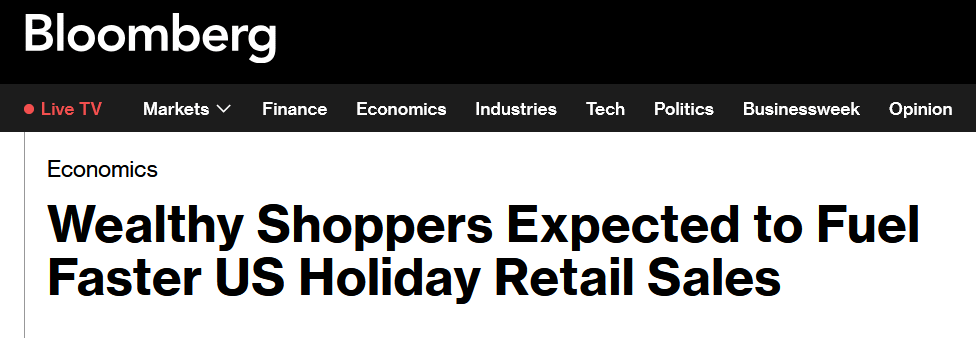
Meanwhile, one of the durable outcomes of the pandemic is that consumer spending now relies more heavily on the rich than ever. The top 10% income earners are keeping consumer spending afloat, while the bottom 80% of consumers are seeing their purchase power whittled away. I spend a lot of time explaining to lawmakers how AI-based and other algorithmic pricing tools are facilitating that harm by making collusion and market segmentation more efficient—which are things Congress can also address. Until then, Bloomberg confirms this trend is poised to continue through the holiday season.
And where are the top 10% of income earners making their money? Well, disproportionately from a rip-roaring stock market.
Coming back to the news about Chinese export controls, let’s be clear that the AI bubble, and the fantastical amounts of money being played with in the financial markets, are ephemeral. Actual productive capacity, and the ability to make real things we need like medicine and food and toys and cars and personal protective equipment, is what matters in the long-run. Right now, we aren’t paying attention to that, at all. Here is a chart that makes the point:
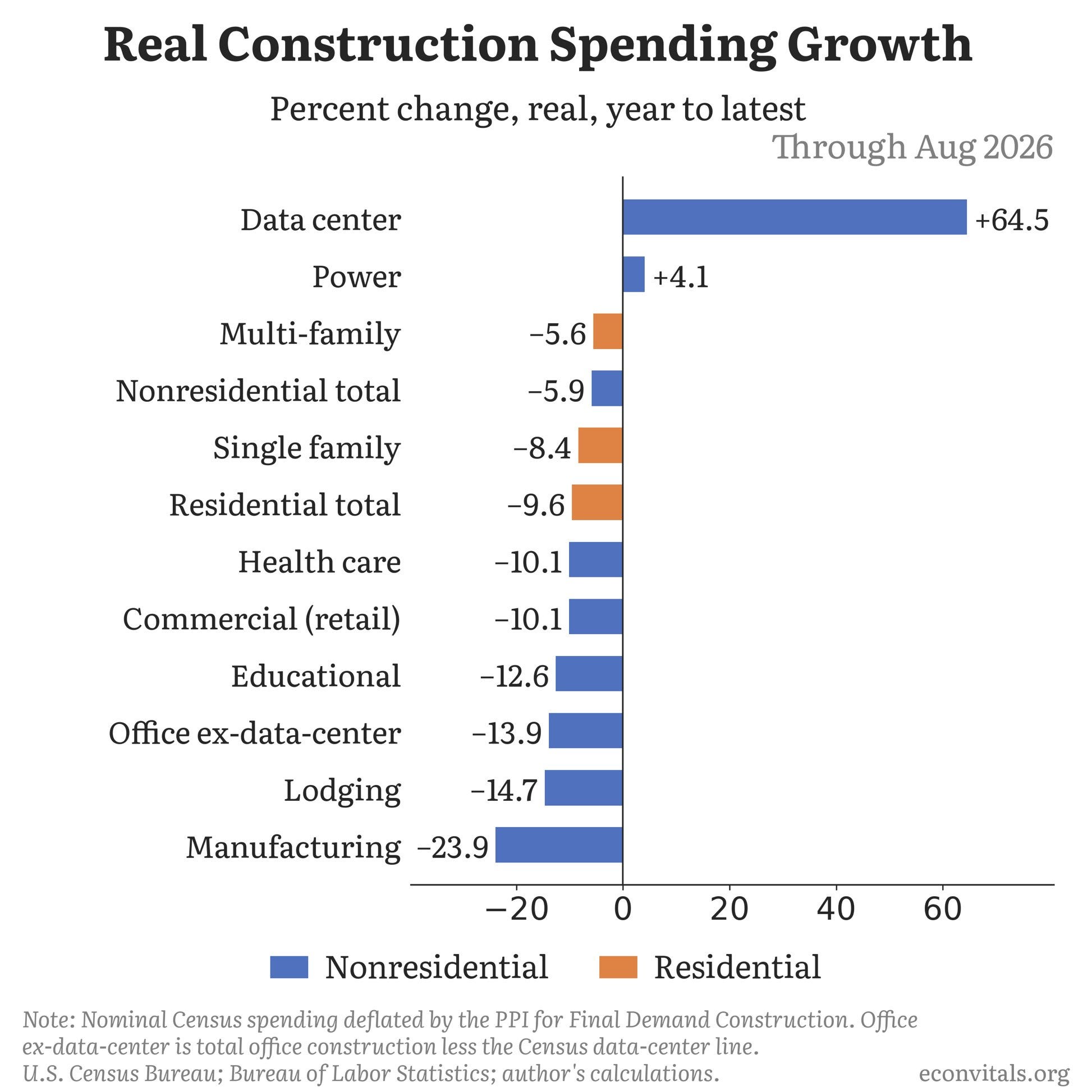
So again, let the AI bubble pop. Rather than see it as a harbinger of doom, recognize instead the political opportunity in weening our broader economy from its record-high dependence on the stock market, and to re-establish the link between wage growth and economic health. More importantly, recognize the value of returning some sort of reality to how our political and financial leaders must see the world.
And now on to the Good and Bad news of the week, including more fallout from the blocked Kroger-Albertsons merger as the two sue each other over who screwed up more, plus restaurants fear publicly opposing a the Sysco-Restaurant Depot merger because a major food distributor can take away their Michelin star. Oh and the money people in Hollywood finally notice there’s a problem, after the Paramount-Warner merger closes. More below, for paid subscribers only.