Welcome to BIG, a newsletter on the politics of monopoly power. If you’d like to sign up to receive issues over email, you can do so here.
Yesterday, Apple announced a set of new products, including an AirPod software update that allows these products to operate as hearing aids. But there’s something unusual about the innovation on display here, since it’s connected to regulation.
Here’s the Washington Post:
Apple said Monday that its AirPods Pro 2 will soon double as an FDA-approved hearing device. The long-anticipated move comes two years after the Food and Drug Administration green-lit the sale of hearing aids over the counter. Some brands such as Jabra already make traditional aids you can order directly online without a prescription, while companies including Sony started making earbuds with hearing enhancement for people with mild to moderate hearing loss…
Apple said that after FDA clearance in the fall, the hearing features will be available via a software update. The AirPods Pro 2 will cost $249.
To set up hearing enhancement, users can take a hearing test inside the Apple Health app that’s based on the pure-tone test used by audiologists. The results of the test automatically adjust your AirPods’ sound levels, or you can download the test as a PDF to show an audiologist. (You can also input existing hearing test results into the Health app.)
That’s excellent news. It’s easy to think, how brilliant of Apple to do this, considering that prescription hearing aids used to cost between $3-5k per ear. But if that’s your instinct, and it is the instinct of many, that’s a reflection of ideological capture.
Apple engineers turning AirPods into hearing aids is wonderful, but it’s not a uniquely difficult endeavor. In fact, what’s happening here is that a set of elected leaders opened up a market closed off by a cartel that had secured a comfortable position, shielded by the Food and Drug Administration. And engineers, many of whom care deeply about hearing, acted in this new legal space to create tools to help people live better lives.
In 2021, I wrote up the story in a piece called Silencing the Competition.
Why are hearing aids so expensive? One reason is that the Food and Drug Administration requires a prescription to get one, making it hard to bring cheaper and more innovative devices to market. Hearing aids had traditionally required lots of adjustment and fitting from a specialist, and while specialists offer critical help, a hearing aid is basically just a microphone in your ear. That technology is much easier for individuals to set up with smartphones and other innovations in consumer electronics over the last ten years. "It just seems crazy that hearing aids haven't become much less expensive, much like every other type of digital technology, and much more user friendly," said Christine Cassel, the former CEO of the American Board of Internal Medicine.
Since 1993, advocates have been calling for the FDA to loosen these tight regulations, and the calls got louder over the years. In 2015, the President’s Council on Science and Technology issued a report seeking to make these devices more widely available. The next year, the National Academies of Science, Engineering and Medicine issued a similar report.
Finally, in 2017, Congress acted. Led by Democratic Senator Elizabeth Warren and Republican Senator Chuck Grassley, Congress passed a bill titled the Over-the-Counter Hearing Aid Act, mandating that the Food and Drug Administration allow hearing aids without a prescription. [And Donald Trump signed it.] The goal was to remove a barrier to entry, and introduce new cheaper competition. Sure enough, Bose soon sought to enter the market, and there are rumors of Apple coming in as well. The bill didn’t pass without opposition; the hearing aid cartel dumped cash into front groups, but Congress ignored them and moved the bill, which then-President Trump signed into law.
The law imposed a deadline for the FDA of 2020, but FDA officials tend not to think about competition or pricing as relevant to their job. FDA regulators tend to like high prices for medicine, since they see high profits as helping to finance more research. This perspective is clearly problematic, but the FDA operates very much like a priesthood, similar to the Federal Reserve. So the FDA simply refused to write the law, until the Biden administration pressured them with an executive order a few months ago.
The FDA blocking firms from the market, however, isn’t the whole story. There’s also the vertical integration in the industry. There are six firms who controlled the global market: WS Audiology, Amplifon, Sonova, GN, Demant, and Starkey. In the U.S., they do so by building out power among insurers.
In the case of hearing aids, several of these firms actually have subsidiaries that manage the hearing part of health insurance. WS Audiology, for instance, owns TruHearing and Hearing Care Solutions, which runs health care plans and discount plans for Medicare Advantage insurers, including Humana, BC/BS, Anthem, Aetna, Cigna, etc. So if you have health insurance with, say, Aetna, and you need a hearing aid, Aetna will send you to a hearing aid manufacturer to tell you whether you need a hearing aid. Surprisingly, they often answer, “Yes, and you need an expensive one!”
But how do these hearing aid makers manage to do so credibly? It’s simple. These manufacturers also own or affiliate with networks of audiologists and hearing aid specialists. Starkey, for instance, not only owns a benefit management company Start Hearing, but runs the hearing aid specialist network Starkey Hearcare. So most people with a hearing loss problem will use their insurance, which, controlled by a hearing aid maker, will send them to an audiologist who is also employed by that hearing aid maker. Most people won’t know about these embedded conflicts of interest, or the various rebates, commissions, and kickbacks that are likely involved.
The FDA rules allow over the counter hearing aids for people who have moderate hearing loss, not severe hearing loss. Losing your ability to hear can be something fixable with a hearing aid, but it can also be a condition that requires treatment requiring the services of an independent audiologist. Fundamentally, the cost of hearing aids should be a relatively small part of the picture. But the hearing aid cartel has sought to make it the whole picture. And then we changed our laws.
If you want a video version of this story, I produced that in 2021 as well.
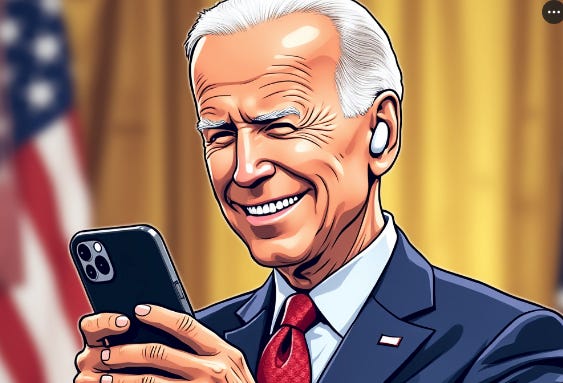
How we deploy technology is not a function of engineering and science as much as it is how those interplay with law, in this case a law that fostered a hearing aid cartel and then a different law that broke it apart. So it’s not outlandish to say that Joe Biden designed Apple’s new hearing aid AirPods, with an assist from Elizabeth Warren, Chuck Grassley, and Donald Trump. It’s just what happened.