Home » President Trump Said He Just Legalized Cheaper, Smaller ‘Cute’ Kei Cars In America
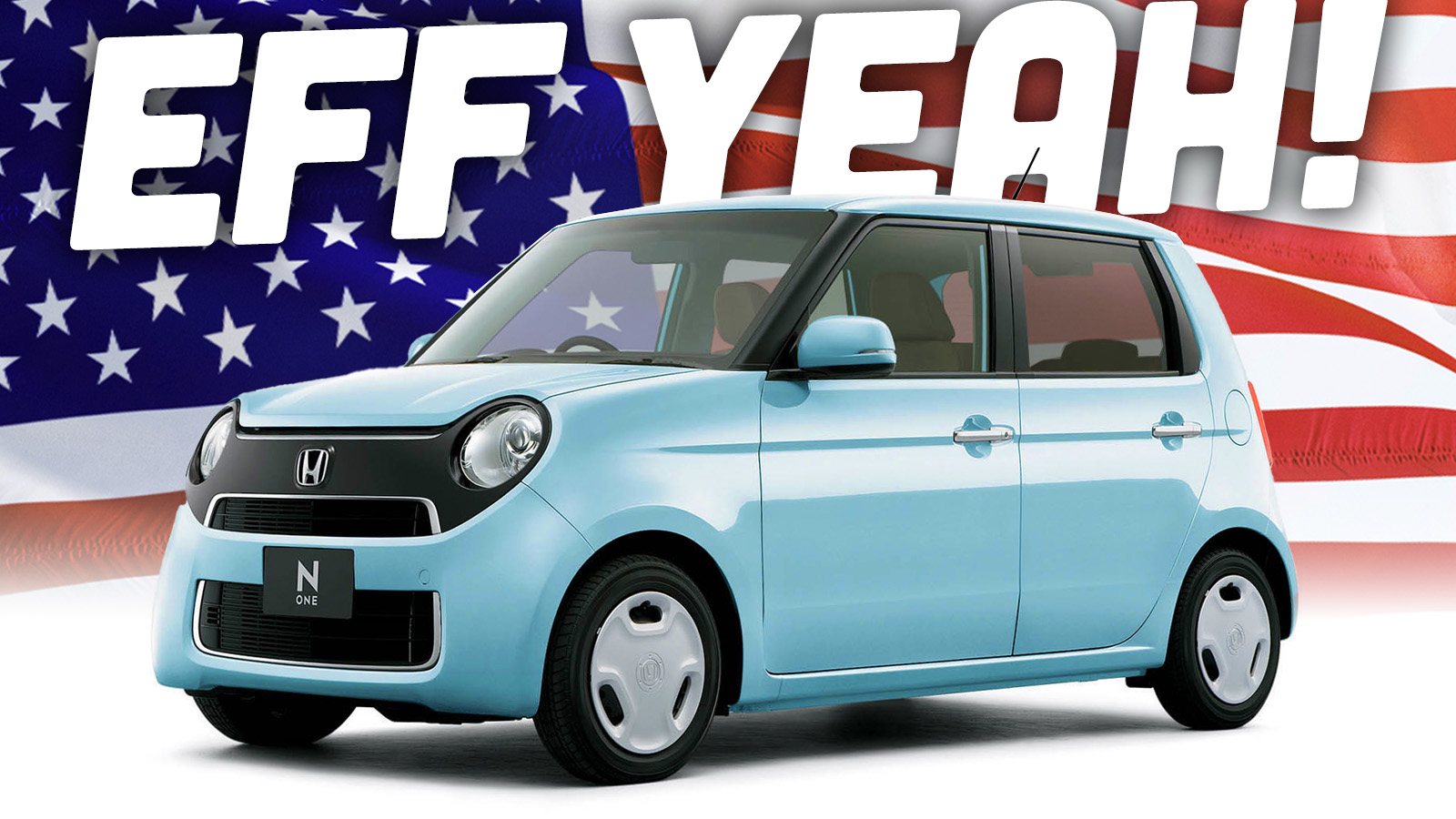
It’s no secret that kei car enthusiasts have been having a rough time. From tariffs on imported cars to various states waging war against these tiny 25-plus-year-old JDM cars, it’s recently grown harder to import a tiny, sub-660 cc car to America. However, if the White House gets its way, enjoyers of small cars might not have to wait to import them, because the government wants to see them made and sold in America.
On Wednesday, the White House held a press conference where President Donald J. Trump announced less stringent Corporate Average Fuel Economy standards.


However, at roughly 11 minutes and 51 seconds into the livestream, Trump announced some completely unexpected news. Here’s the unedited quote, straight from the President:
One of the other things we’re doing—it’s separate from this meeting but I think everybody here would agree with it—if you go to Japan where I just left, and if you go to South Korea and Malaysia and other countries, they have a very small car—sort of like the Beetle used to be with the Volkswagen—they’re very small, they’re really cute, and I said “How would that do in this country?” And everyone seems to think good but you’re not allowed to build them, and I’ve authorized the secretary to immediately approve the production of those cars, so you’ll be able to buy the—they really are, some of them are really beautifully actually if you take a look. Honda, some of the Japanese companies do a beautiful job, but we’re not allowed to make them in this country and I think you’re gonna do very well with those cars, so we’re gonna approve those cars.
Present at the conference was Stellantis CEO Antonio Filosa, who stated, “Thank you very much also for this great news of the kei cars,” to which Secretary of Transportation Sean Duffy responded, “Yes.”
Whew, there is a lot to unpack here: questions about what barriers actually exist for kei cars in America, what changes are actually being made to permit new kei cars on American roads, whether domestic production of kei cars is viable, and, of course, whether this pledge will actually play out as promised. We don’t want to count our chickens before they hatch, so let’s take a look at several of these barriers.
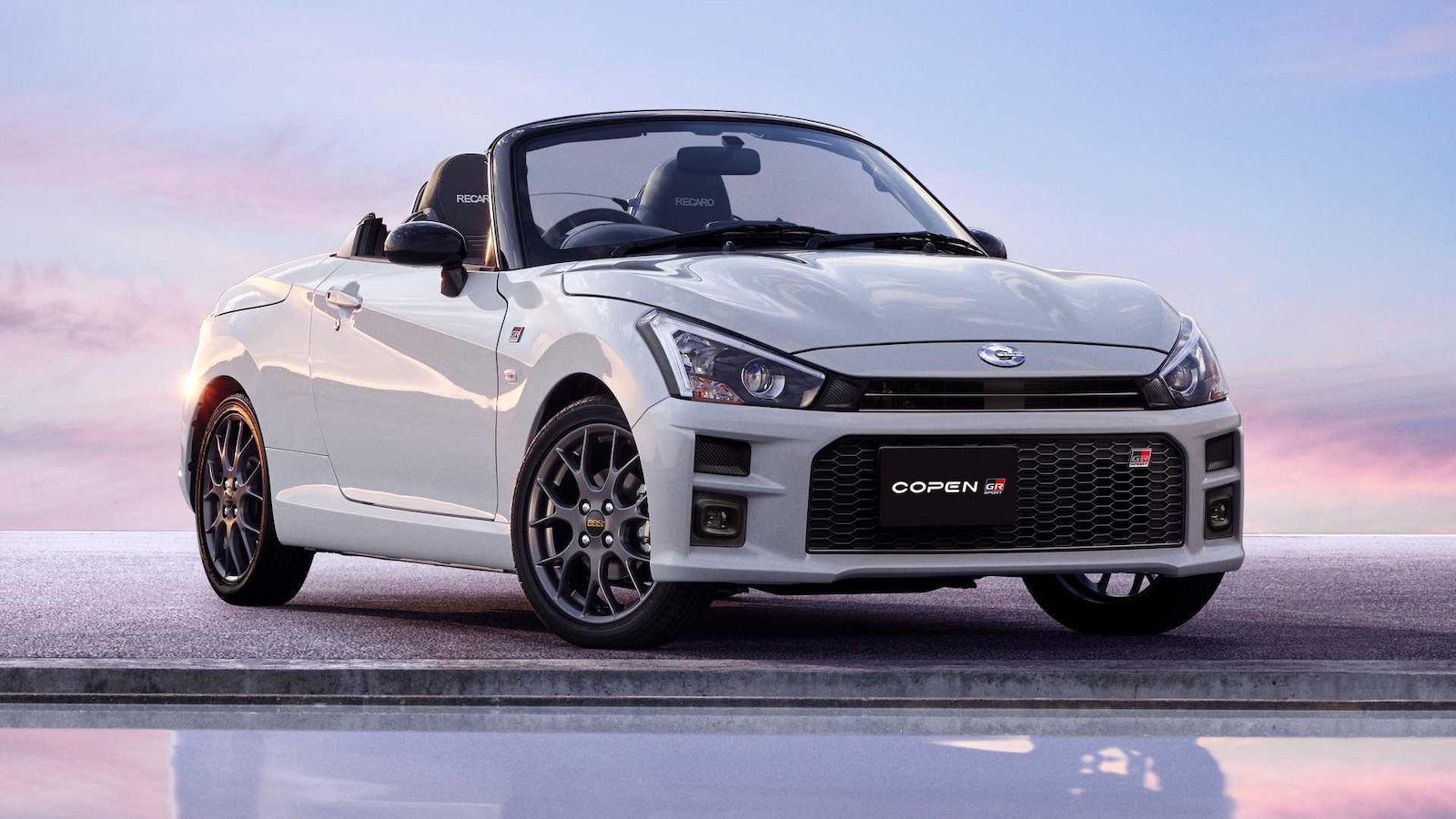
One solid argument against kei cars is that some of them might not be as safe as cars already sold in America. After all, U.S.-market cars must pass unbelted occupant crash testing, a strenuous process that’s kept certain cars away from these shores. The Alpine A110, for example. In addition, Federal Motor Vehicle Safety Standards deviate from the UNECE standards most of the world uses, so some market-specific changes would be necessary. Headlights would need to be changed, amber front retroreflectors would need to be added, that sort of stuff. While the Mitsubishi i-MiEV proved it’s technically possible to sell a modified kei-class car in North America, there are a few reasons why we haven’t seen many of them sold new in America.
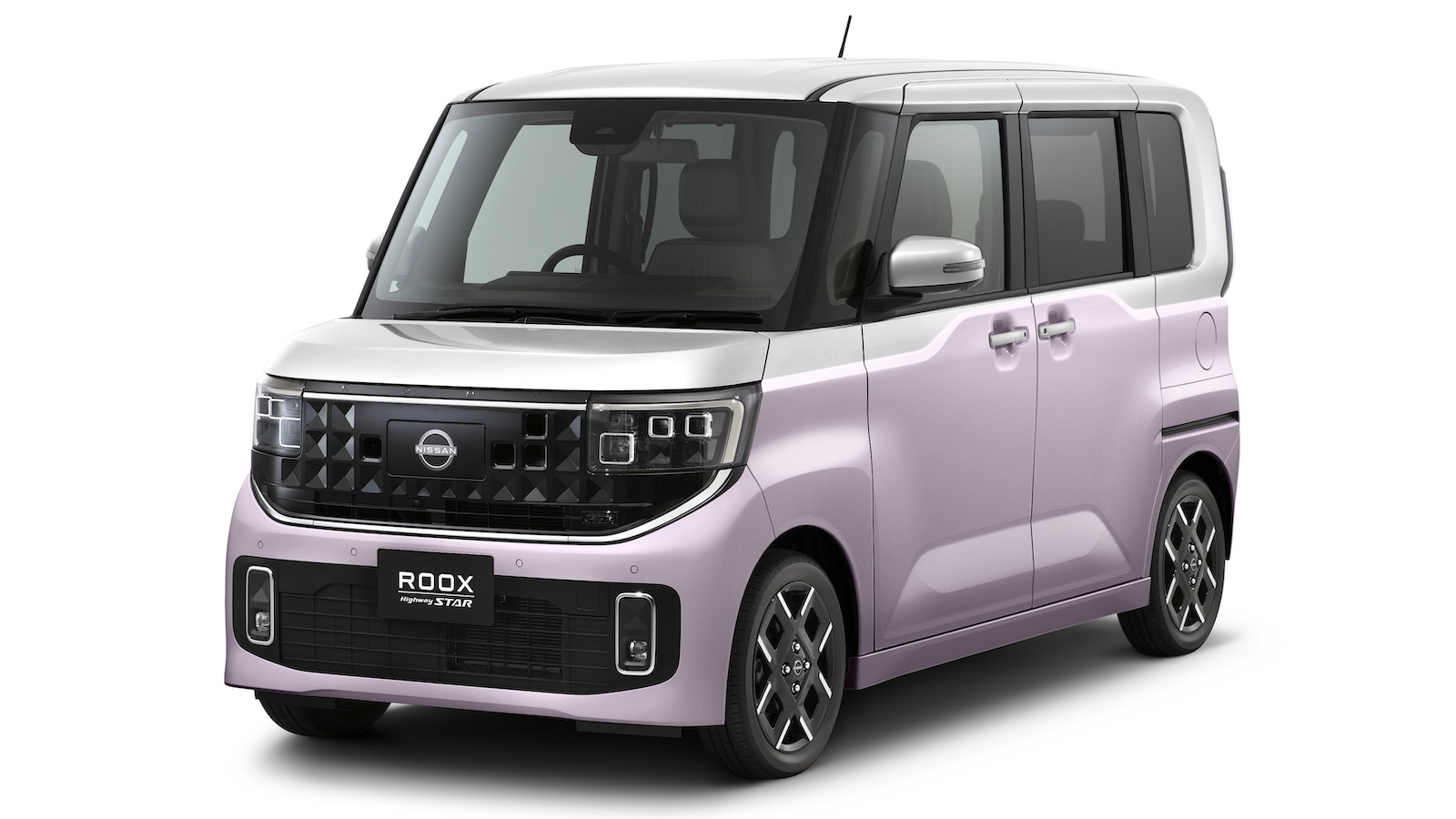
Firstly, let’s talk about the EPA’s footprint rule for a second. From 2008, Corporate Average Fuel Economy standards included a modifier based on a vehicle’s footprint, calculated using its wheelbase and track width. Under this structure, larger cars could emit more pollutants while smaller cars had to emit fewer pollutants. For example, in 2011, cars with a footprint of less than 40 square-feet would’ve needed to achieve a CAFE rating of 31.2 MPG, while cars with a footprint above 55 square feet would’ve needed to achieve 24 MPG. Those numbers don’t seem like a huge deal, except that at the time, the proposed standards for 2025 were 61.1 MPG and 45.6 MPG, respectively. While the CAFE MPG and the number on a window sticker aren’t the same, the footprint rule makes it somewhat punitive to sell small cars in America.
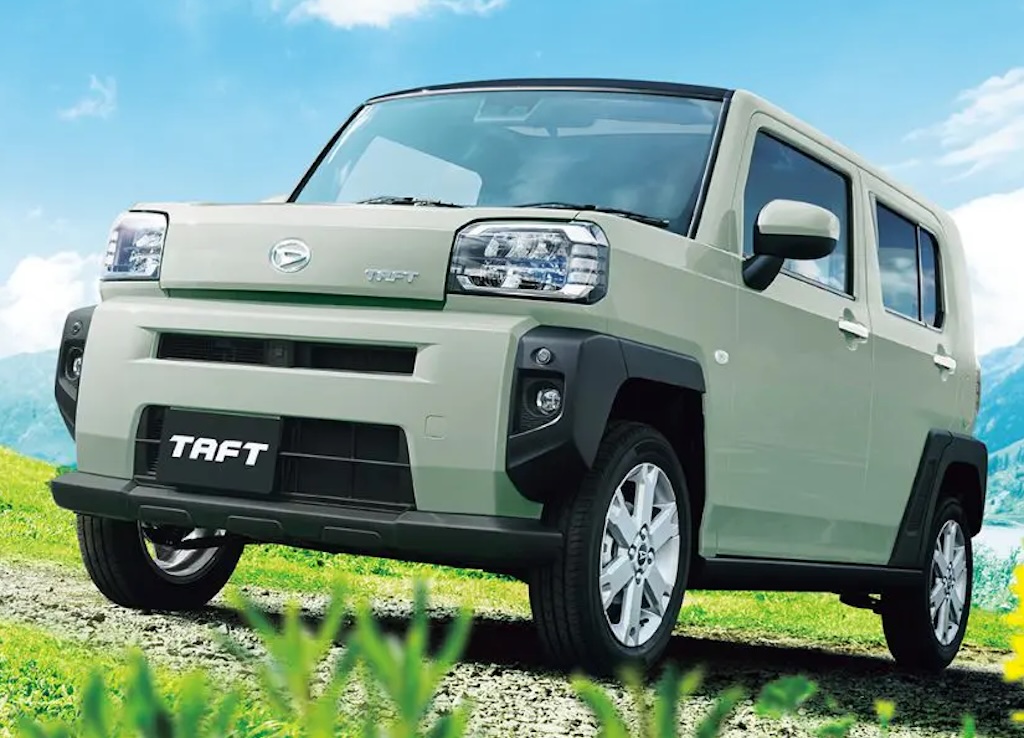
Reading between the lines, it certainly seems like this proposal would legalize U.S.-built kei cars, and that’s where another potential sticking point comes in. When we’re talking about truly inexpensive cars at the bottom of the market, labor costs make up a considerable portion of their wholesale prices. If kei cars were to be built in America, they might not be as cheap as some people hope. At the same time, who knows if imported kei cars will be legal? Given current pricing plus tariffs, an $11,390 Honda N-One could be Nissan Versa money if it were to land in America.
The Autopian reachd out to the DOT about all of this, and it didn’t really answer any of our questions, so much as repeated what Secretary Duffy said on CNBC the next morning. This is exactly what it sent us:
Secretary Duffy on CNBC today“He [the President] called me after the meeting, actually, and said, let’s change the rules. And so I worked with NHTSA. We’re in the process clearing the deck. Listen, if there’s a market for those vehicles, I want to give our manufacturers the opportunity to build those cars. And so we are and it’s going to clear the deck, clear the rules and let them build those small cars. And again are they going to work on the freeways? Probably not. But again, vehicles that work in cities and if that’s where you drive, it could be a great solution for you. And by the way, much more affordable than other options that are on the market today.”

Then we get to the final question: Would the general public even want kei cars in America? While inexpensive cars have seen a resurgence in popularity, kei cars are an order of magnitude smaller than even a Nissan Versa. We’re talking 11.2-foot-long cars with engines displacing less than one liter and zero-to-60 MPH acceleration times usually in the double-digits. They’re economical and inexpensive, but a used Camry is physically a whole lot more car. It can cruise on Texas’s 80 MPH toll road without breaking a sweat and comfortably seat three adults across the rear bench, useful stuff in a nation of long commutes, high-speed roads, and relatively inexpensive fuel. While a domestically-made kei truck would be useful for urban deliveries and light farm work, kei-class passenger cars are a harder sell.
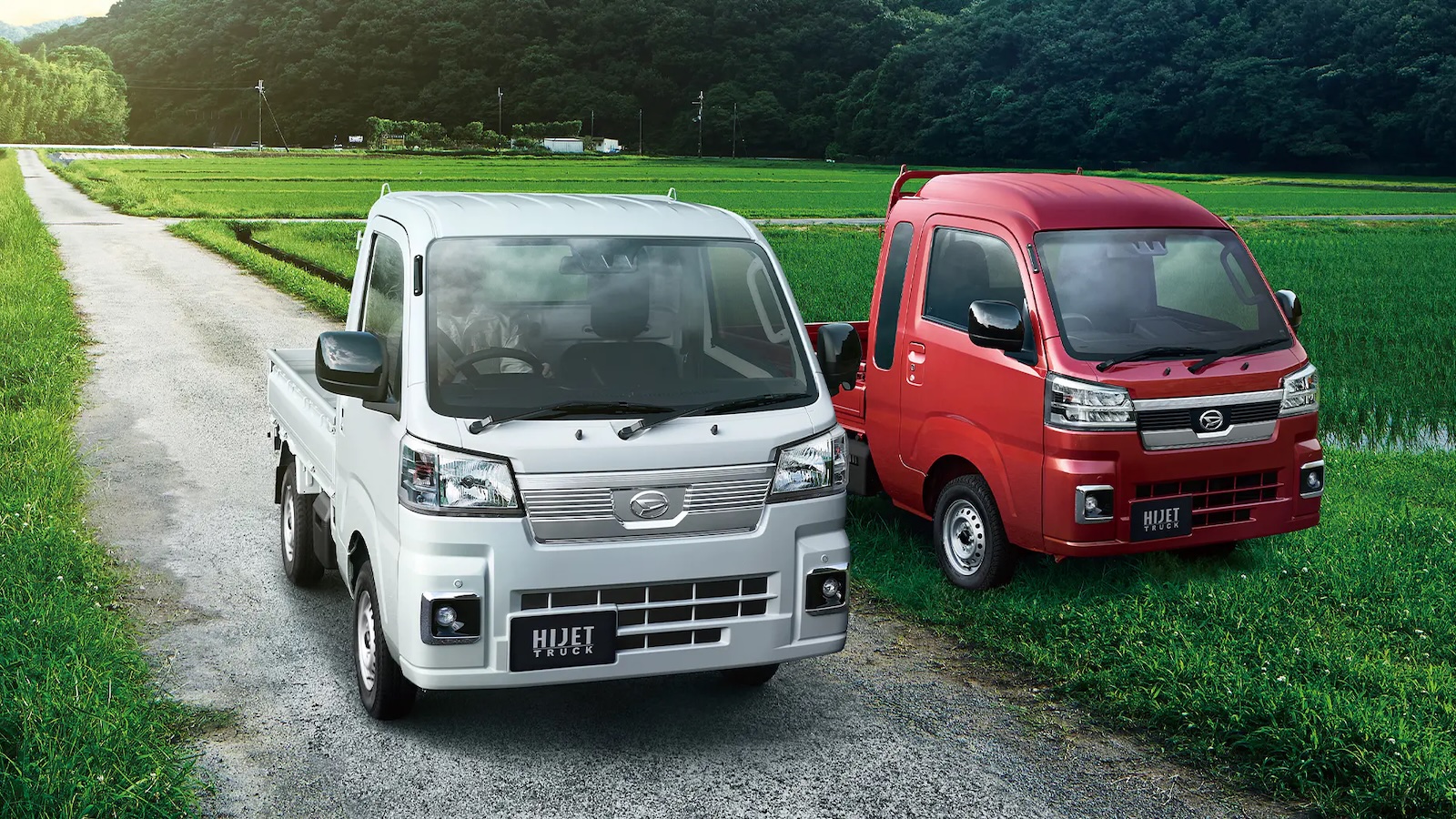
While it’s certainly interesting to hear the White House paving the way for U.S.-market kei cars, the battle to bring truly small cars back to America has only just begun.
Even after that DOT response, it’s still not clear what barriers would need to be lowered or have been earmarked for alteration in order to sell new kei cars in America, and we still don’t know if consumer demand truly exists outside of cities and some commercial uses. Needless to say, we’ve reached out to Honda and Toyota for comment and will update you should we hear further developments.
Top graphic image: Honda, DepositPhotos.com
[Editor’s note: I emailed the DOT yesterday when this story dropped, and it got back to me today (Thursday, the 4th). I’ve added its statement above. – Brian]
Inline Feedbacks
View all comments
To everyone crapping on the idea, you forget that between 2008 and 2020 interest rates were close to or literally 0%. It cost you very little to finance way more vehicle than you needed. We don’t live in that imaginary world anymore. At 5-9 % interest, the actual cost of the vehicle matters much, much more than it used to.
Additionally, the used market is filled with problematic, high technology vehicles that are very expensive to maintain at old age. The average age of vehicles on the road is at record highs.
If cheap, and mechanically simpler cars are made legal to buy, there is a large market that has been completely ignored out of regulatory compliance. You’re not courting the modern egg car buyer, you’re courting the 20 something that is still driving a 2004 Sentra they bought in highschool and are praying it doesn’t break down driving to work this morning. Same market segment the Slate truck is targeting.
Member
Balloondoggle
11 days ago
Reply to RallyMech
Yes, that “beginner” market needs a lot of help. My son is driving a 2010 Soul and wants to replace it, but anything in his price range of used cars is no better. I’d love to see him be able to get something new(er) at a reasonable price, and until he has a family he has no need for a bigger car. His favorite at the moment is the Fiat 500 Abarth, so I’m sure he’d love a kei car if he could get one in better shape than what he has now.
The 20-something without a huge paycheck crowd really does need reliable transportation so that they don’t lose the crappy job they have managed to secure. For that matter, a retired empty-nester has no need for a big car either, and on a fixed income something small, cheap, and easy to maintain would be a boon.
Reply to Balloondoggle
Agreed. We’re missing simple cars these days, such as the first gen Honda Fit. What we still have available is the spiritual successors to the Chevy Cruise, which was cheap for all the wrong reasons and over complicated in the worst ways.
Reply to RallyMech
You can easily get a refreshed (2018 – 2022) Chevy Spark with less than 100K miles for less than $10,000.
Look a little harder and you can get that down to $7K to $8K for a car made in the 2020’s. (Shopping for Sparks at the moment)
Reply to *Jason*
Yes a COVID era car that’s been through every round of GM cost cutting is totally a great idea. Make sure you get one with the CVT for extra spice. /s
The best use for those Sparks are drag racing push cars, just like a Smart ForTwo.
Reply to RallyMech
The Spark is a simple car – with a simple 4 Cylinder NA engine, available with a 5 speed manual. I had a 2016 Spark EV and it was a fine commuter.
Don’t want a Spark? Buy a Sonic, Mirage, Versa, Kicks, Corolla, Yaris, Fit, Trax, Encore Fiesta, Accent, Rio, Soul, Sentra ….
There are literally thousands of small cars and crossovers 2018 or newer listed for sale with less than 100K miles for less than $10K
Reply to RallyMech
No, I’m not forgetting the short and temporary period of time when interest rates were artificially low.
I also remember when I bought my first new car in 2000 and paid 9.9%. I also remember when my parents were paying 15% to finance a car and the same for a 30 year mortgage.
I also remember buying simple cars from the 80’s as my first car in the 90’s and they were absolute total garbage that fell apart in less than 100K miles.
Member
Urban Runabout
11 days ago
Reply to *Jason*
My first new car was a 1989 Mercury Tracer
Financed at 13%.
George Danvers
10 days ago
Reply to Urban Runabout
I’m curious if you liked it. I had one ( I bought it slightly used ) and loved it … until the heater stopped working ( I live in Wisconsin ) and no one, including the dealer, could figure out how to fix it.
Member
Urban Runabout
10 days ago
Reply to George Danvers
It was a really good car – although slightly boring, as Ford/Mercury damped down the controls to the point of numbness.
I should have kept it for longer than I did.
Reply to *Jason*
You’re making my point. We don’t live in the infancy of computers anymore, but we do have the interest rates. The average cost of vehicles ($50k) is ten grand more than an inflation adjusted average 2014 vehicle. The bottom of the market has been ignored.
Reply to RallyMech
The average (mean) cost of a new vehicle is pretty meaningless as it is heavily influenced by vehicles on the high end and a shift by buyers up the chain. The cheap cars are still there – people just are buying fewer of them.
The median would be more useful and it is quite a bit lower than the mean (which is likely why it gets no press)
The bottom of the market isn’t being ignored either. However, inflation and rising wages have moved that bottom to $20,000.
In 1995 a Geo Metro was GM’s cheapest car. It cost $8,395 when the median US household made $34,080. That is 12.8 weeks of income to buy a Metro.
In 2024 the Chevy Trax was the cheapest car GM. It started at $20,490 and the median US household income was $83,730. That is 12.7 weeks of income to buy a Trax
30 years later and the bottom of the auto market is in the same place relative to average (median) income. That buyer is also getting a LOT more for their money today than in the past.
Reply to *Jason*
Does that median include incomes like Elon’s?
I don’t think most people grasp how close to the edge most people are now.
What do you think people that broke can finance anyway?
First time I visited Austin, ages ago, everyone either made $3 an hour or comfortable money for a tech company.
Not much in between.
Reply to DNF
Yes, the median includes Elon Musk although Musk has little effect on the median.
The median is the number in the middle of a group. Line every income up from smallest to largest and then pick the one in the middle.
The mean is what most people think of as the “average” and that is adding up every income and then dividing by the number of incomes.
Say we have 5 car sales. $20K, $25K, $30K, $35K, $200K.
The Median is $30K
The Mean is $62K
Reply to *Jason*
I thought so.
I took engineering math, but don’t need it often.
Either way, it misrepresents the problem of what more appropriately should be called subsistence workers.
No way to build up savings, no fair deals on insurance or loans, and often owning cars they can’t afford to repair.
Reply to DNF
The working poor aren’t new but they are a bigger share than in the past. The data shows the pattern you mentioned in Austin.
While the median is the median the distribution is not as even as in the past. The number of middle class households is shrinking and those people are splitting into the working class and upper income. More are moving up than down the income ladder which moves the median up but doesn’t change the reality for the people being left behind.
At the same time growing income inequality is not a problem for automakers to fix.
Reply to *Jason*
They might find it wise to address the loss of entry level customers before someone outside the industry tries to do it for them.
As long as USA is a country essentially without mass transit, lack of affordable transport affects everything else.
Reply to DNF
The way to address a customer that cannot afford a new car is to sell them a CPO used car. It isn’t selling them a new car at a loss.
Lack of affordable transport for workers is an issue. In other parts of the world it is addressed by companies running their own bus lines to transport workers to and from work.
Companies address their own concerns. It is up to government to address larger societal concerns.
Reply to *Jason*
I asked this the last time there was a mean new car price because medians are generally more useful when there’s only outliers in one direction (which is often the case when you’re looking at a data set of only positive numbers) and while I don’t remember the exact answer the median price was lower, it was not markedly so – like maybe $1,000.
Reply to B L
I have not seen a median new car price for at least a decade – can’t find one today either.
What I can find is averages by market segment which show how much the US fascination with driving full size trucks skews the numbers and how much extra buyers are paying to drive a crossover instead of a sedan in the same class size.
$24,061 – Subcompact Car
$27,003 – Compact Car
$30,594 – Subcompact SUV / Crossover
$33,524 – Midsize Car
$36,517 – Compact SUV / Crossover
$48,650 – Midsize SUV / Crossover
$64,780 – Full-Size Truck
$77,568 – Full-Size SUV / Crossover
$132,999 – High Performance Car
In the Compact class choosing a crossover over the sedan we used to buy adds $9,514 on average. Step up to midsize and the penalty is $15,126.
Member
Reply to RallyMech
This says nothing about CAFE standards which have encouraged the move away from cars, especially compact/sub-compacts.
Reply to Noahwayout
You are absolutely correct. CAFE was very punitive to small cars, despite being the most efficient.
Reply to RallyMech
I would like to have a car built exactly like the early Honda Insight, but more functional.
Possibly just a gas engine?
Reply to DNF
In order to not hurt a manufacturer’s CAFE rating, something that small would have needed to hit high 50’s, low 60’s, for combined MPG rating.
Reply to RallyMech
My friends worn out Insight does 50 on long trips, did 80 routinely when new.
But I agree that rule is clearly skewed.
Reply to DNF
That’s just it though. Getting 50 when the rules say you need 60, hurts your fleet average way more than a significantly more profitable truck getting 24 instead of 25.
And that’s the insight being a hybrid, not a pure ICE vehicle.
Reply to RallyMech
My friends Insight has a rescued battery pack because the car will not operate without it, but the hybrid part is not really in play.
50 mpg in a car with hundreds of thousands of miles isn’t terrible.
On flat ground at highways speeds I wouldn’t expect benefit from the hybrid part anyway.
80 mpg was routine early days.
And the Insight build quality is holding up better than my 2005 4 cyl Camry.
Member
Vetatur Fumare
11 days ago
Reply to RallyMech
Yep; a 2005 Corolla is worth more or equal to a BMW 5-series of the same vintage.
Mercedes Streeter
11 days ago
Late to the party, but I’m just not seeing it. The Honda Fit was one of the best selling small cars in America and even it couldn’t sustain enough sales for Honda to keep it around. America had tons of small and tiny cars not too long ago. There was the Ford Fiesta, Mazda 2, Toyota Yaris, Chevy Sonic, Chevy Spark, and probably more that I’m forgetting. None of them are around anymore. Even the Mitsubishi Mirage eventually kicked the bucket.
Smaller than those? The Scion iQ, Fiat 500, and Smart Fortwo. No member of that trio could say they had good sales. I highly doubt there’s a long list of people who want a tiny 64 HP car that would feel winded at realistic American highway speed (75-80 mph) and will disappear in front of the hood of a pickup truck.
I guess an American Kei could have a larger engine. But you have to remember that these cars already have to be modified to our standards. Then, in order to dodge tariffs, these cars will have to be built here. I doubt this would be done cheaply enough to keep a Kei at an attractive enough price.
Americans might say they want a cheap “people’s car,” but we clearly don’t buy enough cheap cars for automakers to care. I’m not convinced that bringing even smaller cars here is the antidote to that, and I say that as someone who adores and owns Kei cars.
Member
Utherjorge, who is quite angry about the baby FJ
11 days ago
Reply to Mercedes Streeter
maybe would people go in for a small commuter? I would. I signed up for the slate but am about to snag a Corolla, so I don’t know
Reply to Mercedes Streeter
Honda was selling over 50k Fits a year until 2017 when it started to slip in sales, but I’d imagine there were other factors that came into play for that time, and the average person certainly can feel that we’re in a recession period more like the late 00s and early 10s when they were at their peak sales. People aren’t lining up to buy cheap people’s cars because they barely exist anymore. The options for cars under $20k aren’t particularly great either, just boring compact sedans of dubious quality that scream I BOUGHT THE CHEAPEST CAR; the kei stuff gets a lot of envy because they’re still fun despite being practical and economical options.
Reply to Bite Me
50K a year is not enough to bother making unless the vehicle has a hefty profit margin.
The Chevy Trax is a cheap car – one of the cheapest in the USA and it sells 200K a year. It sells because it is in the form factor that people want to buy and is actually a decent car. Add in the other variations as GM is selling 350K on the platform with all of them starting at less than $25K
Last edited 11 days ago by *Jason*
Reply to *Jason*
Make it a loss leader, I don’t weep for low margins for the automakers. The Fit sales still represent hundreds of thousands of buyers who need cars and like the small form factor. The Fit especially was a long lasting reliable car that’s great to have in the used market as well. I doubt we’ll see as many Trax last as long as most Fits (I’m not sure I see that many on the road currently but they’re so boring they might just slip by). Who knows how many others get scared away from smaller cars because of the fucking ridiculous behemoths on the road now anyway, in regards to what people “want to buy”. I’m on board with anything that might help deflate SUV and truck proportions in this country, maybe making small cars cool will be part of the solution.
Reply to Bite Me
Why should a company make a vehicle and sell it for a loss? Please explain the logic.
I do weep for low margins – as I work for an automaker and my bonus is directly tied to our percentage return on sales. This year it will be basically zero due to tariff costs.
The Fit does not represent hundreds of thousands of buyers. If it was selling hundreds of thousands a year it would still be on sale. The Fit average 51K per year. The 3rd gen saw a little bump then a steady decline to less than 33K when Honda pulled the plug in 2020
Clueless_jalop
10 days ago
Reply to *Jason*
I believe the “hundreds of thousands” they were referring to was the Fit’s overall sales, not annual.
But I think you’re both letting your differing perspectives block you from seeing the other person’s point. Honda “only” sold 50k Fits a year, sure, but that was just in the US (and if you average that out, that’s still a thousand Fits per state per year). The Fit was sold in several markets and was a fairly popular choice in all of them, so Honda could spread the development cost out over hundreds of thousands, if not millions of units. And that’s also hundreds of thousands if not millions of people who got a taste for Honda’s products, and might come back at a later date and buy another Fit, or upgrade to an Accord or a CR-V.
But you’re also correct that selling a car on slim margins to a small market is financially unsustainable. If Honda were just selling those 50k Fits per year in the US, and didn’t have other markets or other cars that it shared parts with to back it up, then it wouldn’t last. The price would go up, the sales would go down, and sooner rather than later, production would cease.
So the problem isn’t any one thing (demand, cost, whatever), but it’s that all of those things combine to make it such that unless you have an existing product that you can easily make legal to sell in the US (Fit, Mirage, Versa, Yaris), it just isn’t going to happen. But if you do have that, then we’ve proven that it does work.
Reply to Clueless_jalop
My perspective is from working for an automaker and seeing how the sausage is made. Models, Trims, Options – they get cut when they stop making a margin that makes them worth spending the money to make them. Generally that happens when it come time for a redesign or regulations change and a company has to decide whether or not it makes sense to spend many millions and years of R&D to keep selling that car.
The most recent example I was personally involved in was cutting the manual from a model. Happened during the redesign and the manual was 3% of sales. Keeping the manual would have added cost to the automatics – more than the profit from selling the tiny number of manuals. Numbers went up the chain of command and a decision came down to kill the manual. People like to come up with conspiracies but it comes down to dollars and cents.
Yes, a model like the Yaris was / is sold in other markets. That helps with economy of scale and makes it more viable in a small market like the USA. However, it only helps. Honda can’t sell a European or Japanese spec Fit in the USA. It takes many millions of dollars and years of R&D to make a version that meets US regulations. Companies expect a return on those millions and it is really hard to make the numbers work on the low end.
The best thing that could happen for fans of small cars is if the US either harmonized our standards with the EU or at least allowed EU compliant cars to be sold in the USA. If we could just ship a EU spec LHD car to the USA without all the extra cost it would make many more cars economically viable here.
Clueless_jalop
10 days ago
Reply to *Jason*
Indeed, our differing safety regulations do make things quite difficult. I mean, I’m all for letting the “local” government decide what the “local” population needs, but I really don’t think we’re doing anything different from the Europeans or Japanese that’s appreciable.
Reply to Clueless_jalop
When I was doing interiors we had 6 different versions of the dash for different crash standards and LHD vs RHD.
For safety the EU is ahead as they assume the front seat passengers will wearing a seatbelt while the USA requires automakers to restrain a unbelted adult male. This leads to more powerful airbags that injure small framed people and changes in the lower dash that increase injuries to the lower extremities for belted passengers.
Much has been said about how much better EU standards are for lighting.
Emissions is a bet of a mixed bag. They have stricter regulations for gasoline cars as they have PM and PM count standards that require most DI turbo gasoline cars to have particulate filters like diesels.
Japan adopted EU emission standards as part of the free trade agreement. I don’t know if they have adopted crash standards as well.
Reply to *Jason*
Why should car companies want to sell affordable cars?
After reading about the FX16, I told a friend about it and we went to check them out.
We were already fans of the Mr. 2.
We test drove the faster Mister 2 and the FX16, and he bought the FX16.
Absolutely loved it.
Then his son rolled it into a lake, and the insurance company totaled it.
He wanted to replace it, but found Toyota no longer offered that car.
The only thing available was a tarted up version with body cladding, the exact opposite of what the FX16 was, and with the price doubled.
He eventually gave up and overpaid for the base FX, which only resembled the FX16 on the outside.
The tiniest brakes on it, barely had an interior, a sad car.
He never forgot it, never bought another Toyota.
People like us sold those cars, then watched Toyota kill their market by profiteering.
My friend has an unlimited Tesla now, so that’s the customer they burned.
When cars seem to mysteriously lose sales, often there is a clear reason.
Reply to DNF
“Why should car companies want to sell affordable cars?”
That wasn’t the question. The question was why should an automaker sell a car model at a LOSS.
There is no mystery as to why small cars are losing sales. It is happening across the entire segment at the same time sales of small crossovers are booming. Buyers prefer the crossover form factor. They prefer it enough to pay significantly more for the vehicle.
Reply to *Jason*
They’re not selling the Fit at a loss, it’s just not as profitable as other models and the fucked US market is a great excuse to push more profitable models. And yeah like clueless mentioned, it’s overall sales, most of the 50k sold one year still exist the next year and so on. Adds up to hundreds of thousands of buyers and cars, not to mention the used market, likely hundreds of thousands more buyers.
Sorry your bonus is getting fucked, but don’t forget to take a look at what your execs are getting for their bonus this year. I doubt they’re taking a hit.
Reply to Bite Me
If the Fit was profitable it would still be on sale here. It isn’t like other small cars where the assembly line was repurposed to build a higher margin product. Honda is still turning out the Jazz for other markets but not the USA.
The Fit died when it was resigned for the 4th gen and it didn’t make sense for Honda to spend many millions to sell 30K (or less) a year while paying CAFE fines on every one sold.
(A Fit in 2025 would be required to get 67 mpg CAFE / 47 mpg EPA combined. )
Member
Reply to Mercedes Streeter
To add to that, America is poorly designed for Kei cars. They are best suited to cities with little space, which there are in the US, but these are not going to sell enough, because of the other part that is mentioned, culture.
Our culture is not anywhere close to Japan’s, in which kei cars are a part of life because of how rules and regulations brought them to the market. It would take a massive shift in our culture which I don’t ever see happening.
Reply to Vanagan
If you’re talking specifically about Kei class Japanese cars, I agree. If you’re talking about similar but not exact, disagree. Smaller cars are incredibly useful in most US cities, especially for parking in what seem to be ever shrinking parking spots. Most importantly, it’s a portion of the market that basically doesn’t exist in the US today.
Reply to Mercedes Streeter
The one thing I am not sure about is how much of the blame lays upon dealers. Commission-based salespeople would have no incentive to sell smaller, cheaper cars to people.
Clueless_jalop
10 days ago
Reply to Cayde-6
Sure, but you make more money selling one cheap car than selling zero more expensive cars. If I were a dealer, I’d be looking at the figures and seeing that there are a lot of people in the budget new / low-mid-price used car market, and basically nothing to sell to those people. Used cars are either new enough that they’re nearly as expensive as new cars, or are old and used up or have lots of problems.
Reply to Clueless_jalop
That may be the way of things NOW, with car prices being so unaffordable, but historically, dealers had every incentive to upsell people the largest, highest-trim cars they could get their customers into.
Last edited 10 days ago by Cayde-6
Reply to Cayde-6
Last new car I bought, special ordered, the sales manager told me the salesman only made $25.
I don’t know if that’s true, but I pointed out he took the sale from a competing dealer.
His store had quoted me high when I first went in.
Member
Reply to Mercedes Streeter
There’s definitely a market for small, cheap cars. It’s not a huge market in America, but it’s there. Those cars just don’t make the kind of profit margins that big corporations like, and they figured out if they just don’t make those cars, people will just buy bigger, more expensive cars on long, high interest rate loans. It’s not a lack of consumer demand, it’s corporate greed.
Hatebobbarker
10 days ago
Reply to Jonee Eisen
This is what I came to say, its not that they don’t sell, its that they don’t make as much money. I mean a civic is like $25k to $50k now, and midsize trucks are rough too. You aren’t getting an American one for less than $40k with decent options. The Tacoma maxes out at the starting price of a GX550! BRZ is like $10k more than it was 10 years ago.
Reply to Jonee Eisen
Even people that can easily afford new cars have stopped buying them.
Auto manufacturers won’t be the first companies to tank their own industry.
Reply to DNF
YTD though November S&P Global is showing 14.7 million sales. That is 300K ahead of 2024. We are looking at 16 million +/- vehicles in 2025 which would be the best year since 2019.
There is also the reality that many automakers are no longer chasing market share by overproducing then selling cars with massive incentives.
Alexander Moore
10 days ago
Reply to Mercedes Streeter
You should also mention that most kei cars have struggled for sales even in Europe with bigger engines and more conventional gearboxes. Ultimately they are Galapagos cars that make a great deal of sense in the environment they’re designed for but often lose the value comparison in markets that are less size and power constrained.
Oh I think there’s plenty of potential customers here in America IF they have a similar price to their JDM counterparts. So many people are fed up with new and new-ish used cars being crazy expensive, while affordable used cars are on their last legs a lot of the time. A new box on wheels with good space utilization and great fuel economy for under $15,000 should sell like hotcakes, especially if there are multiple such cars on the market so they’re normalized – you’re not automatically recognized as having bought the cheapest car on the market, because there are several similarly priced cars out there.
As for cheap small cars not selling well here in the recent past, have you seen those cars? No, you probably haven’t, because companies barely marketed them if at all. People are unlikely to buy cars they can’t find or don’t know exist… But also, there were barely any options, and most of them were just not good cheap cars. No fun to look at, no fun to drive (and plagued with CVTs), not immune to dealer markups, and not always great quality either. We haven’t had any real cheap AND cheerful cars in a long time. That’s where Kei vehicles come in – they’re heaps of fun! They have fun designs that are full of character, making them instantly appealing to consumers, and as far as I’ve heard they’re pleasant to drive too.
If nothing else, I think they can be a profitable niche product if regulations allow them to be sold here without a substantial redesign from JDM specs. Homologation is expensive and prevents most things from being sold here, but if Kei cars are being legalized, it sounds to me like Kei regulations are being adopted as a new category of road legal vehicle, likely exempting them from size-based CAFE standards.
If one thing does change from Japanese standards though, it should probably be engine size. Even the Kei cars Japanese automakers sold abroad had export market specific versions with larger engines. I’d love a Kei car, but it’ll need to be able to cruise on the highway comfortably (as in, engine not screaming from over-exertion).
Another factor that I think is important to consider is that new Kei cars could be affordable enough for young adults to consider buying one. Younger generations don’t necessarily have the same biases against small efficent cars that older generations do – if anything, there’s an increasing resentment of large, inefficient trucks and SUVs. Kei cars are a way to make a countercultural statement, like the VW Beetle used to be, and they’re a heck of a lot more attainable than something like a Prius.
I for one have assumed that I’d never own a new car, simply because they’re prohibitively expensive and that makes them too big of a risk. If Kei cars were sold here, though? I could actually see myself buying one new, because it wouldn’t be a huge financial burden, and would be extremely useful. So, this news is exciting to me and gives me hope.
Reply to Austin Vail
“A new box on wheels with good space utilization and great fuel economy for under $15,000 should sell like hotcakes”
NO – They won’t. As recently as 5 years ago you could get a selection of cheap boxes on wheels for $15K – $17K range and they did not sell. Spark, Sonic, Mirage, Yaris, Fit, Rio, Accent. They did not sell and where cancelled. People in that price point will almost alway take a CPO used but nicer car vs the new but cheap car.
I actually had a 2016 Spark EV. It was a small basic car that did all car required things just fine. I’m actually thinking of get a gas version as a toad.
The NSX Was Only in Development for 4 Years
11 days ago
Reply to *Jason*
Those cars sold, but they weren’t selling hundreds of thousands of units a year. We’re just in a stage of Capitalism now where manufacturers need everything to be an immediate gold mine of guaranteed massive profit or else they won’t even bother. I have no doubt there would be buyers of kei cars, but it just won’t be worth anyone’s while to sell them here, even if the Orange One somehow makes them legal.
Reply to The NSX Was Only in Development for 4 Years
They didn’t sell in high enough volume to make a profit.
No automaker is making massive profit margins. Most risk billions every year to get a profit margin that you can beat with a guaranteed CD or Treasury.
We are at a stage of capitalism where automaker will no longer subsidize the sale of cheap cars with profits from models that actually make money.
Manwich Sandwich
11 days ago
Reply to *Jason*
“We are at a stage of capitalism where automaker will no longer subsidize the sale of cheap cars with profits from models that actually make money.”
There are two main reasons for that… the footprint rule and modern hybrid/BEV tech.
The first is obvious. With the second, in the past to get a vehicle with great fuel economy, you had to go small and light with a tiny engine.
These days? To get the best fuel economy, you get a BEV… or the next best thing, a regular or plug-in hybrid.
With the large scale production of hybrids and BEVs, many of the people who used to buy small cars switched to larger hybrids or BEVs. Sure they cost more upfront. But the fuel savings negated much of the price difference and they are much more pleasant to live with compared to the small economy car of the past.
Reply to Manwich Sandwich
Yes, before the footprint rule every automaker had to sell small and underpowered cars to meet CAFE rules. Most where sold at a loss – subsidized by other vehicle sales.
Hybrids and BEVs are why even if we got rid of the footprint rule we will not see a return to small compact cars and hatches.
Member
Colin Greening
10 days ago
Reply to *Jason*
Dude, speaking as a zoomer, the middle class has shrunk drastically in the last 5 years. More and more hardworking people are priced out of reliable cars, big or small. I’ve known a good handful of people myself who were without transportation for a year +, some of them working multiple jobs trying to make ends meet.
We need a new Geo Metro.
Reply to Colin Greening
The Trax is the new Metro and it is cheaper than a 1995 Metro
In 1995 a Metro cost the median household 12.8 weeks of work. The 2024 Trax cost 12.7 weeks.
The middle class is shrinking and splitting. Some households are moving up and some down. More households are moving up than down which is why the median household income is increasing after adjusting for inflation.
There are lots of things we can do as a society to address this. It won’t be solved by automakers selling new small cars at a loss.
AllCattleNoHat
10 days ago
Reply to *Jason*
While the Trax may be roughly the same number of weeks of work as far as cost is concerned, I would be curious as to how many weeks of work a home, home insurance, car insurance, a kid’s college education, a family’s healthcare, etc costs now vs then. Any increase in any of those reduces the number of weeks of work simply available for the car purchase if you catch my drift, i.e. the relative available buying power since the days of the Metro. I’d be surrised if ANY of them are as similar as the Trax/Metro (and yes the Trax is a FAR nicer car than a Metro with the exception of fuel cost however may not exhibit the same longevity.)
Reply to *Jason*
Ask potential customers about their dealer experience. I have only had that happen twice. One was Honda.
I had done some work for a gm dealers home and he was very happy.
Made a point of finding who did the work and told me to call him if I was in the market for a car.
Main issue was gm didn’t offer a manual except in a 3 speed, but worse was they quoted me high prices, then steered me to their used lot.
They knew the owner referred me, but didn’t take it seriously, I think.
Later he called me after I had bought elsewhere, and he was furious at his sales people.
Reply to DNF
I assume since you are talking about 3 speed manuals this was decades ago.
Small cars didn’t die out in the last 10 years because of dealer experience. They have died across the board at every automaker.
GM, Ford, Dodge, Toyota, Honda, Hyundai, Kia, Nissan, Mitsubishi, Mazda, VW. All of them dropped their smallest car and some multiple small cars.
Member
Reply to Austin Vail
But the only impact eliminating regs will have to make this happen is to make it possible for it to get lower gas mileage and have lower crashworthiness.
You can buy a Kia K4 today for <23k with 190 hp, multiple airbags, a suite of safety sensing equipment, and gets 29 city/39 hwy. Is anyone really lining up to pay 15k for a car with no standard safety equipment that also can’t get out of its own way but still only gets 30 mpg?
Reply to 4moremazdas
No, at least not in the real world of people paying for things with their own money.
Reply to *Jason*
People that understand it will pay for repairable cars.
Member
I’d love to see the return of Suzuki to North America. I’d be in a Hustler so fast the ink wouldn’t be dry on the paperwork.
Member
Cars? I've owned a few
9 days ago
There are (toll-free) stretches of I-10 west of San Antonio where the speed limit is 80. For everybody, including 18-wheelers. Most commercial truck tires are only speed-rated for 70. There are a lot of “road gators.” And a lot of personal injury law firms specializing in 18-wheeler crashes.
There is a toll road between San Antonio and Austin that has an 85 mph limit. My son took my Accord up there and said it was interesting, but noticed the fuel economy went from ~35 down to <30 on that part of his trip.
Member
1BigMitsubishiFamily
10 days ago
For a Kei Car to drop in America, we would have to have a complete reform of car insurance in this country. No way they will be sold here in the current environment…
Mitsubishi in the other hand has a couple of options I would certainly consider to add to the other three Mitsubishis in my driveway.
I love the idea of tiny efficient cars available here, but I forsee two problems here. 1) CAFE standards come from congress so would require them to do their damned job. And 2) the present cult of personality seems to blind people to the practicalities of logical proposals despite the source, such as making cheap and cheerful vehicles available in this country because of who said they wanted it.
Duffy is just a detached blow hole from the Orange Turdman.
I can smell his bullshit from here…YMMV
Just give them the same classification as motorcycles if they are under a poundage that makes sense.
Member
Colin Greening
10 days ago
I understand why people are skeptical, but let me offer my $0.02 as a 23yo. A lot of young folks, including those who work very, very hard to make ends meet, cannot afford a dependable car. Everything is too damn expensive and wages haven’t kept up. Cars that didn’t move 5- years ago to Millenials and Gen Xers with more financial latitude would 100% move today, simply because we don’t have a friggin’ choice.
We need the Geo Metro back.
Reply to Colin Greening
I’m 40 with a decent job and I’d buy the shit out of a new geo metro or ford escort pony right now, wind up windows, manual tranny, cloth interior, tiny gutless motor. Gimme.
Reply to Geekycop .
Go buy a Chevy Trax then. It’s the same price.
Reply to Colin Greening
Go buy a Trax then. It’s the same price as a Metro adjusted for inflation, and a much better car. You can probably finance it for a much, much lower rate than you would have been able to when the Meteo was new on dealer lots.
You said it yourself though- Wages at the bottom of the market haven’t kept up. That is the real affordability problem facing everyone making minimum wage.
Regardless, young people simply don’t buy new cars, and it has been that way for a long time. My parents are baby boomers, and they made due with hand me downs until they finally leased a Toyota Tercel in their late 30s.
Why would you pay full price for something like a Honda Fit when you could get a lightly-used Civic with more power, better interior and the same (or better…) fuel economy for the same price? When you’re young and have less responsibility, the specific perks of a new car are a lot less clear cut.
The people who actually buy new cars don’t want bottom of the barrel. They’re happy to pay more for more, helping to maintain resale value to keep ownership costs low. You have to calculate a ‘Total ownership cost”. The current situation of a high quality car lasting for ~12+ years and cycling through 3+ owners is likely much better for everyone than the alternative: Low quality cars at every price point, that are consumed in 4-5 years and go to the junk yard. That was the situation in 40-50 years ago, and those who were old enough to remember it do not look on those days fondly.
Member
Colin Greening
10 days ago
Reply to 86-GL
You make a fair point. I guess the other issue is the used car market being kinda ridiculous still after Covid. There’s a limited supply of reasonably reliable used vehicles that are either cheap enough to buy outright (FB and Craigslist) or finance through a dealer at a reasonable rate. My wife’s 2012 Tiguan was on its last legs for about a year and we were pretty lucky to start making enough money to put her into something newer. We ended up financing a ’23 Pacifica and that has treated her well. On the other hand, I’m still rolling in my 320k ’96 T100 SR5 which has been an awesome truck for the past 6 years, but I’d like to get into something else soon-ish.
Reply to Colin Greening
Sounds like you’re doing pretty well for 23!
I’m 32, and in a similar situation. “My car” is technically an ’86 Volvo 245. Really though, my wife and I share a ’21 F150 we purchased lightly-used when our construction business took off, and her 2010 Forester shat its engine for the *second* time.
We were lucky to be in a position to buy the truck outright, because the finance rate was 8.9%. I can see why so many people opt to go new when shopping for used vehicle that is still within warranty.
We are lucky enough to not need a second daily driver at the moment, but we will in a year or so. I’m hopeful I can get a wicked deal on some sort of depreciated EV. I wish the EX30 had buttons- It would be a fun spiritual replacement for the Volvo wagon.
sweet, but since we’re in murica, we need to have V8s in these little suckers.
Reply to JokesOnYou
At one point the Suzuki Cappucino Kei car was going to be reborn as the Suzuki C2, a slightly larger RWD roadster fitted with a 187kW 1.6 litre turbo V8, weighing just under 850kg!
Clueless_jalop
10 days ago
Wait, WHAT?! That’s absurd! I’m sorry, but this has unfortunately been proven time and time again: occupants not wearing their seatbelt in a crash are at extreme risk regardless of the vehicle they are (or likely were) in. Anecdotal, but my dad occasionally mentions him talking to a long-time state trooper, and he said “I’ve yet to unbuckle a dead man”.
Member
Reply to Clueless_jalop
this unbelted crash testing is the reason why the Alpine A110 doesn’t pass safety regs in the US. It passes everything else with flying colors.
Member
TheFanciestCat
11 days ago
This feels like someone in the administration is just trying to capitalize on the recent pushback against import bans in a slightly misguided way, and I would be genuinely shocked if anything came of it.
Member
Cameron Huntsucker
11 days ago
<insert eyeroll>
We already have NEV’s. I don’t know why the people who want to bring them in aren’t allowed to license them as such.
“A NEV is defined as a four-wheeled electric vehicle that has a maximum speed greater than 20 miles per hour (mph) but not more than 25 mph. All vehicles must comply with the safety standards established in Title 49 of the U.S. Code of Federal Regulations, section 571.500.”
Clueless_jalop
10 days ago
Reply to John Riley
That’s like, a completely different thing though. Sure, some kei cars could meet those criteria, but a lot of them can’t. And even if they could, the audience for such a restrictive vehicle is even smaller than that of an otherwise unrestricted kei car.
Member
Reply to Scott
The post still exists?
Last edited 10 days ago by DNF
Member
Reply to DNF
Well, that count of orange lies is only up to 1/20/21, so it might be twice as high by now. And yes, the Post still exists, albeit in somewhat neutered form thanks to Jeff Bezos, who doesn’t seem shy about exercising editorial control. And it’s got 2.75 million paying subscribers (print and digital) as of 2023. Which might pale in comparison to say, Mr. Beasts’ follower count, but are the two things actually equivalent in terms of societal impact/importance? I think not.
Or is your question intended to cast doubt on the number of times our current President has lied to the American electorate?
I don’t want to assume. 😉
Reply to Scott
I think it’s outrageous when he acts like a Democrat.
Complaining about Trump Kimmeling rings hollow though.
Kei cars could supplant overpriced golf carts in many places.
The atv market is wild in some places and few people can really justify them financially.
Reply to DNF
And yet, the high end ATVs with Fox Smartshox etc are the ones selling better than ever…
Reply to 86-GL
I see them all the time here
I think of Smart Cars, FIat 500’s, Scion IQ’s Honda Fit’s and Yaris of the past and now wonder if they were killed for the excuse of people not buying them, or was it because the emissions vs footprint rule. I think the low price Mirage was nearly Kei to me and even it could not be saved from the axe in the US. If the reason was because of EPA, then let trump nix or loophole the kei’s out of that and let’s build them. I imagine after 5-6 years they will turn a corner on interest and become the next gen’s Pt Cruiser, but I hope not. I always wanted one of the Smart Roadsters, but probably just because I could not have one. if I had access, I am not sure my interest would have lasted all that long. (unless they were really good)
Member
Vetatur Fumare
11 days ago
This is just alzheimers-induced brain farting, but the fact that high-ups in the government are even mentioning kei cars is amazing. I don’t expect there to be any kind of impact, though.
Member
Reply to Vetatur Fumare
Exactly correct. It’s sorta nice to hear some friendliness towards kei cars, but that press conference means exactly nothing.