
A longtime EV owner and current Rivian R1T driver recently shared a rather disturbing incident while charging at an Electrify America station. The incident left the R1T “fried” and the owner stuck hours away from home. Unfortunately, this does not seem to be the first time that such an incident happened.
Rivian R1T owner @snkrticians noted that he was charging his all-electric truck at an Electrify America station when he heard a loud sound. The sound seemed to cause a number of error codes on the R1T, resulting in the vehicle being stuck in the charging stall. It ended up taking several hours before a technician was at the site.
i was two hours away from home, technician wanted to saw the charger off because he couldn’t even pry it off… absurd. now my car is sitting at the charger, what’s next? a rental? a new car? thankfully @Rivian gave me rideshare credits so atleast i can be back home at 3am.— Anson (@snkrticians) January 29, 2023
Unfortunately for the Rivian owner, he was two hours away from home. Being unable to detach the charger from the R1T, the Electrify America technician reportedly suggested sawing off the charger to free the car, which the longtime EV owner found absurd. Fortunately, Rivian aided the R1T owner by providing him with rideshare credits so that he could come home.
EVs frying when connecting to chargers is happening more and more frequently. I’ll be keeping an eye on these to see if we notice any trends https://t.co/OBGvSW588I— Kyle Conner (@itskyleconner) January 29, 2023
What’s rather disturbing about the Rivian owner’s experience is that this is not the first time the issue was reported. Back in November, Ford F-150 Lightning owner Eric Roe posted about a very similar experience on Twitter. According to the Lightning owner, he was able to plug into an Electrify America charger just fine, but not long after the charging session started, he heard a loud sound. The charger then went dark and the Lightning displayed a number of error codes. The vehicle had to be towed from the station.
What’s unfortunate for the Lightning owner was that the vehicle had been back at the dealership since earlier this month due to one of its main battery modules failing since the Electrify America incident. The wait for parts is expected to be long. Ford service has reportedly advised the Lightning owner to ask the carmaker to buy the vehicle back.
Hey man, a week ago the exact same thing happened to my Chevy bolt at an @ElectrifyAm charger. @chevrolet dealer still hasn’t looked at it after spending $288 to have it towed there. I’m curious if EA ever said what actually happened at the charger.— Punished Poster No. 9653 (@Burn_This_App) January 26, 2023
In a response to the Rivian R1T owner’s experience on Twitter, a Chevy Bolt owner claimed to have the exact same experience at an Electrify America charger as well. The incident ended up causing the Bolt owner to reportedly spend $288 to get the all-electric hatchback towed to a dealership. Amidst these reports, electric vehicle owners are clamoring for Electrify America to issue a formal statement about the matter, and as soon as possible, issue a fix to ensure that no electric cars are “fried” anymore.
Car wouldn’t shift out of park, had 13 error codes. @ElectrifyAm told us to have it towed ($288) to dealer. Week later @chevrolet still hasn’t looked at it. @gm hasn’t done anything. Nobody will even give us a loaner car.— Punished Poster No. 9653 (@Burn_This_App) January 29, 2023
Teslarati has reached out to Electrify America for a statement on the matter. I will be updating this article if or when Electrify America responds to my inquiries.
Don’t hesitate to contact us with news tips. Just send a message to simon@teslarati.com to give us a heads up.

Simon is an experienced automotive reporter with a passion for electric cars and clean energy. Fascinated by the world envisioned by Elon Musk, he hopes to make it to Mars (at least as a tourist) someday. For stories or tips--or even to just say a simple hello--send a message to his email, simon@teslarati.com or his handle on X, @ResidentSponge.

News
Rolls-Royce makes shocking move on its EV future
When Rolls-Royce unveiled its first all-electric model, the Spectre, in 2022, former CEO Torsten Müller-Ötvös declared the brand would cease production of internal combustion engine vehicles by the end of the decade.

Published
15 hours ago
on
March 21, 2026
Credit: BMW Group
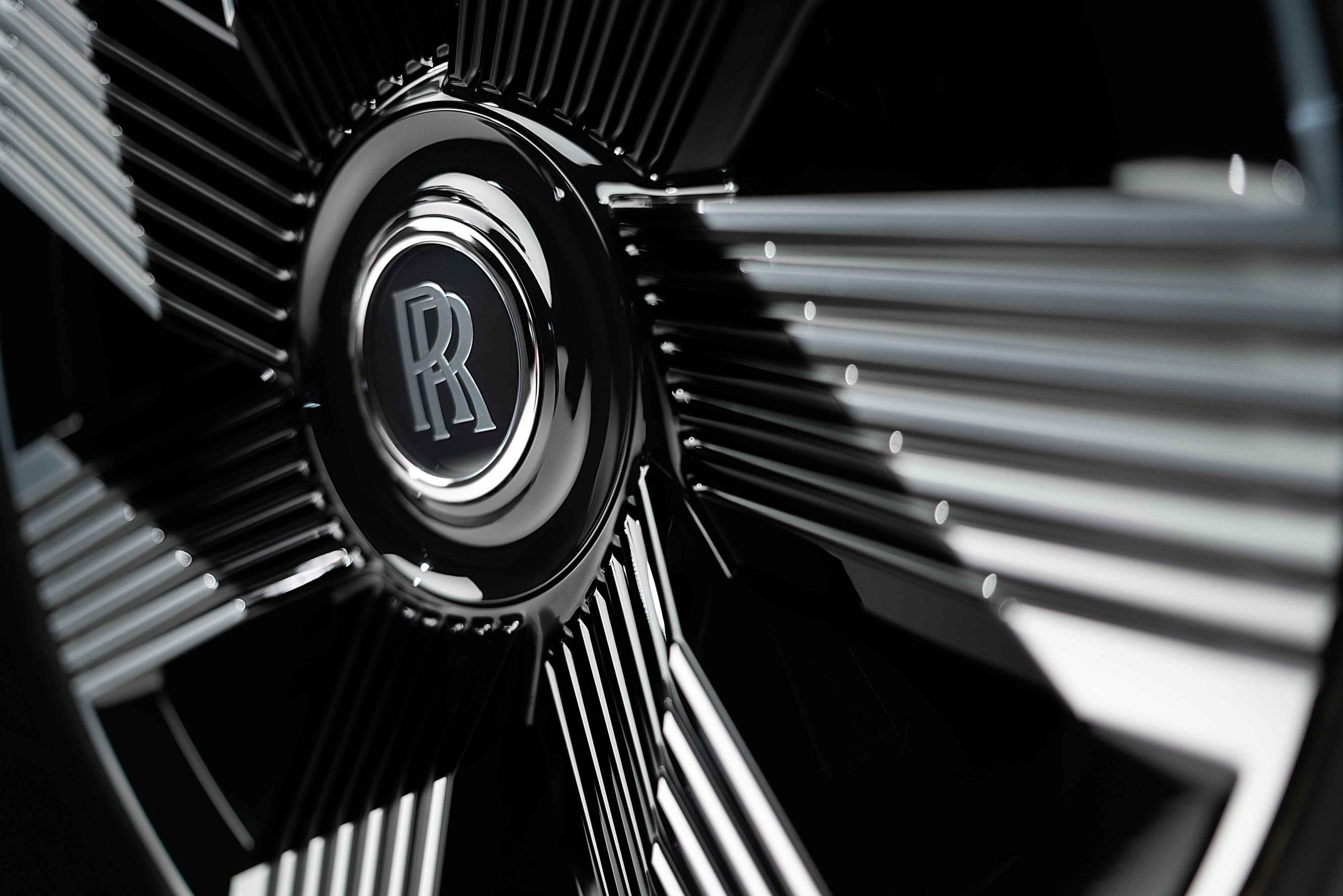
Rolls-Royce made a shocking move on its EV future after planning to go all-electric by the end of the decade. Now, the company is tempering its expectations for electric vehicles, and its CEO is aiming to lean on its legacy of high-powered combustion engines to lead it into the future.
In a significant reversal, Rolls-Royce Motor Cars has scrapped its ambitious plan to become an all-electric manufacturer by 2030. The luxury British marque announced the decision amid sustained customer demand for traditional combustion engines and shifting regulatory landscapes.
When Rolls-Royce unveiled its first all-electric model, the Spectre, in 2022, former CEO Torsten Müller-Ötvös declared the brand would cease production of internal combustion engine vehicles by the end of the decade.
The move aligned with the industry’s broader push toward electrification, promising silent, effortless power befitting the “Rolls-Royce of cars.”
However, new CEO Chris Brownridge, who assumed the role in late 2023, has reversed course. “We can respond to our client demand … we build what is ordered,” Brownridge stated.
The company will continue offering its iconic V12 engines, which remain a cornerstone of its heritage and appeal to discerning buyers who appreciate the distinctive sound and character. He noted the original pledge was “right at the time,” but “the legislation has changed.”
While not abandoning electric vehicles entirely, the Spectre remains in production, with an electric Cullinan option forthcoming; the decision marks the end of a strict all-EV timeline. Relaxed emissions regulations and slowing EV demand, evidenced by a 47 percent drop in Spectre sales to 1,002 units in 2025, forced the reconsideration.
It was a sign that perhaps Rolls-Royce owners were not inclined to believe that the company’s all-EV future was the right move.
Rolls-Royce joins a growing roster of automakers reevaluating aggressive electrification targets.
Fellow luxury brand Bentley has pushed its full electrification from 2030 to 2035, while continuing to offer hybrids and ICE models. Mercedes-Benz walked back its 2030 all-EV goal, now aiming for about 50% electrified sales while keeping combustion engines into the 2030s. Porsche has abandoned its 80% EV sales target by 2030, delaying models and extending hybrids.
Mainstream giants are following suit. Honda canceled its U.S. EV plans, including the 0-Series and Acura RSX, facing a $15.7 billion hit as it doubles down on hybrids. Ford and General Motors have incurred tens of billions in writedowns, canceling models and pivoting to hybrids amid an industry total exceeding $70 billion in charges.
This trend reflects a pragmatic shift driven by infrastructure gaps, consumer preferences, and policy changes. In the ultra-luxury segment, where emotional connection reigns, automakers are prioritizing flexibility over rigid deadlines, ensuring brands like Rolls-Royce evolve without alienating their core clientele.
News
Elon Musk teases expectations for Tesla’s AI6 self-driving chip
This optimistic timeline for tape-out—the stage where chip design is finalized before manufacturing—signals Tesla’s push to rapidly advance its silicon capabilities.
Published
18 hours ago
on
March 21, 2026
Credit: Grok
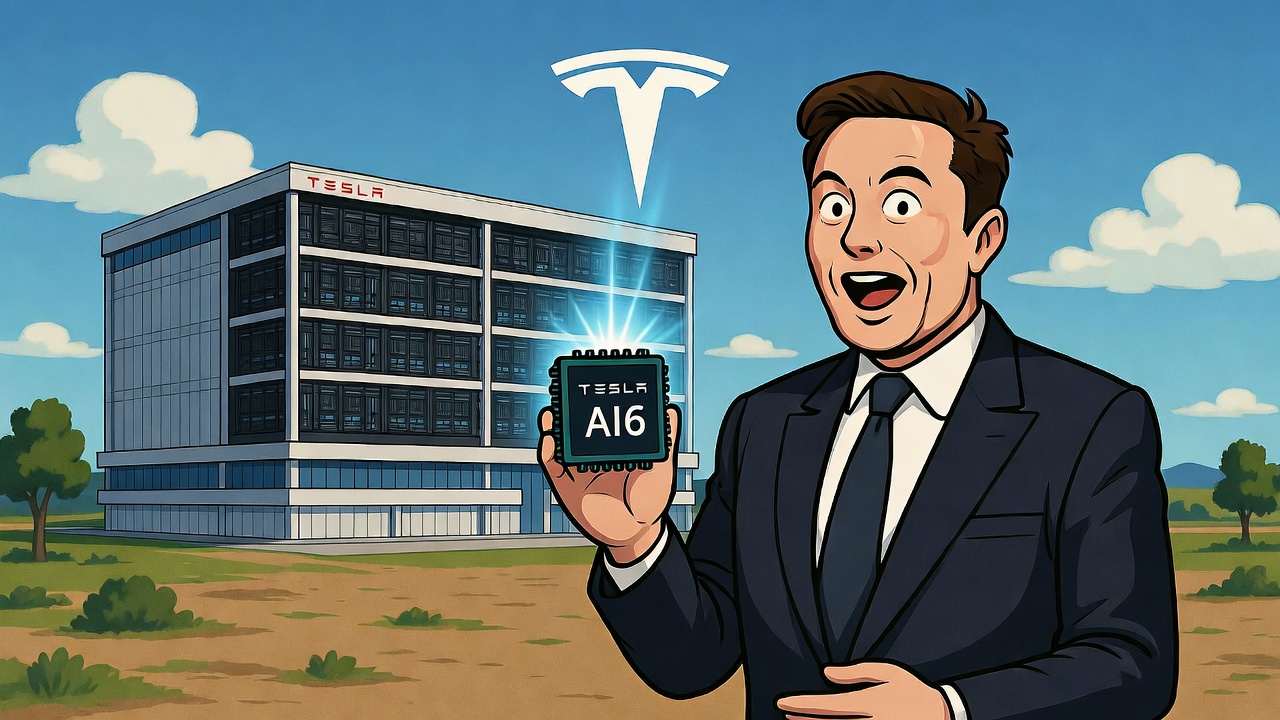
Tesla CEO Elon Musk is outlining expectations for the AI6 self-driving chip, which is still two generations away. Despite this, it is already in the plans of the company and its serial entrepreneur CEO, who has high expectations for it.
Musk provided fresh details on the company’s aggressive AI hardware roadmap, spotlighting the upcoming AI6 chip designed to supercharge Tesla’s self-driving tech, humanoid robots, and data center operations.
In a post on X dated March 19, Musk stated, “With some luck and acceleration using AI, we might be able to tape out AI6 in December.”
With some luck and acceleration using AI, we might be able to tape out AI6 in December
— Elon Musk (@elonmusk) March 19, 2026
This optimistic timeline for tape-out—the stage where chip design is finalized before manufacturing—signals Tesla’s push to rapidly advance its silicon capabilities.
The announcement builds on progress with the predecessor AI5. Earlier in January, Musk announced that the AI5 design was “in good shape” and “almost done,” describing it as an “existential” project for the company that demanded his personal attention on weekends.
He characterized AI5 as roughly equivalent to Nvidia’s Hopper class performance in a single system-on-chip (SoC) and Blackwell-level as a dual configuration, but at significantly lower cost and power usage.
Elon Musk is setting high expectations for Tesla AI5 and AI6 chips
Musk highlighted that AI5 “will punch far above its weight” thanks to Tesla’s co-designed AI software and hardware stack, making maximal use of every circuit. While capable of data center training tasks, it is primarily optimized for edge computing in Optimus robots and Robotaxi vehicles.
For AI6, Musk envisions substantial gains. “In the same half reticle and same process node, we think a single AI6 chip has the potential to match a dual SoC AI5,” he explained.
The company is targeting ambitious nine-month development cycles for future chips, allowing rapid iteration to AI7, AI8, and beyond. AI5/AI6 engineering remains Musk’s top time allocation at Tesla, with the CEO calling AI5 “good” and AI6 “great.”
Samsung is expected to manufacture the AI6 chips, following deals worth billions, while AI5 will leverage TSMC and Samsung production. These chips will form the backbone of Tesla’s Full Self-Driving system, enabling safer and more capable autonomy, alongside powering dexterous movements in Optimus bots and efficient inference in expanding data centers.
Tesla to discuss expansion of Samsung AI6 production plans: report
Musk has also restarted work on the Dojo 3 supercomputer project now that AI5 is progressing. Long-term plans include in-house manufacturing via the Terafab facility.
By accelerating chip development with AI tools, Tesla aims to reduce dependence on third-party GPUs and deliver high-performance, energy-efficient solutions tailored to its ecosystem. Success with AI6 could mark a major milestone in Tesla’s journey toward full autonomy and robotics leadership, though timelines remain subject to manufacturing realities.
Elon Musk
SpaceX is quietly becoming the U.S. Military’s only reliable rocket
Space Force drops ULA for SpaceX on GPS launch after Vulcan rocket anomaly investigation halts flights.

Published
2 days ago
on
March 20, 2026
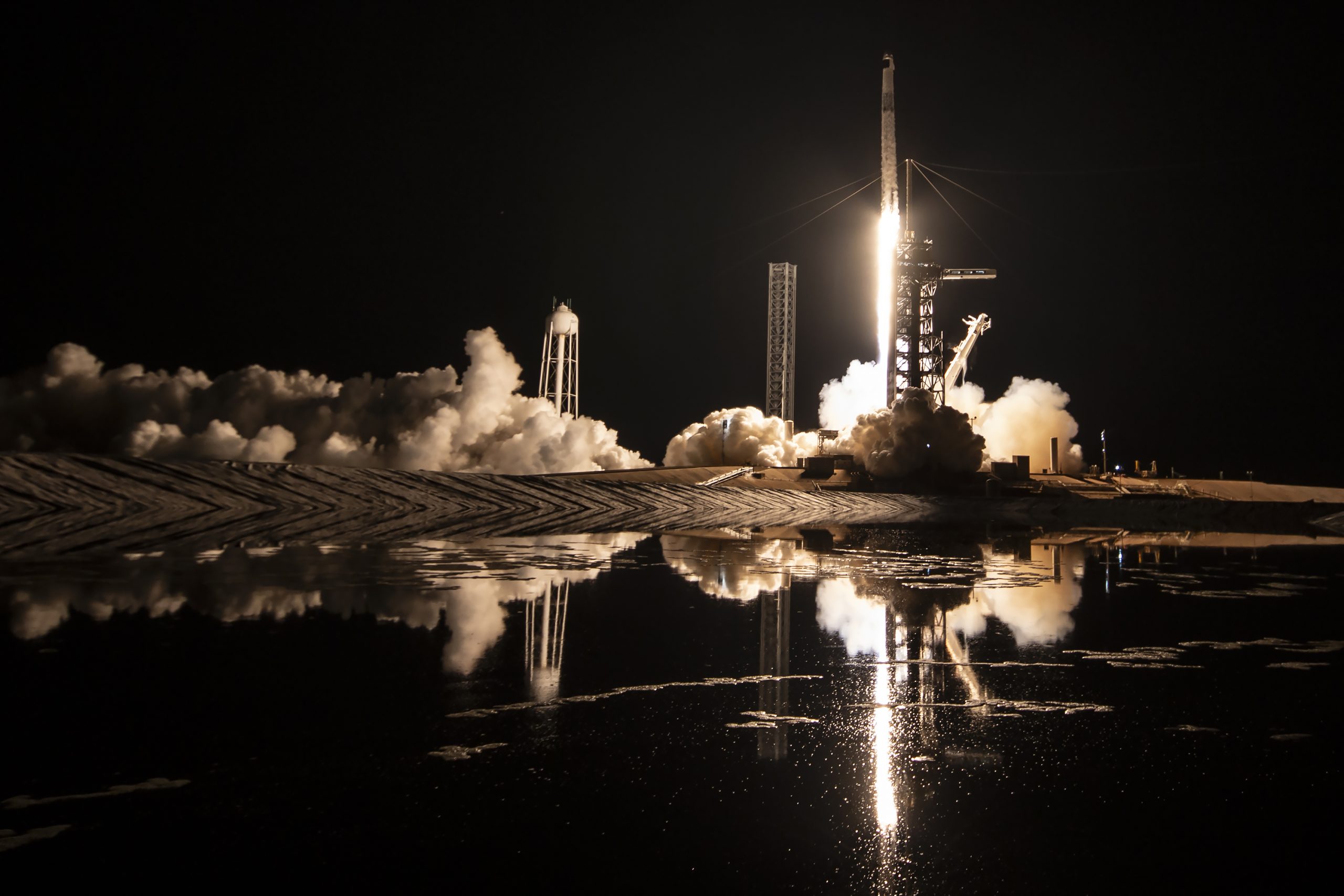
The U.S. Space Force announced today it is switching an upcoming GPS III satellite launch from United Launch Alliance’s Vulcan rocket to a SpaceX Falcon 9, a move that is as much a reflection of Vulcan’s mounting problems as it is a validation of SpaceX’s growing dominance in national security space launch. The GPS III Space Vehicle 09, originally contracted to fly on Vulcan this month, will now target a late April liftoff on Falcon 9, marking the fourth consecutive GPS III satellite the Space Force has moved to SpaceX after contracts were originally awarded to ULA.
The immediate trigger is a solid rocket motor anomaly that occurred on February 12 during Vulcan’s USSF-87 mission. Although the payloads reached orbit and ULA declared the mission successful, the company characterized the malfunction as a “significant performance anomaly” and has since paused all military launches on Vulcan pending a root cause investigation.
“With this change, we are answering the call for rapid delivery of advanced GPS capability while the Vulcan anomaly investigation continues,” said Systems Delta 81 Commander Col. Ryan Hiserote. “We are once again demonstrating our team’s flexibility and are fully committed to leverage all options available for responsive and reliable launch for the Nation.”
The broader reality is that SpaceX’s reliability record and launch cadence have made it the path of least resistance for the Pentagon, and bodes well with Elon Musk’s plans to IPO SpaceX sometime this year. Its Falcon 9 is the most flight-proven rocket in history, and the Space Force’s Rapid Response Trailblazer program was specifically designed to enable exactly this kind of provider swap for GPS missions, and effectively building SpaceX’s flexibility into the national security launch architecture by design.
For ULA, the stakes are existential. The company entered 2026 with aspirations of finally turning a corner after years of Vulcan delays, with interim CEO John Elbon pointing to a backlog of over 80 missions as reason for optimism. Meanwhile, SpaceX’s contracts with the Space Force have given it a formal pathway to take on even more national security launches going forward.
The significance of today’s announcement extends beyond one satellite swap. It reinforces that America’s most critical space infrastructure, including GPS, missile warning, and beyond, is increasingly dependent on a single commercial provider.