The Kowloon Walled City in Hong Kong was once the most densely populated place on earth. And without a single architect or any oversight whatsoever, the ungoverned hive of interlinking buildings became a haven for drugs, crime and prostitution. This is perhaps why the surreal, M.C. Escher-like structure, where one couldn’t even begin to imagine what life was like, captured the interest of the Japanese.
When it was demolished in 1993 the Japanese public tuned in to national television where it was being broadcast. But what most didn’t know was that, up until the previous evening, a group of Japanese researchers, which included architects, engineers and city planners, and led by historian and cultural anthropologist Hiroaki Kani, had entered the deserted city and had been documenting every nook and cranny up until the bulldozers arrived.
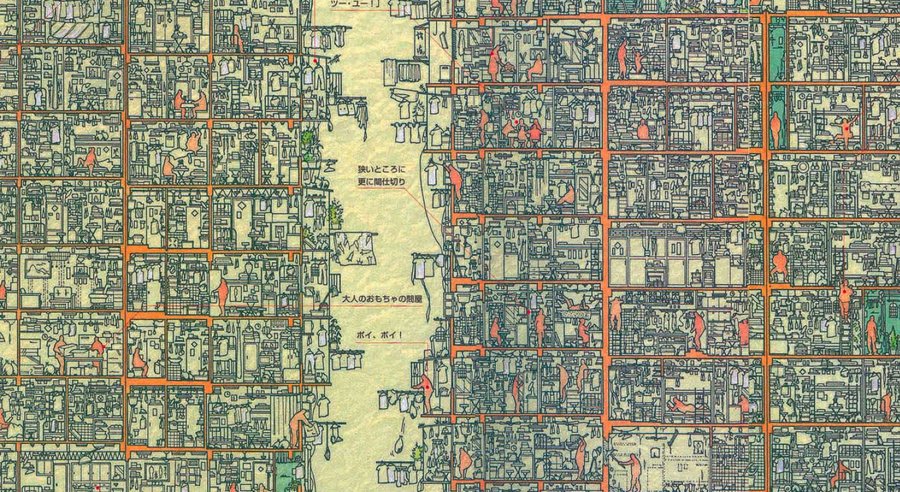
Their findings were compiled into a book that was published 5 years later. Almost as dense as the city itself, the book includes meticulously drawn cross-sections, panoramic views, explanations of different areas and much more. A friend once let me flip through his copy and spent almost an hour mesmerized by the book’s intensity.
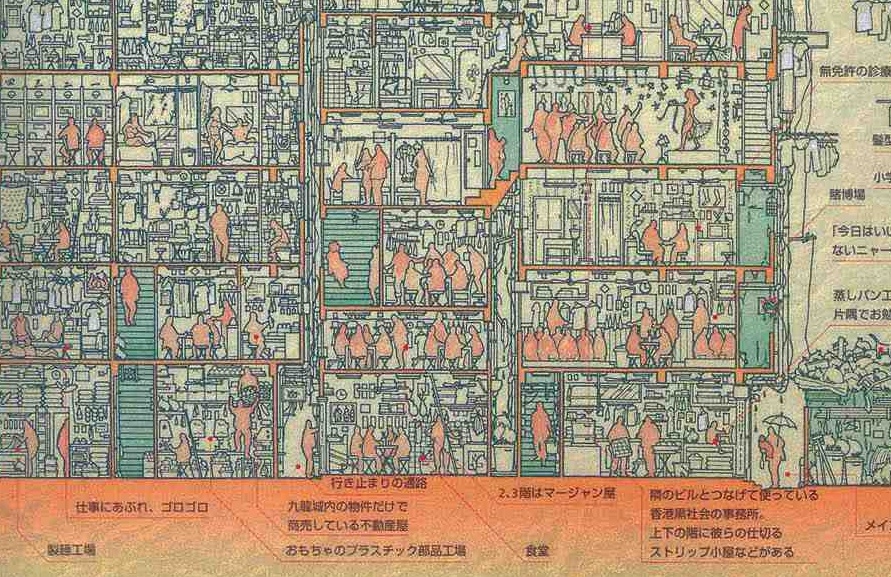
detailed view of the cross-section illustrates a mahjong parlor, a strip club and a plastics factory
Japan’s fascination with the Kowloon Walled City has led to numerous other projects as well, such as a 3D model and – perhaps most ambitious of all – an arcade modeled after the city.
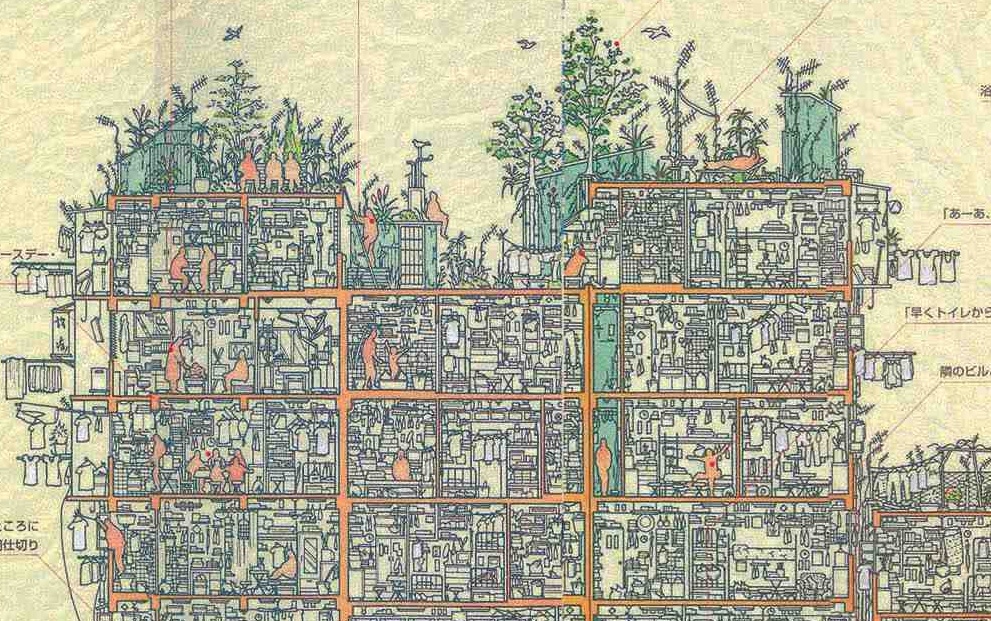
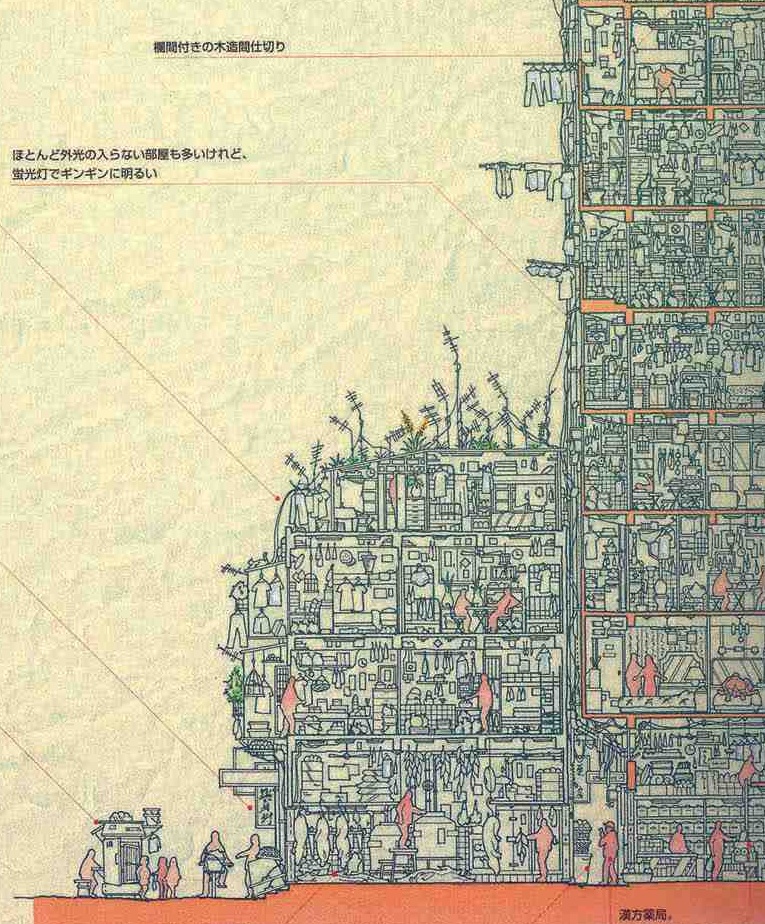
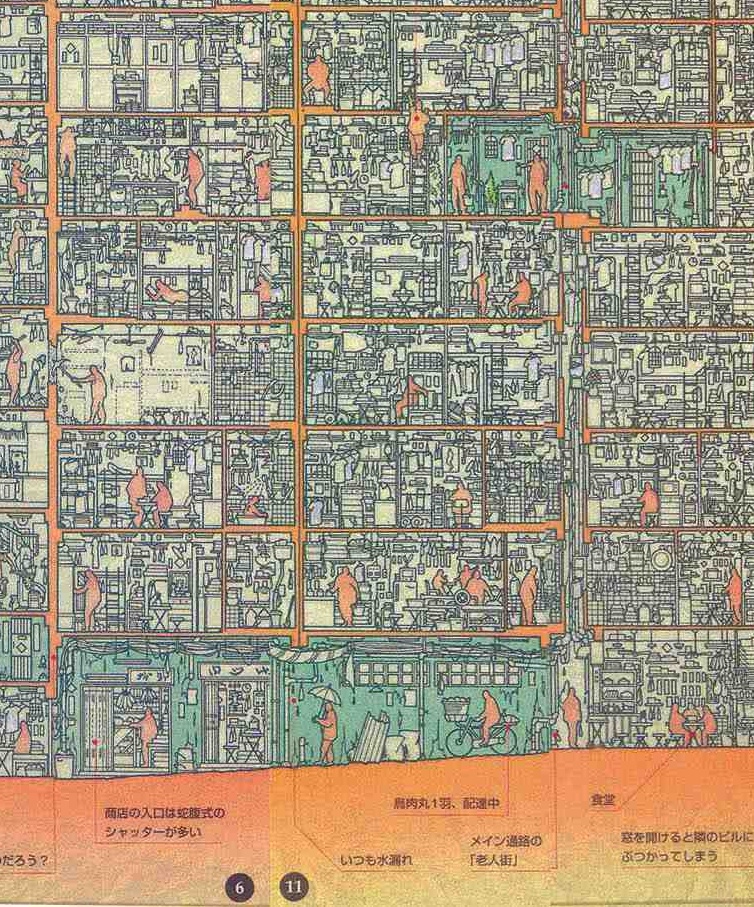
detailed view of the cross-section illustrates a cafeteria and a tunneled passageway that’s always leaking rain water
H/T @themexican
