Remote working, COVID-19 restriction, and lockdowns have permanently changed the expectations of tech workers in the workplace. More than half (71%) of the tech workers prefer to work from anywhere over getting a promotion, as per a report by Ivanti – 2022 Everywhere Workplace ReportOpens a new window . In fact, remote work removes the geographical barriers that would have otherwise prevented some employees from accepting an offer for a new role, the survey found.
Another 2020 SurveyMonkeyOpens a new window study confirms that techies reported feeling happier working remotely than those who continued to work from office during the pandemic. While both studies highlight why work from anywhere or remote working is preferred in the workplace today, the question that remains unanswered is how tech employers can embrace new ways of working to balance tech employees’ expectations. According to Jeff Abbot, CEO, Ivanti, creating a great place to work isn’t about a ping pong table or fully stocked breakroom anymore; [tech] employees need the right tools to be their most productive and secure no matter where they work.
See More: Tech Salaries in 2022: Why the Six Figure Pay Makes Techies Feel Underpaid
READ MORE: CES B2B and Enterprise IT Tech Sessions
What Matters More To Techies: Working Remotely or Getting a Promotion?
As per a poll conducted by Spiceworks News & InsightsOpens a new window , 78% of LinkedIn users voted for working remotely to be their preferred choice, whereas 22% of respondents said getting a promotion matters most to them.
In February 2021, Spotify announcedOpens a new window its new ‘work from anywhere’ model, and in August 2022 the music streaming company confirmed that its turnover rate has decreased compared to its pre-pandemic levels. “While the desire for flexible, remote work is abundant these days, organizations need to take the pulse of their organization to determine what’s ultimately important to their [tech] employees, and enable accordingly. While we’ve seen the data that says ‘2 out of 3 people would choose the ability to work from anywhere over a promotion,’ the truth is [tech] employees want the option for both,” explained Sara RahmaniOpens a new window , VP of people experience and DEI at Chronus, a mentoring software company.
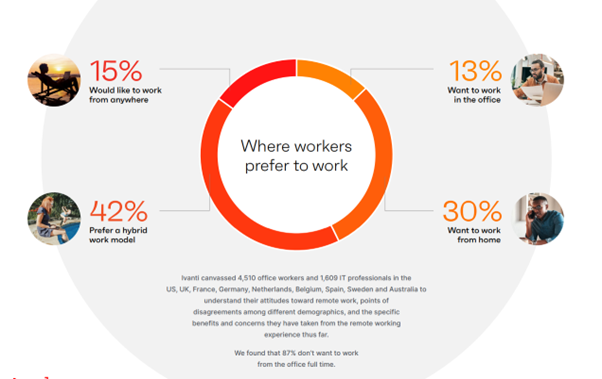
Source: 2022 Everywhere Workplace Report
Besides getting competitive compensation and the flexibility to work from anywhere, tech workers are also looking for opportunities to grow.
Several hiring experts believe that providing only a flexible work environment is not enough to retain talent. “Aside from competitive wages and flexibility, workers are looking for opportunities to grow, mission alignment, and a culture of empathy, autonomy, and mutual respect. Today’s workforce values mentors – not managers. Provide strong leadership, outline a clear career path, and help them upskill in their interest areas to signal that you’re invested in their professional growth,” Sid UpadhyayOpens a new window , CEO and co-founder of WizeHire, an online recruiting services company told Spiceworks.
READ MORE: 4 Sales Management Styles You Must Know
“[Tech] employers must take special care to ensure that their remote workers are not at a disadvantage compared to onsite workers. Onsite workers might have more opportunities to spend time with the executive team and leadership, and increased visibility could influence promotions. So companies need to be building structures that elevate similar experiences for those who prefer the flexibility of the hybrid workplace.”
– Sara Rahmani, VP of people experience & DEI at ChronusOpens a new window
In addition, undertaking the capability to provide both [work from anywhere environment and growth opportunities] in a way that makes sense to the makeup of the organization is where companies need to be putting energy for the future of their workforce, pointed Rahmani.
According to Candace SmithOpens a new window , people operations lead for Americas at Wise, it’s found to be more beneficial for leaders to take an individualistic approach when taking into consideration the total rewards offerings including remote work options and growth opportunities such as promotions. “Companies who look at perks and benefits as an individualized need will see a more engaged and productive workforce,” Smith answered.
See More: Top In-Demand IT Skills In 2022: The Experts’ Edit
How To Balance Techies’ Expectations and Shape the New Workplace
According to Ivanti, the increase of digital nomads – the phenomenon of traveling around the world and working as you go – emerged in the late 2000s but has increased over recent years. The number of digital nomads from the US has more than tripled over the past few years – from 4.8 million in 2018 to 15.5 million in 2021, the report found.
As per hiring experts, during the pandemic most employees have taken advantage of this freedom to work from anywhere, as a result many aren’t willing to let go of that freedom. 47% of those surveyed have relocated during the pandemic, the Ivanti survey reported. “[Tech] employees are increasingly looking for more independence and flexibility in their lives and are willing to forego a traditional job and workplace or relocate away from urban areas to lower their cost of living,” Rahmani noted.
Another interesting point that Smith shares is that leaders apply blanket benefits and policies based on a few conversations with their teams leading inequality in how these benefits are used.
So, what should tech companies do to effectively navigate the future of work? How can organizations provide an inclusive workplace to meet the ever evolving needs of a diverse tech workforce?
“Shift away from dated management styles that measure hours clocked as ‘success’ and focus instead on quality outcomes that optimize results. Ultimately, better retention and job satisfaction happen when the values and expectations of tech employees and employers are synced.”
– Sid Upadhyay, CEO and co-founder at WizeHire
According to Rahmani, tech companies who will not adapt to “this new level of competition will struggle in recruiting and retention well after the pandemic subsides.” The most important factor for tech companies to consider is to create a diverse and inclusive culture in the new hybrid workplace. “Tech employees expect more from their employers when it comes to diversity, equity, inclusion, and belonging (DEIB). This is critical in creating a cohesive and inclusive culture for employees to thrive in the hybrid workplace,” Rahmani said.
“Some employees may be hyper-focused on promotions and career growth. For leaders, this means there is room to hone in on their role and give them new opportunities through projects, working with other teams or even mentorship with leaders that can help them meet their career goals,” Smith shared.
Finally for tech companies, what’s important to consider is to graduate to more flexible schedules, build working hours that accommodate internal team behaviors and create virtual opportunities for networking and connection such as ERGs, mentoring programs and buddy programs. This way tech employees are less likely to feel like there has to be a choice between working from home and promotions.
What do you think tech workers would prefer, working from anywhere or getting promoted in your workplace? Comment below or let us know on Opens a new window LinkedInOpens a new window , FacebookOpens a new window or TwitterOpens a new window . We’d love to hear from you!