

Gemini Nano V4 is available on select Android phones, and Google has now confirmed the compatible Samsung devices.
Google’s Gemini Intelligence requires Android phones to support at least the Nano V3 AI model. Devices with newer generations of AI models offer an even more enhanced experience and have better potential for the future.
Gemini Nano 4 is available on these Samsung phones
Samsung’s newly launched foldable phones come with Gemini Nano V4. They are the only supported models outside of Google’s own Pixel range.
- Galaxy Z Flip 8
- Galaxy Z Fold 8
- Galaxy Z Fold 8 Ultra
In addition to Galaxy Z8 devices, Nano V4 is available on the Pixel 11, Pixel 11 Pro, Pixel 11 Pro XL, and Pixel 11 Pro Fold.
Gemini Nano models are deeply tied to the operating system at launch. That said, we aren’t seeing older models getting listed on the chart of newly available AI models, even from Google.
Gemini Nano V3:
Samsung released the Galaxy S26 series with the Nano V3 AI model. This is a ceiling from Google for Gemini Intelligence features. That said, Galaxy models released before the 2026 flagships are not eligible for Gemini Intelligence.
- Galaxy S26
- Galaxy S26+
- Galaxy S26 Ultra
Gemini Nano V2:
Gemini Nano V2 is also a thing, which is available on two Samsung devices. The complete list includes models from Honor, iQOO, Motorola, OnePlus, Oppo, POCO, Realme, Vivo, and Xiaomi as well.
- Galaxy Z Fold 7
- Galaxy Z TriFold

Samsung has launched the new Galaxy S26 FE with several useful AI features. The phone is the first model in the Galaxy S26 family to come with One UI 9. It brings better cameras, smarter AI tools, and a thin and lightweight design.
Here are five important AI-powered features on the Galaxy S26 FE.
1.) My FanCam
My FanCam makes recording people easier. Users can select a person, and the phone automatically follows them while recording. It keeps the person in the center of the video, even when they move. This can help users create better videos without spending much time editing them.
2.) Super Steady with Horizontal Lock
Samsung has improved video recording with Super Steady and Horizontal Lock. It helps keep videos smooth and level, even when users are moving. This is useful for recording sports, travel, or other fast-moving activities.
3.) Gemini Omni
Gemini Omni lets users create and edit videos using photos and videos saved in the phone’s Gallery. It can help turn simple photos and clips into polished videos that are ready to share. Eligible users also get a six-month Google AI Pro trial, depending on their country and account.

4.) Now Nudge
Now Nudge can provide useful suggestions based on notifications and supported apps. It is designed to show relevant information at the right time and help users complete everyday tasks more easily.
5.) Smarter Smart Switch
The upgraded Smart Switch makes it easier to move data to a Galaxy phone. Users can scan a QR code to transfer supported data wirelessly, including passwords, passkeys, call history, accessibility settings, and eSIM information.
The Galaxy S26 FE combines AI, better video features, and easier data transfer to offer a smarter and more convenient smartphone experience. This smartphone will be available starting September 4, 2026.
AI
Gemini’s new feature could save important details from screenshots

Published
2 weeks ago
on
August 19, 2026
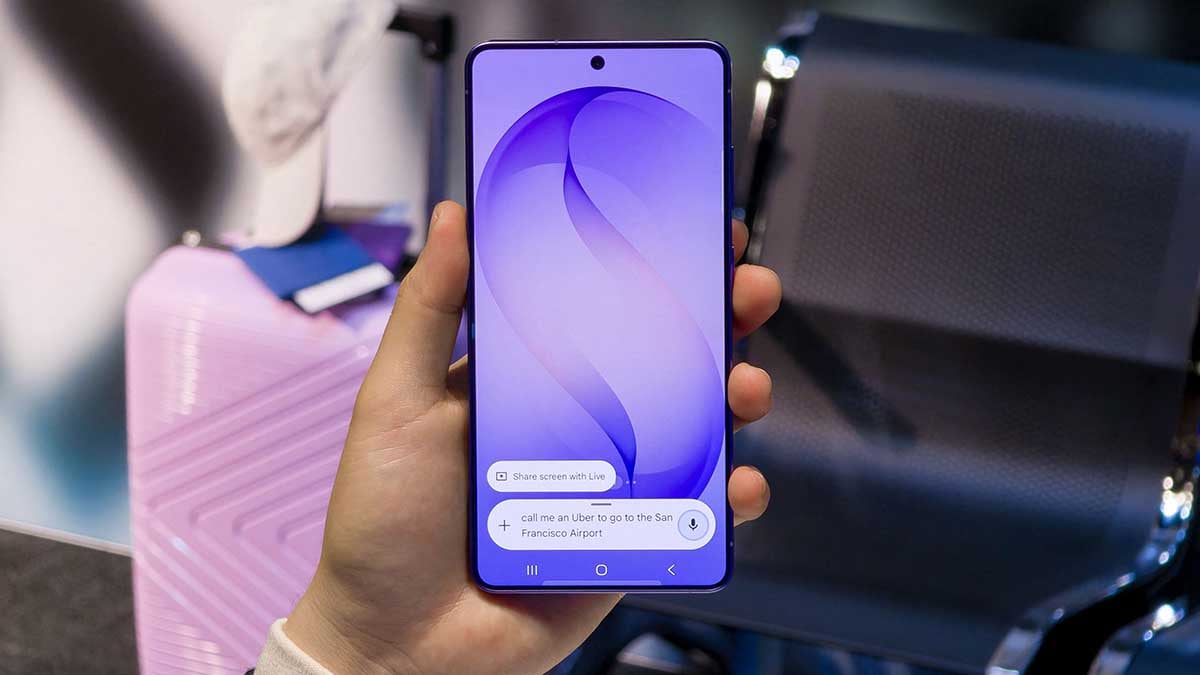
Google may soon make it easier for Gemini to remember important information from screenshots and photos. A new feature found in the Google Gemini Android app – Remember this with Gemini. It could soon appear in the Android share menu when users share an image.
Currently, if you send a screenshot to Gemini, you usually need to type a message and tell it what to remember. The new feature could remove this extra step.
When you choose “Remember this with Gemini,” Gemini would open with “@Remember this image” already written. You would only need to tap send. Gemini could then look at the image, find useful information, and save it to its memory.
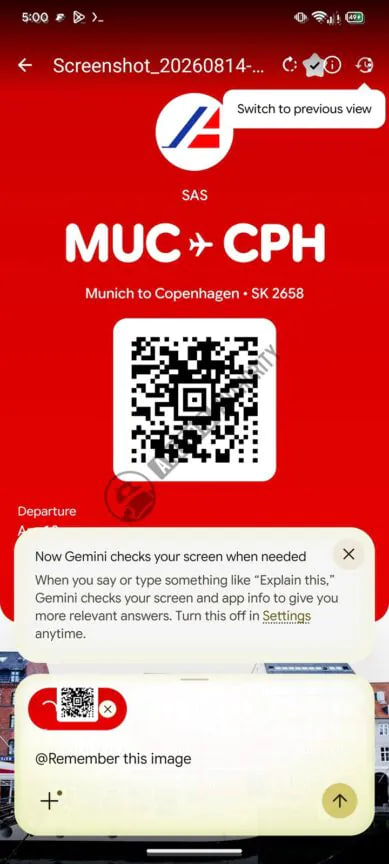
Image via Android Authority
The feature was tested with a screenshot of a boarding pass. Gemini was able to remember details such as the airline, flight number, travel route, passenger name, travel date, and seat number. Later, when asked about the flight in another chat, Gemini could remember those details correctly.
This feature could be helpful in many daily situations. The feature may need Gemini’s memory and personalization settings to be turned on.
However, the Remember this with Gemini feature is not available to everyone yet. Google has not announced when it will officially launch. If released, the feature could make saving important information with Gemini much faster and easier.

NVIDIA is developing a new 800VDC power system for AI data centers. The company plans to start the project in the second half of 2026. The aim is to provide more power to AI servers while reducing energy loss.
This new technology could benefit power-supply companies such as Delta Electronics and Lite-On. Both companies are preparing products for NVIDIA’s new power system and could become important suppliers in the growing AI data center market.
Lite-On has partnered with Wolfspeed, a company that makes silicon-carbide products. Lite-On plans to use these products in its 800VDC power platform. It plans to send prototype power racks to customers in August for testing. If the tests are successful, mass production could begin as early as November, with production increasing next year.

Delta Electronics is also preparing for the new technology. It plans to begin mass production of 800 VDC and ±400 VDC products in the third quarter of 2026. Small shipments are expected in the fourth quarter, while 800VDC production is expected to increase next year.
NVIDIA says 800VDC can make electricity delivery simpler and more efficient. Currently, electricity goes through several conversion steps before reaching AI chips. The 800VDC system reduces these steps to lower power loss and provide more electricity for computing.
NVIDIA is working with Google and Microsoft through the Open Compute Project to develop this technology. More than 80 companies are reportedly working on products based on the new standard. Stay tuned for more information.
AI
You can now remove visible watermarks from Gemini creations
Published
2 weeks ago
on
August 15, 2026

Google has added a new setting to Gemini that lets users remove the visible watermark from AI-created content. This means users can now decide whether they want a watermark to appear on their creations. The option is available for images, videos, and music.
The new setting is named as Media Watermark. Users can find it by opening Gemini’s Settings menu. There are two choices: On and Off. When it is On, the visible watermark stays on the content. When it is Off, the visible watermark is removed.
However, turning off the visible watermark does not remove every sign of AI creation. Google says that SynthID, an invisible watermark, will still remain in the content. C2PA information will also stay attached to the files. These technologies help identify AI-generated content.

Image via Gemini (X)
The change comes after Google asked Gemini users about the problems they wanted fixed. Removing the visible watermark was one of the most popular requests from users. Google has now responded by giving people more control over their creations.
This new feature can be useful for people who want to share or use Gemini-made content without a visible mark. At the same time, Google’s invisible systems will continue working in the background. Users can therefore choose a cleaner look while important AI-related information remains with the content.