- A new Australian review has found nicotine-containing vapes are likely to cause lung and oral cancers
- In addition to cancer, researchers say a range of other diseases can be attributable to vaping, and it can no longer be considered "safer than smoking."
- Experts say there needs to be stronger enforcement of Australia's laws, with a crackdown on incorrectly labelled, black market vapes.
Vapes containing nicotine are likely to cause lung and oral cancers, according to a new Australian review of evidence.
The review, led by researchers from the University of New South Wales (UNSW), brought together a range of evidence including mouse studies, case reports, biomarker studies in humans and a chemical analysis of the ingredients in nicotine-based vapes.
Lead author Bernard Stewart, a cancer researcher at UNSW, said this review provided "by far the strongest evidence" that vapes were likely to cause lung and oral cancer.
Most studies into vaping, Dr Steward explained, compared it to smoking.
But in this review, researchers considered whether vapes on their own had the potential to cause cancer.
"There are remarkably few studies on vapes causing cancer in their own right," Steward said.
Cancer risk aside, researchers found a range of other diseases could be attributable to vaping, and it could no longer be considered "safer than smoking".
Considering these findings, experts say there needs to be a crackdown on the availability of black market vapes and greater public awareness about the potential for harm.
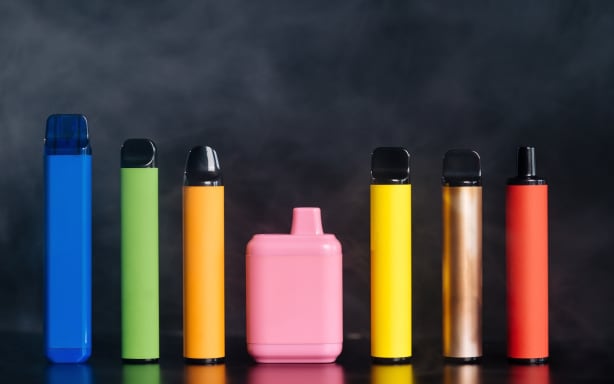
Australia has strong vaping legislation, but experts say these laws need to be enforced.
123rf
'Definitive proof' will take decades
The UNSW-led review analysed a range of studies from 2017 to 2025, and considered the likelihood that vapes caused cancer by comparing the cancer risk in non-smokers who use nicotine vapes with people who have never used them.
The researchers also looked at biological markers in humans that indicate oxidative stress, epigenetic change and inflammation.
A number of case studies were included in the review, such as a a 19-year-old man with an "extensive history of vaping" who developed cancer in his oral cavity.
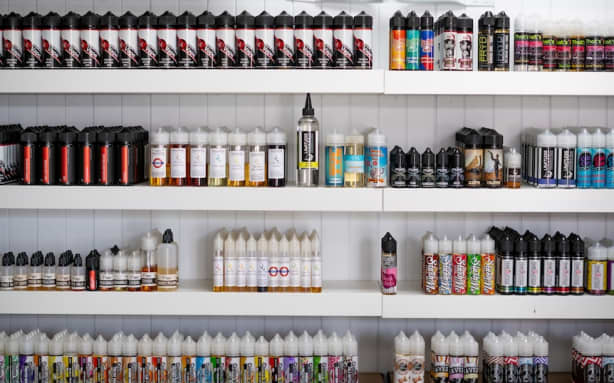
Cancer risk aside, researchers say a range of disease can be attributable to vaping.
ABC News: Che Chorley
Stewart said "the clearest and almost definitive evidence" of the link between cancer and vaping was a study that showed the development of lung cancer in mice exposed to e-cigarette aerosols.
However, he noted, there was still no epidemiological link between vaping and cancer, but he was not surprised given that vapes had only been available for 20 years and it took researchers 100 years to prove smoking caused cancer.
"The definite proof [that vaping causing cancer] will take possibly decades," Stewart said.
Becky Freeman, a public health researcher at The University of Sydney who did not contribute to the study, said it was important now to minimise the potential for future harm by supporting people to quit vaping, and stemming supply.
"There's a temptation sometimes to think, the only way we can know if something causes cancer is if we follow people over time and see if they get cancer," she said.
"But unfortunately that takes a really long time."
What about nicotine-free vapes?
The review only considered vapes containing nicotine, but experts were quick to point out that this did not mean those without nicotine - or vapes labelled as nicotine-free - were a safe alternative.
In 2024, the federal government strengthened legislation so the only place vapes - with and without nicotine - can be sold legally is in pharmacies "for the purpose of helping people quit smoking or manage nicotine dependence".
But there's also an abundance of vapes sold on the black market.

Vapes can contain nicotine, even if it is not in their ingredient list on the packaging.
ABC News: Courtney Withers
Alexander Larcombe, senior research fellow at Perth's Curtin University, said the inaccurate labelling of vapes was an "ongoing problem".
"Most black market vapes sold in Australia contain nicotine, although the labels are unlikely to indicate this," Dr Larcombe, who did not contribute to the review, said.
"This could mean that users are unwittingly inhaling nicotine and becoming addicted.
"There is also never a comprehensive ingredients list on vape packaging, so users can't make informed decisions on what they're choosing to use."
Larcombe has spent years investigating the chemical components of vapes sold in Australia.
He said nicotine-free e-cigarettes were "definitely not" safe to use.
"They still contain a wide range of harmful substances that shouldn't be inhaled," he said.
Vapes can contain a range of substances which can cause harm, including volatile organic compounds (such as formaldehyde and acrolein), metals (such as nickel and chromium), and cytotoxic flavouring chemicals (like cinnamaldehyde), he said.
"Many of these substances are known to be carcinogenic, irritants, sensitisers and/or impair immune function, thereby leading to health effects," Larcombe explained.
Some experts argue that vapes — even those that contain nicotine — are not as harmful as cigarettes. Almost 100 chemicals in cigarette smoke are known to be toxic, with at least 70 chemicals known to cause cancer.
Dr Larcombe said if "like-for-like usage" of vapes and traditional cigarettes were compared, "vaping [was] likely a safer option" but this came with caveats.
"There aren't many things you can do legally that are worse for your lungs than smoking cigarettes, so the comparison is largely moot," he said, adding that people who used them have often never smoked.
Richard Edwards, head of public health at Flinders University who did not contribute to the study, agreed.
"I don't think anything inhaled into the lungs other than fresh air is likely to be completely OK," he said.
"Vapes are almost certain to be harmful and if they contain nicotine will be highly addictive - you may find it very difficult to stop using them once you start.
"So if you don't smoke, don't start to vape."
But, he added, for people who had tried multiple ways to quit smoking without success, vaping - with vapes bought at a pharmacy and in consultation with a health professional - might help.
Enforcement of vape laws needed
Professor Freeman, Dr Larcombe and Professor Edwards all agreed that, based on the totality of evidence so far, it was likely that vaping caused lung and oral cancers.
In addition to increased public awareness about the potential cancer risk for people who vape, Edwards said there also needed to be greater interventions to restrict the illicit vape market and encourage people who used vapes as alternatives to smoking, to source them from pharmacists.
Freeman said Australia's laws restricting the sale and supply of vapes were "really good", but these laws were not being enforced by authorities.
"If we were to have our laws fully enforced and e-cigarettes were only going into the hands of smokers using them to quit, under the advice and support of a health professional, then our [vaping] laws would be the best in the world," she said.
"Enforcement is the weakness here."
Lead researcher Dr Stewart wants a more precautionary public health response.
"I don't think vapes are established as a successful means of stopping smoking," he said.
UNSW epidemiologist Freddy Sitas, who also contributed to the study, said many people who started vaping as a means to quit smoking often ended up in "dual use limbo", using both vapes and cigarettes.
"Unless there is a proven [way] to stop people from vaping, then we are stuck [with] this high-risk population that starts using both," he said.
"It's a bit like swallowing the spider to catch the fly."
The ABC contacted the Federal Department of Health regarding the availability and restriction of vapes in Australia, but did not receive a response before deadline.
- ABC