You know that groggy Sunday morning in March when your alarm feels like a cruel joke? You could’ve sworn you had another hour before it went off. And it’s so dark out … but nope, your phone says it’s the right time. Hold on, though—the clock on your microwave says it’s an hour earlier. What is happening?!
When you wake up a little more, you realize that daylight saving time is messing with your head and that you somehow lost a whole hour in the middle of the night. But why do we change the clocks at 2 a.m., of all times? There’s a story behind this, of course!
To find out what it is, we spoke to David Prerau, PhD, an internationally known expert on daylight saving time, and Chad Orzel, PhD, chair of the physics and astronomy department at Union College and author of A Brief History of Timekeeping: The Science of Marking Time. Read on to learn the surprising reasons behind the 2 a.m. switch.
Get Reader’s Digest’s Read Up newsletter for more knowledge, humor, cleaning, travel, tech and fun facts all week long.
What is daylight saving time?

On the second Sunday of March each year, shortly before the spring equinox, clocks are set forward one hour at 2 a.m. This kicks off daylight saving time, which aims to give people an opportunity to make better use of daylight while they are awake. By contrast, clocks go back an hour on the first Sunday of November every year. These rules have led to the popular and easy-to-remember saying “spring forward, fall back.”
But how did daylight saving time come to be? “DST is a process for fiddling with the exact time in [the various] time zones in a way that allows us to achieve other goals—specifically, arranging the day in a way that we find congenial,” explains Orzel. While time zones were instituted in the late 1800s, DST wasn’t introduced until 1908 and didn’t catch on in the United States until 1918.
One important note: It’s daylight saving time, not—as is commonly but mistakenly said—daylight savings time. Now you know!
Why does daylight saving time start at 2 a.m.?
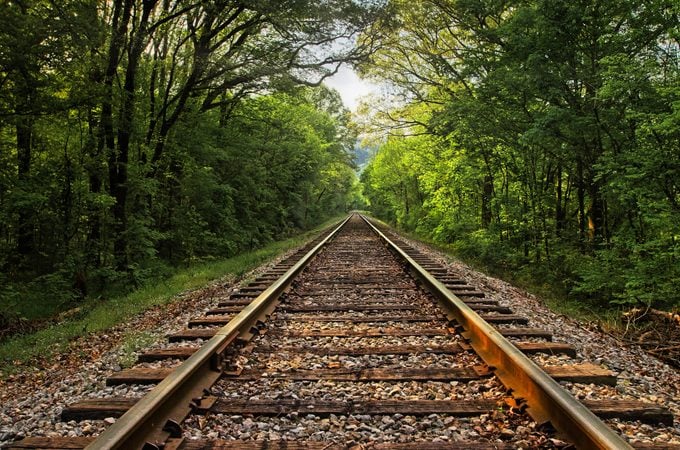
The 2 a.m. time change isn’t random. Back when DST was first introduced during World War I, it was one of the few times when trains weren’t running. “The original clock time of the DST change was picked to minimize a major concern at the time: potential collisions of trains if one train adjusts for DST and a crossing train does not,” explains Prerau. Sunday at 2 a.m. was the quietest hour of the week, making it the safest choice.
It was also a practical middle ground between midnight—when changing the clocks would shift the date—and later in the morning, when early-shift workers and churchgoers could be affected.
Why does daylight saving time start in March?
DST runs from March to November for a reason. According to Prerau, “it minimizes the negative of having some late sunrises under DST by setting the DST period symmetrically with respect to sunrise times.” This timing gives longer evenings in spring and summer without creating overly dark mornings.
Then in November, when we “fall back,” we return to standard time—shorter days, earlier sunsets—until mid-March.
What, exactly, happens when daylight saving time begins and ends?
When daylight saving time starts at 2 a.m. in March, the clocks jump ahead an hour. When it ends in November, about six weeks after the fall equinox, the clocks fall back an hour.
Is there more going on behind the scenes? “On a technical level, it’s really a surface change,” Orzel says. “The official time for the world is UTC (Coordinated Universal Time), which is maintained by the consensus of an array of atomic clocks operated by standards labs all around the world. UTC doesn’t change and just keeps ticking along at one nanosecond per nanosecond.”
In other words, the DST change is really just a local adjustment. And luckily, your smartphones, tablets and computers usually handle the time change automatically. Just remember to manually adjust the clocks on appliances like your oven or microwave.
When does daylight saving time spring forward and fall back in 2026?

In 2026, daylight saving time starts on Sunday, March 8, and ends on Sunday, Nov. 1. Here are the dates for the next three years:
- 2027: Sunday, March 14, to Sunday, Nov. 7
- 2028: Sunday, March 12, to Sunday, Nov. 5
- 2029: Sunday, March 11, to Sunday, Nov. 4
Additional reporting by Mariah Thomas.
About the experts
- David Prerau, PhD, is an internationally known expert on daylight saving time who the New York Times called “the foremost authority on DST.” He is the author of Seize the Daylight: The Curious and Contentious Story of Daylight Saving Time and the co-author of three major U.S. government technical studies on DST. He also served as a DST consultant for the U.S. Congress and British Parliament.
- Chad Orzel, PhD, is the Gordon Gould Professor and chair of the department of physics and astronomy at Union College in Schenectady, New York. He is also the author of five books explaining science for non-scientists, including A Brief History of Timekeeping: The Science of Marking Time, from Stonehenge to Atomic Clocks. He has been blogging about science since 2002, and in 2021, he was named a fellow of the American Physical Society for his work on public communication of science.
Why trust us
At Reader’s Digest, we’re committed to producing high-quality content by writers with expertise and experience in their field in consultation with relevant, qualified experts. We rely on reputable primary sources, including government and professional organizations and academic institutions as well as our writers’ personal experience where appropriate. We verify all facts and data, back them with credible sourcing, and revisit them over time to ensure they remain accurate and up to date. Read more about our team, our contributors and our editorial policies.
Sources:
- David Prerau, expert on daylight saving time and author of Seize the Daylight: The Curious and Contentious Story of Daylight Saving Time; email interview, Feb. 25, 2026
- Chad Orzel, PhD, chair of the department of physics and astronomy at Union College and author of A Brief History of Timekeeping: The Science of Marking Time, from Stonehenge to Atomic Clocks; email interview, Feb. 23, 2026
- Time: “Why Does Daylight Saving Time Start at 2 a.m.?”
- WebExhibits: “When We Change Our Clocks”