AI isn't all fun ChatGPT queries.
British researchers have trained an artificial intelligence to recognize keystrokes by sound. A smartphone placed near a laptop served as the microphone.
The researchers combined the sound of each key with the corresponding letter for the training. They then typed a password into the laptop and had the AI calculate which word was heard based on the sound. The AI recognized the password with an accuracy of 95 percent.
To make the attack realistic, the researchers tested whether this method could also be used to spy on passwords during a video meeting via Zoom or Skype. And indeed, the AI still achieved an accuracy of just under 92 percent for Skype and 93 percent for Zoom.
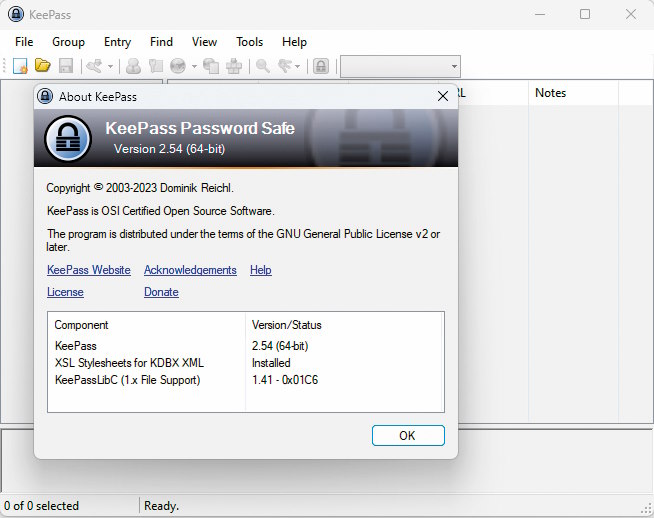
Password managers such as Keepass enter passwords using a key combination or automatically in log-in fields. This means that the data cannot be intercepted by AI.
IDG
The researchers used a Macbook Pro with an M1 chip and 16-inch screen from 2021 and either an iPhone 13 Mini placed 17 centimeters away or the video conferencing tools Zoom and Skype.
The researchers then converted the audio recordings into images in the form of waveforms and spectrograms and used them to train an image AI. As a defense measure, the researchers recommend that users use the ten-finger system when typing. In this case, the recognition rate of individual keys dropped significantly.
Upper and lower case letters in passwords as well as special characters should also make it more difficult to reconstruct passwords using AI like this. However, the best protection is provided by a password manager that automatically fills in passwords with a click of the mouse. Check out our roundup of the best password managers if you aren’t already using one yet.
This article was translated from German to English and originally appeared on pcwelt.de.
This article originally appeared on our sister publication PC-WELT and was translated and localized from German.