Why is the National Park Service concerned about noise?
Park visitors and wildlife interact with each other and park resources through their senses, including the sense of hearing. So, protection of natural sounds supports both ecosystems and quality visitor experiences. Additionally, there are laws and policies that require the agency to conserve acoustic environments "unimpaired for the enjoyment of future generations."
How does the sound map work?
Scientists made long term measurements of sound in parks as well as urban and rural areas across the country. This information helped predict current sound levels for the entire United States. A model was developed to understand relationships between measured sound levels and variables such as climate, topography, human activity, time of day, and day of year. The resulting geospatial sound model can also estimate how places would sound naturally, without human influence.
Map of existing conditions:
Download a high resolution version of the natural conditions map (png 13 MB).
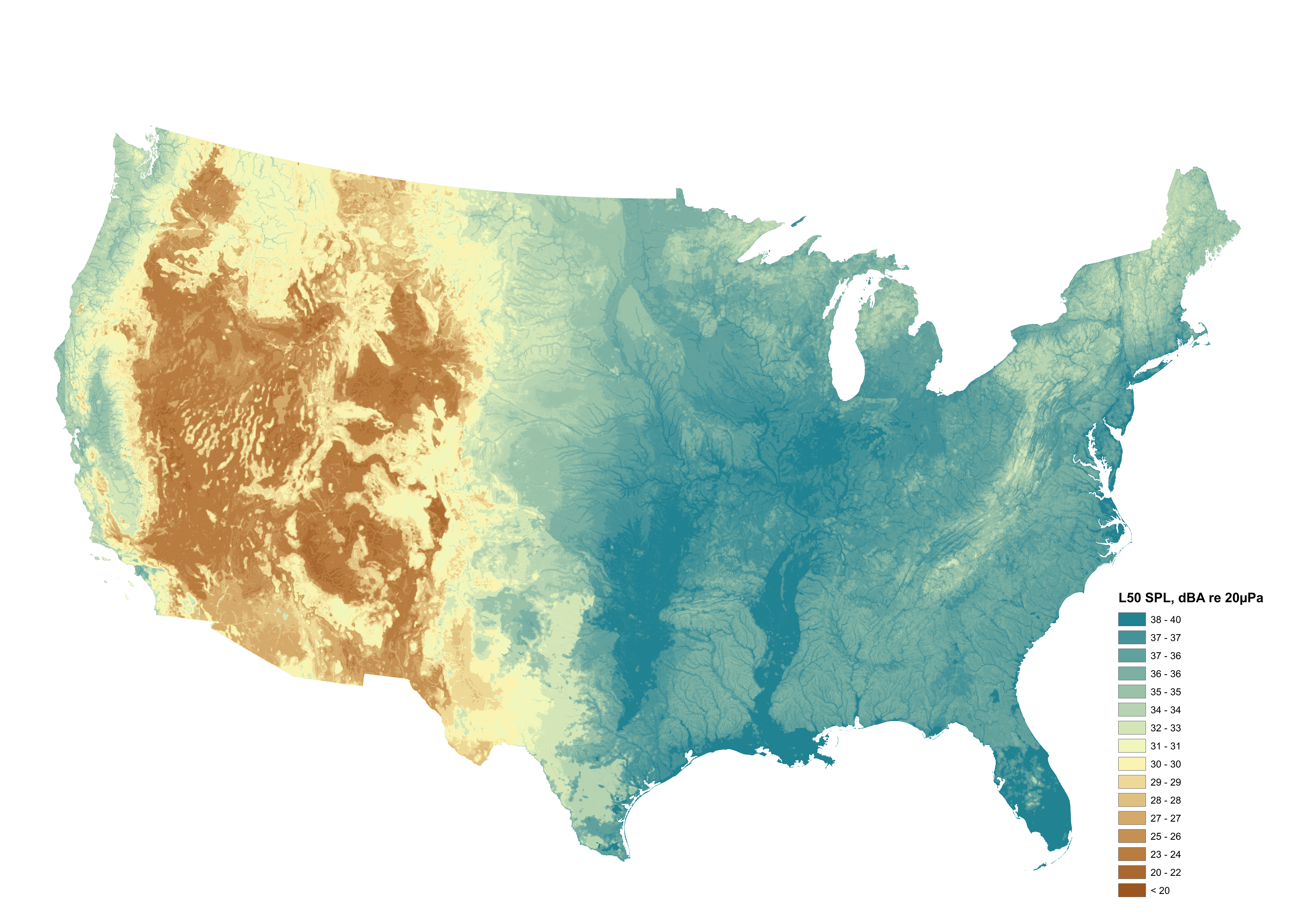
Note that the numbers on the legend are different than in the first map, because it is so much quieter. The trend is higher sound levels in wetter areas with more vegetation. This is due to the sounds of wind blowing through vegetation, flowing water, and more animals (especially birds and frogs) vocalizing in more fertile locations.