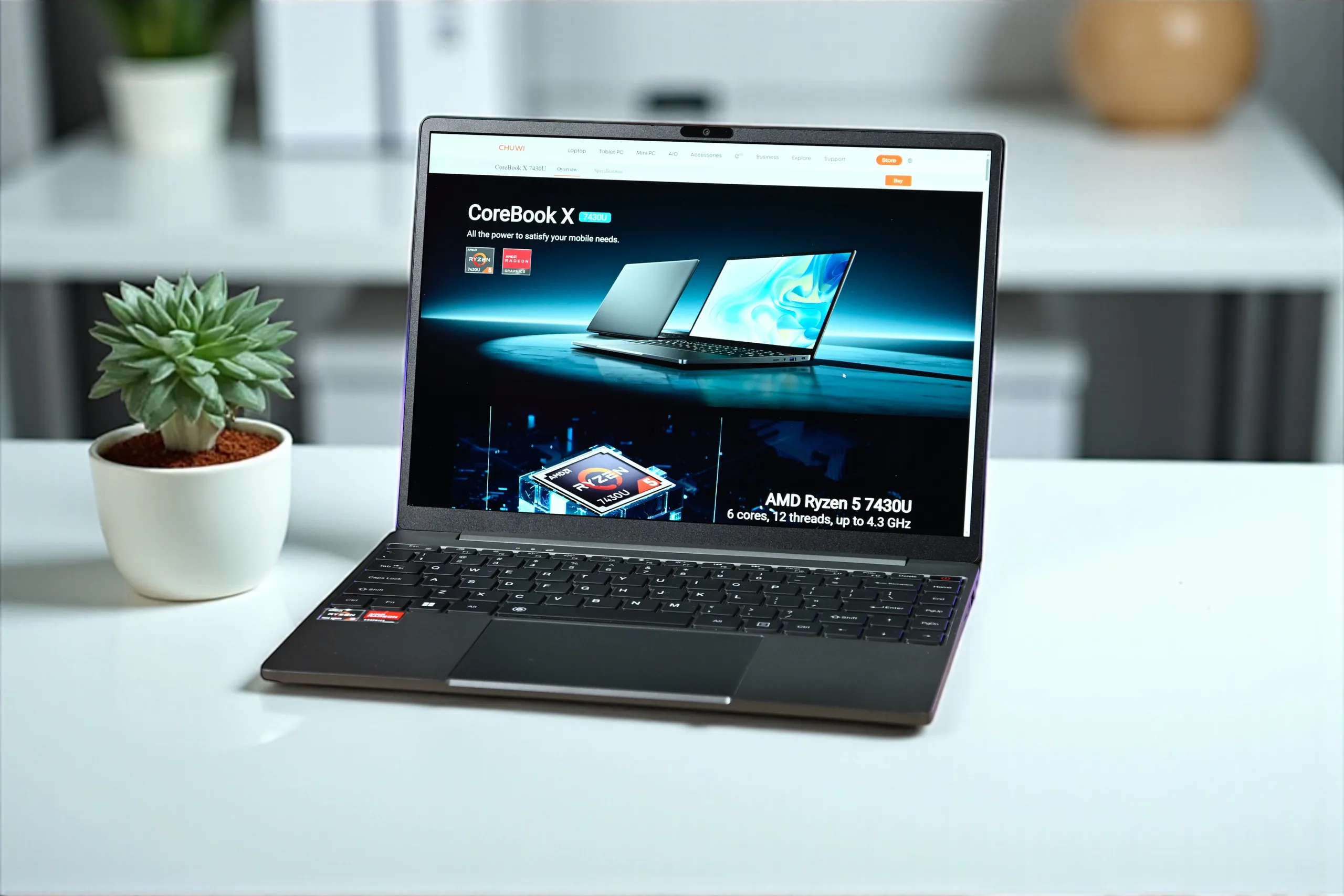
A supposed bargain is currently causing considerable discussion: The Chuwi CoreBook X, which is officially advertised with an AMD Ryzen 5 7430U, has an older Ryzen 5 5500U installed. The system software also deceives the user. This not only raises the question of performance, but also severely damages trust in the manufacturer's product specifications.
If you opt for an inexpensive notebook from a Chinese online retailer, you are usually prepared to accept minor compromises from the outset: simpler materials, average speakers, or a display that doesn't quite match up to more expensive models. However, you wouldn't expect the specifications for the processor to be different from the chip actually installed. This is exactly what seems to have happened with the Chuwi CoreBook X - a circumstance that has rightly caused criticism and severely shaken the confidence of many buyers in the now well-known brand.
What exactly happened:
Our review of the Chuwi CoreBook X was published some time ago. In retrospect, however, it turned out that the processor labeled as AMD Ryzen 5 7430U was apparently not actually installed (The key tip came from chinamobilemag.de). Instead, an AMD Ryzen 5 5500U is actually being used in the device.
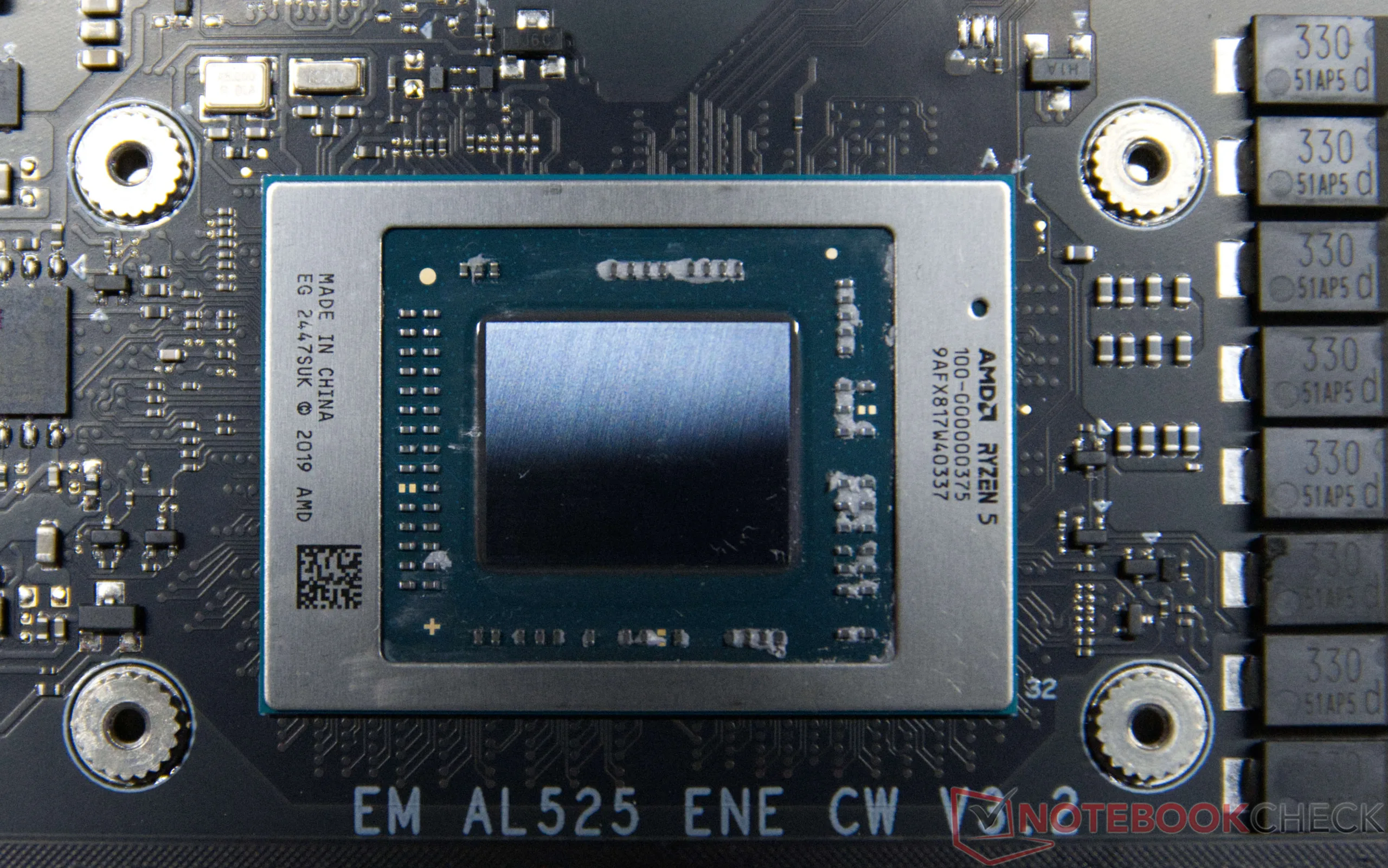
To find out for sure, we have now opened our test device and removed the CPU cooler. The OPN number 100-000000375, which can be read directly on the chip, is clear and confirms (see AMD) that it is the AMD Ryzen 5 5500U.
This is where the core problem of the whole matter becomes apparent. Anyone who does not explicitly expect that a component apart from the one specified could be installed usually does not scrutinize the system information read out in detail. This was also the case in our test. Our test was primarily concerned with the practical impression: How does the notebook perform in everyday use? Are the display quality, SSD performance, connectivity, and battery life right? Does the overall performance correspond to what can be expected in this class?
The basic technical data was tested, but not with the level of suspicion that would have proved necessary in retrospect. An anomaly in the L3 cache was therefore ignored, as it is generally assumed that the CPU is correctly identified in a new device. We noticed that the measured performance was not quite at the expected level of a typical Zen 3 processor. Nevertheless, we suspected the causes were elsewhere. The built-in single-channel RAM was an obvious explanation, as this memory mode has been proven to have a noticeable effect on performance. Only afterward did it become clear that the actual cause is obviously of a much more fundamental nature.
| CPU Performance rating | |
| Average AMD Ryzen 5 7430U | |
| Average AMD Ryzen 5 5500U | |
| Chuwi CoreBook X AMD Ryzen 5 7430U | |
* ... smaller is better
We immediately contacted the manufacturer and asked for a statement. Chuwi did indeed reply but did not explicitly admit to an error. Instead, it referred to various production batches, or more precisely to remaining stocks still in circulation. The company no longer has any direct influence on these devices. The manufacturer also admits that this issue is being taken very seriously and that an internal investigation has been initiated to clarify the exact cause. However, this is not a satisfactory answer. All system tools lead the user to believe that they have purchased the newer 7430U - as advertised.

I was already interested in technology from an early age, and I was able to study for my dream job as an IT Systems Electronics Engineer. Subsequently, I started 12 years of military service, during which I learned a lot about technology and constantly kept my knowledge up to date with the latest developments. As I like to share my knowledge, I found Notebookcheck was a very good opportunity for this. In addition, I also work a lot with water cooling and network security.
Sebastian Bade, 2026-03- 4 (Update: 2026-03- 7)