HERMANTOWN, Minn. (Northern News Now) - One of the most controversial parts of the so-called AI revolution has arrived in the Northland.
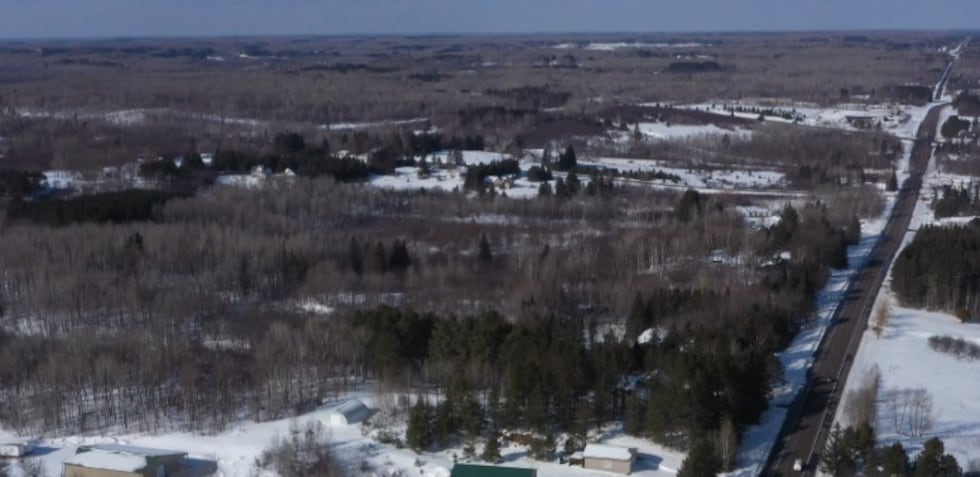
Last fall, after an apparent year of secret talks among a mystery company, Minnesota Power and some elected leaders, we learned a massive, hyperscale data center was planned for Hermantown.
Outrage followed over transparency and environmental concerns, while supporters pointed to major investment and economic growth.
This is just one of the hundreds of big tech projects headed for small communities nationwide, with more than a dozen proposed for Minnesota alone.
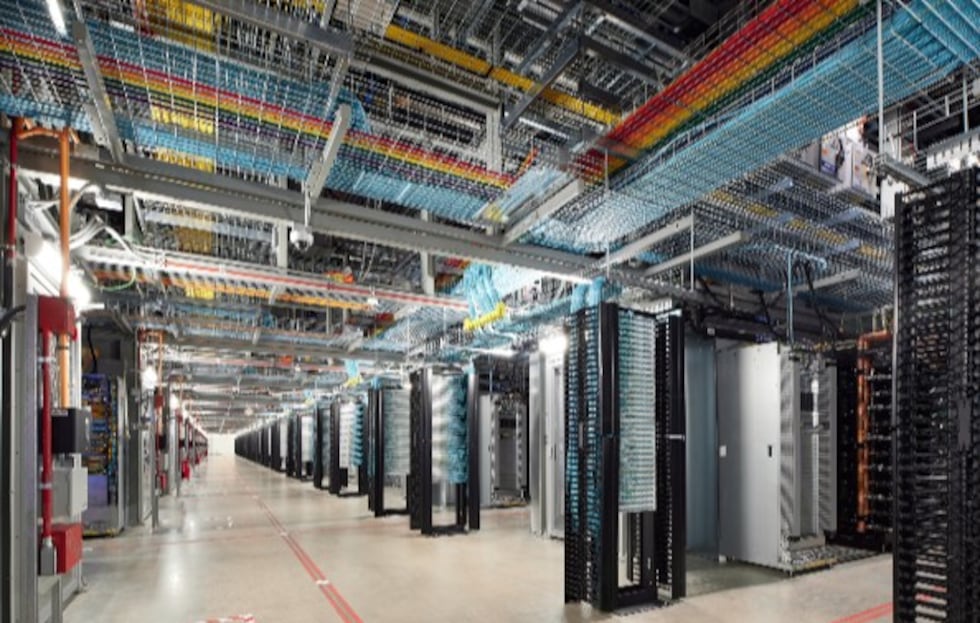
Now that we know the company is Google, Hermantown city leaders face a decision of whether to accept immediate riches, with little idea of the long term consequences.
No amount of snow and cold can keep the Schminski family indoors.
On a sunny February morning, Brea Schminski and her young children snowshoed across the woods of their property.
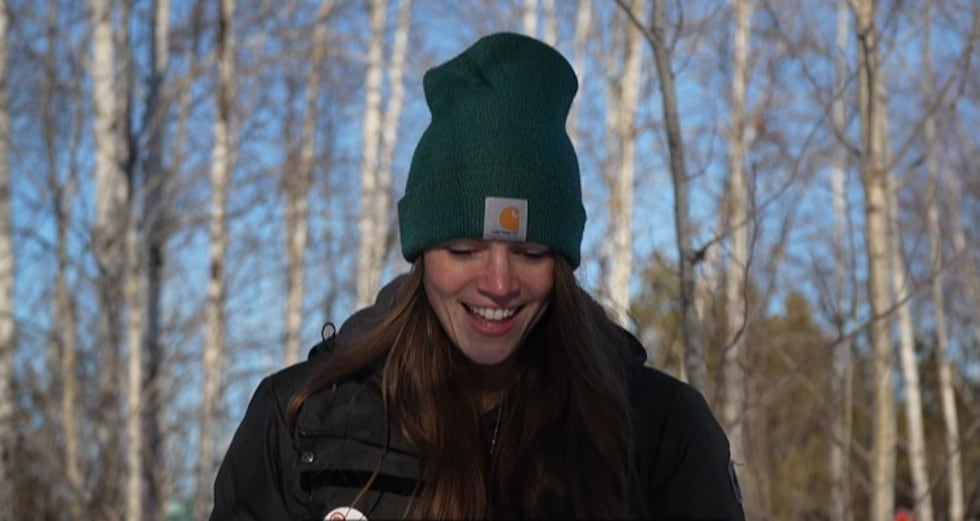
They chose to live on a quiet, Hermantown-area plot of land to enjoy the outdoors.
“We long going on walks and bike rides,” said Brea Schminski.
However, these days, mom spends less time enjoying nature, and more time worrying it could go away.
“We were just basically flabbergasted,” said Schminski.
Word that Google could become a neighbor came as a shock. She gets emotional talking about it.
“We’ve talked about maybe moving when the kids are done with school because that’s when it would be done being built,” said Schminski. “It’s kind of hard to imagine when you think you’ve found your forever home”
Hermantown, after all, promotes itself as a place “for country living and small-town community feel,” as it says on the city’s website.
The Schminski family lives on the southern edge of the proposed build site, where around a decade of construction would put up buildings equal to a third of the Mall of America.
The data center -- known as hyperscale -- would be filled with hundreds of thousands of servers that help fuel big tech’s artificial intelligence push.
Google, one of the nation’s largest companies, says hundreds of Hermantown acres would help drive a new era of industry and enhance national security.
That might sound familiar to Northlanders of a certain age.
In 1915, the nation’s largest company used these hundreds of West Duluth acres to help drive a new era of industry and enhance national security.
U.S. Steel chose that part of town as a place to manufacture steel and cement for roughly six decades.
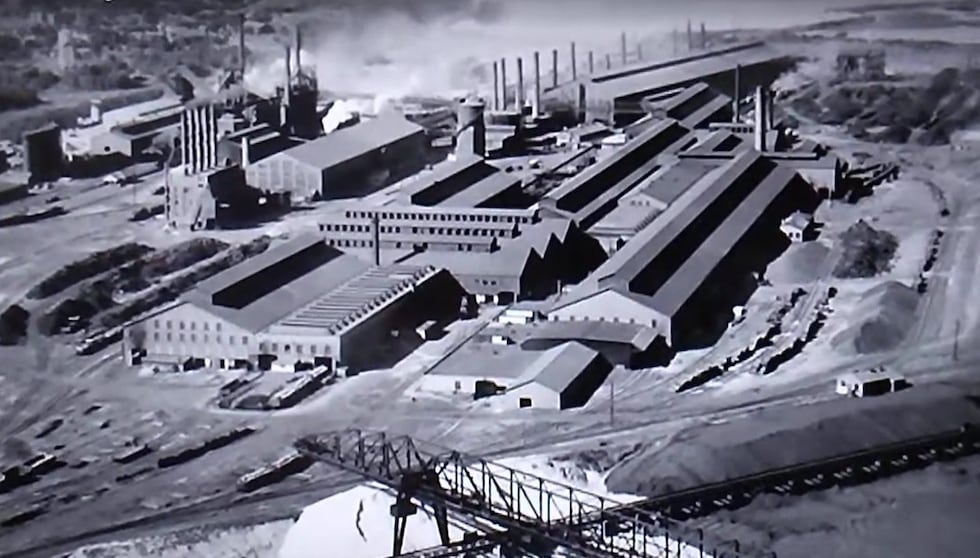
The largest employer in city history, with several-thousand people working there at a time, had an entire neighborhood built for them.
With the facility’s help, Duluth’s population was much larger then than it is today.
The modern growth challenges were recently addressed by Hermantown city leaders at a brief press conference.
“The overarching challenges that we’re all facing,” started Hermantown Assistant City Administrator Joe Wicklund. “Populations that haven’t grown, adding Google as a partner of our local and statewide efforts provides a benefit for all of those efforts.”
Wicklund and Hermantown Economic Development Director Chad Ronchetti are touting Google as a launching pad to return the Twin Ports to its economic glory days. However, for the project to become reality, it will have to overcome several challenges, including a rock rollout.
When data center plans came to light via an environmentalist’s data request in September, there was outrage that it had been kept secret for more than a year by all parties involved, including some local elected leaders who vowed to keep their silence by signing non-disclosure agreements.
“They knew everything but they didn’t divulge it with us,” said Bob Kohlmeier.
Kohlmeier’s property butts up to one corner of the data center site. He and his family have lived there for decades, and when the data center developer offered to buy him out, he told them to kick snow.
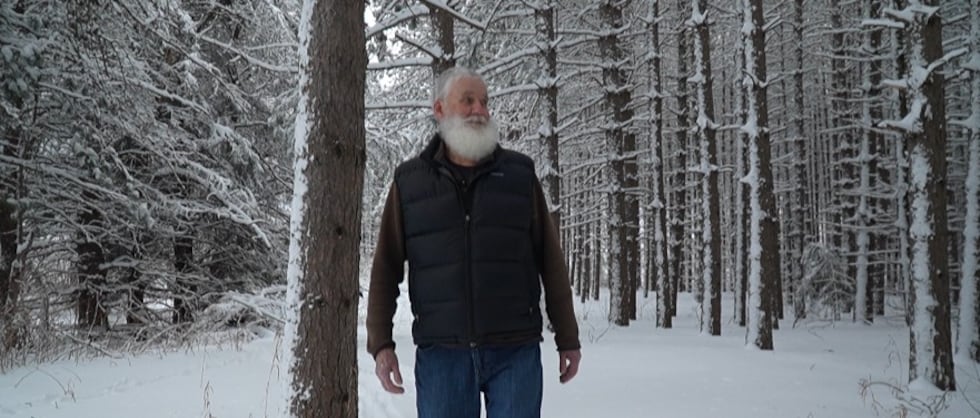
“Non-disclosure agreements. For all I’ve done for this city. I fought for the country in Vietnam, we planted these trees, we coached soccer, we fly the flag,” said Kohlmeier. “For them to keep this secret was a slap in my face. I don’t trust these people anymore.”
Concern over the data center is why Kohlmeier’s exchanged emails with the state senator from Hermantown, Grant Hauschild.
Hauschild authored legislation to attract hyperscale data centers to Minnesota.
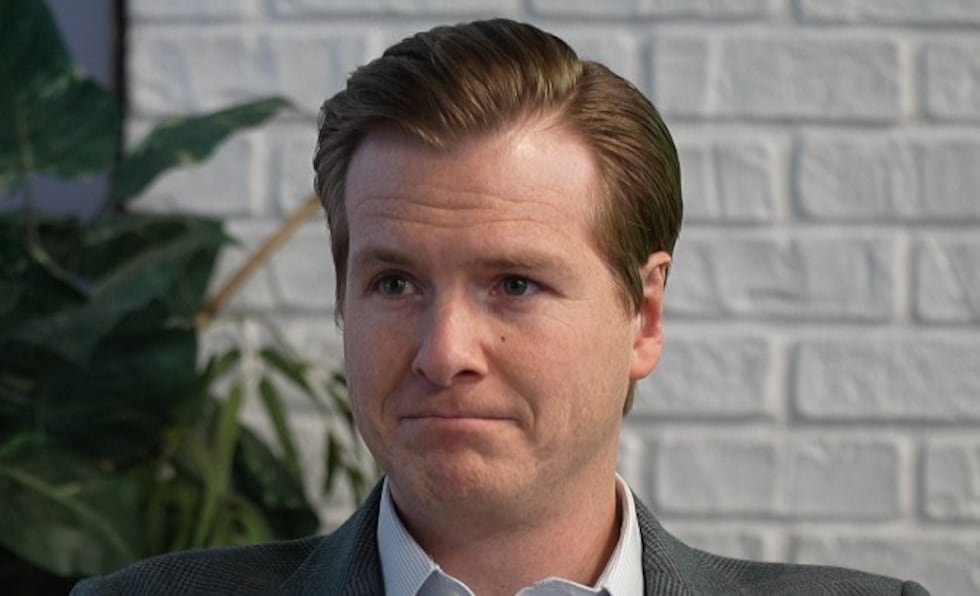
He’s now cleaning up by pushing legislation that bans elected leaders from signing NDAs.
Northern News Now’s Dan Wolfe asked Sen. Hauschild, “you knew NDA’s were a part of this when you introduced legislation to try to attract data centers. Isn’t that kind of like starting a fire and taking credit for putting it out?”
Hauschild replied, “It’s a good point. I didn’t know some of the details of how NDAs were used in local governments when I was a city councilor. I never was involved in NDAs or what that process looked like.”
Sen. Hauschild’s bill last session offers big tech companies sales tax exemptions on equipment and software.
“Why try to attract one of these big AI data centers to our north woods?” asked Wolfe.
“You know, it wasn’t about picking a particular area,” replied Hauschild. “But what we did want to make sure is that Minnesota had the highest environmental standards while also staying competitive with neighboring states.”
“You feel comfortable that this will be done in an environmentally friendly way?” asked Wolfe.
“Yeah, I think it would go through the proper processes,” said Hauschild.
And that’s where this debate gets really heated.
The lawsuit keeping Hermantown officials from talking to Northern News Now for this story was filed by an environmental group that says a build here is not going through the right process.
“We have gotten more calls on this data center issue than possibly any issue ever in our 50 year history,” said JT Haines.
Haines is Northeast Minnesota Director of the Minnesota Center for Environmental Advocacy.
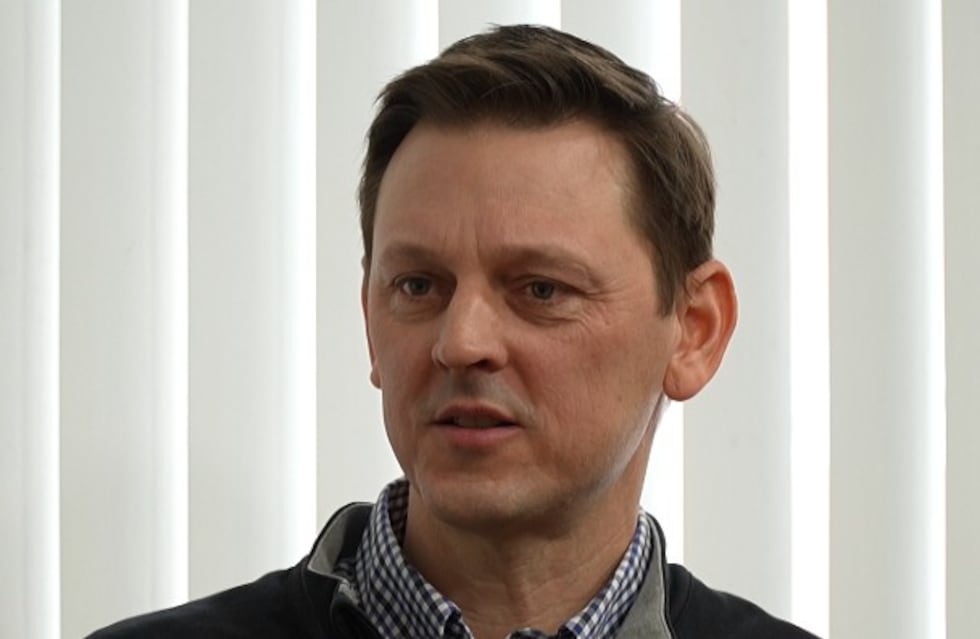
The organization is suing Hermantown, demanding leaders do a more thorough environmental review, called an Environmental Impact Statement.
“I think what’s happened here is a lot of outside money and influence has come knocking on the doors of a lot of small cities in Minnesota with this brand new process called an AUAR,” said Haines.
That stands for Alternative Urban Areawide Review, typically performed for light industrial development.
The MCEA says there’s nothing light about a building the size of US Bank Stadium going up in the midst of woods and wetlands, potentially using more electricity than every residential Minnesota Power customer combined.
“The biggest environmental concern here is the energy draw,” said Haines. “There are enormous carbon implications of a hyperscale data center. On energy, on water, on the metals used in the servers, air, noise pollution, etcetera.”
It seems for now, residents of the region share in that concern.
In an exclusive Northern News Now-UWS Center for Research and Evaluation Services survey of around 1,200 Twin Ports residents, 74% oppose the Hermantown data center.
22% support the project.
When it comes to those who live within five miles of the proposal, 76% oppose.
28% of them cite environmental concerns, including energy use, as the reason for their opposition.
Minnesota Power cleared up some energy use questions last week. The company announced it will power the data center, in part by introducing a massive amount of wind and battery storage to the grid.
“We’re going to add 700 megawatts of new clean energy technology,” said Julie Pierce, VP of Strategy and Planning at Minnesota Power.
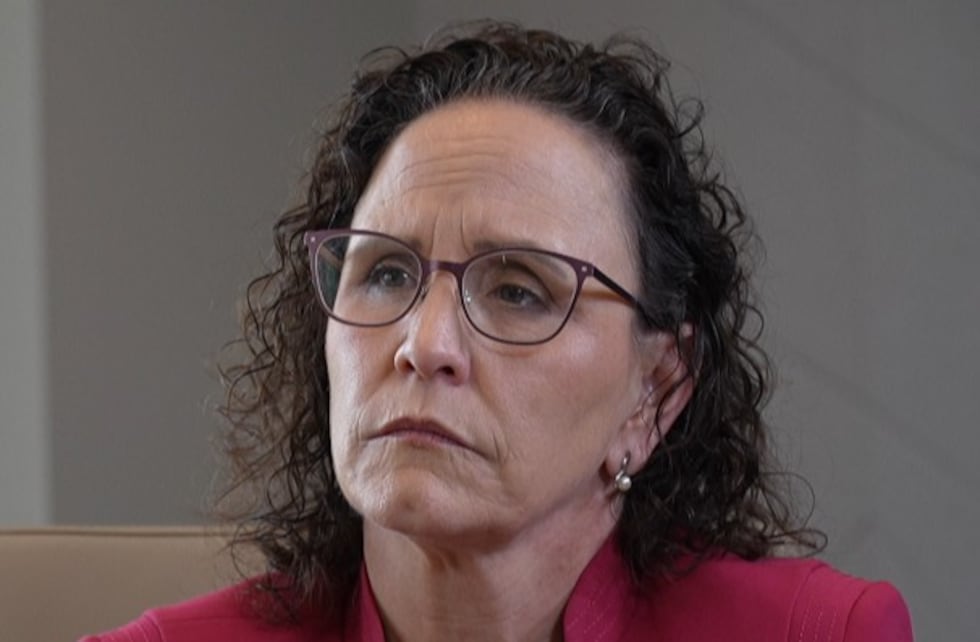
Asked if that’s everything it will take to power the data center and whether only clean energy will be used to power the data center, Pierce replied, “They’re going to get the benefits of our entire portfolio and that renewable energy supply is going to augment and ensure that we have all the energy we need to serve them.”
Minnesota Power says Google will pay for its own grid infrastructure costs so that they are not passed on to customers.
However, there’s one question no one can seem to answer. What happens to the facility when it’s estimated ten to 25 year lifespan is up?
“I’m not happy with my former industry not telling the straight truth,” said former US Bank tech executive Prescott Balch.
Balch is a Wisconsinite who worked in the tech industry for 38 years.
He now sees himself as a data center resistance leader, recently fending off Microsoft’s plans for a hyperscale data center in a village outside Milwaukee.
His winning argument -- it’s risky economics.
“The developer was putting a big giant number in a piece of paper and saying ‘wouldn’t this be nice in your village coffers every year?’ And the answer is, ‘sure it would.’ However, it’s a volatile industry with no reverence for its past.”
Still, area economic development leaders, like APEX CEO Rachel Johnson, say a global brand promising hundreds of jobs and millions in tax revenue is too good an opportunity to pass up.
“This is a digital port,” said Johnson. “It attracts other business and commerce because it’s located here.”
That’s what US Steel did near Duluth’s port. For 65 years it was an economic engine, before leaving behind a mess and deep economic void.
Many now wonder which part of that history this project would repeat.
“Back in the early 1900’s when we had the mining and the timber and we had the most millionaires per capita of anywhere in the nation,” said Johnson. “An investment like Google, again there’s significance to that. They are a global superpower.”
Still, environmentalists and others opposed to the project say we have to slow down.
“If these data centers are so critical, if we need this many of them and there’s not a bubble, well in two years presumably those factors will still be in place,” said JT Haines.
It appears a majority of Americans agree with that sentiment.
Gallup recently performed a nationwide survey, finding around 80% of Americans believe the government should maintain rules for AI safety and data security, even if it means developing AI capabilities more slowly.
As for our local survey, full results can be found here.
Northern News Now sponsored the study and contracted with the UW-Superior Center for Research and Evaluation Services to serve as the research agent.
Click here to download the Northern News Now app or our Northern News Now First Alert weather app.
Copyright 2026 Northern News Now. All rights reserved.