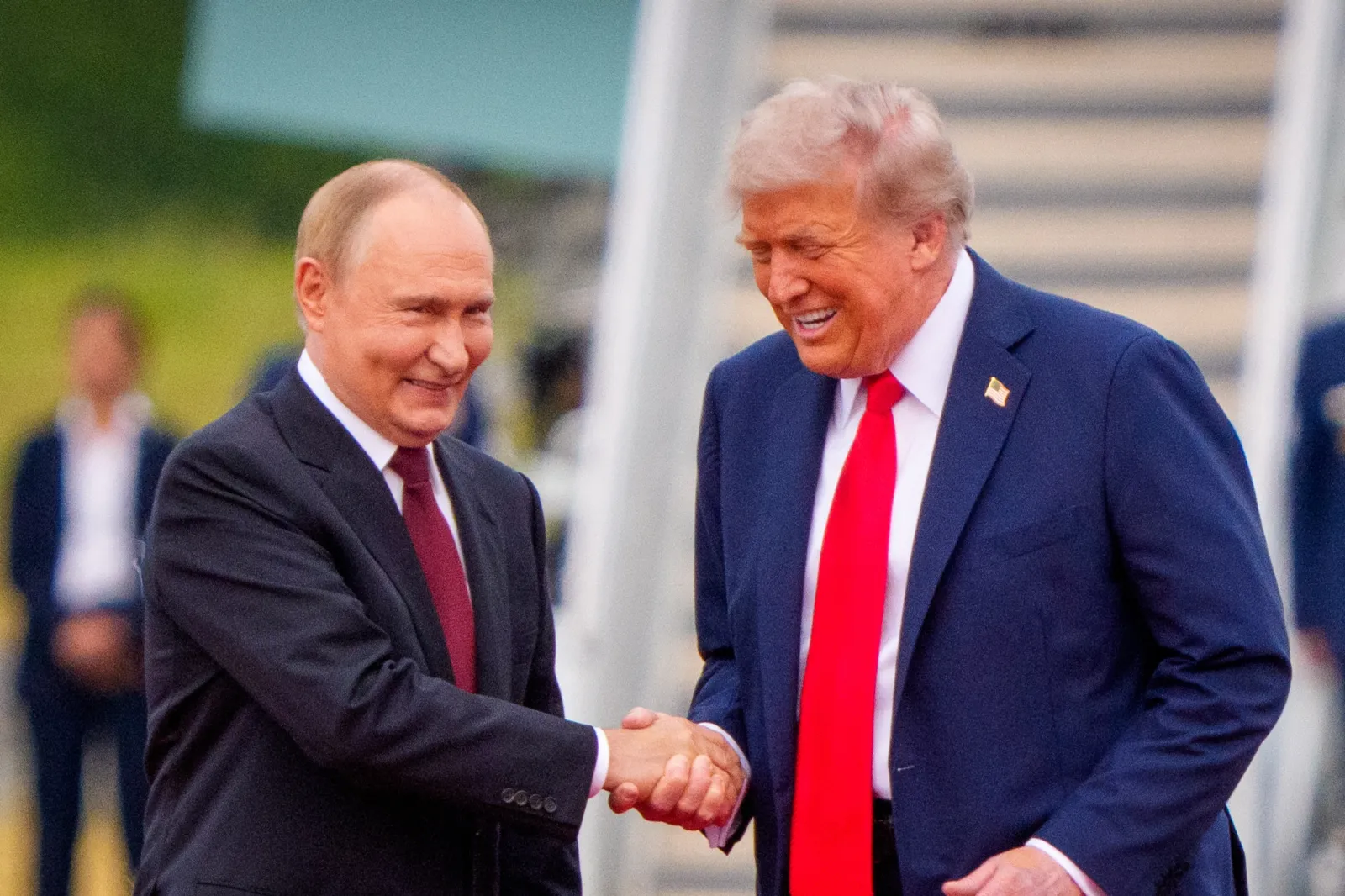
Action led by President Donald Trump has contributed to what "looks like Putin’s dream plan," a key NATO ally's leader has warned.
Polish Prime Minister Donald Tusk wrote in a post on X on Thursday: "The threat of NATO’s break-up, easing sanctions on Russia, a massive energy crisis in Europe, halting aid for Ukraine and blocking the loan for Kyiv by Orbán - it all looks like Putin’s dream plan."
Russian President Vladimir Putin has for years complained about NATO's eastward expansion, and in his explanation for invading Ukraine, named Kyiv possibly nearing membership as a major red line.
President Trump and Secretary of State Marco Rubio both suggested this week that the U.S. will review its role in NATO after the war in Iran ends. Last month the U.S. lifted sanctions on Russian oil in a bid to curb energy price rises as a result of the war. Meanwhile Hungary leader Viktor Orbán, a Trump ally, blocked Europe sending more aid and loans to Ukraine.
Asked about Tusk's remarks and whether the sanctions would be reimposed, a U.S. State Department spokesperson referred Newsweek to Secretary Rubio's comments and said the "United States does not preview sanctions actions."
Why It Matters
Tusk's pointed remarks speak to a widening gap between the U.S. and its European allies.
Trump has long questioned the value of U.S. membership in the NATO military alliance, which was established in the wake of World War II to seek stability in Europe and prevent the spread of communism from the Soviet Union. Trump has also railed against the imbalance in military spending between the U.S. and other alliance members, and European pushback against his plans to annex Greenland.
The U.S.-Israel war in Iran has only exacerbated frustrations on both sides of the Atlantic. Trump has repeatedly criticized European NATO allies for not helping defend the Strait of Hormuz, the key shipping route blocked by Iran. In turn, Europe is increasingly vulnerable to the resultant rise in energy prices, at a time when it is already working to end its dependency on Russian gas.
What To Know
Trump said he would consider pulling the U.S. from NATO after the Iran war, in comments published by a British newspaper on Wednesday, as European leaders met to coordinate plans to tackle an energy crisis escalated by the conflict.
Asked if he would reconsider the U.S.’ membership of NATO after the conflict, the president told the Daily Telegraph: "Oh yes, I would say [it’s] beyond reconsideration. I was never swayed by NATO. I always knew they were a paper tiger, and Putin knows that too, by the way."
Trump's comments emerged hours after U.S. Secretary of State Marco Rubio told Fox News, "we are going to have to re-examine" NATO after the war in Iran. Trump has offered several different timelines for the war's end, most recently offering on Tuesday "two or three weeks"—a popular timeframe offered by the president for major news developments.
Most of Tusk's points centered on a looming energy crisis heading down the road for Europe, where gas prices have risen by more than 70 percent since the U.S.-Israeli war on Iran began on February 28.
The U.S. last month lifted sanctions on Russian oil at sea until April 11—aiming to ease soaring energy prices caused by the Iran war—marking a major easing of America’s stance on punishing Russia for its full-scale war on Ukraine.
Meanwhile, new European Union (EU) sanctions on Russia and a new loan to Ukraine have been blocked by Russian ally Viktor Orbán, the leader of Hungary, an EU member.
Last year, the Trump administration temporarily halted military aid to Ukraine following a combustible White House meeting between the U.S. president and Ukrainian counterpart Volodymyr Zelensky.
What People Are Saying
U.S. Secretary of State Marco Rubio told Fox News on Wednesday: "I think there’s no doubt, unfortunately, after this conflict is concluded, we are going to have to re-examine that relationship.
"If NATO is just about us defending Europe if they’re attacked, but them denying us basing rights when we need them, that’s not a very good arrangement. That’s a hard one to stay engaged in."
President Donald Trump told the Daily Telegraph in remarks published on Wednesday: "Beyond not being there [the Strait of Hormuz], it was actually hard to believe. And I didn’t do a big sale. I just said, ‘Hey,' you know, I didn’t insist too much. I just think it should be automatic.
"We’ve been there automatically, including Ukraine. Ukraine wasn’t our problem. It was a test, and we were there for them, and we would always have been there for them. They weren’t there for us."
What Happens Next
Foreign ministers from more than 30 countries are scheduled to meet on Thursday to plan diplomatic and political pressure to reopen the Strait of Hormuz. The U.S. is not among them.