According to Billboard’s "Country Digital Song Sales" chart, the No. 1 song in the U.S. is "Walk My Walk" by Breaking Rust—an artist that was created by artificial intelligence (AI).
Newsweek contacted Breaking Rust via social media message outside of regular working hours for comment.
Why It Matters
This is a new development in the music industry as it is the first time an AI-created song has reached the top of the charts.
There have long been concerns about the use of generative AI in creative sectors. Discourse about this came into the fold a few years ago following protests in Hollywood from the writer and actor guilds, which took place shortly after the public release of ChatGPT, and concerns that came in tandem with the new technology and its implications.
Any creative materials that have been made with the usage or assistance of AI are heavily scrutinized, be it the debut of the so-called AI actor Tilly Norwood or internet furor over Coca-Cola using AI in their Christmas adverts.
High-profile musicians, including Sir Elton John and Dua Lipa, are among those leading the charge for AI regulations as multiple petitions have been launched to ban the usage of AI in certain areas.
What To Know
Not much is currently known about Breaking Rust, but the artist's bio on Linktree reads: “Music for the fighters and the dreamers.”
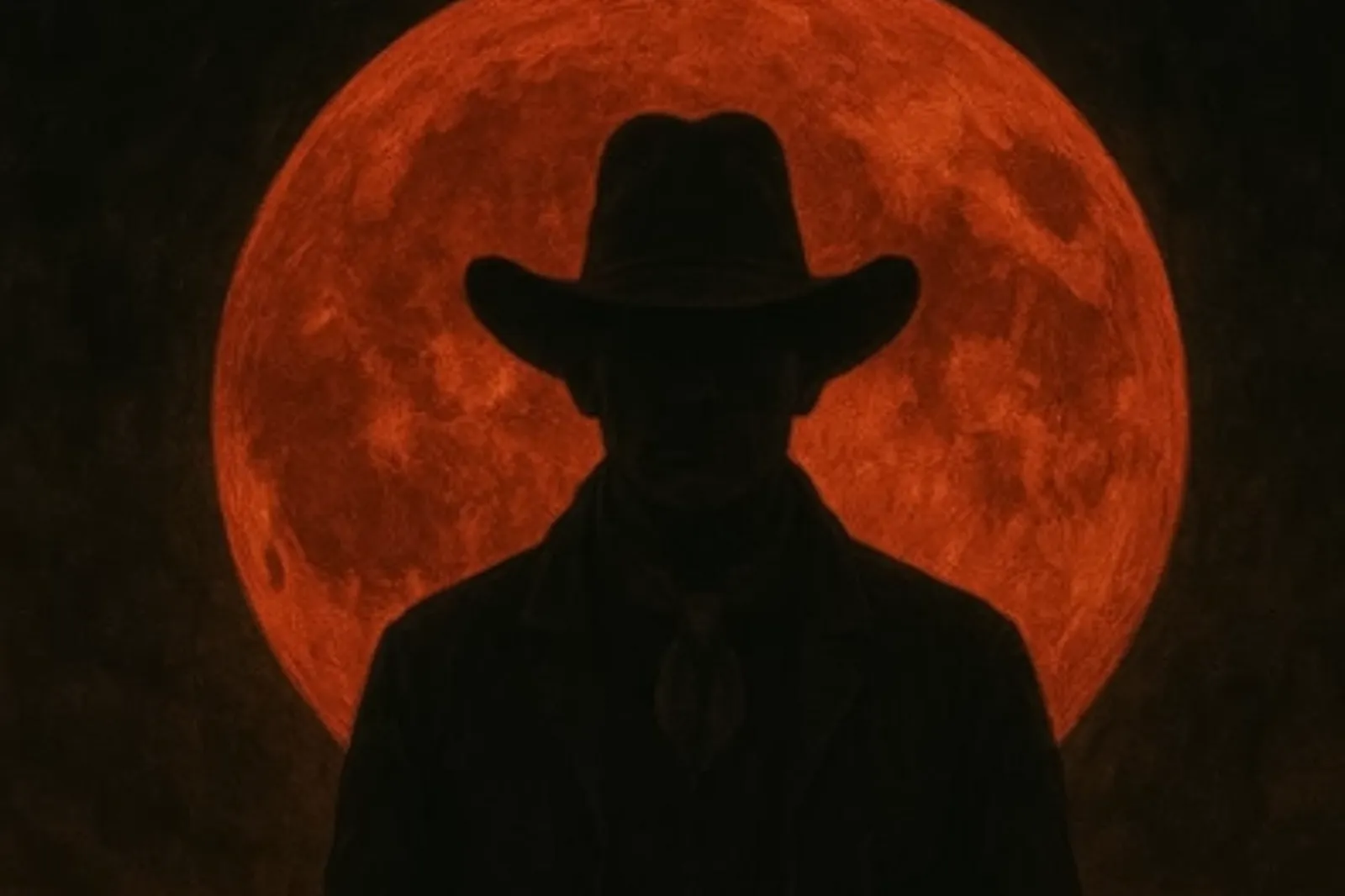
Breaking Rust also has a profile on Instagram, which boasts over 35,000 followers and is filled with images of a melancholy looking man, wearing a cowboy hat in various settings, including at a phone booth, walking on a road, and sitting in the rain.
As of publication time, Breaking Rust has more than 2 million monthly listeners on Spotify where it is a verified artist. On YouTube, it has over 23,000 subscribers, and the video for the song "Livin' on Borrowed" Time has amassed 4.4 million views over the four weeks since it was first uploaded.
Speaking to Newsweek over email about the song, Jason Palamara, an assistant professor of music technology at Indiana University said “Despite the 'stomp, clap, hey' rhythms and acoustic-y sound, this song is heavily laden with some very techy production techniques.”
“After listening to 'Walk My Walk' one time, it was pretty obviously the product of AI,” Palamara noted.
Palamara described Breaking Rust’s music as an improvement to other AI bands like The Velvet Sundown, adding: “This is an advancement for agentic [autonomous] AI: the creation of a consistent vocal 'character' that can be reused again and again for multiple songs.” However, he described the lyrics as a vague and meaningless.
“The audio on every track sounds really compressed and still has this weird digital shimmer, especially evident in the vocals. Once you notice it you can’t not notice it,” Palamara told Newsweek.
Pointing to how people have connected with Breaking Rust’s music, Palamara said: “The fact that this is happening with country shows that even country music is susceptible to being faked without any sincerity. Perhaps this means a significant number of modern country fans have drifted from loving real human artists who have real stories to merely being sucked in by flashy production and vapid lyrics.”
The “About” section for the artist is blank and the image used for Breaking Rust's profile picture is a generic black and white image of a man wearing a cowboy hat, with stubble and a necktie.
Multiple songs from the AI-generated artist have garnered over a million streams on Spotify. The song "Livin’ on Borrowed Time" has been streamed more than 4 million times, "Walk My Walk" has been streamed a little over 3 million times and "Whiskey Don’t Talk Back" has been streamed over 1 million times.
Breaking Rust began putting music on Spotify in 2025.
What People Are Saying
Jason Palamara, an assistant professor of music technology at Indiana University told Newsweek: “AI bands are going to make it even harder for real human artists to break through and get a following, at least using streaming apps like Apple Music, Spotify, etc.
“Human artists who are forward-looking are already investing in the one thing AI cannot (yet) replicate, genuine, continual, long-term connections with fans that bring them into the process, rather than just showing the output (the song, the album) after the cake has been baked…That level of deep connection is going to be very hard for AI to replicate.”
Josh Antonuccio, director of the School of Media Arts and Studies at Ohio University told Newsweek: “On the whole, AI-generated content is creating more noise and integrating tracks to listeners—tracks that will compete with the output of current artists in their respective lanes. The only thing that will continue to distinguish human artists is those that have remarkable music, a compelling perspective and a story that draws fans to them.
“It is already changing the landscape of music, and we’re not going back. Look at Deezer’s reports on the now-30 percent volume of AI-generated tracks that are being uploaded to their platform or the AI-assisted artist Xania Monet, who already hit the Billboard charts. The ease of this technology will only enable both musicians and fans alike to create and distribute work at a scale we have not seen before.”
Spotify, in a statement to Newsweek via email, said: “Spotify recently rolled out new protections for artists, songwriters, and producers against AI-accelerated spam, impersonation, and deception. As part of this, we’re supporting a new industry standard for credits that shows when AI played a role (like vocals, instrumentation, or post-production). When labels and distributors send us that info, it’ll start appearing in credits on Spotify.
"We also shared plans to collaborate with Sony Music Group, Universal Music Group, Warner Music Group, Merlin, and Believe to develop responsible AI products that empower the artists and songwriters they represent, and connect them with the fans who support them. We’ve begun building a state-of-the-art generative AI research lab and product team focused on developing technologies that reflect our principles and create breakthrough experiences for fans and artists."
Journalist Joe Weisenthal wrote in an X post on Sunday: “The #1 country song in America is AI generated. The artist 'Breaking Rust' has 2 million monthly listeners on Spotify.”
X user @TrixxFEE wrote in a post last week: “Pretty much every week now there's a new AI artist popping up on the Viral 50, this week it's 'Breaking Rust.'"
What Happens Next?
As the AI revolution continues to impact creative industries, it could be that more AI-generated artists continue to pop up in the charts, with pushback likely to be inevitable.
Antonuccio told Newsweek “Whether it’s lyrical assistance, AI-assisted ideation, or wholesale artist and song creation, AI-generated content is going to become a much more common reality and will continue to find its way into the charts. The real question starts to become 'will fans care about how it’s made?'”
Update 11/13/25, 3:19 a.m. ET: This article has been updated to include comment from Spotify and additional context.
Update 11/11/25, 8:42 a.m. ET: This article has been updated to include comment from Antonuccio and Palamara.