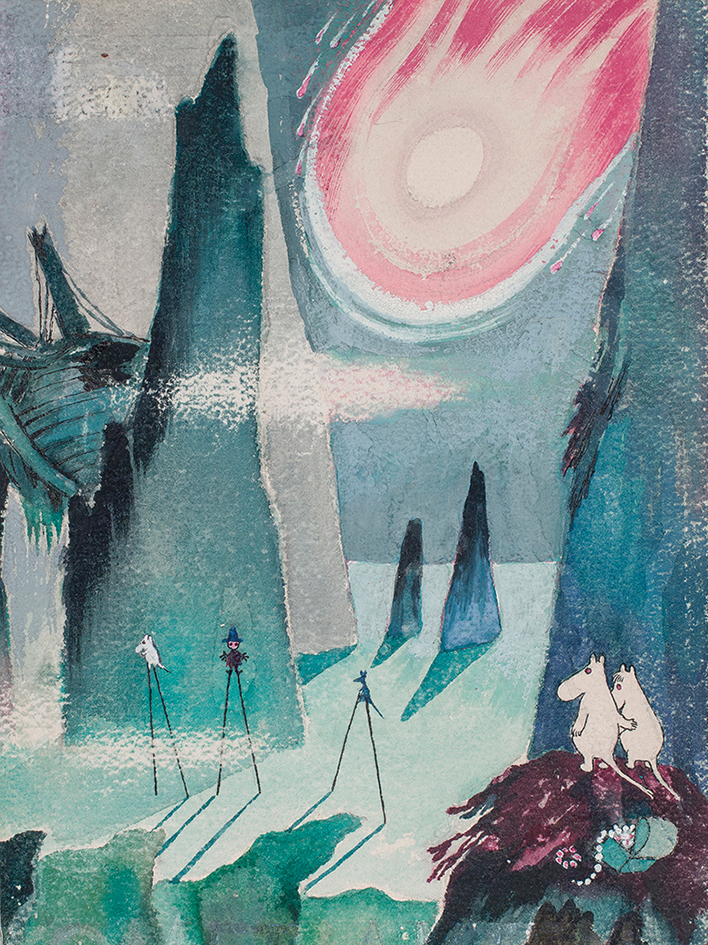
“I could vomit over Moomintroll,” Tove Jansson confided in her notebook in the late 1950s. A decade after the hippo-like creature with low self-esteem made his debut appearance in 1945, Scandinavian homes had become versions of Moominvalley, with Moomin-themed aprons, curtains, wallpaper and crockery, while department stores stocked Moomins modelled in marzipan, ceramic and white leather (Jansson drew the line at Moomin sanitary towels). This world of whimsy bore little relation to the Finnish artist’s initial conception of the Moomintrolls.
The Moomins and the Great Flood, the 60-page picture book not translated into English until 2005 and now celebrating its 80th anniversary, was written during the Winter War in 1939, when Russia’s invasion of Finland left 300,000 Finns homeless. (The Moomin estate is marking the anniversary by partnering with Counterpoints Arts and Refugee Week to commission artists to create public artworks inspired by the book.) A tale of displaced people and dangerous predators and living on borders, the first of the nine Moomin books begins with Moomintroll and Moominmamma arriving, “late in the afternoon one day at the end of August”, in “the deepest part of the great forest”. August, Jansson believed, was “the border between summer and winter” and twilight “the border between day and night”.

Subscribe to the New Statesman this summer - 2 months for only £2

Content from our partners
This article appears in the 10 Apr 2025 issue of the New Statesman, Spring Special 2025