- NEWS FEATURE
- Correction 21 April 2026
A burgeoning field is launching its first clinical trial to find out whether dialling back cell development can safely refresh aged tissues and organs.

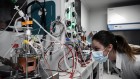
Technologies to refresh ageing tissue have become attractive targets for investors. Credit: Jean-Christophe Plat/Gamma-Rapho/Getty
Yuancheng Ryan Lu could barely breathe while he waited for his labmate to adjust the microscope focus.
Nature 652, 291-293 (2026)
doi: https://doi.org/10.1038/d41586-026-01024-7
Updates & Corrections
-
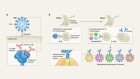
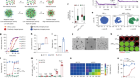
Correction 21 April 2026: The graphic in this article had an inaccurate label for the Yamanaka factor SOX2.
References
Lu, Y. et al. Nature 588, 124–129 (2020).
Takahashi, K. & Yamanaka, S. Cell 126, 663–676 (2006).
Singh, P. B. & Zacouto, F. J. Biosci. 35, 315–319 (2010).
Ocampo, A. et al. Cell 167, 1719–1733 (2016).
Doeser, M. C., Schöler, H. R. & Wu, G. Stem Cells 36, 1216–1225 (2018).
de Lázaro, I. et al. Mol. Ther. 27, 59–75 (2019).
Chen, Y. et al. Science 373, 1537–1540 (2021).
Rodríguez-Matellán, A. et al. Stem Cell Rep. 15, 1056–1066 (2020).
Macip, C. C. et al. Cell Reprogram. 26, 24–32 (2024).
Berdugo-Vega, G. et al. Neuron 114, 1102–1116 (2026).
Related Articles
-
 How your brain controls ageing — and why zombie cells could be key
-
 How quickly are you ageing? What molecular ‘clocks’ can tell you about your health
 Longevity is in the genes: half of lifespan is heritable
 Reversal of biological clock restores vision in old mice