- NEWS AND VIEWS
Exploring multidimensional ‘landscapes’ of chemical reactions provides rich insights into how they work, and might even enable the discovery of new forms of reactivity.
By
-
William E. Robinson
-
William E. Robinson is at Radboud University in Nijmegen, the Netherlands, and the Big Chemistry consortium in the Netherlands.
-
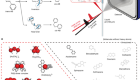
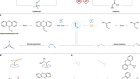
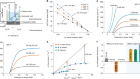
When people think of a reaction to synthesize a new chemical compound, they might imagine an equation consisting of one or two reactants on the left-hand side, leading to a single product compound on the right. Around the reaction arrow, details of the conditions might be given: a single temperature, catalyst concentration or reaction time, for instance.
Nature 645, 861-862 (2025)
doi: https://doi.org/10.1038/d41586-025-02821-2
References
Jia, Y. et al. Nature 645, 922–931 (2025).
Leonov, A. I. et al. Nature Commun. 15, 1240 (2024).
Dai, T. et al. Nature 635, 890–897 (2024).
Ha, T. et al. Sci. Adv. 9, eadj0461 (2023).
Slattery, A. et al. Science 383, eadj1817 (2024).
Rohrbach, S. et al. Science 377, 172–180 (2022).
Back, S. et al. Digit. Discov. 3, 23–33 (2024).
Schäfer, F., Lückemeier, L. & Glorius, F. Chem. Sci. 15, 14548–14555 (2024).
Robinson, W. E., Daines, E., van Duppen, P., de Jong, T. & Huck, W. T. S. Nature Chem. 14, 623–631 (2022).
Competing Interests
The author declares no competing interests.
Related Articles
-
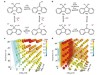 Read the paper: Robot-assisted mapping of chemical reaction hyperspaces and networks
-
 A way to determine how partial charges of atoms in a molecule are distributed
-
 Origins of life: the molecules that could have unlocked peptide synthesis
-
 Light wins uphill battle to solve enduring problem in organic synthesis