- NEWS FEATURE
The Langlands programme has inspired and befuddled mathematicians for more than 50 years. A major advance has now opened up new worlds for them to explore.
By
-
Ananyo Bhattacharya
-
Ananyo Bhattacharya is chief science writer at the London Institute for Mathematical Sciences and the author of The Man from the Future: The Visionary Ideas of John von Neumann.
-

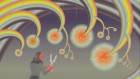
Illustration: Andy Gilmore
One of the biggest stories in science is quietly playing out in the world of abstract mathematics. Over the course of last year, researchers fulfilled a decades-old dream when they unveiled a proof of the geometric Langlands conjecture — a key piece of a group of interconnected problems called the Langlands programme. The proof — a gargantuan effort — validates the intricate and far-reaching Langlands programme, which is often hailed as the grand unified theory of mathematics but remains largely unproven. Yet the work’s true impact might lie not in what it settles, but in the new avenues of inquiry it reveals.
Nature 643, 622-624 (2025)
doi: https://doi.org/10.1038/d41586-025-02197-3
References
Gaitsgory, D. & Raskin, S. Preprint at arXiv https://doi.org/10.48550/arXiv.2405.03599 (2024).
Arinkin, D. et al. Preprint at arXiv https://doi.org/10.48550/arXiv.2405.03648 (2024).
Campbell, J. et al. Preprint at arXiv https://doi.org/10.48550/arXiv.2409.07051 (2024).
Arinkin, D. et al. Preprint at arXiv https://doi.org/10.48550/arXiv.2409.08670 (2024).
Gaitsgory, D. & Raskin, S. Preprint at arXiv https://doi.org/10.48550/arXiv.2409.09856 (2024).
Arinkin, D. & Gaitsgory, D. Sel. Math. New Ser. 21, 1–199 (2015).
Gaitsgory, D. Astérisque 370, 1–112 (2015).
Fargues, L. Preprint at arXiv https://doi.org/10.48550/arXiv.1602.00999 (2016).
Fargues, L. & Scholze, P. Preprint at arXiv https://doi.org/10.48550/arXiv.2102.13459 (2024).
Kapustin, A. & Witten, E. Commun. Number Theory Phys. 1, 1–236 (2007).
Ben-Zvi, D., Sakellaridis, Y. & Venkatesh, A. Preprint at arXiv https://doi.org/10.48550/arXiv.2409.04677 (2024).
Related Articles
-
 ‘Mind blowing’: quantum computer untangles the mathematics of knots
-
 Obesity-drug pioneers and 13,508 physicists win US$3-million Breakthrough Prizes
 ‘Grand unified theory of maths’ nets Abel Prize
 Proof of passion