- NEWS
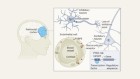
In mice, stress altered the way that the brain formed memories, resulting in an unnecessary fear response.
Stress makes mice form big bundles of neurons in the brain that disrupt memory formation, making them fearful of harmless situations1 — which might help to explain why stressed people often feel threatened in safe environments.
Access options
Access through your institution
Access Nature and 54 other Nature Portfolio journals
Get Nature+, our best-value online-access subscription
$32.99 / 30 days
cancel any time
Subscribe to this journal
Receive 52 print issues and online access
$199.00 per year
only $3.83 per issue
Prices may be subject to local taxes which are calculated during checkout
doi: https://doi.org/10.1038/d41586-024-03724-4
References
Lesuis, S. L. et al. Cell https://doi.org/10.1016/j.cell.2024.10.034 (2024).
Related Articles
 Memories are made by breaking DNA — and fixing it
 Sleep deprivation disrupts memory: here’s why
 Brain stimulation leads to long-lasting improvements in memory
 Young brain fluid improves memory in old mice
Subjects
Latest on:




Jobs
-
Assistant/Associate/Full Professor
The Department of Integrative Biology and Pharmacology (https://med.uth.edu/ibp/), McGovern Medical School at The University of Texas Health Scienc...
Houston, Texas (US)
UTHealth Houston
-
Postdoctoral Fellow – DNA Damage Response and Cancer Biology
Postdoctoral Fellow – DNA Damage Response and Cancer Biology The Luong Lab in the Department of Oncology Science at the NCI-designated OU Health ...
Oklahoma City, Oklahoma
University of Oklahoma Health Campus
-
NTU AI-for-X Postdoctoral Fellowship 2026
NTU AI4X-PDF empowers early-career researchers to harness AI for breakthroughs in STEM, driving innovation and boosting Singapore’s AI ecosystem
Singapore (SG)
Nanyang Technological University (NTU)
-
Talent Recruitment Announcement at the College of Plant Science & Technology
Gather Global Talents, Forge Great Achievements
Wuhan, Hubei (CN)
Huazhong Agricultural University (HZAU)
-
Recruitment Announcement for High-Level Talent at the Center for Agricultural Microbiology
Join HZAU's global faculty team to advance research with competitive benefits.
Wuhan, Hubei (CN)
Huazhong Agricultural University (HZAU)