- NEWS
Knowing the genes responsible for water bears’ radiation tolerance could lead to diverse applications, from cancer treatment to space exploration.
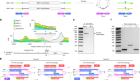
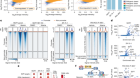
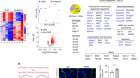
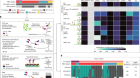
A newly described species of tardigrade is giving scientists insights into what makes these tiny eight-legged creatures so resistant to radiation.
Access options
Access through your institution
Access Nature and 54 other Nature Portfolio journals
Get Nature+, our best-value online-access subscription
$32.99 / 30 days
cancel any time
Subscribe to this journal
Receive 52 print issues and online access
$199.00 per year
only $3.83 per issue
Prices may be subject to local taxes which are calculated during checkout
doi: https://doi.org/10.1038/d41586-024-03484-1
References
Li. L. et al. Science 386, eadl0799 (2024).
Related Articles
 What Chernobyl’s stray dogs could teach us about radiation
 See a tardigrade ride a worm in the world’s weirdest rodeo — September’s best science images
Subjects
Latest on:





Jobs
-
Multiple Faculty and Postdoctoral Positions in Ultrasound Medicine and Engineering
Seeking global talents at all levels (Distinguished, Leading, Young Scholars, Postdocs).
Chongqing (CN)
State Key Laboratory of Ultrasound in Medicine and Engineering, Chongqing Medical University.
-
Postdoctoral Researcher
Postdoctoral Researcher to investigate the neural circuit mechanisms underlying individual differences in stress vulnerability and resilience.
New York City, New York (US)
Anacker Lab
-
UTSW OBI Scholars – Assistant Professor or Associate Professor
OBI Scholars seeks exceptional early-career scientists studying mechanisms of nervous system disease for faculty positions with ~$3M in support.
Dallas, Texas (US)
UT Southwestern Medical Center
-
Postdoctoral fellowship in neurogenomics
NIH postdoctoral fellowship opportunity in neurogenomics, multi-omics, and computational biology of neurodegenerative diseases.
National Institute of Health, Bethesda
National Institutes of Health (NIH)
-
Assistant Professor in Fair and Responsible Artificial Intelligence
We are seeking candidates who develop novel AI methods and systems that are technically rigorous, trustworthy and deployable in practice
South Kensington Campus
Imperial College London (ICL)