- CLINICAL BRIEFINGS
Spinal-cord injury interrupts communication between the brain and spinal cord, leading to paralysis. An implant that decodes the brain signals that control movements and drives electrical stimulation of the spinal cord re-establishes this communication, enabling an individual with spinal-cord injury to walk naturally.
This is a summary of: Lorach, A. A. et al. Walking naturally after spinal cord injury using a brain–spine interface. Nature https://doi.org/10.1038/s41586-023-06094-5 (2023).
Access options
Access Nature and 54 other Nature Portfolio journals
Get Nature+, our best-value online-access subscription
$32.99 / 30 days
cancel any time
Subscribe to this journal
Receive 51 print issues and online access
$199.00 per year
only $3.90 per issue
Rent or buy this article
Prices vary by article type
from$1.95
to$39.95
Prices may be subject to local taxes which are calculated during checkout
doi: https://doi.org/10.1038/d41586-023-01345-x
Figure 1 is published under a CC BY 4.0 licence.
References
Courtine, G. & Sofroniew, M. V. Nature Med. 25, 898–908 (2019).
Capogrosso, M. et al. Nature 539, 284–288 (2016).
Benabid, A. L. et al. Lancet Neurol. 18, 1112–1122 (2019).
Rowald, A. et al. Nature Med. 28, 260–271 (2022).
Powell, M. P. et al. Nature Med. 29, 689–699 (2023).
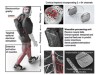 Read the paper: Walking naturally after spinal cord injury using a brain–spine interface