- NEWS AND VIEWS
Resident bacteria in the maternal gut are important for normal fetal brain development in mice. It emerges that this effect is driven by bacterially produced metabolite molecules that signal to the fetal brain.
By
-
Katherine R. Meckel
-
Katherine R. Meckel is in the Nash Family Department of Neuroscience and the Department of Psychiatry, Icahn School of Medicine at Mount Sinai, New York, New York 10029, USA.
-
-
Drew D. Kiraly
-
Drew D. Kiraly is in the Nash Family Department of Neuroscience and the Department of Psychiatry, Icahn School of Medicine at Mount Sinai, New York, New York 10029, USA.
-
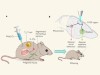
The population of resident gut microorganisms, which are often referred to as the gut microbiota, are crucial for health throughout life. Many studies in animals indicate that the microbiota has a key role in ensuring proper fetal development in the face of environmental stressors. However, what contributions maternal microbes might make to embryo development in the absence of such stressors remain poorly understood. Writing in Nature, Vuong et al.1 report that, in pregnant mice, specific maternal gut bacteria produce molecules as metabolic by-products that influence the neural development of certain sensory pathways in the fetus, leading to lasting behavioural changes in offspring.
Nature 586, 203-205 (2020)
doi: https://doi.org/10.1038/d41586-020-02657-y
References
Vuong, H. E. et al. Nature 586, 281–286 (2020).
Kim, S. et al. Nature 549, 528–532 (2017).
Buffington, S. A. et al. Cell 165, 1762–1775 (2016).
Jašarević, E. et al. Nature Neurosci. 21, 1061–1071 (2018).
Visconti, A. et al. Nature Commun. 10, 4505 (2019).
Vojinovic, D. et al. Nature Commun. 10, 5813 (2019).
Related Articles
-
 Read the paper: The maternal microbiome modulates fetal neurodevelopment in mice
-
 Gut microbes regulate neurons to help mice forget their fear
 Mum’s bacteria linked to baby’s behaviour