- NEWS AND VIEWS
The fundamental machine-learning task of classification can be difficult to achieve directly in ordinary computing hardware. Unconventional silicon-based electrical circuits can be evolved to accomplish this task.
By
-
Cyrus F. Hirjibehedin
-
Cyrus F. Hirjibehedin is in the Quantum Information and Integrated Nanosystems group, Lincoln Laboratory, Massachusetts Institute of Technology, Lexington, Massachusetts 02421, USA.
-
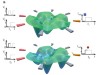
Artificial intelligence (AI) has allowed computers to solve problems that were previously thought to be beyond their capabilities, from defeating the best human opponents in complex games1 to automating the identification of diseases2. There is therefore great interest in developing specialized circuits that can complete AI calculations faster and with lower energy consumption than can current devices. Writing in Nature, Chen et al.3 demonstrate an unconventional electrical circuit in silicon that can be evolved in situ to carry out basic machine-learning operations.
Nature 577, 320-321 (2020)
doi: https://doi.org/10.1038/d41586-020-00002-x
References
Silver, D. et al. Nature 529, 484–489 (2016).
Liu, X. et al. Lancet Dig. Health 1, e271–e297 (2019).
Chen, T. et al. Nature 577, 341–345 (2020).
Merolla, P. A. et al. Science 345, 668–673 (2014).
Day, A., Wynn, A. & Golden, E. APS March Meet. 2020 abstr. L48.00008 (2020); go.nature.com/2ti4zt1
Binnig, G., Rohrer, H., Gerber, Ch. & Weibel, E. Phys. Rev. Lett. 50, 120–123 (1983).
Arute, F. et al. Nature 574, 505–510 (2019).
Bose, S. K. et al. Nature Nanotechnol. 10, 1048–1052 (2015).
Schofield, S. R. et al. Phys. Rev. Lett. 91, 136104 (2003).
 Read the paper: Classification with a disordered dopantatom network in silicon
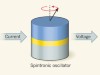 A new spin on nanoscale computing
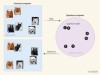 Machine learning in quantum spaces