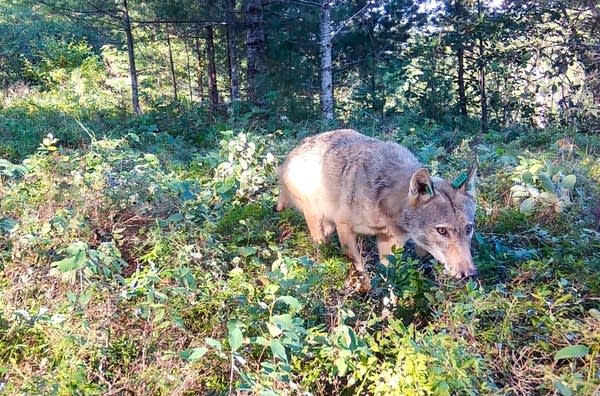
A new study shows that wolves eating and digesting blueberries and northern Minnesota helps blueberry seeds germinate more quickly and successfully. Courtesy of the Voyageurs Wolf Project.
Courtesy of the Voyageurs Wolf Project
Create an account or log in to save stories.
Thanks for liking this story! We have added it to a list of your favorite stories.
Researchers who study wolves in far northern Minnesota have found that wolves eat a lot more than just white-tailed deer, their preferred prey. They also hunt beaver, catch fish, and will even gorge on blueberries in July and August when fresh meat can be tough to come by.
A new study released this week shows that not only do those blueberries help wolves survive during the lean summer months; but the wolves also benefit blueberries by spreading their seeds, and helping those seeds grow faster and germinate more successfully.
Published in the journal Biology Letters, the study found that blueberry seeds digested by wolves and then deposited in their scat were between 5 and 27 percent more likely to successfully germinate and sprout into new blueberry plants. They also germinated about seven days faster than seeds that were not consumed by wolves.
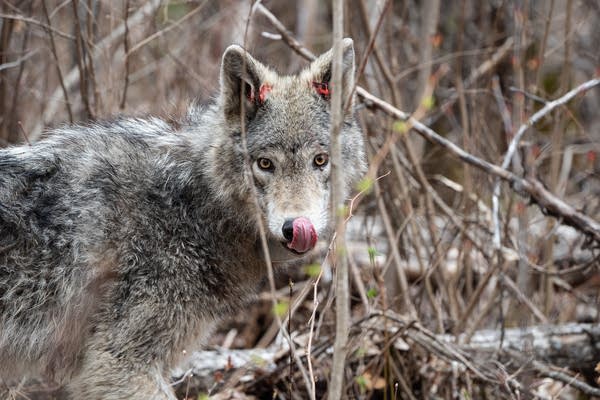
A gray wolf in northern Minnesota in the region around Voyageurs National Park. Courtesy of the Voyageurs Wolf Project.
Courtesy of the Voyageurs Wolf Project
Those increases may not seem enormous. But Tom Gable, who leads the Voyageurs Wolf Project and is co-author on the study, said the faster germination and growth are significant when put in the context of just how many berries wolves can eat.
MPR News helps you turn down the noise and build shared understanding. Turn up your support for this public resource and keep trusted journalism accessible to all.
“Our previous work has estimated that there are hundreds, if not thousands of seeds that are passed through a wolf's gut every time they basically poop out berries.” said Gable.
So even a five percent difference in germination success is meaningful, Gable said, “when you think about how many seeds are being processed through wolves' digestive systems in this ecosystem.”
Scientists with the project have found that blueberries can make up to 83 percent of the diet of wolves living in and around Voyageurs National Park during July and August, when it’s more difficult to catch deer and beaver.
Deer fawns are larger and more elusive in the summer months than earlier in the year. And beavers spend most of their time in ponds in the hot summertime, where they are much more difficult for wolves to hunt.
So wolf pups also rely on berries for about 30 percent of their diets during the summer. The researchers have also documented adult wolves regurgitating berries and feeding them to their young.
So why would blueberry seeds found in wolf poop have a better chance of successfully sprouting? The scientists who study them have two theories.
First, as the seeds pass through a wolf’s digestive system, they get scarred by bone shards and other things in the wolf’s gut. That scraping of the seed coat could give it a better chance to germinate.
Second, the fecal material in wolf scat may create a micro environment that benefits seeds, said Alex Gross, a masters student at Northern Michigan University who works with the Voyageurs Wolf Project and is the lead author of the study.
“Think of [it] like a fertilizing effect on blueberry seeds, and that may protect the seeds from harmful pathogens that would maybe inhibit growth or harm the seeds in some way,” said Gross.
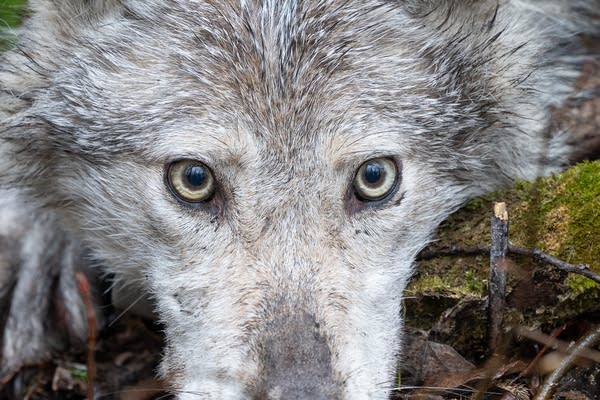
A close-up of a wolf in northern Minnesota. Courtesy of the Voyageurs Wolf Project.
Courtesy of the Voyageurs Wolf Project
Other studies have shown that bears and birds also disperse seeds and help them propagate. But the researchers believe this is the first study to look at the impact that wolves may have on the broader success of blueberry germination.
“We just don't think of wolves really as blueberry eaters,” said Gross. “So I think further research would really benefit to see, does this trend continue to hold up over time with larger samples?”
Researchers collected five fresh wolf scats in 2017 and 2018 that were made up mainly of digested fruits. From those poop piles they collected and studied more than one thousand seeds. Then they collected about 500 control seeds from ten wild blueberry plants in the area.
Gable estimates that a wolf needs to eat about a pound of blueberries to produce one scat of digested fruit. “So you just think about how many seeds are in a pound of blueberries, and it’s a lot of them.”
And because wolves travel long distances when they hunt and search for mates, they are likely dispersing blueberry seeds over a wide territory.
“Much farther than a fox would be able to, or a bear, or some other species that also regularly eat blueberries and deposit those seeds in their scat,” said Gross.
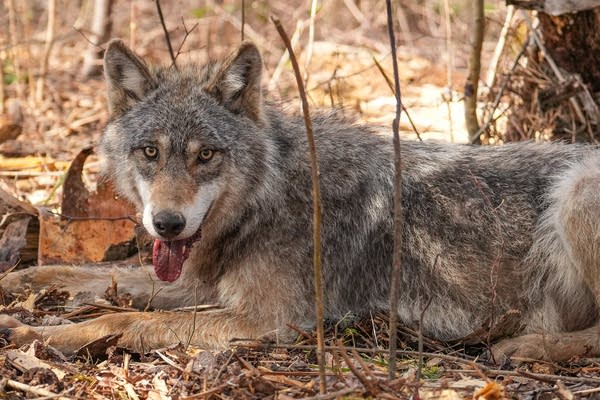
A new study shows that wolves eating and digesting blueberries and northern Minnesota helps blueberry seeds germinate more quickly and successfully. Courtesy of the Voyageurs Wolf Project.
Courtesy of the Voyageurs Wolf Project
Because wolves cover so much ground, Gross believes they could potentially play a role in the formation of new blueberry patches. More broadly, Gable believes the study provides yet another fascinating example of the role wolves play in the interconnected ecological web of northern Minnesota, and likely in other forests around the world where wolves prowl.
“This pattern of wolves being seed dispersers in the ecosystem is a really interesting wrinkle in our understanding of what sort of ecological role wolves play in places like Minnesota, and probably an unexpected one.”