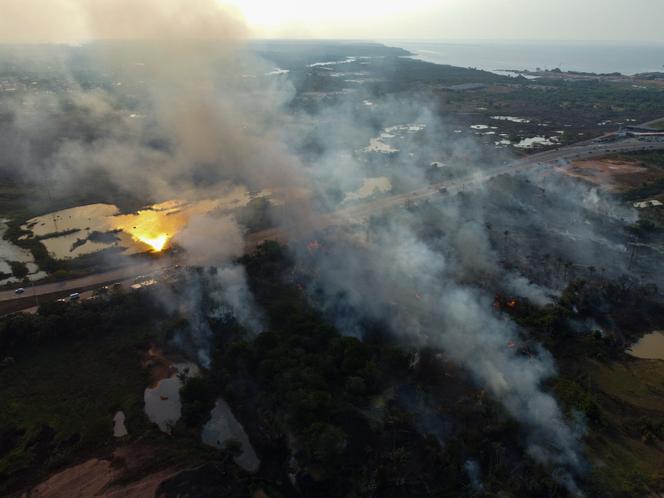
Alarming news on the climate front: land carbon sinks, made up of forests and soils, fell massively in 2023. They captured very little CO2, due to the effects of gigantic fires and long, repeated droughts. If such a decline were to continue, it could cause a runaway climate. These results, from the work of a team of some 15 researchers, were presented on Monday, July 29 at an international conference on the carbon cycle held in Brazil. They had been published on July 17 as a preprint – in other words, they have not yet been peer-reviewed.
Climatologist Philippe Ciais, one of the study's authors, doesn't hide his significant concern. "If this collapse were to happen again in the next few years, we risk seeing a rapid increase in CO2 and climate change beyond what the models predict," said the research director at the Laboratory for Climate and Environmental Sciences. "This study is based on the most advanced climate models and satellite data," said Australian climatologist Josep Canadell, executive director of the Global Carbon Project – a consortium of around 100 scientists – who was not involved.
You have 81.17% of this article left to read. The rest is for subscribers only.