Confidence is overrated. A more effective, scientifically-grounded approach to improve performance is self-efficacy.
We often hear about the importance of confidence. "Believe in yourself," the advice goes. Although intuitive, it's not as helpful. What exactly is confidence? Is it innate? Can you work at it? Self-efficacy is a more precise way of understanding confidence.
Imagine having not just the belief that you can succeed, but a deep-seated conviction based on experience, knowledge, and self-awareness. That's self-efficacy. It's the difference between saying "I think I can handle this challenge" and knowing "I have the skills and experience to navigate this situation effectively."
I’ve found self-efficacy more helpful than the often vague notion of “confidence”. More importantly, it provides ways to build it systematically.
In this article, I explore:
- The criticality of self-efficacy, and its key elements
- Its role in leadership
- How to systematically build self-efficacy
What is Self Efficacy?
Self-efficacy, as defined by Albert Bandura, is the belief in your ability to organize and carry out the actions needed to reach a specific goal. It's the "can-do" cognition—the internal conviction that you can deal with whatever situation comes your way.
Self-efficacy is concerned not with the number of skills you have, but with what you believe you can do with what you have...[10]
To emphasize, it's worth repeating: it's not a measure of your skills, but instead your belief about what you can produce with those skills. Think of it like a conductor: your skills are the musicians, but self-efficacy is the conductor who organizes and improvises with those musicians to create a performance.
Unlike self-esteem, which reflects self-worth, or confidence, which is general and context-free, self-efficacy is precise.
You may be confident leading a team, but lack self-efficacy in navigating a financial crisis. This nuance is critical because self-efficacy directly impacts how leaders approach challenges, influencing whether they engage or retreat, persevere or abandon, and ultimately succeed or fail.
A key attribute of self-efficacy is malleability. It’s a dynamic belief system that evolves with experiences, feedback, and reflection. This means you can actively develop it over time, turning it into a resource that grows stronger with use. Unlike static traits like temperament or personality, self-efficacy thrives on intentional practice, making it an ideal focus for leadership development.
People’s beliefs about their abilities have a profound effect on those abilities. Ability is not a fixed property; there is a huge variability in how you perform.— Albert Bandura
Self-efficacy is not confidence or self-esteem
Self-efficacy differs from confidence in several ways:
- Specificity: Unlike broad self-confidence, self-efficacy is task and context-specific. You might have high self-efficacy for strategic planning but lower for public speaking.
- Basis in experience: While confidence can be baseless, self-efficacy is typically grounded in past experiences and achievements.
- Impact on behavior: High self-efficacy leads to approaching challenges as opportunities to master, not threats to avoid.
Understanding and developing self-efficacy offers a more nuanced approach to leadership development than simply trying to boost general confidence.
Criticality of Self-Efficacy
When I first read Bandura's work on self-efficacy I was struck with the sheer impact it had on all aspects of work and life. Consider the following observations from Bandura.
The foundation of action
Self-efficacy is the engine of agency—our ability to intentionally make things happen.
Among the mechanisms of self-regulation none is more central or pervasive than beliefs of personal efficacy.
It is the foundation because it dictates whether we even try to act in the first place. Without a belief in our own power to produce results, we simply have no reason to start. As Bandura observes,
Unless people believe they can produce desired outcomes and forestall undesired ones by their actions they have little incentive to act or to persevere in the face of difficulties.
You can provide a team with the most brilliant strategy in the world, but if they doubt their operative capability, that strategy isn’t going anywhere.
Bridging the gap between knowing and doing
We assume that with the right knowledge and skills, performance naturally follows. Yet, we’ve all seen talented people fail to act even when they know exactly what to do.
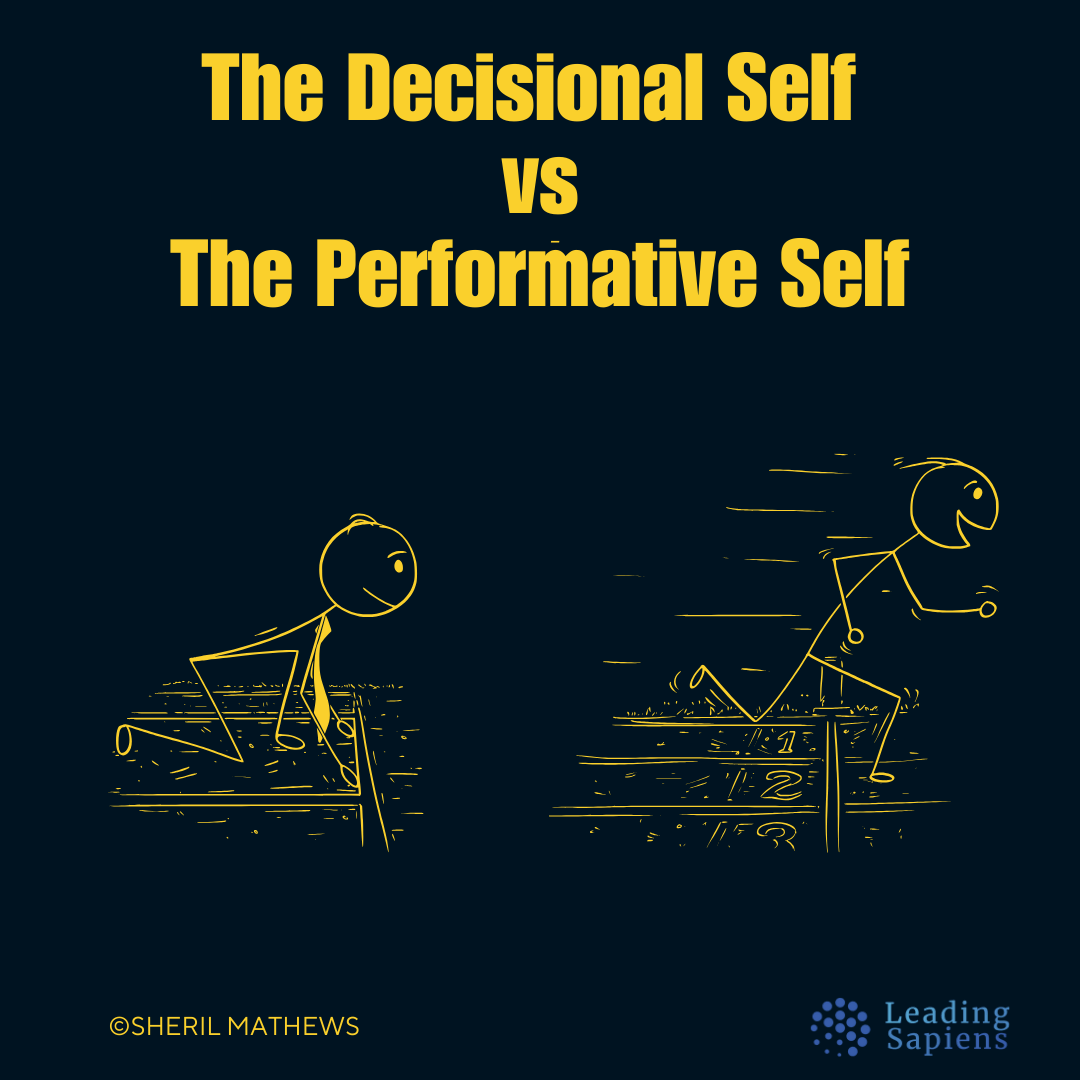
Self-efficacy is the critical bridge over this gap. It adds a "performative self" to the "decisional self". While the decisional self is an architect—weighing options and choosing a destination—it is often "left stranded in thought"without the performative self’s conviction to execute the plan. Self-efficacy is what mediates the relationship between what we know and what we actually achieve.
Shaping life paths
Perhaps the most profound impact of self-efficacy is how it serves as a filter for reality. It doesn’t just influence how we perform; it dictates the "slate of options" we even bother to consider.
If we judges ourselves inefficacious in certain domains, we don’t just decide against those paths, we effectively delete them from our field of vision. Consequently, self-efficacy is pivotal in how career paths and life trajectories are formed, often becoming more influential than actual talent.
Resilience under fire
In volatile environments, the impact of self-efficacy is most visible when things go wrong. For someone with low efficacy, a setback is a verdict—a sign of personal deficiency that justifies giving up. But for those with a robust belief in their capabilities, obstacles are merely "challenges to be mastered rather than as threats to be avoided". Highly efficacious individuals:
- Redouble their efforts when faced with failure rather than slackening them.
- Maintain a task-oriented focus instead of dwelling on personal inadequacies.
- Recover their sense of efficacy quickly after a disappointment, treating the experience as data rather than a verdict on their worth.
Regulating the internal environment
Finally, self-efficacy is critical because it regulates our internal state. It’s a powerful buffer against stress, anxiety, and depression. When we believe we can exercise control over potential threats, we remain unperturbed. But, when we feel under- equipped, heart rate accelerates and blood pressure rises at the first sign of a challenge.
High performers have learned to interpret this biological arousal not as a sign of vulnerability, but as an "energizing facilitator". By mastering "thought control efficacy," they keep their minds clear and their actions precise when the stakes are highest.
The Four Sources of Self-Efficacy
Bandura identified four primary sources of self-efficacy. Think of it as a psychological battery charged by four distinct sources:
- Mastery experiences.
- Vicarious learning (people like me).
- Social persuasion (feedback).
- Psychological and physiological states.
These sources are interconnected and collectively shape our belief system.
1. Mastery experiences
Personal achievements gained through effort and persistence — or mastery experiences — are the most potent source of self-efficacy. Success in a challenging task provides evidence of our capabilities, reinforcing the belief that we can handle future challenges.
Enactive attainments provide the most influential source of efficacy information because it can be based on authentic mastery experiences. [10]
Successfully navigating a high-stakes negotiation builds confidence for future ones. This belief is further solidified if it required overcoming significant obstacles, as the effort required to succeed amplifies the sense of mastery. Easy wins, while gratifying, don’t offer the same enduring reinforcement.
To put it succinctly: do hard things and earn it. Seek opportunities for meaningful achievement and tackle complex challenges to build robust self-efficacy.
However, mastery experiences are a double-edged sword. Just as success strengthens self-efficacy, repeated failure undermines it. Learn to frame failures as temporary setbacks and learning opportunities, not indicators of incompetence.
Reflection is key: analyzing what went wrong and identifying lessons ensures negative experiences contribute to long-term growth.
2. Vicarious learning (role models)
Observing others succeed — especially those similar to ourselves — boosts self-efficacy. Vicarious learning is especially relevant in leadership, where mentorship, modeling, and storytelling are pivotal.
When you see a peer navigate a complex challenge, it provides a blueprint for action. The implied message is, “If they can do it, so can I.”
Relatable role models are more effective than distant success figures. An emerging leader is more likely to draw inspiration from a direct manager than an abstract case study of a Fortune 500 CEO.
Organizations can amplify this effect by highlighting internal success stories. Narratives of leaders who overcame adversity or achieved milestones create a culture of possibility. Role-playing exercises and peer learning enhance vicarious learning by offering firsthand exposure to effective behaviors.
Encouragement and constructive feedback from others — what Bandura calls social persuasion — significantly influence self-efficacy, especially when coming from trusted and credible sources. Unlike empty praise, effective feedback is specific, actionable, and grounded in reality.
Instead of saying, “You’re a great leader,” a mentor might say, “The way you handled that conflict showed good emotional intelligence. You turned a divisive situation into a collaborative effort.” Such feedback not only reinforces a leader’s belief but also provides clarity on what behaviors to replicate or modify.
However, feedback has limits. It’s most effective when paired with evidence from mastery experiences or vicarious learning. Encouragement alone can’t create self-efficacy without action or observation.
Leaders must also learn to filter feedback, distinguishing between constructive guidance and unhelpful criticism.
4. Psychological and physiological states
We interpret our physical and emotional states as indicators of our readiness or ability to perform. But this interpretation process varies significantly between individuals.
A racing heart before a public speech, for example, can be seen as a sign of nervousness or as a surge of energy and focus. Learning to manage and reframe these internal signals is essential for building self-efficacy.
Practices like meditation and exercise help regulate emotional states, ensuring you approach challenges with calm and control. Additionally, creating routines that promote rest and recovery lays a strong foundation for maintaining high self-efficacy in high-pressure environments.
Self-efficacy: a cornerstone of effective leadership
Leadership is inherently uncertain and complex. You must make decisions with incomplete information, manage conflicts, and inspire others during turbulent times.
Research shows that self-efficacy contributes to effective leadership in several ways:
- Setting and achieving ambitious goals
- Demonstrating resilience in adversity
- Inspiring and empowering others
- Making effective decisions and solving problems
- Creating a positive and supportive work environment
- Managing stress and promoting well-being
Research also shows a strong relationship between self-efficacy, resilience, and success. Self-efficacy drives resilience and success, while experiences of resilience and success enhance self-efficacy, creating a powerful upward spiral.
Thus self-efficacy serves as an anchor, enabling you to maintain clarity and agency amidst chaos. It’s not just a psychological boost; it’s the engine driving action, resilience, and sustained performance. Without it, even competent leaders can falter under pressure.
Strategies for building self-efficacy
Given the research findings on self-efficacy,
- Leadership development programs should prioritize mastery experiences over theoretical knowledge.
- Mentorship should focus on modeling context-specific behaviors rather than general advice.
- Feedback systems should be redesigned to reinforce task-specific capabilities rather than broad personality assessments.
What follows are ways to systematically increase self-efficacy. Work with a coach, peer, or mentor to practice these consistently over the long-term.
1. Engineer mastery experiences
- Gradual exposure. Introduce yourself to challenges incrementally. For instance, someone anxious about public speaking might start by presenting to small, familiar groups before addressing larger audiences.
- Use a small wins approach. Begin with “low-risk, high-reward” tasks to create early wins, which serve as proof of capability. A new leader might lead a short-term project or facilitate a meeting before taking on larger responsibilities. Highlight the progression of difficulty to make growth tangible, including dashboards and tracking tools for skill development.
- Reflect and debrief on wins and losses. Use structured retrospectives to extract lessons. Questions like “What went well? What could be improved? What skills were key to success?” help identify replicable strategies and areas for growth. Document these reflections to build a personal “playbook.” Use tools like the Johari Window and the Ladder of Inference to identify your blindspots.
- Utilize failure scaffolding. Create environments where the downside of failure is minimized (e.g., simulations, pilot projects, coaching). Focus on experimenting with new behaviors. Gradually increase the complexity of challenges.
2. Emphasize vicarious learning
- Choose role models wisely. Select mentors or role models with relatable paths or struggles. An introverted leader observing another introvert excel in public speaking builds both belief and strategy for improvement. This increases the transferability of skills.
- Shadowing other leaders. Find opportunities to observe seasoned individuals. Watching how they handle ambiguity, resolve conflicts, or inspire teams offers a practical education. Pair observation with follow-up discussions to unpack insights.
- Reverse mentoring. Senior leaders can learn from younger team members adept at navigating emerging technologies or new approaches. This expands the leader’s toolkit while showing that learning is a continuous, reciprocal process.
- Parallel task practice. Create low-stakes environments to practice critical skills, like mock negotiations or decision-making scenarios. Feedback loops ensure skill refinement before real-world application. They're also a key aspect of double-loop learning.
- Targeted feedback. For effective constructive feedback, tie it to observable behaviors and outcomes (e.g., “Your ability to synthesize diverse perspectives in the meeting helped drive alignment”). Specificity strengthens belief in repeatable capabilities.
- Normalize developmental feedback. Shift the narrative to emphasize growth over judgment. Use language that frames challenges as opportunities (e.g., “This is an area where you’re gaining strength” instead of “This is a weakness”).
- Leverage group affirmation. Spotlight team achievements in forums for peer recognition. This reinforces mutual confidence and collective efficacy.
4. Optimize physiological and emotional states
- Reframe stress. Use analogies to reinterpret signals. For example, “Like an athlete before a game, my body is gearing up for peak performance”. Learn to link physiological arousal to readiness instead of fear.
- Micro-recovery rituals. Develop recovery practices tailored to your needs, like quick breathing exercises or a short walk before high-pressure moments. Well-practiced rituals create a buffer against burnout and maintain focus.
- Create psychological safety. Build trust by increasing your self-disclosure. Admitting mistakes and uncertainties as a leader within reason. When team members feel safe, they model this behavior, reinforcing a culture of learning and experimentation.
5. Practice cognitive flexibility
- Cognitive reframing. Learn to shift negative thoughts by challenging their validity and replacing them with action-oriented alternatives. For instance, “I failed” becomes “This setback taught me X, which I’ll use next time.” Stay alert to cognitive distortions that can derail you, and build your cognitive flexibility.
- Narrative rewriting. Revisit your own journey to identify inflection points where resilience and capability emerged from challenging assignments. Retelling these stories strengthens belief in your ability to handle future challenges.
- Future anchoring. Connect current actions to future impacts. For instance, by seeking feedback from diverse team members today, you’re developing inclusive leadership skills crucial for leading cross-functional projects next year. This broadens your perspective, linking today’s effort to long-term gains.
Self-efficacy goes beyond the simplistic notion of "confidence" in leadership discourse. It's a nuanced, context-specific framework for developing leadership capabilities. It challenges the assumption that effective leadership stems from innate traits or charisma. Instead, it posits that leadership effectiveness can be cultivated through deliberate practice and reflection.
Self-efficacy views leadership not from a position of unwavering confidence, but as a journey of continuous self-discovery and deliberate skill-building.
Decisional Self vs Performative Self: Why Decisions Don’t Translate into Actions
Most of us have facets of our lives where things are just not up to the mark. We’d like things to be different, but somehow it hasn’t panned out. And equally likely, we already know what needs to be done and how to go about it. Yet, we
 Leading SapiensSheril Mathews
Do Leaders Have to Be Confident?
What’s the role of confidence in leadership? Is it a requirement for being an effective leader? How confident are you about your confidence? Confidence, on sale Looking at the brochure of one leadership program, it seems confidence is necessary to be an effective leader and that all successful leaders are
 Leading SapiensSheril Mathews

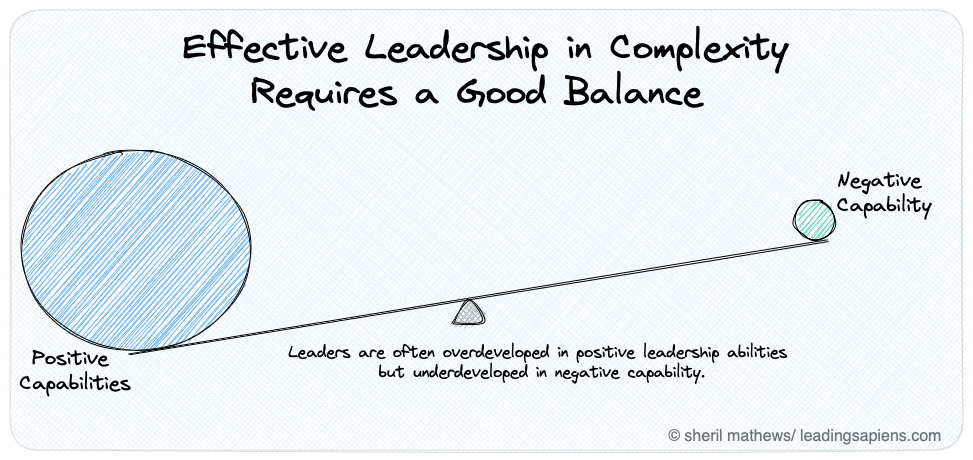
Why Developing Negative Capability is Critical in Leadership
Leadership development is usually about positive abilities. Negative Capability is often forgotten but equally critical. What is it and what prevents it?
 Leading SapiensSheril Mathews
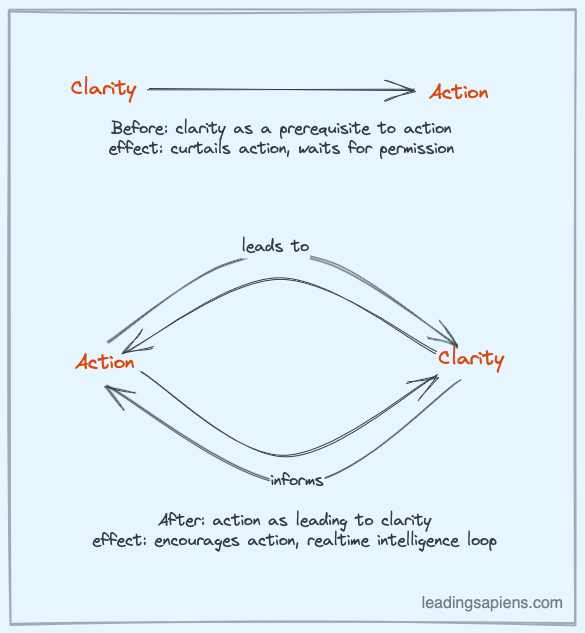
Donald Schon on The Paradox of Real Learning
Often in leadership coaching, clients are asked to “try on” a new behavior just as they would try on new clothes at the store so they get a “feel” for it. The pushback often comes in the form of “but I don’t know how to do that”. We’ve all been
 Leading SapiensSheril Mathews
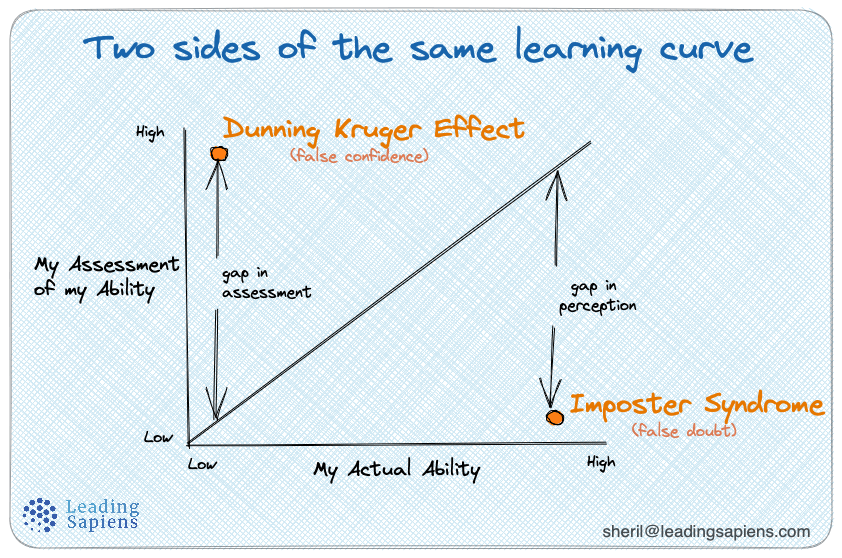
There’s no need to eliminate or even overcome self-doubt.
Self-doubt is not an impediment to be eliminated as is commonly thought of. It’s a condition of the game and can even be a positive indicator.
 Leading SapiensSheril Mathews
Sources
- Bandura, A. (1997). Self-efficacy: The exercise of control.
- Luthans, F. (2010). Organizational Behavior: An Evidence-Based Approach.
- Luthans, F., Avolio, B. J., Avey, J. B., & Norman, S. M. (2007). Positive psychological capital: Measurement and relationship with performance and satisfaction. Personnel Psychology, 60(3), 541–572.
- Clough, P., & Strycharczyk, D. (2012). Developing Mental Toughness: Improving performance, wellbeing and positive behaviour.
- Ferrari, M., & Sternberg, R. J. (1998). Self-awareness: Its nature and development.
- Heifetz, R. A., & Laurie, D. L. (2001). The Work of Leadership. HBR.
- Kayes, A., & Kayes, D. C. (2011). The Learning Advantage: Six Practices of Learning-Directed Leadership.
- Kilburg, R. R. (1991). Executive wisdom.
- Peltier, B. (2010). The Psychology of Executive Coaching: Theory and Application.
- Bandura, A. (2009). Cultivate self-efficacy for personal and organizational effectiveness. In Handbook of Principles of Organizational Behavior.