AB 1709, set to take effect January 1, bars features like personal recommendations and autoplay for videos, out of concern they foster compulsive use by children under 16. But in a federal lawsuit this week, Google, Meta and TikTok argue the new law violates their First Amendment rights.

A 14-year-old boy holds an iPhone with various social media and messaging apps on Feb. 23, 2026. (Anna Barclay/Getty Images)
Three social media giants turned to the courts this week to contest a single California law set to go into effect in January.
In separate lawsuits filed Wednesday, Google, Meta and TikTok said Assembly Bill 1709 wrongly compels them to honor California’s preferred means of presenting content to children, and substitutes the state’s judgment for that of parents. The law prohibits social media platforms from offering children things like personalized feeds and autoplay for videos. It also requires the deletion of children’s accounts with those features.
The companies said the law violates the First Amendment free speech protections, as well as Section 230 of the federal Communications Decency Act, which broadly shields online platforms from liability over user content.
The California Attorney General’s office, which enforces the state’s laws and is the only defendant, wrote KQED that it is reviewing the lawsuits, adding, “Our office is committed to defending California’s commonsense laws to protect kids online.”
During his final State of the State address, Gov. Gavin Newsom called on lawmakers to explore stricter online safety guardrails for kids, even as critics warned free-speech concerns and age-verification challenges have complicated the state’s broader effort to regulate social media.
Google, which owns YouTube and is a unit of Alphabet, filed its lawsuit in federal court in San Jose. Meta, which owns Facebook, Instagram, and WhatsApp, sued in San Francisco. TikTok, a unit of China’s ByteDance, sued in Los Angeles.
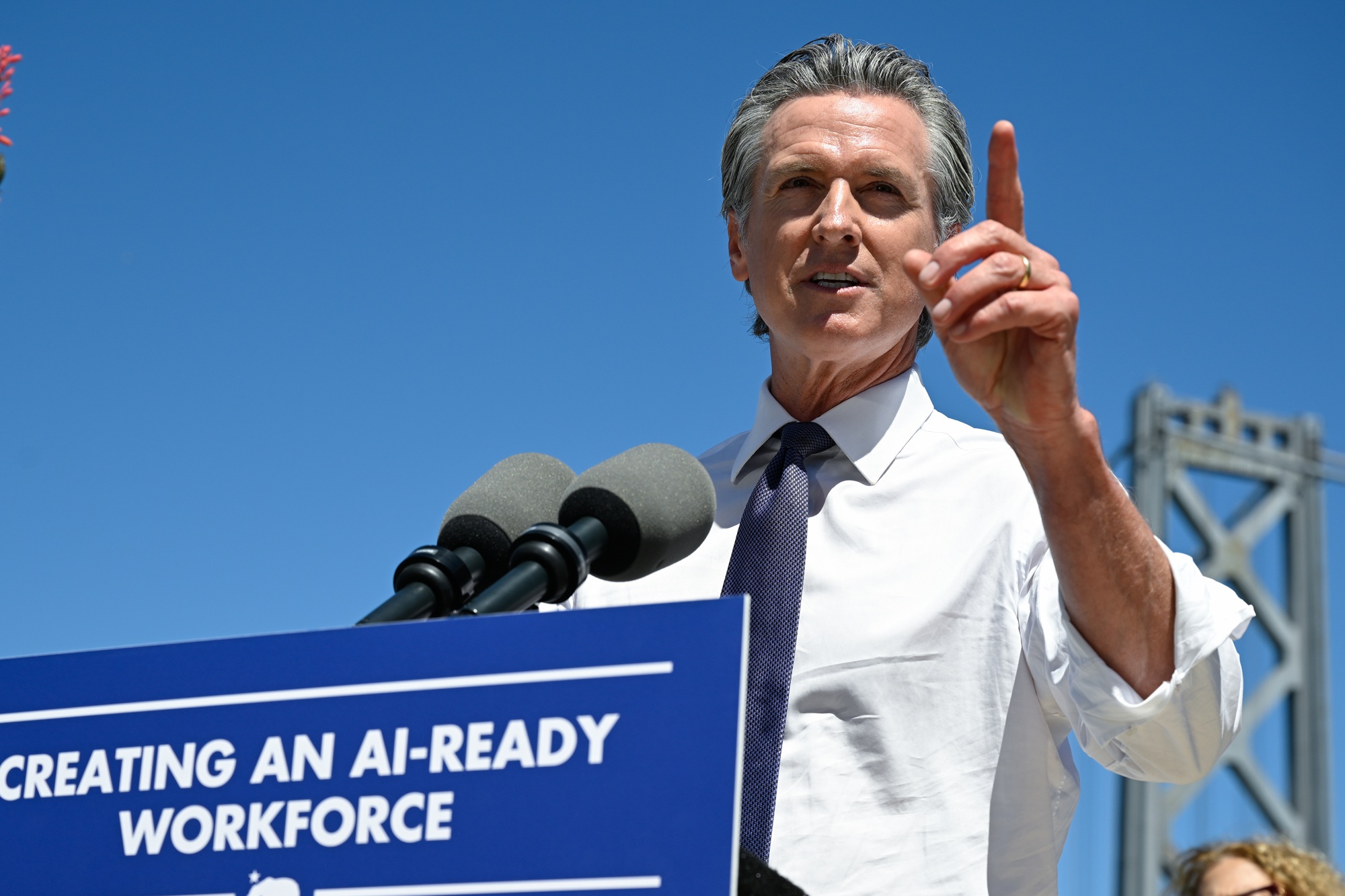
Newsom signed AB 1709 into law in September, saying at the time that children’s safety should be central to any discussion about technology. “We’re establishing a framework,” he said in a press conference announcing the package, “so that we can really enact a more aggressive posture as it relates to enforcement.”
“AB 1709 is a blatantly unconstitutional restriction on free expression that erodes the long-standing and protected practice of curating content based on user preferences, which bookstores, TV networks and streaming services all use,” a TikTok spokesperson wrote in an email to KQED. He added TikTok teen accounts have more than 50 preset safety, privacy and security settings.
“We are challenging this law because it violates the First Amendment by letting the government dictate how ideas are organized, displayed, or shared with Californians. Under the law, we would be forced to either remove features that keep teens’ experiences age-appropriate, or cut thousands of California teens off from family, friends, and their communities,” a Meta spokesperson wrote in a separate email to KQED.

The three companies, along with Snapchat parent company Snap Inc., are facing thousands of lawsuits by individuals, school districts, municipalities and other government entities claiming they sought intentionally to addict children to their platforms and caused a mental health crisis among young people.
In August, Meta agreed to pay up to $18 billion and limit teenagers’ use of Facebook and Instagram under agreements with nearly all U.S. states. They accused it of violating privacy and consumer protection laws.
“The public and the attorneys general are outraged at the behavior of the big social media and AI platforms,” said Jim Steyer, the CEO of Common Sense Media, which is also a big mover and shaker in Sacramento.
Now, Steyer said, consumer advocates and states are winning. “They’re winning big. And so the companies are trying to delay the inevitable. Defer the settlements, minimize the settlements. And somehow trying to explain after the fact that they aren’t really liable for all the damages and all the harm they’ve caused to young people,” he told KQED.
Many states regulate children’s access to social media given the inability of Congress, over several presidential administrations, to take action. In the meantime, countries elsewhere are experimenting with a range of restrictions; Australia, for example, has a ban on social media for children under 16.