This article began as an internal note I shared with the June team. After countless conversations with other founders, I realized it could be valuable to a broader audience. I hope you find value in it.
Writing is thinking. And to write well is to think well. Many say this and for good reasons. That's why it's so hard but that’s also why it’s valuable. For me, writing has never been second nature. But sometimes, I feel the need to spill my jumbled thoughts onto a blank page. Like a child dumping out Lego pieces all over the floor, trying to build something new, I try to make sense of everything going through my head, playing with the fragments of my ideas, recollecting and reshaping them into something coherent.
What you are about to read and (hopefully appreciate..) is the result of me going through some of the hardest questions I’ve faced at June so far. Questions that touch everything from customer-psychology and character-building, to positioning and brand identity, and how all of this ties back into June’s grand-scheme of things.
These are personal reflections that I’ve shared with my team and that today I wanted to share with you too.

There are no shortcuts; to create a long-lasting company, you need to make something genuinely useful. As the old man from the orange company said: “...something they love.” While I think it’s fair to say that June hasn’t quite yet nailed PMF (or at least not in the original Andressen’s definition) and there are lots of margin for improvements on the product side, I think we can all agree that we DO have built something people want.
I mean... paying customers, and annualized revenue, if anything, means that we as a company have successfully crossed the early extinction chasm.
Then, why are we still here, doing more than okay-ish but definitely not AMAZING yet? And why am I in my bed at night listening to countless podcasts about brand and positioning knowing that, deep down, something’s still not quite there? And why are we so obsessed about finding the narrative™ for June? This sort of special thing that would make June, June?
Deep down we know the answer. It’s because most companies (within our target range) would probably benefit from something like June, but they don’t know it yet. But how would they know? June is just a small company in what looks like a well-defined market category, dominated by a few larger companies.
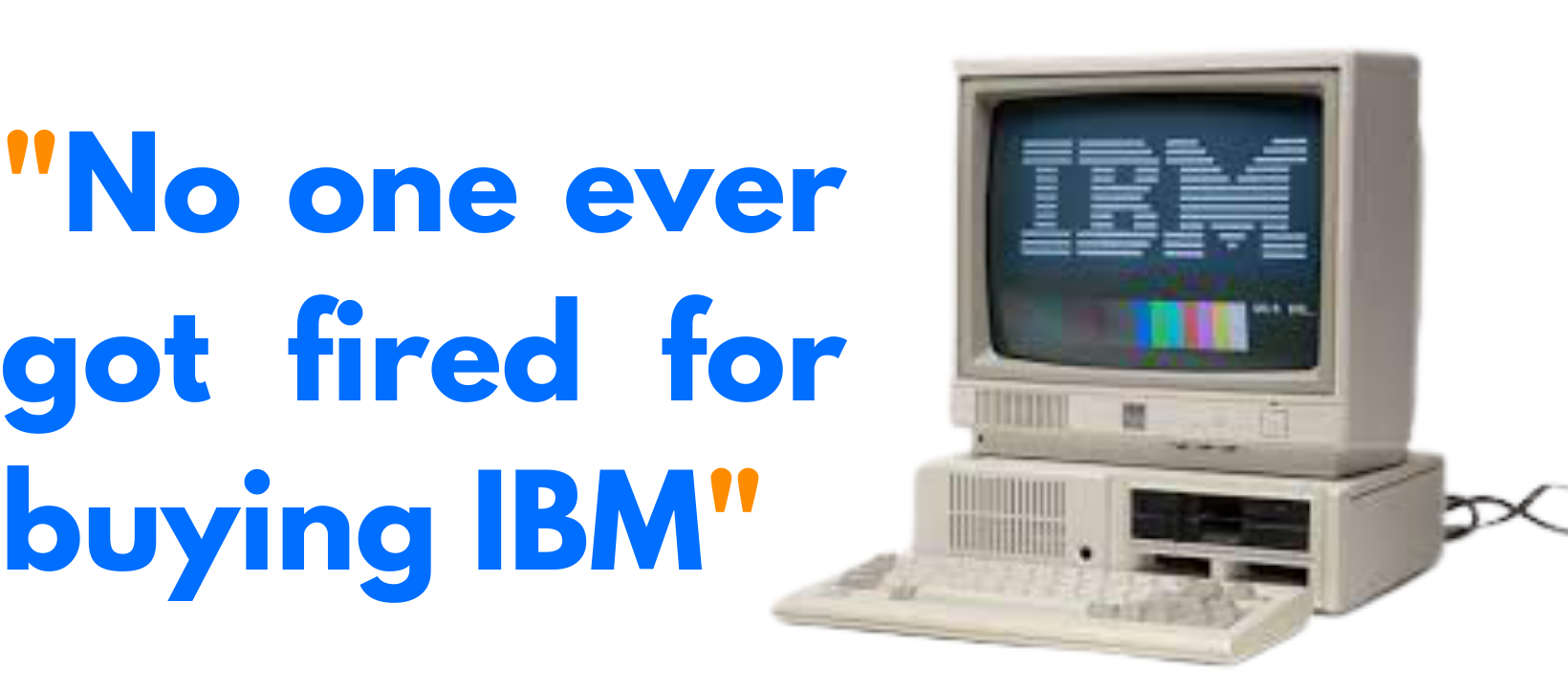
The old saying “Nobody has ever been fired for buying an IBM” seems to fit this case well. The current widely used alternatives, Amplitude or Mixpanel, work just fine—so, why would someone even bother finding or trying something else?
We know you are unlikely to be able to sell June as “a simplified Mixpanel” very well: there aren’t simply not enough people shopping for “simplified product analytics platforms” or a “new way of doing product analytics'' or a “product analytics that just work.” On June product analytics features, the cold truth is that Amplitude and Mixpanel analytics do actually just work.
So, if we’re not really selling an “analytics product” or the set of features June has in their specific implementation, what are we even trying to sell here?
Just as much as our job is about building something that is genuinely useful, our job is also about understanding what people think they want and then translating the value of June into their terms.
We know we have to come up with something better, more powerful, more exciting. Something that helps people reframe the question and see June as the obvious answer.
Narrative Building
When I think about companies and narratives I keep instinctively going back to the ideas of minerals and colors and their textures. Some have such bright and unique combinations that are easy to remember even if you took a single glimpse. Others have mild blends incapable of standing out from the rest. I think the same applies to companies and product identities.

Some companies and products seem to have such unique and distinct characters. While others don’t. Some narratives are so powerful that they stay with us for months after we heard them for the first time, while others are completely forgotten the minute we close their website’s tab.
Is this something that we actually have some control over? And if so, to what extent?
Taken for granted that there is not a single way to approach this and, like mother History has taught us plenty of times, there are many examples that validate or invalidate what I am about to write. Nonetheless, under our specific circumstances I think it makes sense to follow 3 criteria that I see being at the heart of powerful narratives:
1. Fundamental, unrecognized truth
If you are looking to reframe a 20-year old industry problem you better start from the correct underlying premise or, at least, a very reasonable one. It doesn’t make any sense to even consider a wacky foundation or something that we don’t quite believe it’s (or it’s going to be) an absolute truth.
It’s also important that this “truth” isn’t as widely acknowledged (this, I think, crosses with Thiel’s infamous question). After all, if that were the case, there would be no need to tell people, and it likely wouldn't be relevant anyway. Often, these truths are held back by some pre-existing generational societal norms.
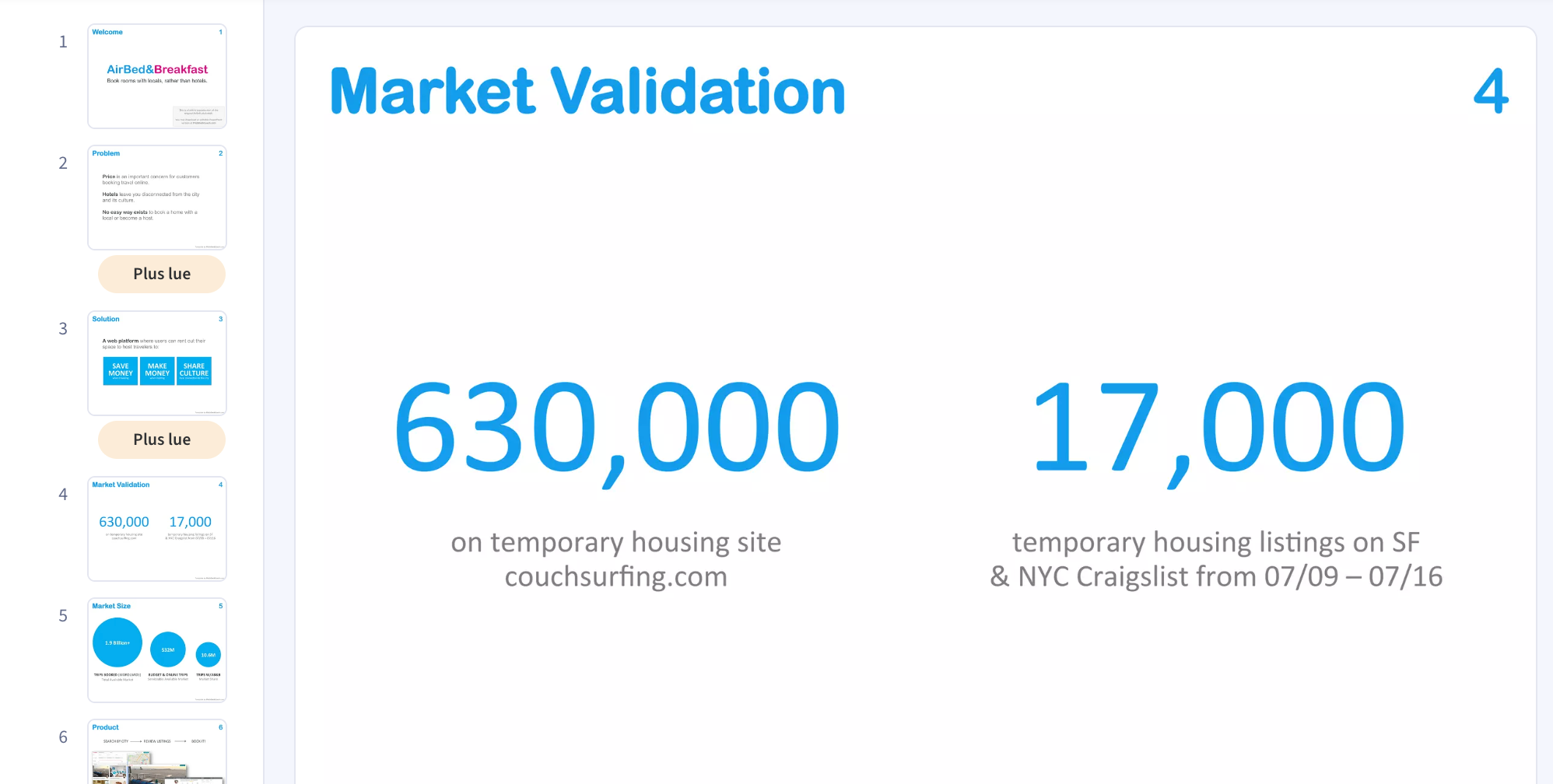
Think of Airbnb, the idea of people sleeping in other people’s beds was considered inappropriate and quite over the line for standard social conventions. Regardless they stood for a loud “we think it's okay to sleep in other people's beds.”
Or take Uber: “we think it’s okay to step in stranger’s cars”. Or Bumble “we think women can make the first move.”
All of these 3 were kinda considered taboos by the previous generations. Instead they counteracted and made that act the centercore piece of their identity. It’s how Airbnb became “the only app that allows you to live everywhere” and Bumble “the first feminist dating app”.
A strong “unacknowledged truth,” with the concrete yet unrealized potential to resonate with contemporary audiences, is the foundation for great products and iconic identities.
We talked about digital products’ identities, but we could also talk about physical products brand’s and (pretty much) all we’ve said would still apply. Take Levi’s, for example—the jeans were originally designed and marketed for labor and manual work. In the 1960s, it was considered inappropriate to wear Levi’s outside of blue-collar settings. But by the 1980s, a new generation embraced Levi’s in formal contexts, using them as a form of rebellion against the norms of the previous generation. And it was exactly during this cultural shift that Levi’s found the identity we all know today.

Clearly, in Bumble’s case, the shift was intentionally planned, while with Levi’s, it emerged organically from the ground up. Yet, the common thread between both is how they transformed cultural norms to define their identities.
"This feels like a crossroads where we could dive into adjacent topics—how trends emerge, their impact on sociology, semiotics, visual art, and (probably, hardest stuff on Earth) the complex evolution of fashion. But that would take us WAY too far off track. So, let’s bring it back to us…
Everything we said so far, can be distilled down to this idea: if people agree you have the correct code and the right framing of the problem, they will feel legitimate doing things your way.
This raises the obvious questions for us: what’s that equivalent for June? Can we identify an unspoken truth in our category?
2. Narrative-Product fit
The product should fit and embody this unrecognized truth to the point it becomes its vessel. Airbnb is a short term rental website, Uber is a ride-hailing app where you tap and a black car picks you up, and Bumble is an app where only women are allowed to swipe.
These products are such great instances of that unspoken truth. To the point it looks almost impossible to come up with a different or better form-factor.
Back to June, if our “unacknowledged truth” isn’t practically embodied by the June product, then it will feel superimposed, manufactured, detached from reality and it will work against us.
3. Exciting and inspiring
Just because this “truth” is (might be) true and it's well embodied in your product, doesn’t mean it's an exciting thesis. If startups are “movements”, the narrative needs to be exciting, inspiring and make people want to be part of it.
At the intersection of the 3 is where, I think, we need to look for:

Character as a Texture
What we're looking for here is a “core idea” that can be eventually broken down at every sub-level, morphing into the different, required artifacts while still retaining the original meaning.
We’re looking for a material, a texture, a flavor. Whether with that we’re going to create a chair, a sofa, or table doesn’t really matter. If we go with marble, it might be an elegant, royal marble chair, if we pick wood it might be a warmer, friendly and rustic chair.

The core idea will take different shapes and orient to different meanings depending on context, but it will always stay true to its unique original traits and characteristics.
A new perspective
I have to zoom out for a moment and reflect on who we are and everything we've accomplished so far. When I step back and take in the broader picture, I see a team of intelligent, kind, and welcoming people, all united by one clear goal: to delight every customer who interacts with us
In a category space dominated by cold-looking, static, lifeless brands, June stands out as a warm, welcoming ally. This isn’t distorted or manufactured reality to role-play someone else’s character. It’s just plain truth; it’s who you are and your attitude is perfectly mirrored on the brand you have created.
To me the word that captures everything you do, did and are doing is “empathy”. And after that “customer-empathy”
Empathy because when we onboard customers we listen to their needs with a care and dedication that I have yet to see somewhere else. Empathy because Ferruccio doesn’t just share a list of features and bugs in the changelog but actually highlights and uplifts (with public tweets) the customers who requested them in the first place. Empathy because Alberto often emails people out of the blue when he guesses they are struggling on the docs page and they might have questions.
Empathy because we all of you share our personal Whatsapp numbers with customers, listen to their feedback, reply on the weekends and are willing to do everything possible to make them happy.
The kind of empathy that stems out of mutual recognition and deep understanding of someone' needs. The kind of empathy that eventually leads to digital proximity and–to some extent–intimacy. A connection on a deeper, more personal level. Person to person. Human to human.
I find it quite amazing that while you do this as the front-face men of the company, your product also helps others achieve the same results and embrace the same philosophy.
June is empathetic software. Software capable of generating customer intimacy. And it does that by creating a window in your customer world.
When we speak about data being generally available, I think we want to say “make your team more empathetic”. Because, if everyone in your team truly connects on a deeper, more meaningful level with your customers (their desires, their frustrations, their needs), if everyone in your team truly becomes more “customer-empathetic” then you’ll be more successful.
When you say “teams are disconnected from their product” you actually mean, product teams aren’t empathetic enough with their customers—and one of the core reasons is that analytics products for the last decade have made you think of customers in terms of clicks, numbers, steps and funnels.

June flips that with a human-first approach where people aren't flattened and reduced to metrics, stats and digits. June stands for customers being treated like they deserve.
If we go back to the previous 3 criterias and try to run the simulation with this idea instead:
For the last 20-years, analytics products have lost touch with people. Yet, your customers are the most important asset in your company. You wouldn't have a company without them afterall, and yet you are still treating them in terms of clicks, pageviews, and funnels.
In that sense, the final form-factor can’t be anything else than June. A data tool that stands for a human-first approach, providing the right abstraction level (hence, a simplified, more streamlined approach to analytics) and that allows everyone (not just PMs) to be more customer-empathetic and connect with the people using your product (hence, Slack/Hubspot integration and customer-context reaching your team whenever they are)
If “data'' doesn't sound too exciting, maybe “customer-empathy” does. Or maybe, it does when we tell the world we are looking to build the most customer-empathy company on earth and in doing so we are building the best tool to also help you achieve that.
I hope this story helps anyone reflecting on their own narrative. If you're interested, the exercise I did to find ours evolved into what you see here. I believe it truly captures everything we stand for.